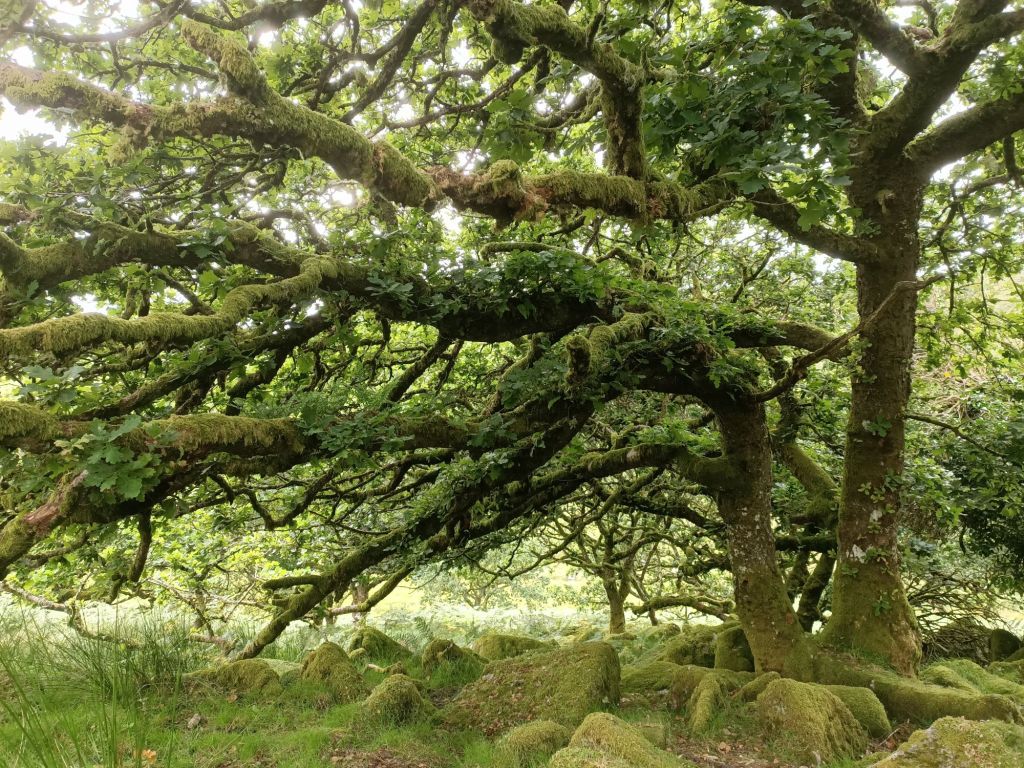
When we were offered a last minute opportunity to visit Cabilla, the temperate rainforest on Bodmin Moor, we jumped at the chance.
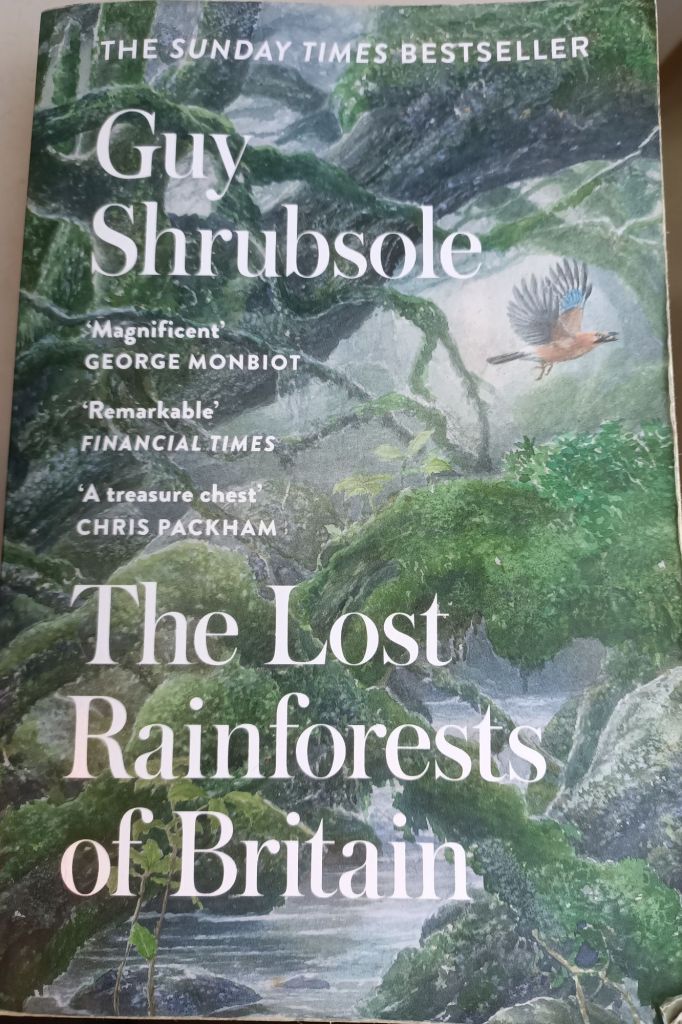
Despite appearing in the same book, The Lost Rainforests of Britain, by Guy Shrubsole, we had never experienced this ancient woodland environment or met its guardian, Merlin Hanbury-Tenison and, so, off we went.
When we think of rainforests, our thoughts usually go to the hot, humid tropical rainforests, near the equator, of which the Amazon is the largest. However, only recently has the spotlight shone on the temperate rainforests, also known as Celtic or Atlantic rainforests because of their geographic locations. Most of the western coasts of Britain and Ireland were once covered in lush temperate rainforest but now, due to human devastation, only isolated fragments remain. On a global scale, they are rarer than tropical rainforests, with less than 1% remaining.
The specific wet, warm conditions for this lush habitat to exist are ideal for lichens, mosses and fungi, many of them rare species across the world, which co-exist with sessile oak, holly, hazel, rowan, ash, willow and birch trees. To visit such a wealth of wonderful wildlife was really exciting.
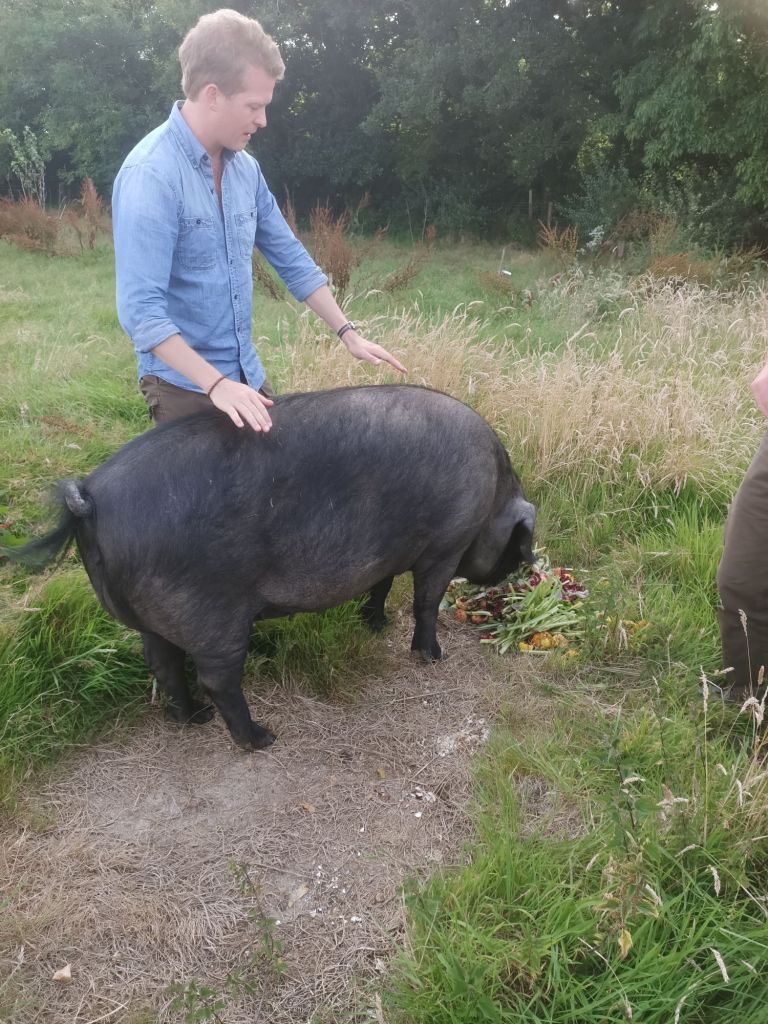
We walked from the meeting point, at the moorland upland farm, where we were greeted by Gloria, a very friendly Large Black pig, also known as a Cornwall Black. This breed is endangered, almost becoming extinct in the 1960s. Gloria was clearly very happy and healthy, enjoying our attention.
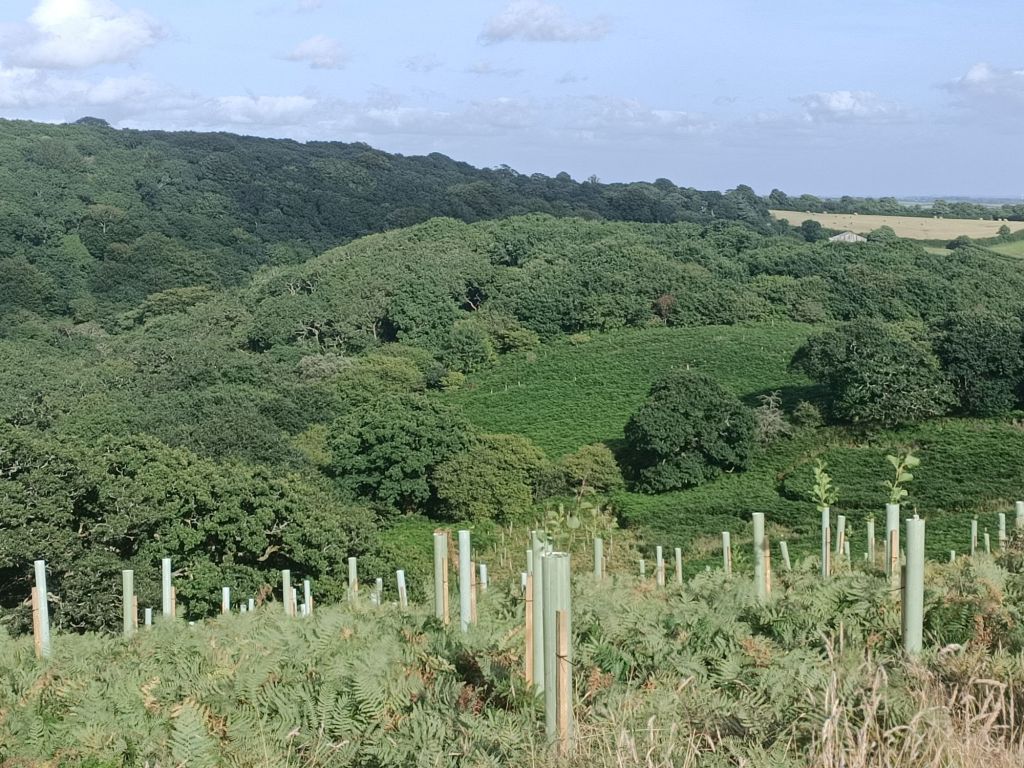
We passing by thousands of tree saplings, on land once given over to grazing. This is part of Merlin’s thousand year project designed to accelerate the establishment of a celtic rainforest habitat by factoring in the distribution of various tree species.
As we descended down into the valley, we entered a broad-leaved woodland, which provided pleasant shade from the hot sun. Bracken fern (Pteridium aquilinum) stood like a mini woodland below the swirling arms of the trees above; the leaves playing in the glinting sunlight.

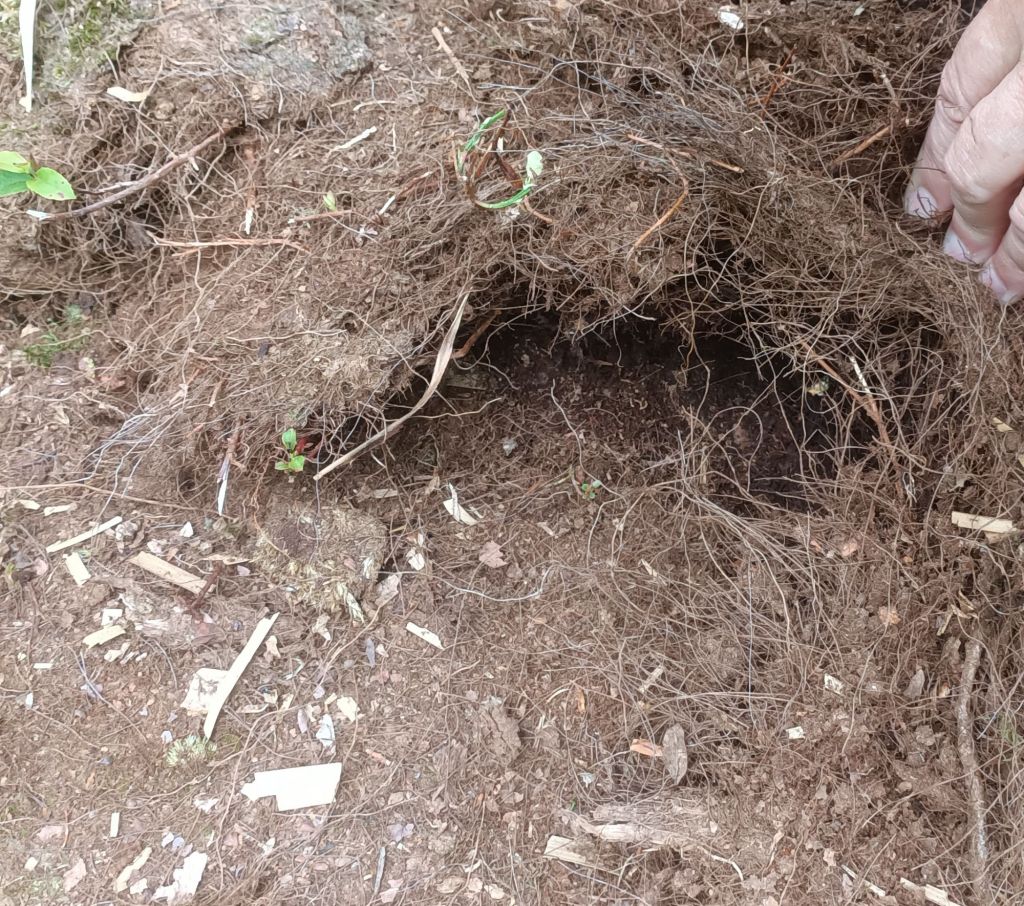
Our walk continued, and we sensed the air changing: becoming more humid, heavy and bringing different smells. The soil became spongy underfoot and, on investigation, visibly comprised a vast interconnected mycorrhizal network, which resembled a thick matted carpet.
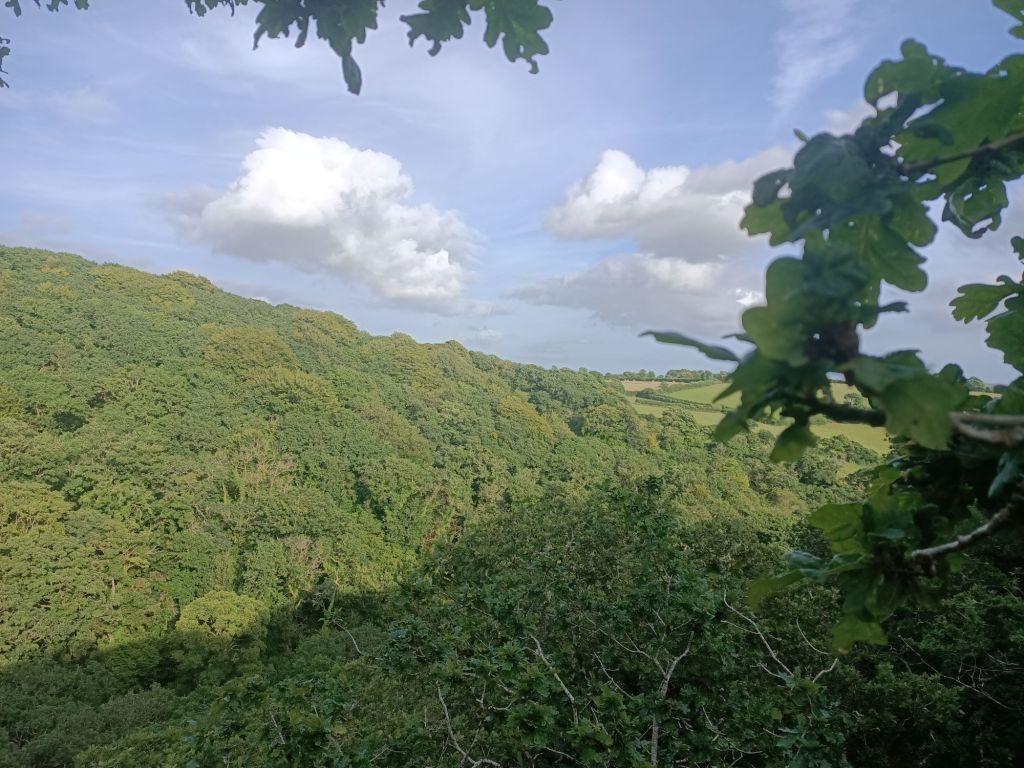
This was most evident when we stopped to take in the view on top of Cabilla Tor, a granite outcrop synonymous with moorland geology, looking down to the Bedelda River, a tributary of the River Fowey.
German forester, Peter Wohlleben, dubbed this network the “woodwide web,” as it is through the mycelium that trees “communicate.” This network is made up of tiny threads of mycelium, which is a fungal network, enabling every tree and plant to communicate as a supportive community. They not only communicate warning signals but share nutrients, carbon and water. If only human communication systems were as efficient…🤔
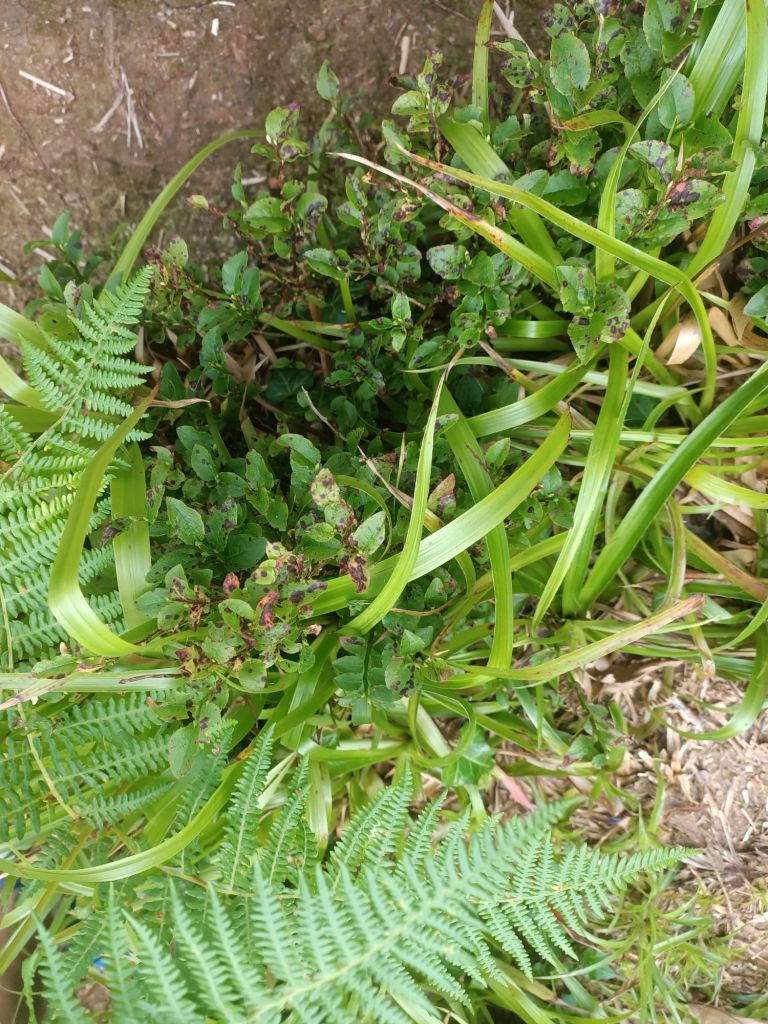
As well as the presence of the hundreds of tiny entangled threads of mycelium in the soil, the woodland was carpeted with Woodrush (Luzula sylvatica) and Bilberry (Vaccinium myrtillus).
Bryoria (Horsehair) and Usnea (Beard) lichens hang like mysterious, forgotten Christmas decorations from the gnarled tangled branches of the Quercus petraea (Sessile oak) species. These oaks predominate and the low lying twisting structure is indicative of being in a temperate rainforest.

Petraea means ‘of rocky places’ which is the favoured environment of these ancient trees – rocky moorland. It’s hard to believe that areas like Dartmoor, Bodmin Moor and Exmoor in Devon were once thriving ancient woodlands until most of these trees were chopped down to make warships in the 18th century. “HMS Victory at the Battle of Trafalgar, Nelson’s flagship is estimated to have required 6,000 trees, 90 per cent of them oak”. Today, much of these moorlands appear as barren rocky landscapes due to the deforestation, and subsequent overgrazing by sheep and deer.
Being in this rainforest was a sensorial delight: the thick velvety moss-clothed branches with a myriad of epiphytes growing on, around, down and up the embracing arms. There was even a rowan tree growing out of a nook of a branch of oak which Merlin endearingly named “Mother Oak”.
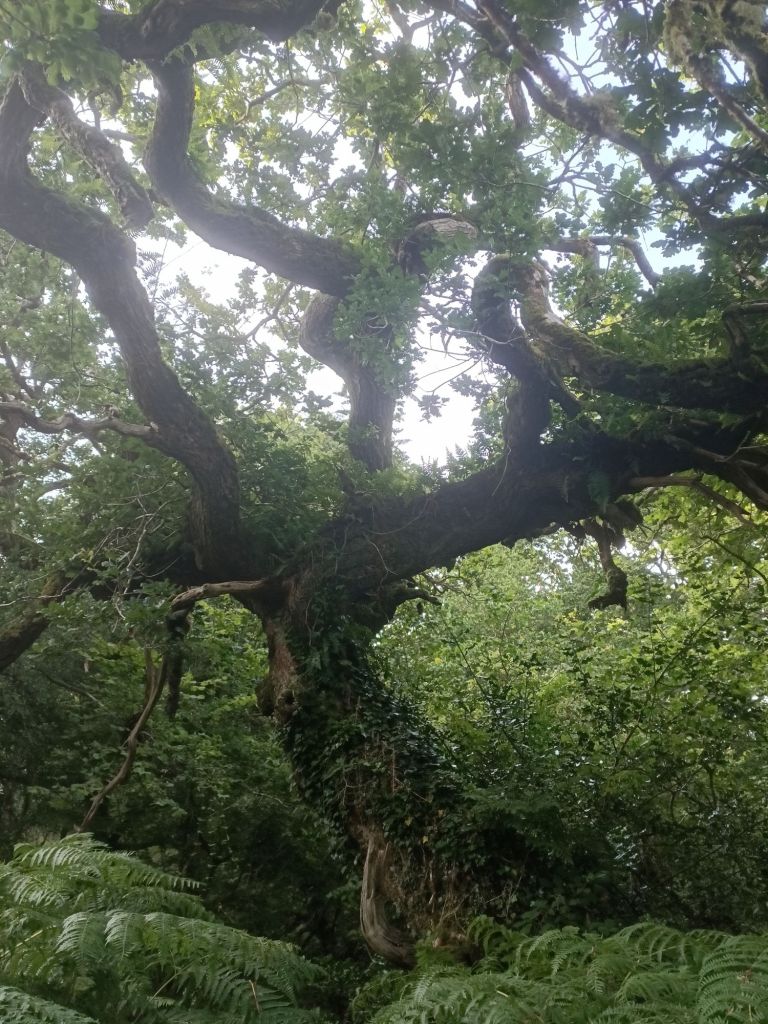
Apparently, forty-six species of moss have been recorded (here) including the locally rare Atrichum undulatum and the first record for Cornwall of Pohlia muyldermansii
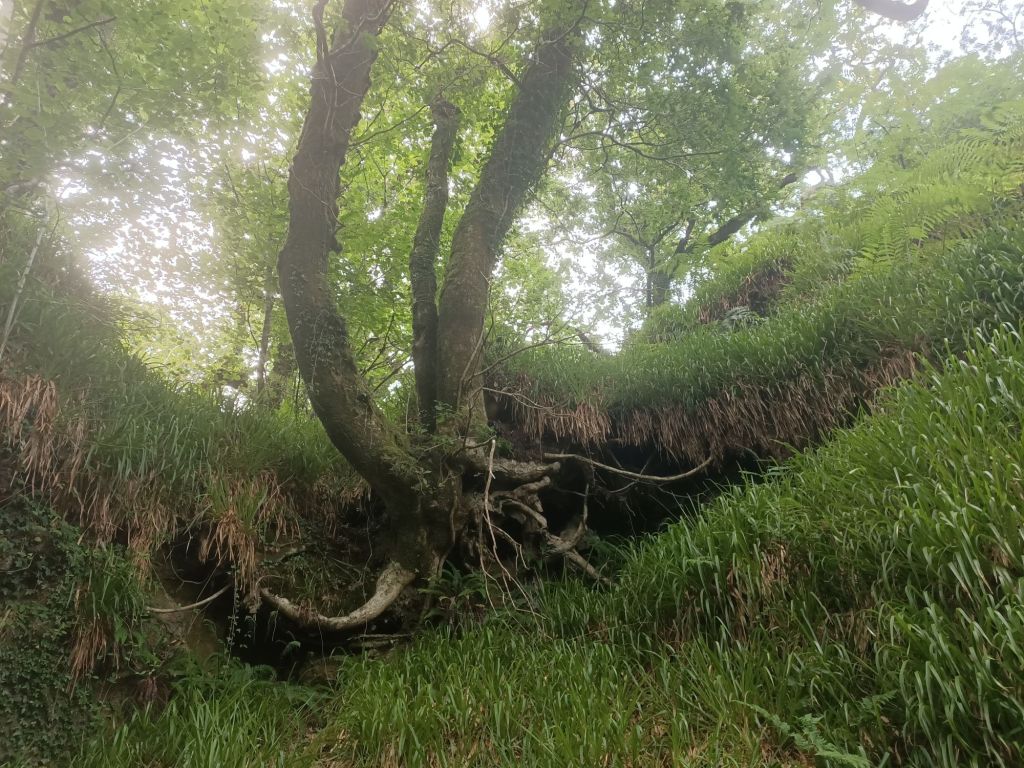
So what makes a temperate rainforest different from an ancient woodland? Would you know the difference if you found yourself in one of these?
This is the description as stated on the Woodland Trust site and many others, including the government website, so ancient woodlands are generally over 400 years old. Those between 150 and 300 years old are called veteran woodlands. However, researching temperate rainforests dates is more ambiguous, as some pockets of rainforest have continued to exist for more than 60 million years!
To distinguish between them, we really need to think about what species are present, the soil content, the geology and geographical location, the air quality, the average annual rainfall and temperature. These factors determine the difference and walking through woodlands that are 400 years old and 4,000 years old, at Cabilla, revealed that difference.
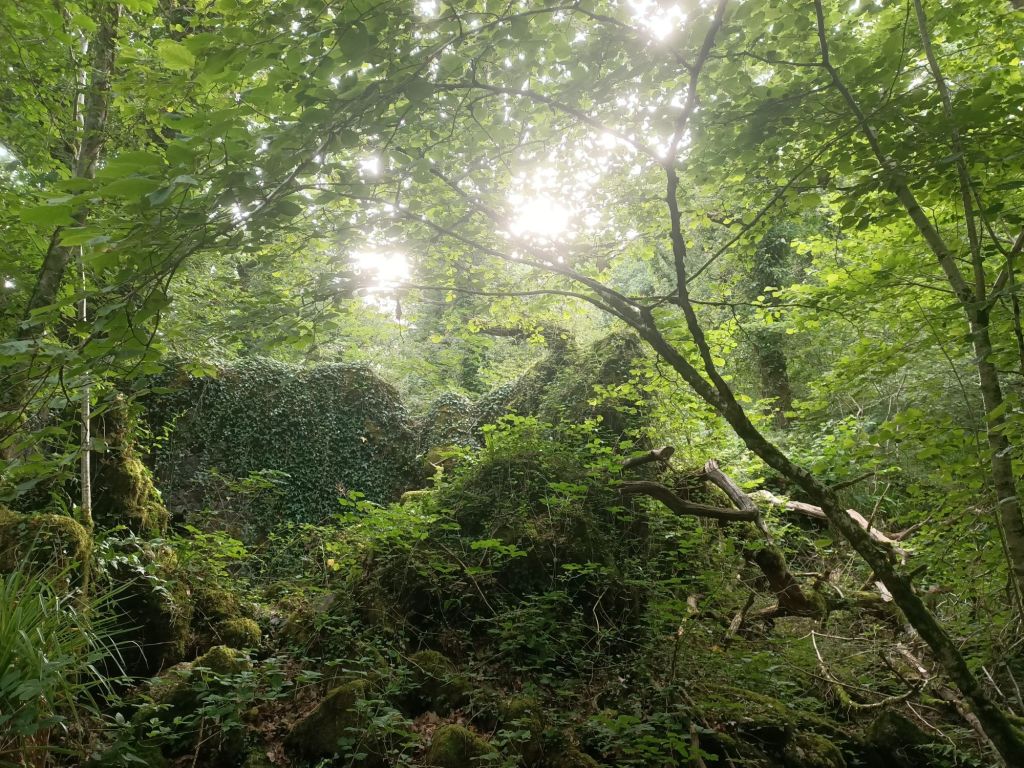
Remember though, ALL woodlands are extremely important! Mature, well- established trees offer vital habitat for wildlife, they provide oxygen, offer shelter from the sun, soak up rainwater, thereby reducing flooding and prevent soil erosion.
The Sessile oak supports 326 species of wildlife that we currently know of, and decaying wood left on the forest floor will support over 1800 species.
Woodlands exist in different climates and locations with different tree species. This in turn will determine other plants growing there and the pollinators that feed and habituate them. If woodlands were left to grow, rot and renew naturally then centuries of undisturbed soils and accumulated decaying wood (will) have created the perfect place for communities of fungi and invertebrates to thrive – plus, other specialist species of insects, birds, and mammals (which) strongly rely on them for survival.
In conclusion, temperate rainforests, as the name suggests, need rain and the few fragments left can be found in areas where oceanic currents bring warm winds and torrential downpours…and Britain has some of the best climatic conditions. The trees, mainly oak, will be adorned with lichens and mosses with other epiphytes growing on them including: liverworts and polypody (many-footed) ferns. These bryophytes are believed to be the oldest living remnants of eukaryotic plants that colonised the land.
When woodlands age, they become rich in life, abundant in diversity and verdantly healthy environments – so let’s keep them that way 🙂👍🌳🌳🌳🌳🌳🌳🌳🌳🌳🌳
 #RebelBotanists
Excellent information. I really enjoyed learning this. Great job!!!!
LikeLiked by 1 person
Thank you 👍
LikeLike
wow!! 25Temperate Rainforests and Ancient Woodlands: a visit to Cabilla
LikeLike