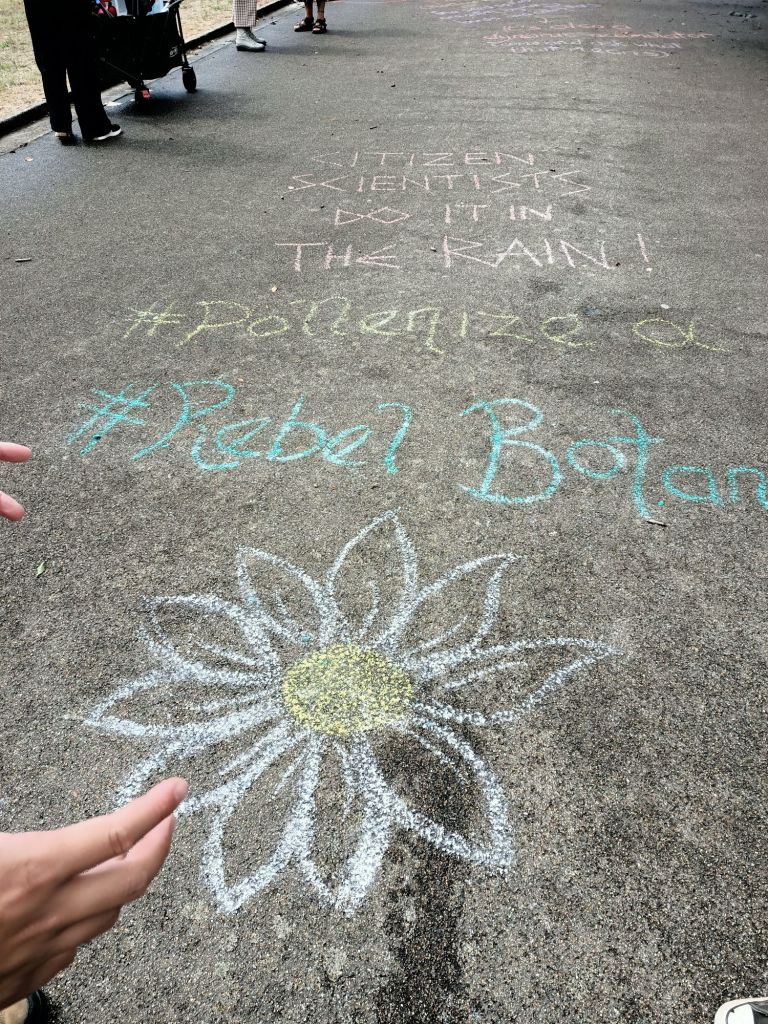
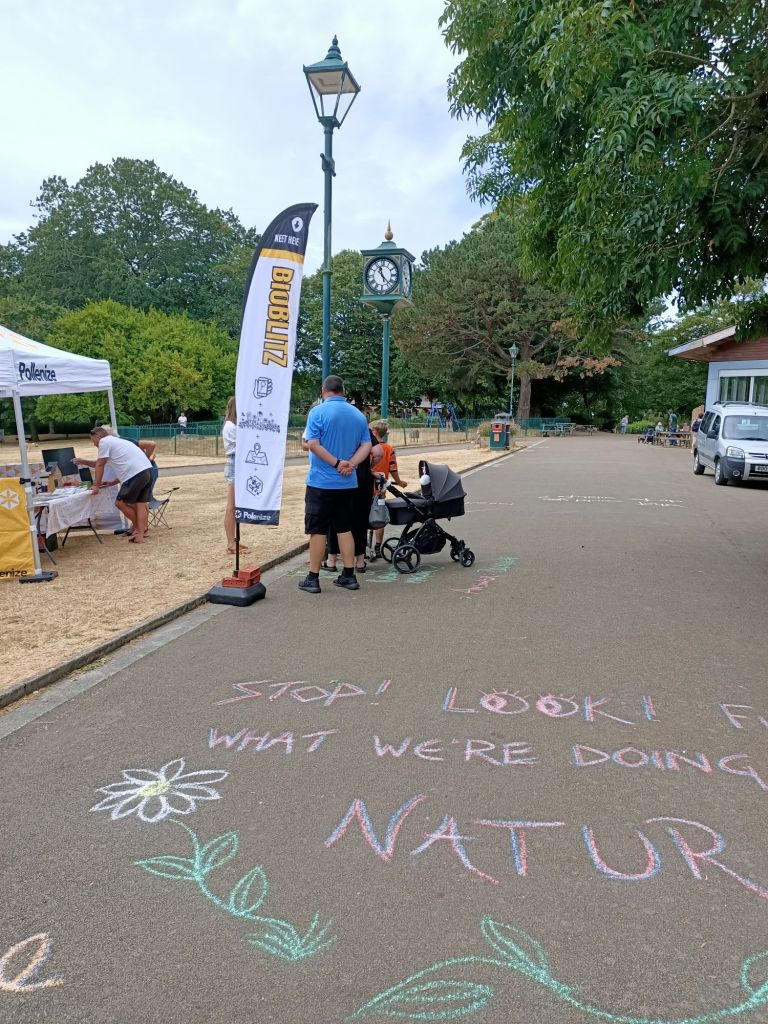
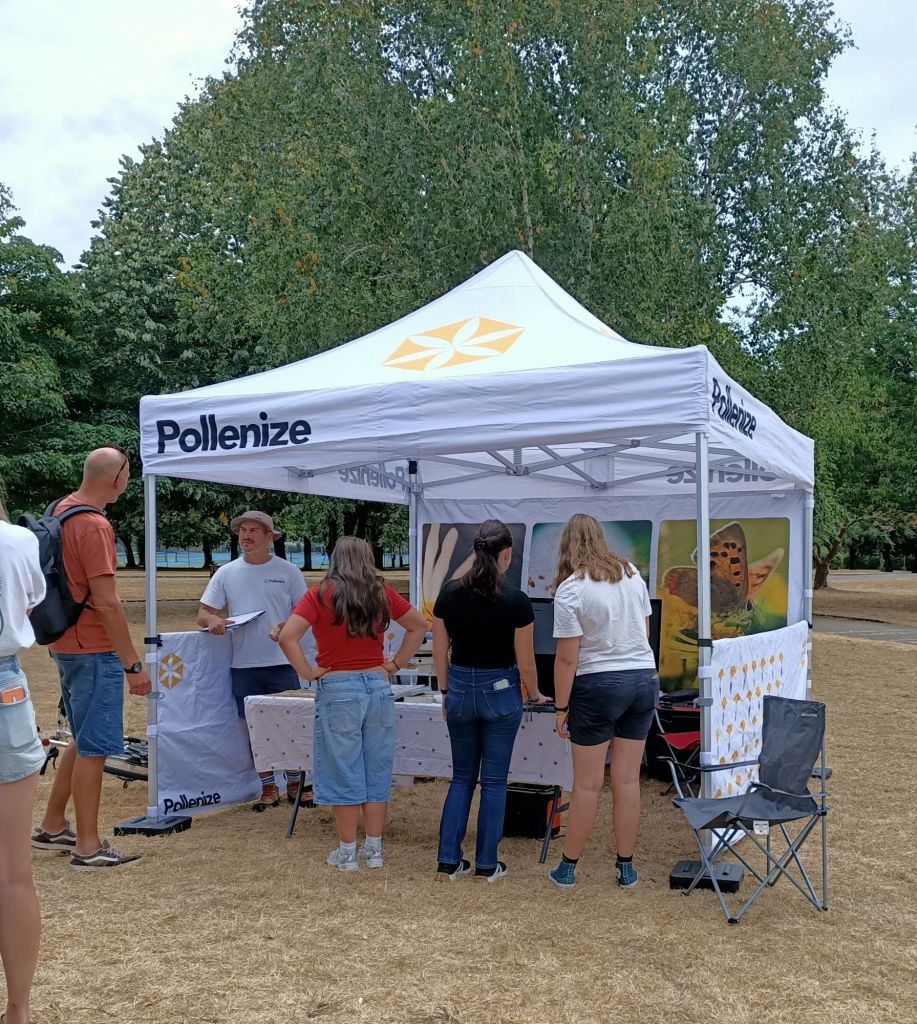
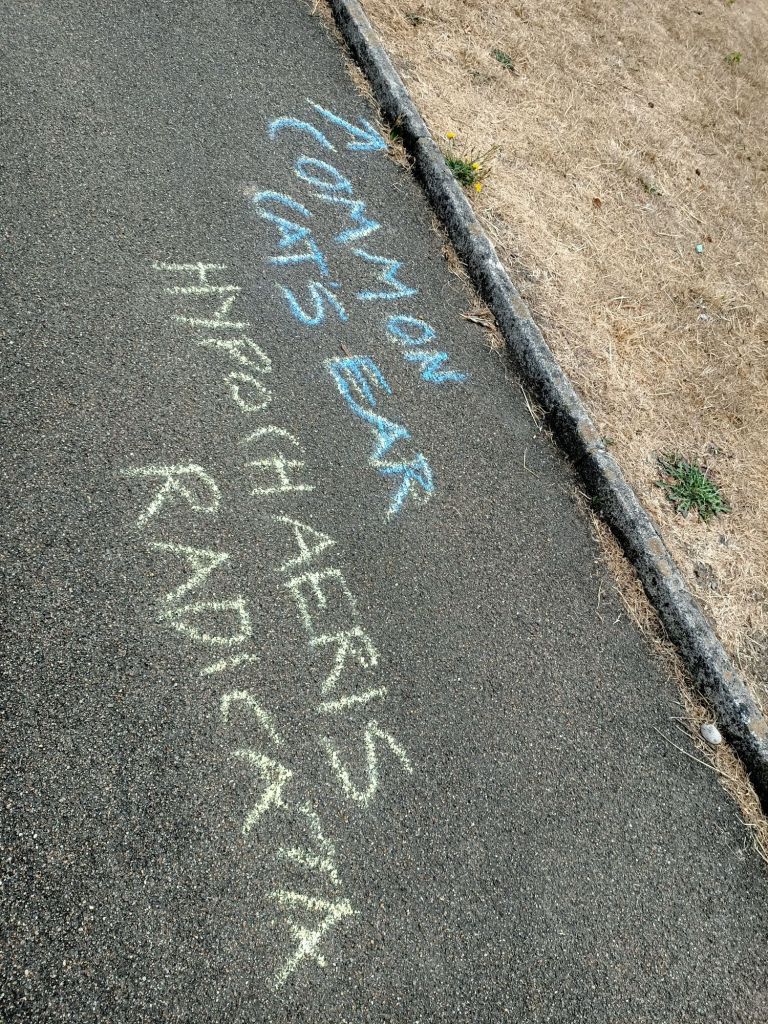
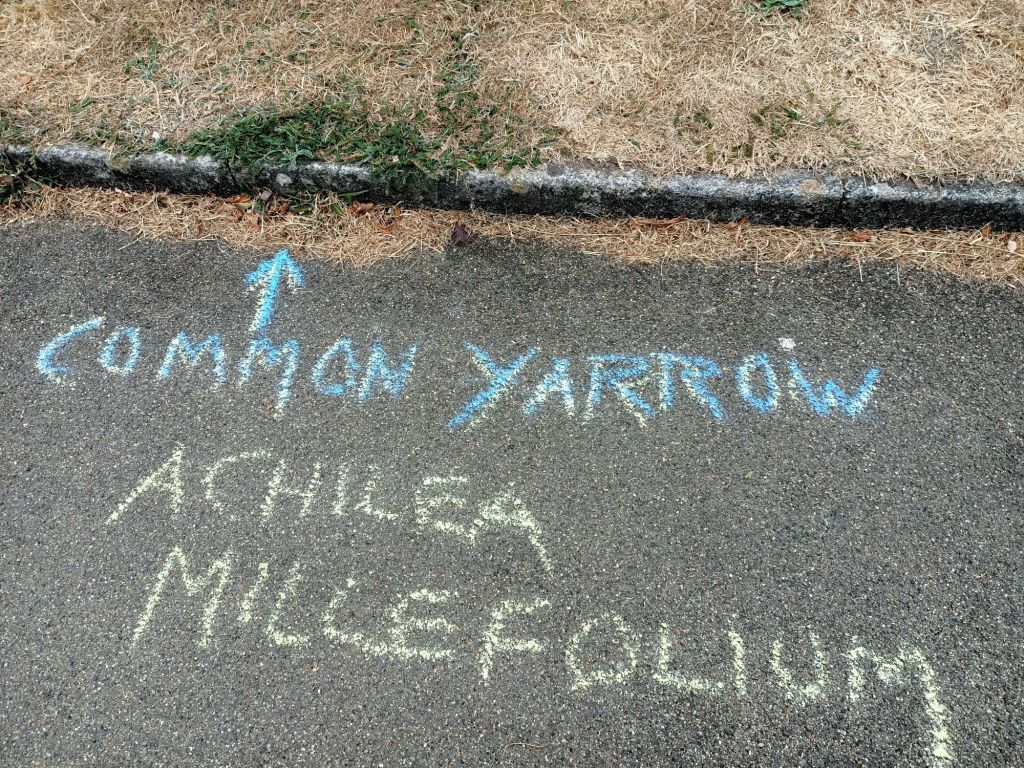
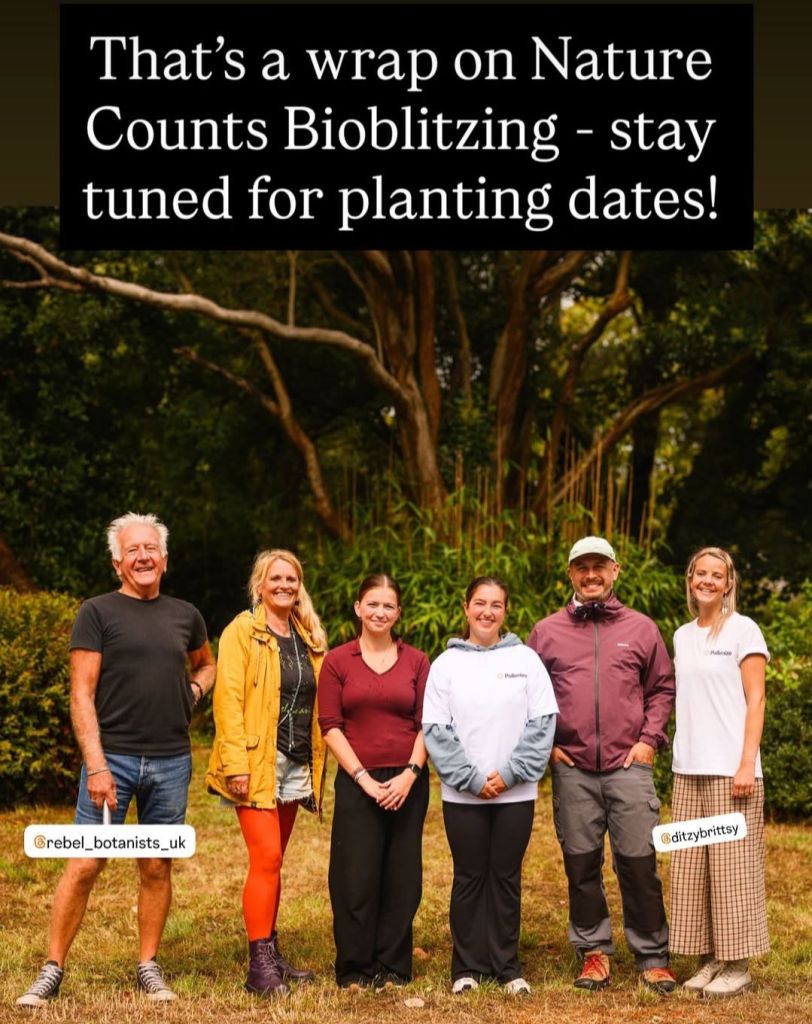
Come rain or shine, it’s been a pleasure to collaborate with Pollenize on their Nature Counts project.
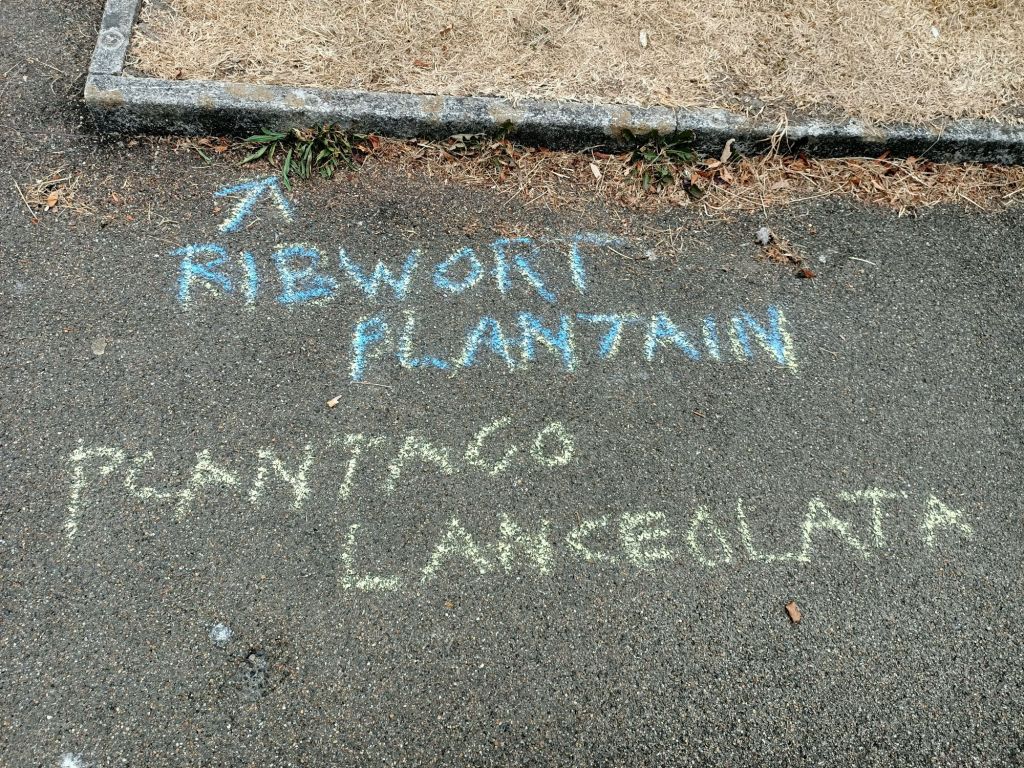
Chalking between the summer showers 🌧️
Responding to the ongoing decline of pollinators and other insects in urban green spaces, the citizen science, technology-based activities took place over 6 weekends in two Plymouth parks: Devonport and Mount Wise.
Pollenize and Rebel Botanists at Devonport Park, PlymouthPeople join in to become citizen scientists 🔍
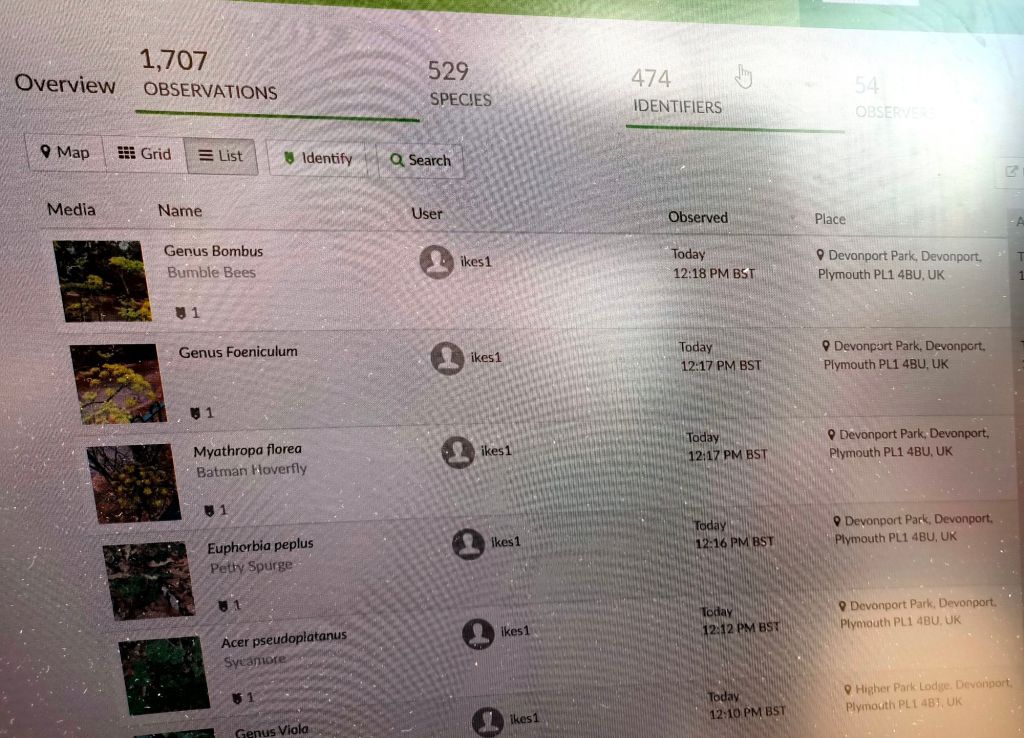
People came together to identify and record the wild life found in randomly placed quadrates (square frames), using the free iNaturalist Classic app.
Data input into Floradex
This data was then entered into Floradex – no, it’s not a margarine spread 🤣. It’s actually Pollenize’s new software, which takes the data and provides nature-based solutions to restore biodiversity – wow! 😀
It can tell you:
🌼 which plants are thriving, 🐝 the connections being made to pollinators, 🌱 future planting recommended to support biodiversity in that area, ⏳updates on your progress.
Every tree, shrub, plant and flower provides life, food and shelter to sometimes hundreds, even thousands, of species – that’s biodiversity – life 🧬 is completely interconnected.
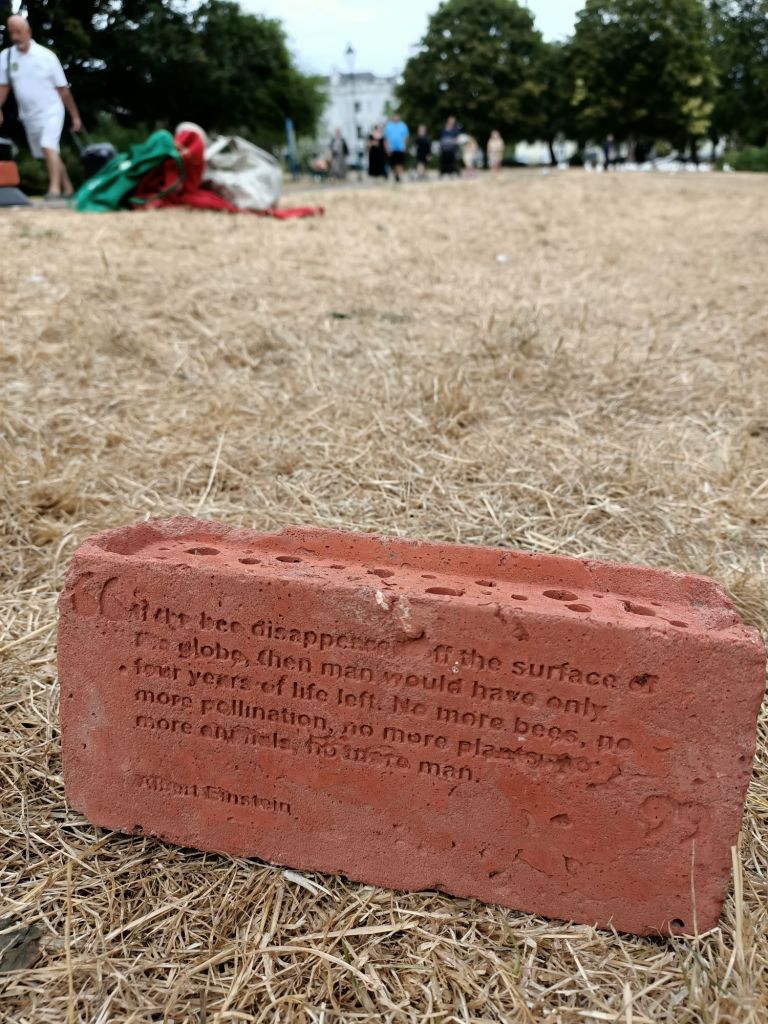
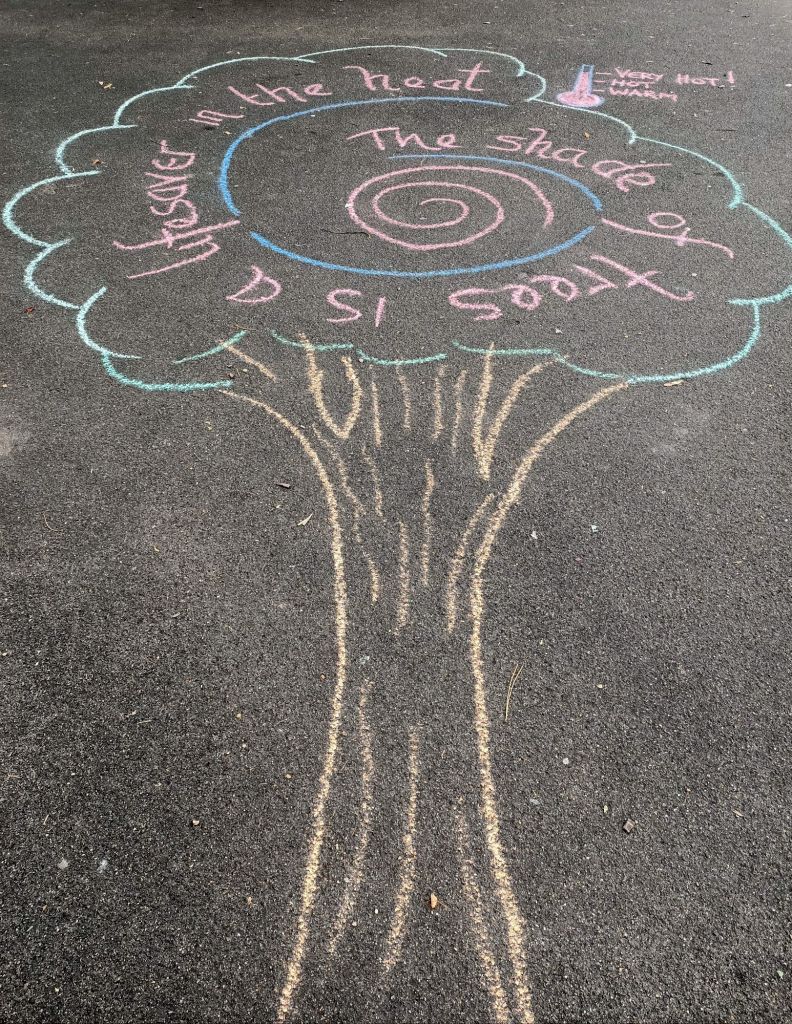
Great quote from the great Albert Einstein 🐝This summer we have experienced the highest temperatures ever recorded across the globe 🌡️
Trees are vital to life – for all wildlife, including our own.
“More trees are desperately needed in our towns and cities to help communities cope with the hotter summers that the climate crisis is bringing. But nearly half of neighborhoods in English towns and cities have less than 10% tree cover, while over a third lack adequate access to green space”.https://friendsoftheearth.uk/climate/cooling-effect-trees-and-green-spaces-cities
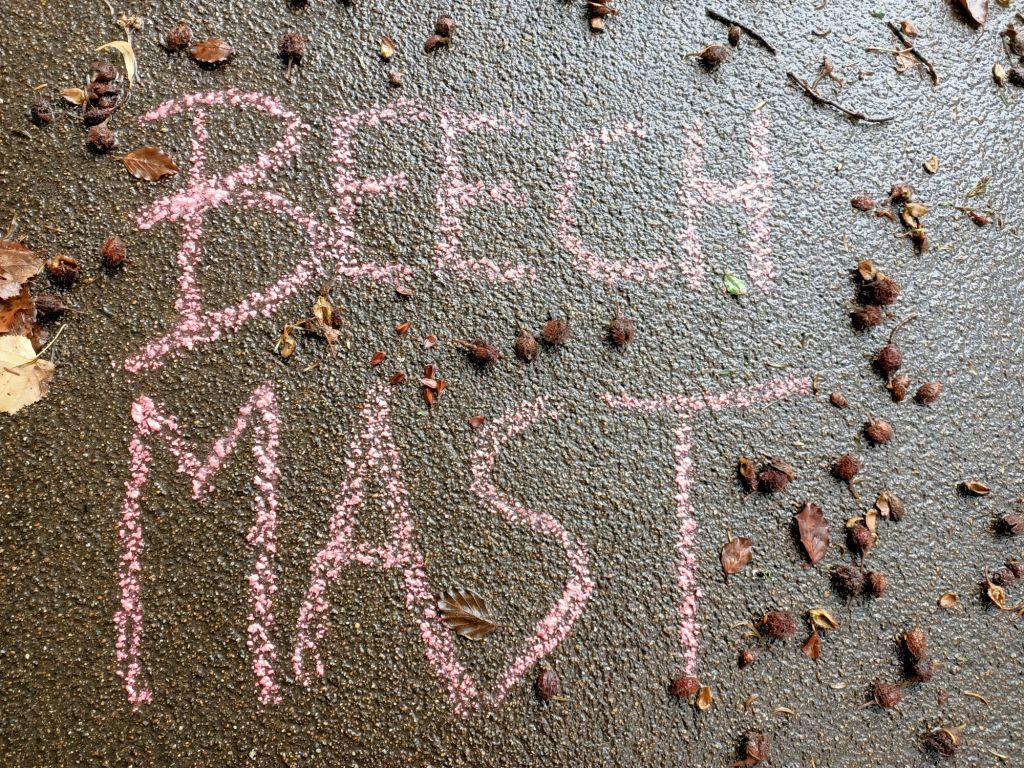
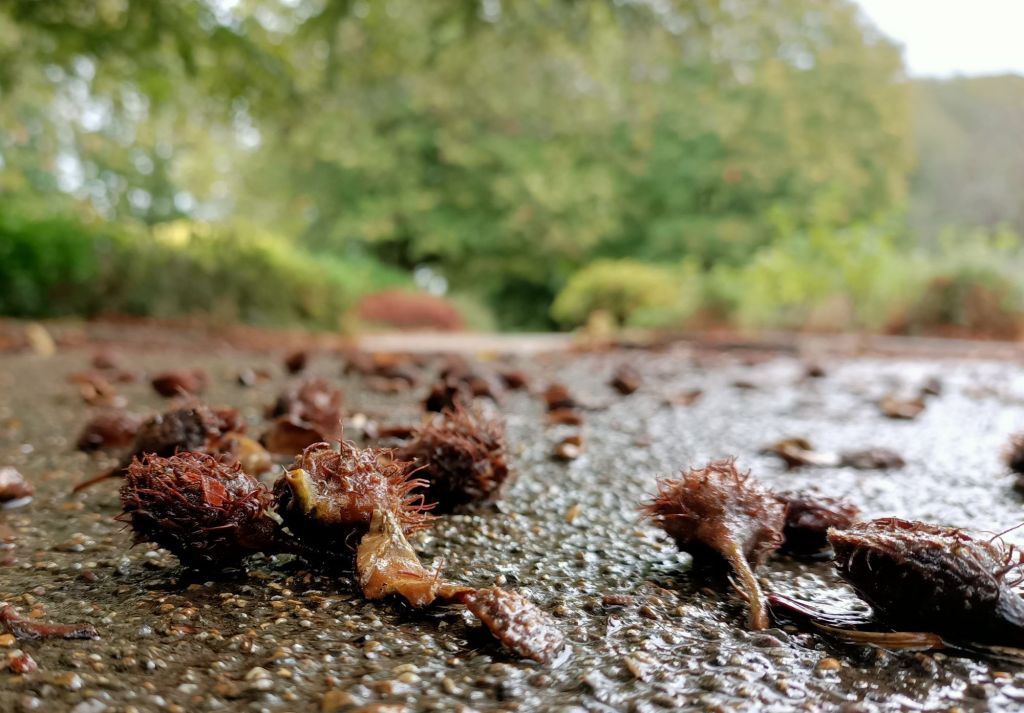
Fagus sylvatica Collective term for fallen beech nuts seen here on the pathway. Taraxacum officinale
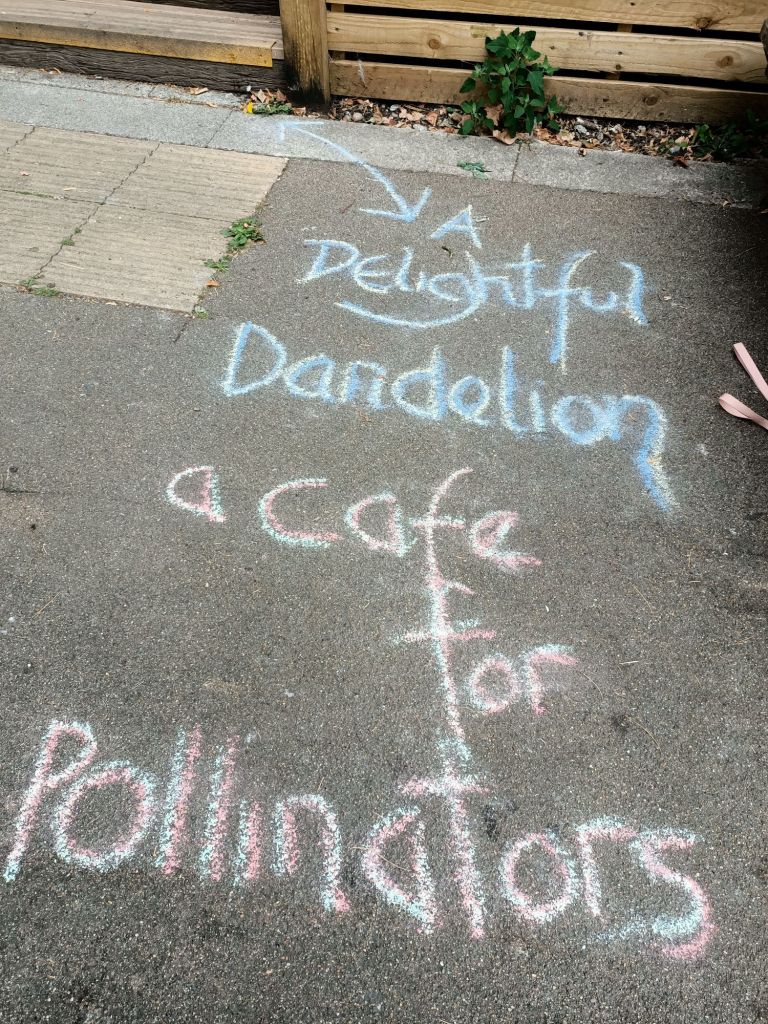
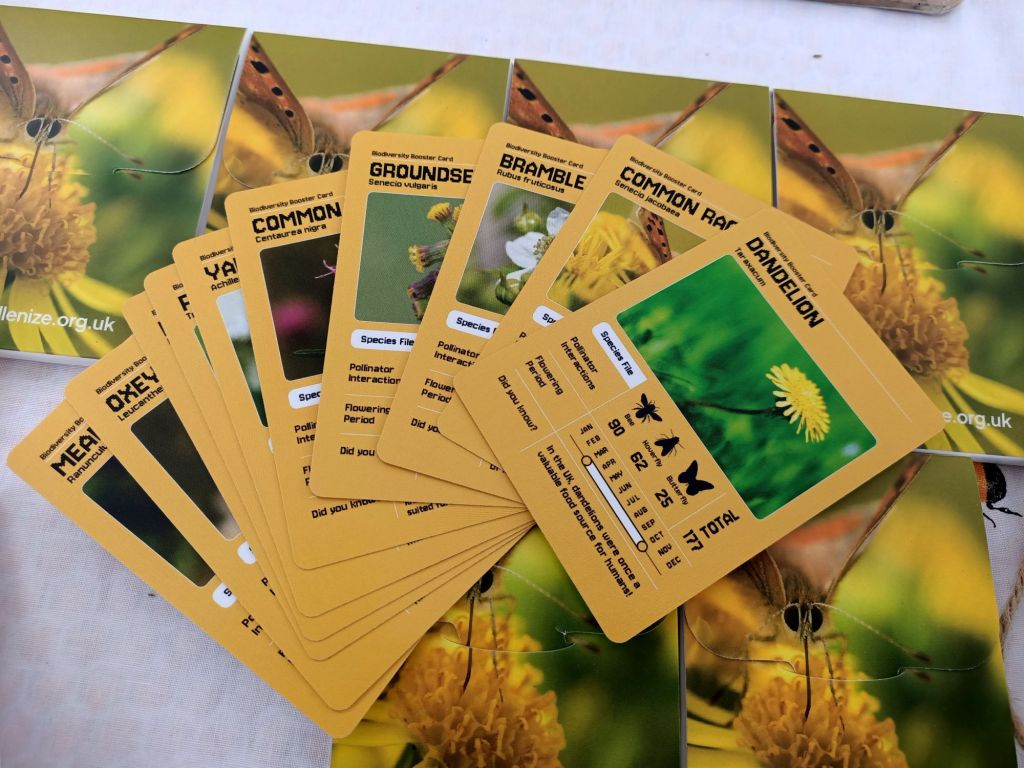
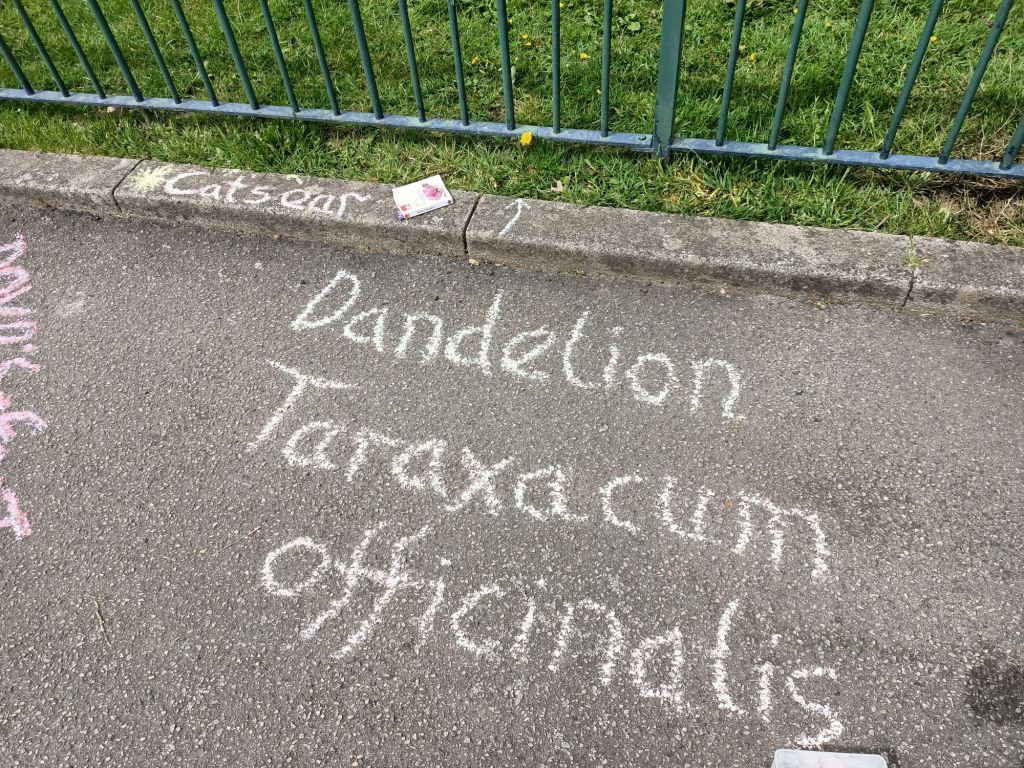
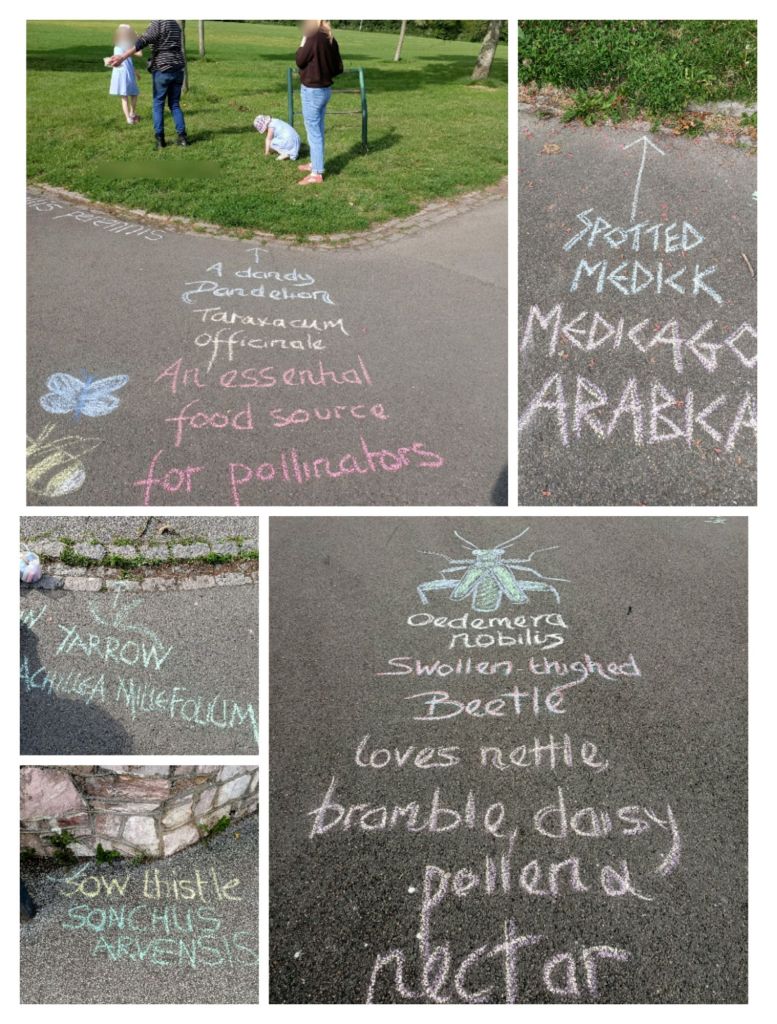
Outside the park cafe was another ‘cafe’ for wild life. Why would I call a Dandelion a cafe you may wonder 🤔. Well, did you know that Dandelions can support more than 177 different species? 🐝🦋🐛 And that’s just the ones we know about, we are still learning!
Check out these amazing fact cards from Pollenize
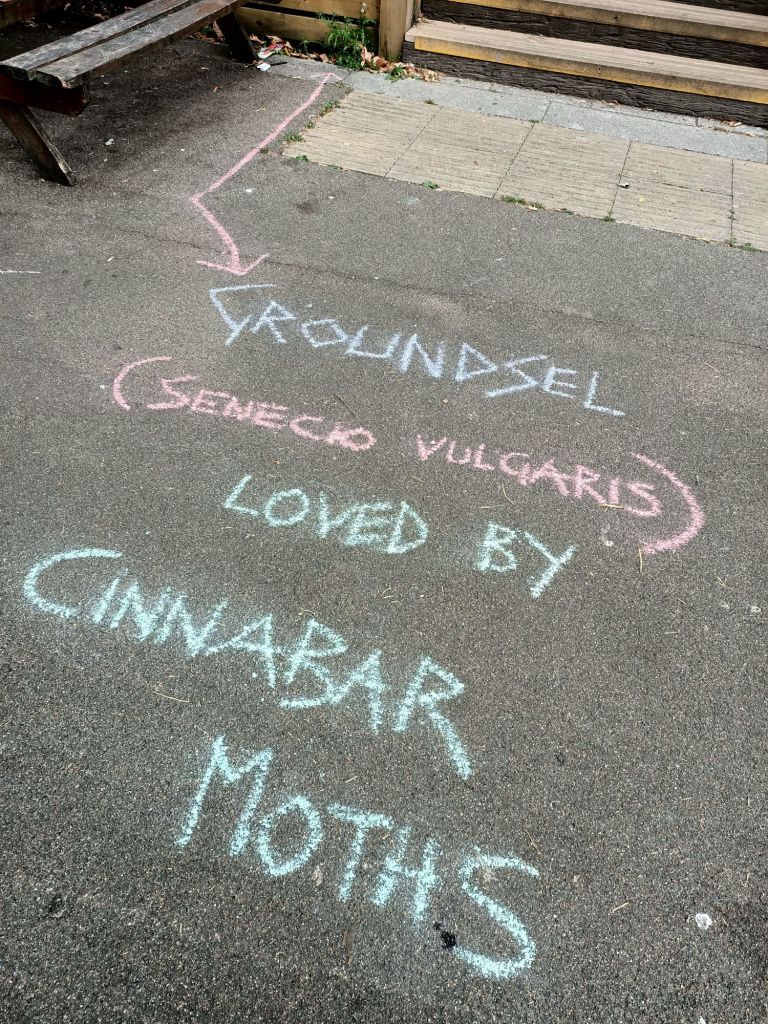
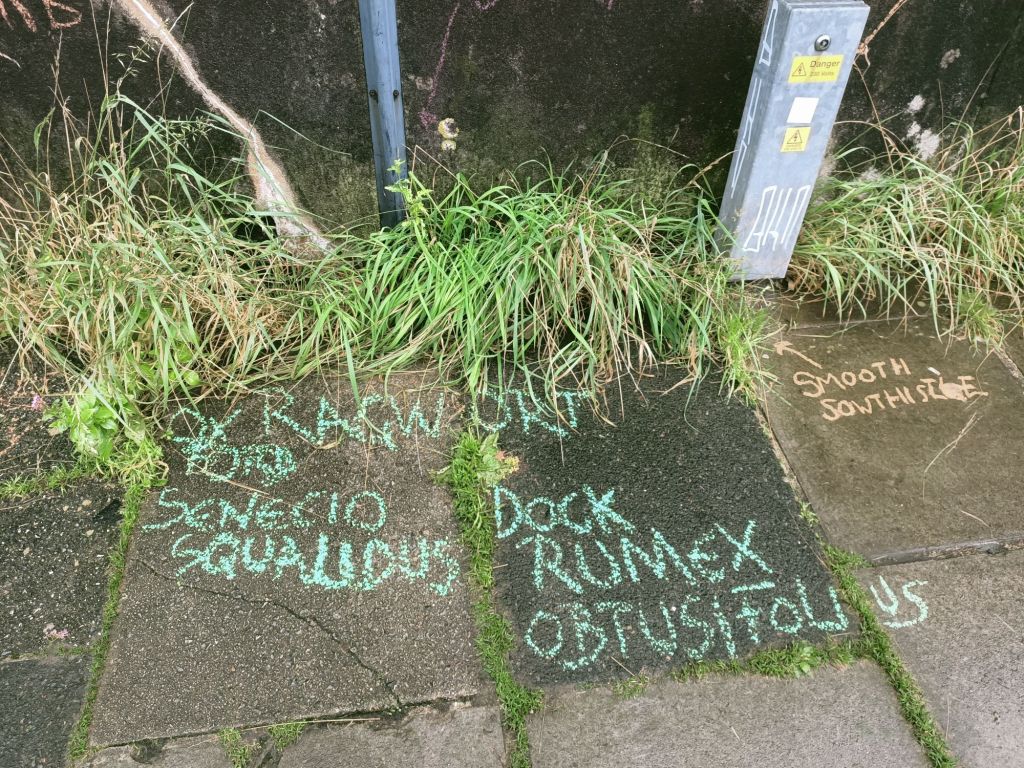
Grounsel is a food source for the Cinnabar moth. Of course, they prefer Common Ragwort, but both these plants are persecuted by humans and so the Cinnabar Moth is in decline. So please, grow more Ragwort and Grounsel!
Popping up in cracks of pavements – wild plants have to survive in urban environments. Another provider of food for numerous species and natural wormer for some animals.Amongst the dried brown grass of a hot summer, we seek out life…Life on the edge…A pretty flower with a pretty interesting name.
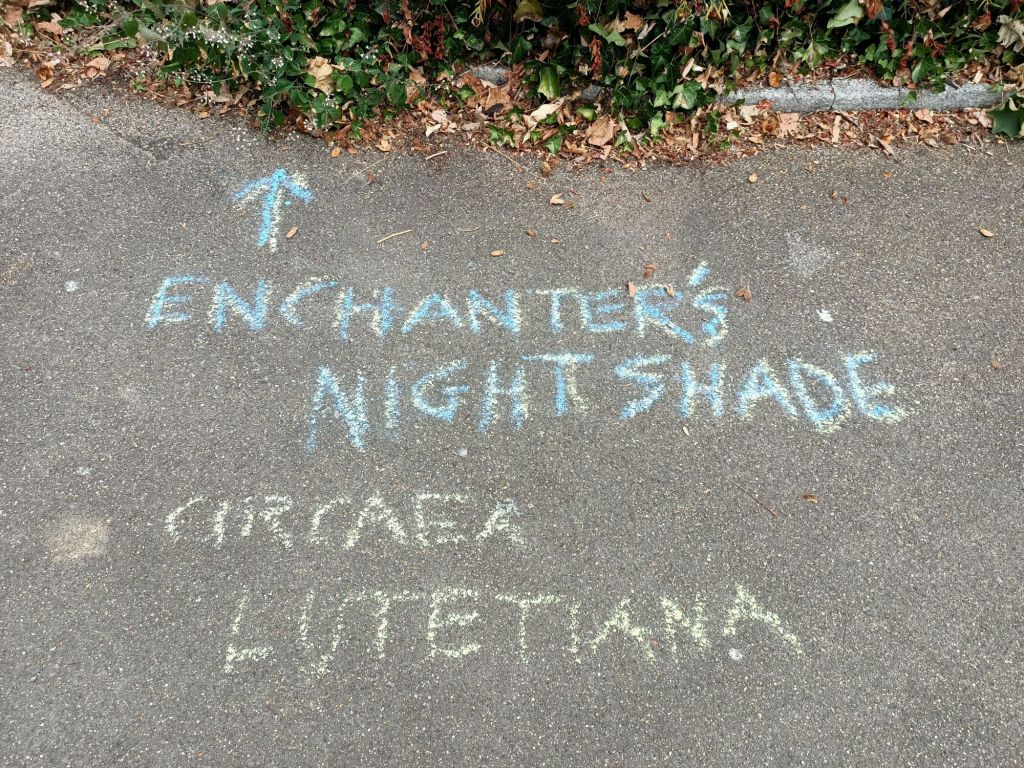
The genus name comes from the enchantress, Circe, in Greek mythology, who was known for her knowledge of herbs. The specific designation, lutetiana, is derived from Lutetia, the Latin name for Paris, before the 4th century 🤔.
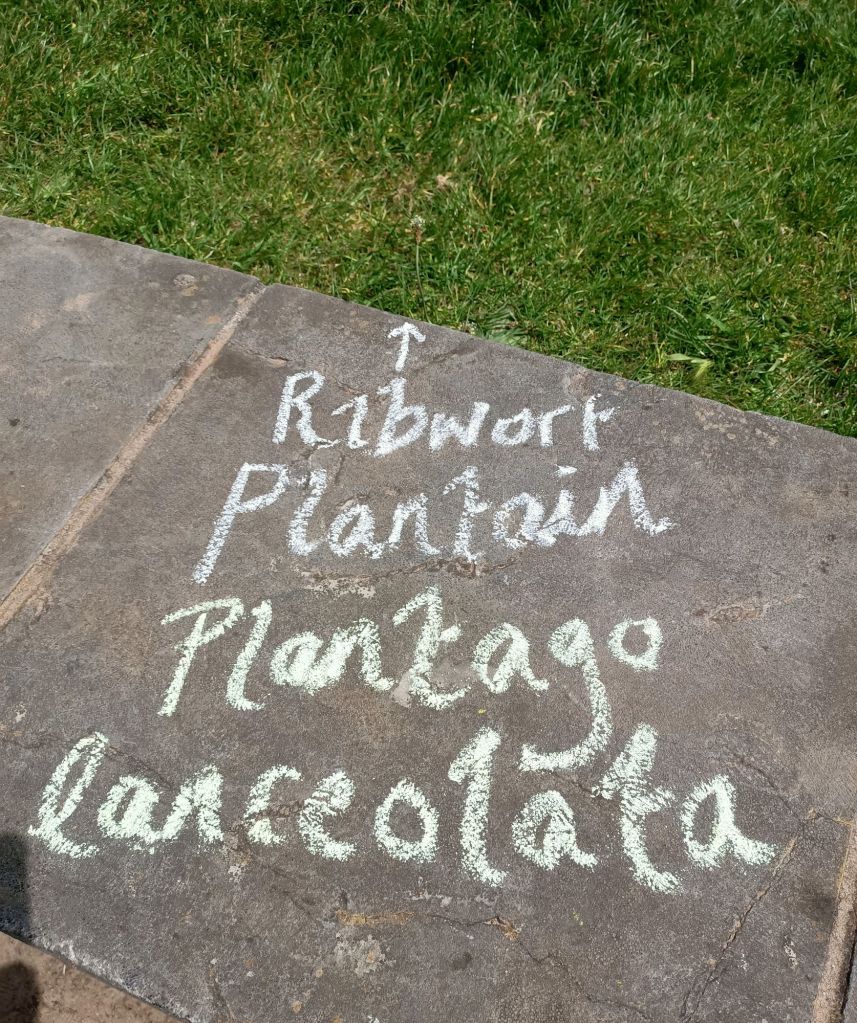
Close up of Enchanter’s Nightshade The lance-like leaves of the Plantago lanceolate.
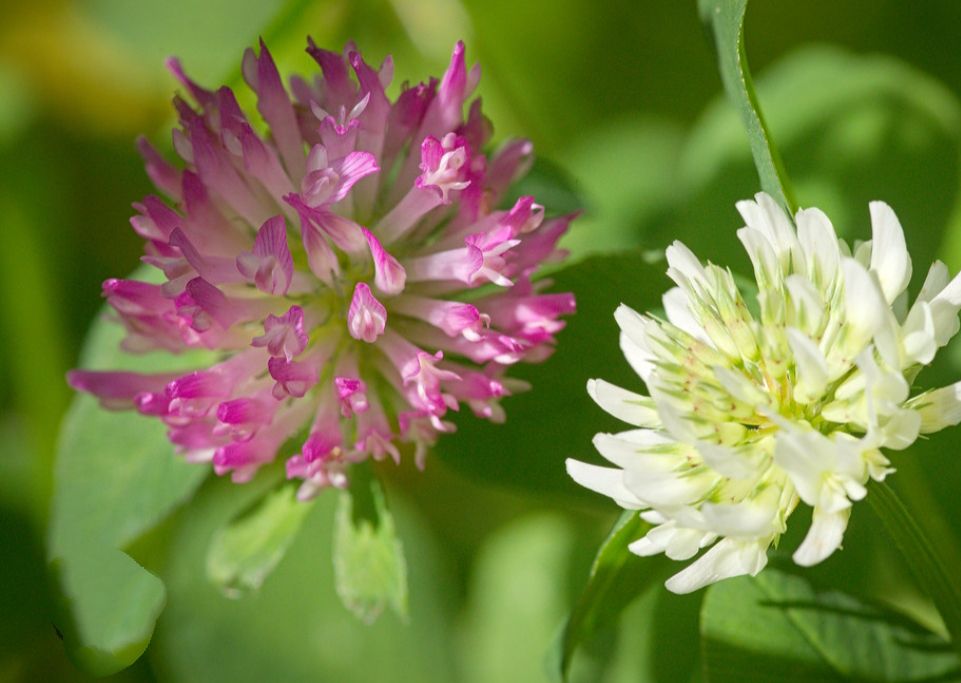
Lastly, introducing the Red and White Clovers 🍀🍀. One of the amazing university students, who joined us highlighted a clever fact.
Red Clover is larger because it puts its efforts into growth, whilst the White Clover is smaller putting its efforts into defense. So, although the Red Clover is bigger and more prolific, it’s more likely to get eaten by predators, therefore allowing White Clover to proliferate. If you take the predator out of that environment, the Red Clover would completely take over – this is a good example of how biodiversity works when humans do not interfere. When we introduce or take away something – this ultimately effects the complex cycle of life.
Isn’t Nature clever? 😀 Thanks to Ruby for that amazing Nature fact. And, thanks to all of you for reading and following.
Rebel Botanists and Pollenize – the dream team 😀👍🐝🌼🐝🌼🐝
This summer we are collaborating with Pollenize in their ‘citizen science bioblitz’ project to identify the pollinators and plants in two large Plymouth parks.
There are still 3 more events to go, so why not come along 🚶♂️🚶♀️🚶https://www.pollenize.org.uk/ Great fun for all the family – learn about nature and help it too 👍
In response to the continuing decline of insects in our urban environments, Pollenize are conducting these surveys to identify and count the existing species in Devonport Park and at Mount Wise.
These events are FREE for everyone🙂. Not only are they a great opportunity for all ages to reconnect and learn more about nature, but you’ll be helping nature too by helping on this important research.
How many butterfly or bee species can you identify? 🤔
Did you know that there are over 250 different bee species in the UK? 🐝
Did you know that 90% of bees are solitary? 🐝
Are you aware that over half of our butterfly species are in sad decline? 🦋
Year after year, butterfly and bee species are diminishing in the UK; what can we do about it? 🦋🐝🦋🐝
In the meantime, here are some photos from the last event in June at Devonport Park. Remember, all insects need: water, in these hot months; pesticide-free native flowers, for food and energy; and, cool shelter, to rest. 🌊 🌼 🌳
White Clover, Trifolium repens, is a highly valuable forage crop and an excellent resource for pollinator conservation.Pineapple weed is distinguished by its pineapple-shaped flowerheads, and distinctive pineapple smell. Though an introduced plant, it is edible and very tasty. “the seeds are attractive to birds, which aid their dispersal, the species bears several English common names that emphasise this property, such as ‘Birdseed’ and ‘Bird’s Meat’ (Salisbury 1964). https://bsbi.org/in-your-area/local-botany/co-fermanagh/fermanagh-species-accounts/plantago-major-lThey do! 👍 They also provide shelter and habitat for many insects, as well as seeds for food, so don’t underestimate them, they are also valuable.The food plant of the Small Heath (Coenonympha pamphilus), Meadow Brown (Maniola jurtina), Gatekeeper (Pyronia tithonus) butterfly caterpillars 🦋🦋🦋 The seeds and grass blades are eaten by the Common Sun Beetle (Amara aenea), Eupelix cuspidata, of the leafhopper family, and Myrmus miriformis, a grass bug. 🪲Lolium perenne, has a very high protein count; it is drought resistance and hardy, so thrives well on well-trodden grassy areas.Orchard Grass, also known as Cock’s-Foot, Cat Grass, or Ascherson’s Orchard grass, offers nesting sites and cover for wildlife, like small mammals and birds. Cats enjoy chewing on it, hence the nickname Cat Grass. The seeds are important for wildlife.Lots of lovely grasses, providing food, shelter, protection and nesting sites for many wildlife species 🪲🦋🐝🦗🪳🕷️🐛🐜🐞Yew hedges are incredibly dense, offering protection and nesting opportunities for many birds. The fruit is eaten by birds, such as the Blackbird, Mistle thrush, Song thrush and Fieldfare; and small mammals, including squirrels and dormice. The leaves are eaten by caterpillars of the Satin Beauty moth. https://www.woodlandtrust.org.uk/trees-woods-and-wildlife/british-trees/a-z-of-british-trees/yew/What’s this lovely tree species, then? 🤔Sycamore, of course. Sycamore trees provide food for a variety of animals, including bees, pollinators, caterpillars, birds, and insects. The leaves are eaten by caterpillars of a number of moths, including the Sycamore moth. Sycamore seeds are eaten by birds, such as Greenfinch and Goldfinch. Sycamore bark is eaten by insects, including Sycamore Lacewing and Sycamore Aphid. The flowers provide a good source of pollen and nectar for bees and other insects, and the seeds are eaten by birds and small mammals. Wow! They are so amazing for wildlife! https://www.woodlandtrust.org.uk/trees-woods-and-wildlife/british-trees/a-z-of-british-trees/sycamore/Okay, check out the leaves, which species is this one? The flowers of the Horse Chestnut provide a rich source of nectar and pollen for insects, particularly bees. Caterpillars of the Triangle moth feed on its leaves, as does the Horse Chestnut Leaf-miner moth whose caterpillars provide food for Blue Tits.
Top: Mr Park known to many customers as a kindly man. Below: established in 1864 on Mutley Plain, Plymouth
Step back in time to Plymouth’s last Victorian chemist. Established in 1864, it was known as Mr Park’s Chemist shop. It sadly closed its doors in 1983, but the contents were rescued and are on show at the Park Pharmacy Trust’s museum and library at Thorn Park.
Chalking the medical attributes of the wild plants outside the museum.
We have been invited by Dr Jan Knight and Jonathan Gale, who are wonderful hosts, and guardians of this incredible collection. Stepping into this lovely little lodge building is an intriguing joy; there are bottles of all elegant shapes and sizes, colourful concoctions, wooden drawers filled with pharmaceutical fancy, pill-making equipment and beautifully hand-written 19th century prescription books. It is an apothecary treasure chest. http://www.parkpharmacytrust.org.uk/
Materia medica Beautiful old books filled with healing recipesDate ordered prescription books over 100 years old! Handwritten prescriptions from 1933A range of botanical books are laid out for us
And so, in our chalking of the plants around the building, and in the nearby park, our focus becomes medical. It seems that every plant is a botanical healing pharmacy 💚 🙂
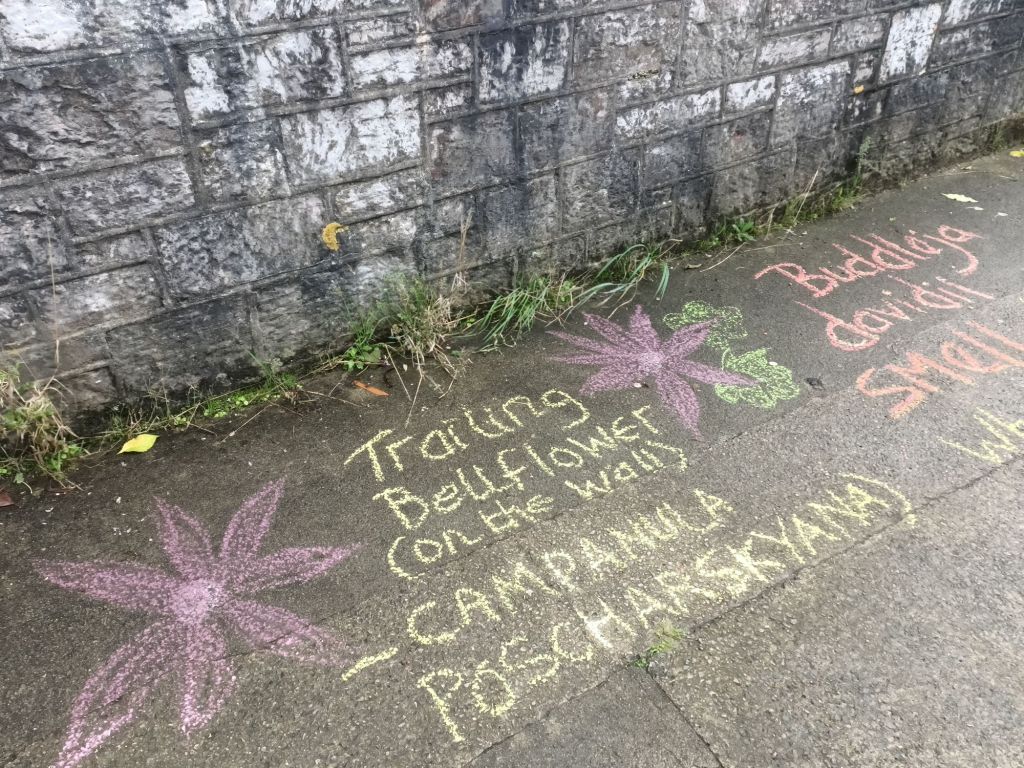
Campanula Poscharskyana, Trailing or Serbian Bellflower. Apparently, in Tibetan medicine they are used in the treatment of constipation and peptic ulcers. The roots have anti-inflammatory properties and support the respiratory, digestive and immune system.
Brassica nigra has a rich history in traditional medicine for digestive, respiratory, and anti-inflammatory uses, whilst modern research identifies its antioxidant, antimicrobial, antidiabetic, and anticancer potential. Mustard seed supplements are used for coughs, congestion and muscle aches, however overuse can irritate the skin or stomach, so dosage guidance is recommended. It’s healthy and flavoursome effects come from glucosinolate compounds that release pungent oils when crushed.
Sorrel (Rumex acetosa) is a leafy herb known for its sharp, lemon-like tang derived from natural oxalic acid. Traditionally used to support digestion and provide refreshing, nutrient-rich greens, sorrel appears in soups, sauces, salads, and herbal preparations throughout Europe.
The bristly leaves of the Helminthotheca echioides, can be eaten raw when young, or steamed when older. They have an earthy, slightly chicory taste. They also aid digestion. Its leaves and flowers can also be steeped to create soothing teas for coughs, colds and sore throats.
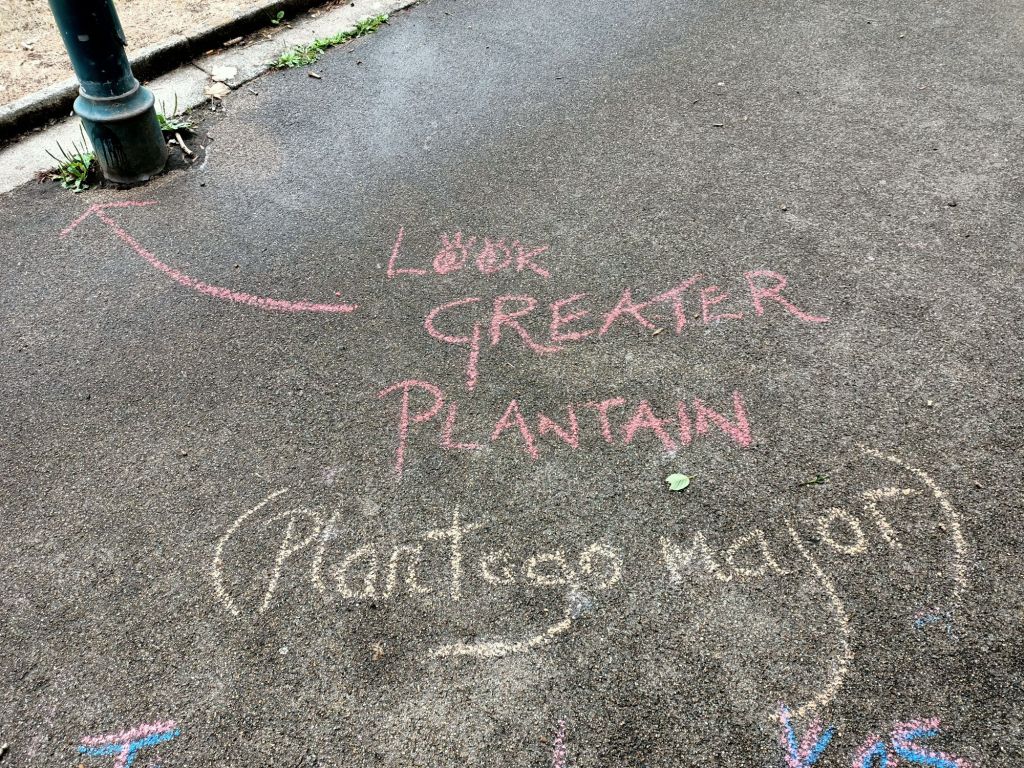
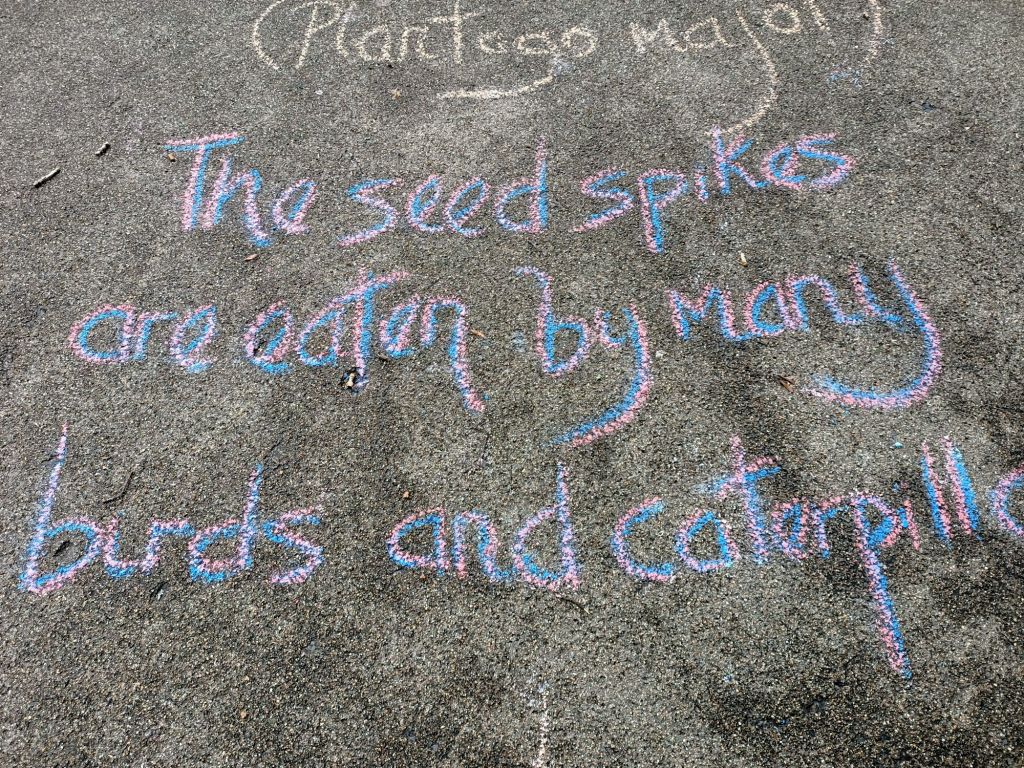
Broad leaf plantain, Plantago major, has edible leaves and seeds, which can improve digestion, enhance wound healing, and lower inflammation. This plant has antibacterial, antiviral, and antifungal properties. In Scandinavia, it’s known as ‘groblad’, meaning ‘healing leaf’, and remains one of the most common go-to remedies for minor wounds. Dioscorides, the Greek physician and herbalist, wrote about plantain in the 1st century in De Materia Medica, recommending the leaves for dog bites. https://thebuffaloherbalist.substack.com/p/plantain-plantago-major-healing-benefits
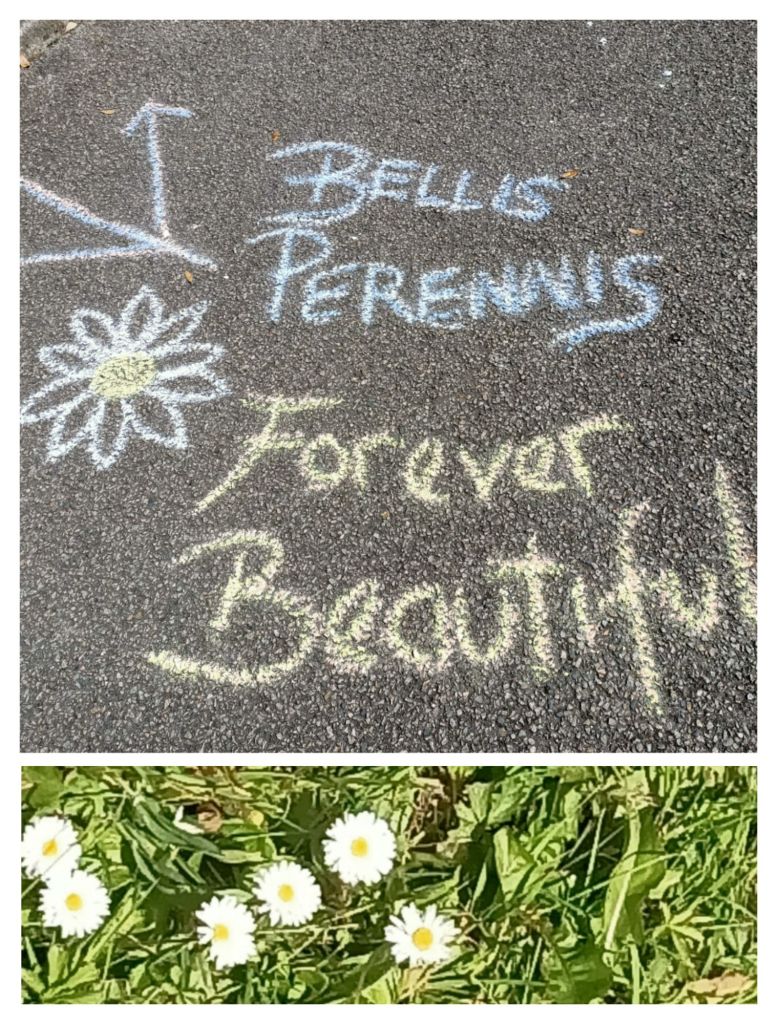
The Common Daisy goes by many other names including: English Daisy, Day’s Eye, Brainwort, Bairnwort, Bruisewort and Poor Man’s Arnica. The latter two names highlight its use in treating bruises. It’s medical uses, however, are numerous covering: wound healing, respiratory and digestive treatment, improving circulation and immune system and removing toxins from the body. https://theschoolofwildmedicine.com/common-daisy-medicinal-uses-bellis-perennis-medicinal-uses
So even the trees are medicinal 🙂👍. Yew tree, Taxus baccata, is a medical paradox, as it cannot, under any circumstances, be used as a home remedy as it is toxic, but its medical value is important as a source of taxane-based cancer drugs. It’s one best left to the experts.
The Walnut tree provides: antioxidant, anti-inflammatory, antiviral, antifungal, antiseptic laxative, astringent, diaphoretic, sedative, emetic, blood tonic, alterative, anthelmintic benefits. Wow! What a list!
Look at the cute little spider on the Walnut leaf 👀
The Walnut leaves are used to treat eczema, herpes, sore throats, and heal indolent ulcers, boils, hives, and sores.
Did you know that Hawthorn trees are good for the heart? 🤔 Yes, they are! Their berries contains potent antioxidants, such as flavonoids and oligomeric proanthocyanidins (OPCs), which help dilate blood vessels, improve blood flow, and protect the heart against oxidative stress. You can use the dried berries, leaves and flowers to make tea, tincture and jelly. Find out more at: https://theschoolofwildmedicine.com/hawthorn-medicinal-uses-the-secret-powers-of-hawthorn-revealed/
Really, can the Giant Redwood be medicinal too?
It certainly is. Native American tribes have long recognized the healing value of the Giant Redwood tree, Sequoiadendron giganteum. The bark was sometimes used in poultices for skin irritations or minor wounds. The leaves and bark were prepared as infusions and consumed as teas for internal ailments. Redwood essential oil, derived from the leaves and twigs, when diffused or inhaled, help clear airways and ease breathing, similar to other conifer essential oils.
Meanwhile, back at the medicinal garden…
These beautiful blue flowers are Love-in-a-mist, Nigella damascena. Its healthy benefits include reducing symptoms of: pain, high body temperatures, catarrhal infections, flu, asthma, upper-respiratory conditions, gastrointestinal parasites, diabetes and cholesterol.
This medicinal secret garden has more than 152 plants, that provide essential food and energy for wildlife, and provide a free medicine cabinet for all our ailments.
There is still so much we do not know about plants, which is why we must do more to protect and nurture them in our own gardens and parks. We need to embrace their propensity to pop up between the paving stones, and clamber up the walls 🌼🌼🌼🌼🌼🌼🌼🌼🌼🌼🌼
We will be returning to Park Pharmacy Trust later in the year, so if you fancy learning how to make your own medicines, keep following and join us 😉
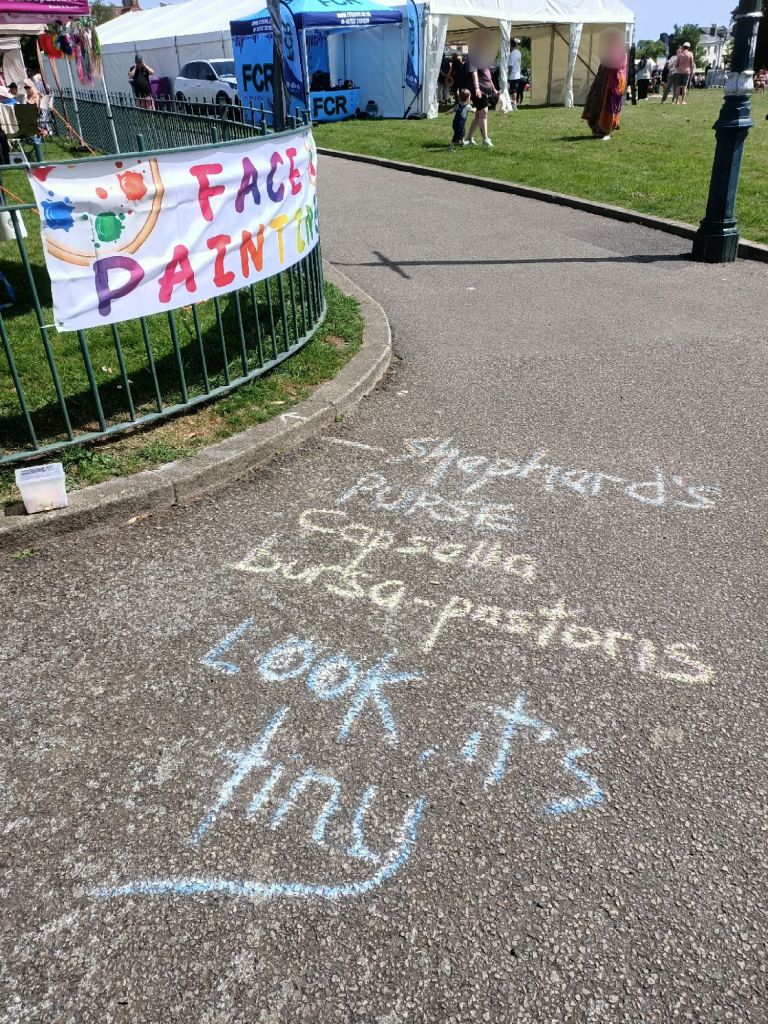
Whilst more people than ever were enjoying the music and activities of this year’s Freedom Community Festival, we were seeking out tiny wild flowers popping up along the busy pathways. And, we found some beautiful ones 😍
Shepherd’s Purse has tiny white flowers which, unusually, flower all year round, providing much needed nectar for pollinators. They have distinctive heart-shaped seed pods which are copper in colour like little penny coins.
A man passing by said: “it’s amazing you found that tiny flower with all this going on!” But, when you re-connect with nature you can’t help but notice 👀
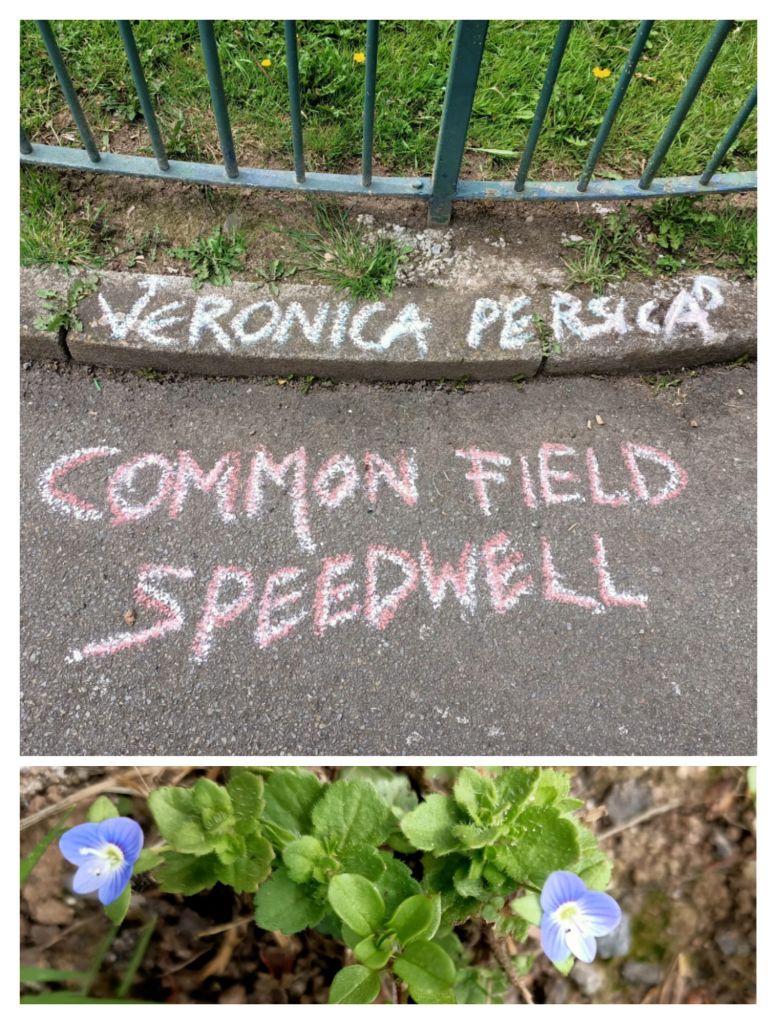
Bird’s-eye or Common Field Speedwell, Veronica persica, has a beautiful blue flower with a white centre, which attracts bees.🐝🐝🐝
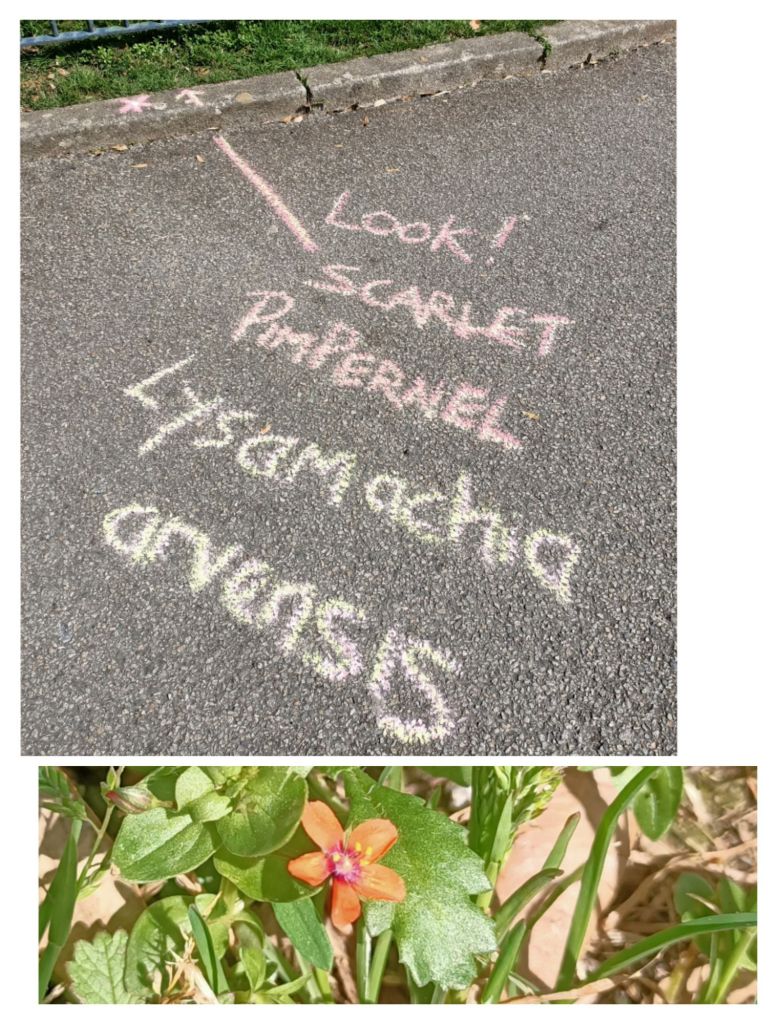
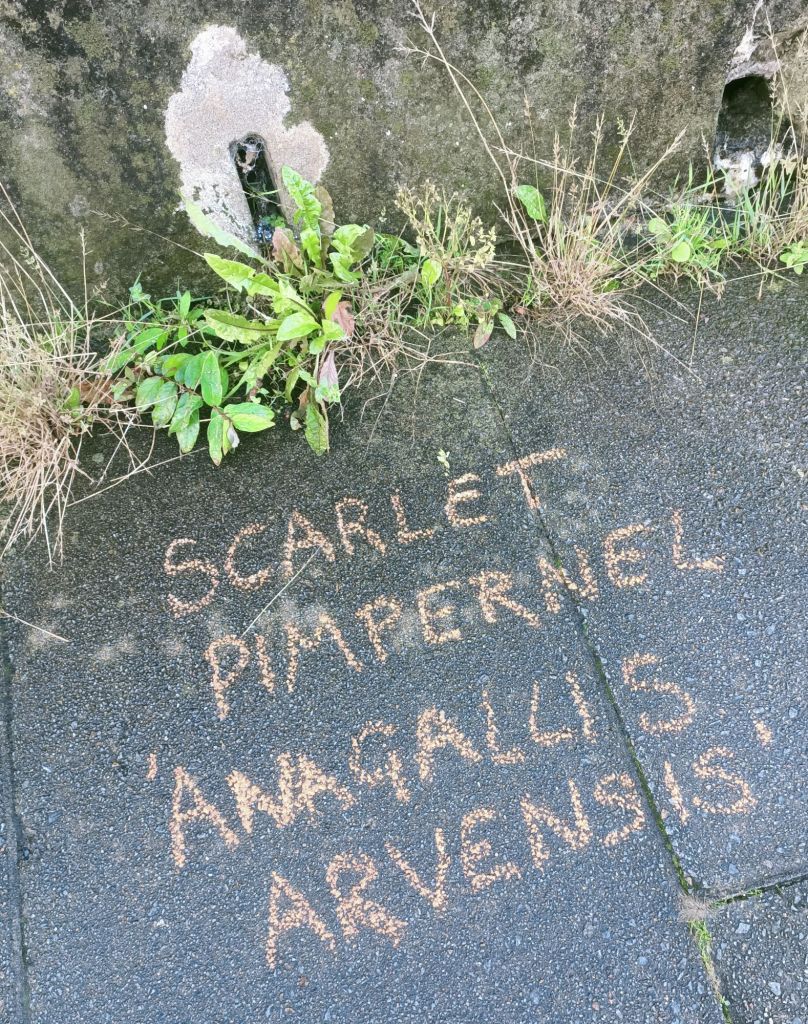
Lysimachia arvensis, syn. Anagallis arvensis, the Scarlet Pimpernel can also be blue in colour. As yet, we have not found one, but these little red ones are a lovely find. This flower was used to represent the fictional hero, of the same name, who rescued aristocrats from death in the French Revolution.
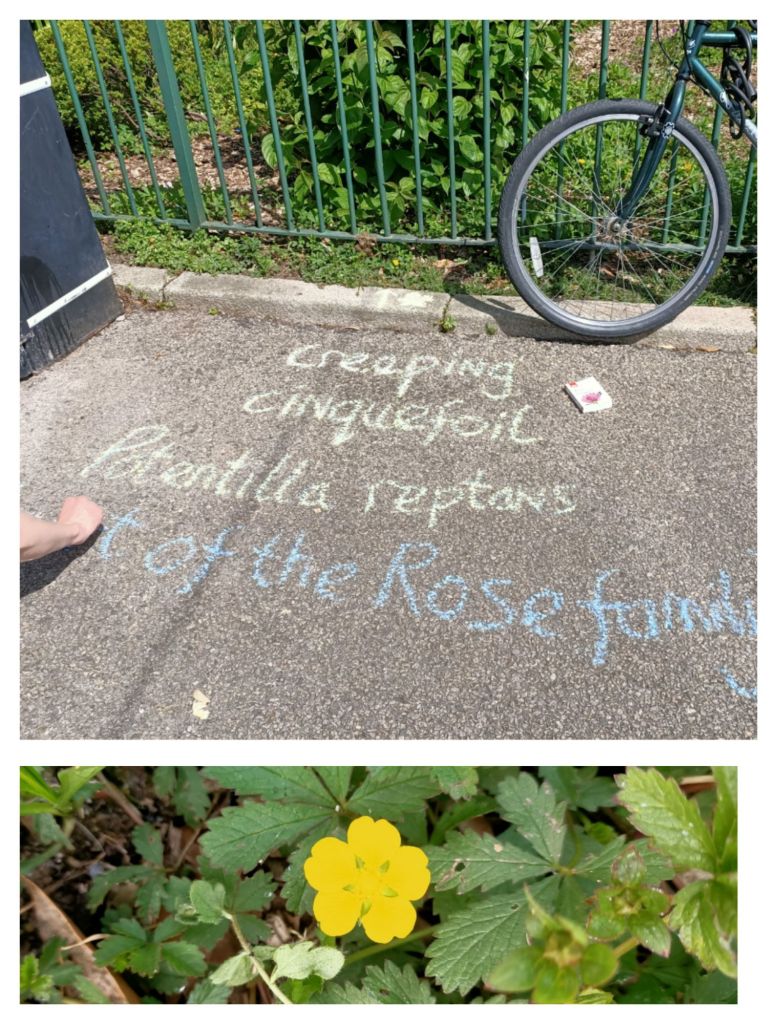
Creeping Cinquefoil has naturalised well and is appreciated for its ability to form dense ground cover and prevent soil erosion, creating habitats for insects. Potentilla, the Latin genus name, means powerful, despite its small size, it is a reference to the apparent medicinal value of plants in this genus.
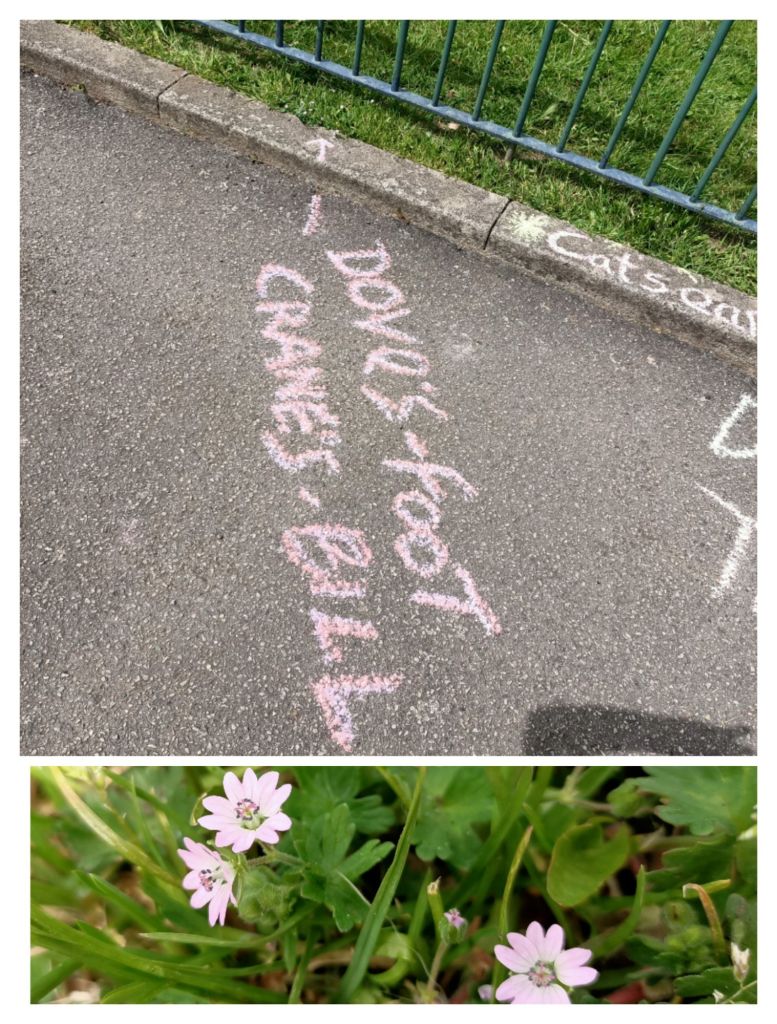
Dove’s-foot Crane’s-bill, Geranium molle, a pretty little pink flower, which interestingly has a double hyphenated name and two apostrophes (if you appreciate your English 😉). This plant has rounded leaves usually 5-7 with 3 upper lobes – quite different from our next Geranium family example.
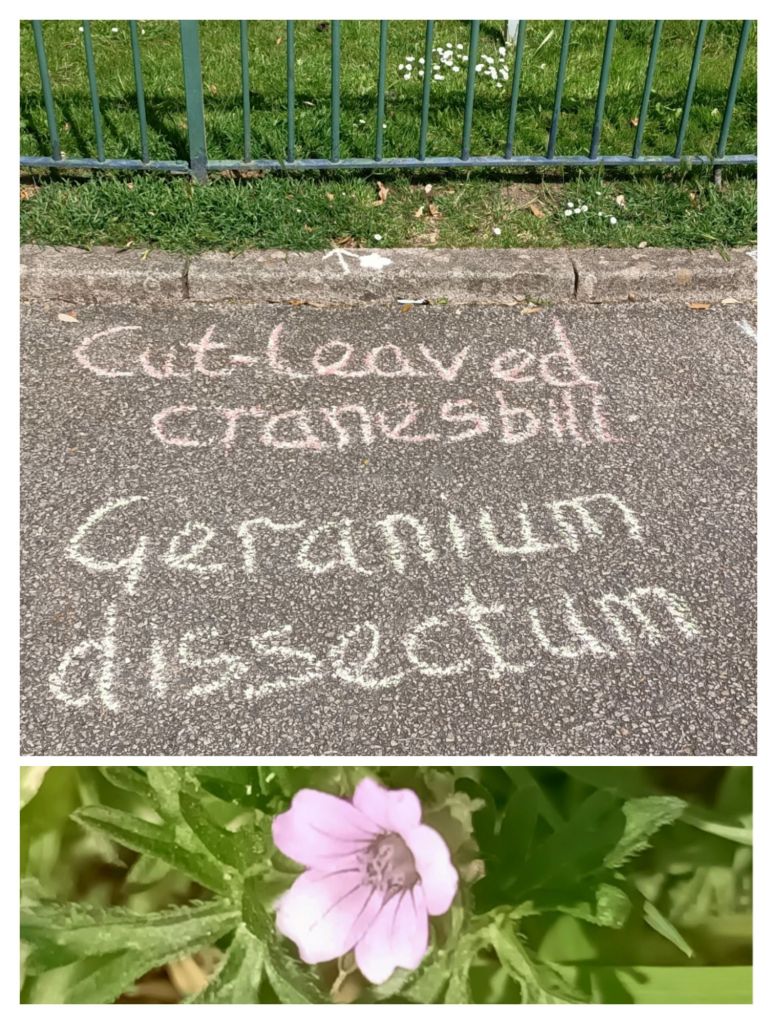
Geranium dissectum, has quite different leaves from the G. molle. These are long and ‘cut’ like, hence the name.
All year round food for pollinators and all year beauty for us 💚
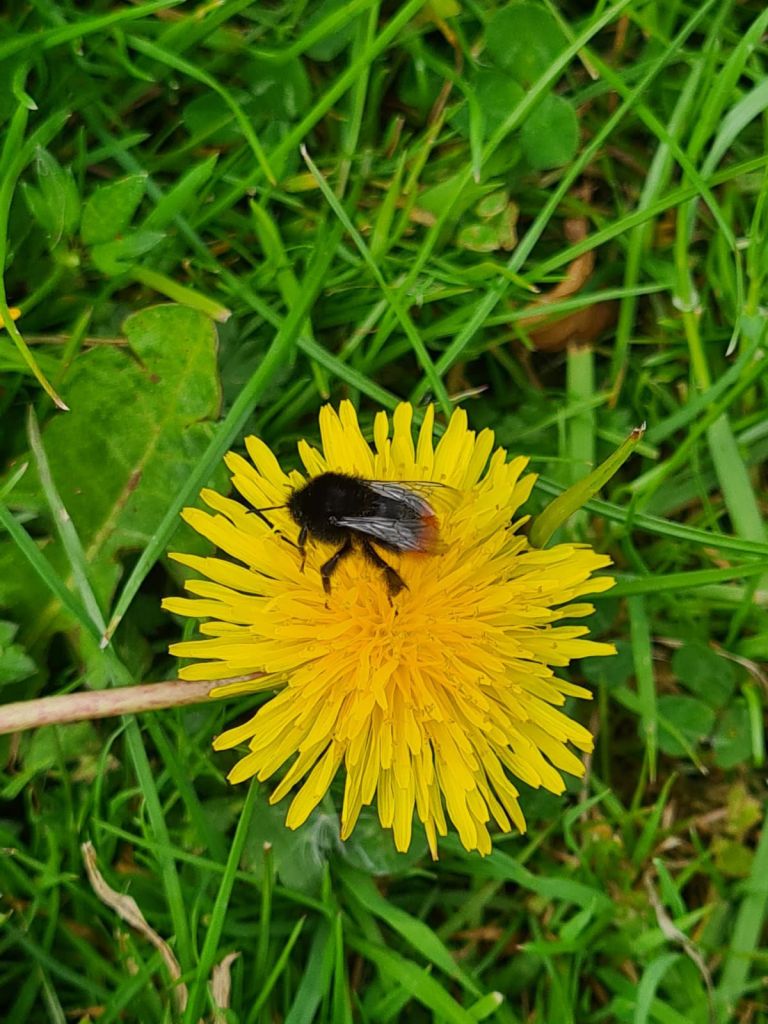
A dandy Dandelion, and what’s that on it? Check out the next photo…A buzzing bumblebee – 🐝🐝🐝 illustrates why these tiny wildflowers at our feet are SO important! A natural wormer for field dwelling animals like cows 🐮 and sheep 🐑Hmm…which one could it be? Yes, well done. Those curly leaves gave it away. 🙂👍
All these tiny wildflowers at your feet, often overlooked, often underappreciated are vital for all life on this planet, so let’s all do a little more to rewild our world 👍
Thanks for following, everyone, and doing a little more for nature 😀 🙏🌳🌼
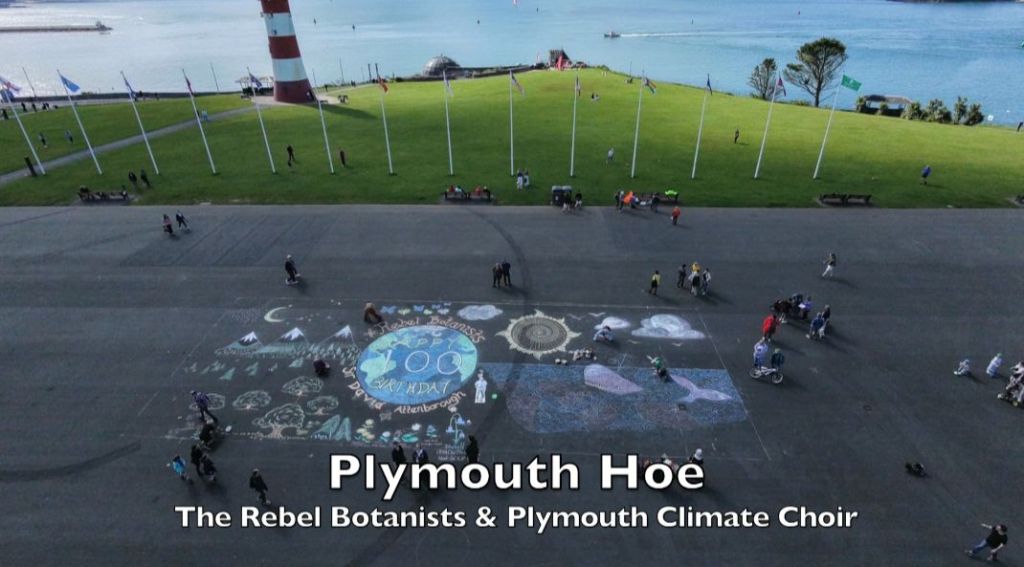
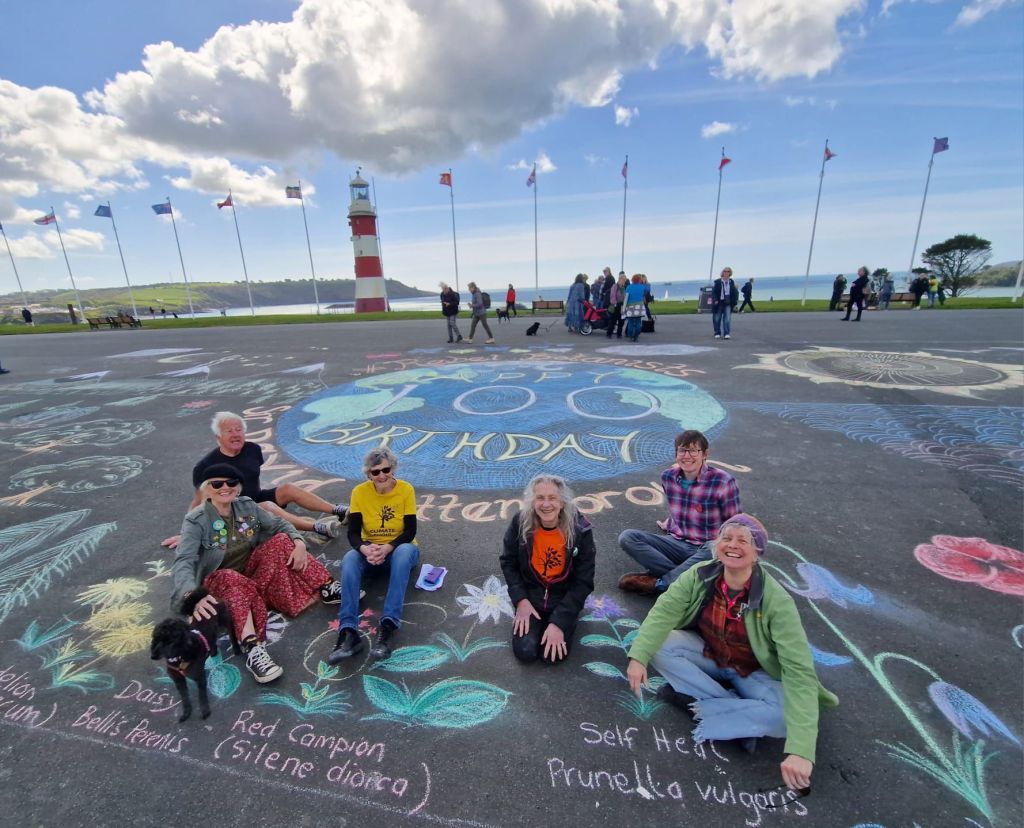
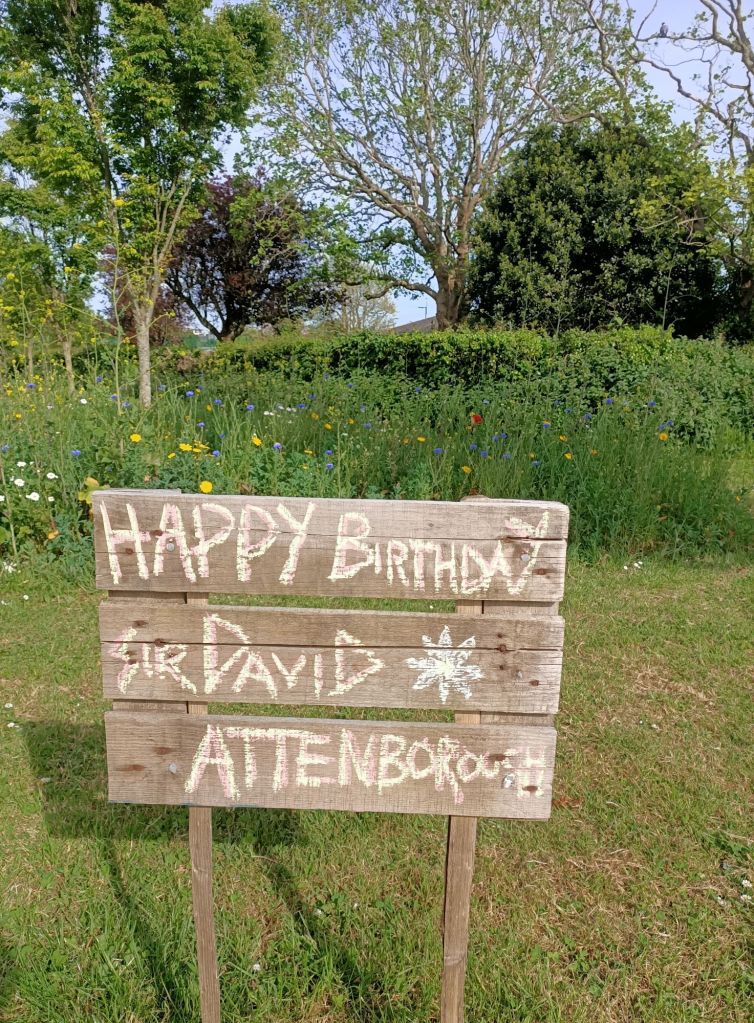
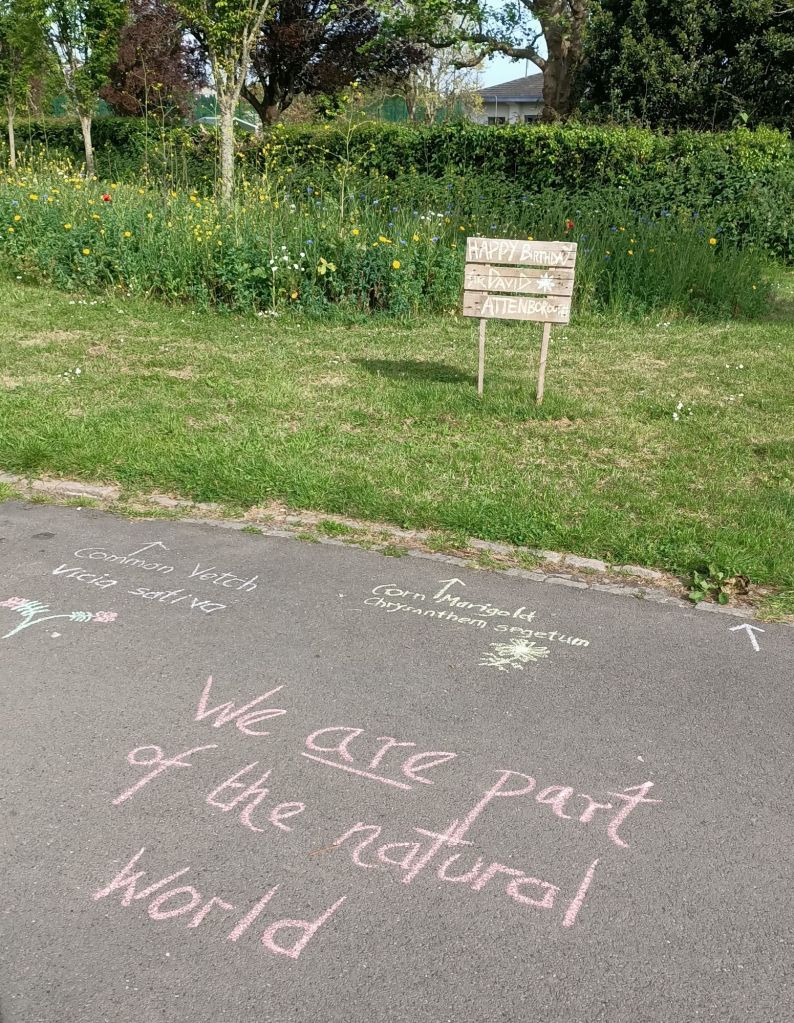
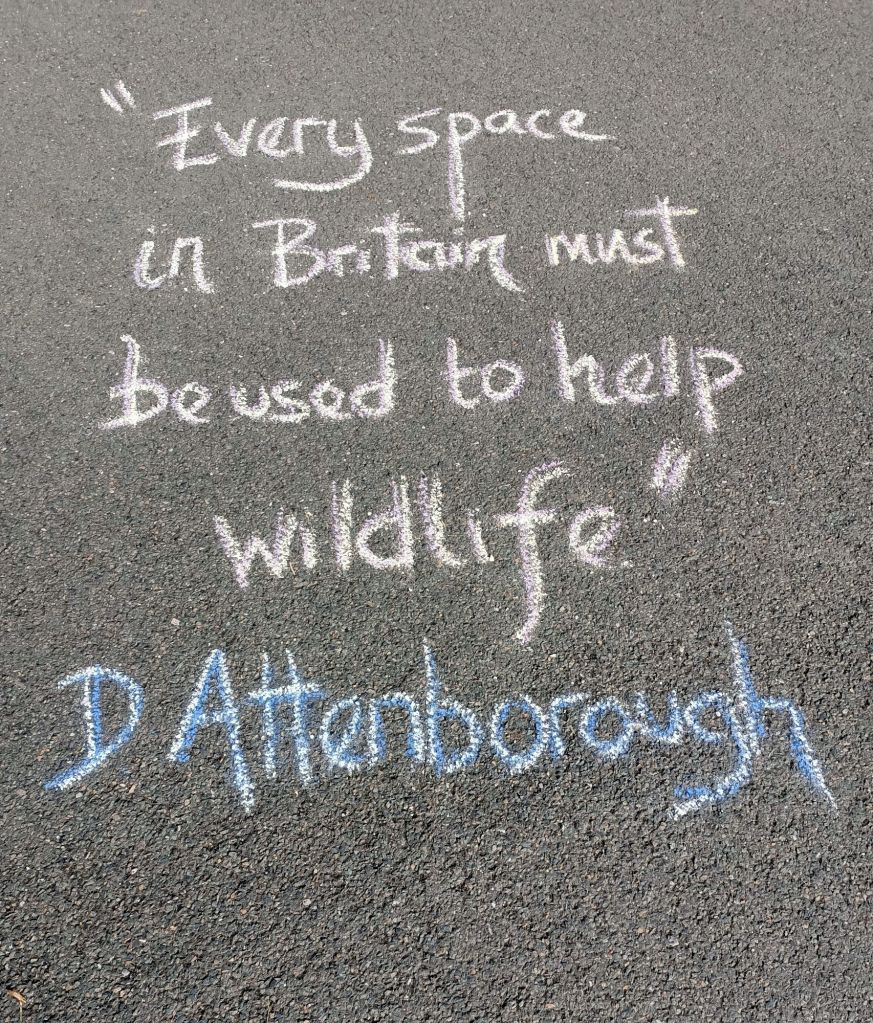
80 foot chalking on Plymouth Hoe to celebrate Sir David Attenborough’s 100th birthday 🙂🌍🌼
David Attenborough has been teaching us all, across the world, for almost 70 years! This is a record-breaking achievement for any presenter or (online) teacher, and there is no sign of stopping him, even in his 100th year!
In his 2011 ‘Life Stories’ book and series, he took us on a journey back almost 600 million years to the discovery of Charnia, one of the oldest animal fossils, resembling a giant frond. Then in 2026, he brought us to the present day, right in our own back gardens, to reveal the secret lives of small mammals, birds and insects desperately surviving in our hectic and dangerous world. His time-travelling through natural history is better than any ‘Dr Who’ series, and he doesn’t even need a telephone box! 😉
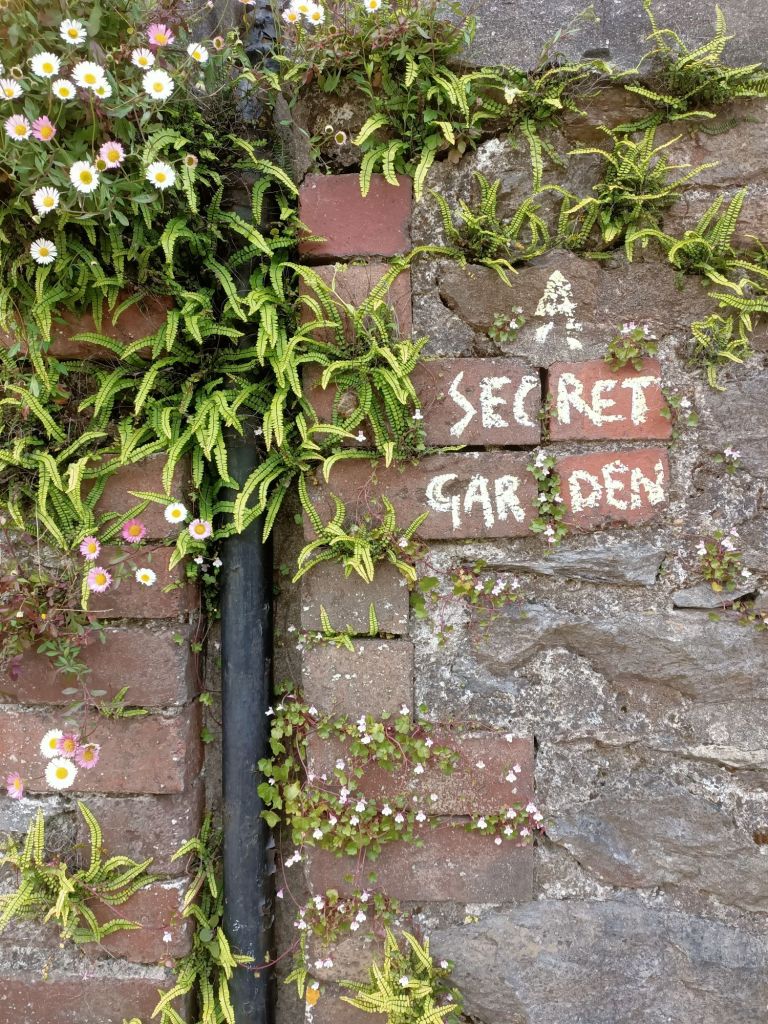
Inspiration from Attenborough’s Secret Garden series, with Maidenhair Spleenwort, Ivy-leaved Toadflax and Santa Barbara Daisies
His programmes have brought all sizes of creatures into our living rooms too, from Leafcutter Ants to Blue Whales. For these and so many more achievements, he is so deserving of the global birthday celebration that culminated in the Royal Albert Hall on the 8th May.
We, along with other groups, including the Plymouth Climate Choir, were involved in a song video, as part of the birthday celebrations. For our part, we embarked on a chalking design 80 feet wide on Plymouth’s iconic Hoe Promenade. We had 3 hours to complete it, before a filmmaker arrived with a drone to record the event – phew! Made it!
A rare photo of us 😉
However, in celebrating these 100 years, we need also contemplate what drives him to continue presenting with his amazing team of filmmakers to bring us, and teach us, the wonder of the natural world. We should not just sit, watch and wonder, we really need to be acting upon the facts he is presenting us with, if we are to save this precious, now fragile, planet.
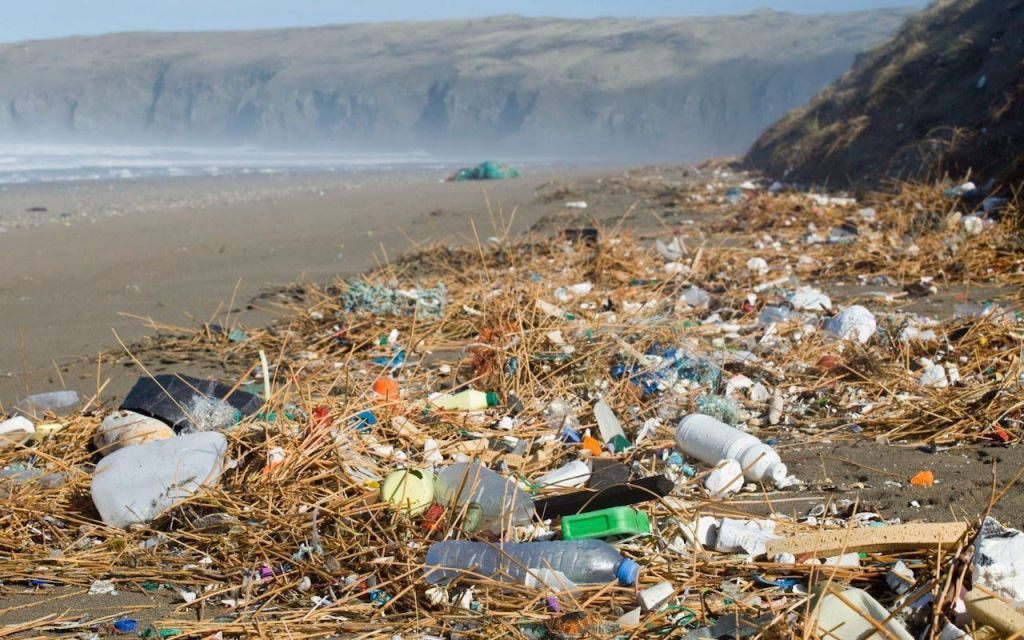
When David Attenborough was born there were approximately 2 billion people in the world; today, there are 8.2 billion! The population has more than quadrupled in his lifetime and with that huge increase has come mass consumerism and, subsequent, mass waste! Our seas are full of plastic, our soils are drenched in toxic pesticides and the air we breathe is becoming more contaminated with carbon dioxide, nitrous oxide and methane gas. In David Attenborough’s lifetime, the levels of carbon dioxide in the air we breathe have risen from 280ppm to 430ppm (parts per million), and the world’s wilderness has reduced by half!
“The devastating scale of the catastrophe now forecast…is a direct result of the way we are currently treating the planet.”
Pesticides and artificial fertilisers destroy and kill our soils, wildlife and us! Our waste plastic litters every ocean, ingested by sea mammals and birds!
However, from the top down (governments, corporates, the world’s richest people) to the bottom up (that’s us!) we can ALL make change. Government change is slow, but we have buying power and that can force change at the top.
Buy for need, not greed. Greed wastes YOUR money and creates waste.
We can stop buying pesticides. Learn to garden for nature, not against it. You’ll SAVE money and nature by not poisoning it.
By allowing nature to grow without harmful poisons, the insects and pollinators will come and naturally care for the plants.
Turn off/down unnecessary energy usage – computers, heaters, lighting and SAVE money.
Reduce/stop car use and flight travel. Walking and cycling is healthier and free. Use buses, trains and ferries – relax and ENJOY your journeys.
By cutting down what we spend, with big global businesses, like Amazon, prevents the rich becoming richer; and by making our needed purchases with our small local businesses, that improves YOUR local economy.
We all need to be more thoughtful about our spending, our wasting and improving our wellbeing by working and being in nature. Our philosophy moving forward must be “sustainability in all things…and… radically reduce our impact on the world.”
For us, we continue to make our mark on the urban pavements, using them as a canvas to highlight the wildflowers popping up between the cracks and crevices. By naming these plants, we hope you learn to love and respect them too, and reconnect with nature. “To restore stability to our planet … we must restore its biodiversity.”
So, let’s “rewild the world!” 🌼🌍🌼🙂👍
(All quotes and data taken from: D. Attenborough, 2020. A Life on our Planet: My Witness Statement and a Vision for the Future. Witness Books: London.)
“The State of Nature Report is an assessment of how nature is doing across the UK…The report pools data and expertise from more than 60 nature conservation and research organisations, a partnership unparalleled in UK conservation.” https://www.bto.org/our-work/science/publications/reports/state-of-nature
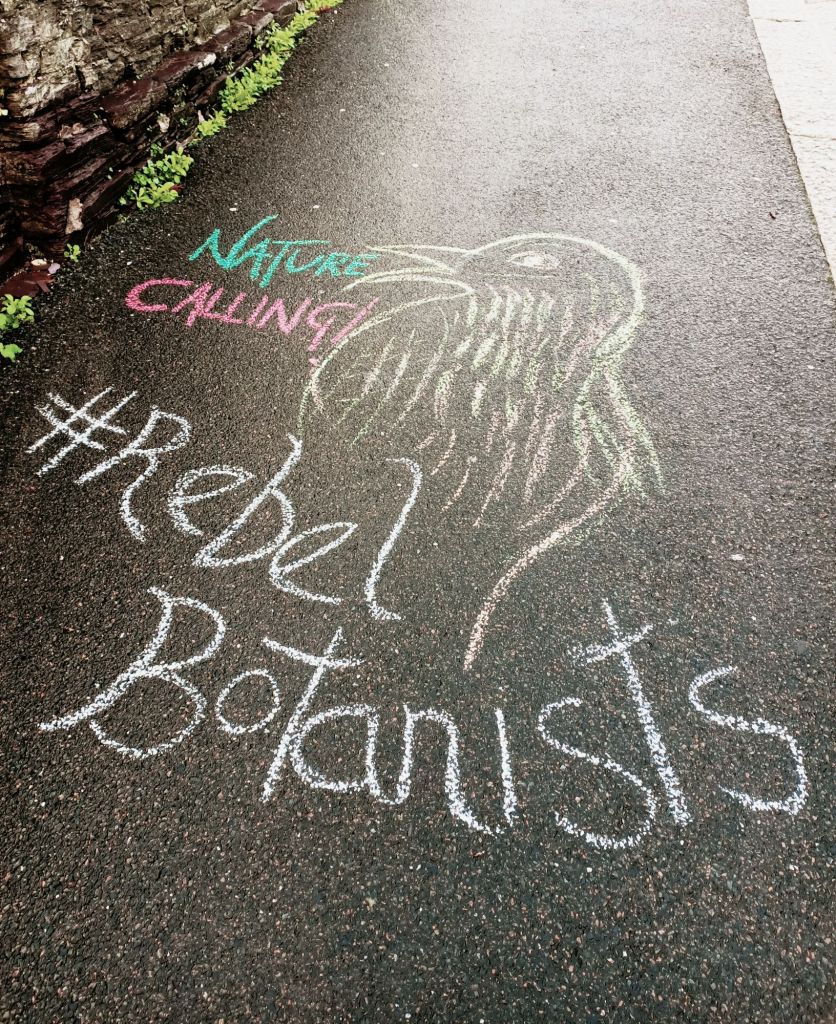
Our latest project, ‘Nature Calling!’ has been kindly funded by Charlotte Holloway, the local councillor of Drake Ward in Plymouth. Its key aims are to address and raise awareness of pests and pesticide pollution: both are major threats to flora and fauna.
Our chalked sign at a previous EcoFest in Tavistock
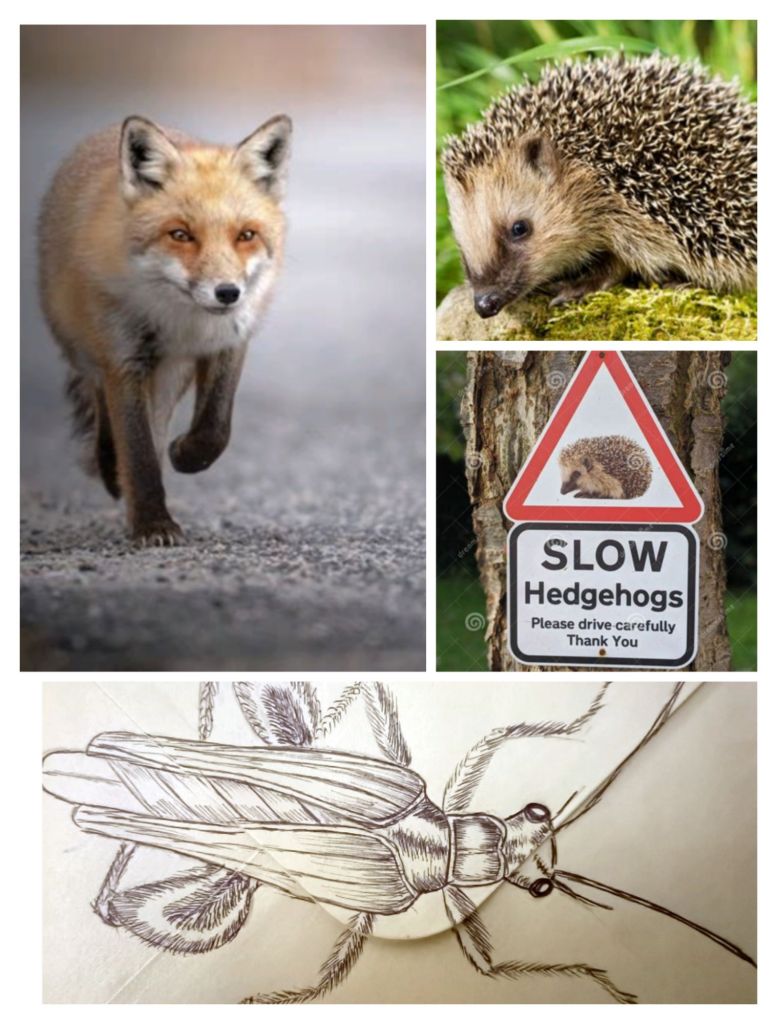
When we talk of pests, we are not talking about insects, because with thoughtful gardening practices they are not pests, but pollinators and food for other insects, birds and mammals – a natural biodiversity cycle. No, the pests we are focussing on are in fact our cute and adorable moggies. Yes, cats!
It’s a cat’s instinct to hunt, so telling it off won’t work, but we can reduce this hunting behaviour. Given how seriously threatened birds and small mammals are, it’s an essential cat owner’s ethical responsibility to protect them, so here’s what you can do:
1. Keep your cat indoors between dusk (sunset) and dawn (sunrise) when birds are singing and feeding. “Not only will doing this protect wildlife, but it may also protect your cat by reducing fighting and road accidents (Cecchetti, Crowley, & McDonald, 2021; Crowley et al., 2019).”
2. Play with your cat. Providing physical and mental stimulation through play and puzzle feeders, even for just “10 minutes of daily play can reduce hunting by up to 25% (Cecchetti, Crowley, Goodwin, et al., 2021).”
3. Consider your cat’s diet. Store-bought cat food is low in meat proteins, instead they are packed out with grain and cheap proteins. “Changing your cat’s diet to include more proteins that come from meat has been shown to reduce hunting by 36% (Cecchetti, Crowley, Goodwin, et al., 2021).”
4. Place your bird feeders up high. Even though you may not have cats yourself, neighbours cats will undoubtedly wander in your garden. Place them really high, out of reach of the most energetic cat.
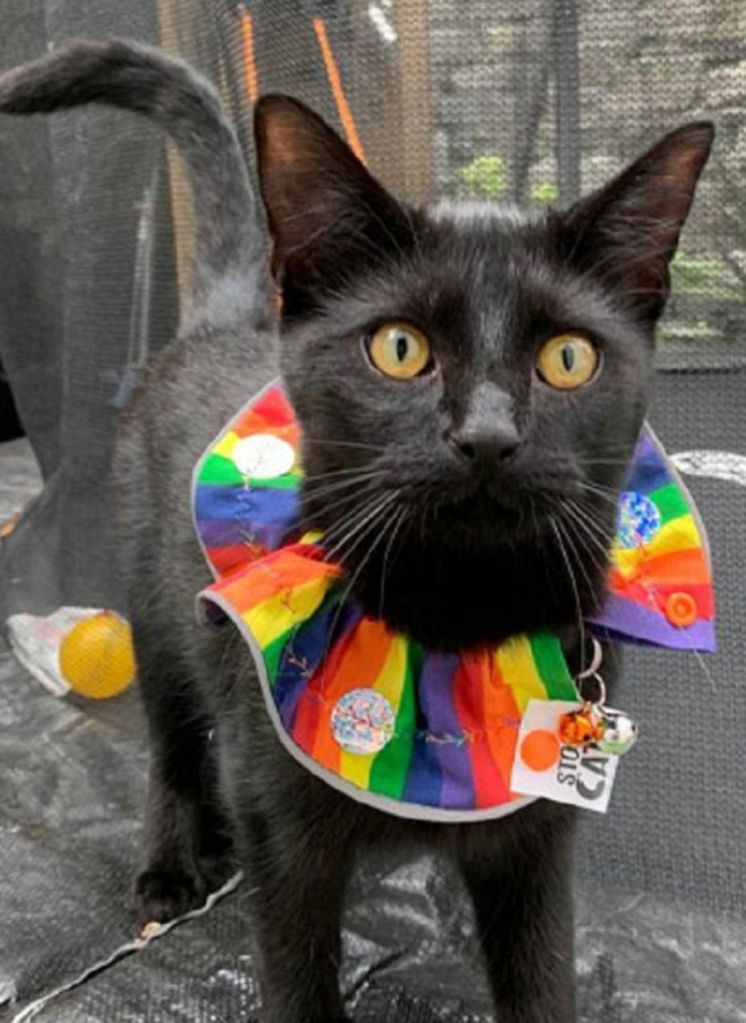
5. Get a multi-coloured cat collar with bells. They can reduce the number of prey caught “by over 50%, making it one of the most effective options for reducing the number of birds your cat kills.” (birdsbesafe.com).
So, at Houndiscombe Park, in Plymouth, funding has secured:
– the replacement of high rise bird feeders and seed for our feathered friends 🐦🐦🐦🐦🐦
– 10 free multi-coloured cat collars (with bells and safe release clips). If you live in the Drake Ward – these are available to the first 10 lucky cat owners to try. Just give us email feedback (twice over 6 months) to let us know how effective they are. Just PM us on our Facebook page.
This is the rainbow design cat collar
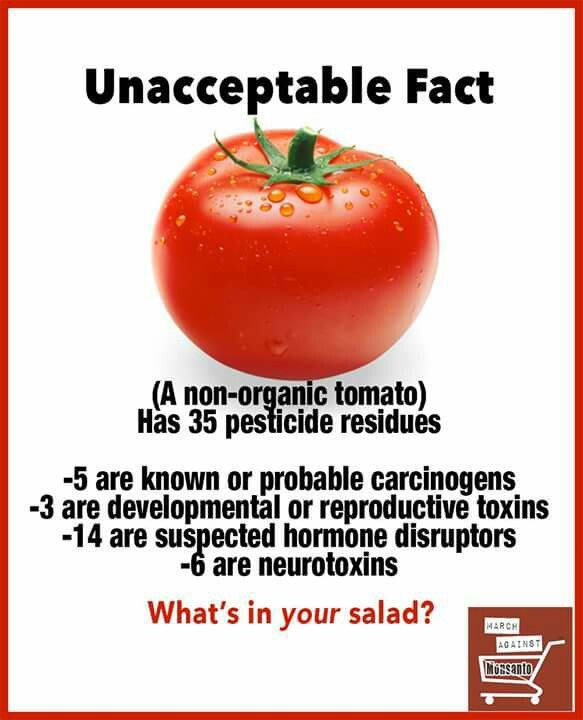
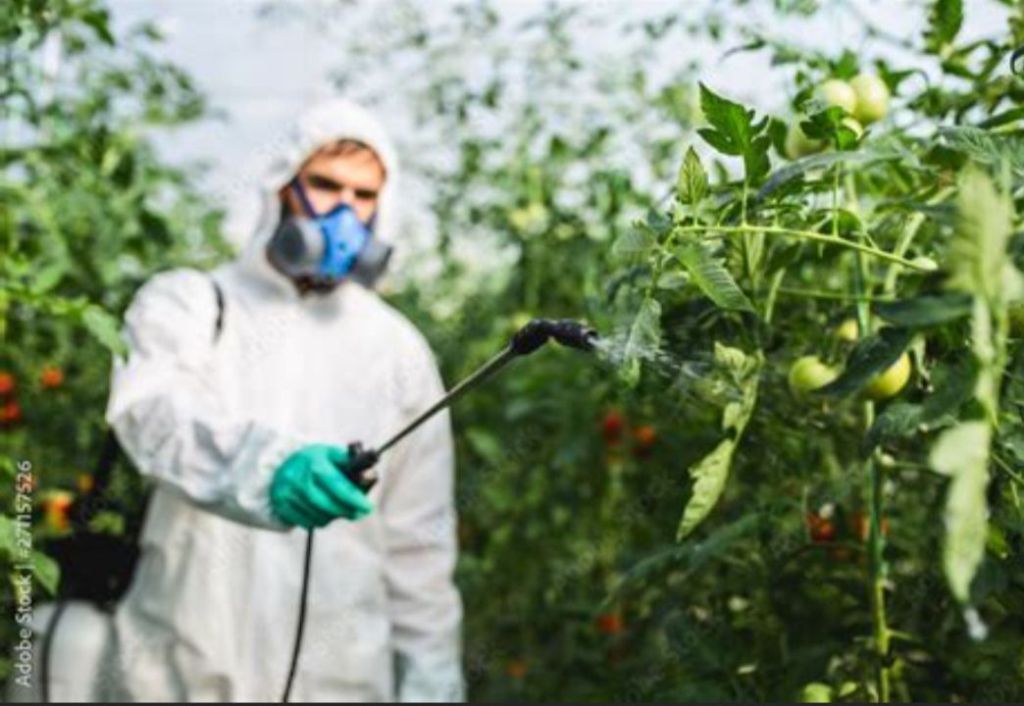
The second focus of our project is pesticides. Despite being readily available to buy on garden centre shelves, they are destructive toxins, killing life in our gardens and further afield. These chemicals are also contained in flea sprays used on pets.
“PAN Europe recently revealed that PFAS pesticide residues are found in many fruits and vegetables… These forever chemicals are deliberately sprayed on food and fields and their use is increasing. Not only are they persistent but they also have toxic properties.” https://www.pan-europe.info/blog/pfas-pesticides-cause-havoc-uk
Done tests have revealed up to 17 different pesticide toxins being present!
“PAN UK analysed the latest results from the UK government’s residue testing programme, finding that ten different PFAS pesticides were present in spices and a range of fruit and vegetables including grapes, cherries, spinach and tomatoes. Strawberries were found to be the worst offenders, with 95% of the 120 samples tested by the government in 2022 containing PFAS pesticides.”
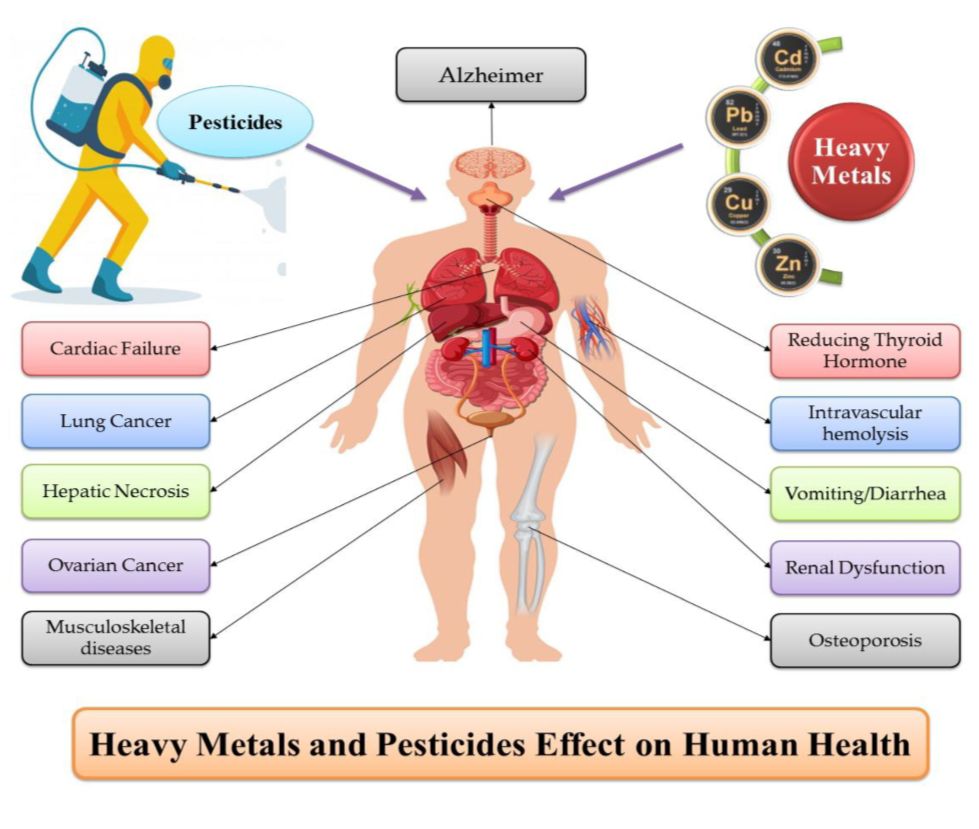
“Pesticide elements have now perpetually entered our atmosphere and subsequently contaminated water, food, and soil, leading to health threats ranging from acute to chronic toxicities…Pesticides produce different types of toxicity, for instance, neurotoxicity, mutagenicity, carcinogenicity, teratogenicity, and endocrine disruption.” https://www.sciencedirect.com/science/article/pii/S2405844024051594
Depressing reading isn’t it, but: here’s what you can do:
– stop using pesticides in your garden – email your council to stop using chemicals on streets and public spaces – buy organic and significantly reduce your exposure to these chemicals – use natural, toxic free, flea sprays for your pet.
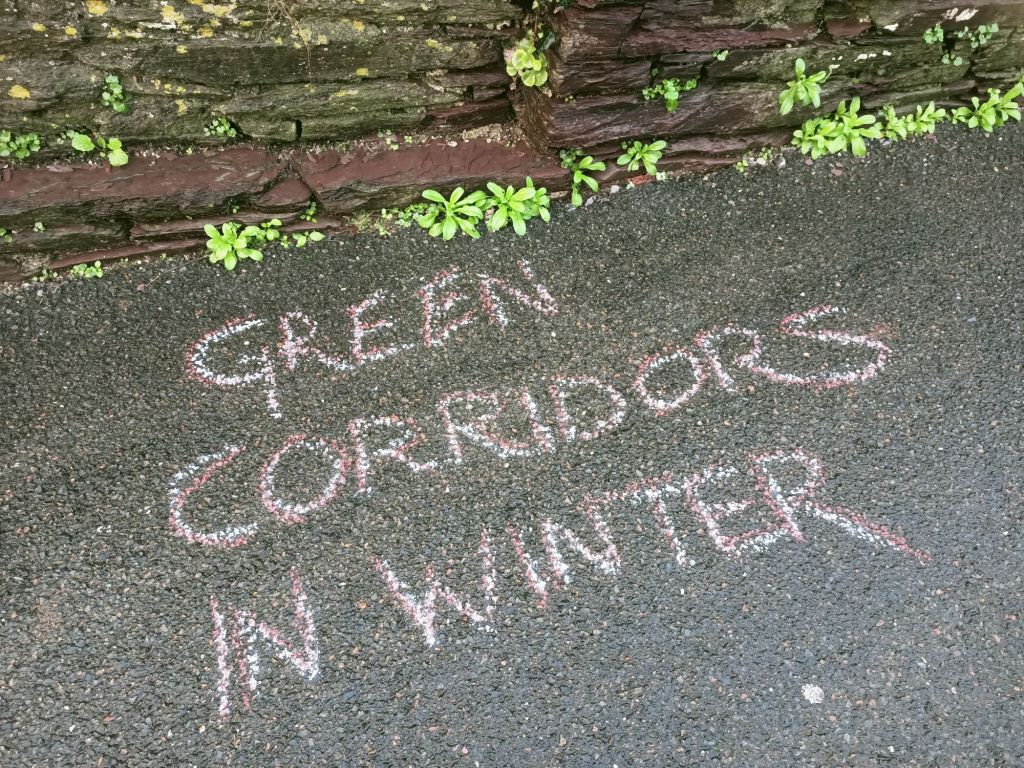
Pesticide-free green corridors for wildlife are crucial, particularly in winterLots of little plants popping up between the cracks and crevices, supporting insects, birds and mammals 🙂👍
A natural toxic-free alternative is Apple Cider Vinegar (ACV) spray. It is effective because:
– “pH balance: ACV slightly acidifies the skin’s surface, creating an environment fleas dislike. – Smell and taste deterrent: its sharp scent and flavor make animals less attractive to biting insects. Anti-inflammatory effects: helps calm itching and redness from flea bites. Mild antiseptic properties: cleanses minor irritations and prevents infection from scratching.
Pasley Street (pronounced paisley) is a very long urban road in the heart of Stoke, Plymouth. Join us on our walk and chalk, with Sophie from Green Communities, to identify wildlife on the walls and in the cracks of pavements, serving as valuable green corridors for nature. 🚶♂️🚶♀️🚶Here we go 🙂…
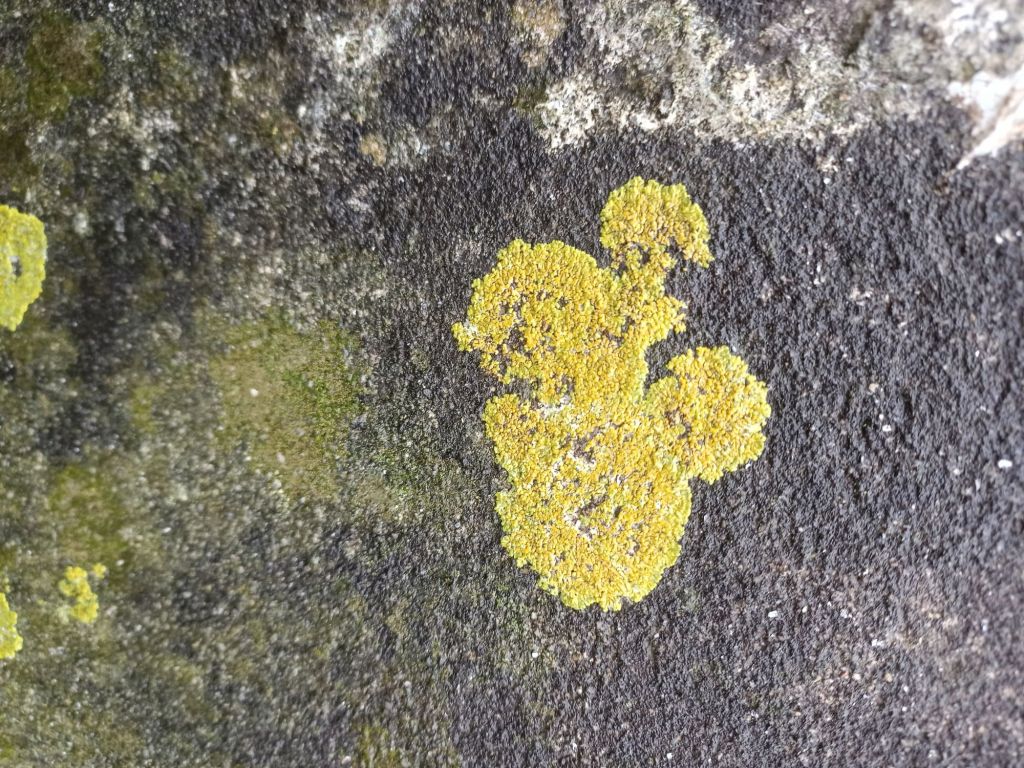
Firedot crustose lichens can be orange, yellow or brown and appear like tiny dots on the surface. These dots are the spore-bearing structures (apothecia).
Sunburst lichens (Xanthoria) like Firedot are often found on sunny walls and rocks. They have a circular, foliose design with tiny branching lobes, which often become obscured as they amalgamate into larger forms and can be easily mistaken for a crustose lichen.
Thoreau stated in his journal of 1851: “It is a good day to study lichens”, but perhaps that could refer to any day because lichens are fascinating. “They provide food, shelter and nesting material for birds, mammals and insects…moths on the run from a predator will mimic bark lichens. Many foods, perfumes, dyes, medicines (antibacterial and antiviral properties) and foods are directly derived from lichens…many species are very sensitive to pollutants such as sulphur dioxide and nitrogen.” (www.bbc.co.uk)
On the steps leading from Pasley Street to Block House Park.
As well as those fabulous Vitamin K-packed, dandy Dandelions (Taraxacum officinale) we found Sunken Disc Lichen (Aspicilia calcarea) which belongs to the Aspiciliaceae family.
“Through its ability to break down minerals and organic matter, the lichen gradually forms a thin layer of soil, creating microhabitats that support the establishment of other plant species…By binding soil particles together and reducing surface runoff, the lichen contributes to the maintenance of soil structure and fertility. (https://www.sidmouth-nature.uk/hub-detail/Sunken%20Disc%20Lichen)
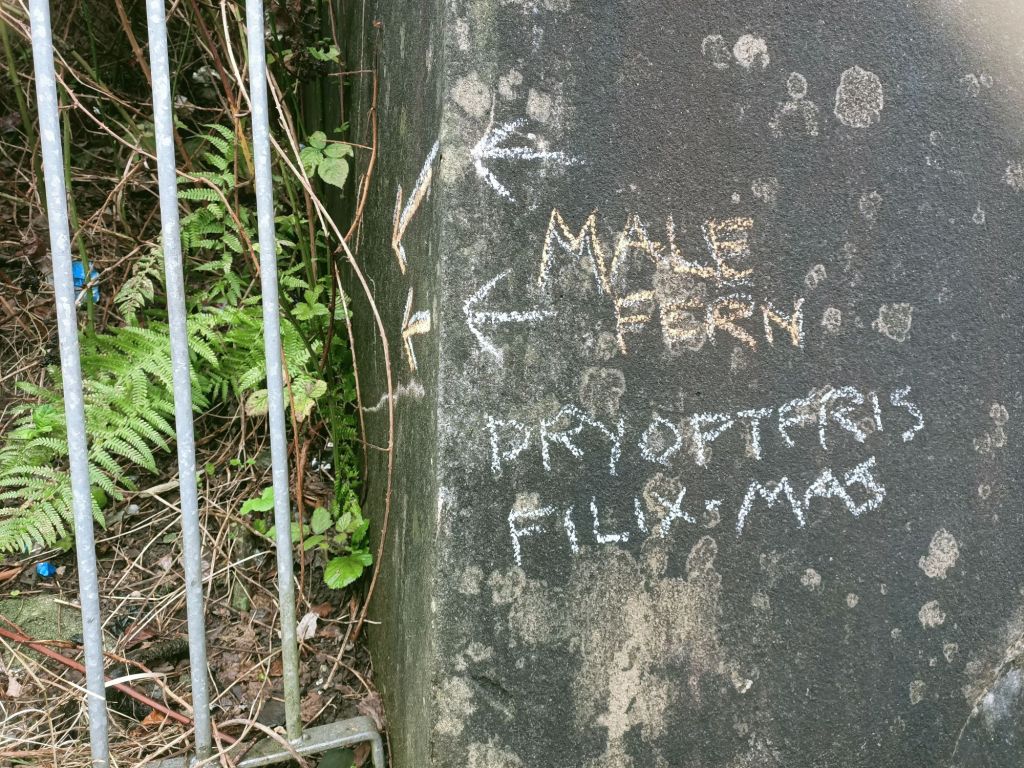
Another ancient life form on this planet is the fern. Did you know there are more than 10,500 species of fern? 🤔 Wow! 😲
It’s a vascular plant that has neither seed or flower, and this Male Fern likes damp shady places.
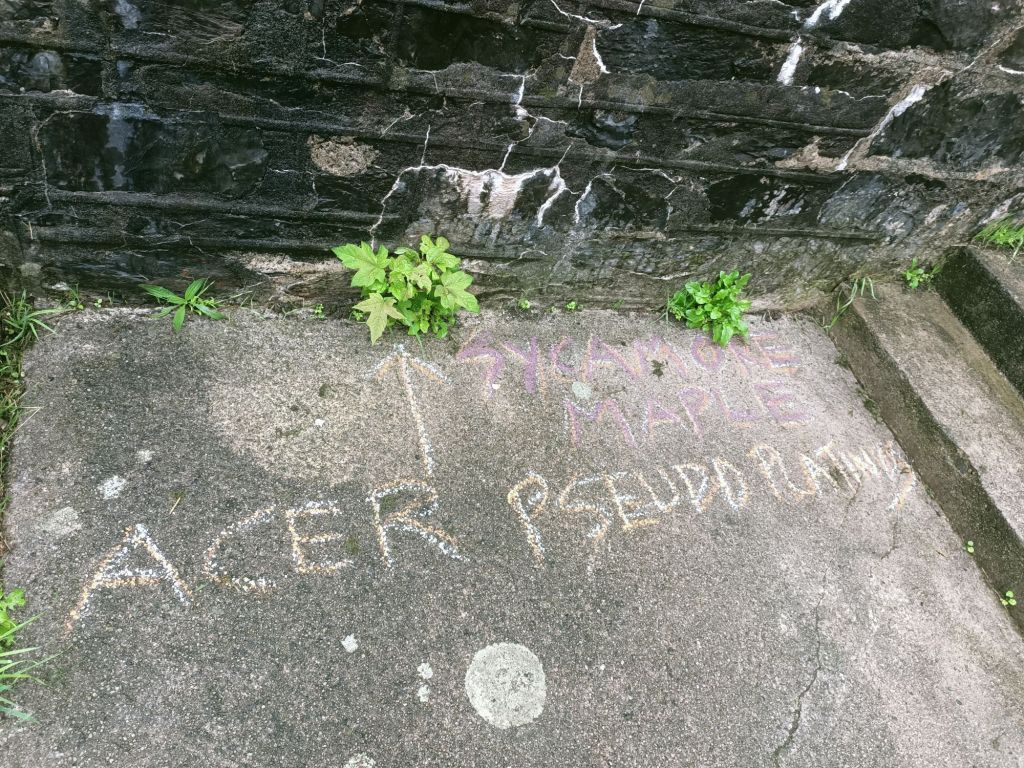
Self-seeded Maple, known as Sycamore
Don’t you just love it when a plant or tree finds the tiniest crack to find a home? 🙂Just like people, our sometimes hostile concrete streets are difficult places to find shelter, so plants have to be resilient and resourceful. The Sycamore provides nectar and pollen for bees and other pollinators 🐝🐝🐝🐝🐝🐝🐝🐝🐝🐝🐝🐝🌳🌳🌳🌳
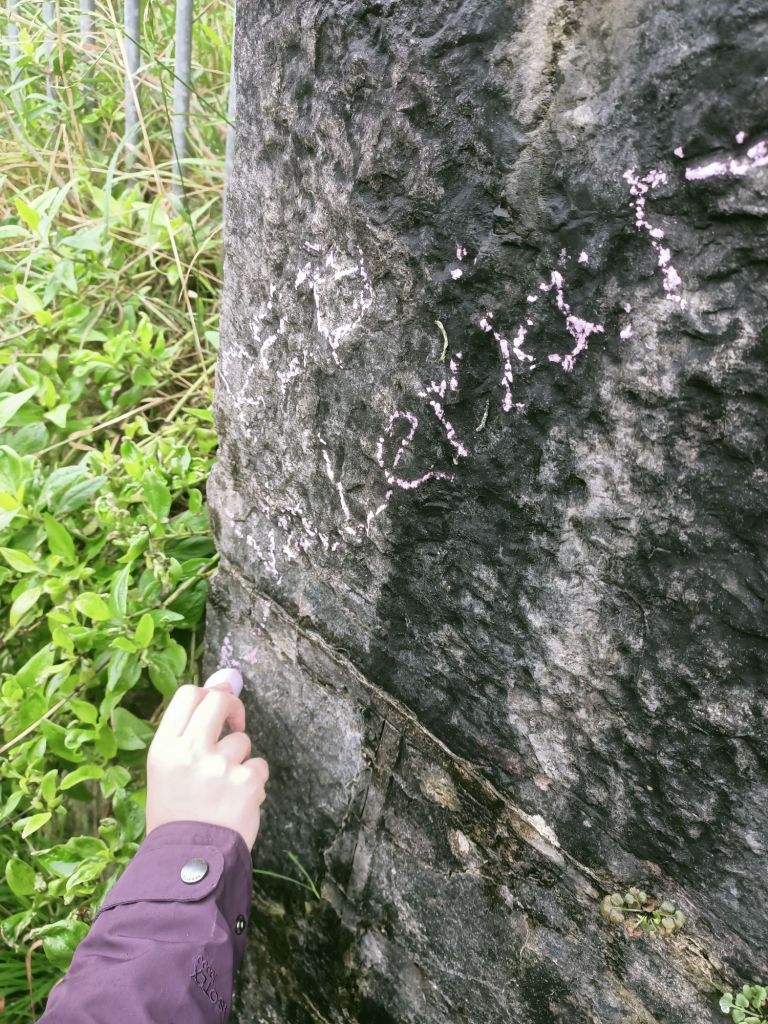
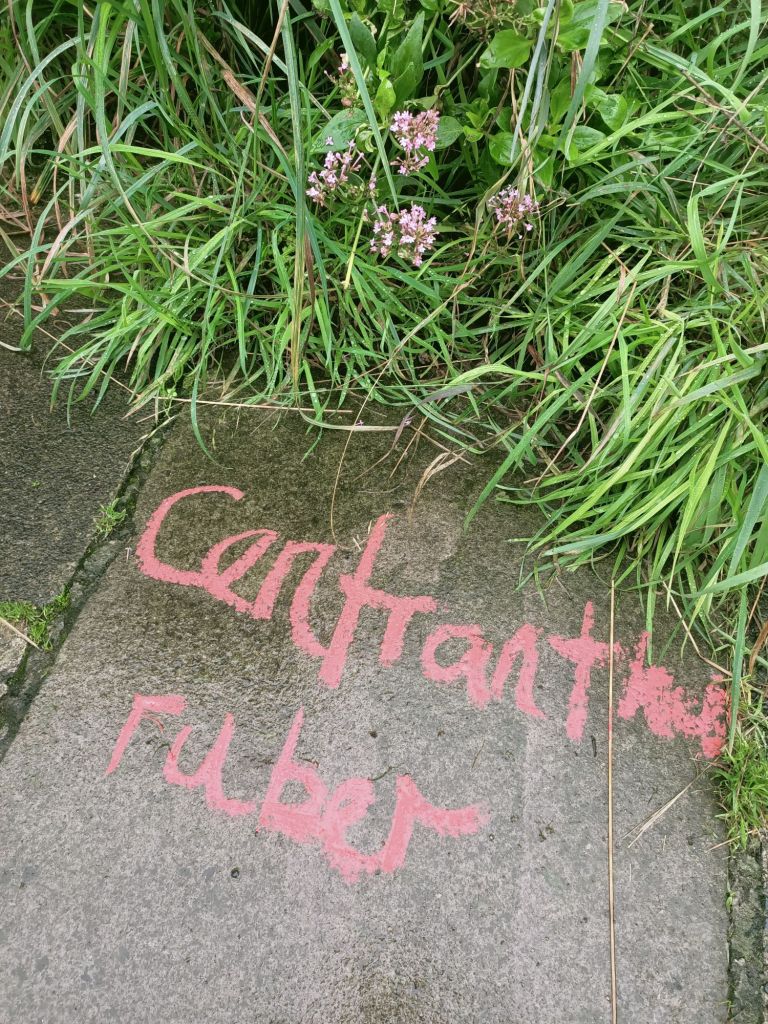
Thanks to a lovely local joining in with some chalking. Can you guess the plant she’s naming? Yes, Red Valerian – Centranthus Ruber.
Did you know that Red Valerian is also known as: Kiss-me-Quick, Fox’s Brush, Devil’s Beard and Jupiter’s Beard. Which name do you know it as?
To avoid confusion this is why we use the Latin language to name plants, as this is globally recognised. “Since the first printing of Carl Linnaeus’s Species Plantarum in 1753, plants have been assigned one epithet or name for their species and one name for their genus”. (Wikipedia) This is why Latin plant names are binomial.
All the little wildplants along your streets are absolutely vital for biodiversity.
“The troubling extent of insect declines across the UK has been highlighted… by the results of the 2024 Bugs Matter citizen science survey. The latest data shows that the number of flying insects sampled on vehicle number plates, across the UK, has fallen by a staggering 63% since 2021. (https://www.buglife.org.uk)
We can all do more to help insects and increase these numbers – NOT using pesticides is a good start. These are toxins which kill insects and contaminate our socks, watercourses, and poison other life in our gardens, including birds and our own pets. Check out http://www.pan-uk.org for further information.
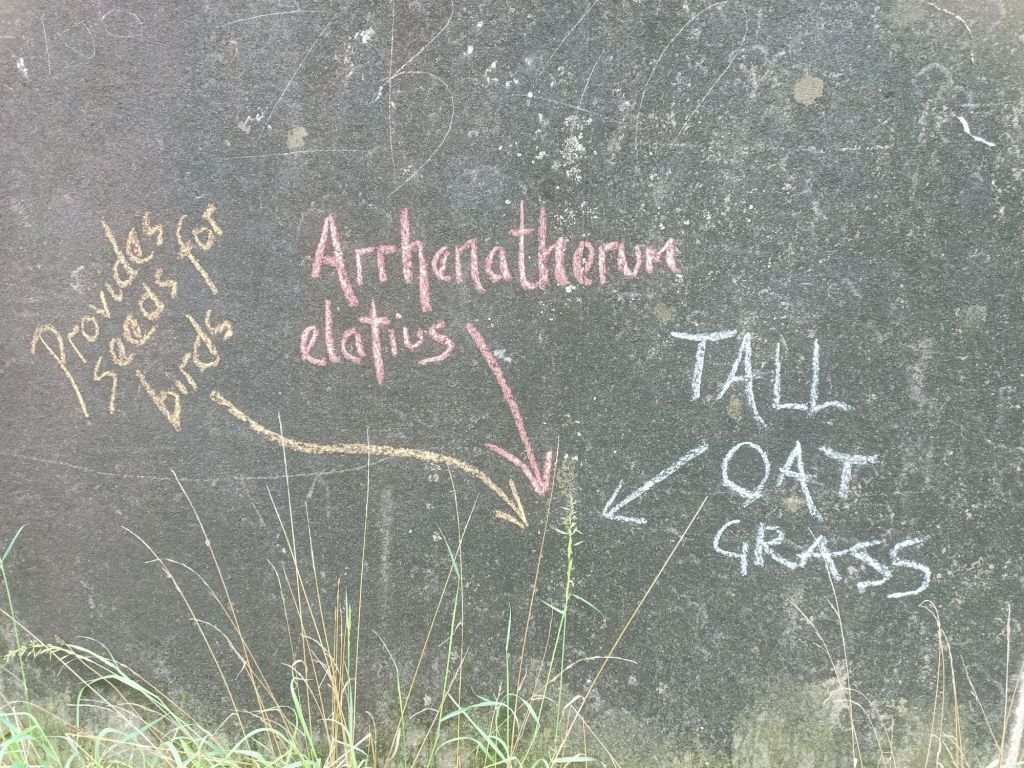
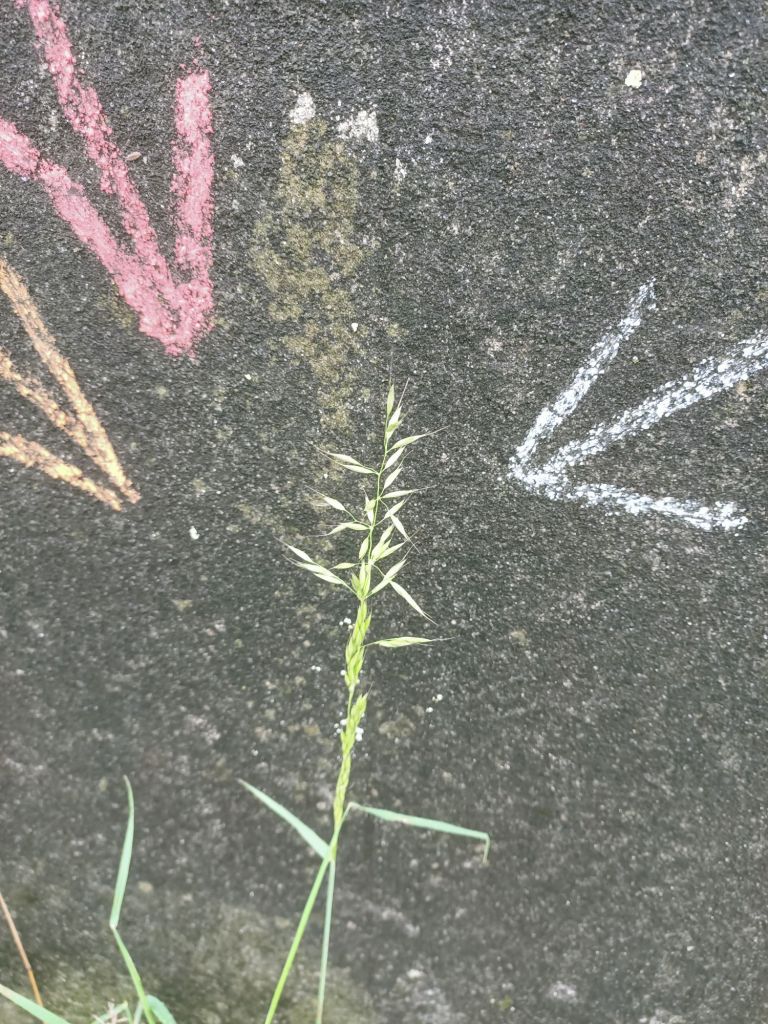
Grasses are really important too, providing food for birds, insects and small mammals. Close up of Tall Oat Grass
Also known as False Oat-Grass, it provides shelter and nesting material for Field Voles.
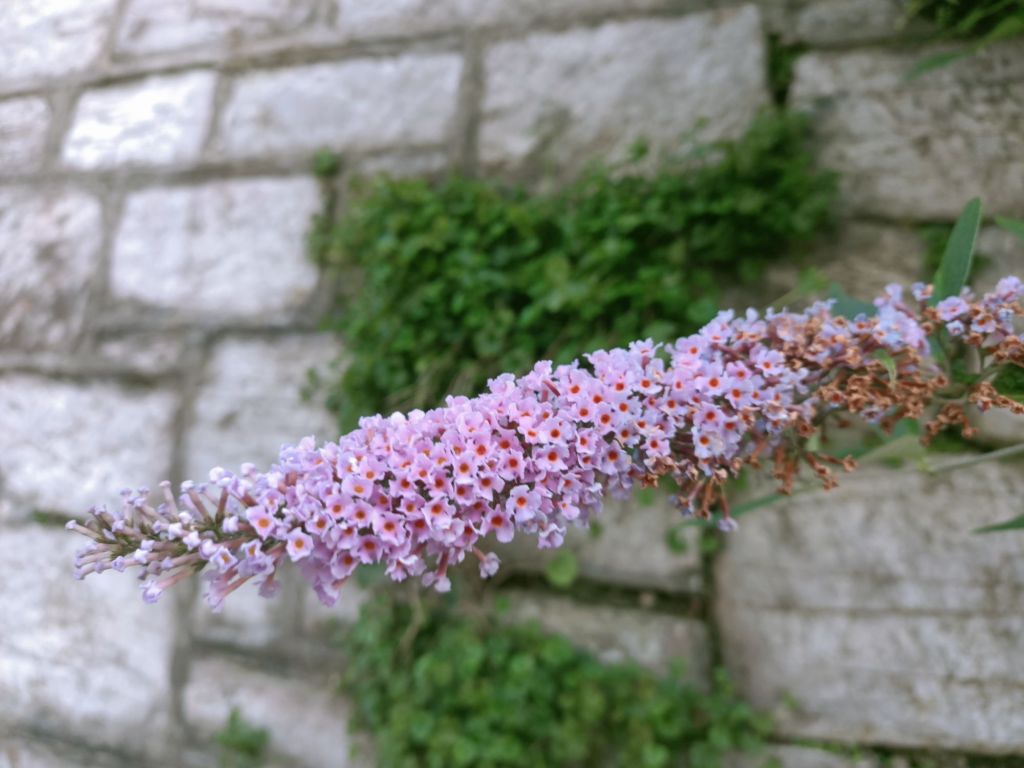
Looking closely, you can find lots of wild plant species in one small area. Butterfly Bush
Have you got up close and smelt the wonderful aroma of the Buddleja davidii? 🤔
The flowering Butterfly Bush
The little pink-purple flowers are so pretty, and the scent is wonderful of this wild plant. When you smell it, you’ll soon realise why it is so attractive to bees and butterflies – it’s a fabulous lifesaver to pollinators, so encourage it’s growth 😉👍
Symphyotrichum novi-belgii
It cannot be overstated enough how important autumn flowering plants are to pollinators (insects, birds, mammals). 🐝 These Michaelmas daisies also provide colour to your garden. Remember though, as with all flowers, try to avoid the hybridised (crossed/cultivars) because the more petal layers they have, the LESS pollen they have for 🐝🐝🦋🦋🐦🐦👍
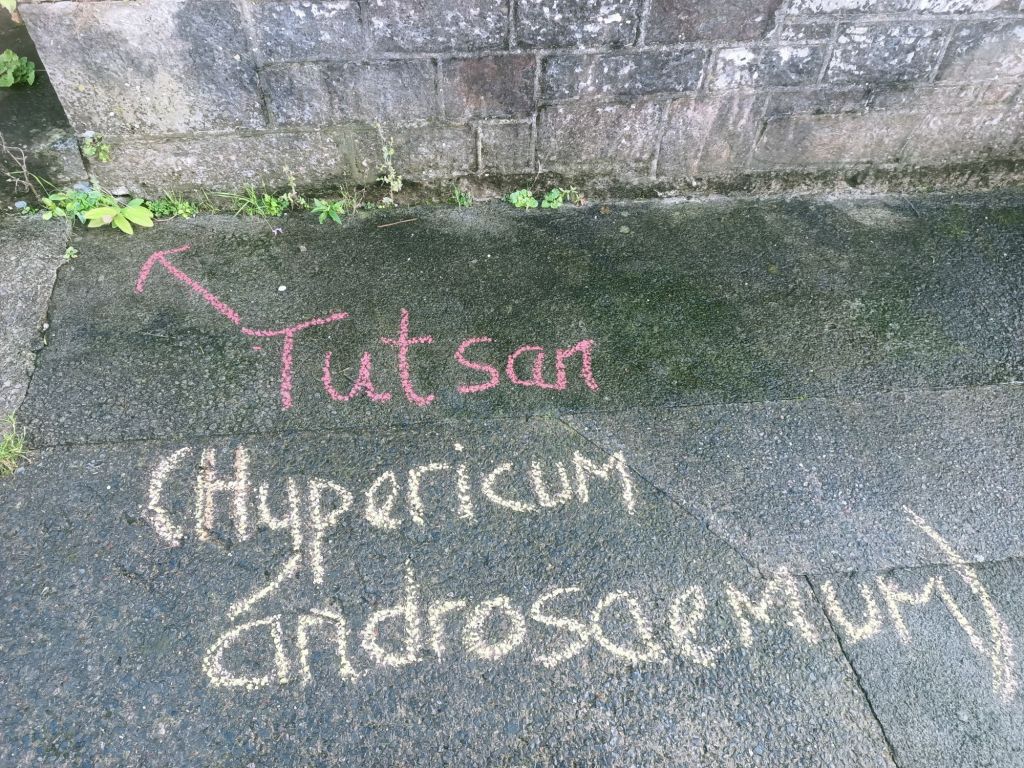
Bloomin’ lovely 😍Hypericum androsaemum
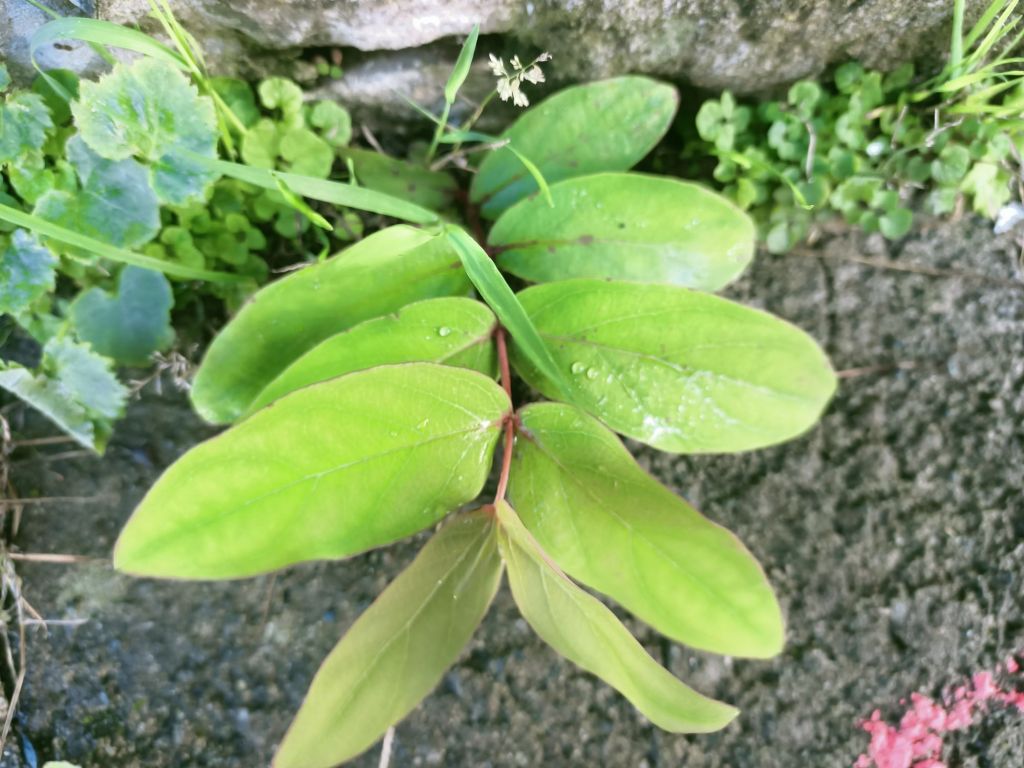
What’s Tutsan I hear some of you say? 🤔 Well it’s a shrubby St. John’s Wort, and it is also known as Sweet-amber. Want to see it close-up? It’s got rather lovely leaves…
Lovely lime green oval leaves with a reddish stalk.
A medical plant used as a diuretic and to progress the healing of burns and minor skin wounds. It has also been used to treat sciatica and gout, as well as being used in the skincare industry. In Portugal, the leaves are used in the treatment of liver, kidney and bladder problems: quite an elixir! 👍
Erigeron canadensis
As the name suggests, this plant originated from North and Central America. Its common names include: Canadian Fleabane, Marestail, Coltstail (there’s a horse theme here 🙂🐎) and Butter weed.
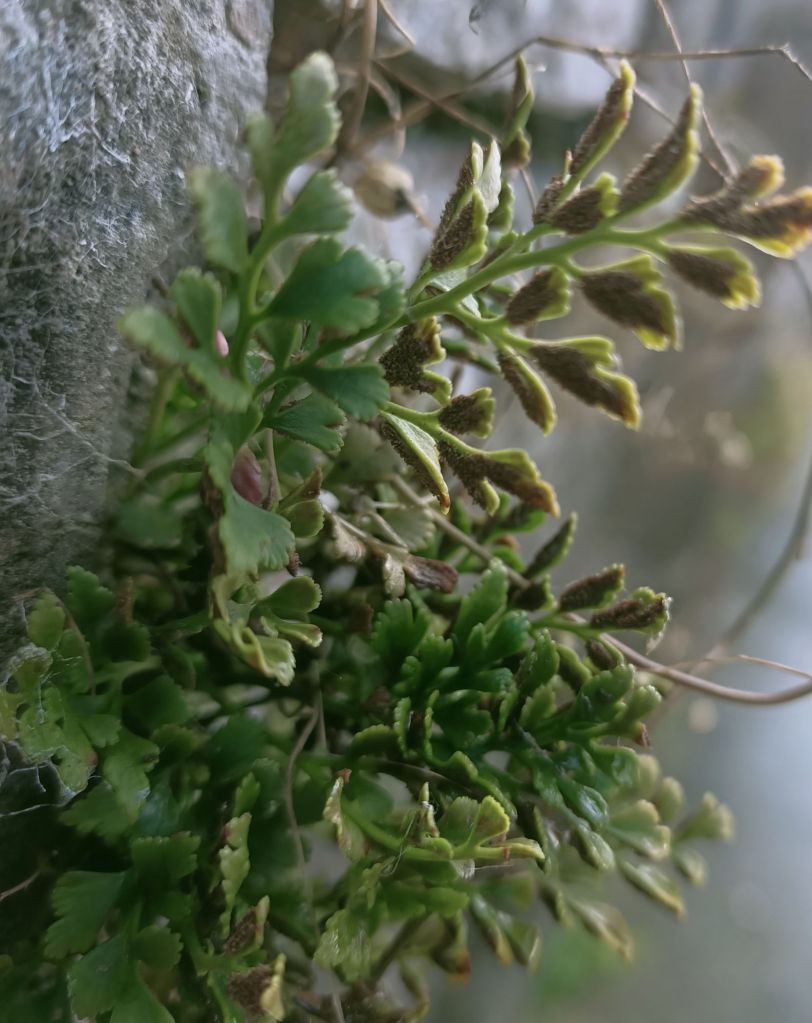
We seek him here, we seek him there…okay, you heard that joke before 🤣😂A small fern, Wall-rue
Distinctive due to its club-shaped leaflets that appear in groups of three on the frond. It often appears with other ferns like the Maidenhair Spleenwort.
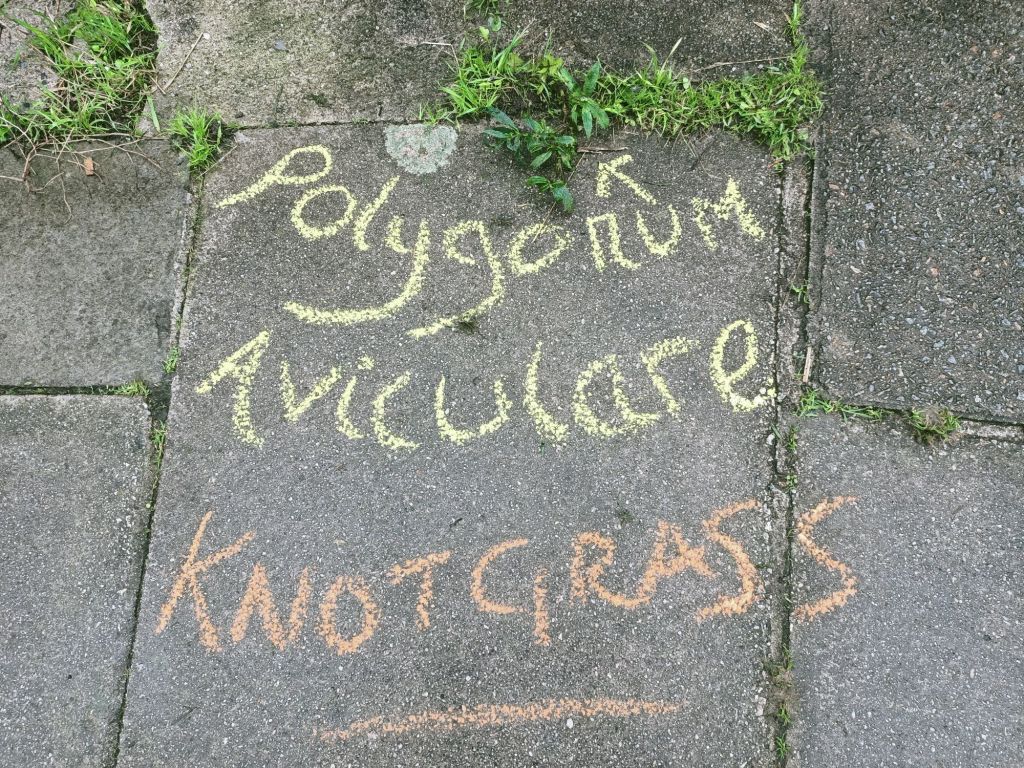
The underside of the Wall-rue leaves reveal its sporesAka Santa Barbara daisies, Mexican Fleabane and Spanish Daisy, these profusions of flora look stunning 🌼🌼🌼🌼🌼Common Knotgrass
Did you know, Polygonum means ‘many knees’ in Greek, referring to the prominent joints along the stem. Many species of insects feed on Knotgrass, including the eponymous Knot Grass moth, Acronicta rumicis. 🙂👍
Trailing Bellflower
The species is hermaphrodite, which means it has both male and female organs, and is pollinated by bees, flies, beetles, lepidoptera (moths and butterflies). It is also known as the Serbian Bellflower – it originated from the Dinaric Alps, in the former Yugoslavia. Despite it being a non- native, it is extremely attractive to bees and other pollinators 🐝 🦋 🦋 🐝 Its bell shaped blue flowers, also make it attractive to humans 😉.
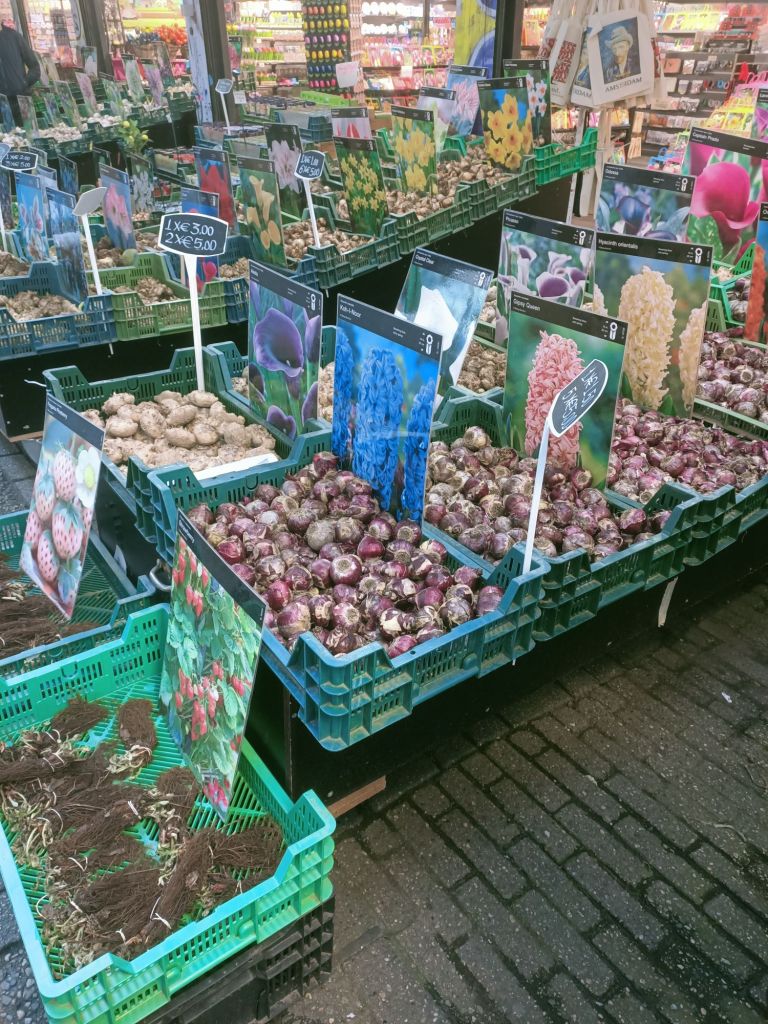
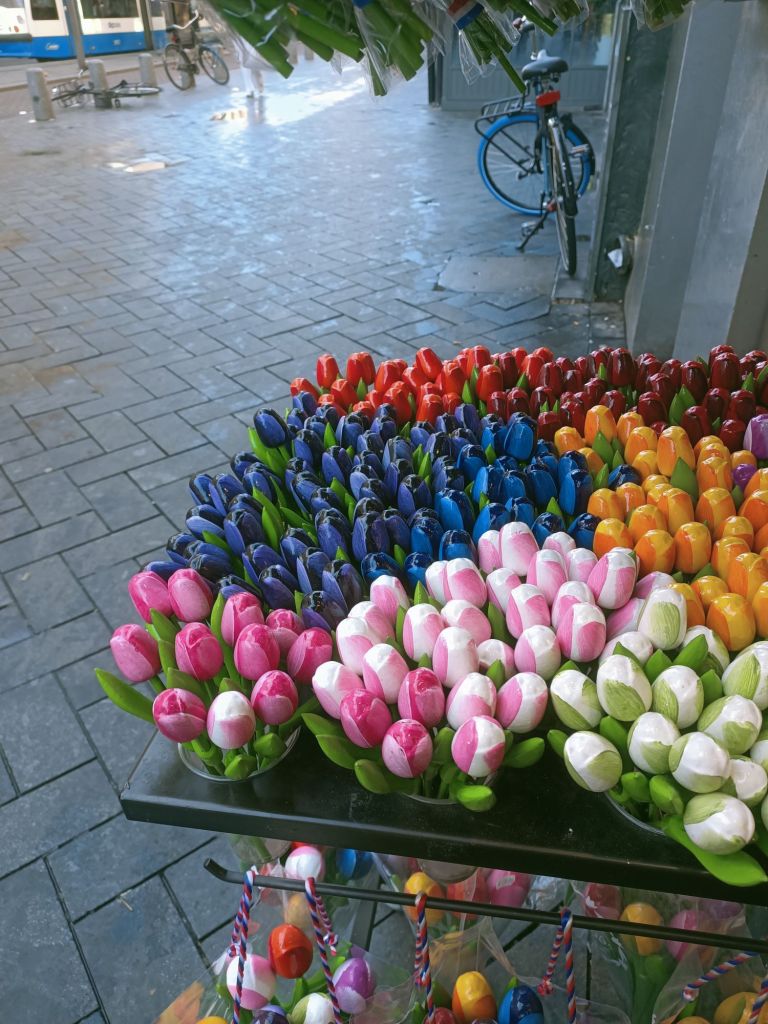
It’s fair to say the Dutch people seem really wild about tulips! 🌷 They are everywhere, in every colour and composition imaginable, through a hybridisation process that has lasted over 400 years and still continues. There is even a book called Tulipomania explaining the fad that took hold regarding this flower.
Each genetically modified design has a different commercial name; here are just a few:
Armada Kansas Golden melody Queen of Night Golden Artist
Tulip bulbs for sale in the huge flower market in the centre of Amsterdam The names of the genetically modified flowers are designed to appeal to potential buyers/tourists.
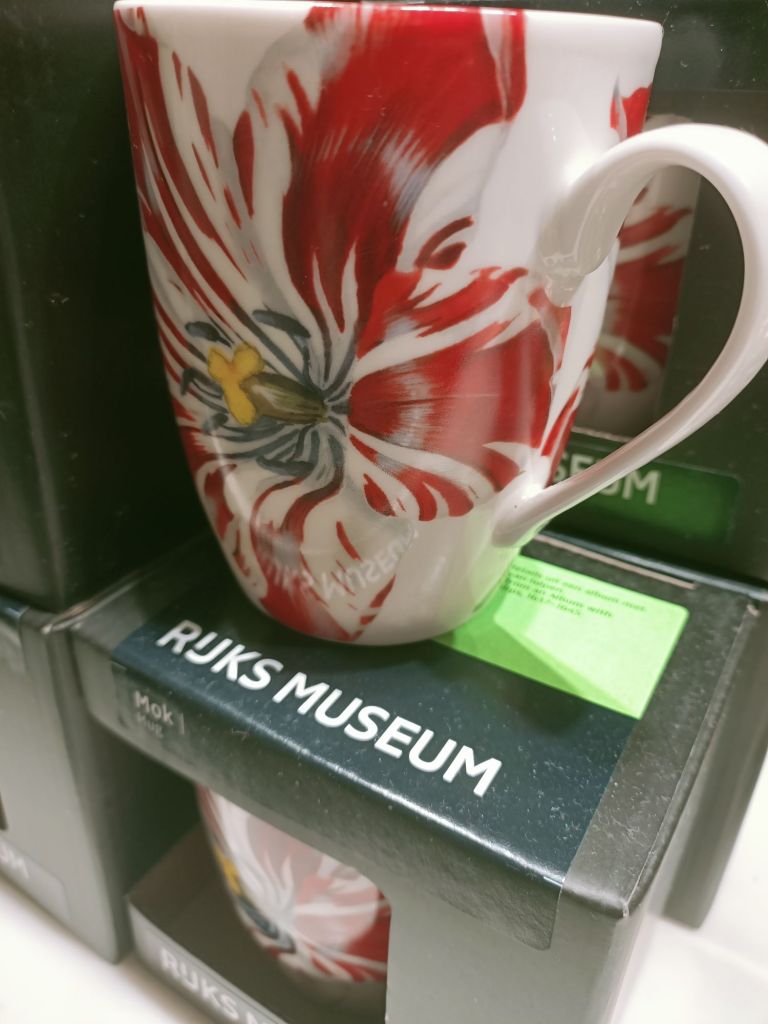
Not only are they sold as bulbs, but the flowers are recreated in oil paintings, plastic decorations, china crockery and even wallpaper.
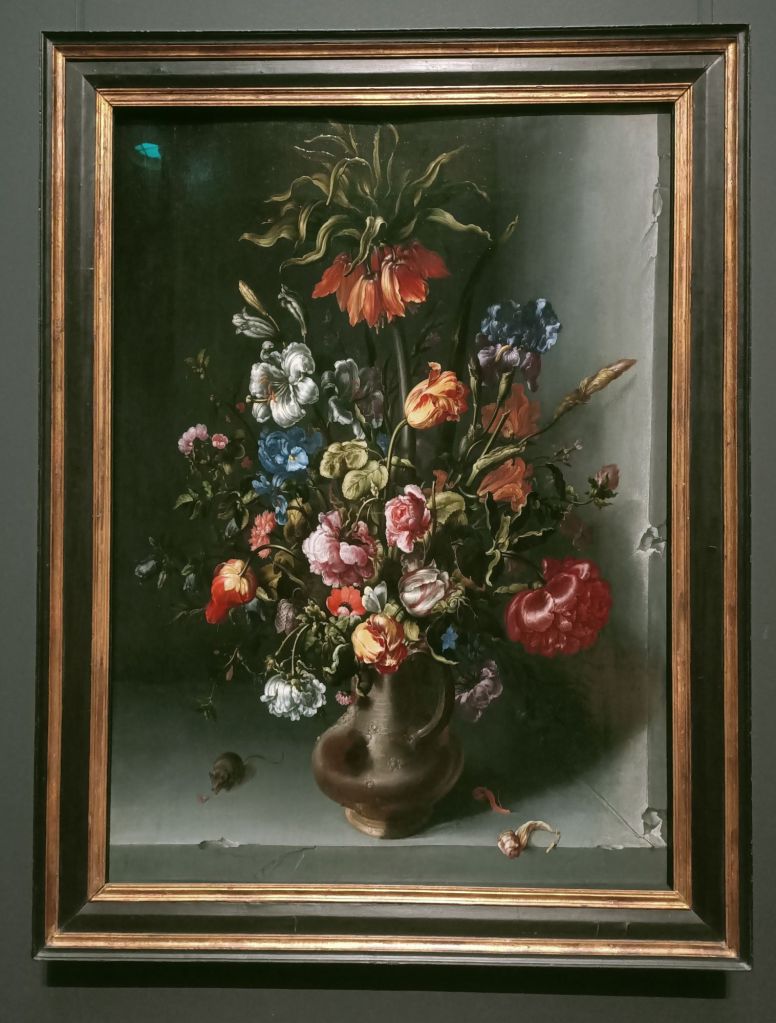
Plastic tulip decorations are popular features in gift shops and supermarkets. Decorated cups in one of Amsterdam’s famous museums.Captured in an oil painting by Vosmaer, in 1613.As wallpaper in a bathroom.
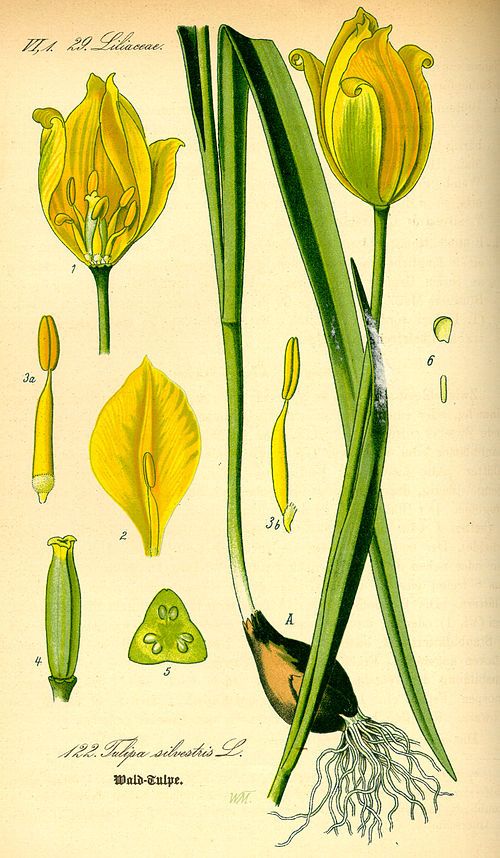
But where is the original tulip, the Wild Tulip, Tulipa sylvestris? 🤔
Tulipa sylvestris, the Wild Tulip, or Woodland Tulip, is an Eurasian and North African species of plant in the lily family. “It was introduced from the Mediterranean to northern Europe in the sixteenth century and became widely naturalized”. (https://www.nature.com/articles/s41598-022-13378-9)
Who first introduced tulips to Europe is not completely clear, but it may well have been the “French diplomat and naturalist Pierre Belon” (ibid) around 1540, during his travels in the Orient.
Yes, though you may have thought Tulips are native flowers to Holland, they were introduced, albeit about more than 400 years ago.
“The Netherlands, known for its tulips, is the world’s largest producer and exporter of tulip bulbs. In 2021, the value of the tulip bulb export in the Netherlands was over 250 million euros.” https://oggardenonline.com
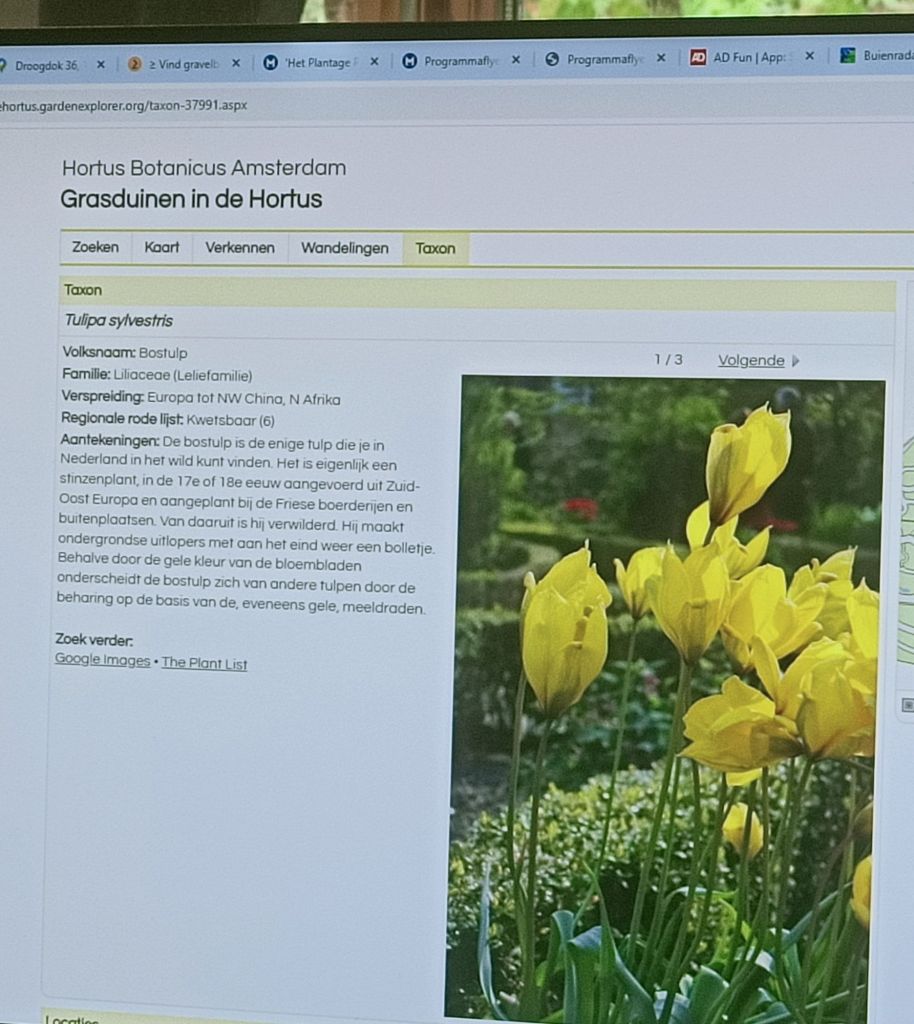
However, still keen to find the original Wild Tulip species, the search ended up at the Hortus Botanicus in Amsterdam. Of course, to see any tulip in bloom one must see them in the spring, but now, in late summer/early autumn, seeking them as a bulb for planting is the only option. After discussion with two very helpful staff at the gardens, they explain that they do have Wild Tulip bulbs, though not for sale to the public, but planted in their grounds. Unfortunately, their location is not in a public area; however, they show me on the computer evidence on their database that they are there.
And here they are, Tulipa sylvestris
It would have been more eventful to have found the Wild Tulip, or Woodland Tulip, as bulbs that could have been planted, but at least we found them. It’s rather a pity that the hybridised colourful versions have completely taken over the sales markets from the original wild species: I wonder what the pollinators think about that…🐦🐝🦋🪲
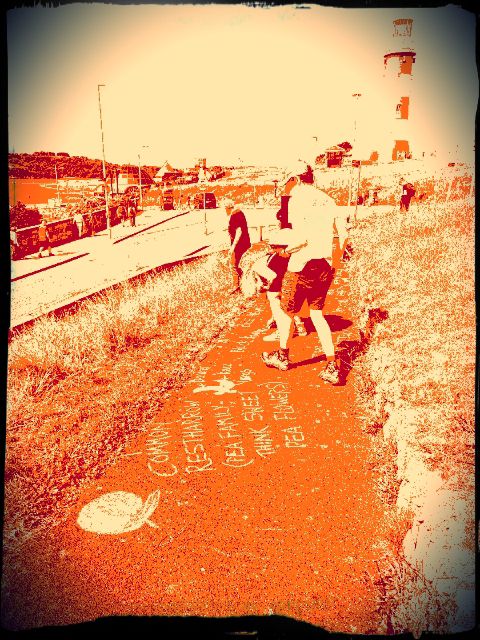
Whilst walking and chalking on Plymouth’s Hoe, we met a lovely French lady and her two young daughters visiting from Paris. They joined in, chalking flowers on the path, and commended our work for raising attention to urban wildflowers, which are key to the survival of pollinators in cities.
Our French guests joining in chalking flowers 🌼🌼🌼
We explained how this consciousness raising supports the non-use/ banning of chemical pesticides, which ultimately destroys the biodiversity we are highlighting. She then informed us of a bombshell: the “Duplomb law”.
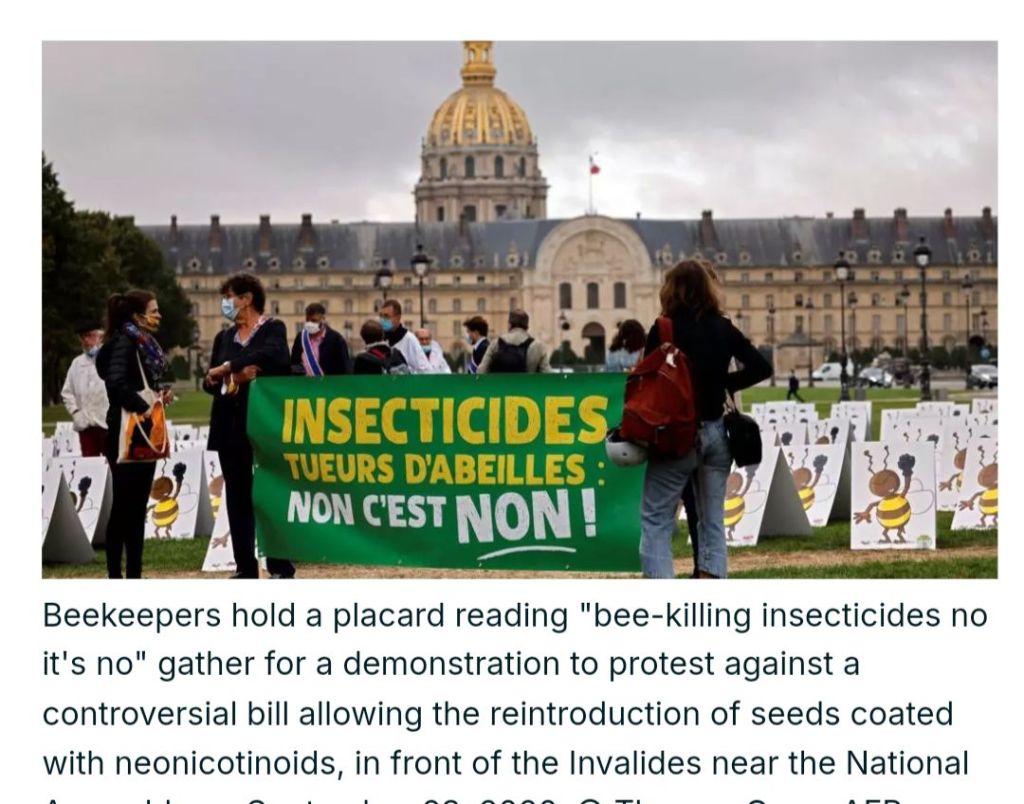
Protest in France
The “Duplomb law” is being hotly debated now, with over 2 million people having signed a petition against it. This new law is overturning a previously banned toxic pesticide, acetamiprid, to be used across the country in the agribusiness. Many “Michelin-starred chefs, school canteen cooks, bistro owners and farmer-restaurateur collectives have spoken out” against this toxic from the “neonicotinoid family saying: “We restaurateurs are in this business to feed, not to poison.” https://www.france24.com/en/france/20250728-feed-not-to-poison-french-chefs-push-back-against-pesticide-law-duplomb
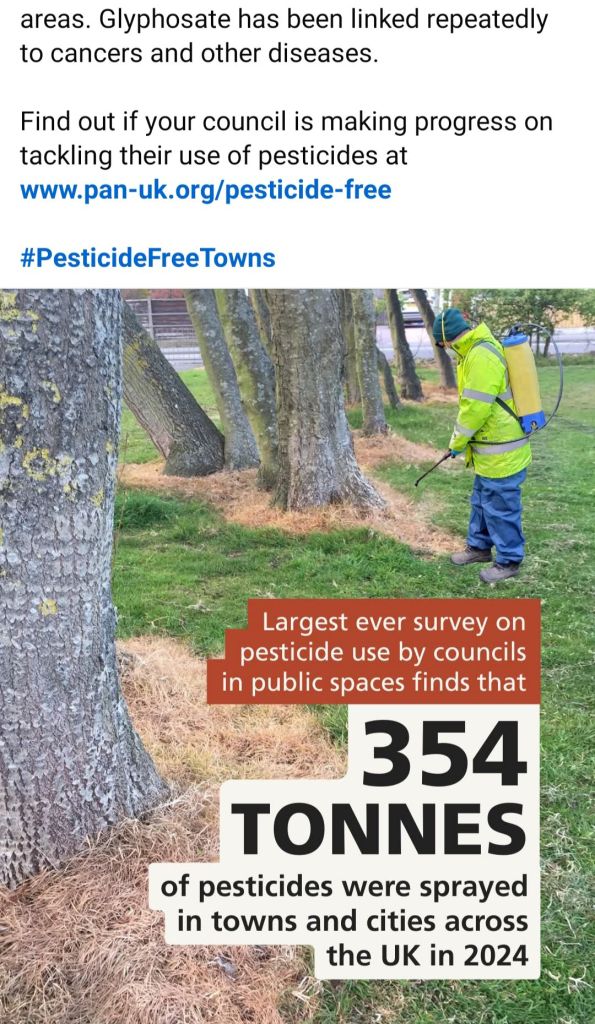
“France is the leading agricultural power in Europe and is committed to offering healthy, sustainable and traceable food”, states the https://www.businessfrance.fr website, so the ruling on this will have far reaching implications and possibly for the UK also. By relaxing rules and regulations about the standards of food being produced and sold, in favour of economic growth (greed), in one country will certainly have a knock-on effect in other countries. In the UK, we are currently pushing for councils to ban the use and sale of pesticides, whilst some have done so others, clearly, haven’t.
Check the Pesticide Action Network website to see if your council is ‘pesticide-free’
Pollinator populations around the world are declining at an alarming rate over recent decades (Goulson et al., 2015), and “disappearing habitats and use of pesticides are driving the loss of pollinator species around the world”. https://www.cam.ac.uk/stories/pollinatorsriskindex
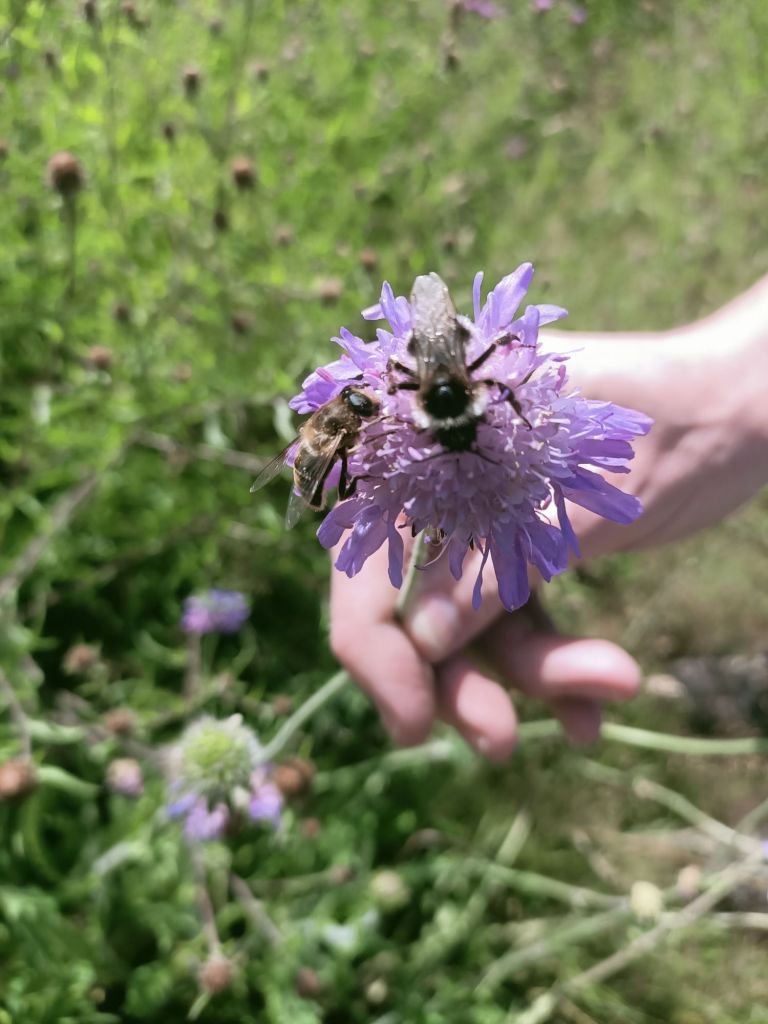
Ladybird on Dock plantBees on Field Scabious
We’ve known this since the 1960s with Rachel Carson’s research and subsequent book: “Silent spring is acknowledged as the ‘effective beginning’ of ‘toxic discourse’, and as a pivotal contribution to emergent modern environmentalism” https://pmc.ncbi.nlm.nih.gov/articles/PMC5554789/
This French lady was clearly distraught by this threat. She said: “I worry for my children; what kind of world will there be for them…if this goes ahead I will have to buy bio (organic) food… this law will effect all of biodiversity.”
So, by the 7th August share this post with everyone you know, especially anyone who lives in France or has any connection with food production and cooking, to send a message to President Macron at: https://www.elysee.fr/en/contact/
Please feel free to copy and paste any part of this blog in your message to President Macron. ✊
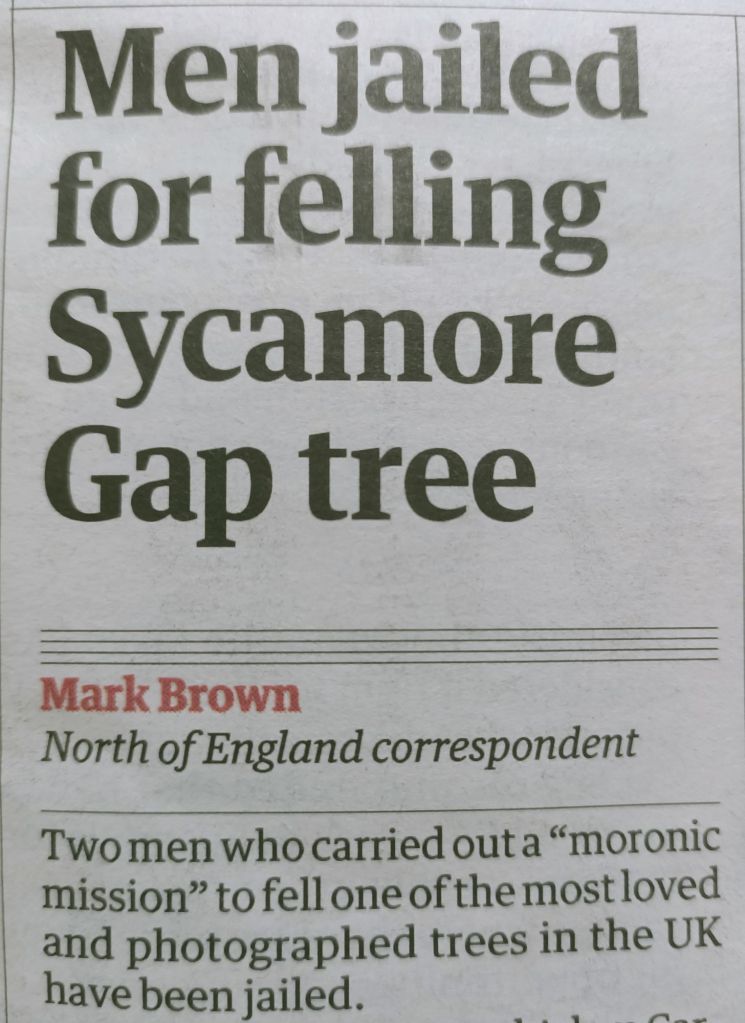
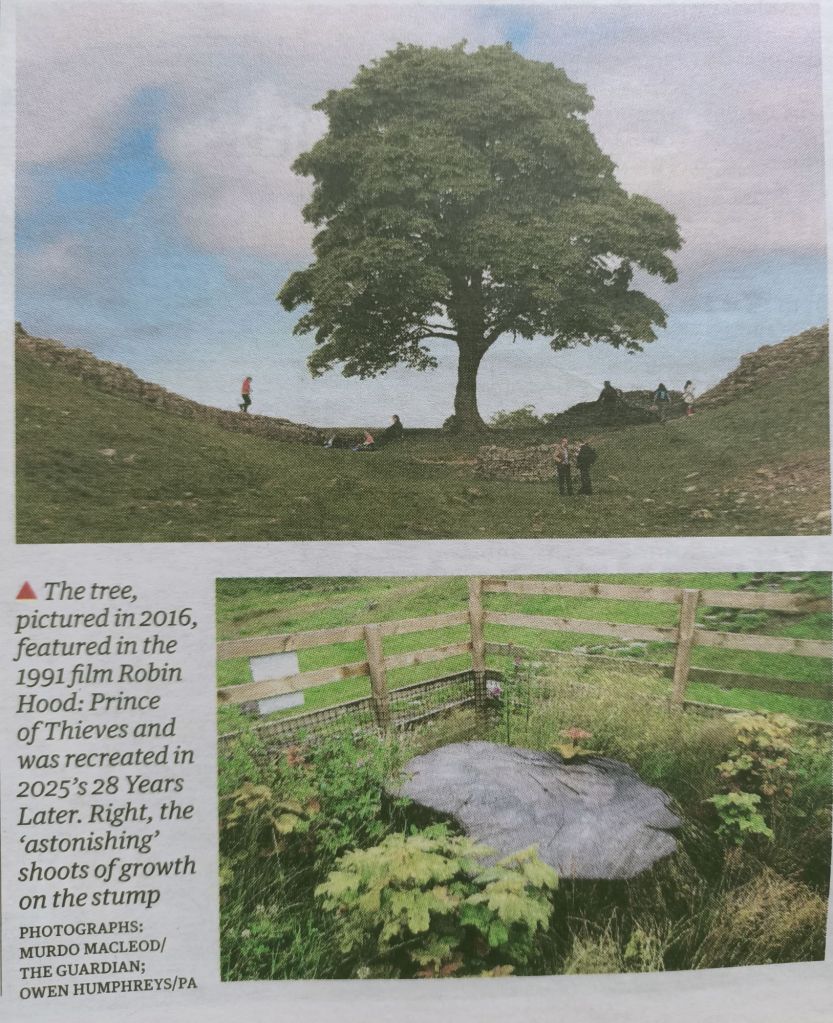
The men responsible for chainsawing the Sycamore Gap tree “were each given sentences of four years and three months”, stated The Guardian on 16th July, 2025.
Although the charge was one of criminal damage, “the attack… was met with sadness, disbelief and anger that rippled around the world…the felling caused widespread distress”. Generally, acts of criminal damage only effect the immediate owners of property or items involved, this case had a far different and far reaching impact, as the mayor for the area stated: “the sentence could never reflect the devastation we all still feel for the loss”. The loss is a living breathing life “that brought only joy and happiness to people”.
It’s not an inanimate object, it’s a beautiful life. So, with this legal story a couple of questions arise: firstly, is this a case of criminal damage or ecocide? Secondly, if killing a tree results in a custodial sentence, why are we seeing so many trees being killed across the country without any criminal investigation or sentencing? Is it acceptable for corporates and councils to destroy trees, but not so by two men on a “moronic mission”? https://www.guardian-series.co.uk/news/national/uk-today/25315781.sycamore-gap-men-jailed-4-years-felling-iconic-tree/
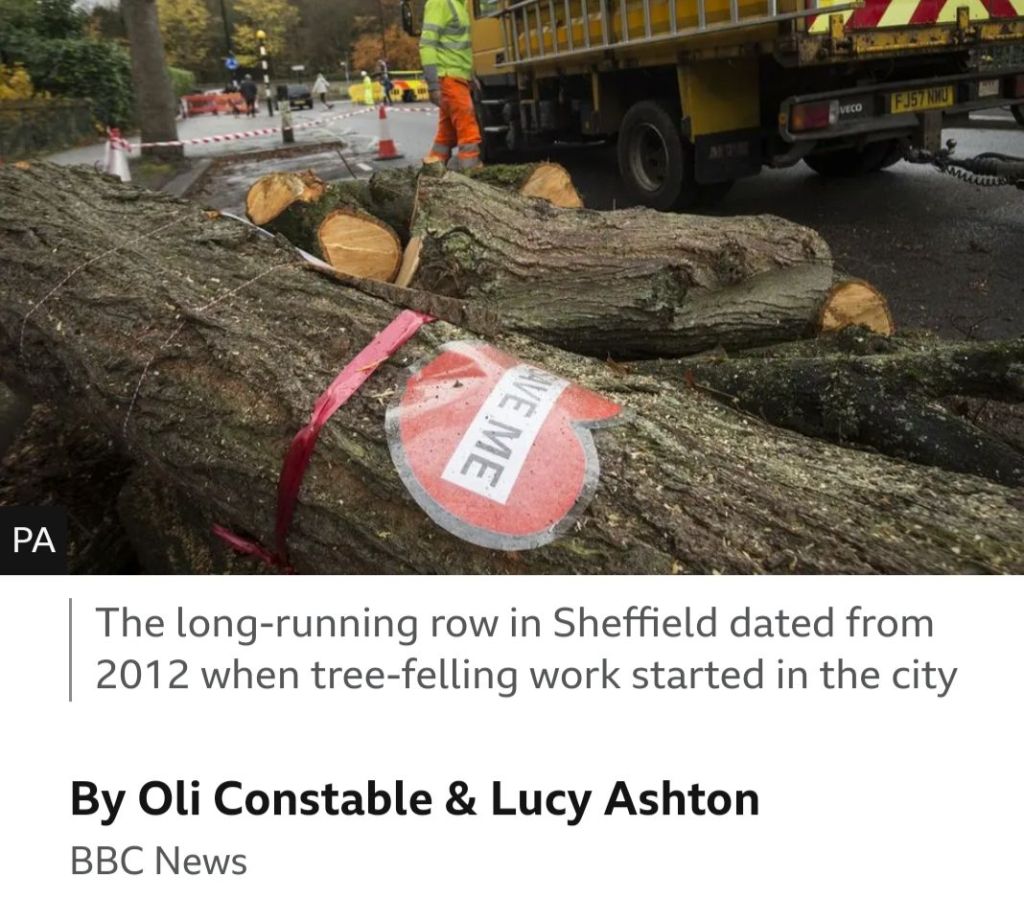
“Thousands of trees were felled as part of a £2.2bn street improvement project” in Sheffield back in 2012. “…the authority and contractor, Amey, had ignored the value of street trees and did not anticipate the views of significant numbers of residents”. https://www.bbc.co.uk/news/uk-england-south-yorkshire-64863130
In Plymouth, in March 2023, 119 trees were felled in the city centre, under cover of darkness, despite outrage from many of its citizens. A subsequent court case hit the national headlines and a report stated “council failings in governance, project management, engagement, and staff wellbeing.” https://www.plymouthherald.co.uk/news/plymouth-news/armada-way-trees-council-told-10205168
In Derbyshire recently, dozens of trees were felled beside a railway line. Network Rail contractors stated it was for “essential vegetation management”; however, residents and a local councillor feel the work was: “absolutely devastating for the area”. “Contractors had gone far and beyond what they needed to do. I just burst into tears. I saw the birds, the thrushes, and it was just heartbreaking”. https://www.bbc.co.uk/news/articles/c0719jmjxx0o
Every tree is beautiful and has a Right to Life
The beautiful Sycamore Gap tree is representative of all trees, each and every tree is a life which gives oxygen, temperature protection, soil stability, absorbs pollution and provides habitat for thousands of insects, birds, mammals, lichen, fungi and moss. We all need to rethink trees – respect trees, respect what they do for us and every living being on this planet and stand up for their right to life.