On a recent visit to London, I ventured out one day and left my chalks behind. Heck, how could I do such a thing?! Chalks are the ‘weapons of mass education’ which should be carried at all times, by a true Rebel Botanist: always ready for street art education, to highlight urban wildlife. Despite the lights and sights of the skyline, and the glory of galleries and museums (which is where I was heading) I couldn’t be distracted from the greatest art of all – nature!
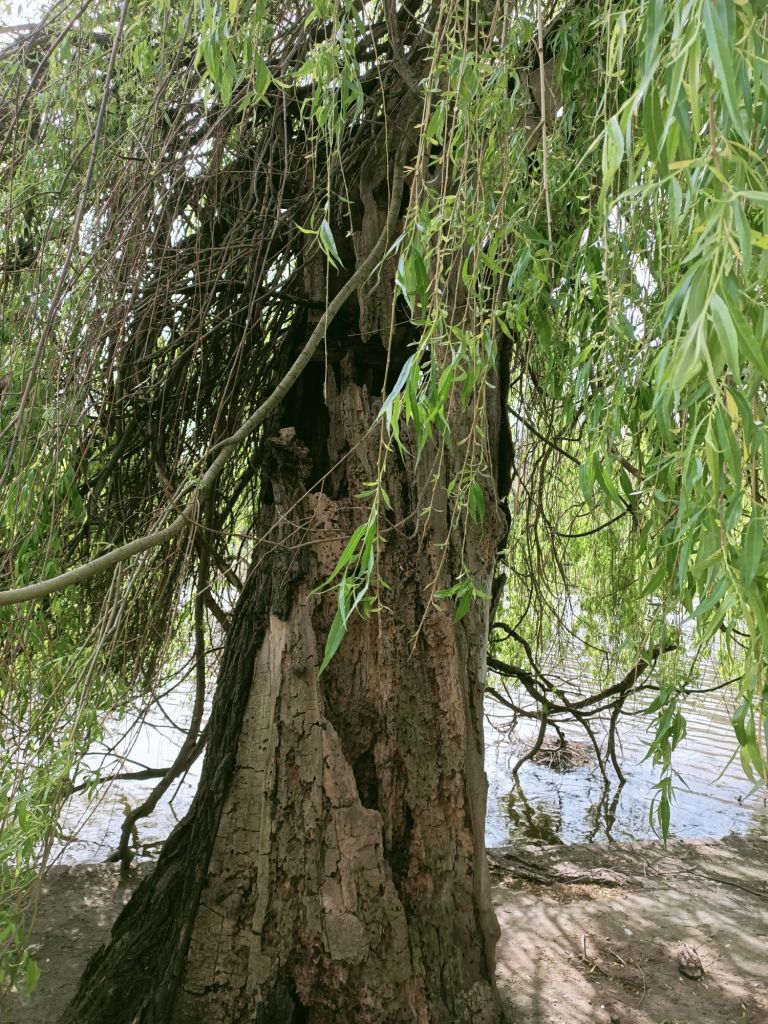
A willow in St James’ Park grabbed my attention because despite it’s hollowed holey twisted trunk, which suggested decay, it’s branches were decorated with vibrant green leaves dancing in the sunshine. Am I the only one who sees this, as I stand in awe and people pass by? A chalked message would distract their attention to see this beauty, but alas, no chalk. No chalk, no words. No words to draw attention, to inform, to recognise: my words were lost. It reminded me of McFarlane’s book, Lost Words, written in response to nature words being omitted from children’s encyclopedias. My omission of chalked words gave me a sense of guilt and frustration. I walked on.
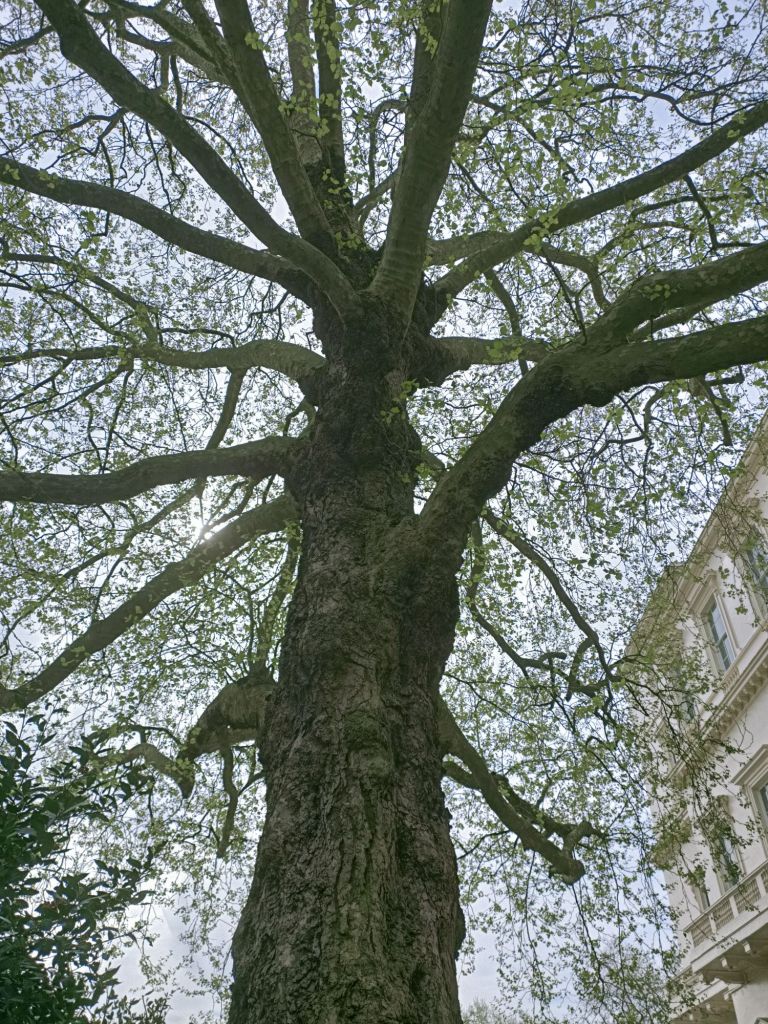
Ah, a London Plane (Platanus x hispanica) shimmering with thousands of tiny green emeralds over my head with arms outstretched in a warm embrace to the sun. Despite being a hybrid, it is extremely successful in urban cities, due to its outer bark, which it sheds to rid itself of environmental pollutants from cars and industry. This species was around long before city pollution, so I wonder why this characteristic evolved? When you really look and think about nature, so much curiosity is aroused.
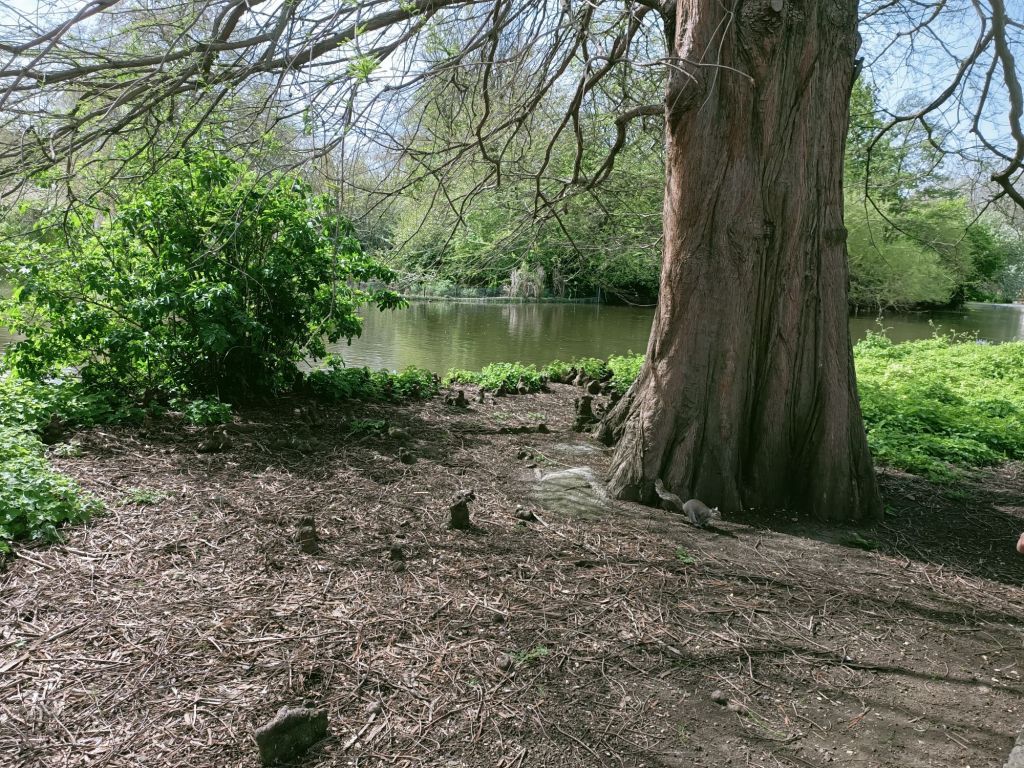
Further on I came across a Swamp Cypress (genus: Taxodium) with its roots erupting from the soil surface like snake heads rising to the sonorous sounds of a snake charmer. These outgrowths are in fact taking in oxygen for the roots below. This genus of tree has only two species, this one is the deciduous T. distichum from SE USA. Oh, to write this information on the smooth surface of the path; can you imagine my frustration?
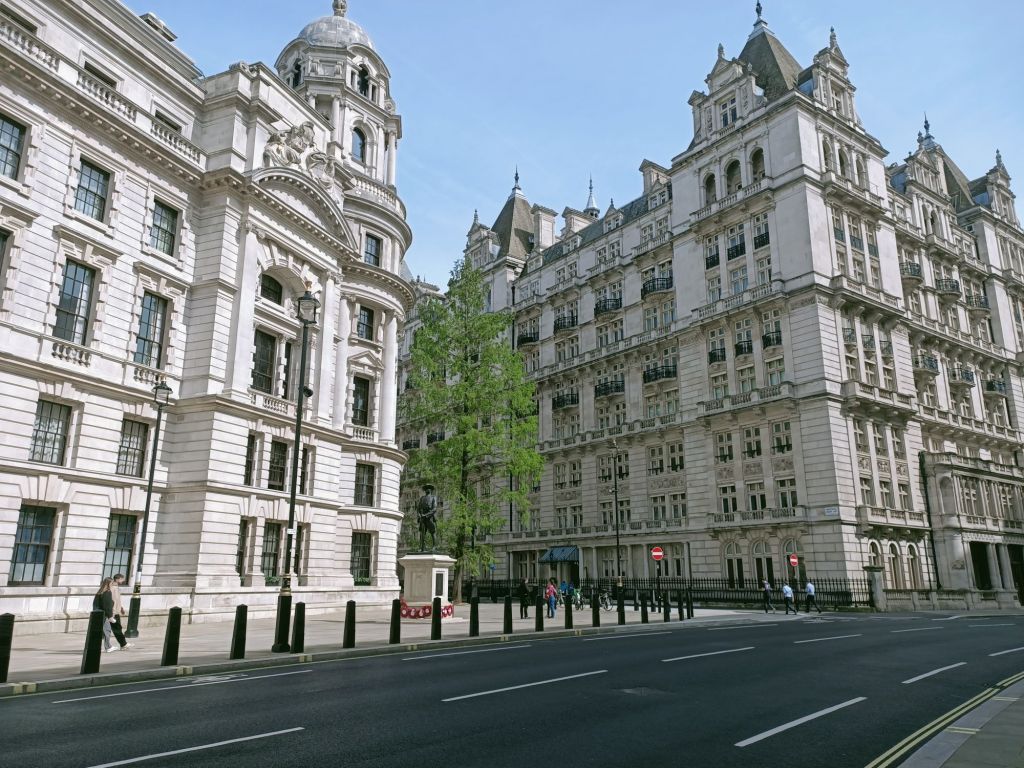

A stunning Dawn Redwood, Metasequoia glyptostroboides, resolutely rising in Whitehall, was breathtaking. This species was once thought extinct in the wild, due to loss of habitat, until some were found in central China in the 1940s, I believe. Clearly not in its natural environment, but providing a wonderful show of wildness in an otherwise sterile stand of Government buildings. A lone Gurkha stood guard before it. I desperately wanted to scribble its Latin name upon the cleanest smoothest paving stones at its base. What else are they there for, after all? 😉
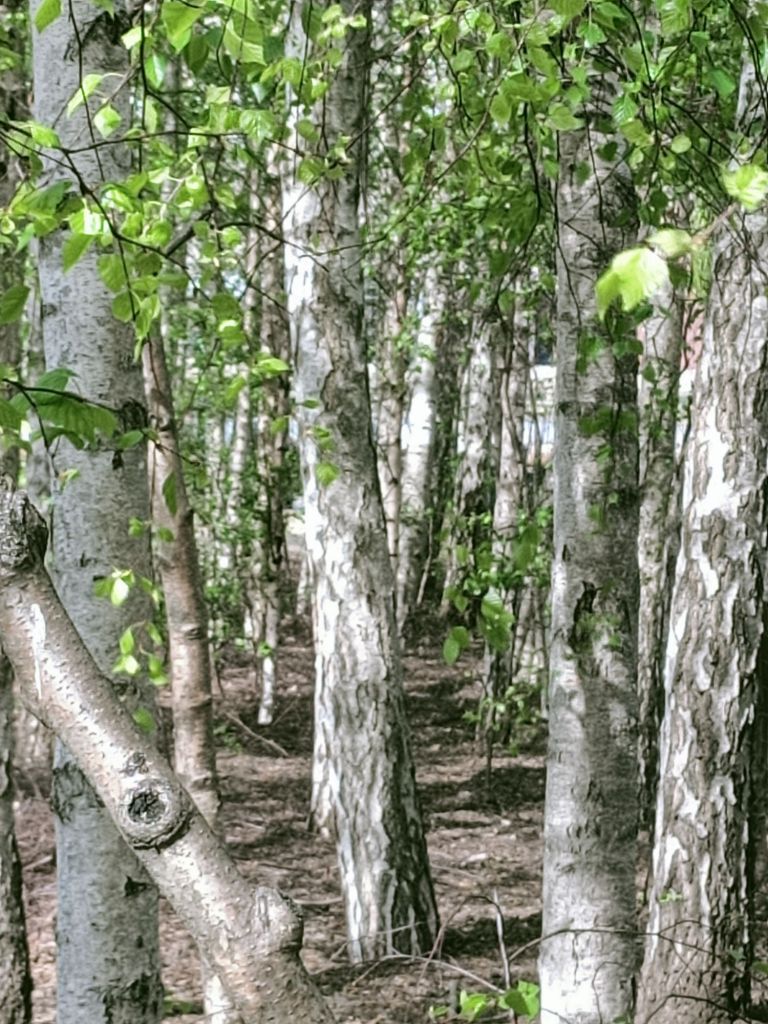
This lovely glade of willows (Salix) outside the Tate Modern, offered quiet calm to the busy-ness around it. Oh, how I wished to describe the light shafts glinting through the slender elegant trunks and dainty leaves, to encourage people to stop and look. Dylan Thomas called this effect ‘windfall light’ in his poem Fern Hill, and C.S. Lewis described it as ‘Godlight’. In Japan, they use the word Komorebi, 木漏れ日.
Did you know that Canada’s Inuktitut dialect has 53 words for snow, and in the Iñupiaq language of Alaska, they have 70 words for sea ice? Yet, in Britain we struggle to have one to describe the effect of light through leaves…? Could this be linked to the fact that only 7% of our native woodlands are in good condition, according to the Woodland Trust? Consider, also, the fact that Robert MacFarlane wrote his widely acclaimed ‘Lost Words’ book, in response to a children’s encyclopedia omitting everyday nature words, like acorn, bluebell and wren. Whilst our language is a dynamic one, it should not be ‘losing’ words which are in fact vitally important to our existence.
Linguistic relativity theory suggests that a language’s vocabulary determines or shapes the thought processes of the speakers; therefore if we are not using these words, that recognise the biodiversity in which we exist, how are we to save it? With the eroding of our nature vocabulary and the recognition of the visual ‘impairment’ of ‘plant-blindness‘, people are becoming cognitively plant-blind. This planet is a living breathing biosphere of life, of which we depend, and therefore it should be at the forefront of our consciousness and conversations.
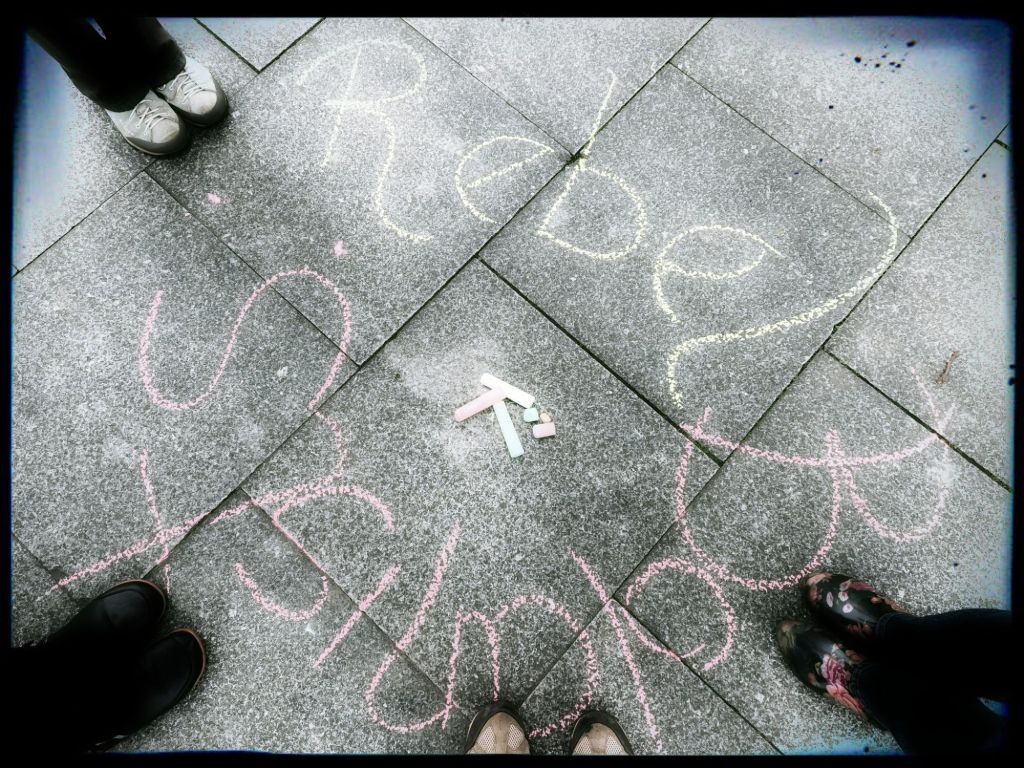
So, my chalks will not be lost or forgotten again! Education on the streets is absolutely necessitous to open our eyes to the beauty around us, that is Nature. We ARE Nature.
 #RebelBotanists