Thanks to #plantsages for the photo.
After our visit to Cabilla, Guy Shrubsole, author of the Lost Rainforests of Britain book, said: “Have you been to Dizzard yet, it’s even bigger?” Dizzard…? Where’s Dizzard…? And so the investigation began on this North Cornwall temperate rainforest.
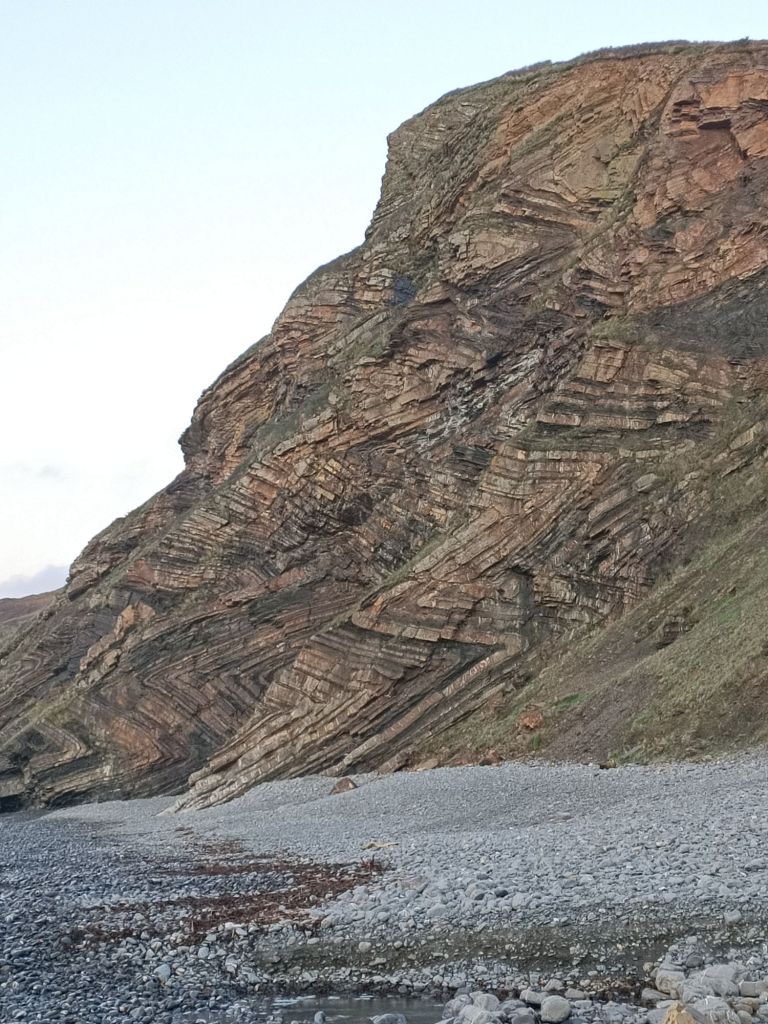
We headed for our destination, on the coastline, near Millook, with its stunning chevron rock formations,which are also well worth a visit.
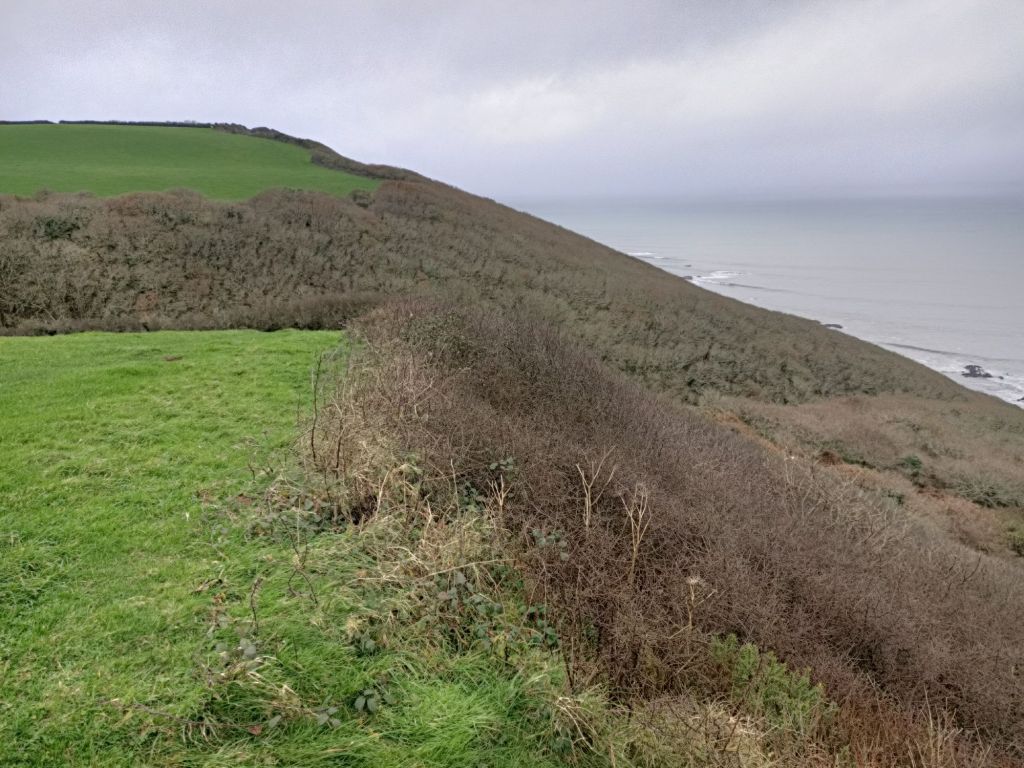
Our walk started over a stile and across a field.

The name Dizzard comes from the Cornish word, Dyserth, meaning very steep and perhaps it is due to its steep cliff location, beside the sea, that it has survived centuries of human destruction.
In the 8th century, more than 25% of England had woodland cover, imagine that; now those ancient woodlands have reduced to only 2.5%. Ancient woodlands are documented as those having existed continuously since the 17th century; this continuity adding greatly to the amount of stored carbon and the incredible understory entanglement of the mycorrhizal network, which inextricably links tree roots and fungi in a symbiotic relationship.
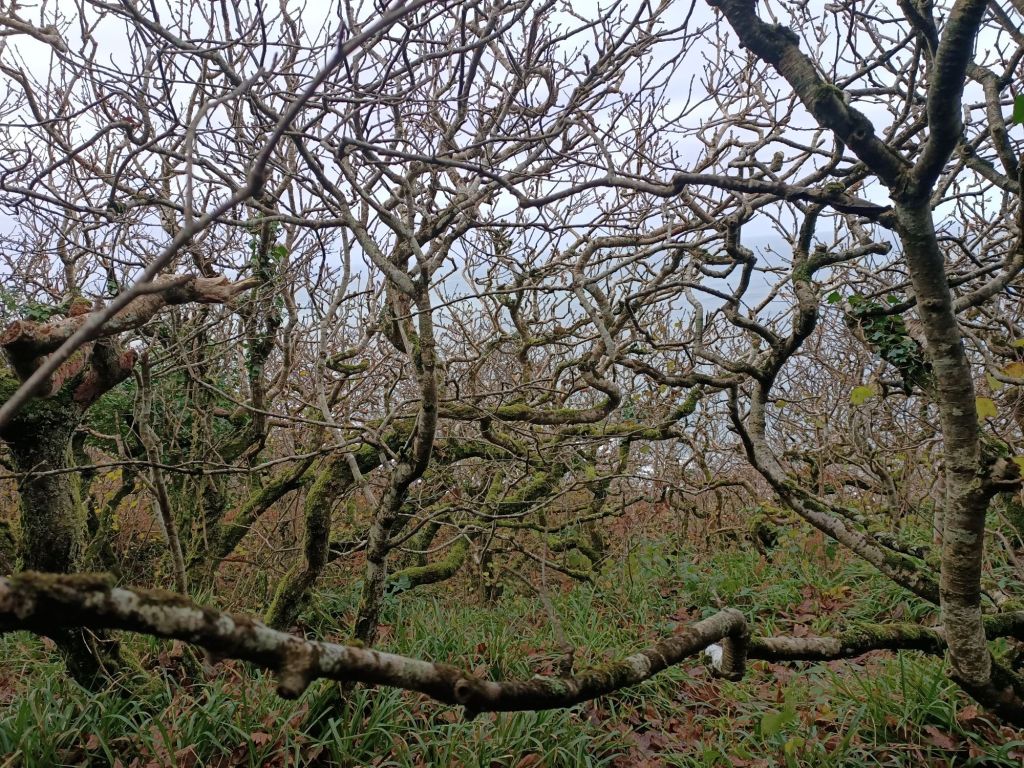
When we look at the gnarly twisted intricacy of the ancient trees above ground, we can only imagine the development of life below, beneath our feet.
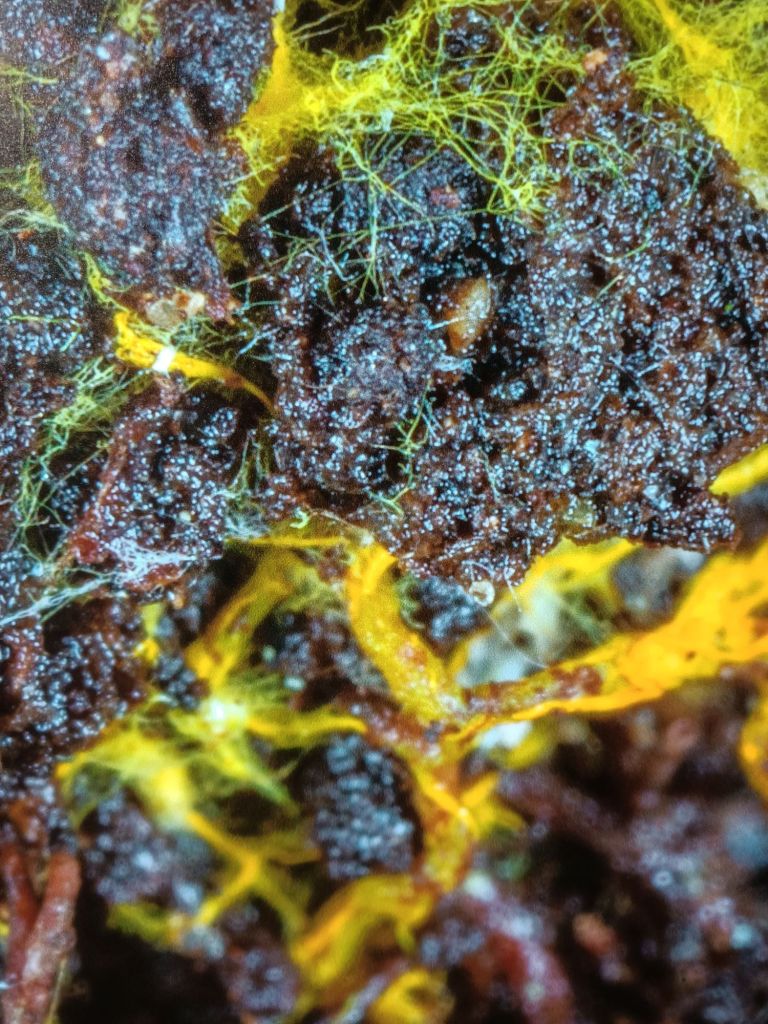
My phone’s camera, hi-tech though it is, cannot capture the living beauty of such a place: the smells, temperature, textures – the holistic sensorial experience of being at one with such an ancient undisturbed place. However, the visual record will serve to share its aesthetic existence.
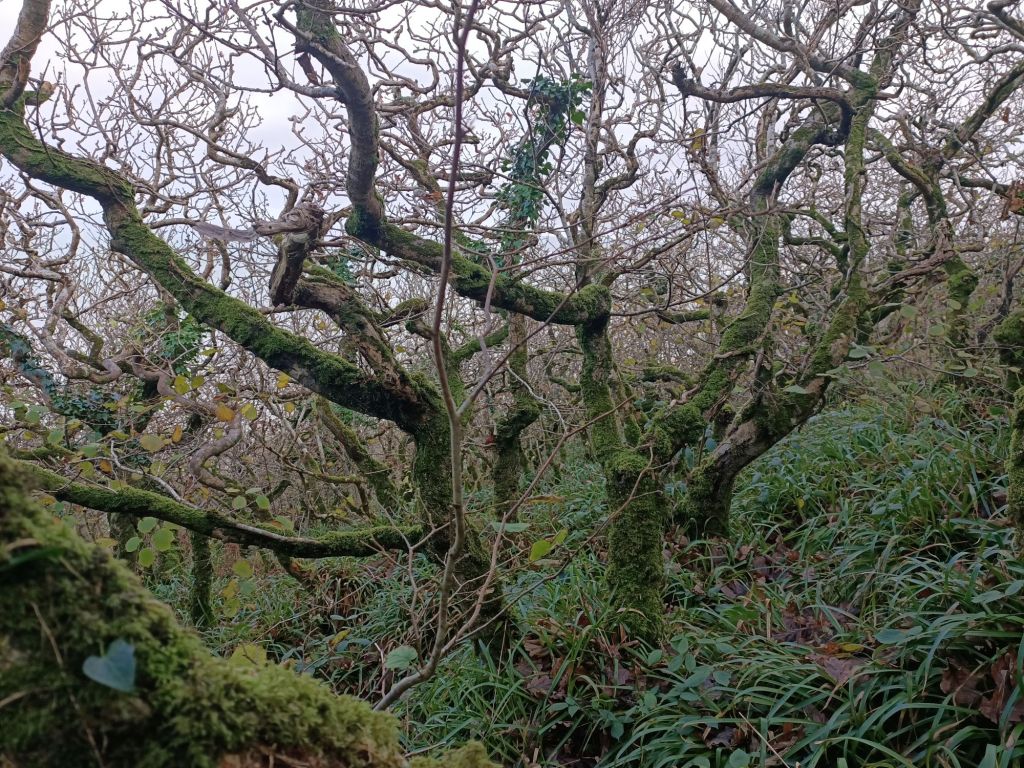
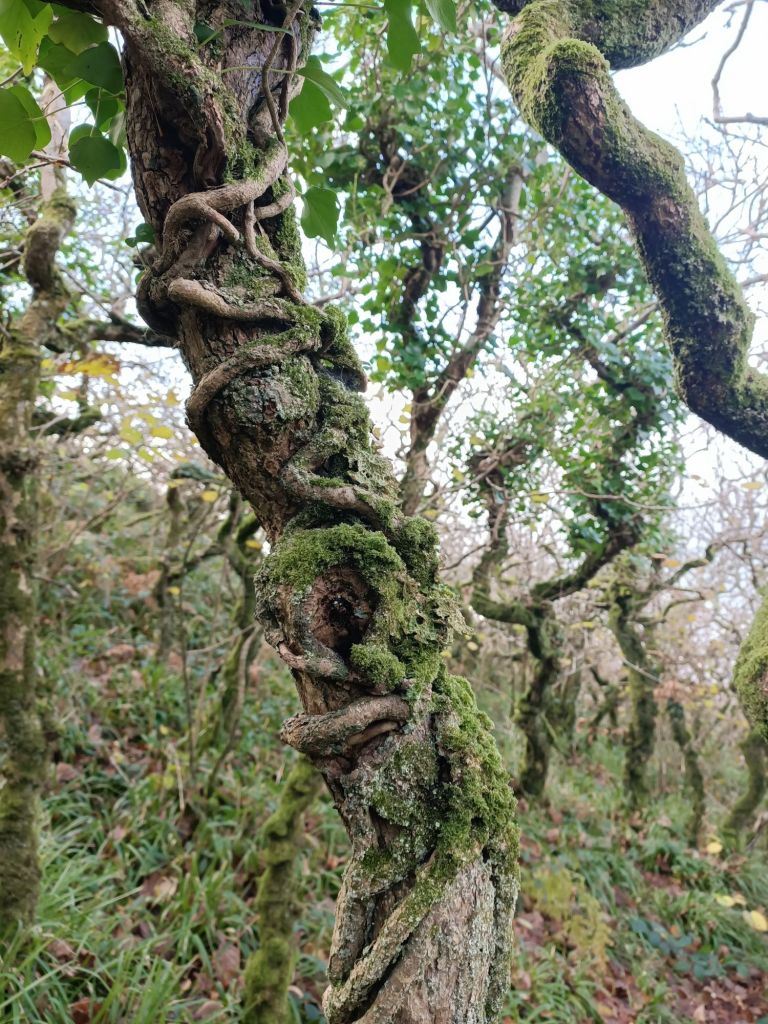
You can’t mistake an ancient woodland from a veteran woodland, though both are incredible wildlife spaces providing a wealth of varied benefit to the environment. Arriving at the edge of Dizzard, the strange branching shapes resemble the Ancient Greek Gorgons: Medusa, Euryale and Stheno, with their hair of snakes writhing wildly from their heads.
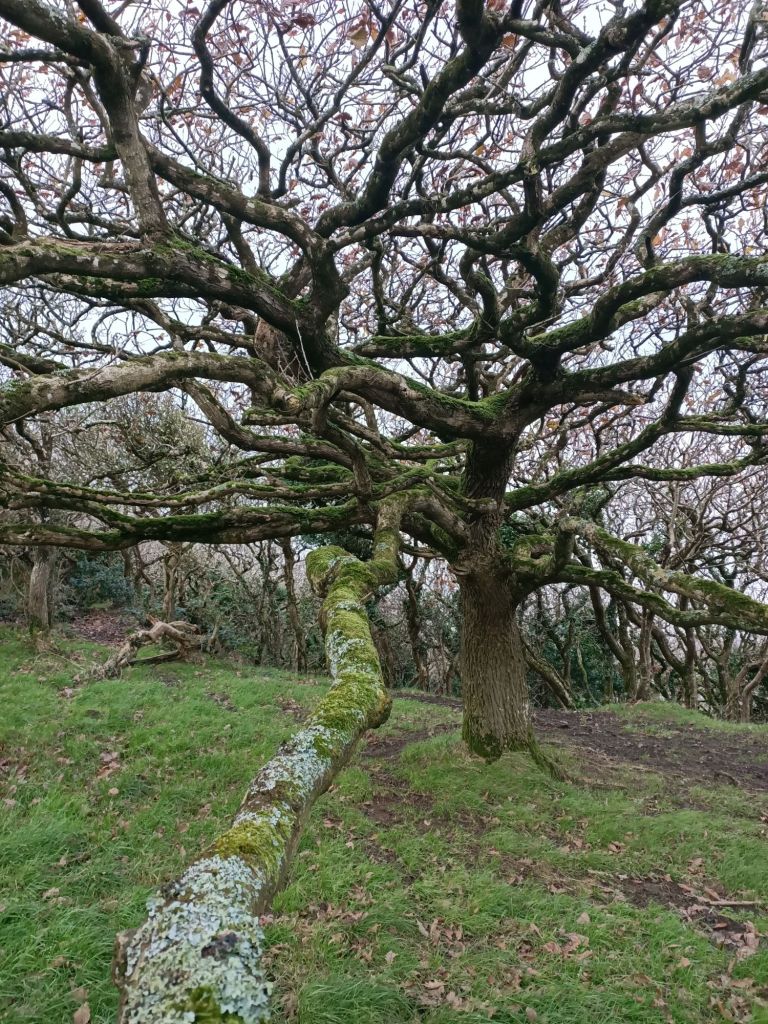
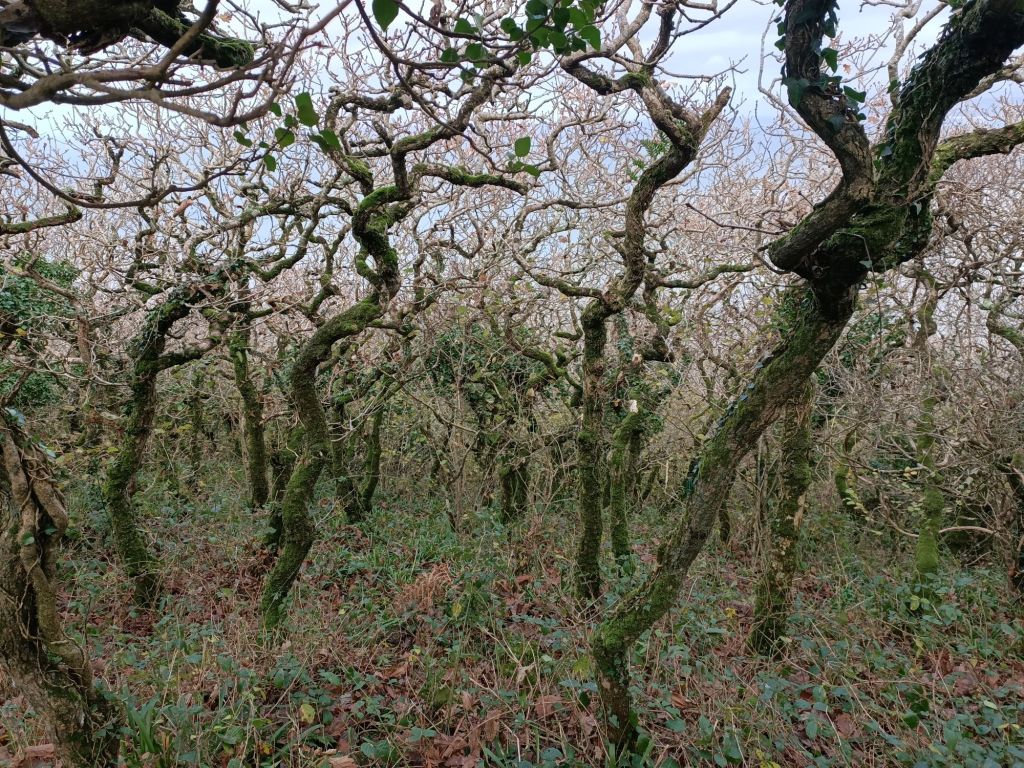
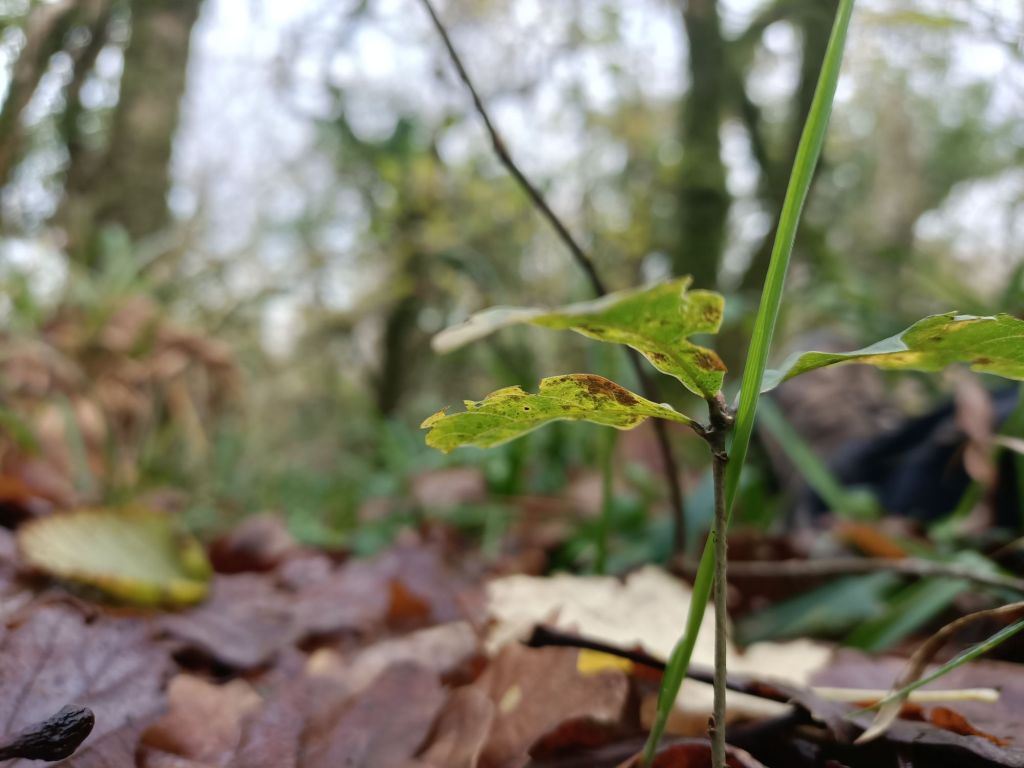
We tread slowly and carefully, checking for any new life popping its head up through the thick soft carpet of fallen leaves, and wander in wonder at the tree branches coated in velvet green mosses.
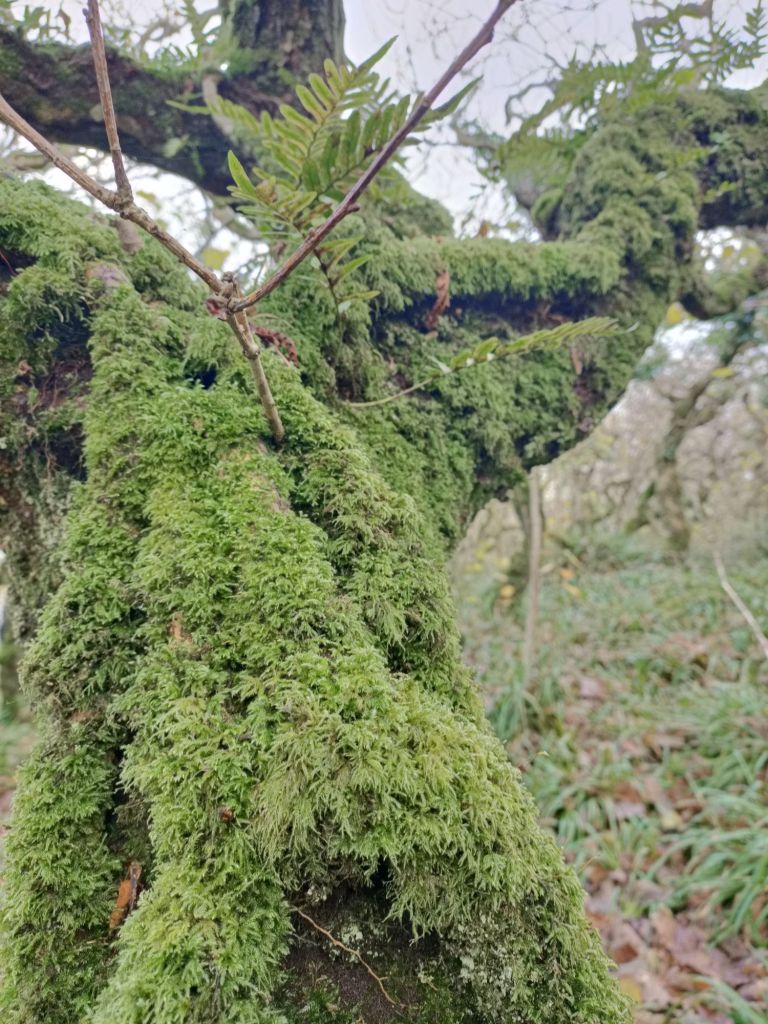
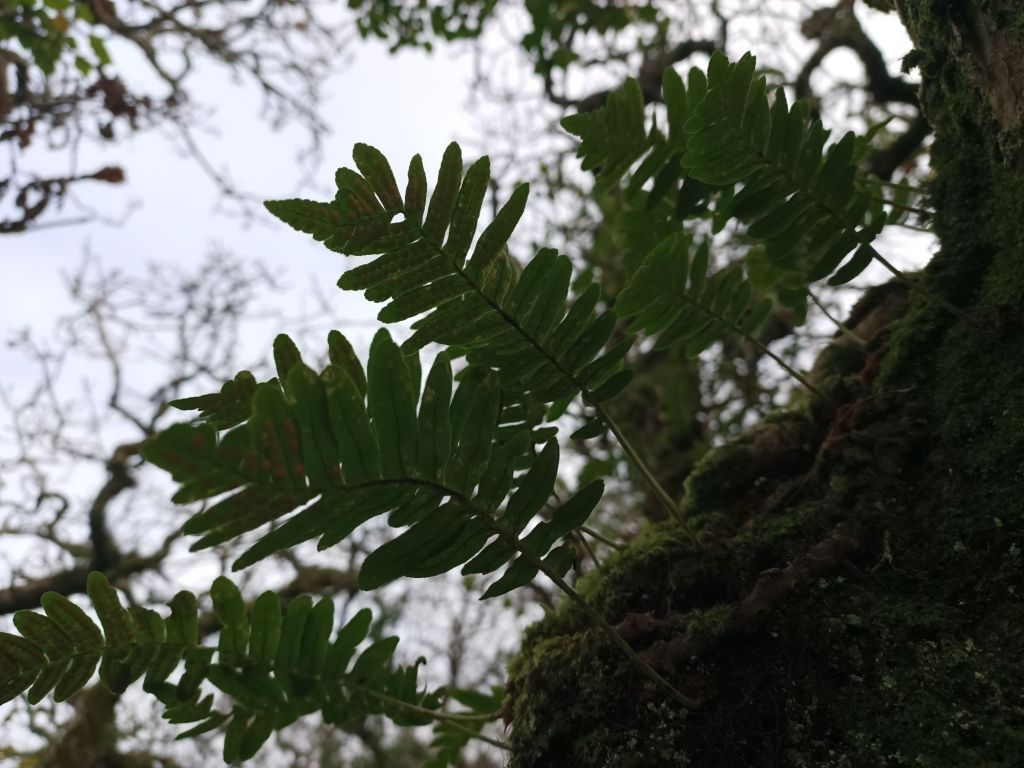
Epiphytes are abundant: mosses, lichen, fungi, polypody ferns and tiny creatures nestled between; it’s life on life on life.

Lobaria pulmonaria (Tree Lungwort)


These strange and stunning woodlands are essential in our fight to prevent further climate warming, as they sequester and store atmospheric carbon.
The Woodland Trust states: “The entire woodland ecosystem plays a huge role in locking up hundreds of millions of tonnes of carbon, including the living wood, roots, leaves, deadwood, surrounding soils and its associated vegetation.”
There can be no just reason for destroying any healthy tree, whether ancient, veteran, rural or urban, wouldn’t you agree? 🙂🌳
 #RebelBotanists
I am trying to contact Guy to invite him to speak about Dizzard at Bude Literary Festival from 14-18 May 2025. Does anyone have contact details for him?
Mnay thanks
Richard Wolfenden-Brown
Bude Literary Festival
LikeLike