How we started and where we’re going…
Well, the seeds were already there: a true love of nature and a passion to protect it.
It began in March 2020, when Bang! Crash! Wallop! the Covid-19 lockdown happened. I, as billions of other people did across the globe, stopped: stopped working, stopped rushing around, just stopped…
I am lucky to have a park on my doorstep, so every day I took my exercise there, and with none of the usual pressing engagements to keep, I just kept walking, or perhaps ambling. I really started looking, listening and becoming more aware of my surroundings. I have walked this park many times before, but for the first time in my life there was no constant background din of traffic. The streets were silent. Now I could really hear nature, and…was it just my imagination or was the air sweeter too?
Another element that started me on this path was listening to The Self Isolating Bird Club: amusing, entertaining and informative, I watched it every morning, I was completely hooked! It covered not just birds, but their habitats and behaviours and their connections to other species, botanical and zoological. Armed with this information, I began really making sense of my local park, as its own ecosystem.
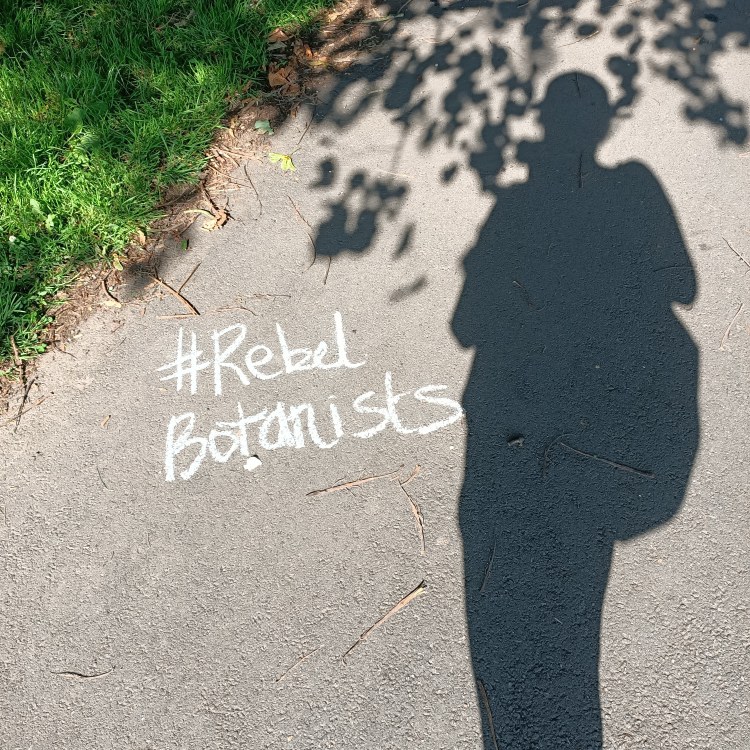
I am neither a qualified botanist or zoologist, but that’s where the fun comes in: wondering and wandering! That’s also where the ‘rebel’ came from for the name, as I wanted to make it clear to everyone that I wasn’t an expert – you don’t need to have any prior knowledge, anyone can do this!
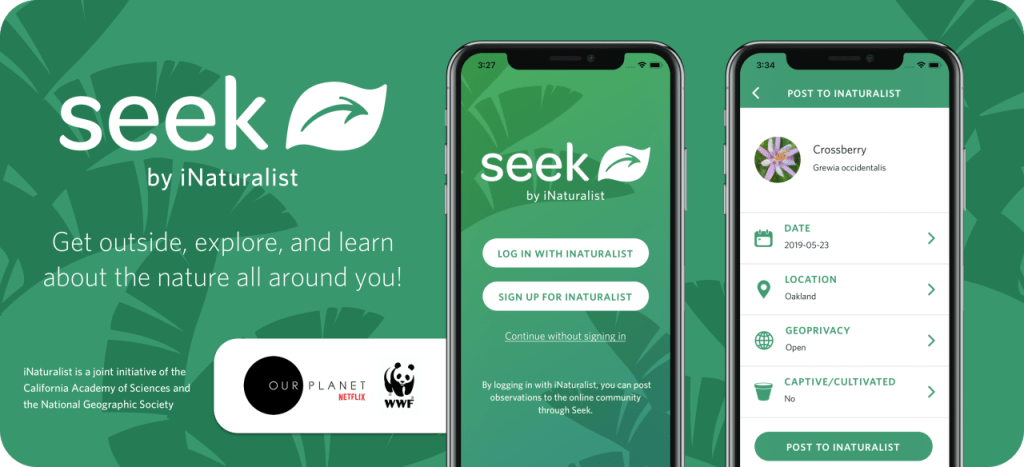
I soon realised, however, that I could name very few plants with any real confidence: I needed help. I found a brilliant free App called Seek, by iNaturalist, produced by National Geographic and the California Academy of Sciences. You point it at the plant (or any wildlife species) you want to detect, and it searches its huge database to tell you what it is. Dependent on light and the detail it can pick up, I have found it to be very accurate and still use it now despite trying several others. It will tell you the common name, Latin name, whether it’s a native species and some basic information. All the information you collect on it, adds to the database too, so you are collecting data as a citizen scientist too.
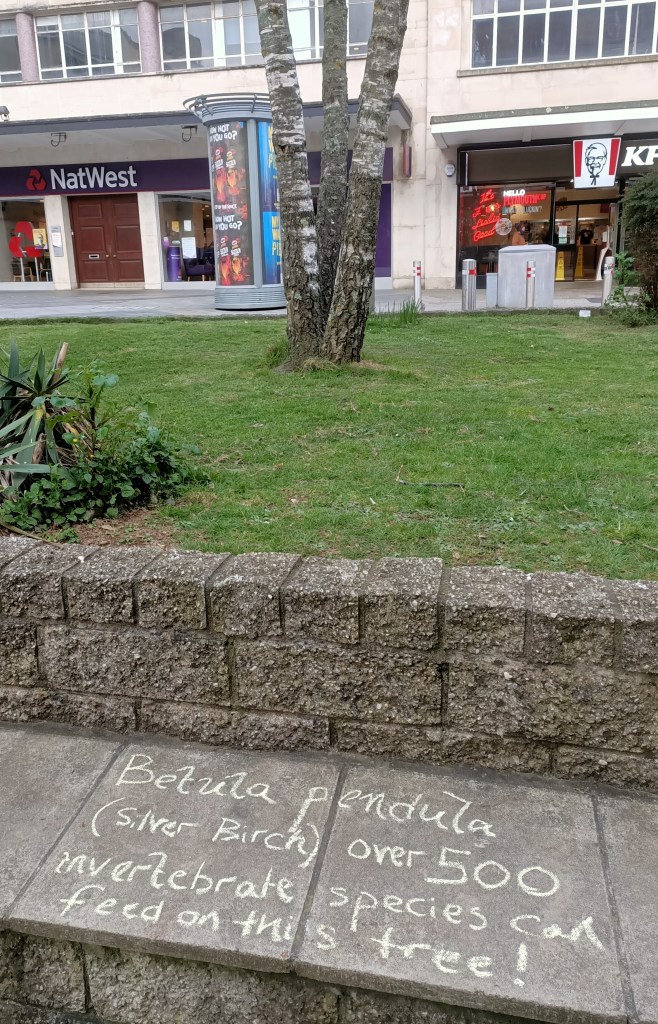
It was then that I saw a photo, on a news feed site, of Boris Presseq, https://www.boudulemag.com/2019/05/jungle-urbaine, a lecturer from the Toulouse Museum of Natural History, writing plant names in chalk on the streets – what a great idea, I thought. This would really help me remember the names, and so with the Seek App, some old nature books I pulled down off my shelves and a box of chalks, off I went!

A couple of weeks later I was joined by a friend, another passionate plant protector, and then another, who brought her own knowledge and skills from managing her allotment: the Rebel Botanists became a movement of more than just me!
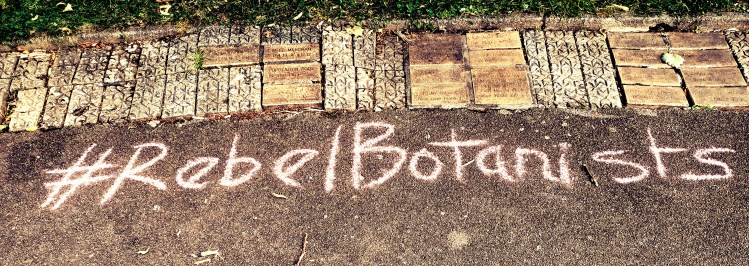
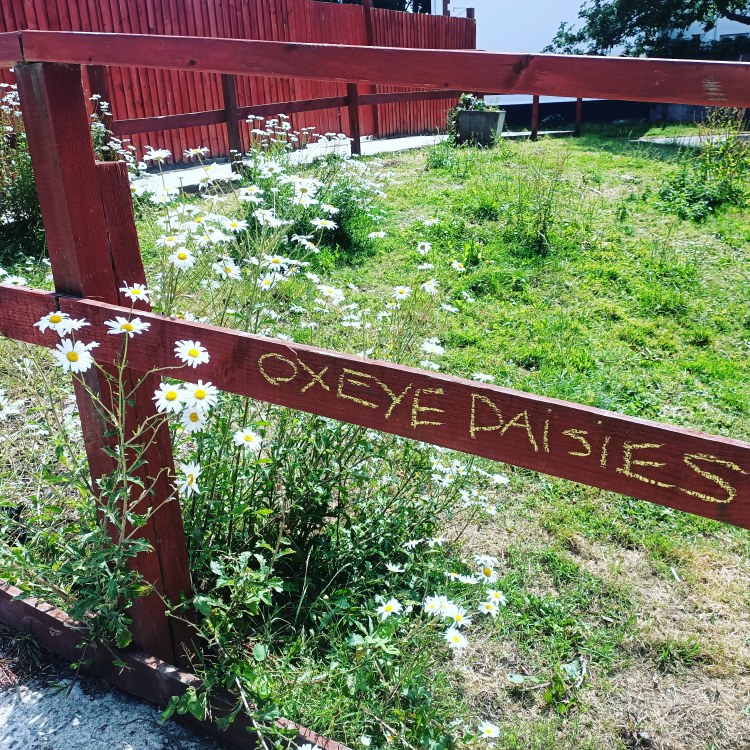
We were by now allowed to link in groups of 6 outdoors, and so we grew, walking and chalking the park pathways, the urban streets and kerbs, looking for plants poking their heads through pavement cracks, sheltering in wall crevices; those humble but incredible plants that many people walk past without a second glance.
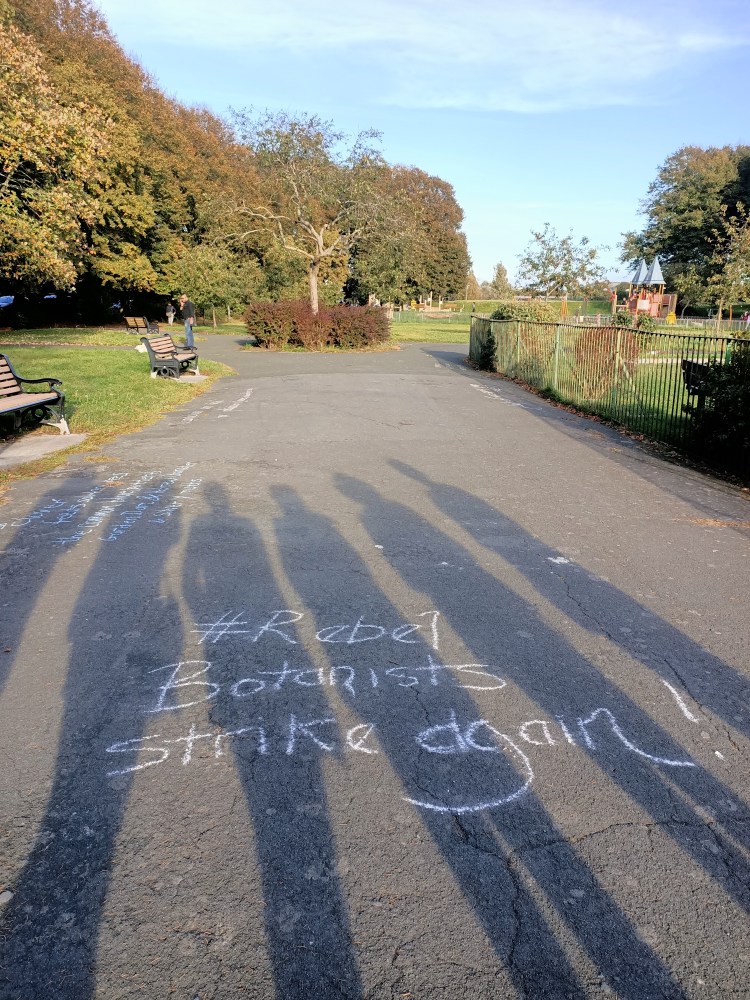
The more you look at each little wild plant the more fascinating they are and the more you realise how vital they are to native wildlife.
“The UK is one of the most nature depleted countries in the world and despite nature struggling against all odds to survive, more than 1 in 7 native species face extinction” (www.wwf.org.uk).

As well as the fun, there are very significant facts that make our street art activities really important – it’s about education! When people learn to recognise a plant, they begin to notice it and respect it. Curiosity is the first positive step to learning, for all ages. We don’t have to approach passers-by, they come to us. Every question or comment we have received has been so positive, hand-on-heart; not one negative statement yet, which, to be honest, has astounded us all!
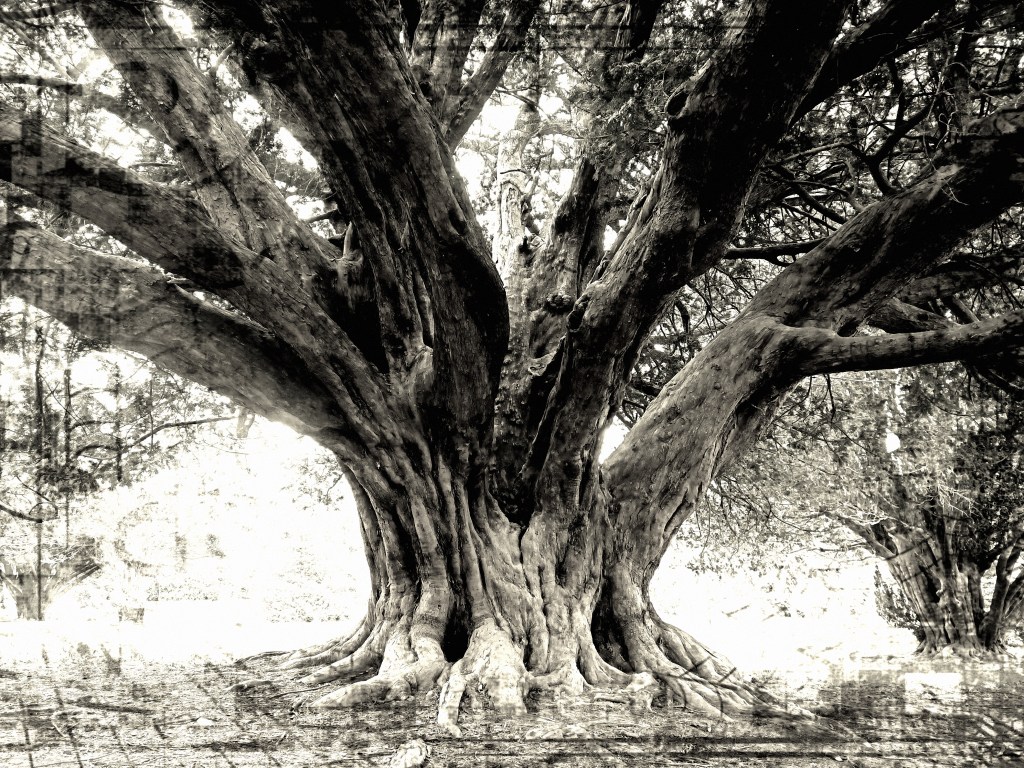
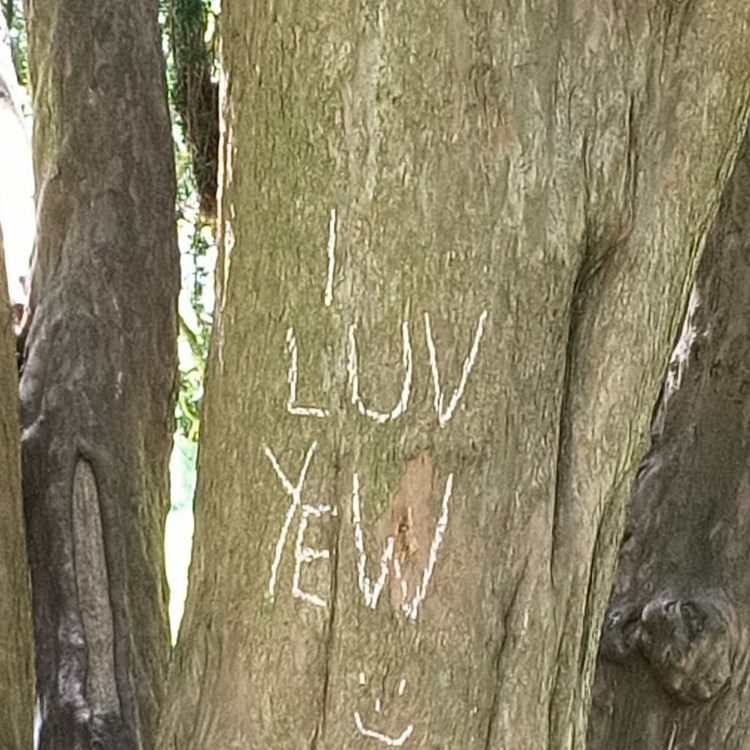
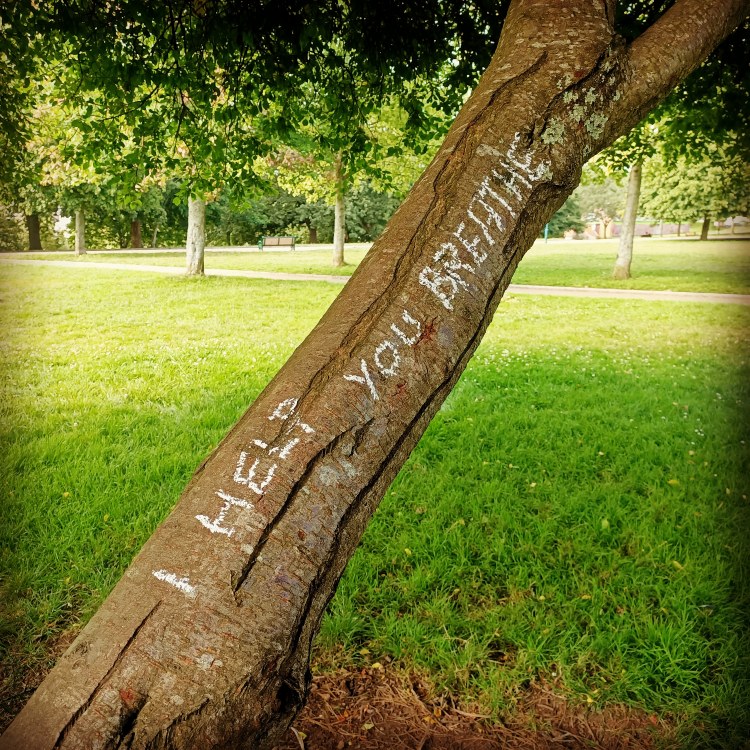
I recall in the first weeks of that spring in 2020, I chalked up a stunning Taxus baccata: ‘I luv Yew’. About half an hour later, still walking and chalking through the park, a runner came up and asked if I had labelled the tree. “Yes”, I replied, rather tentatively, it was, after all, the first time anyone had questioned me doing this. “Great!” he enthused, “I run past that amazing tree every day and never knew what it was until now, you’ve taught me something, thank you!” That was the point, on the 2nd May 2020, at which I knew how important this work could be; it was about more than me learning, it was about raising people’s consciousness to the importance of nature.
And, it’s working. In September 2020, a lovely reporter, Jonathan, interviewed us for coverage on BBC’s Spotlight programme, http://www.bbc.co.uk/news/av/uk-england-devon-54012372. This was followed by interviews with BBC Radio Devon and West Midlands Radio and, later, we were featured in the I newspaper.
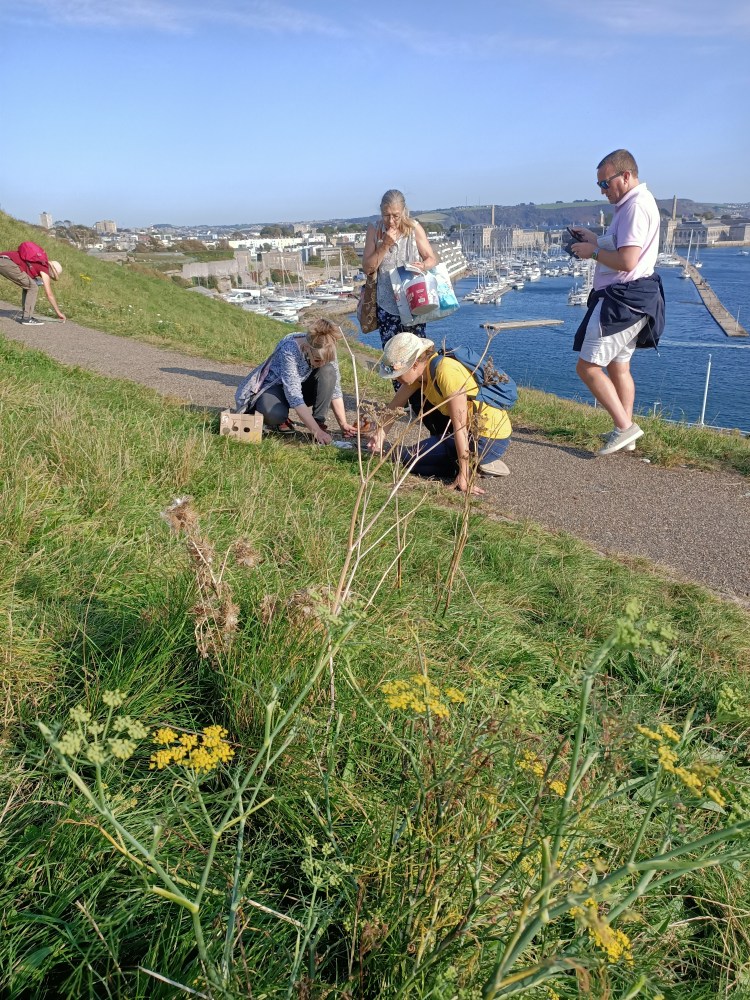
Our acts of graffiti challenge the ingrained traditional thinking of wild plants being called ‘weeds’ and being considered unseemly and untidy. We challenge the use of pesticides, which poison the soil, plants, pollinators and eventually ourselves. We promote natural native wildplants over hybridised double varieties, which have been bred to produce bigger and highly coloured flowers or fruits. These mutations lack pollen for pollinators, and so are useless for wildlife. Native plants are also preferential to non-native plants as herbivores, particularly, are unable to adapt to them, leaving them with no food source.
As well as ‘walking and chalking’, we promote plant positive activism by encouraging people to adopt a grass verge or unloved grassy area in their neighbourhood and replenish it for nature – see our projects on ‘the plot thickens’ page to find out more.
As we continue our work, new groups are shooting up and we have people across the UK and Europe following our Facebook page: https://www.facebook.com/rebelbotanistsplymouth
Our vision is for every village, town and city to have a #rebelbotanists group to respect and protect wildplants everywhere. Elizabeth Richmond (Founder)

 #RebelBotanists