Temperate Rainforests and Ancient Woodlands: a visit to Cabilla

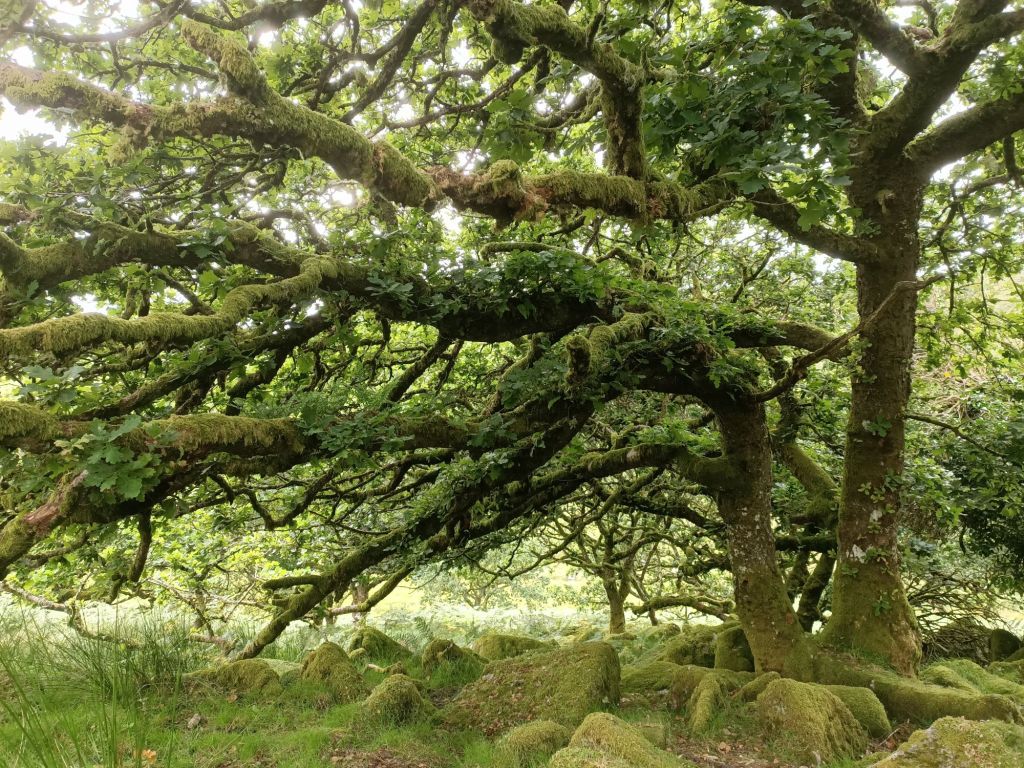
Quercus petraea festooned with epiphytes

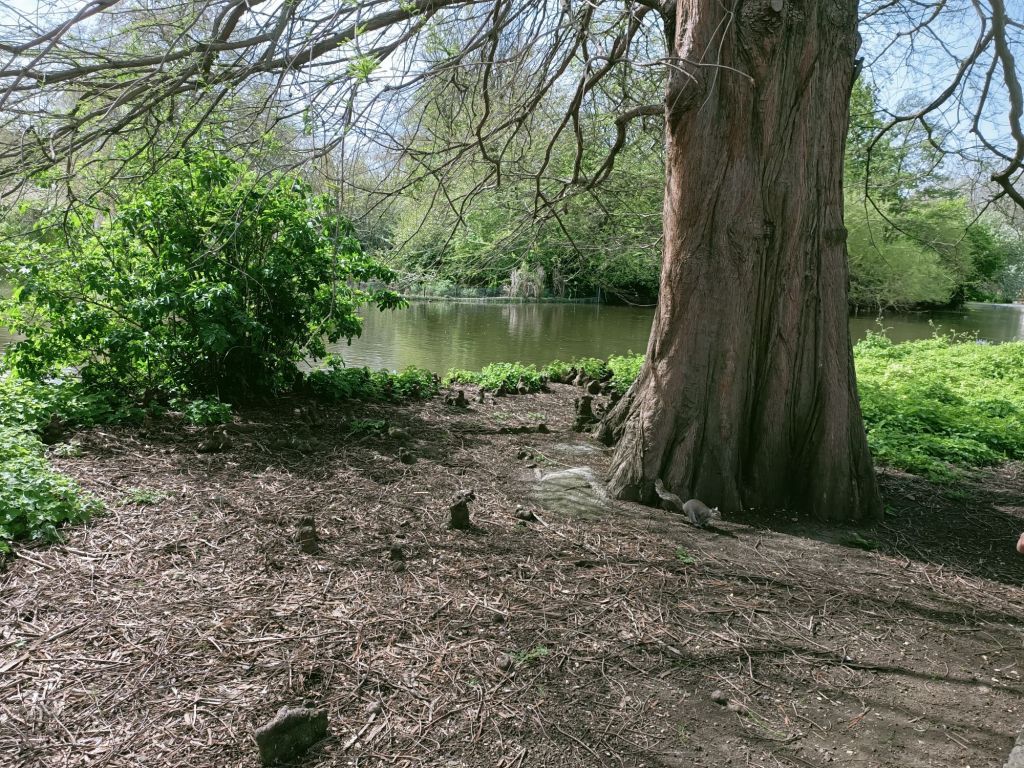
When we were offered a last minute opportunity to visit Cabilla, the  temperate rainforest on Bodmin Moor, we jumped at the chance. 

Despite appearing in the same book, The Lost Rainforests of Britain, by Guy Shrubsole, we had never experienced this ancient woodland environment or met its guardian, Merlin Hanbury-Tenison and, so, off we went.
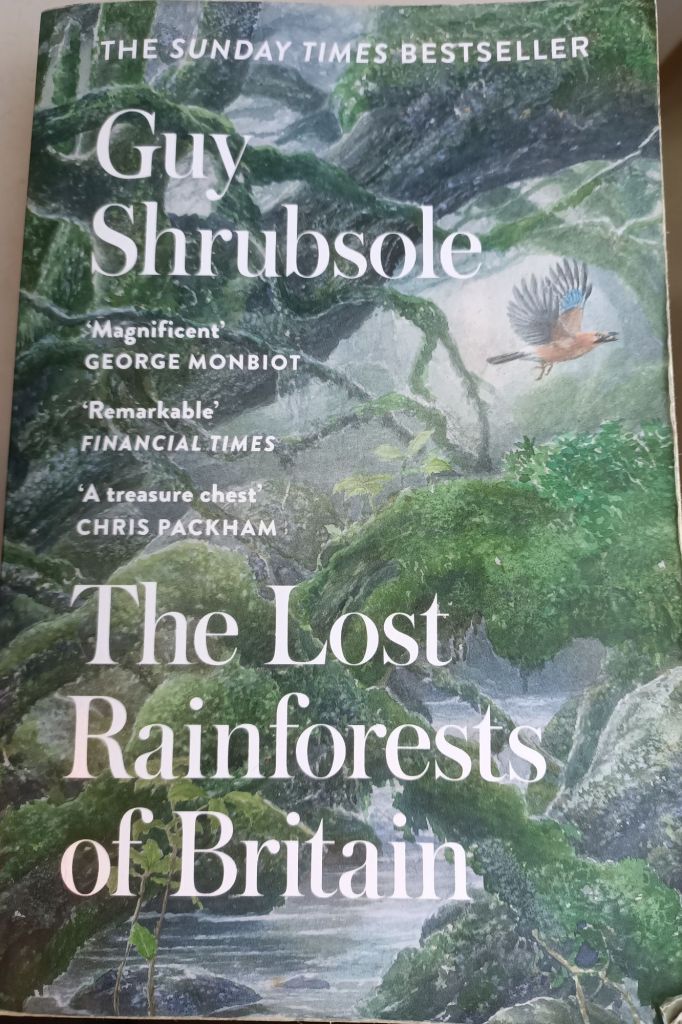
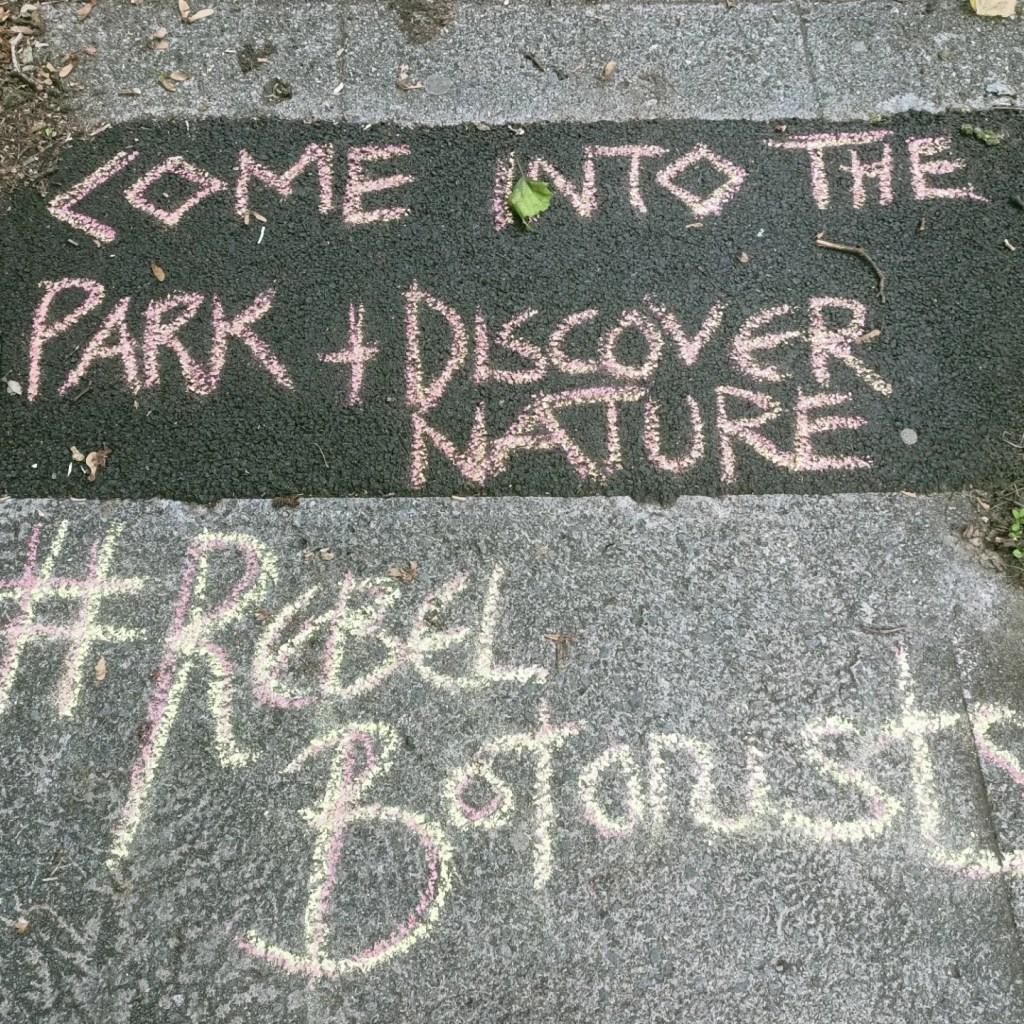
     Rebel Botanists: pps. 46, 68; Cabilla Rainforest: pps. 227-232

When we think of rainforests, our thoughts usually go to the hot, humid tropical rainforests, near the equator, of which the Amazon is the largest. However, only recently has the spotlight shone on the temperate rainforests, also known as Celtic or Atlantic rainforests because of their geographic locations.  Most of the western coasts of Britain and Ireland were once covered in lush temperate rainforest but now, due to human devastation, only isolated fragments remain. On a global scale, they are rarer than tropical rainforests, with less than 1% remaining.

The specific wet, warm conditions for this lush habitat to exist are ideal for lichens, mosses and fungi, many of them rare species across the world, which co-exist with sessile oak, holly, hazel, rowan, ash, willow and birch trees. To visit such a wealth of wonderful wildlife was really exciting.

We walked from the meeting point, at the moorland upland farm, where we were greeted by Gloria, a very friendly Large Black pig, also known as a Cornwall Black. This breed is endangered, almost becoming extinct in the 1960s. Gloria was clearly very happy and healthy, enjoying our attention.
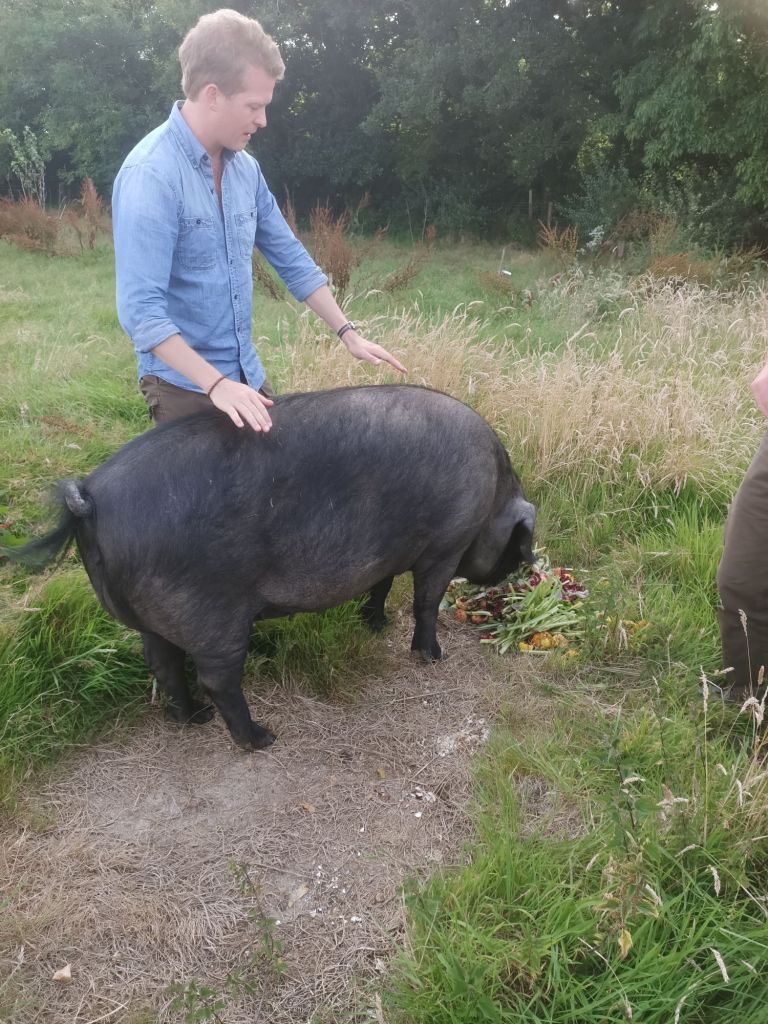
Merlin providing Gloria a very delicious lunch and affectionate back scratches

We passing by thousands of tree saplings, on land once given over to grazing. This is part of Merlin’s thousand year project designed to accelerate the establishment of a celtic rainforest habitat by factoring in the distribution of various tree species.
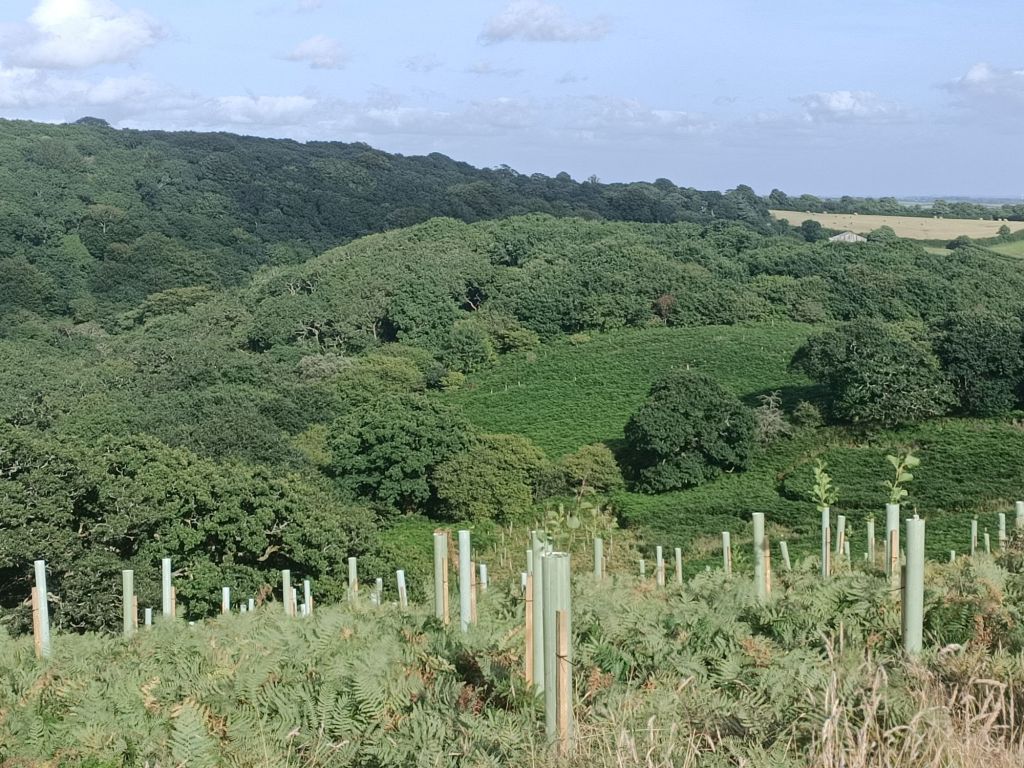
At the top of the valley, trees are being planted to extend the woodland – this is planning a thousand years hence

As we descended down into the valley, we entered a broad-leaved woodland, which provided pleasant shade from the hot sun. Bracken fern (Pteridium aquilinum) stood like a mini woodland below the swirling arms of the trees above; the leaves playing in the glinting sunlight.

A forest of ferns within a forest of trees

Our walk continued, and we sensed the air changing: becoming more humid, heavy and bringing different smells.  The soil became spongy underfoot and, on investigation, visibly comprised a vast interconnected mycorrhizal network, which resembled a thick matted carpet.
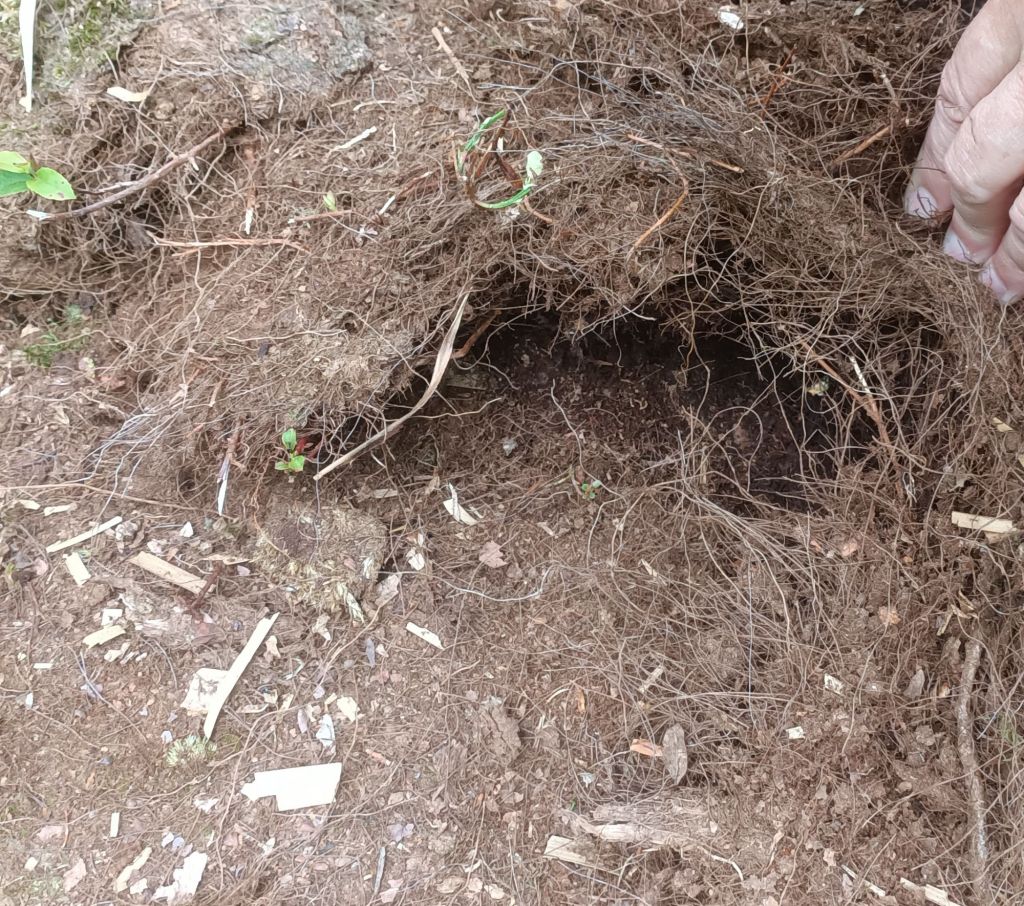
A layer of thick matted soil on the underlying rocky substrate – the interconnected mycorrhizal network quite visible

This was most evident when we stopped to take in the view on top of Cabilla Tor, a granite outcrop synonymous with moorland geology, looking down to the Bedelda River, a tributary of the River Fowey.
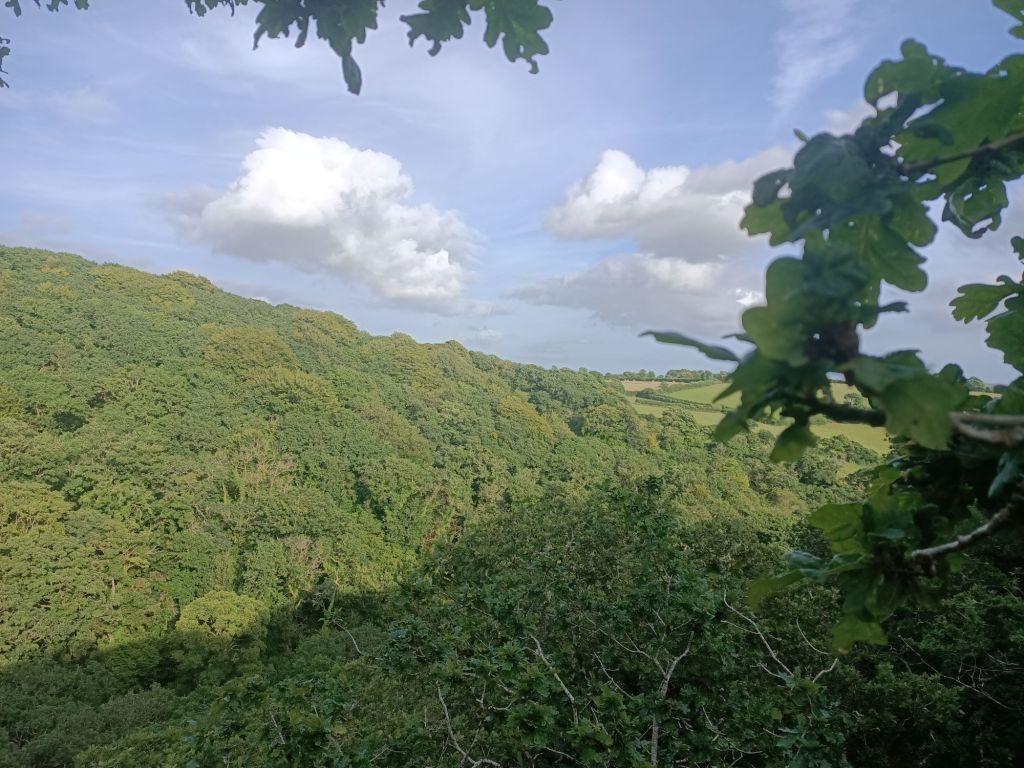
View across the valley from Cabilla Tor
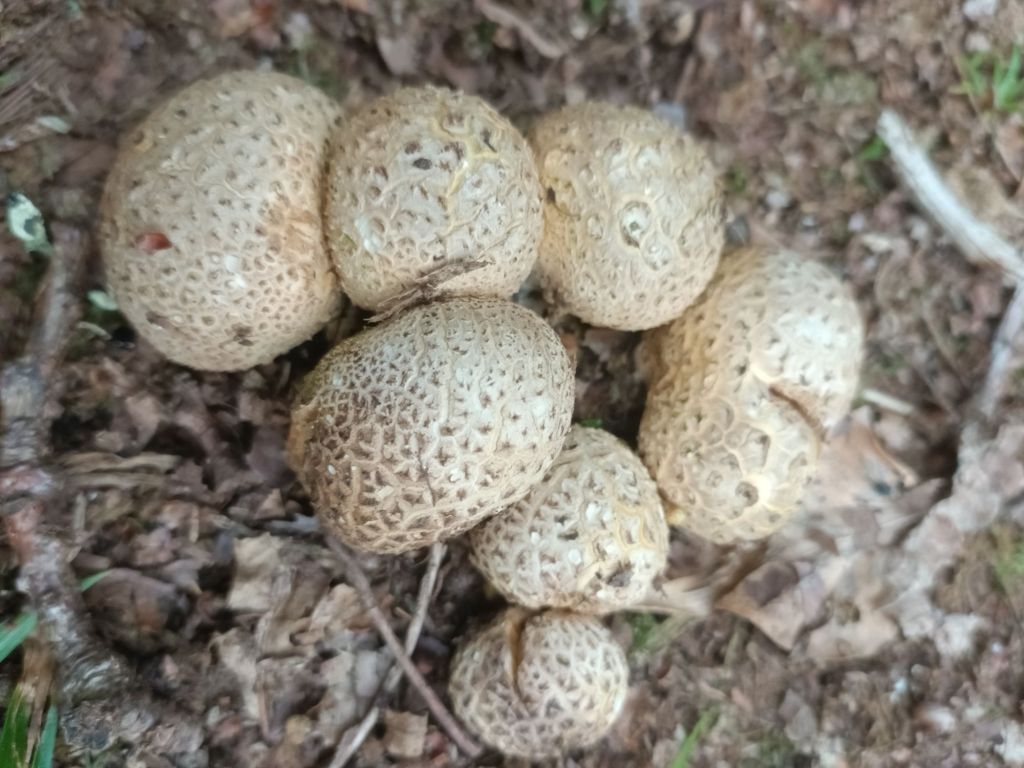
Fruiting bodies of a huge underground fungal network

German forester, Peter Wohlleben, dubbed this network the β€œwoodwide web,” as it is through the mycelium that trees β€œcommunicate.”  This network is made up of tiny threads of mycelium, which is a fungal network, enabling every tree and plant to communicate as a supportive community. They not only communicate warning signals but share nutrients, carbon and water. If only human communication systems were as efficient…πŸ€”

As well as the presence of the hundreds of tiny entangled threads of mycelium in the soil, the woodland was carpeted with Woodrush (Luzula sylvatica) and Bilberry (Vaccinium myrtillus).
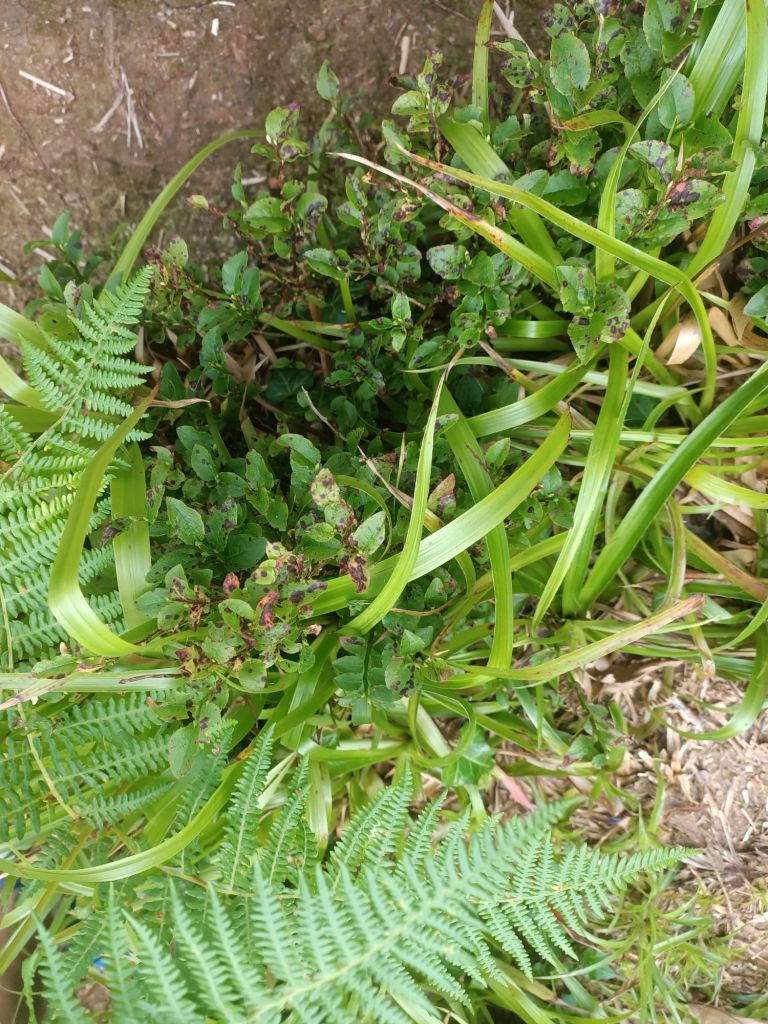
Woodrush and Bilberry on the forest floor

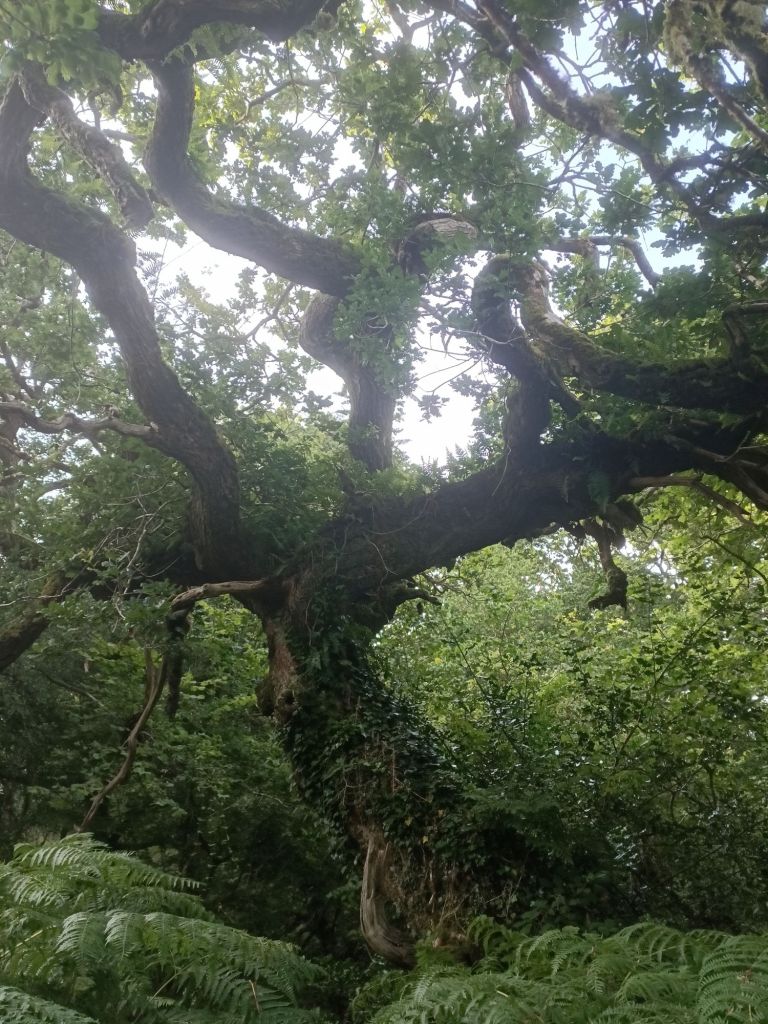
Bryoria (Horsehair) and Usnea (Beard) lichens hang like mysterious, forgotten Christmas decorations from the gnarled tangled branches of the Quercus petraea (Sessile oak) species. These oaks predominate and the low lying twisting structure is indicative of being in a temperate rainforest.

The branches covered in epiphytes: lichen and mosses

Petraea means ‘of rocky places’ which is the favoured environment of these ancient trees – rocky moorland. It’s hard to believe that areas like Dartmoor, Bodmin Moor and Exmoor in Devon were once thriving ancient woodlands until most of these trees were chopped down to make warships in the 18th century.  “HMS Victory at the Battle of Trafalgar, Nelson’s flagship is estimated to have required 6,000 trees, 90 per cent of them oak”.  Today, much of these moorlands appear as barren rocky landscapes due to the deforestation, and subsequent overgrazing by sheep and deer.  

Being in this rainforest was a sensorial delight: the thick velvety moss-clothed branches with a myriad of epiphytes growing on, around, down and up the embracing arms.  There was even a rowan tree growing out of a nook of a branch of oak which Merlin endearingly named “Mother Oak”.
Apparently, forty-six species of moss have been recorded (here) including the locally rare Atrichum undulatum and the first record for Cornwall of Pohlia muyldermansii
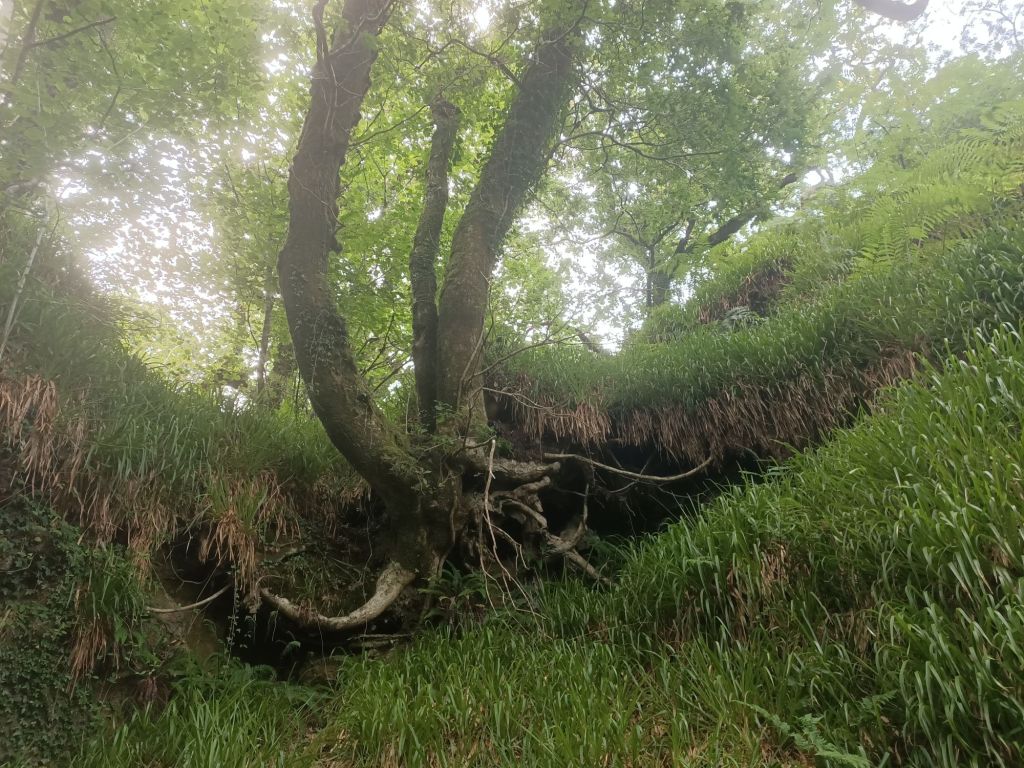
So what makes a temperate rainforest different from an ancient woodland? Would you know the difference if you found yourself in one of these?

“Ancient woods are areas of woodland that have persisted since 1600 in England, Wales and Northern Ireland, and 1750 in Scotland”.

This is the description as stated on the Woodland Trust site and many others, including the government website, so ancient woodlands are generally over 400 years old. Those between 150 and 300 years old are called veteran woodlands.  However, researching temperate rainforests dates is more ambiguous, as some pockets of rainforest have continued to exist for more than 60 million years!

To distinguish between them, we really need to think about what species are present, the soil content, the geology and geographical location, the air quality, the average annual rainfall and temperature. These factors determine the difference and walking through woodlands that are 400 years old and 4,000 years old, at Cabilla, revealed that difference.
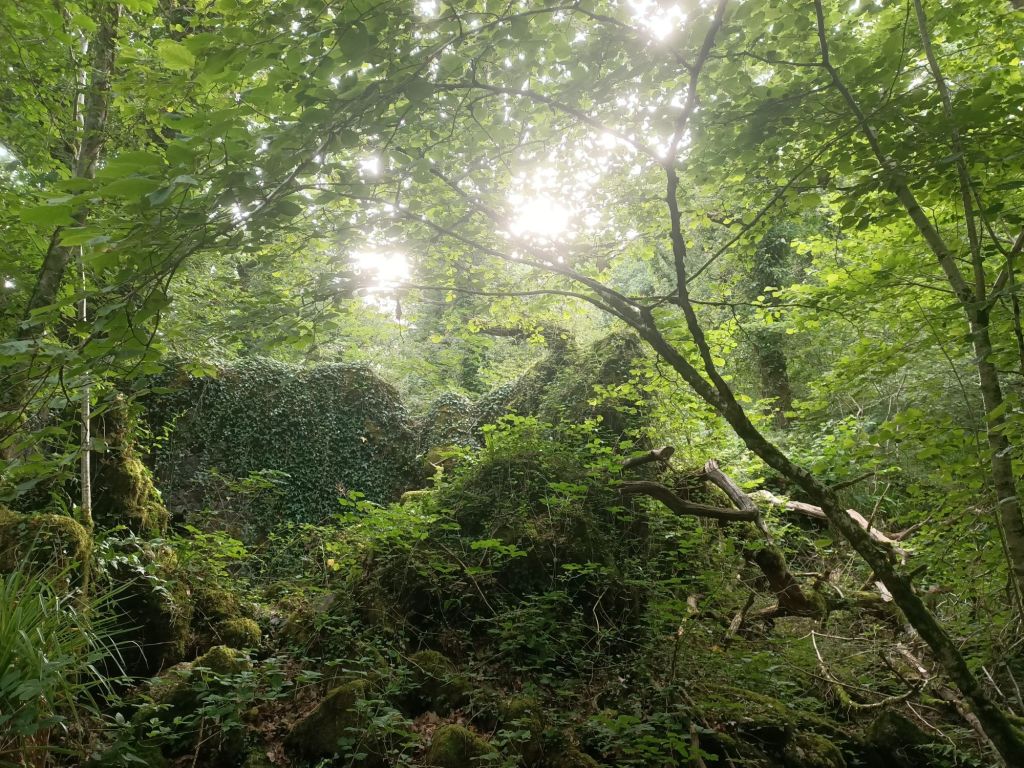
Remember though, ALL woodlands are extremely important! Mature, well- established trees offer vital habitat for wildlife, they provide oxygen, offer shelter from the sun,  soak up rainwater, thereby reducing flooding and prevent soil erosion.

The Sessile oak supports 326 species of wildlife that we currently know of, and decaying wood left on the forest floor will support over 1800 species.

Woodlands exist in different climates and locations with different tree species. This in turn will determine other plants growing there and the pollinators that feed and habituate them. If woodlands were left to grow, rot and renew naturally then centuries of undisturbed soils and accumulated decaying wood (will) have created the perfect place for communities of fungi and invertebrates to thrive – plus, other specialist species of insects, birds, and mammals (which) strongly rely on them for survival. 

In conclusion, temperate rainforests, as the name suggests, need rain and the few fragments left can be found in areas where oceanic currents bring warm winds and torrential downpours…and Britain has some of the best climatic conditions. The trees, mainly oak, will be adorned with lichens and mosses with other epiphytes growing on them including: liverworts and polypody (many-footed) ferns. These bryophytes are believed to be the oldest living remnants of eukaryotic plants that colonised the land.

When woodlands age, they become rich in life, abundant in diversity and verdantly healthy environments – so let’s keep them that way  πŸ™‚πŸ‘πŸŒ³πŸŒ³πŸŒ³πŸŒ³πŸŒ³πŸŒ³πŸŒ³πŸŒ³πŸŒ³πŸŒ³

Making Connections

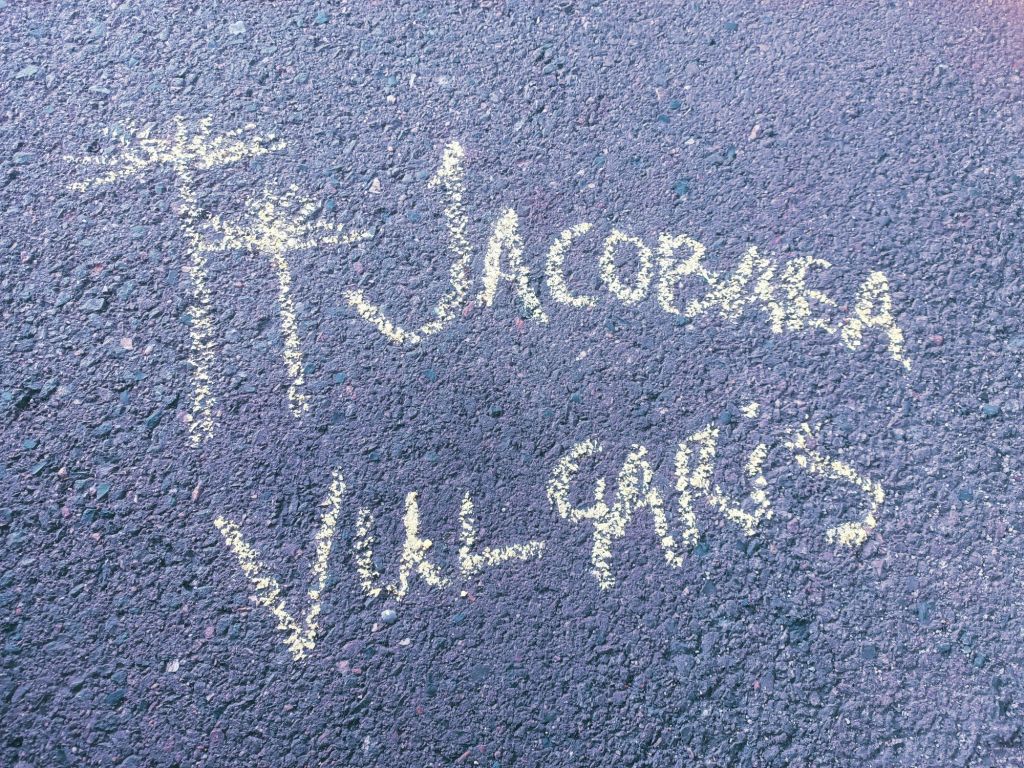
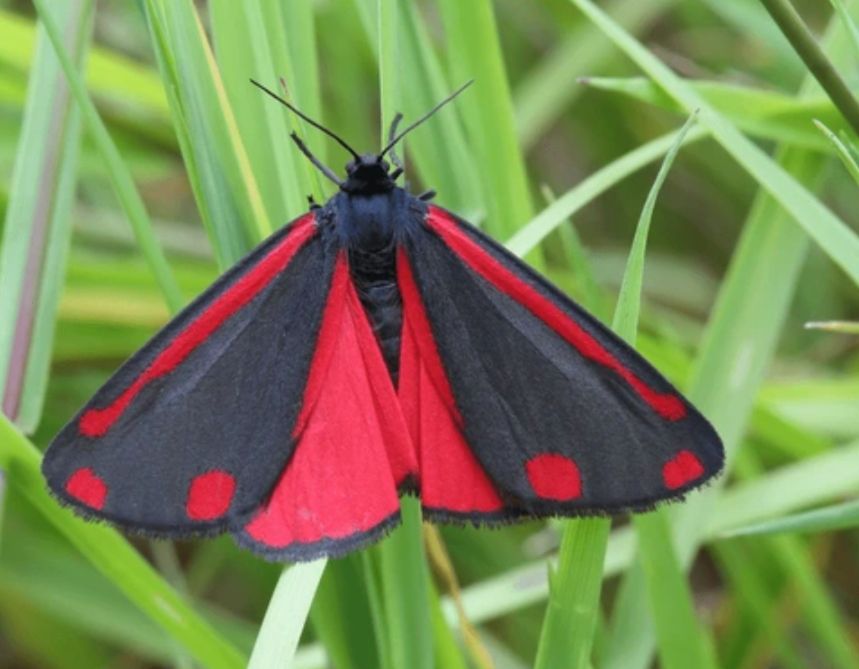
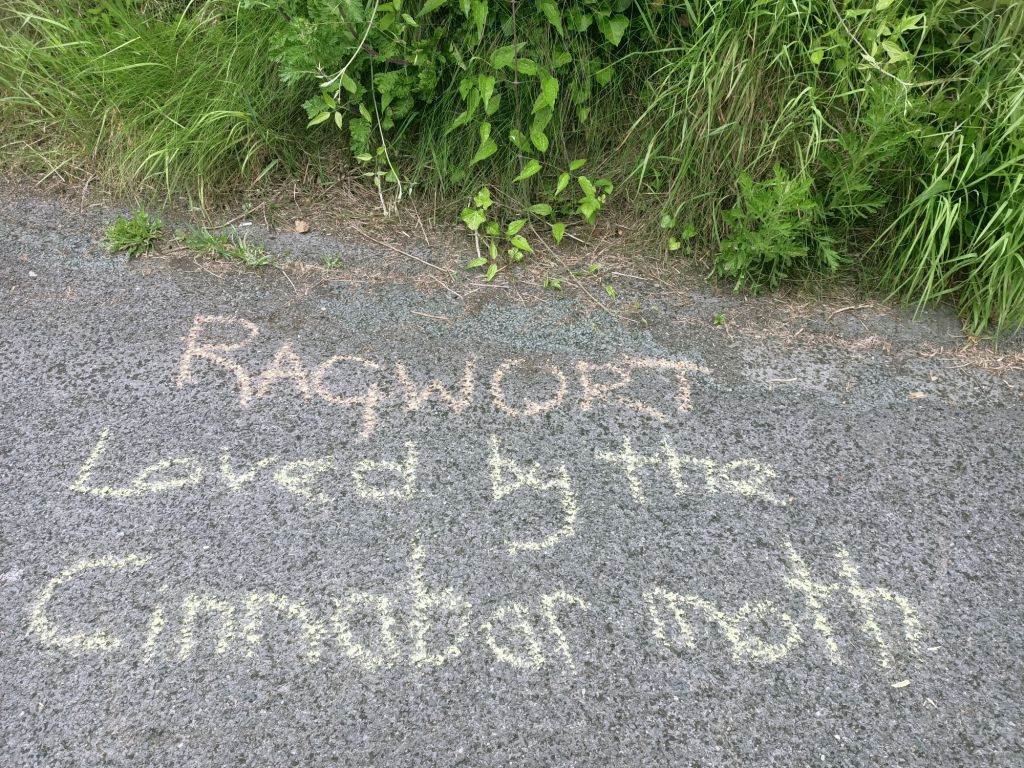
What connects Tyria jacobaeae and Eristalis tenax, or, I could say, what links Cinnabar moths and Common Drone flies?

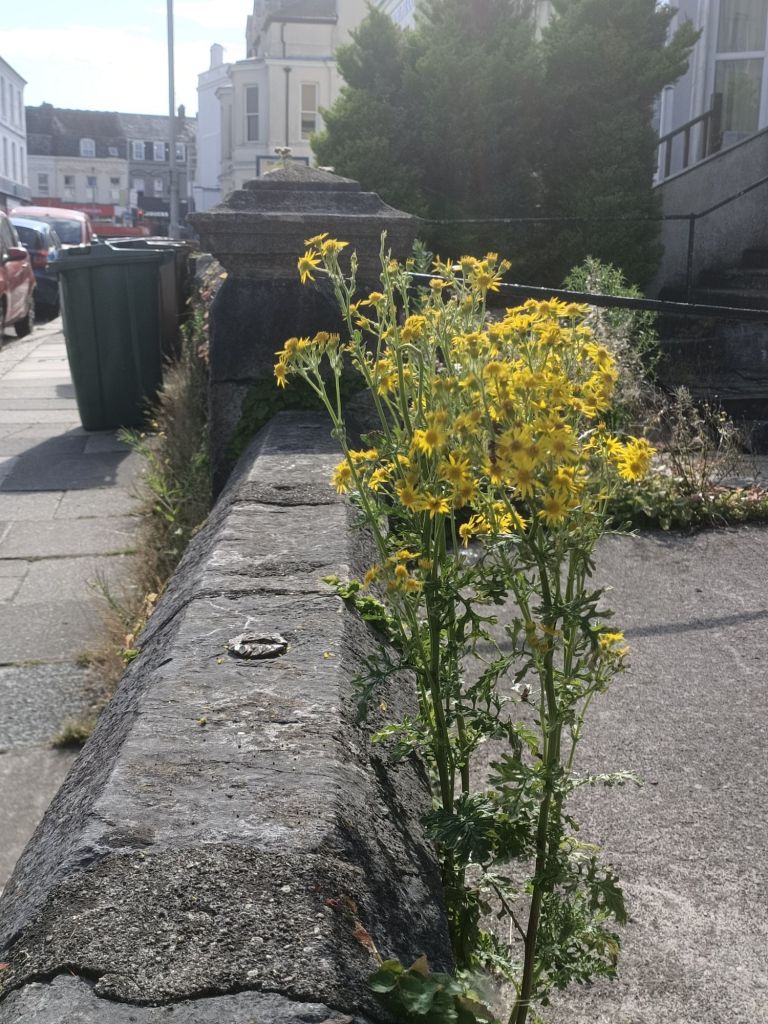
Well, as my photo evidences, the answer is Ragwort. This bright bunch of Ragwort flowers caught my eye, as I walked briskly from Mutley Plain, in Plymouth. But, what really caught my eye was the number of ‘woolly bears’ making a tasty meal of the petals, on just a small number of these wildflowers growing behind a low wall of someone’s front garden.Β 

Ragworts are in the daisy family, Asteraceae, and all these flowers are important to pollinators. We recently posted how valuable Ragwort is on so many levels, but with insects numbers significantly reduced, the most important factor has to be their benefit to wildlife.

With the Butterfly Count in full swing at the moment, I see and hear many comments lamenting how few butterflies we are currently seeing in this country – it is after all one of the most nature depleted in the world! 😞 Seeing the number of caterpillars on this plant gave me some hope, but it also emphasized the need that we all must do more to protect Nature by:

🌼 Reducing mowing – wait until early autumn when flowers will have seeded and young wildlife have fledged/grown.

🌼 Not using toxic pesticides which kill life below and above the soil – what’s the point of feeding birds and inviting insects if we are to poison them?

🌼 Encourage wildflowers in any space you can, no matter how small.

Moths are just as important as butterflies for pollination, and just look how beautiful the Cinnabar moth is in the above picture.

This is just a small outcrop of Ragwort along this road, but imagine if there was a while green corridor of life along this street and many more…πŸ€” It would be more colourful and supporting so many more pollinator lives. So go on, save a life and grow some wildness πŸ™‚πŸ‘πŸ¦‹πŸ¦πŸπŸžπŸͺ²πŸŒ³πŸŒΈπŸŒΌπŸŒΌπŸŒΌπŸŒΌ

“Sweet April showers, do spring May flowers”

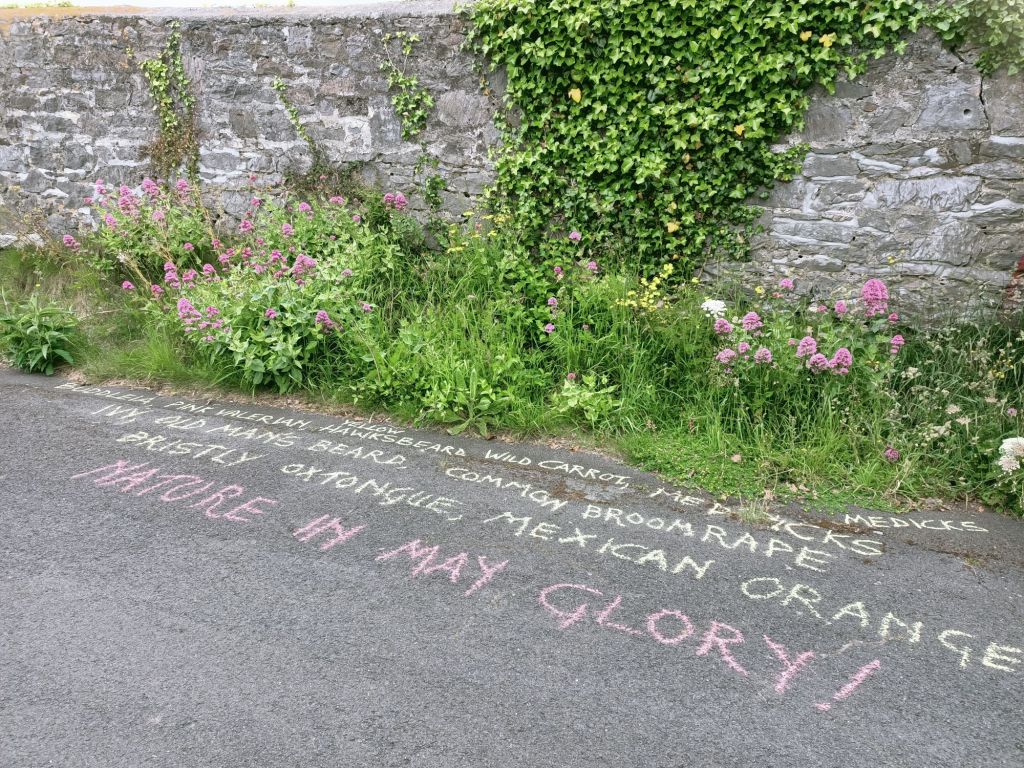
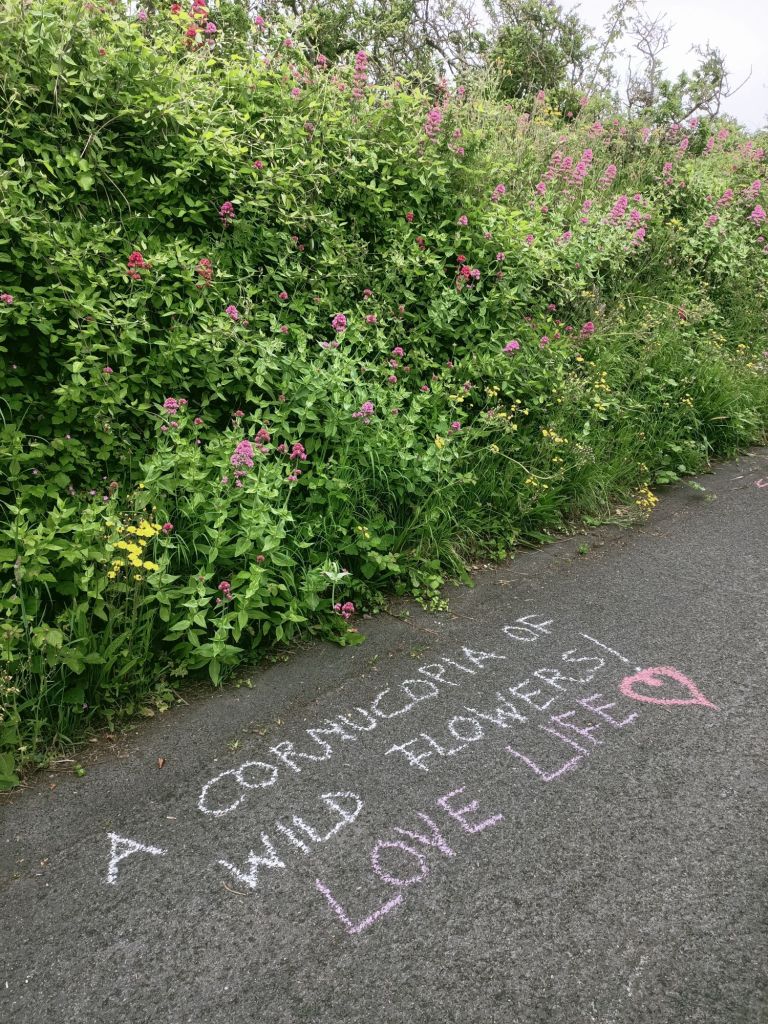
An array of wonderful wildness πŸ™‚

This little poem, written in 1557 by Thomas Tucker, identified the seasonal British weather; although, I think we could all agree that, this year those “sweet April showers” were more like deluges at times!Β  Such is the effect of climate warming: less predictable and more dramatic.

Today, with the May sunshine to warm us, we went for a short walk along the 630- mile Southwest Coast Path. It is the longest national trail in the UK, with free access to all.

Here we go! πŸ‘
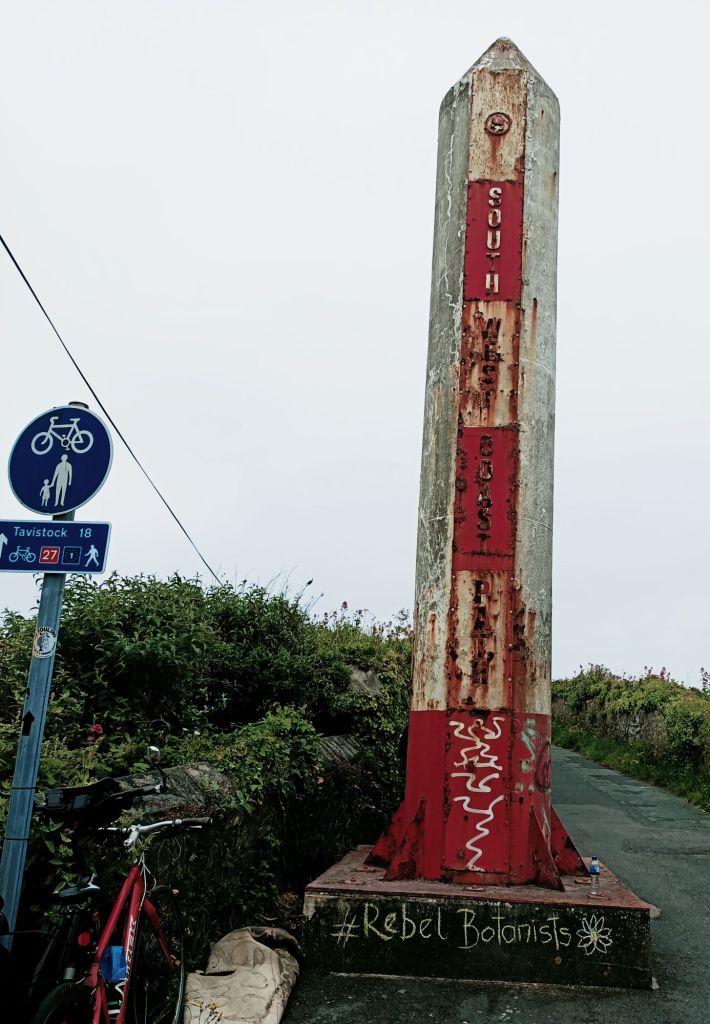
The coast path rocket blasted us off on our chalk and walk! Rather sad that someone had dumped an old carpet there.

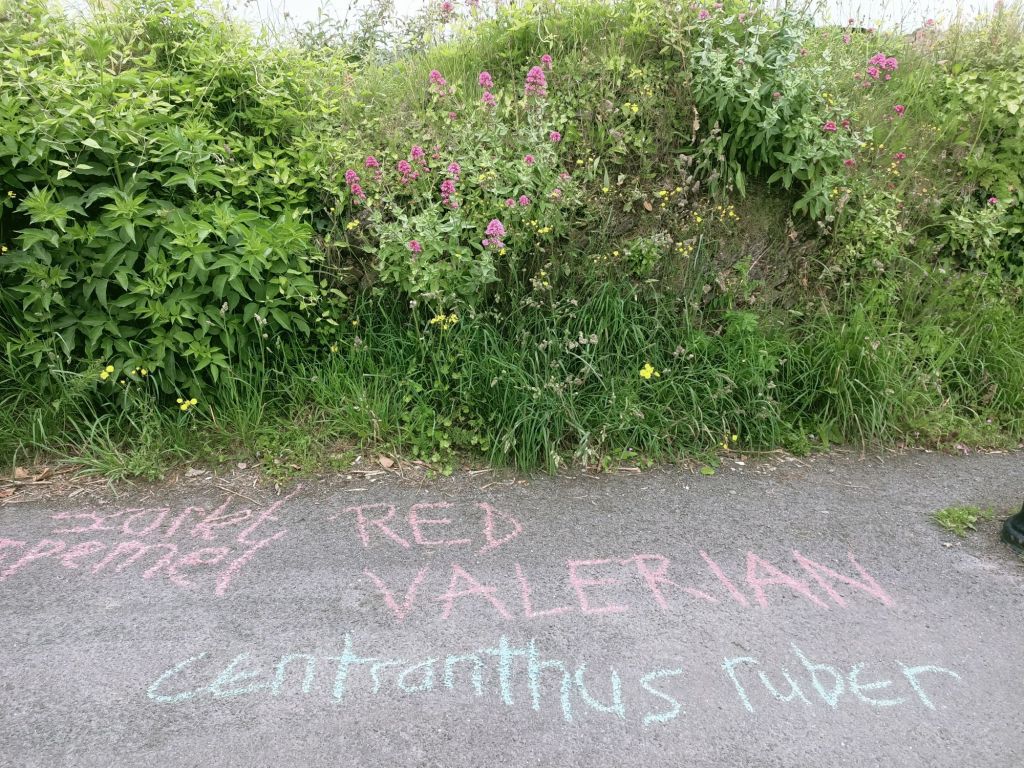
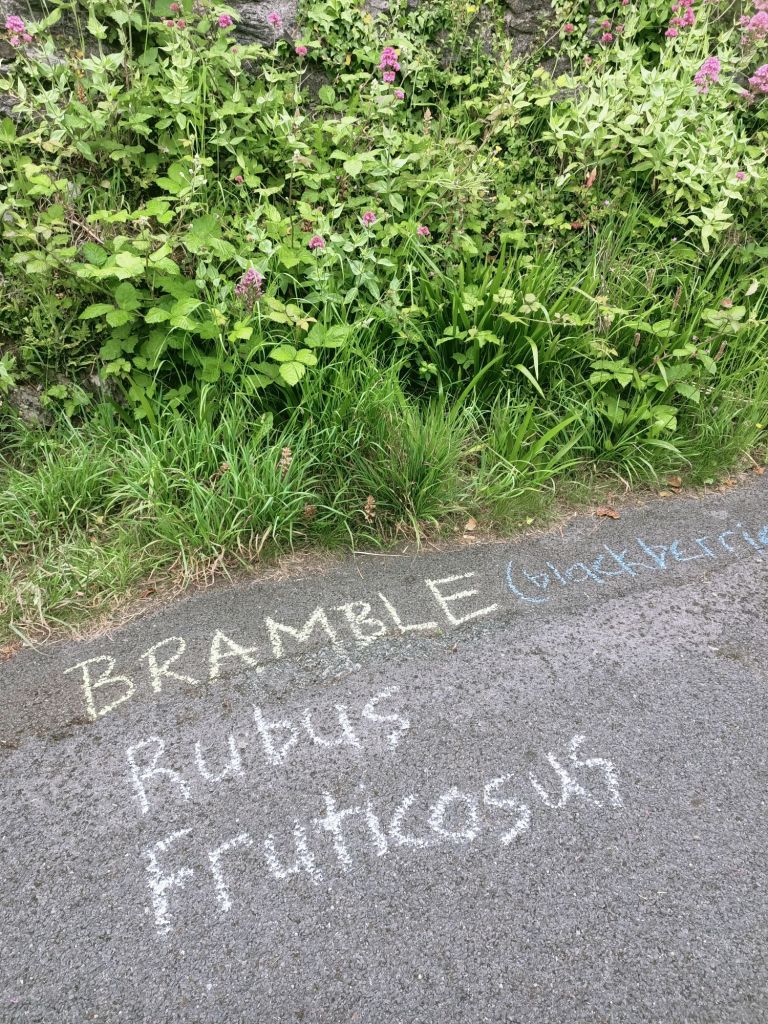
Red Valerian or Spur Valerian, Centranthus ruber, blooms flowers of red, pink and white. Although a non-native, it has established itself well with many pollinators.

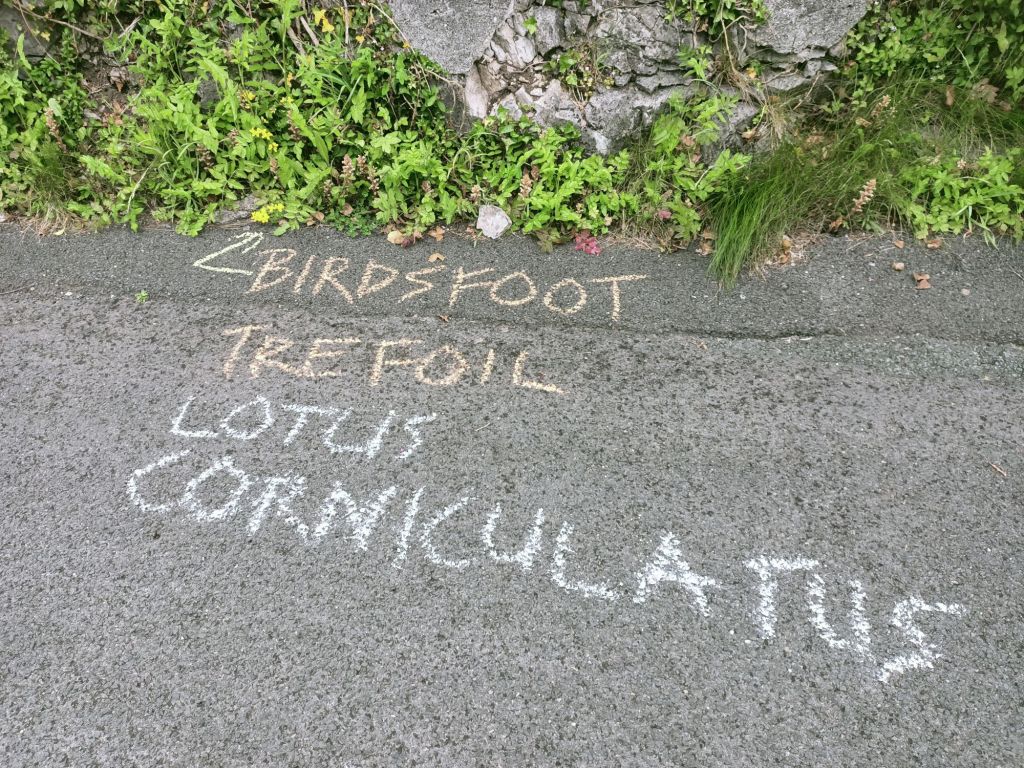
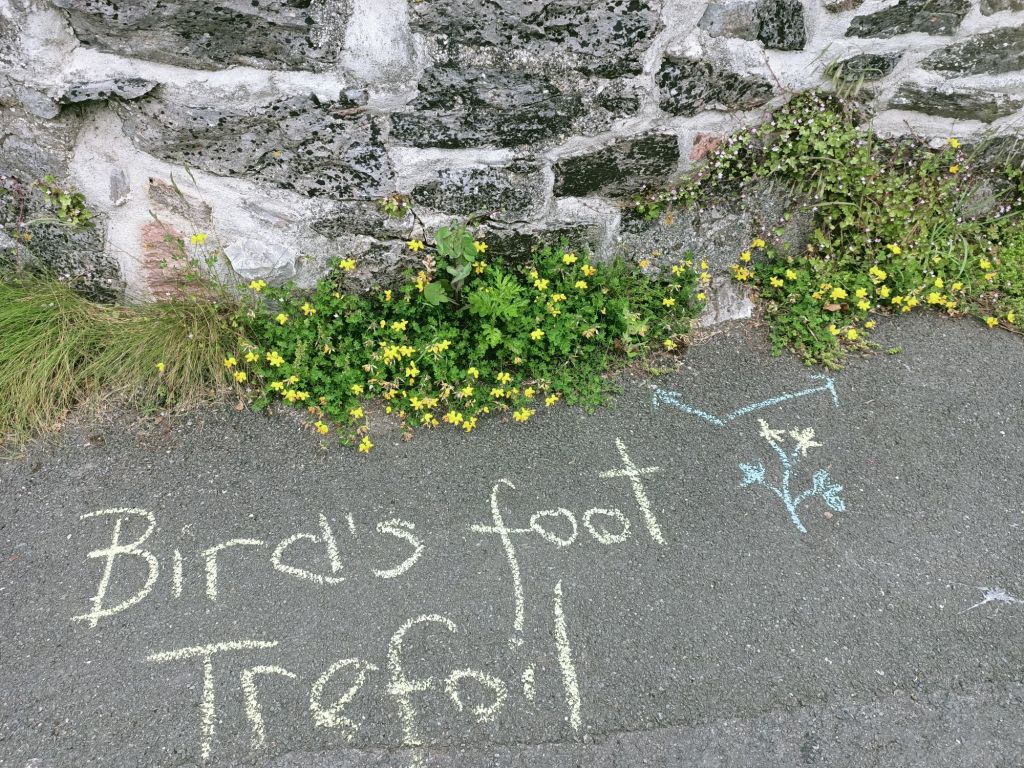
Did you know, as well as this species there is also another called Greater Birdsfoot Trefoil?

A widespread grassland native, it is also known as Eggs and Bacon or Tom Thumb. Get up close and take a look; the flowers are attractive in colour and design.

Umbilicus rupestris

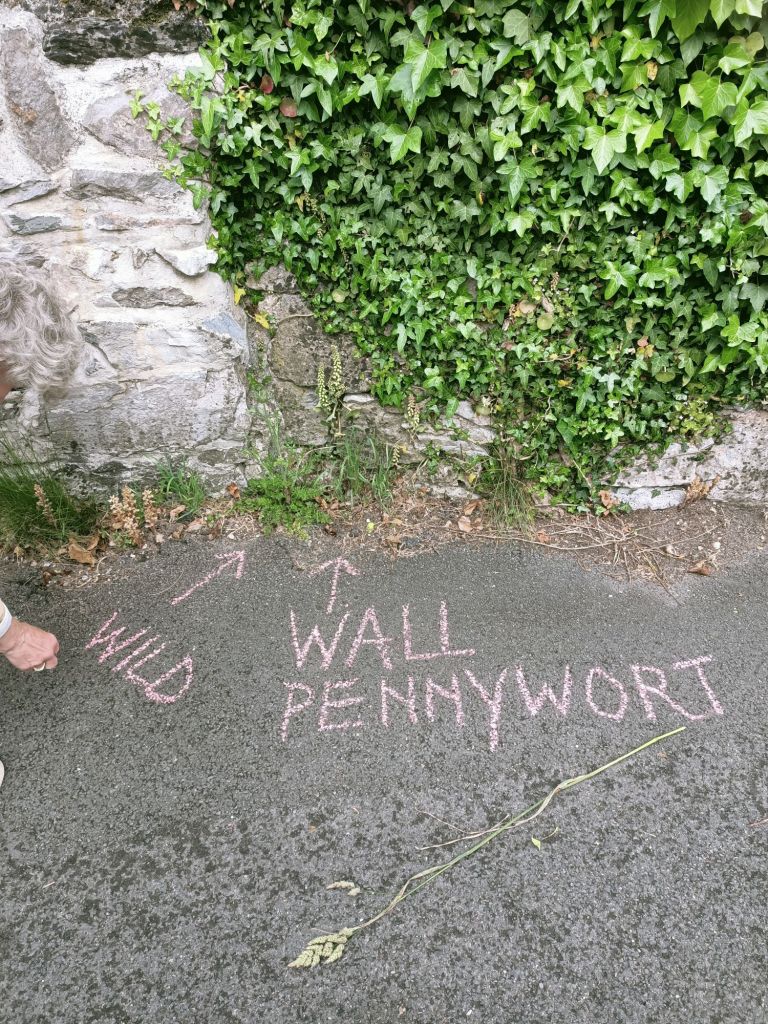
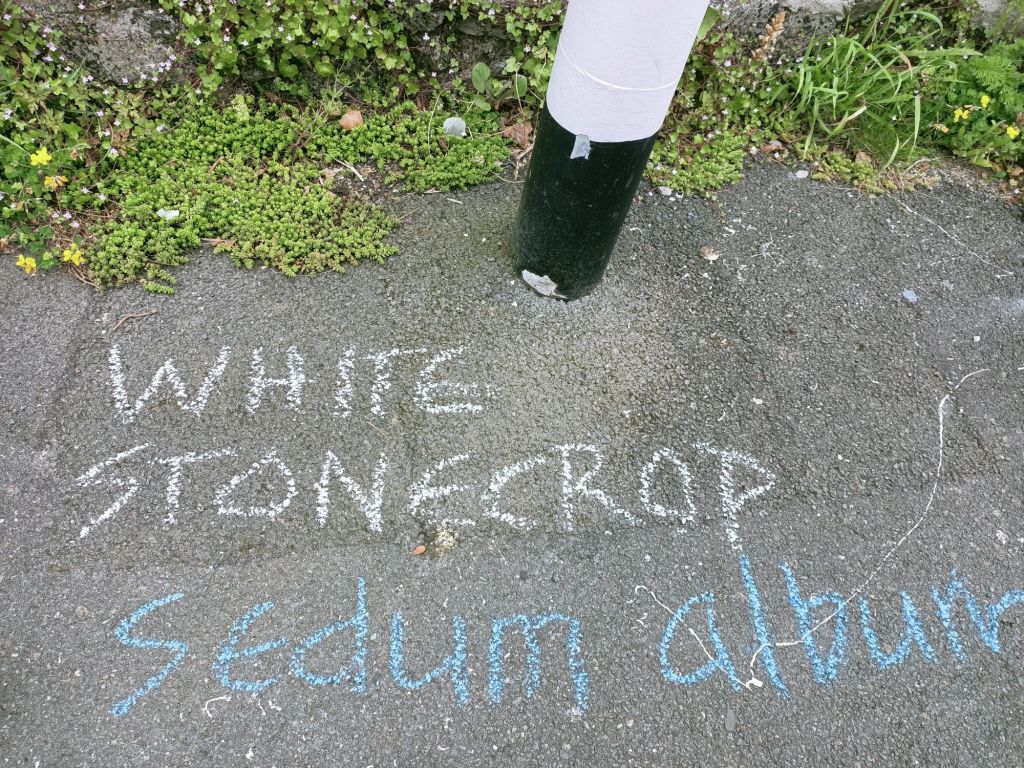
In the Stonecrop family, this plant is distinguished by its dimpled leaves. They are also known as Penny Pies.Β  Can you guess what our Rebel is starting to label?

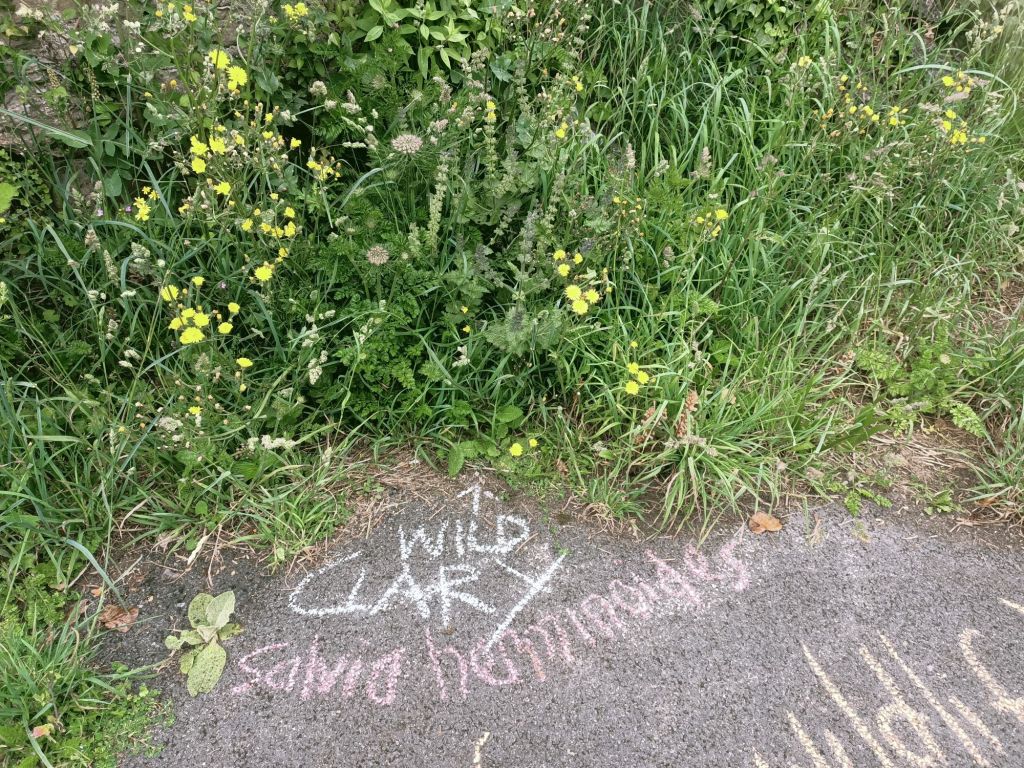
A: Wild Carrot πŸ₯•πŸ˜

Characterised by thick fleshy leaves πŸƒ

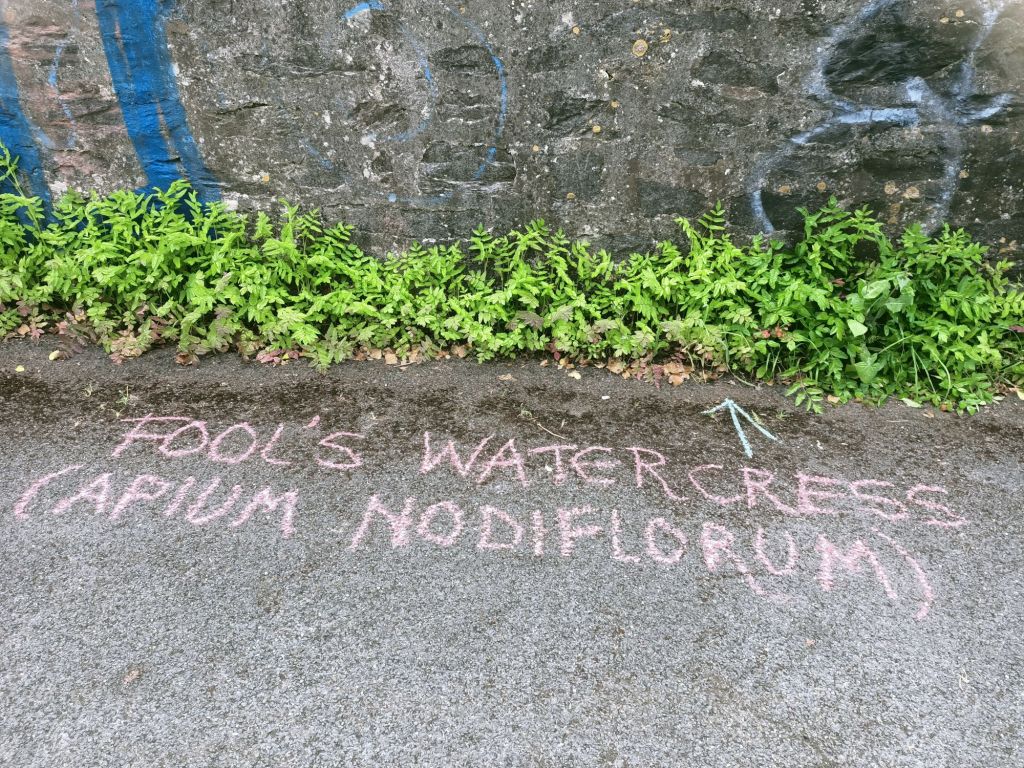
In case you are fooled into thinking it’s Watercress, no worries as it’s not poisonous, though probably not as tasty πŸ™‚
Some lovely lichen and a view across Plymouth Sound to see Devon and Cornwall
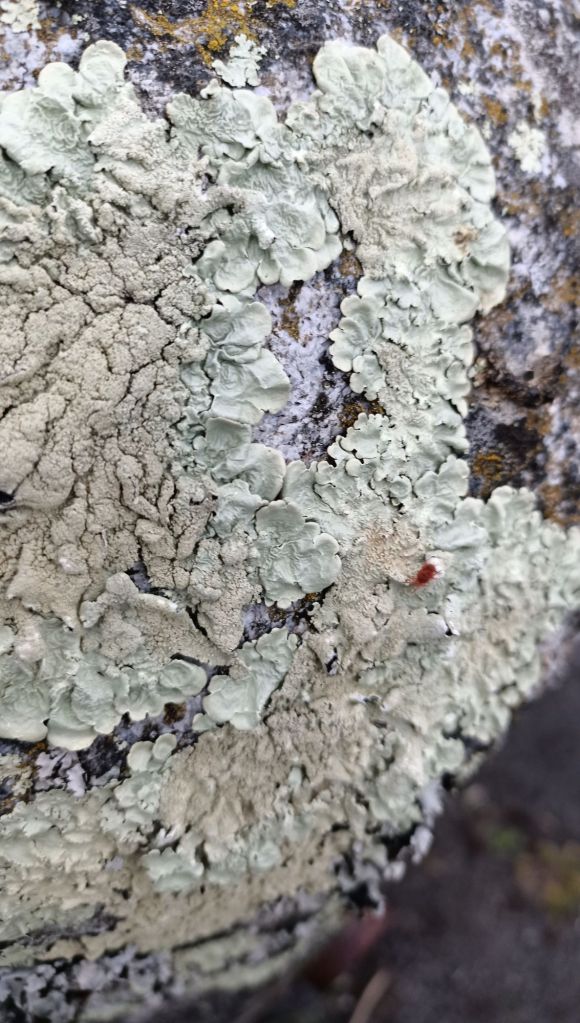
A closer look at this Maritime Sunburst lichen
Let’s take a closer look at this stone post to see the Rock Green shield lichen πŸ‘€

Flavoparmelia baltimorensis

Our favourite 🌼🌼🌼
More recognisable when it flowers
A favourite food of birds and humans πŸ˜‹
Look out for the Cinnabar moth with its distinctive red colouring
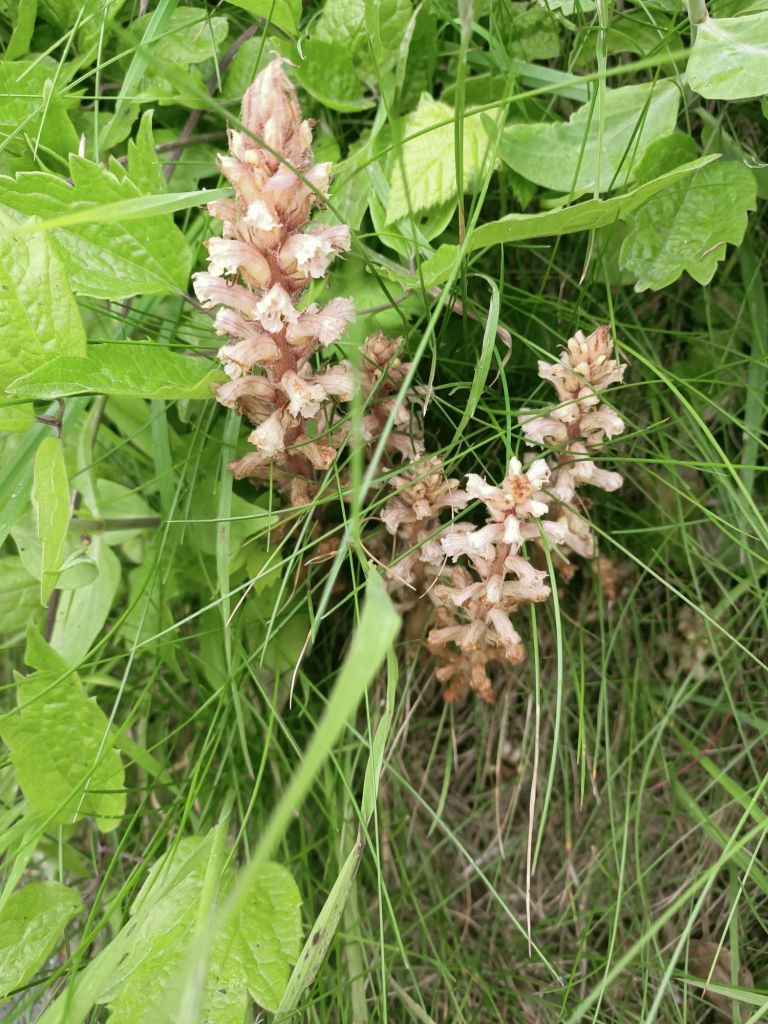
Orobranche minor

A close up of the Common broomrape – interesting how it gets its name, one for you to research.

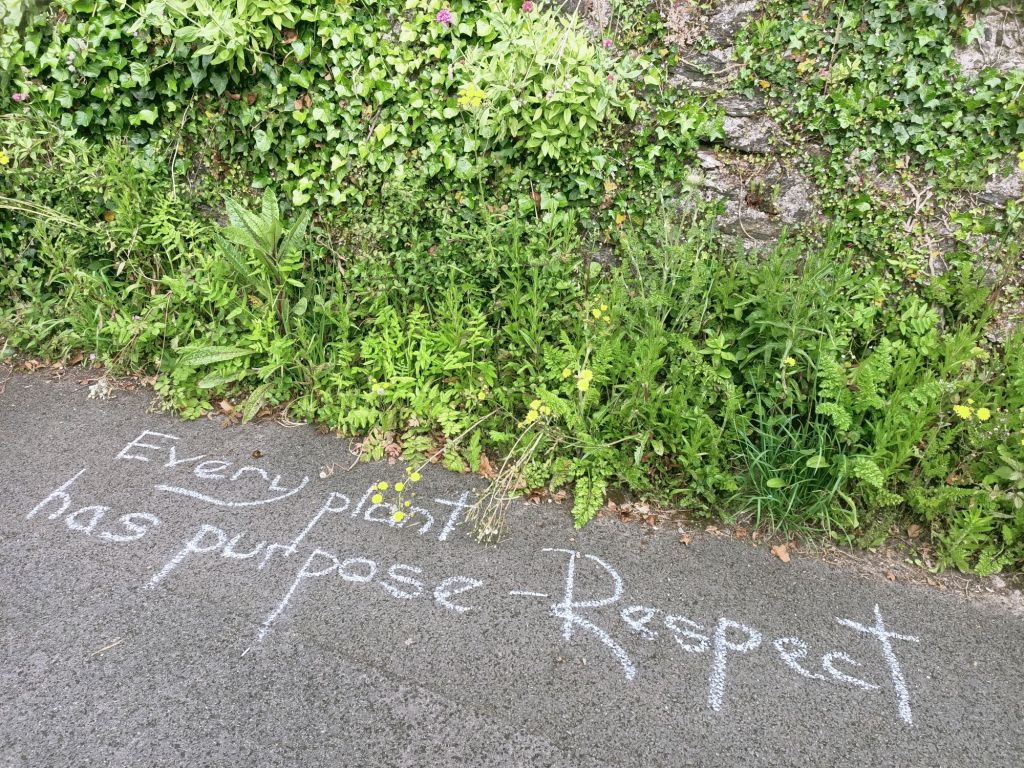
Every plant really does have a purpose!        In the highly complex and connected biodiversity network, that we, as humans, are still learning about, we do know that our existence depends upon them πŸ’šπŸŒ³πŸŒΌ
Aha, the elusive Scarlet pimpernel, Anagallis arvensis.
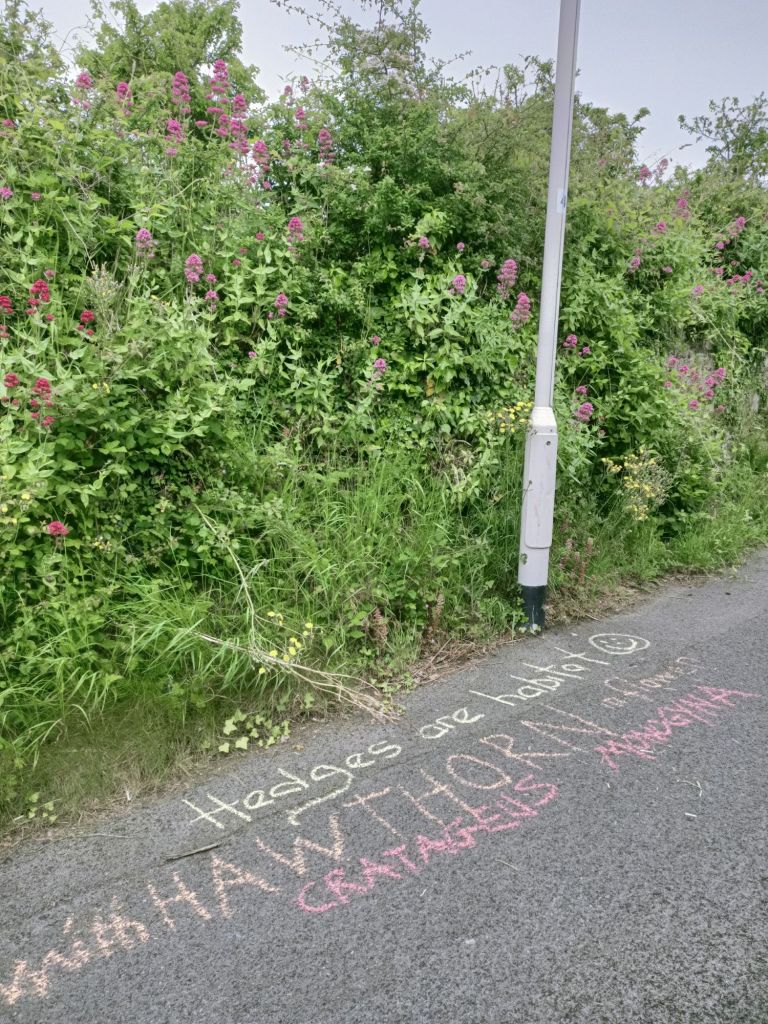
Allow your hedges to flourish – they are a haven for wildlife πŸ™‚πŸ‘

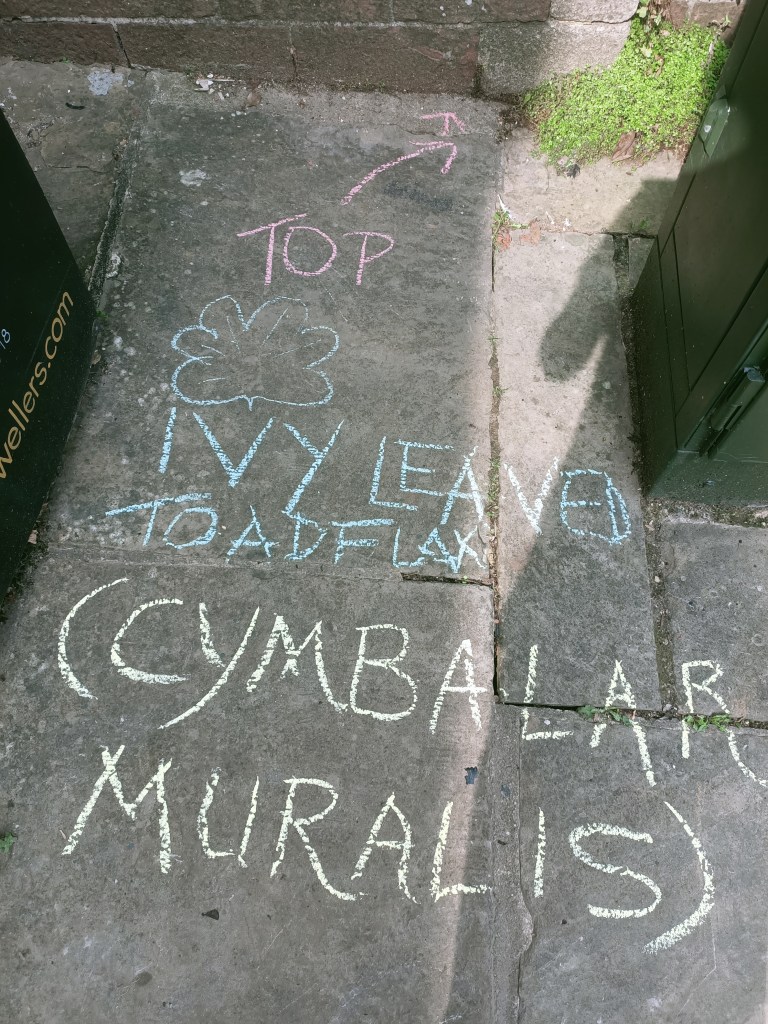
This is one flower we saw. Can you guess what it is?Β 

A: Cymbalaria muralis πŸ™‚

Thank you for reading this post. We hope you enjoyed it, as much as we loved doing it πŸ˜‚πŸ‘πŸŒΌπŸŒΌπŸŒΌ See you next time.

Are you Brave Enough to be a Tree Hugger?

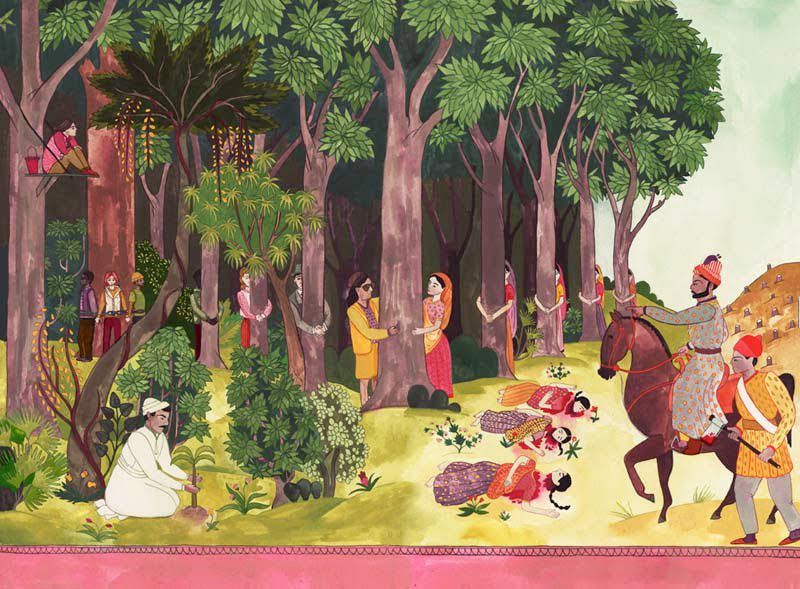
If you think tree huggers are ‘hippy- dippy time-wasters’ think again! This term is often, and incorrectly, used as a flippant pejorative, but it stems from a story of stunning defiance and vicious bloodshed.

The true etymology of this phrase comes from the courageous souls who laid down their lives to save the lives of others: the living, breathing and life-supporting beings that are  trees.

Amrita Devi and her three daughters were the first to be killed protecting their sacred Khejri trees (Photo: Cari Vander Yacht).

In 1730, 363 Bishnois people in India were brutally killed while trying to protect the trees, in their village, from being turned into the raw material for building a palace. They literally clung to the trees while being slaughtered by the soldiers.

From 1730 to present day, environmental peaceful activists are still fighting for the right to life for nature.

Amrita Devi and her 3 daughters were the first to die, by being beheaded, by the soldiers, sent by the King of Jodhpur to cut down the Khejri trees with their axes. Amrita ran to stop the felling when she realised what was happening. She hugged one of the trees to protect it from the blows and begged them to stop, but the soldiers took to violence and struck her with an axe. When her three daughters witnessed the brutality, they rushed and hugged the trees as well and were also killed. Word spread quickly around the village of Khejarli and others joined in, hugging trees in a nonviolent protest.  The soldiers continued to mercilessly kill the people, both young and old: a horrific massacre of caring people who died protecting their beloved sacred tree.

The Bishnois faith respects the sanctity of all forms of life and the non-killing of animals and felling of green trees.

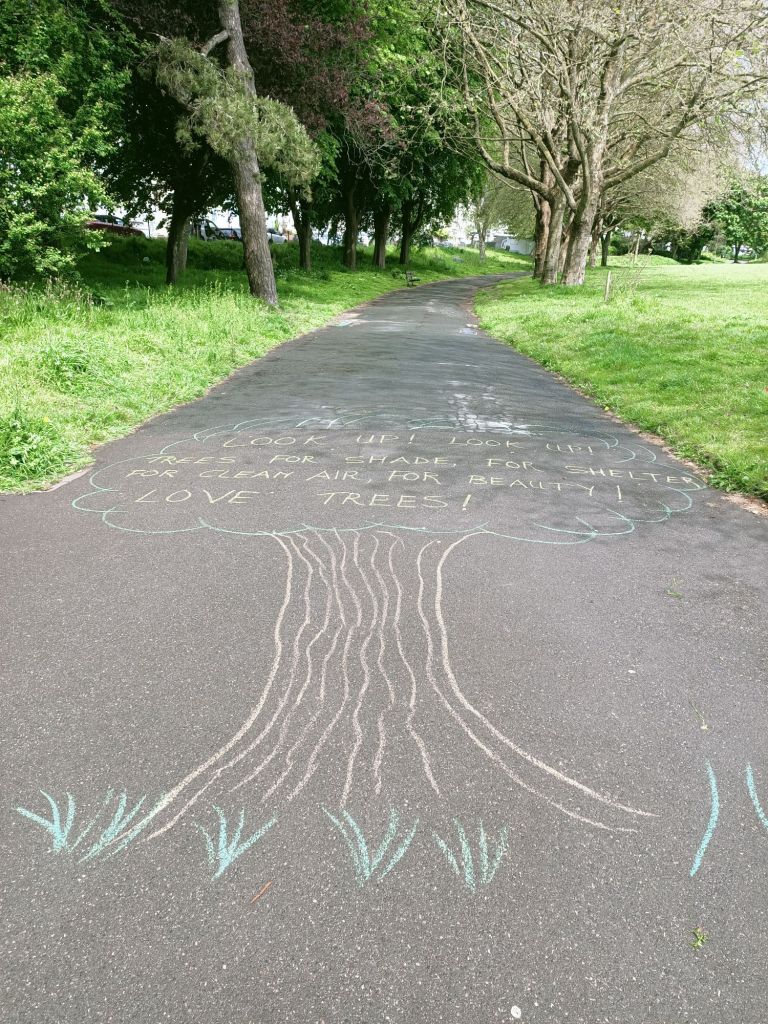
Look up! Look up! Trees for shade, for shelter, for clean air, for beauty! Love trees!

The Khejri tree (Prosopis cineraria) has adapted to withstand both frost and drought, and survives both high and low temperatures. It is known to improve soil fertility by supporting nitrate retention in soil and contributes greatly to the micro-flora in desert environments. A large and well-known example of the species is the Tree of Life in Bahrain: approximately 400 years old and growing in a desert devoid of any obvious sources of water. Living trees are far more valuable than dead buildings, don’t you think?

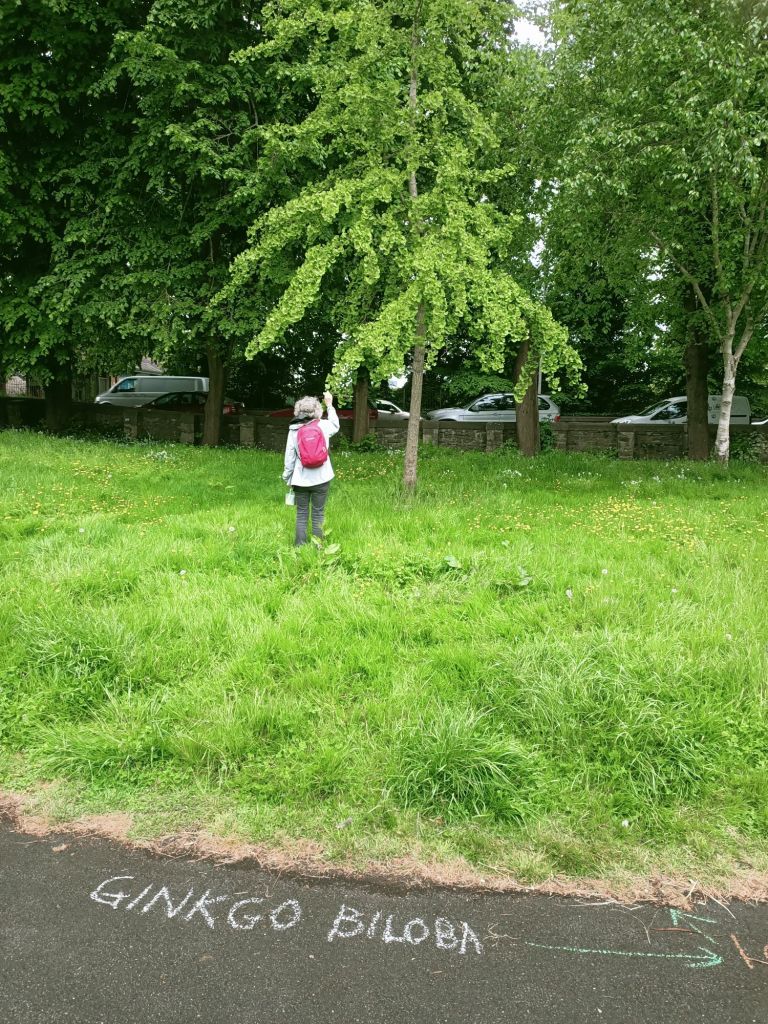
One of our Rebels admiring the leaf shape of the Ginkgo biloba; an ancient tree and the only species of its Genus to exist
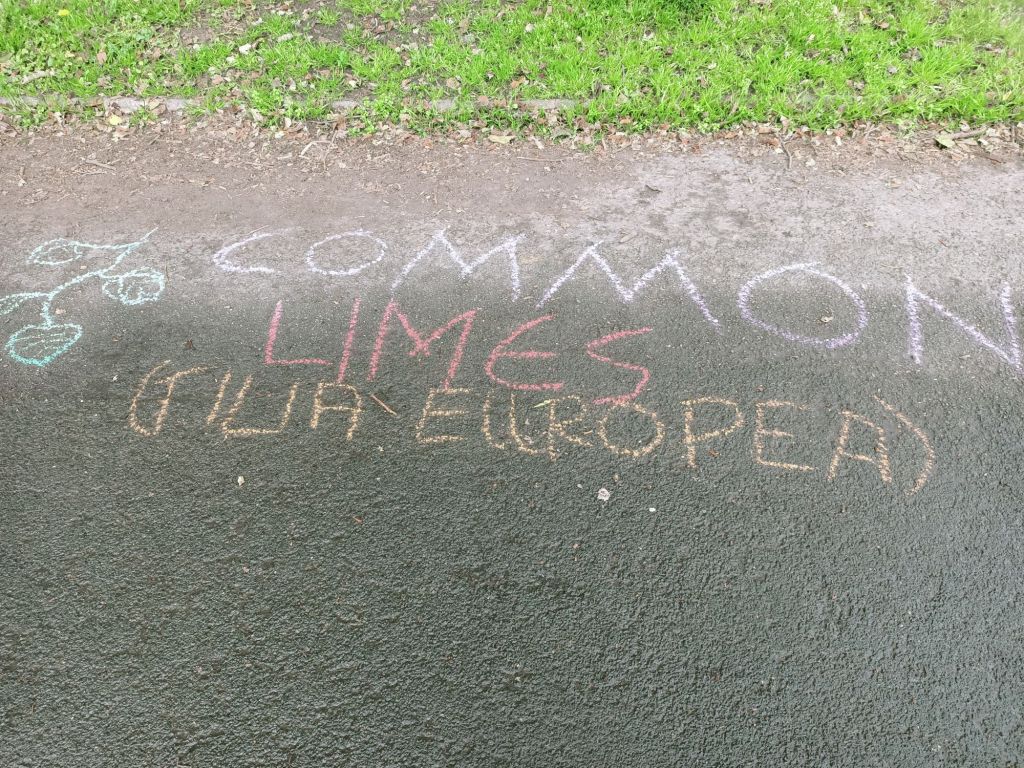
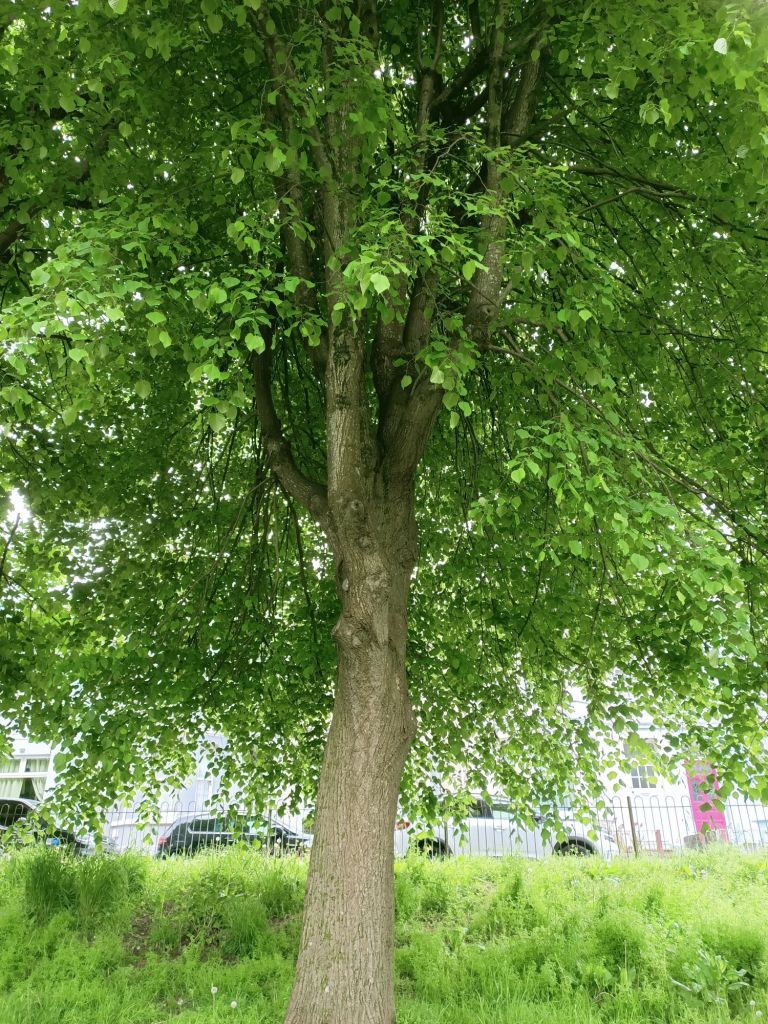
Lime tree: Tilia europea

The brave sacrifice of Amrita Devi and the villagers would have ripple effects 240 years later, in the formation of India’s most vibrant environmental movements called the Chipko Andolan, in the 1970s.
Chipko translates as ‘hugging’ and they represent a non-violent forest conservation movement, opposed to logging and deforestation.

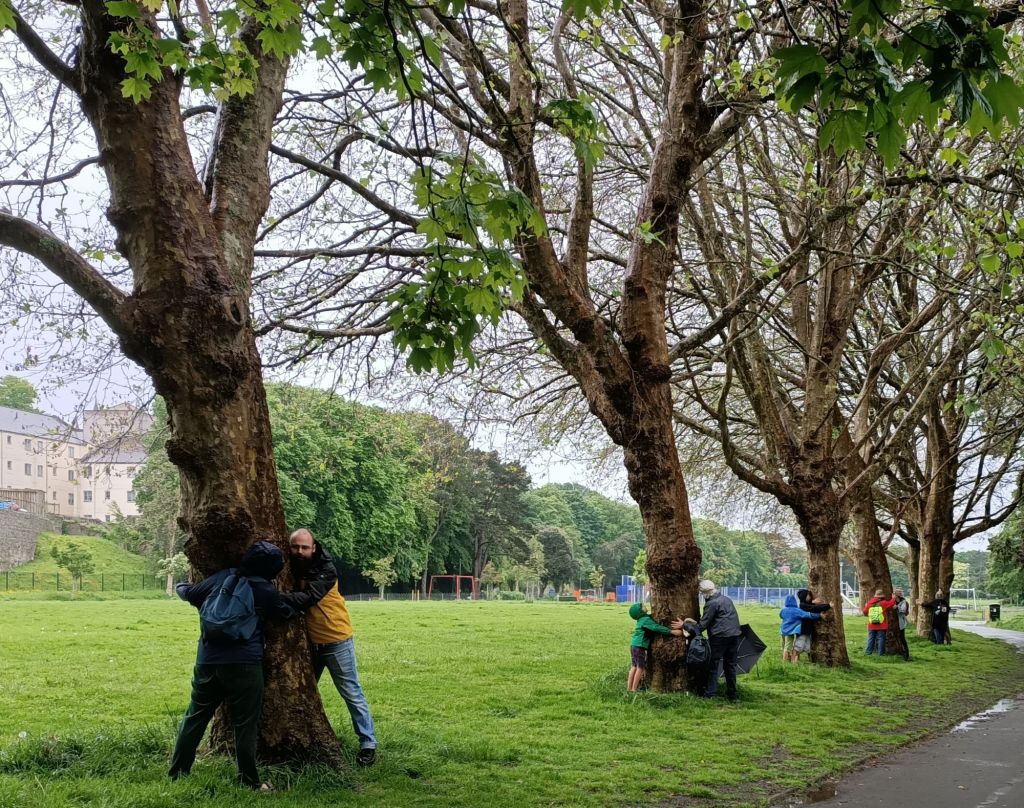
From 1730 to present day, Rebel Botanists and chalkers repeat the action of Amrita and the villagers to show their respect and bravery in caring for trees today βœŠπŸŒ³πŸ’š

Today, in Plymouth, we are supporting the Plymouth Tree People in this year’s festival. They are a volunteer run charity who, for 20 years, have been caring for, and planting, trees in Plymouth. They rightly state that trees “provide us with shade and shelter and a habitat for wildlife. Trees improve air quality, reduce crime and benefit our mental health”.

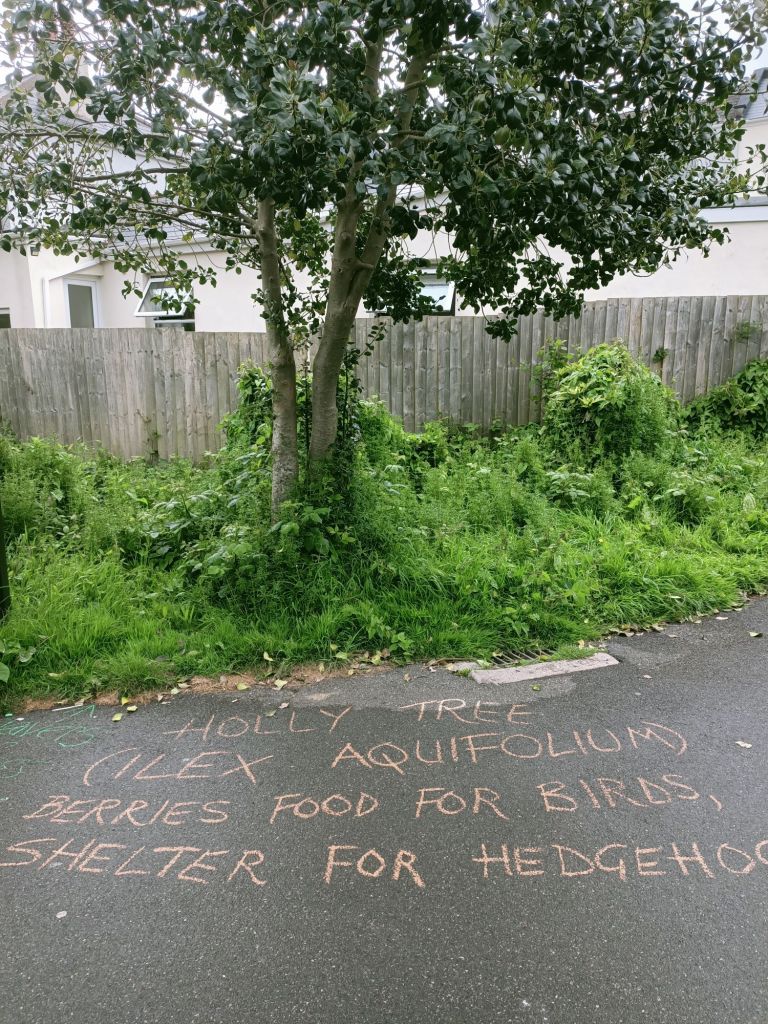
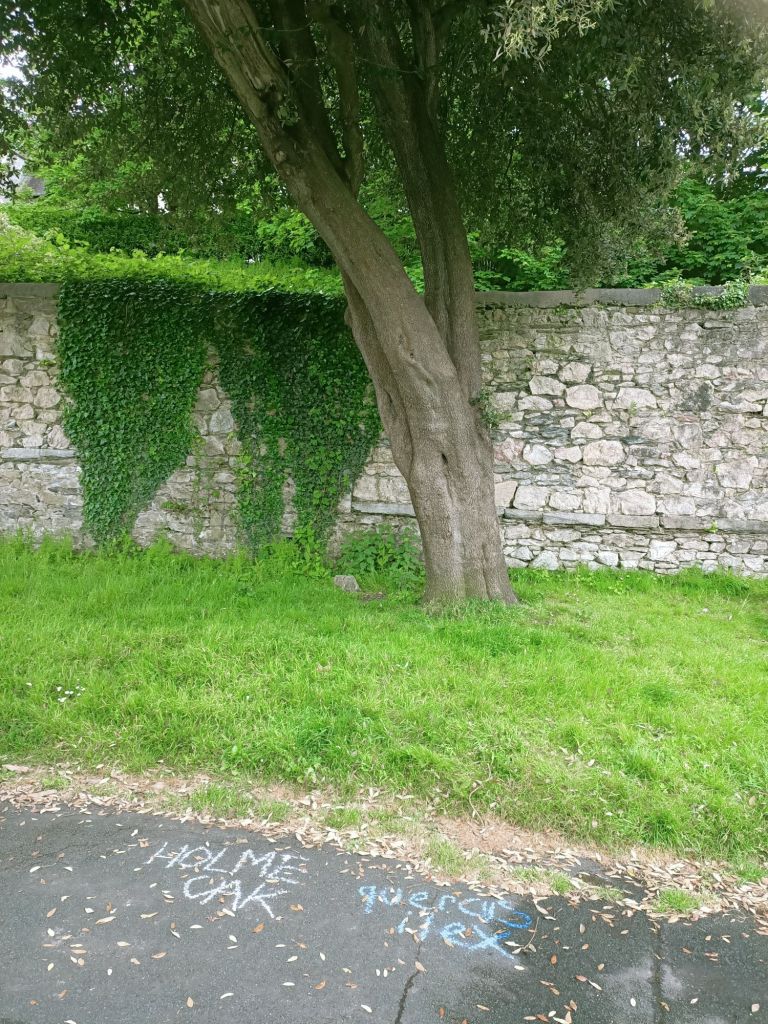
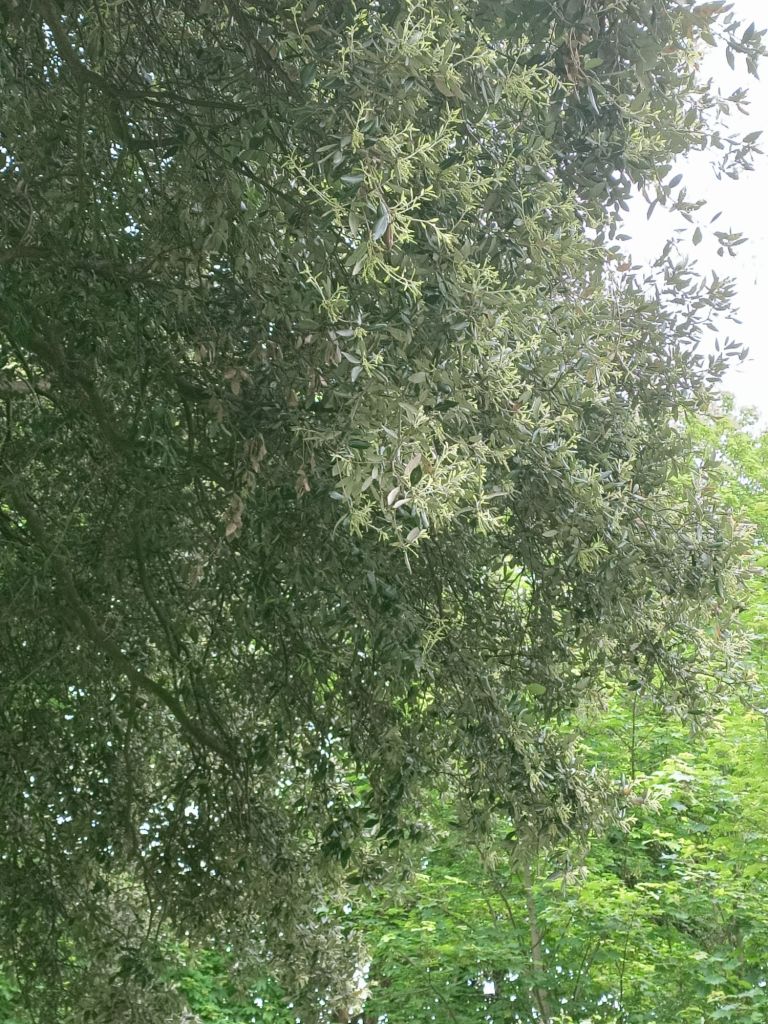
The leaves of the Holme oak (Quercus ilex) are quite different from the English and Red Oak
European Black Elderberry
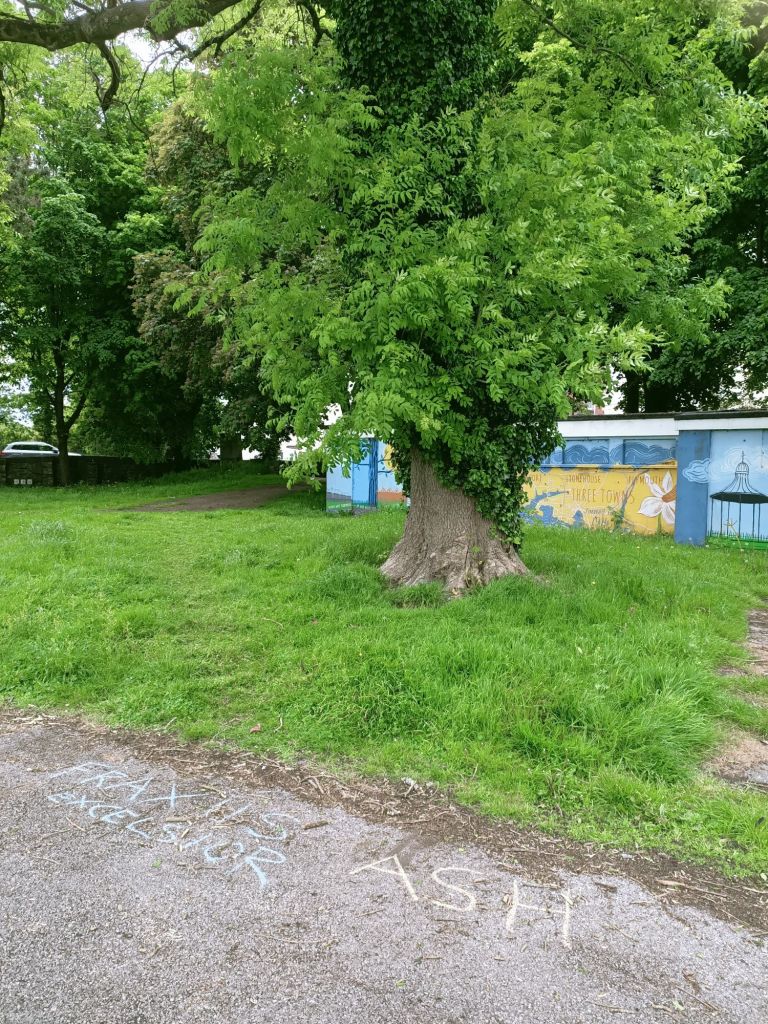
European or Common Ash (Fraxinus excelsior) with its easily recognisable leaves.
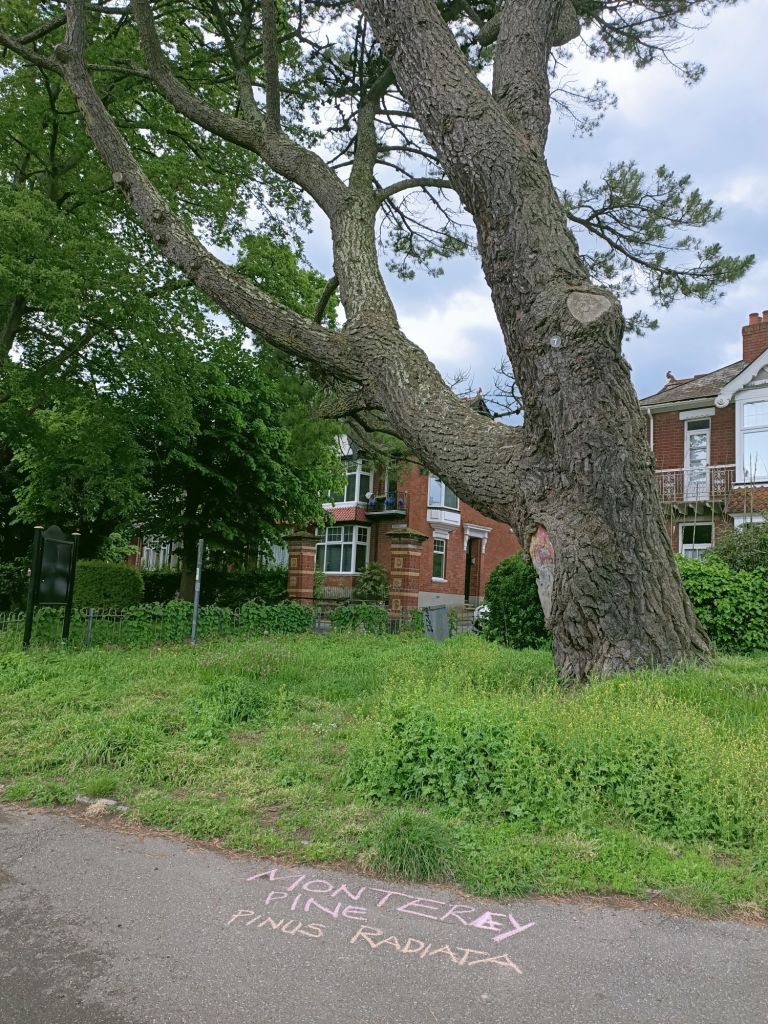
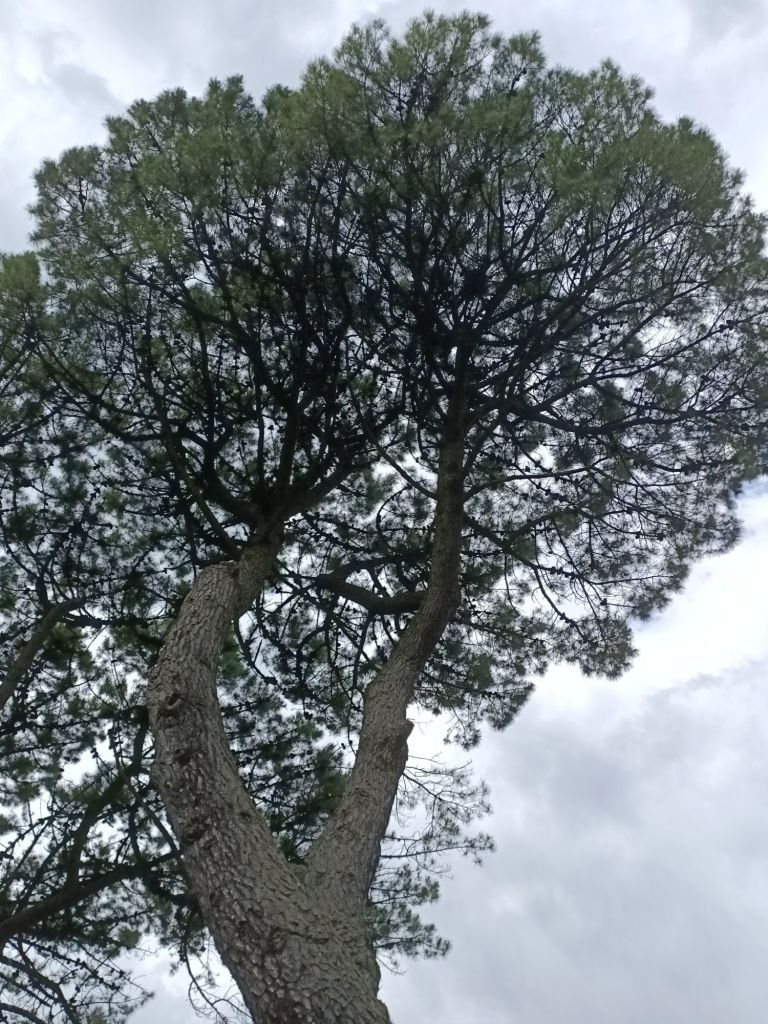
Look up! To see the magnificent beauty of this Monterey pine πŸ‘€

This city is also home to STRAW Plymouth, (Save the TRees of Armada Way)  who clearly could be a further ripple from the Bishnois legacy.  They set up in 2023 and attempted to save 117 trees (which included 37 different species) from the proverbial chop by the local council for ‘urban development’. Fortunately for them, the tree slayers didn’t behead them, but the council’s “military-style night time felling operation on March 14th 2023”, against these non-violent activists, resulted in the loss of many of the trees, despite their brave battle and 17,000 signature petition. However, they did save approximately 20 trees and they are continuing to protect them through legal action in the high courts.

Despite the fact that humans know the essential value of trees to our very existence, e.g. shelter, temperature reduction, water control, wildlife habitat and food sources, pollution control and  oxygen-generating) it seems activists still have to put their time, dedication and lives on the line to saving them, against the money-hungry exploiters across the globe. It’s time to make Ecocide a recognised law across the world to protect ALL living beings, not just human-centric existence.

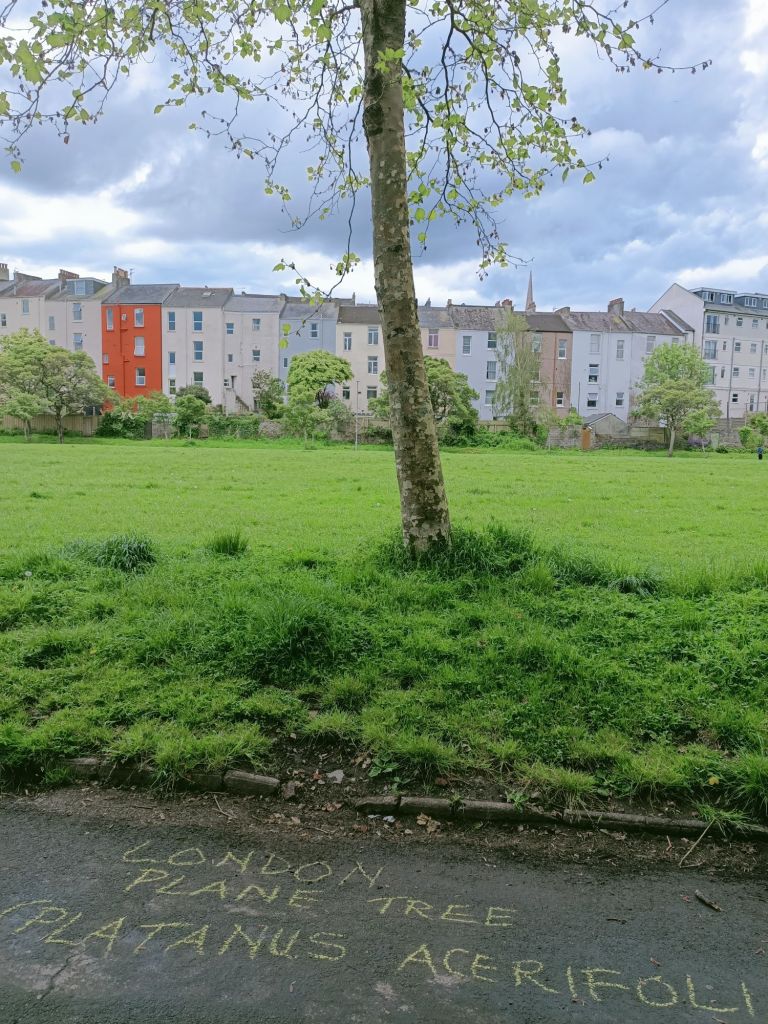
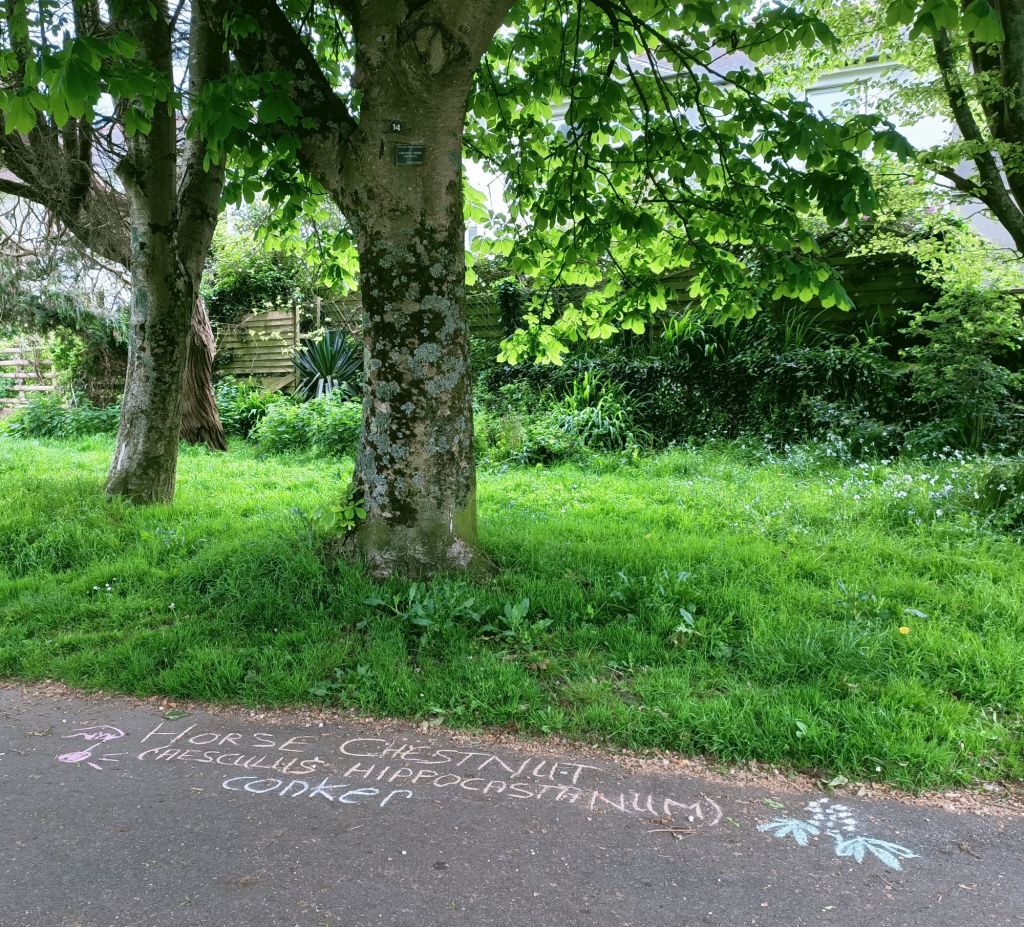
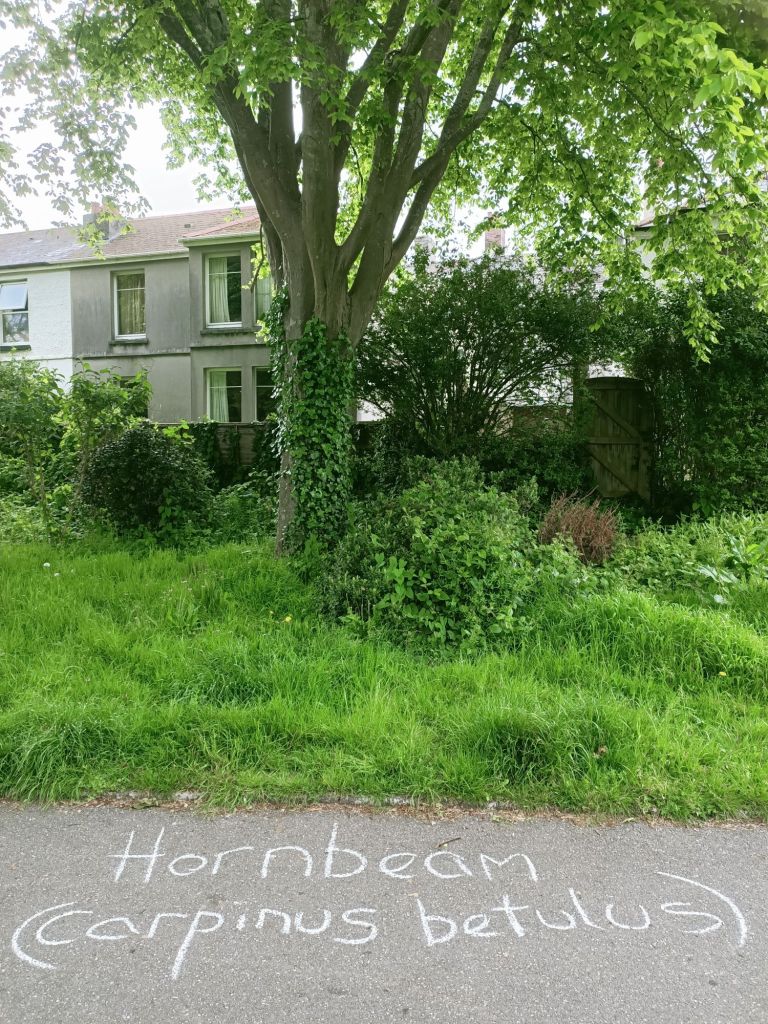
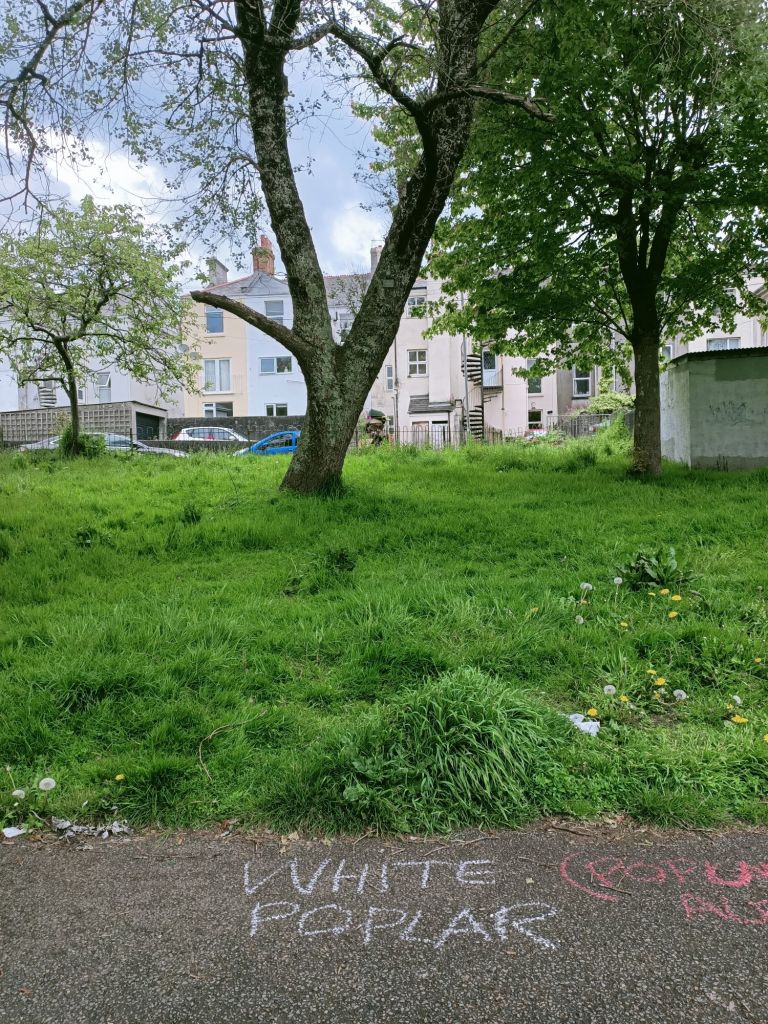
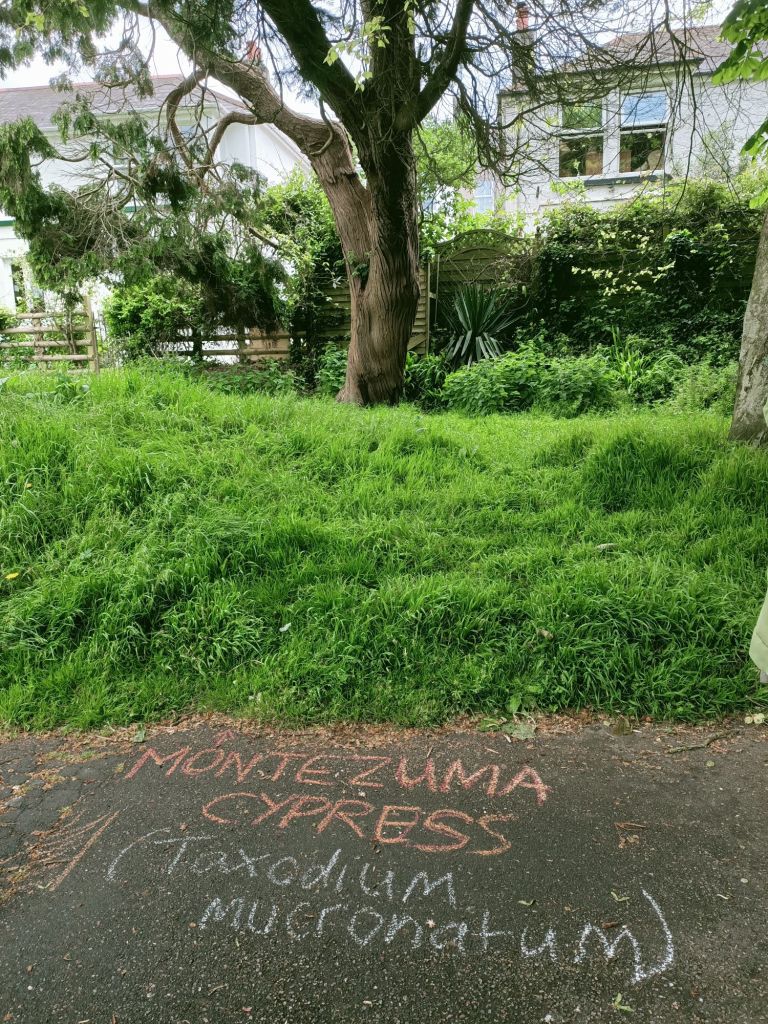
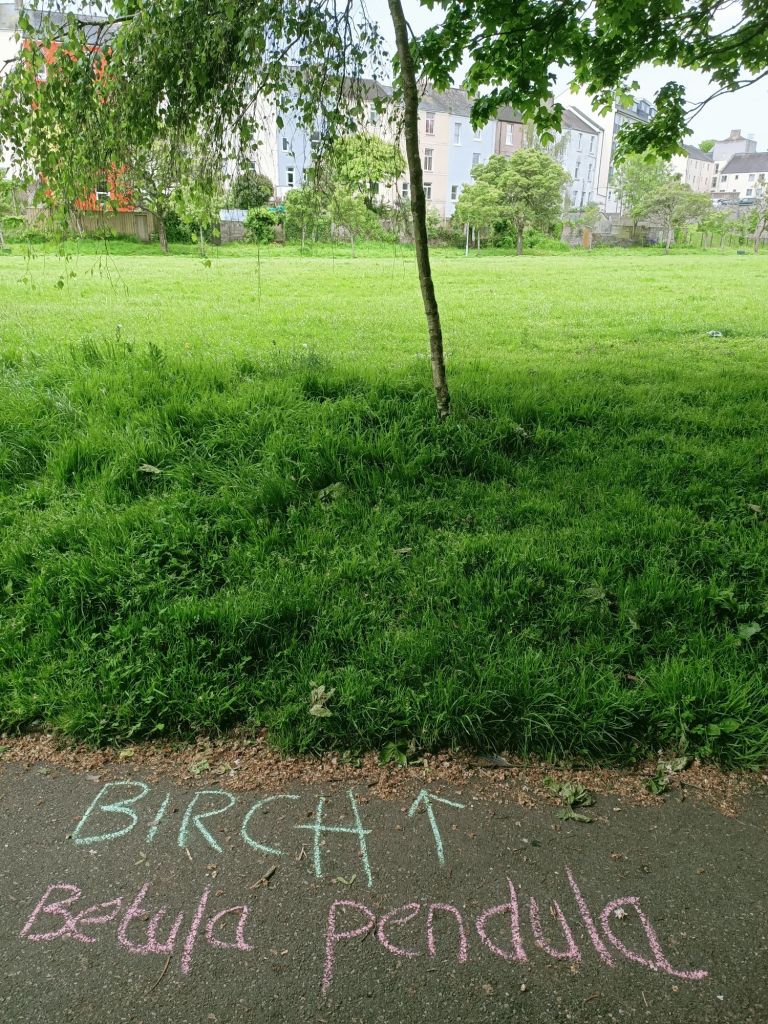
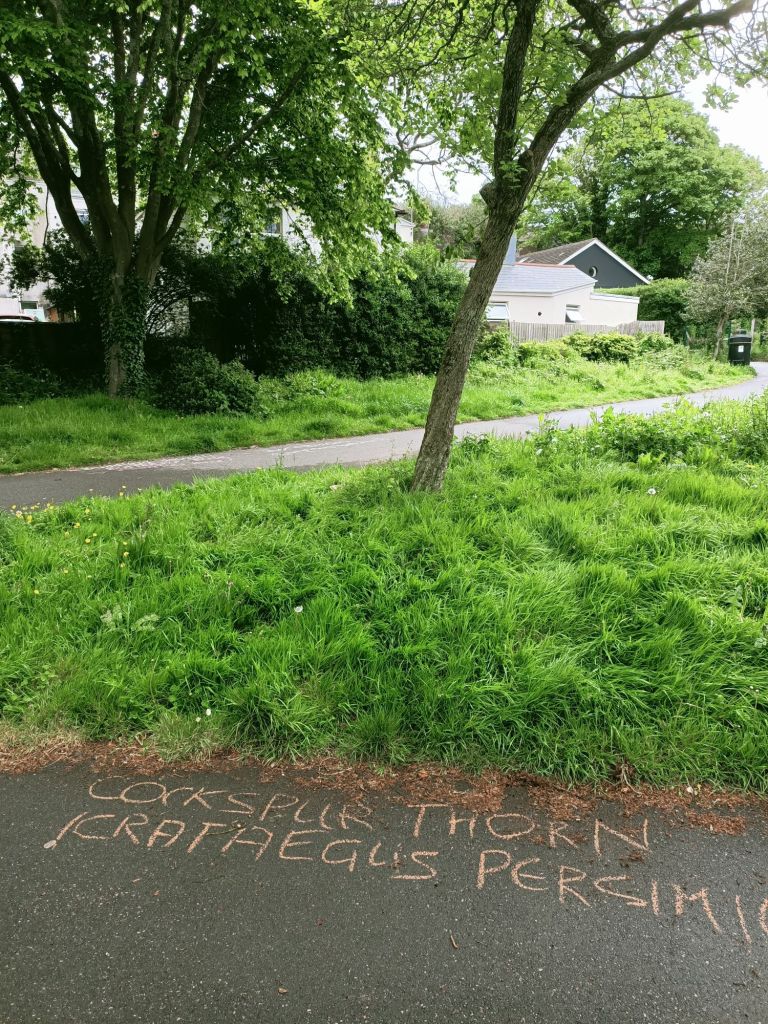
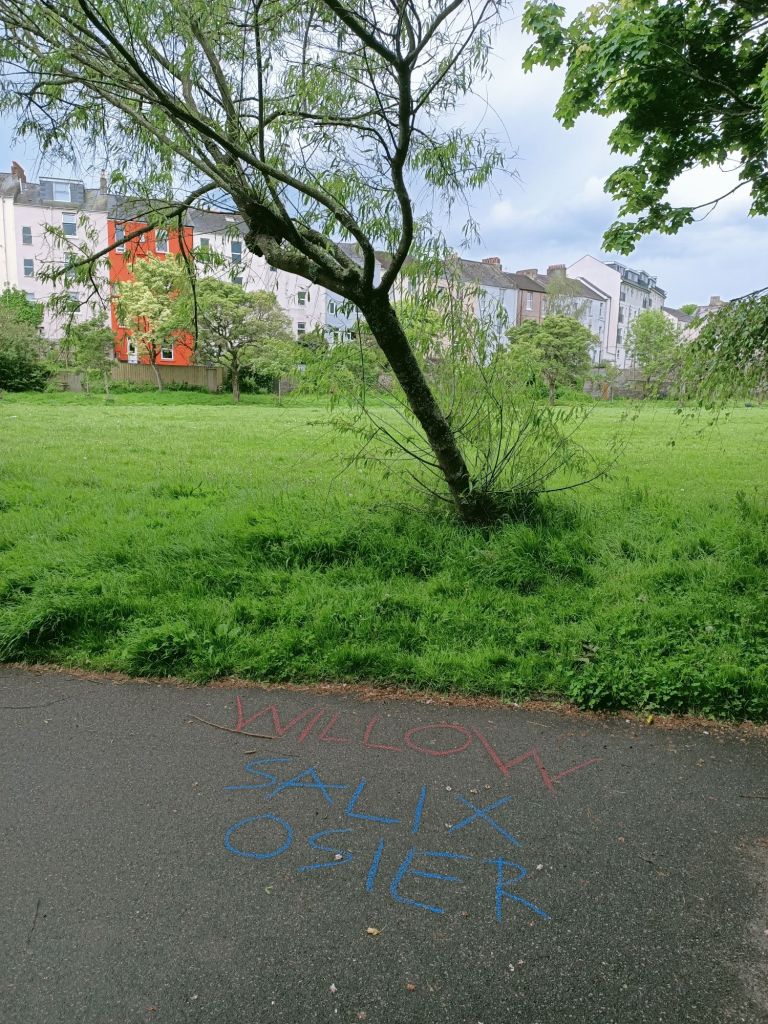
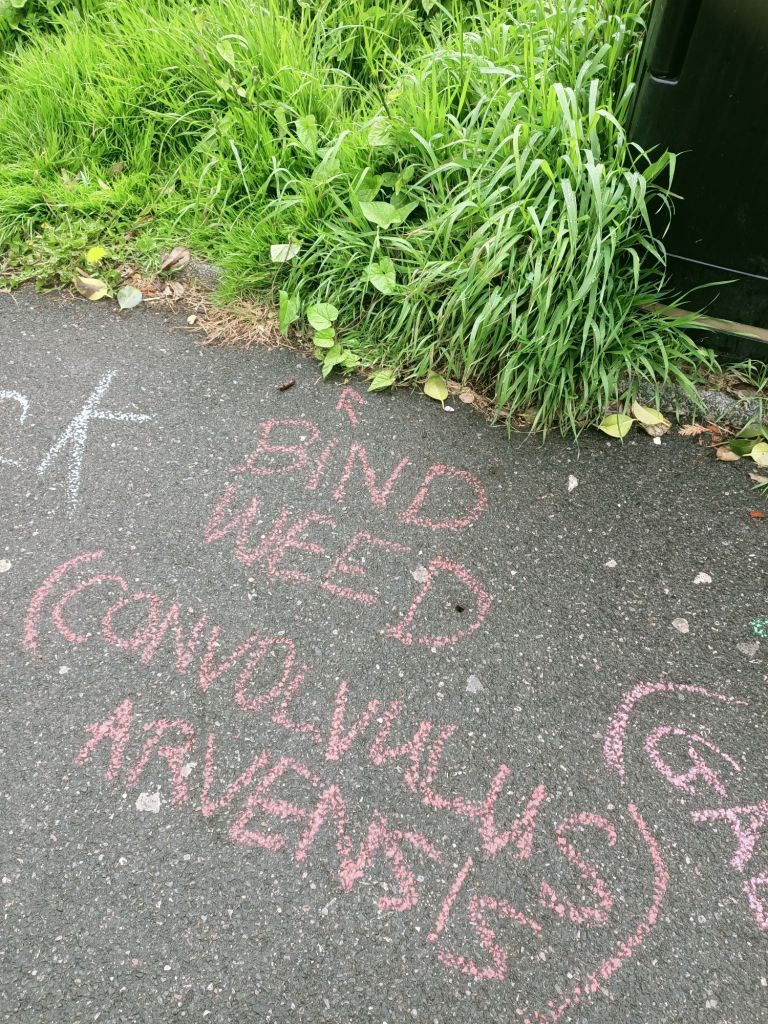
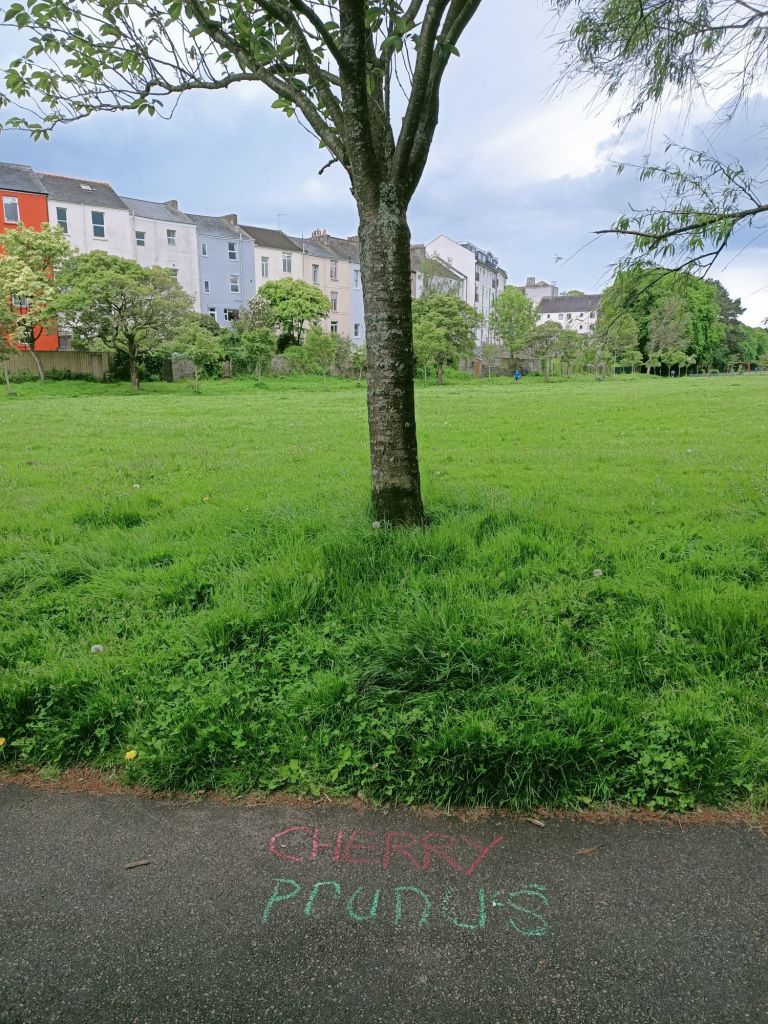
We had to chalk up other plant life alongside the trees in Victoria Park
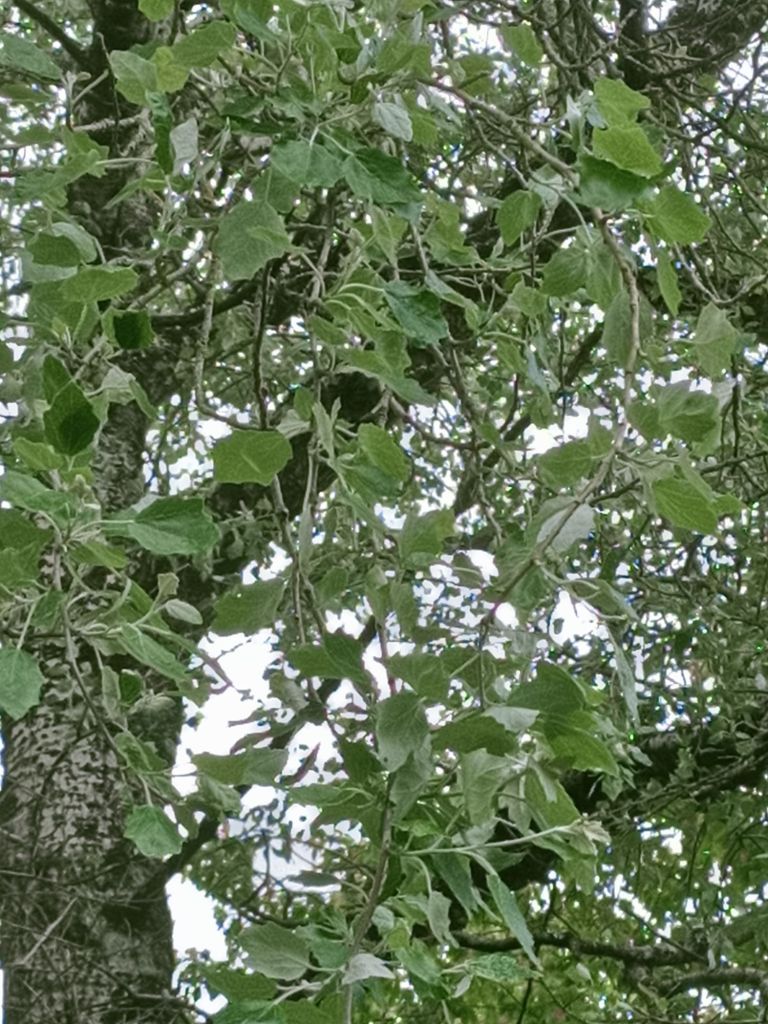
Leaves of the White poplar
Cute but he wasn’t so good at chalking πŸ˜‚
This one is especially for the gentleman in the orange-red painted house:                          it’s a Red Chokeberry! πŸ™‚πŸ‘
We were joined by lots of passionate chalkers and tree huggers today, including:  Rafi and his family, well done πŸ‘πŸ‘πŸ‘

So, are you brave enough to be a tree hugger and protect what nature provides for free?

Thank for reading – I hope you enjoyed it πŸ™‚

Information sources:

https://www.abc.net.au/news/science/2022-08-07/tree-hugger-bishnoi-chipko-defiance-deep-historical-roots/101247020

https://www.earthisland.org

https://en.m.wikipedia.org β€Ί wiki β€Ί Ecocide

A Celebration of Education: a rhizomatic rhythm

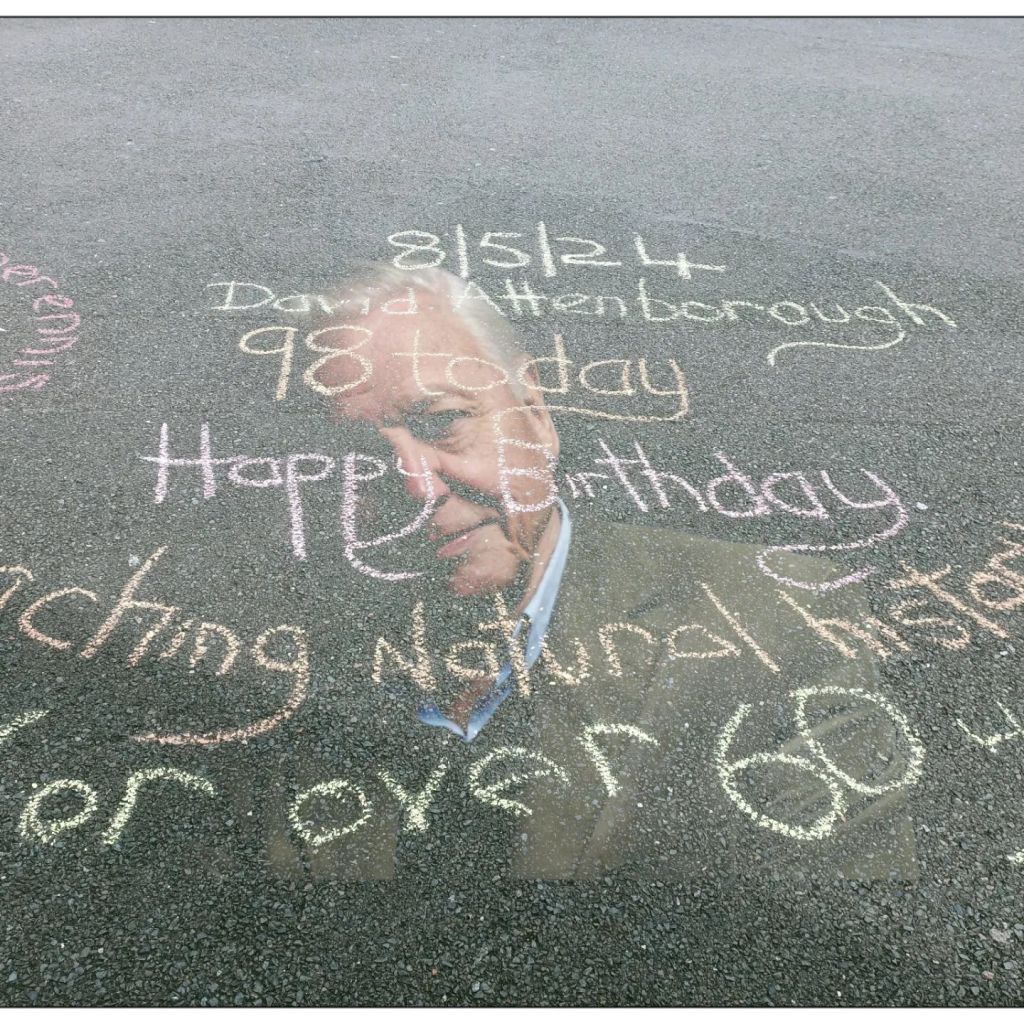
David Attenborough: 98 today on 08.05.24 Teaching Natural History for over 60 years.

On the 8th May 2024, we held two chalking events to celebrate the birthday and on-going work of Sir David Attenborough, at the fantastic age of 98 years. 

The work he has carried out in researching and facilitating natural history to millions of people across the world has, I’m sure, given rise to so many contemporary proteges, as well as raising awareness of the myriad life forms that make up our biosphere. Covering geology, botany, biology, zoology, history and climate warming: his publications and documentaries cover a plethora of sciences that reach across a wide curriculum. This is informal teaching at its best!

‘Informal education does not have the ordered structure and rigidity of formal education. It’s more natural, spontaneous, relaxed and engages different techniques from those found in a classroom.

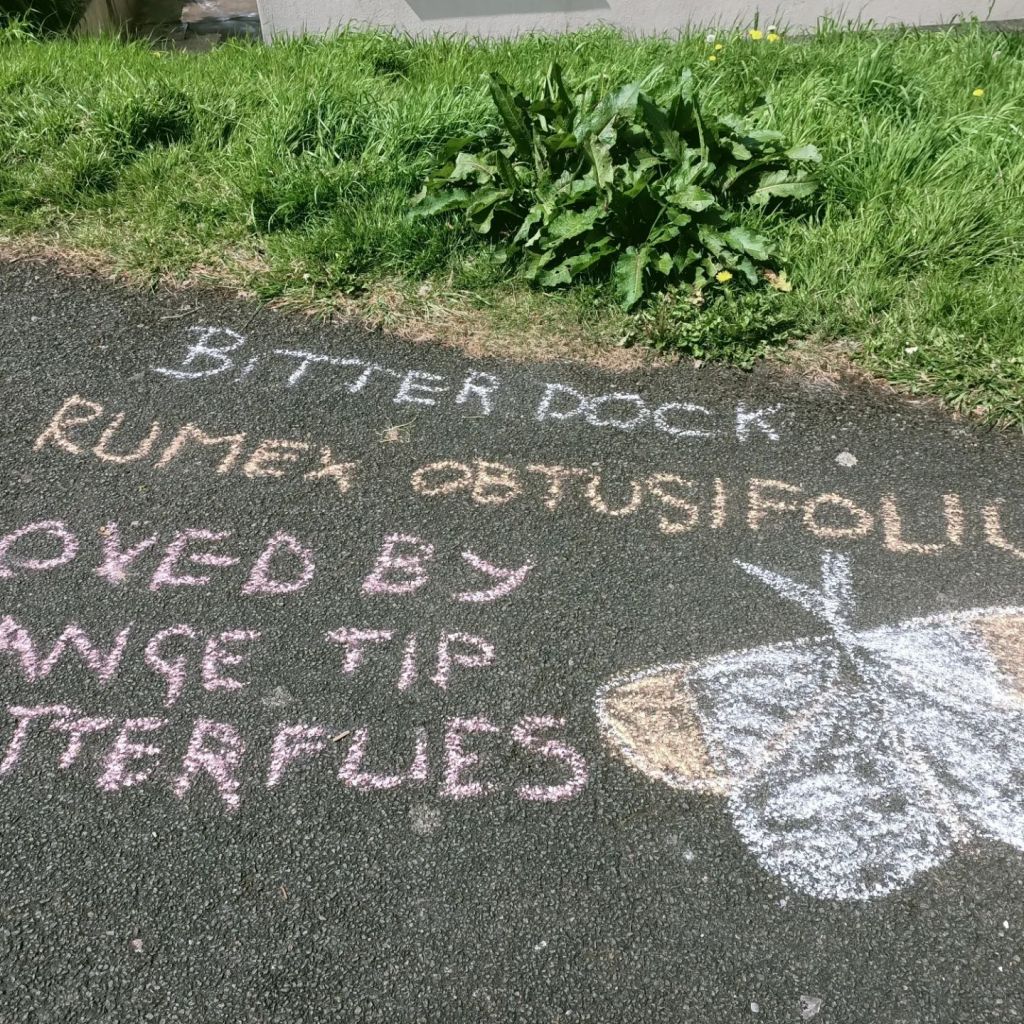
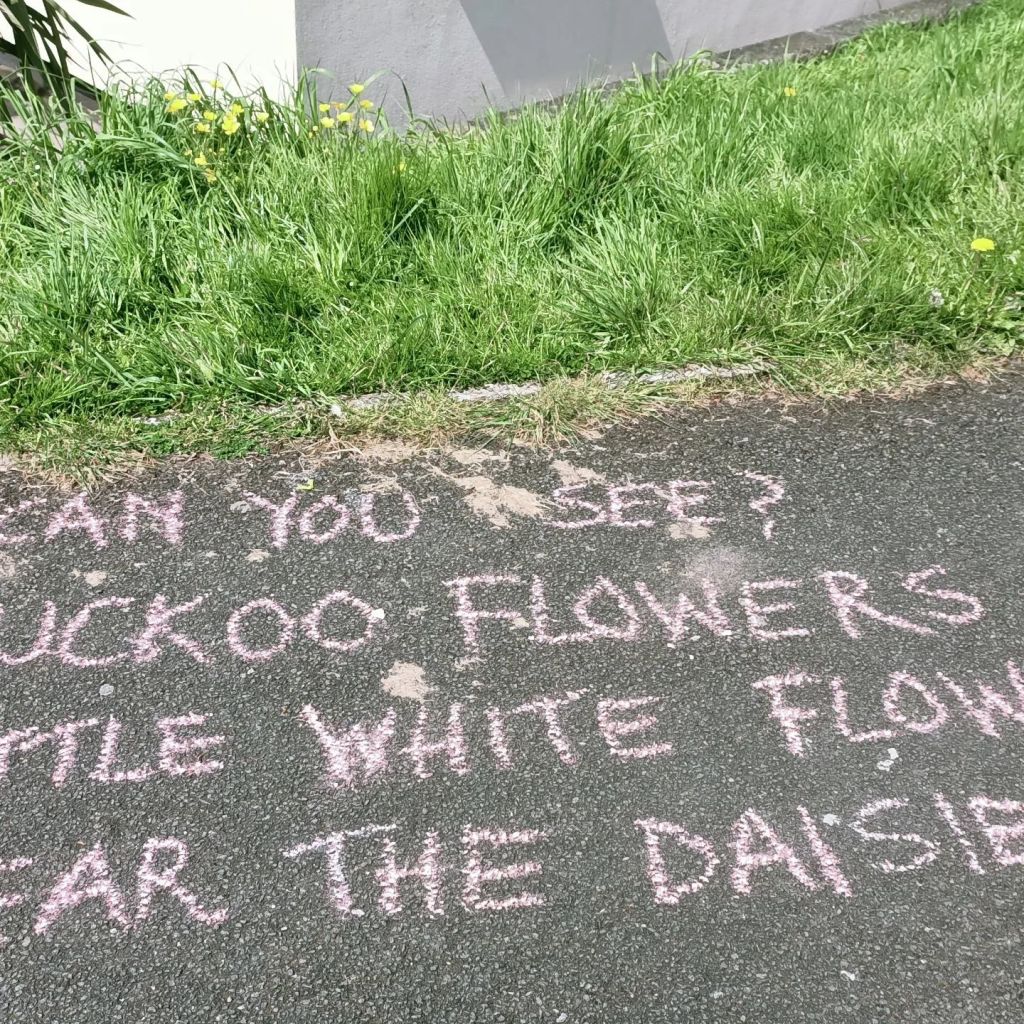
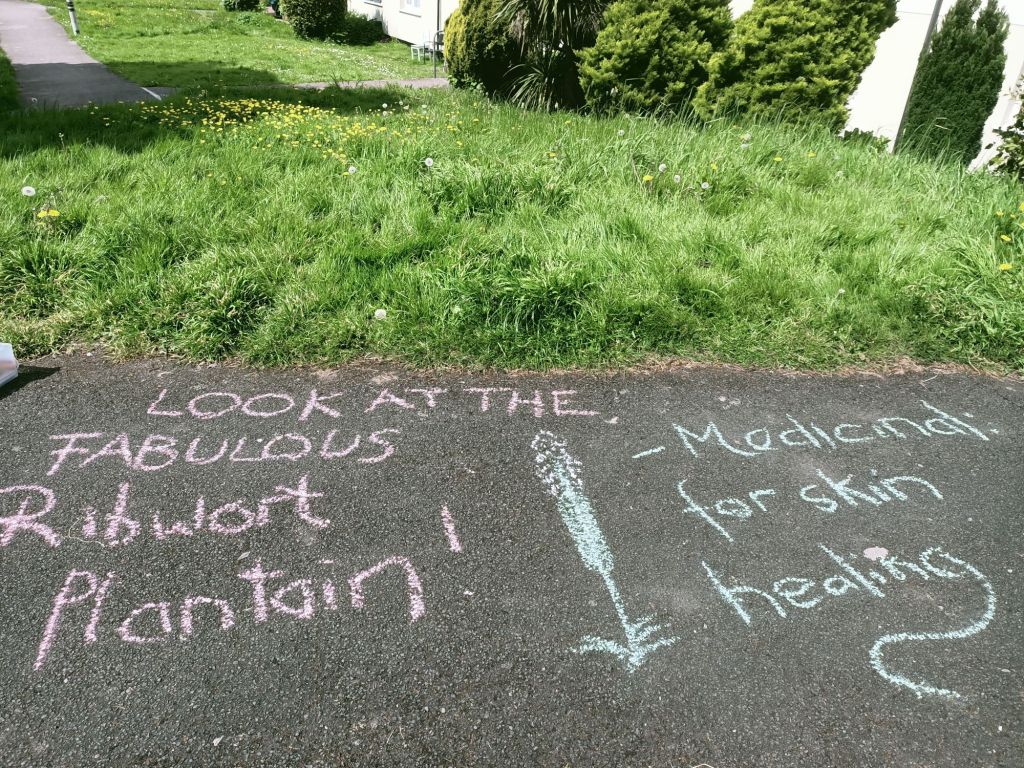
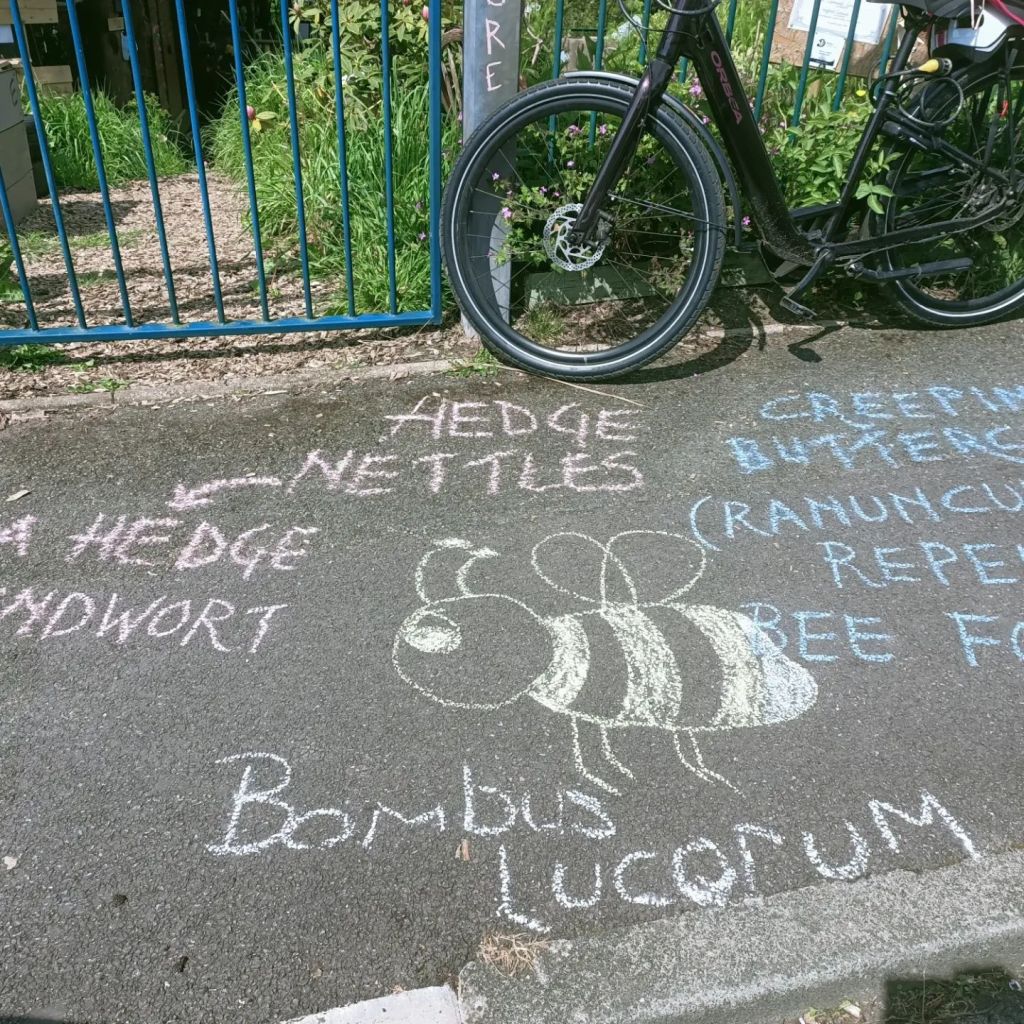
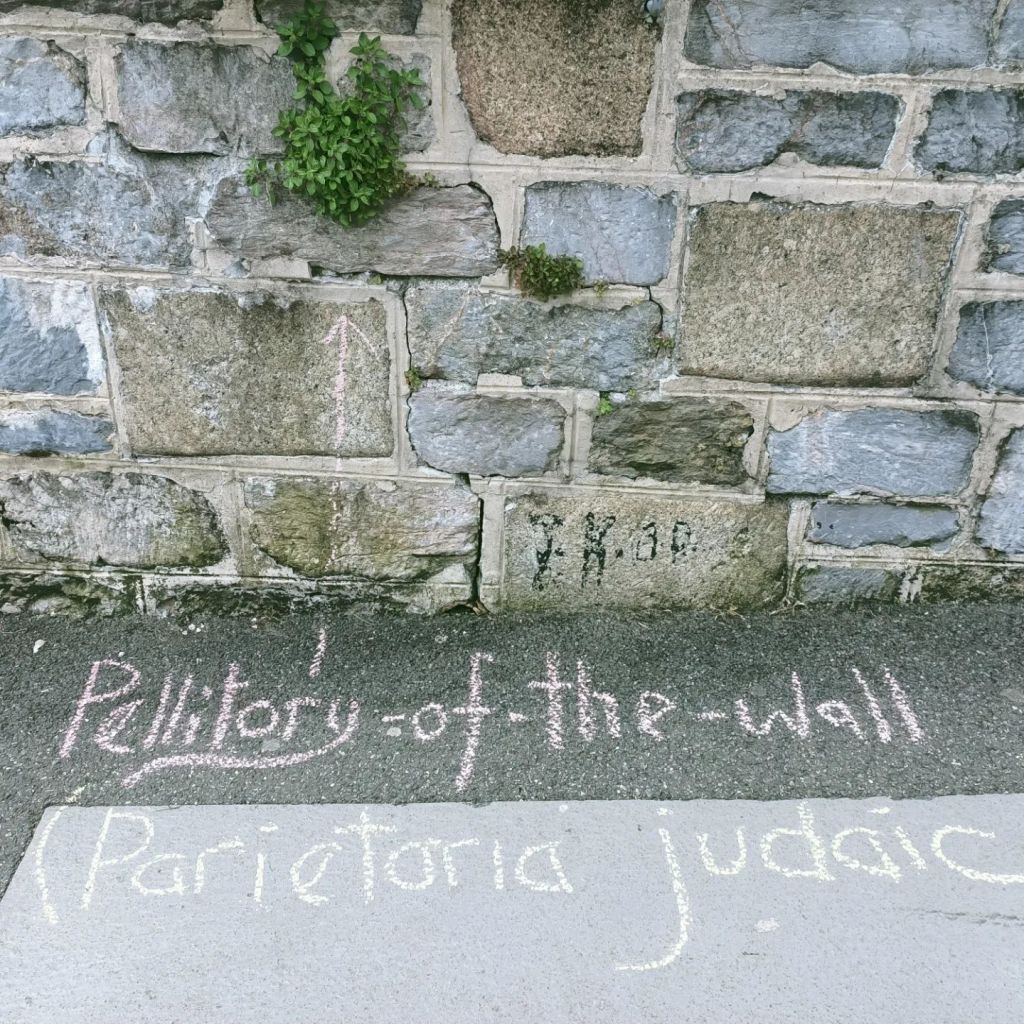
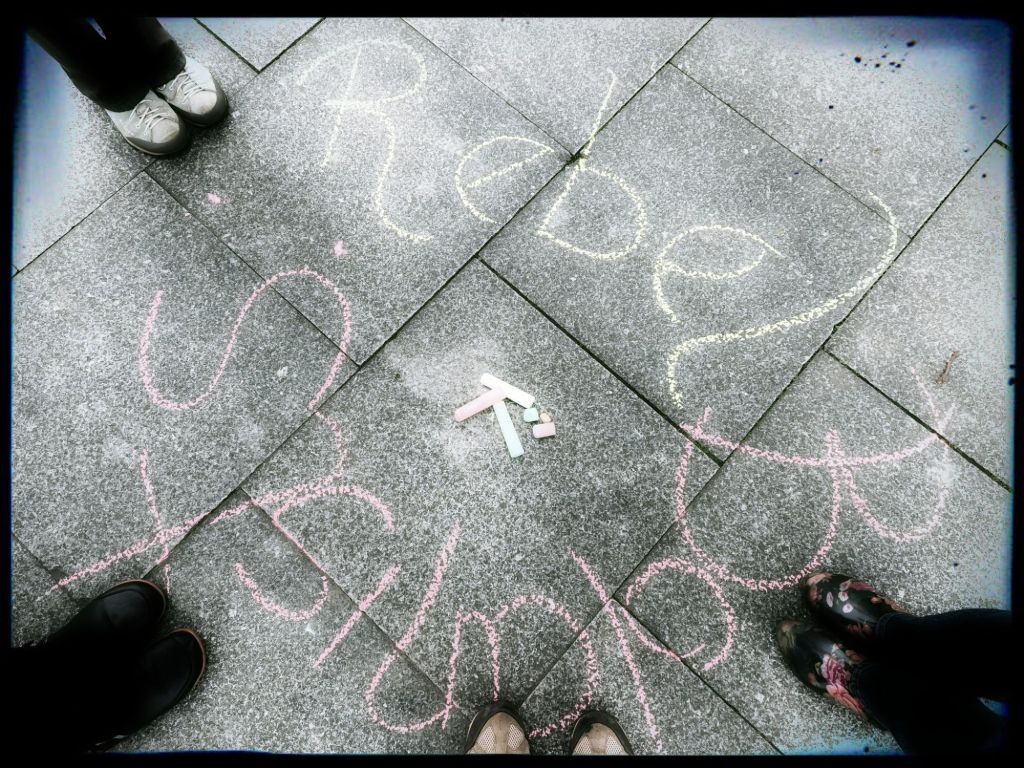
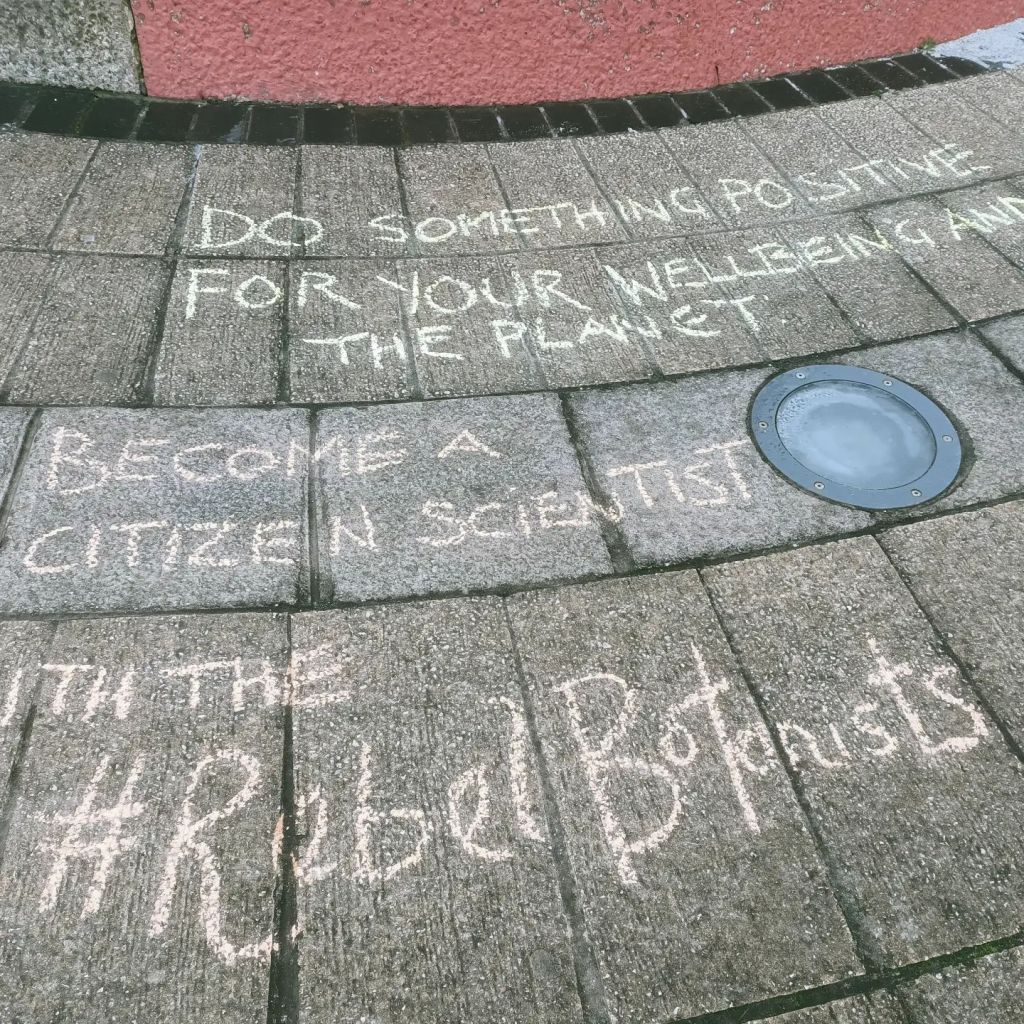
To increase knowledge and understanding of urban wild plants we also use an informal approach to learning. A different and rather rebellious technique of chalking Latin botanical names and information on pavements beside the plants: we are street art educators. People stop and look, they read, take photos and ask questions. This is the best way to engage learning – by arousing curiousity, so people want to know more.

So much of what’s going wrong in the world, is often borne out of ignorance. The mass media plays a big role in this by promoting a debt economy through blatant indoctrination practices: buy, buy, buy, debt, debt, debt. People are being conditioned to buy pesticides, power machines, bigger cars, oil-based plastic products, not because they need them but because it makes the CEOs richer.

“Education is the most powerful weapon you can use to save the world”, said Nelson Mandela; such wise words. Confrontation does not bring compromise, but conversations do. Taking time to listen and learn brings many rewards, including peace and understanding – which I’m sure you’ll agree, we need more of.

When I think back to growing up withΒ  Attenborough, as my ‘television teacher’, I wonder if without his inspirational I would have read about Rachel Carson, Edward O. Wilson, Alexander von Humboldt or Darwin’s earthworm project.Β  It’s interesting how one thing leads to another: a rhizomatic rhythm, don’t you think?  πŸ€”

Lost Chalks; Lost Words

On a recent visit to London, I ventured out one day and left my chalks behind. Heck, how could I do such a thing?! Chalks are the ‘weapons of mass education’ which should be carried at all times, by a true Rebel Botanist: always ready for street art education, to highlight  urban wildlife. Despite the lights and sights of the skyline, and the glory of galleries and museums (which is where I was heading) I couldn’t be distracted from the greatest art of all – nature!

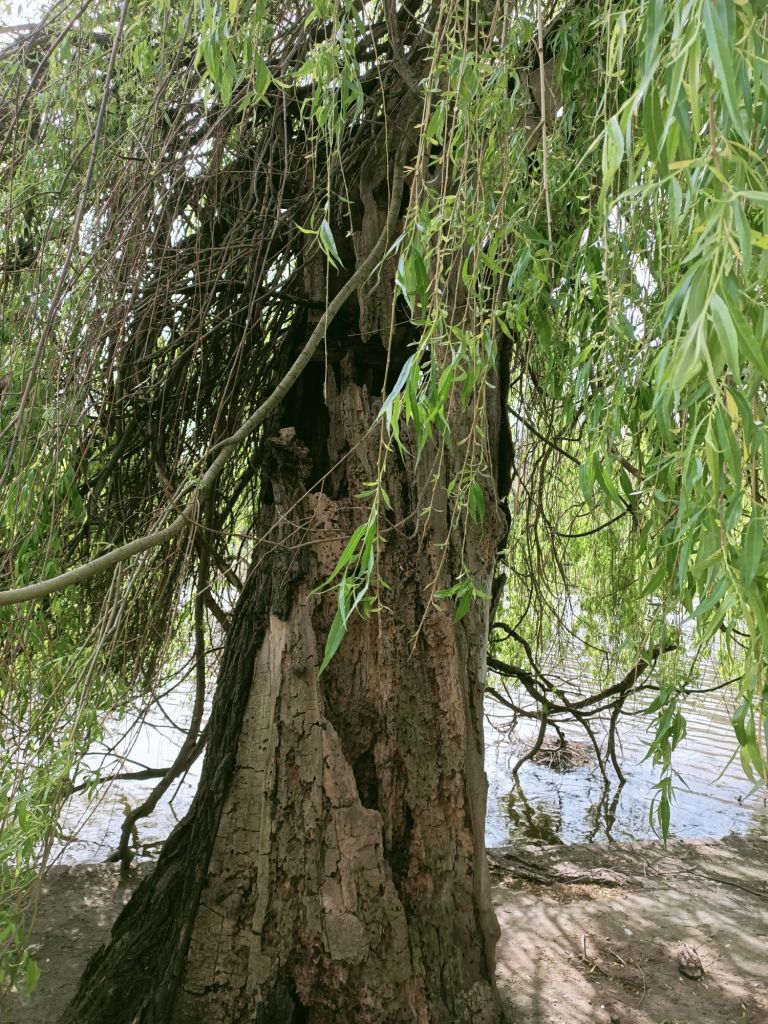
Hollow holey twisted Willow trunk

A willow in St James’ Park grabbed my attention because despite it’s hollowed holey twisted trunk, which suggested decay, it’s branches were decorated with vibrant green leaves dancing in the sunshine. Am I the only one who sees this, as I stand in awe and people pass by? A chalked message would distract their attention to see this beauty, but alas, no chalk. No chalk, no words. No words to draw attention, to inform, to recognise: my words were lost. It reminded me of McFarlane’s book, Lost Words, written in response to nature words being omitted from children’s encyclopedias. My omission of chalked words gave me a sense of guilt and frustration. I walked on.

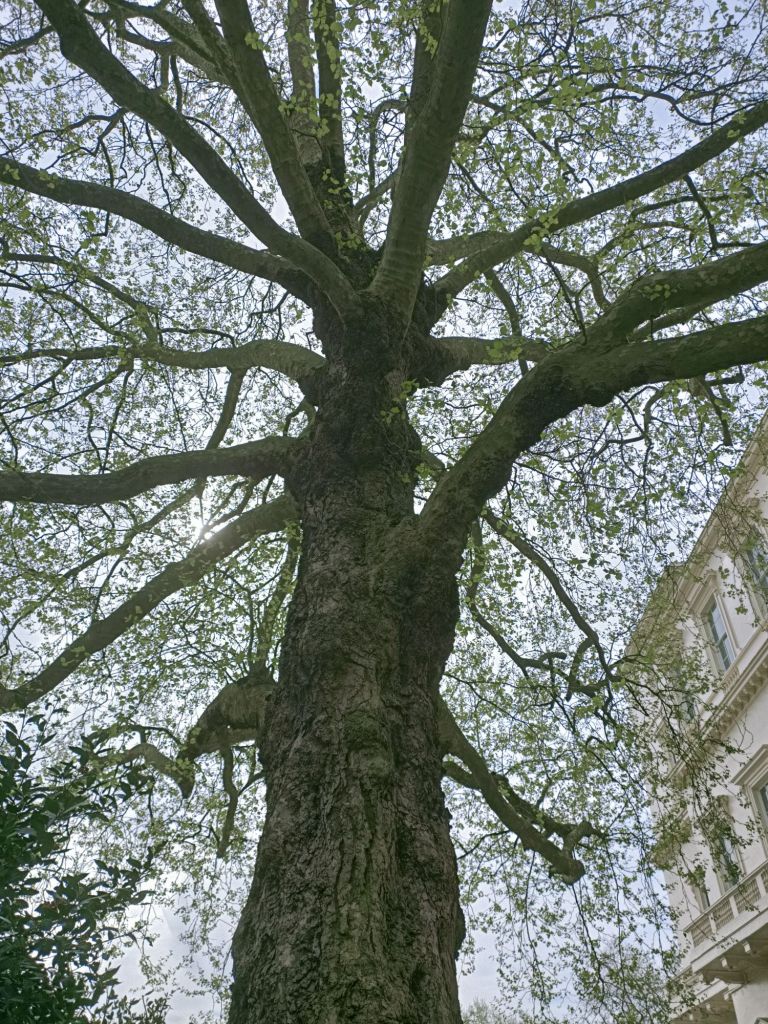
London Plane embracing the sun

Ah, a London Plane (Platanus x hispanica)  shimmering with thousands of tiny green emeralds over my head with arms outstretched in a warm embrace to the sun. Despite being a hybrid, it is extremely successful in urban cities, due to its outer bark, which it sheds to rid itself of environmental pollutants from cars and industry. This species was around long before city pollution, so I wonder why this characteristic evolved? When you really look and think about nature, so much curiosity is aroused.

Erupting roots of the Swamp Cypress

Further on I came across a Swamp Cypress (genus: Taxodium) with its roots erupting from the soil surface like snake heads rising to the sonorous sounds of a snake charmer. These outgrowths are in fact taking in oxygen for the roots below. This genus of tree has only two species, this one is the deciduous T. distichum from SE USA. Oh, to write this information on the smooth surface of the path; can you imagine my frustration?

Life rises resolutely: Dawn Redwood

A stunning DawnΒ  Redwood, Metasequoia glyptostroboides, resolutely rising in Whitehall, was breathtaking. This species was once thought extinct in the wild, due to loss of habitat, until some were found in central China in the 1940s, I believe. Clearly not in its natural environment, but providing a wonderful show of wildness in an otherwise sterile stand of Government buildings. A lone Gurkha stood guard before it. I desperately wanted to scribble its Latin name upon the cleanest smoothest paving stones at its base. What else are they there for, after all? πŸ˜‰

Willowy Willows

This lovely glade of willows (Salix) outside the Tate Modern, offered quiet calm to the busy-ness around it. Oh, how I wished to describe the light shafts glinting through the slender elegant trunks and dainty leaves, to encourage people to stop and look. Dylan Thomas called this effect ‘windfall light’ in his poem Fern Hill, and C.S. Lewis described it as ‘Godlight’.            In Japan, they use the word Komorebi,      ζœ¨ζΌγ‚Œζ—₯.  

Did you know that Canada’s Inuktitut dialect has 53 words for snow, and in the IΓ±upiaq language of Alaska, they have 70 words for sea ice? Yet, in Britain we struggle to have one to describe the effect of light through leaves…?  Could this be linked to the fact that only 7% of our native woodlands are in good condition, according to the Woodland Trust?  Consider, also, the fact that Robert MacFarlane wrote his widely acclaimed ‘Lost Words’  book, in response to a children’s encyclopedia omitting everyday nature words, like acorn, bluebell and wren. Whilst our language is a dynamic one, it should not be ‘losing’ words which are in fact vitally important to our existence.
Linguistic relativity theory  suggests that a language’s vocabulary determines or shapes the thought processes of the speakers; therefore if we are not using these words, that recognise the biodiversity in which we exist, how are we to save it?  With the eroding of our nature vocabulary and the recognition of the visual ‘impairment’ of ‘plant-blindness‘, people are becoming cognitively plant-blind. This planet is a living breathing biosphere of life, of which we depend, and therefore it should be at the forefront of our consciousness and conversations.

So, my chalks will not be lost or forgotten again! Education on the streets is absolutely necessitous to open our eyes to the beauty around us, that is Nature. We ARE Nature.

Can A.I. Change the World?

“Artificial Intelligence enables us to track environmental footprints, extreme weather events, carbon emissions, and biodiversity loss. But can it help us to find solutions to tackle some of our society’s most pressing environmental issues? AI has a staggering carbon footprint itself – but can it help us find solutions in a rapidly changing climate?” https://www.agile-rabbit.com/event/environmental-intelligence-can-ai-change-the-world/

After seeing this event advertised our curiosity aroused, we decided to board a train and walk the beautiful woodland walk to Dartington to attend. We came across 400-year old chestnut trees, listened to a melodious Great Tit and saw an Egret and a Grey Heron standing majestically in marshland. We also, serendipitously, met a couple of friends there, making it an even more interesting evening.

The panel, made up of 3 university professors from the fields of business and computer science, the CEO of the Met Office and environmental journalist and activist, George Monbiot, were presented by a BBC interviewer. Whilst they discussed how AI could model future weather patterns and climate warming to consider what plants and trees would be more suited to different areas, it was evident that AI was still a tool to be wielded by the rich and powerful. Who would ultimately control the organisations developing AI? As one speaker pointed out, look at Google. I did later, to discover it was founded in 1998 and is still owned by the same two shareholders. In 2023 the company revenue was over US$304 billion!

The dichotomy of discovery (for the good) and control (for the bad) was very evident, in the talk. We are already seeing how machines are taking over skills-based jobs in farming and supermarkets, for example. The swift tide towards the digitalisation of money is raising concerns of monitoring where and how much each of us spends our incomes.

When questions were offered to the floor, a hand shot up. “Can AI predict when the permafrost will melt?” asked my friend, Chris, a biologist of 40 years. A significant question indeed because it’s effect will not only cause inevitable land destruction, it will release millions of tons of stored carbon, methane and nitrous oxide into the atmosphere and may well rob us all of our final breaths. Climate warming is already causing permafrost to melt, creating landslides, craters and swampy land masses; without the ice keeping the soil intact, giant sinkholes are swallowing up land and releasing greenhouse gases, adding to the existing climate warming problem.

It would seem that “Current climate change forecasts may underestimate the emissions from permafrost because they only take into account gradual thawing of the ice layer.” https://www.weforum.org/agenda/2020/02/permafrost-ice-melt-thaw-arctic-global-warming-carbon/

Left as they have been, for thousands of years, permafrost lands act as a carbon sink, but the continuing human activity of excessive burning of fossil fuels, increasing global temperatures, are melting these frozen areas and releasing these toxic gases.

“Paleoclimate evidence reveals that current warming is occurring roughly 10 times faster than the average rate of warming after an ice age. Carbon dioxide from human activities is increasing about 250 times faster than it did from natural sources after the last Ice Age.” https://www.ipcc.ch/report/ar6/wg1/downloads/report/IPCC_AR6_WGI_Chapter02.pdf

Scientists are revealing the already devastating effects through traditional methods of field and empirical research (positivistic science) that biodiversity is in peril:
“The tundra of the western Canadian Arctic has long been carpeted in cranberries, blueberries, cloudberries, shrubs, sedges, and lichen that have provided abundant food for grizzly bears, caribou, and other animals. Now, however, as permafrost thaws and slumping expands, parts of that landscape are being transformed into nothing but mud”. https://e360.yale.edu/features/how-melting-permafrost-is-beginning-to-transform-the-arctic.

It is clear that whilst AI can be used constructively for modelling predictions, more needs to be done, and fast, if we are to combat the key problems that are killing our planet. For this, AI is not necessary because we have known for decades that burning fossil fuels, mass deforestation, industrial development and chemical and waste pollution are destroying the biodiversity of our living, breathing planet.

George Monbiot’s response was crystal clear: Governments must act upon the findings of scientific research; there has to be system change. The rich are continuing to live lifestyles that literally fly in the face of sustainable living.

What good is AI if it is controlled by the rich? What benefit comes from the findings if they are not acted upon because the rich want to get richer despite the devastation they are causing? When is enough, enough?

Rachel Carson, an environmentalist, scientist and writer, fought hard, to the end of her life in 1964, to highlight to the world how pesticides were destroying birds, insects, plants and healthy soils, in her book ‘Silent Spring’. Yet, 60 years on these toxic chemicals are still being sold on supermarket shelves like sweets! Why, because Governments allow it, the media advertise them and big business sells them – the rich mediate everything, often to our detriment. How can the general public make informed decisions when so much information is polluted?

We cannot rely on believing everything we read in newspapers and on digital platforms. We have to seek and research, more deeply. As Rebel Botanists, we walk the urban streets seeking out nature, finding out for ourselves what we are looking at, what value these plants provide and have discovered that everything is ecologically connected; providing food, habitat, and medicine for human and wildlife. We use all our senses, we discuss with one another subtle differences to establish greater understanding and we do it, above all, with a sense of wonder and enjoyment in the hope of making the world a better place.

Researching to find the truth amongst the “lies, damned lies and statistics” (Mark Twain) can be daunting, but self-discovery is empowering. Talking and sharing your findings and opinions with others you trust promotes empathy, understanding and comradeship. So, please, keep talking. πŸ™‚πŸ€

Thresholds of Change


Happy New Year Everyone! πŸ˜ƒπŸŒΌπŸŒΏπŸŒ³

We have all well and truly stepped into 2024, no matter where on this planet you live. We have stepped over the manmade objective threshold of time, from one year to the next, and yet moved back to the routine of work, study and life.  Perhaps one day is already melding into another, just as it did in 2023… If so, then we really need to wake up because life is in the now! There is a wonder-ful world to be discovered and appreciated. 🌼

We don’t have to wait for a new year event, every minute of our day offers the liminal opportunity for a threshold of change, you just need to do it!  Why not change just one thing in your life (for starters) to show your love and respect for planet Earth. Please, continue reading; it may give you some ideas πŸ˜‰

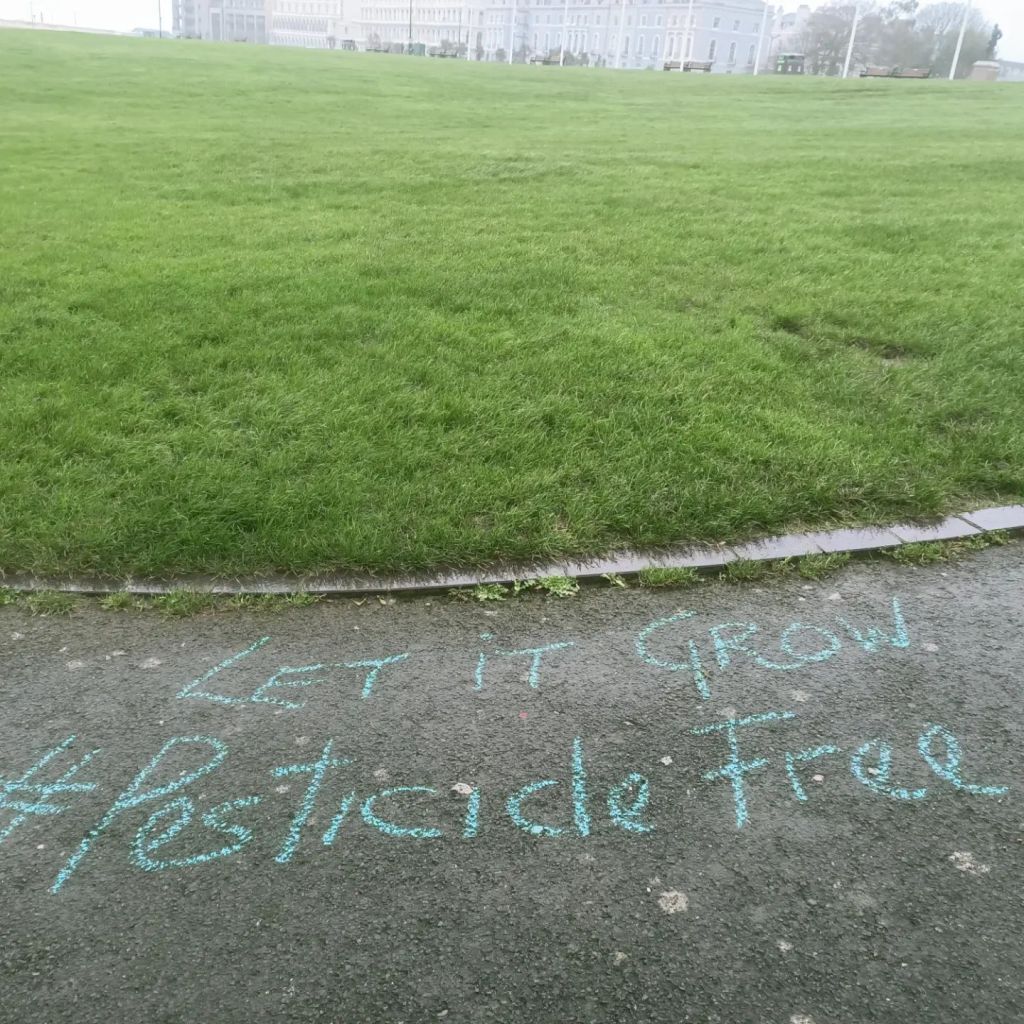
New Year’s Day chalking on Plymouth Hoe

The misty, moist morning did not dampen our spirits, or our chalking. Being out, raising awareness of the urban wildplants to highlight their importance makes you feel good: mentally, emotionally and physically.

Plantago lanceolata

There are great benefits to being a Rebel Botanist: learning about plants, their Latin names and their value to wildlife and humankind. One of our amazing Rebels makes skin healing salves from the Plantaginaceae plants. Used for many skin ailments, they have been used for centuries as a topical herbal medicine.

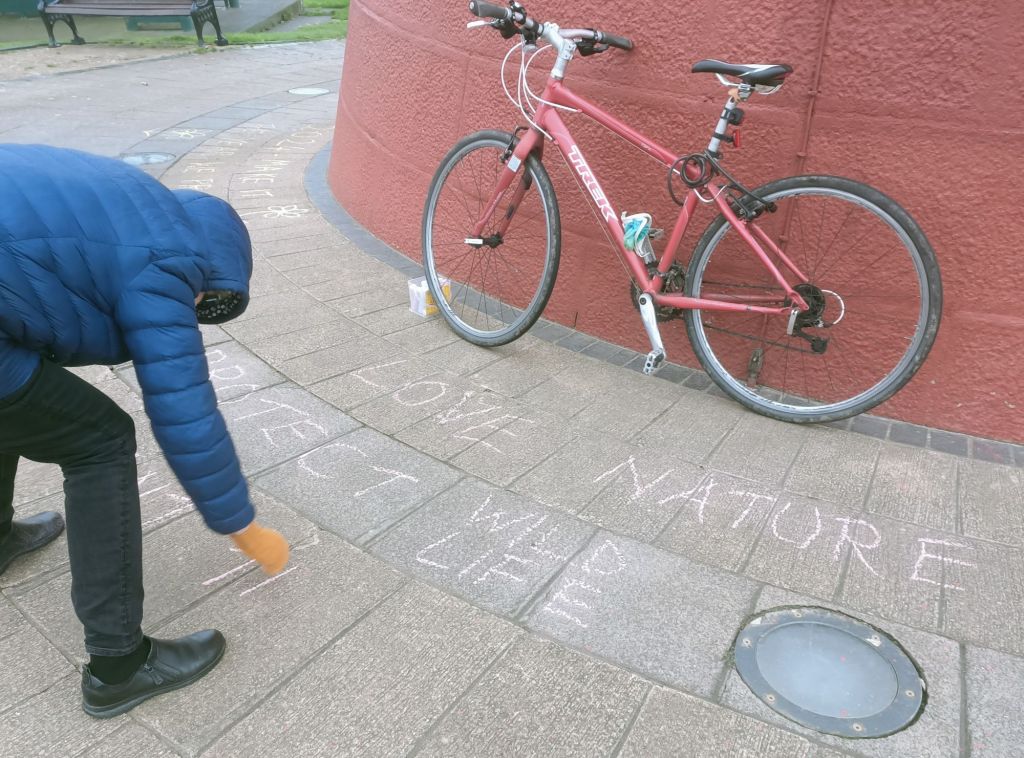
Rebel in action πŸ˜ƒ

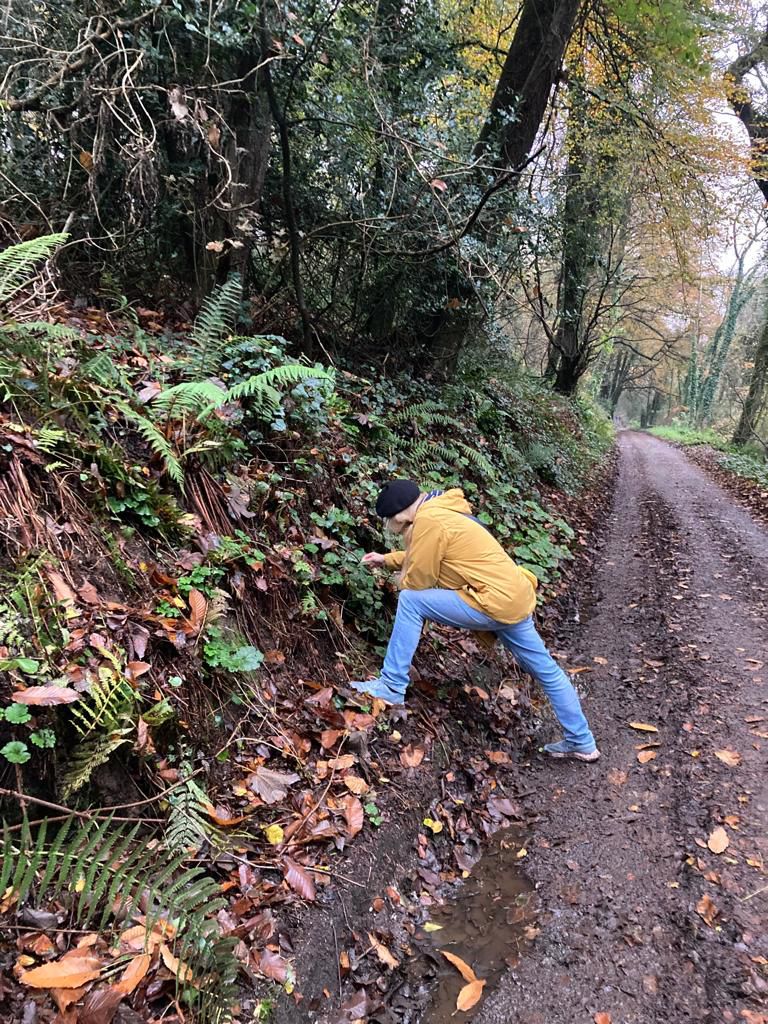
Being a Rebel Botanist also keeps you fit. Many of us cycle and we certainly do plenty of walking on our chalking adventures. We also do lots of bending and touching our toes πŸ€£πŸ˜‚

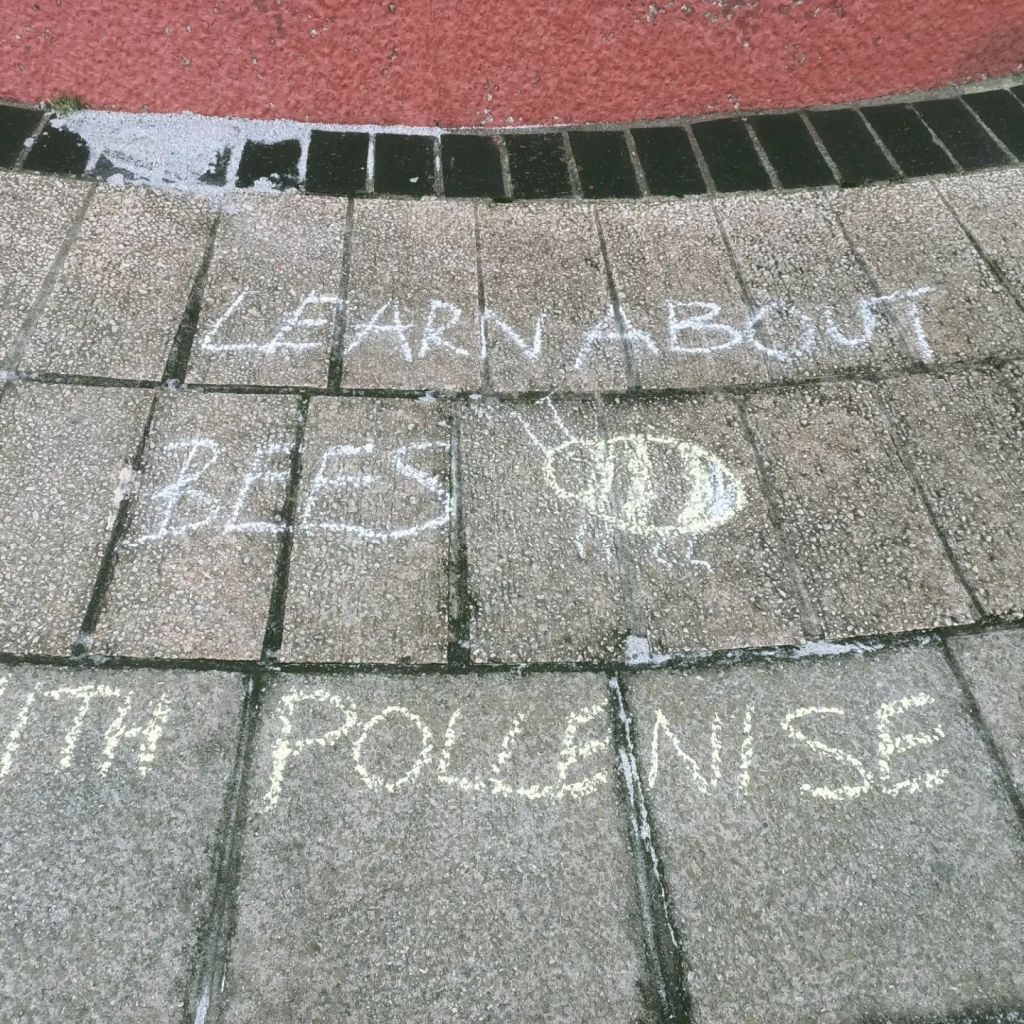
http://www.pollenize.org.uk

We also work and support other environmental groups like Pollenize, because they protect and nurture urban bee populations. Wildflower meadows have been destroyed by 98% since the year David Attenborough was born. Can you imagine the effect this has had on pollinators? However, organisations like Pollenize are working hard to help them.

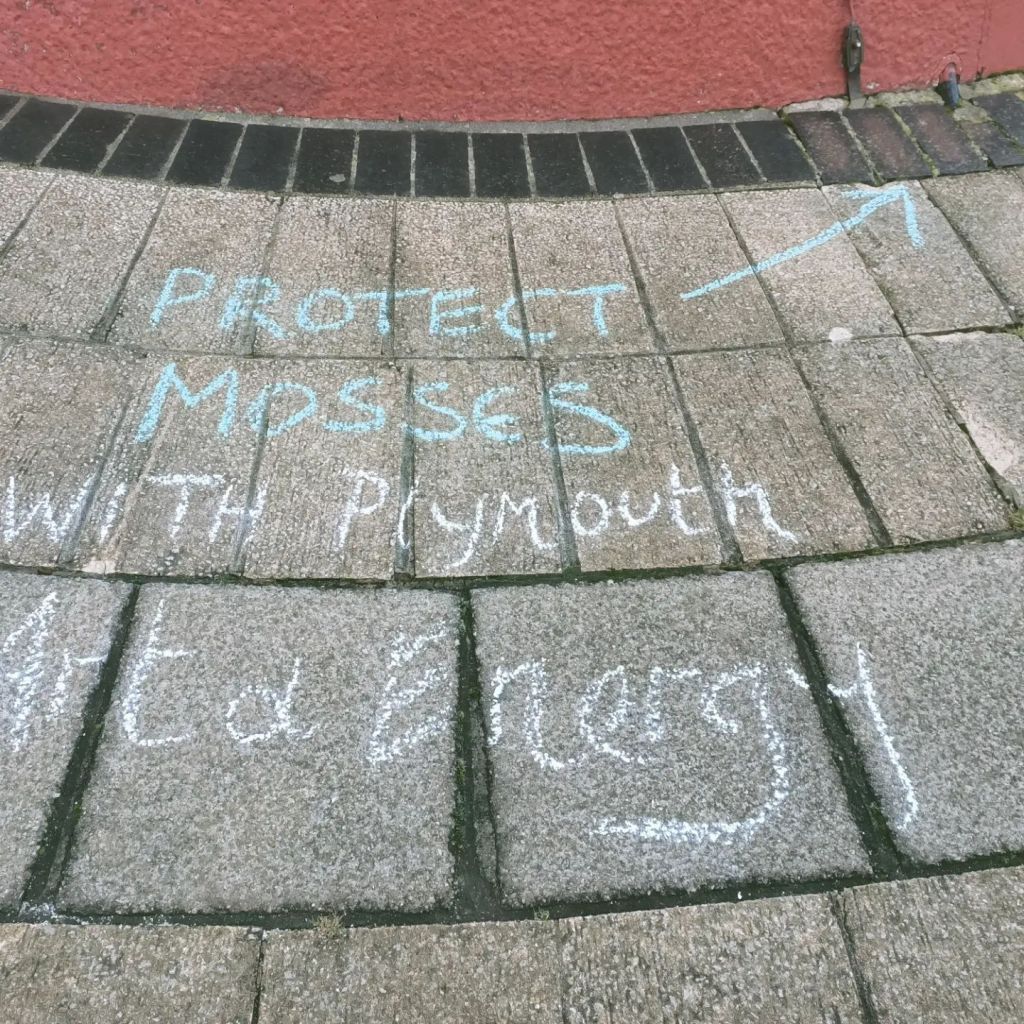
http://www.artandenergy.org

We also link up with Art and Energy, who are currently focussing their efforts on the Mossy Carpet Project. They are encouraging families to learn more about the value of mosses. Mosses are amazing – did you know they date back 450 million years, that we know? As well as being incredible micro eco-habitats for nematodes, rotifers and tardigrades, they soak up excess rainwater like a sponge and retain moisture in the soil.

http://www.cleanupuk.org.uk

Don’t you just hate it when someone drops their litter on the floor – too lazy to put it responsibly in a bin? Well, Clean Our Patch do a great job picking up litter all over the city and on beaches. The founder, El, says it also helps with her mental and physical health. The organisation have built up a strong group of volunteers in different areas to keep the streets clean. I hope their amazing work also educates people to stop littering, sometime soon.

http://www.foodplymouth.org

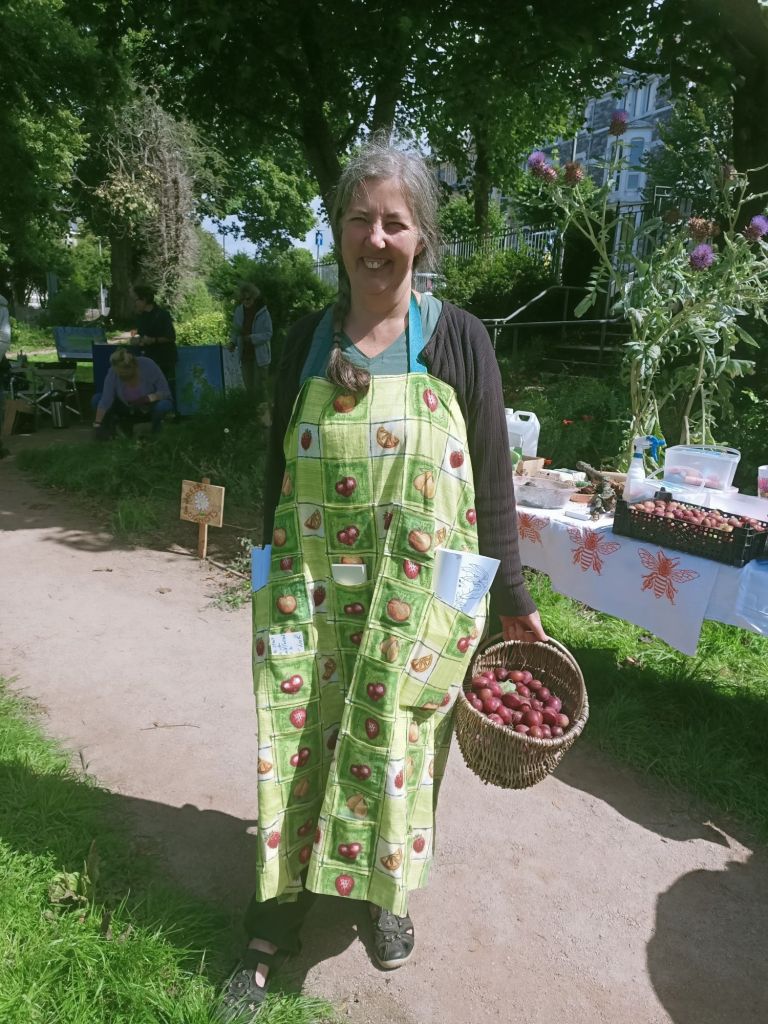
One of our loveliest collaborators is Tess from Food Plymouth, who is brilliant at providing regenerative, sustainable and affordable food practices. From permaculture gardening courses to apple-pressing, she demonstrates that we can grow our own food without chemicals and care for the environment. In the photo above, she demonstrates that she doesn’t have to spend any money on tables or gazebos when she attends events; instead, she wears this multi-pocketed apron for all her leaflets – very practical Tess; sew a Vivienne Westwood label inside and I’m sure it will catch on πŸ€£πŸ˜‚

http://www.pan-uk.org

Pesticide Action Network promotes safe and sustainable alternatives to hazardous pesticides. The website provides up-to-date research and information on how, and why, we must progress our lives without poisonous chemicals. Rachel Carson used the word ‘biocide’ as being more appropriate than insecticide, as ‘all life is caught in its crossfire…Disregarding the whole record of contamination and death, we continue to spray, and to spray indiscriminately.’ (Carson, R. 1962. Silent Spring.

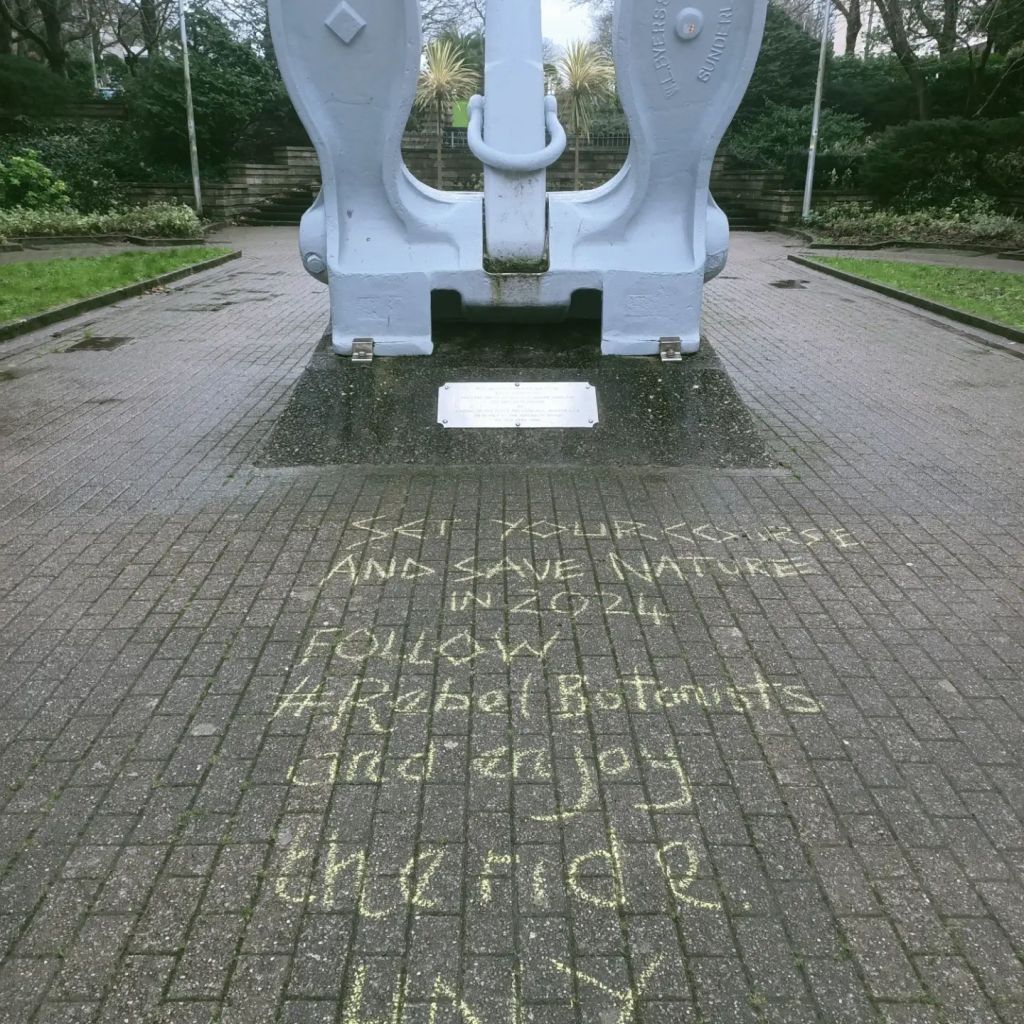
Don’t stay stagnant, pull up anchor and set your course…
Stand for Nature in 2024

What will you do for nature? Perhaps:

Stop using pesticides Put up a bird feeder
Join a local litter picking group
Shop for need, not greed. Learn to repair, not replace with new
Walk in the woods (not the shops) Learn to grow your own vegetables Learn to cook wholesome meals on a budget Volunteer with a local Friends of the Park group and learn more about plants

There are so many positive things to do and they will: save money, save life and keep you healthy. πŸŒΌπŸŒΏπŸ’šπŸ˜ƒ

So, everyone, steer your course this new year in the right direction for a better, happier lifestyle, and world, and give back to nature. 🌎

Follow us for updates and some exciting workshops starting in February πŸ‘

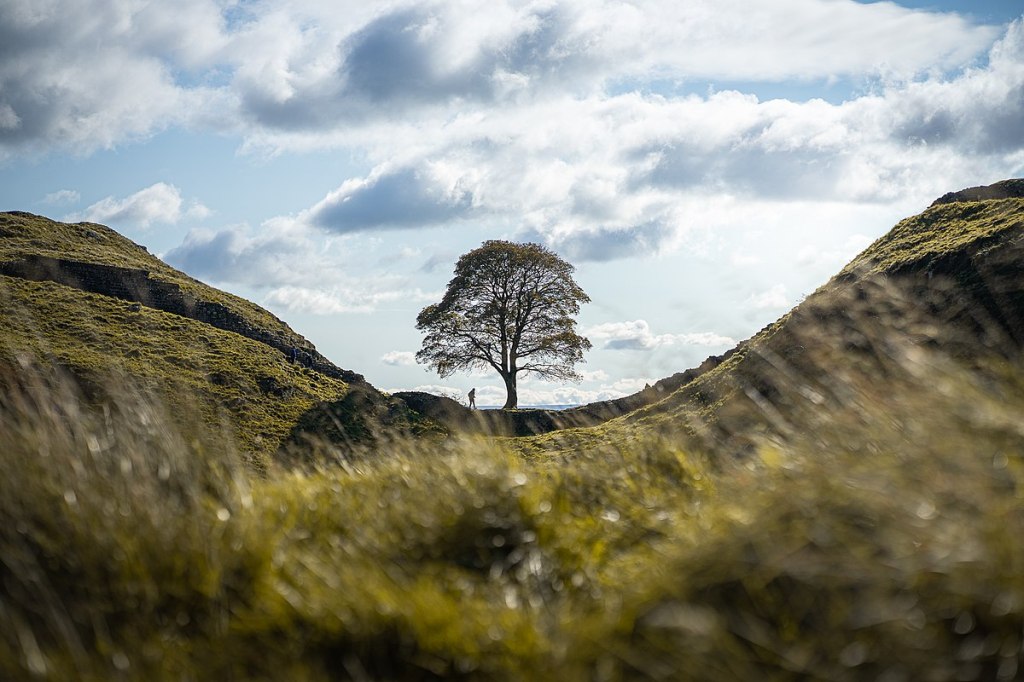
The Sycamore Gap; ‘Woodman, Spare the Axe’

Photo sourced from http://www.wikipedia

The distress caused by the “pointless and mindless” felling of the 300-year old Sycamore Gap is still evident a week later, as highlighted on Mark Radcliffe’s BBC2, Folk Show, on the 4th October. http://(https://www.bbc.co.uk/programmes/m001qvbx) He made this tree the theme of his show, engaging links to nature and Hadrian’s Wall, where it had stood: an ancient life beside an ancient monument. His show opened with a song by Paul Armfield: ‘Woodman, Spare the Axe http://www.paularmfield.com; of course this plea is too late for the Sycamore Gap, but can we learn something from this dreadful incident?

‘The woodman’s axe has been responsible for many gaps’ (The Project Gutenberg eBook of Memorials of Old Derbyshire): consider only recently the chopping of 110 trees in Armada Way, Plymouth. The local campaign group, STRAW, http://www.strawplymouth.co.uk borne out of this tragedy, slapped the council with a high court injunction.

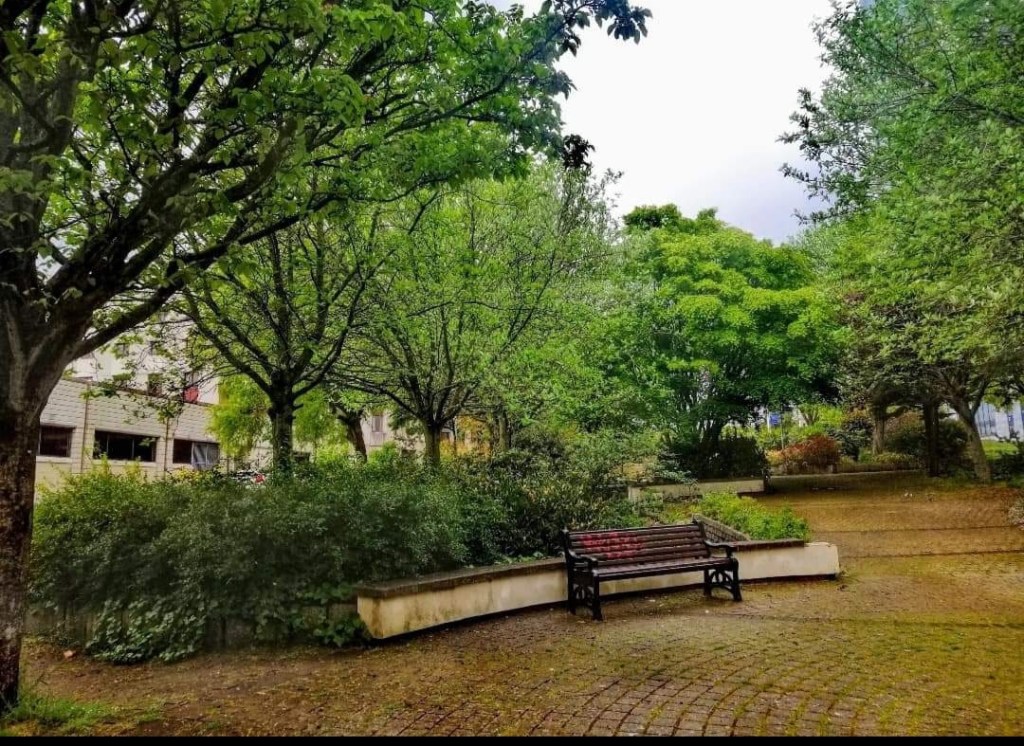
Armada Way trees, prior to the felling. Photo sourced from Straw Facebook page
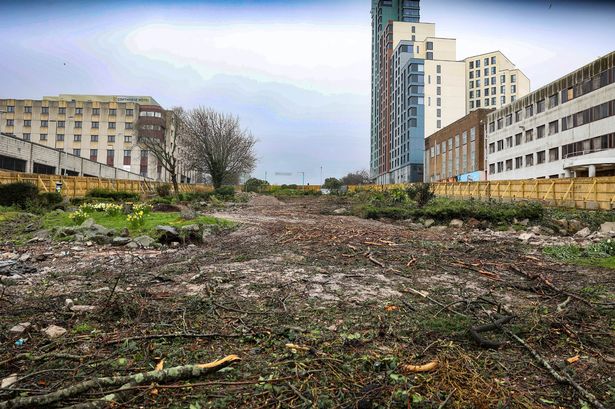
After the felling of the 110 trees. Photo sourced from Plymouth Live http://www.plymouthherald.co.uk

The Guardian covered the story with the headline description of ‘an act of vandalism’. Looking at these before and after photos, the devastation is palpable.

Consider, also, the destruction of ancient woodlands, Sites of Special Scientific Interest, wetlands and wildflower meadows by the government’s HS2 debacle.

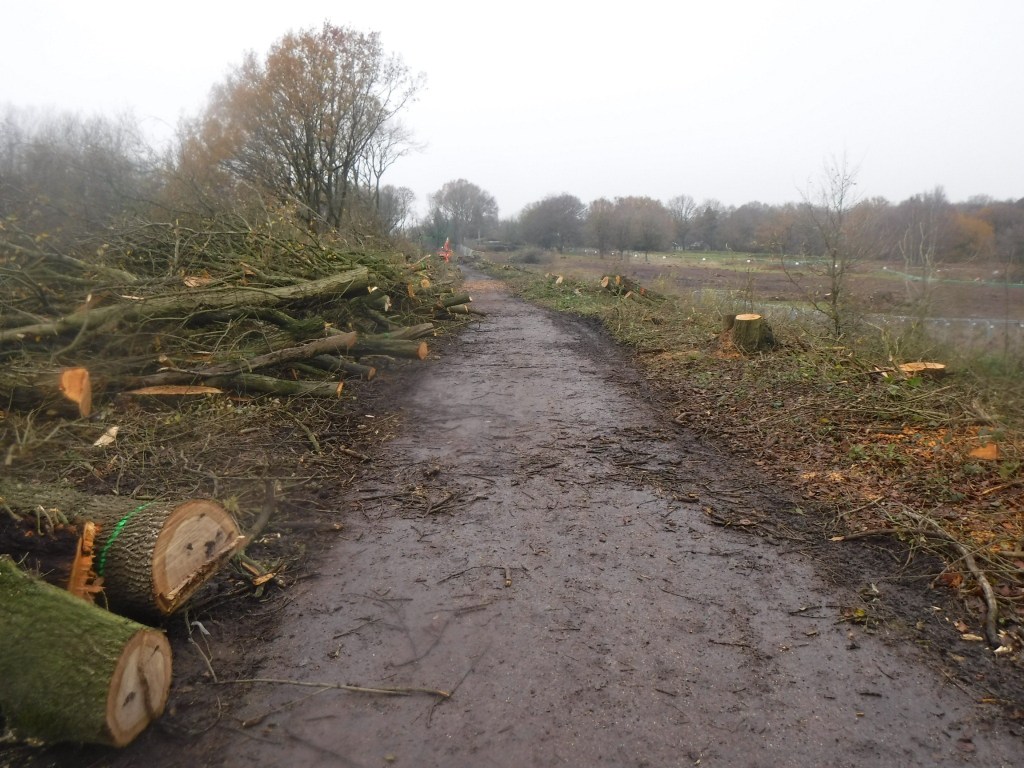
Kenilworth Greenway destroyed by HS2
Photo sourced from http://www.woodlandtrust.org.uk

Some people might say, why are we so upset, it’s only one tree; well, actually the Sycamore Gap is representative of the thousands of trees that are being thoughtlessly slaughtered in the UK every year.

Bravo to Mark Radcliffe for raising further awareness of this ecocide. Whilst many people are evidently moved by this tragedy, due to the Sycamore Gap’s iconic and aesthetic location, we really must remember all other trees that need protecting. Every tree is a living breathing being, that provides oxygen, cleans our polluted air, provides habitat and shelter to many thousands, yes thousands, of wildlife species that are also under threat.

So, what can we do? What can YOU do as an individual?

Firstly, start respecting trees: walk amongst them, take note of the bark and leaf shapes; how many species can you identify? Learn a little about them. To name them correctly is a great start.

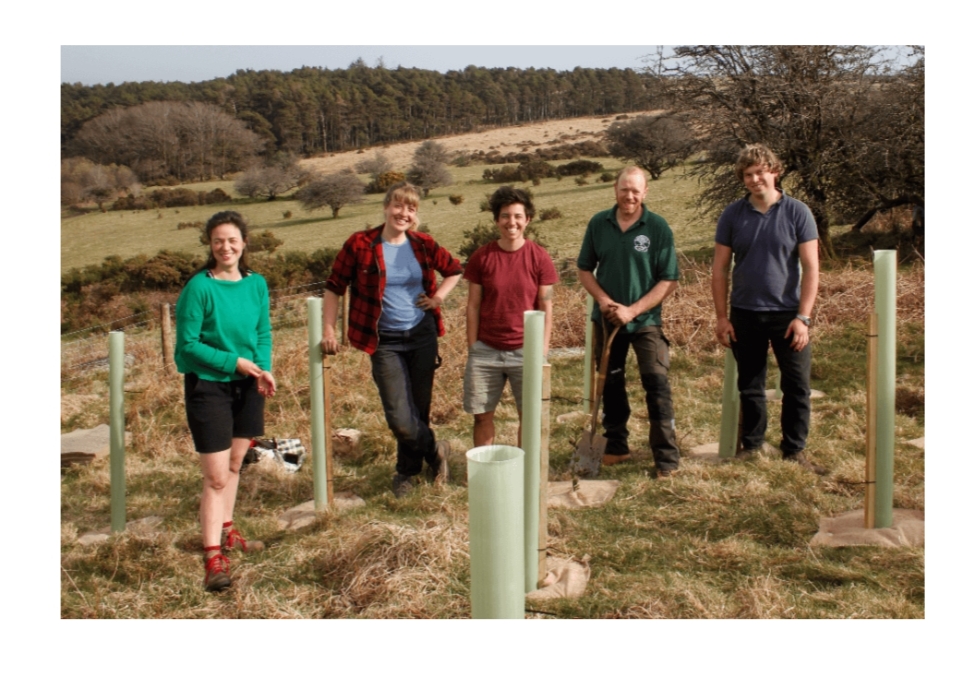
Secondly, join a local group to plant and protect trees. The singer, Paul Armfield, mentioned earlier, not only sings songs about trees, but protects them too. If you live in the Isle of Wight, you will be aware of his Songs Beneath the Trees Project – check it out. If you live in Plymouth, consider joining Moor Trees, a brilliant organisation planting trees on the moorland.

Photo sourced from http://www.moortrees.org

Join us, the Rebel Botanists and learn about trees and wildflowers through creative street art practices. Wherever you live, there should be something going on with nature protection at its heart.

Thirdly, why not plant a tree in your garden, or join a local ‘Friends of…’ group that care for your local park.

If you teach, embed sustainability and environmental good practice in to your curriculum and, even better, do it outside: outdoor learning is far more exciting and memorable than reading information from workbooks. πŸ™‚πŸ‘πŸŒ³

Photo sourced from http://www.marjon.ac.uk

Rebels, Roamers and Guerillas Chalk the Streets of Totnes! πŸ˜„

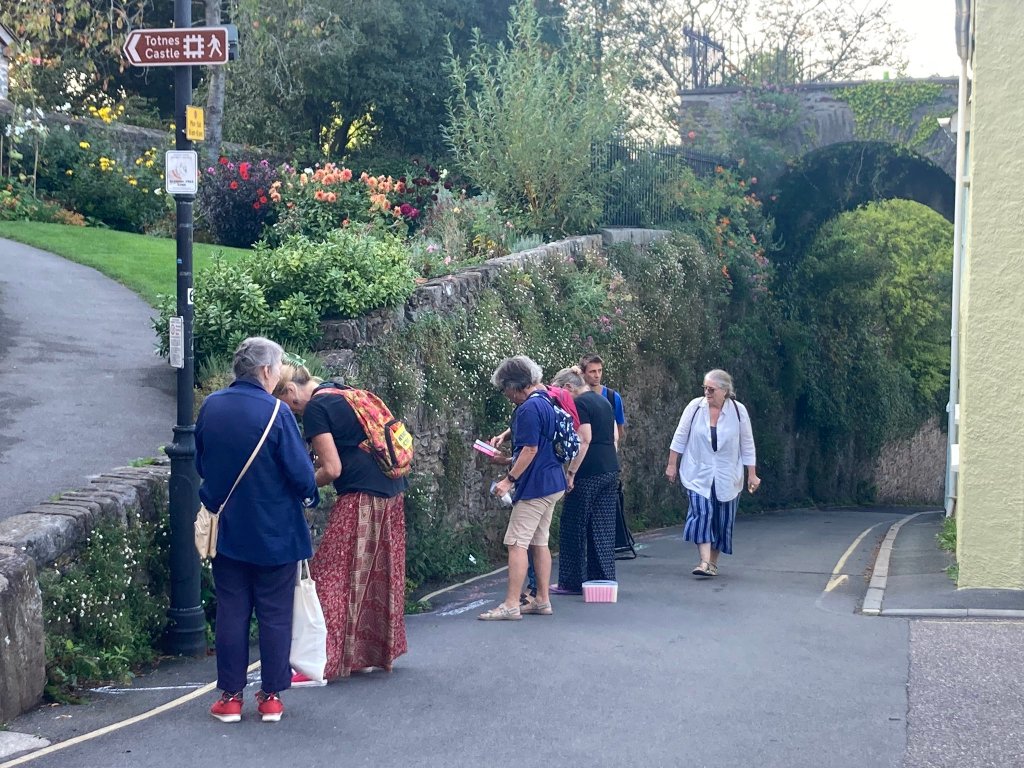
We were joined by Guy Shrubsole (www.lostrainforestsofbritain.org, www.righttoroam.org.uk) when we visited Totnes, in Devon, to identify and chalk the names of the wildplants we found along the streets.

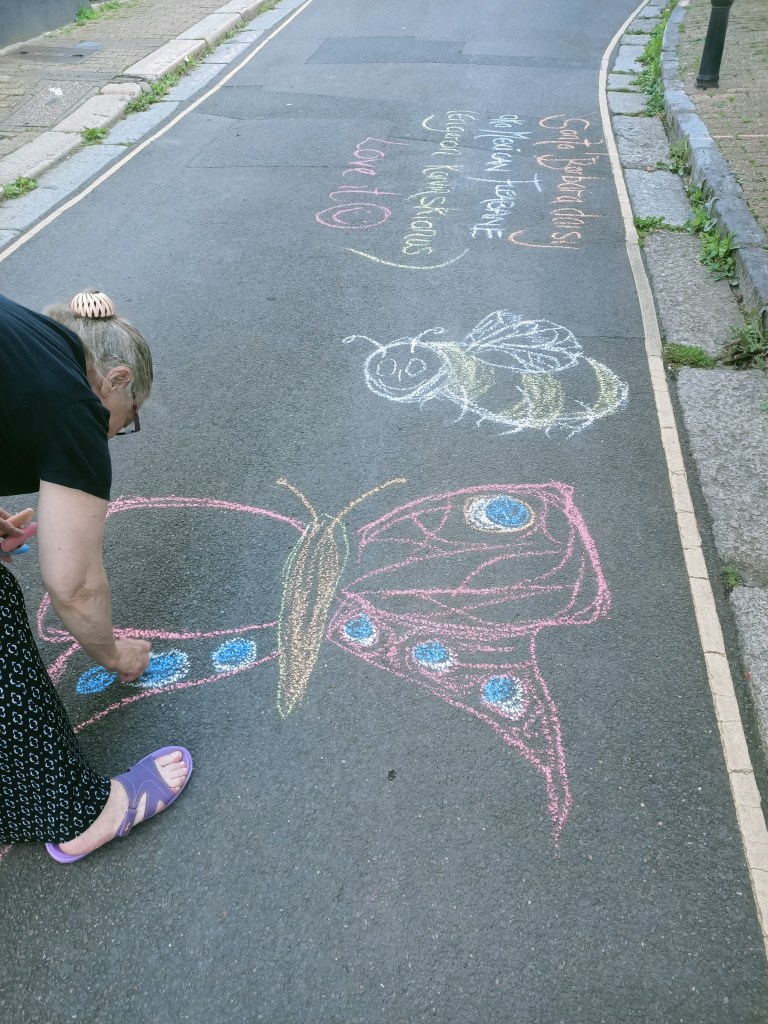
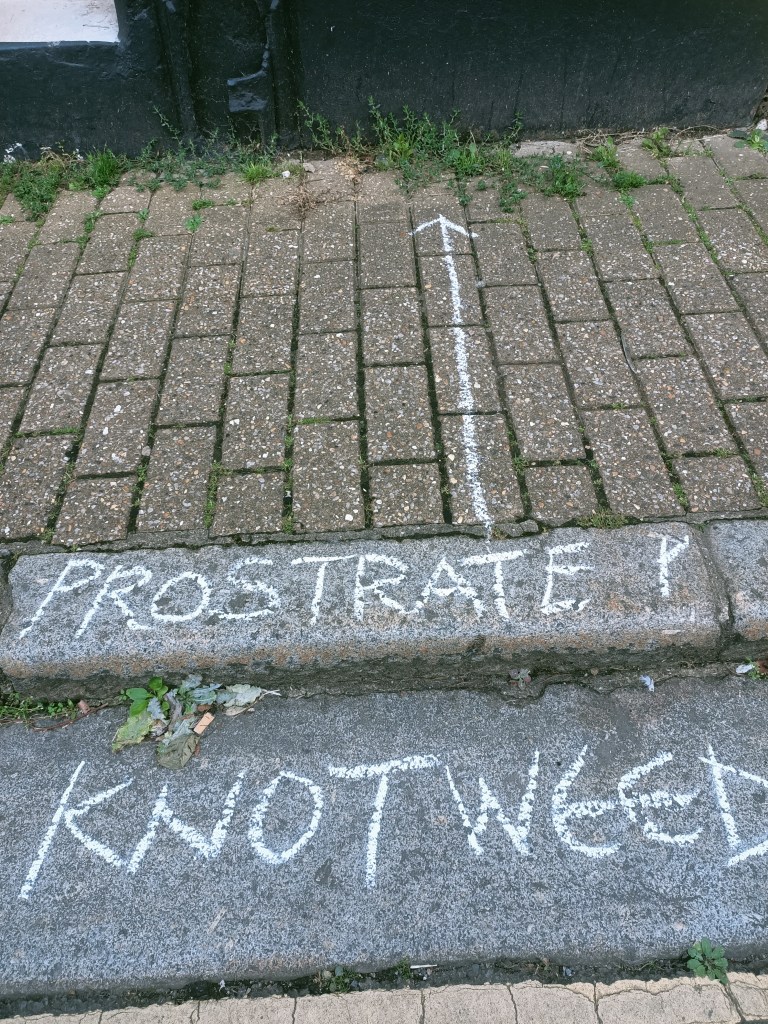
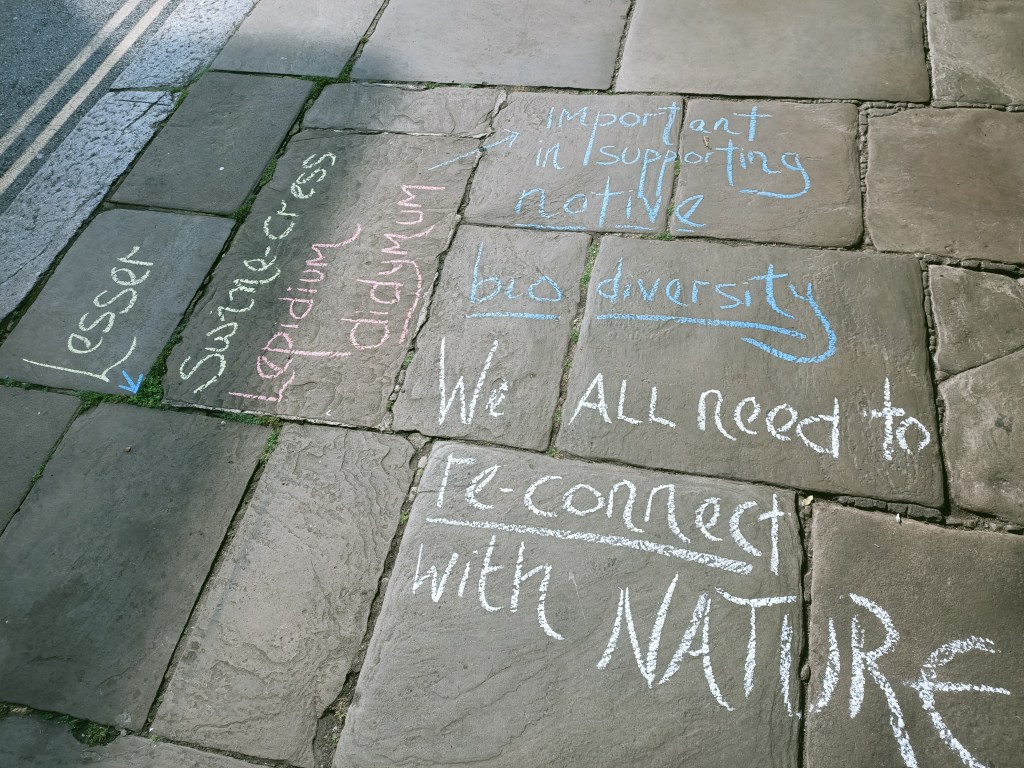
We use the common and Latin names of the plants. Our colourful street art style attracts people to look and learn – it’s not only educational, but fun too πŸ™‚

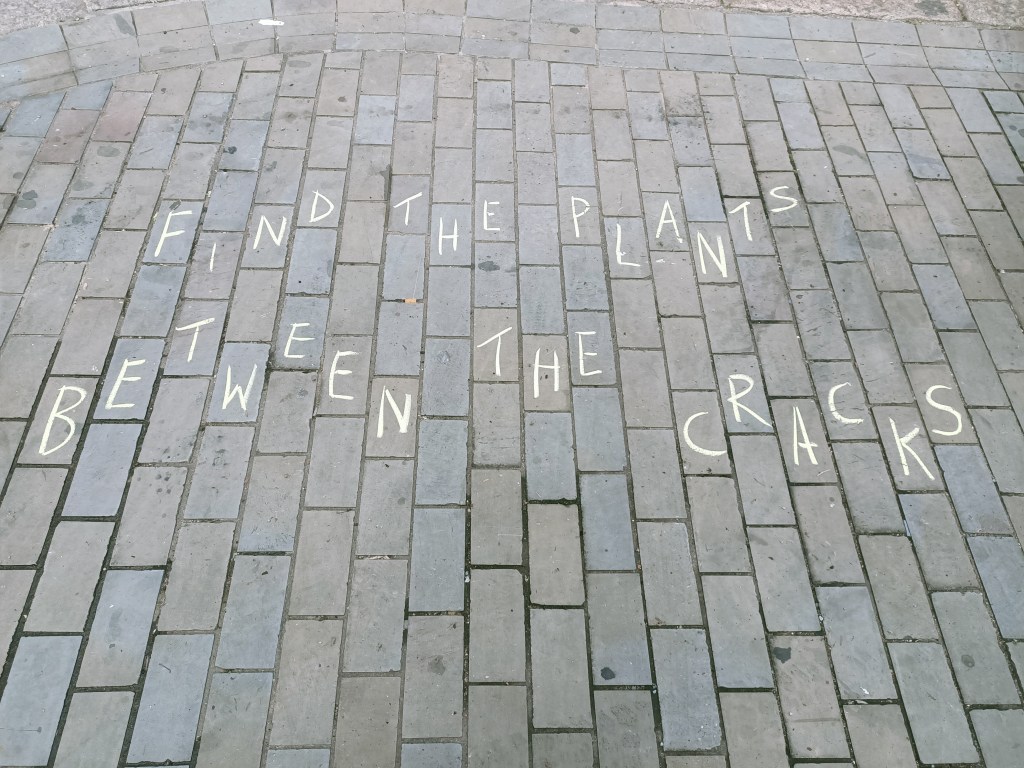
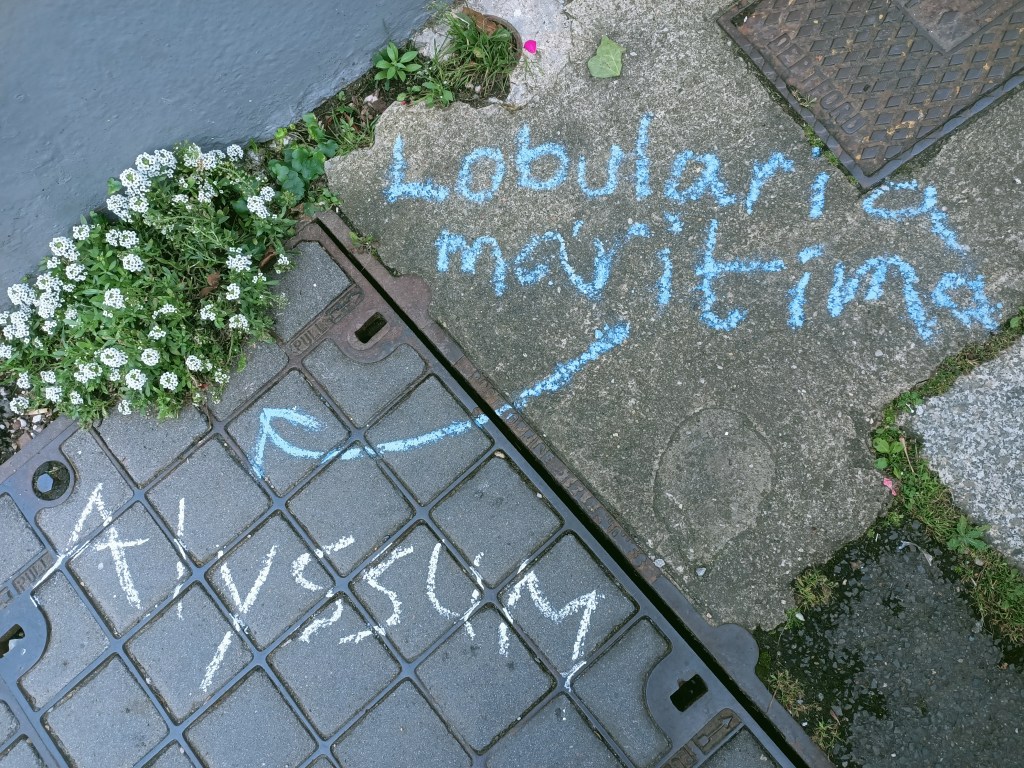
And, what do we do best? We find those amazing wildplants that grow up between the gaps and cracks of the pavements and walls; they defy the urban built-up environment to provide the vital food and nectar for our native wildlife – the pollinators!

Did you know…? This plant is used externally as a poultice on fresh wounds to stop bleeding. It is also used in India to treat diabetes. πŸ€” Wow!

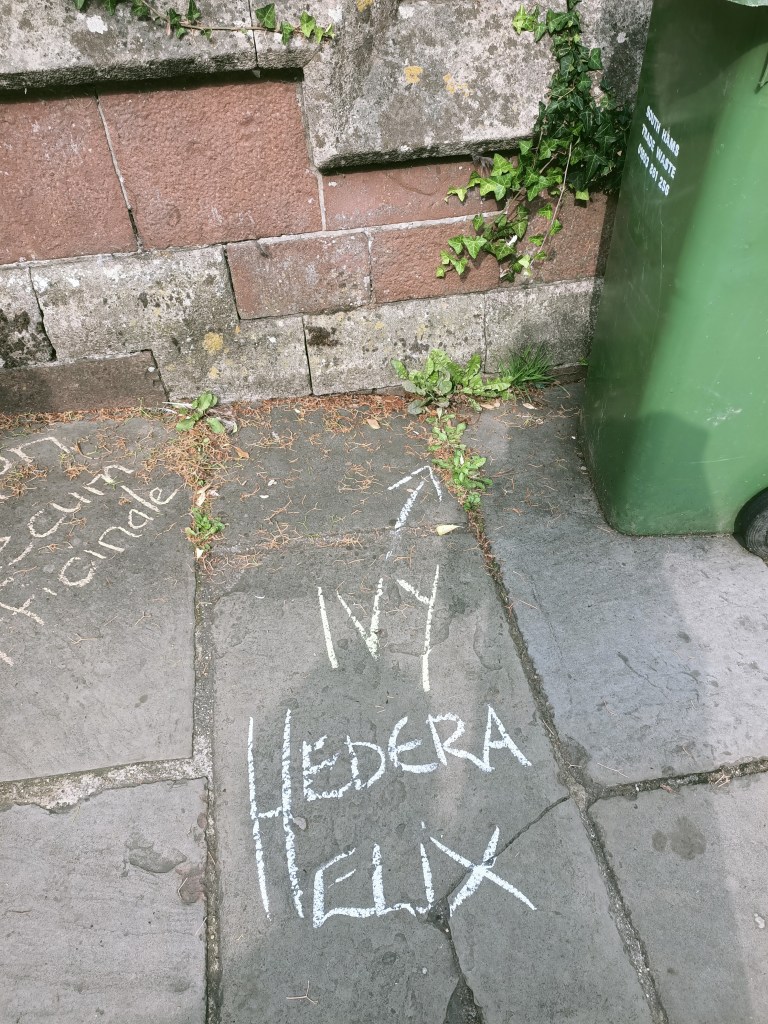
We know how valuable Ivy is to many insects and birds, but did you know…? πŸ€” The leaves can be used medically to treat mucus in the airways and can improve lung function – aren’t plants amazing? 😍

Another fabulous wildflower that provides valuable food and nectar to insects, but as well as this, did you know…? The leaves are used to stimulate the appetite and help digestion. It may also improve the immune system – 😲

Undoubtedly, there are still many wildflower species that hold healing/medicinal properties that we are still unaware of; however, globally, there are up to 80,000 plant species that are currently used in medicine. That’s why EVERY plant is precious! πŸ™‚ http://www.biologicaldiversity.org

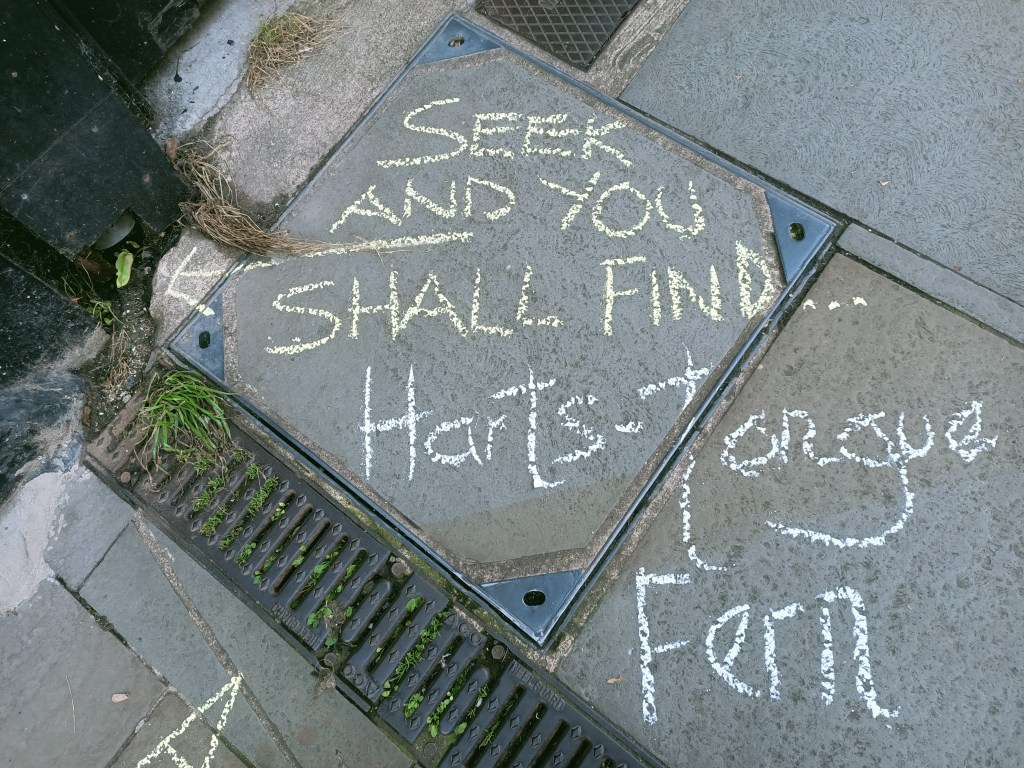
Well, this spotting was a first for us πŸ™‚and what a great name! Otherwise known as Hedyotis, it is apparently native to the Florida area of the U.S. So, what’s it doing here ? πŸ€”

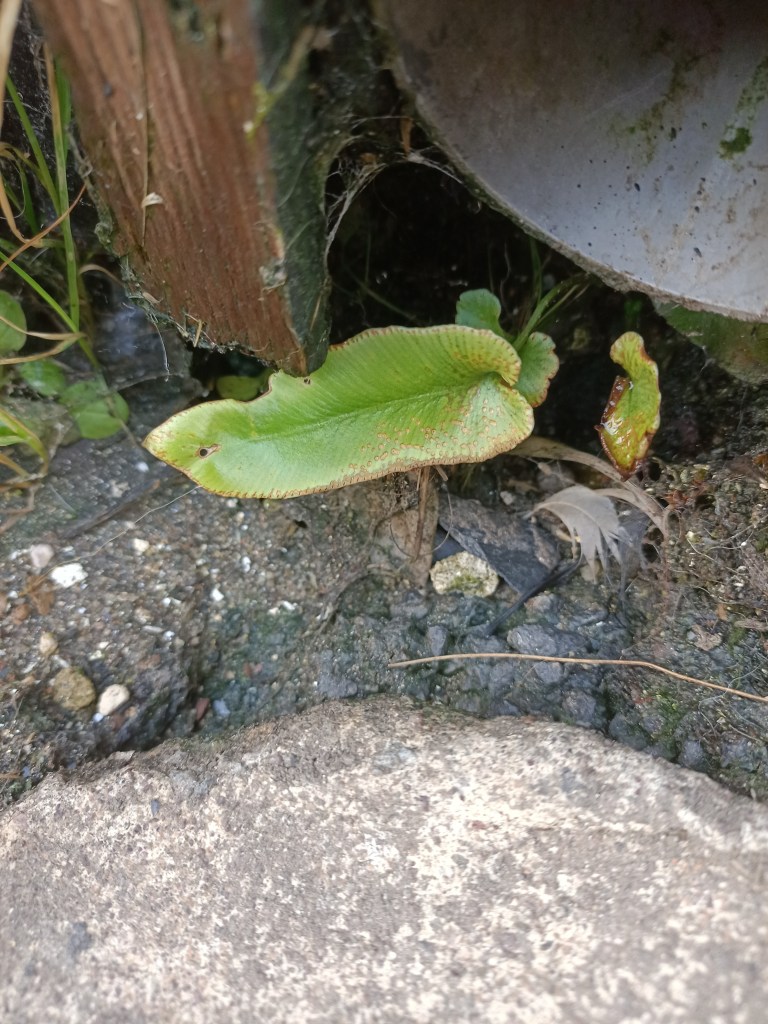
Normally found in woodland, but look at this ancient plant emerging between the cracks by a drain.

Here’s a close-up of this tiny fern.

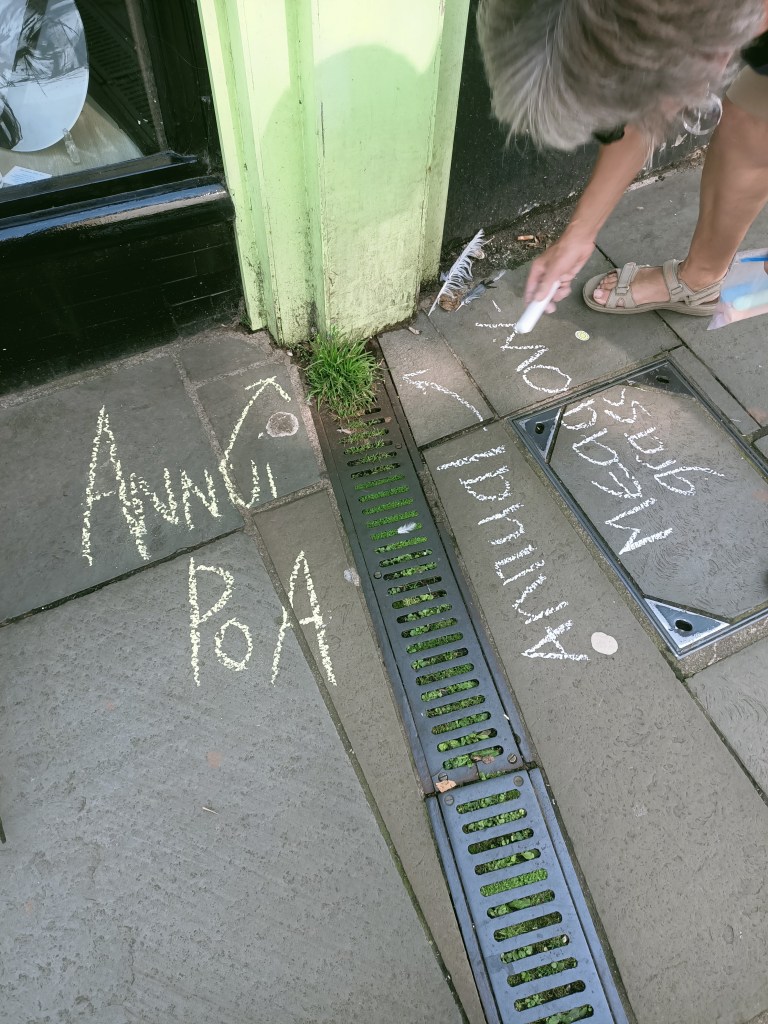
Yep, we know it’s Annua Poa, Annual meadow grass πŸ™‚

Polygonum aviculare is another plant used medically. It can soothe sore throats, treat gingivitis and some cardiovascular conditions. http://www.webmed.com

Such a lovely plant that favours cracks and crevices. It is also known as, Mind-your-own-business. I wonder how it got that name πŸ€£πŸ˜‚

Buddleja davidii, or Butterfly bush. Bees, butterflies and moths love this plant. They produce an explosion of colour in the summer. Everyone should have one πŸ‘

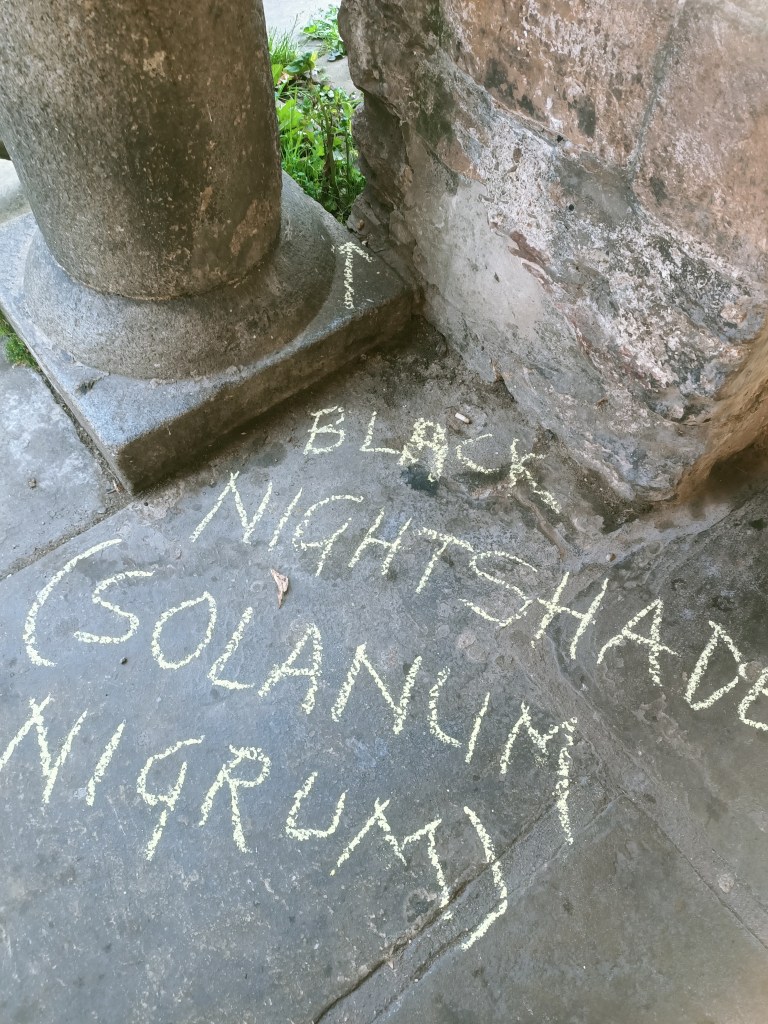
Solanum nigrum has been recorded from the Palaeolithic and Mesolithic era of ancient Britain. The botanist and ecologist, Edward Salisbury suggested that it was part of the native flora before Neolithic agriculture began. The species was mentioned by Pliny the Elder in the 1st century AD. http://www.wikipedia.org

Nettles, Sow Thistles and a ‘wild’ Tomato have converged on this little area to make a lovely companion group.

This lovely plant, with its attractive white flowers, is again highly beneficial to both human and wild life. In Spain it is commonly used as a diuretic and antiscorbutic. It is, apparently, highly esteemed in its treatment of gonorrhoea. http://www.naturalmedicinalherbs.net

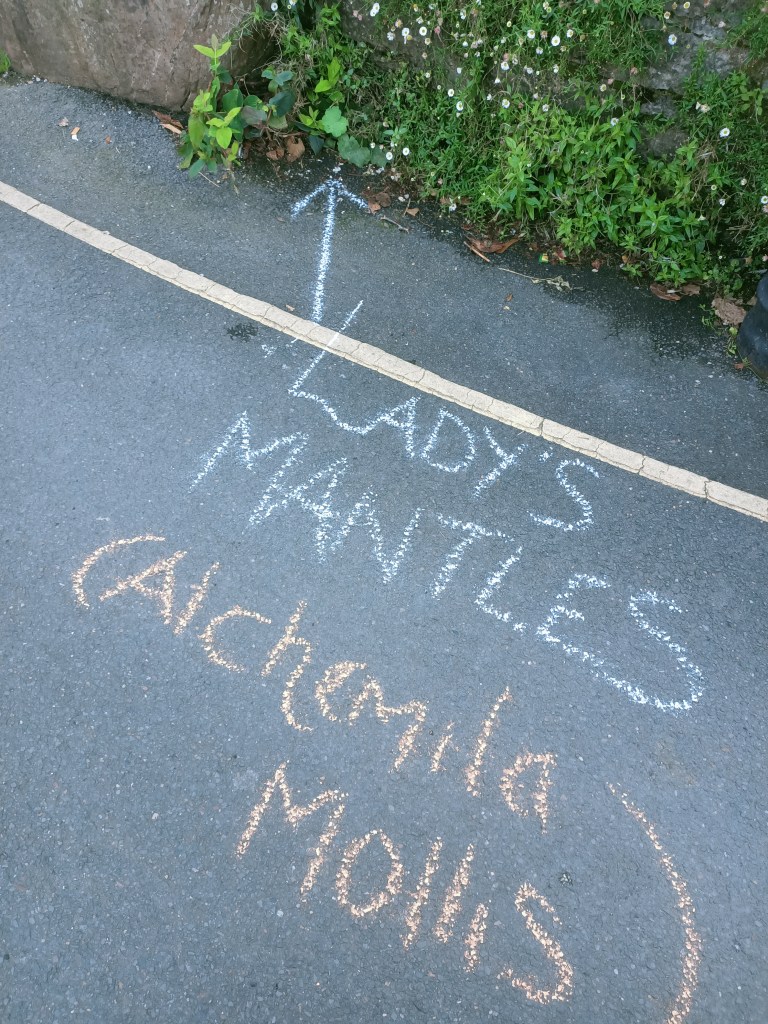
Alchemilla mollis, is a stunning perennial that on researching appears to have a plethora of varying medicinal uses. It has been used as a medicinal herb since the Middle Ages. http://www.botanical.com

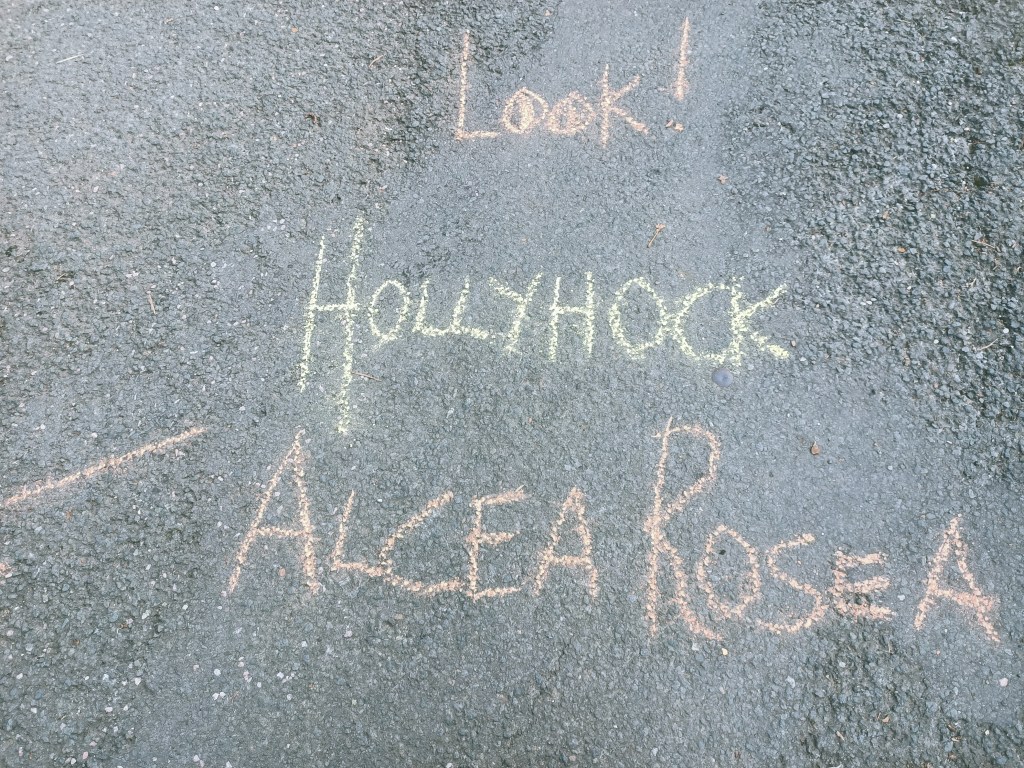
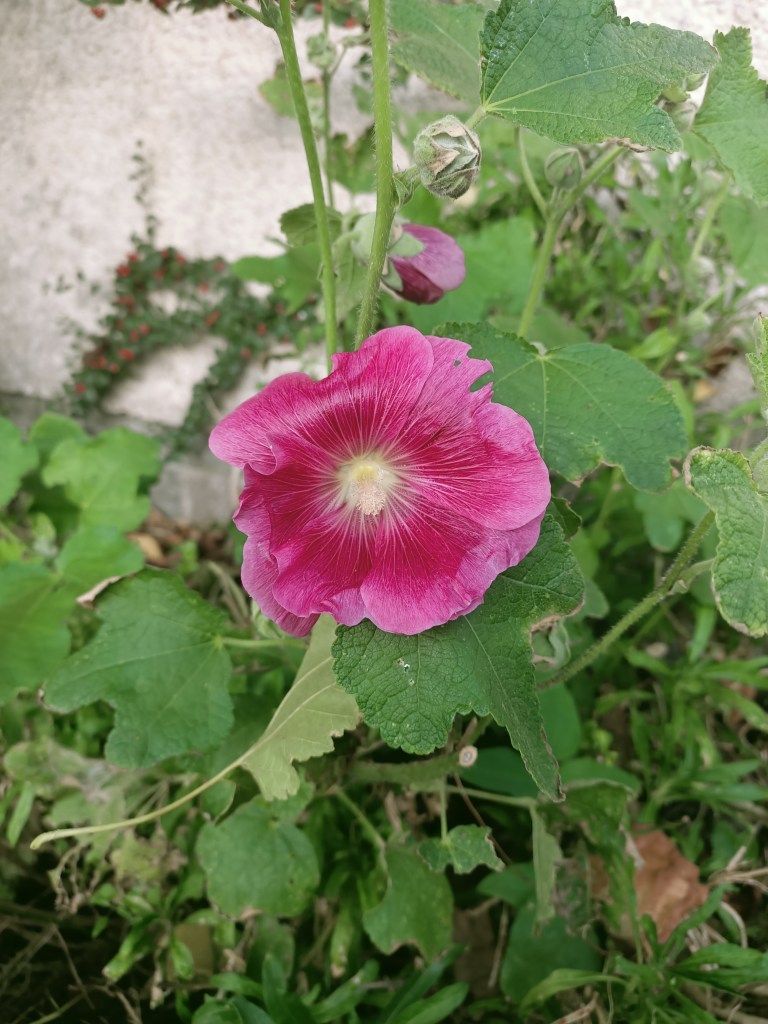
There are over 80 species of Hollyhock. We found these beauties walking down Castle Lane…πŸšΆβ€β™‚οΈπŸšΆπŸšΆβ€β™€οΈ

And here it is; what a beautiful flower. In fact, we noticed Castle Lane had some lovely blooms…

Including these lovely daisies which covered the walls…🌼🌼🌼🌼🌼

And then we realised we were being photographed…πŸ“· We met Richard, the original Guerilla Gardener, http://www.guerillagardening.org Just look, above our heads, at the beautiful flowers he had planted by Totnes Castle 🌼🌺🏡️🌹🌻🌷

Thanks everyone for joining us on this brilliant walk and chalk. And thanks again to Guy Shrubsole, who roamed the streets with us, and Richard Reynolds, the Guerilla Gardener. πŸ˜„πŸ‘