Let’s Keep Talking

Tree Felling in Progress

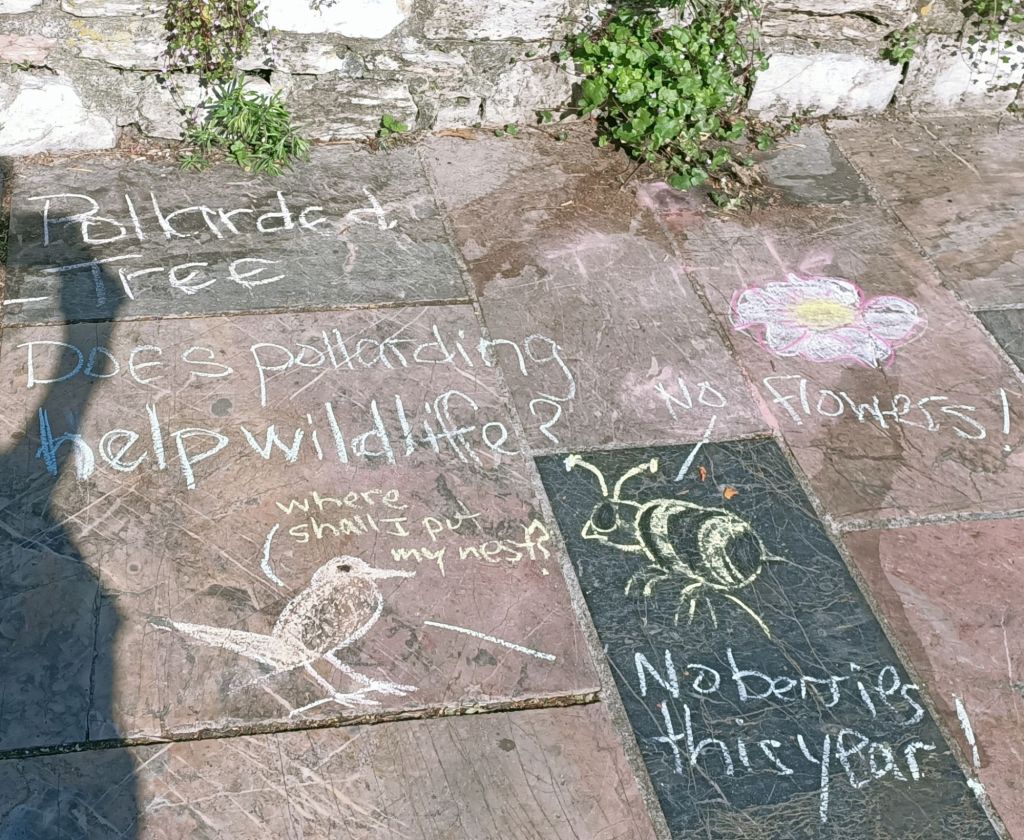
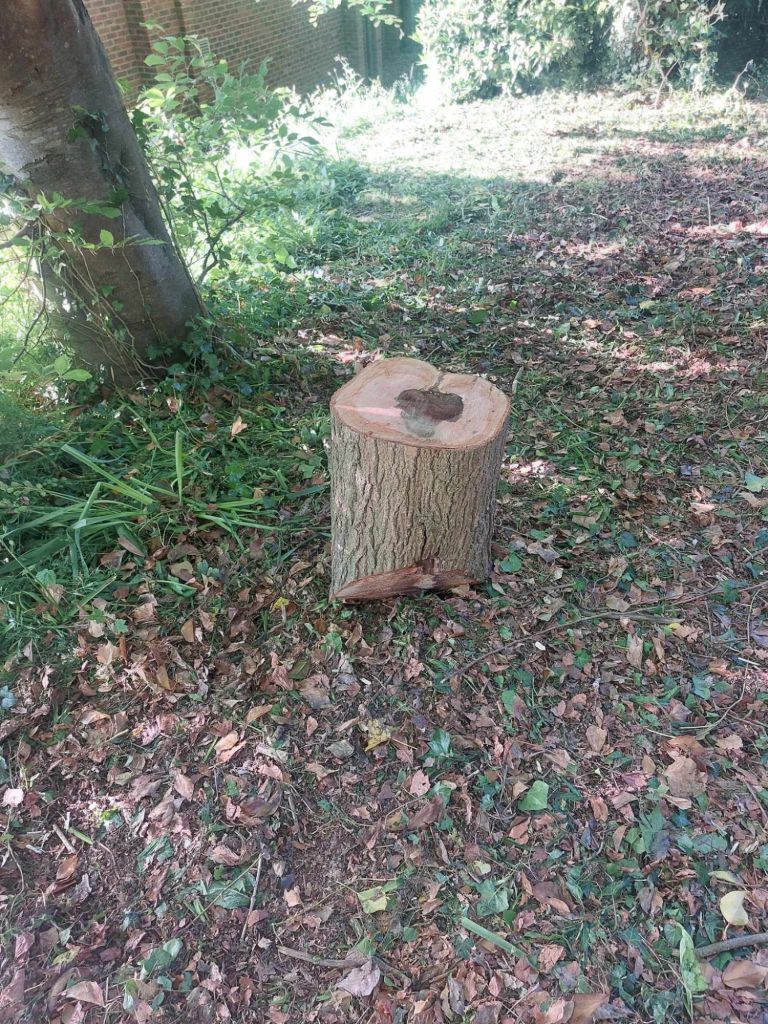
On Friday, 16th May we turned up to a site in Plympton, Plymouth responding to an urgent plea that lots of trees were being chopped down and nesting birds were possibly in danger. Could we stop it?  Well, we knew nothing about this and neither did anyone else we contacted in our ‘tree caring’ community. So, armed only with good advice and a passion for protecting nature, we responded.

The neighbours living close by these trees had not been informed of this action. As one resident said when we arrived: “you hear the chainsaws and you immediately think ‘Armada Way’, they’re going to cut the whole lot!”  It seems the shock waves from that event are still very much felt by people in Plymouth.

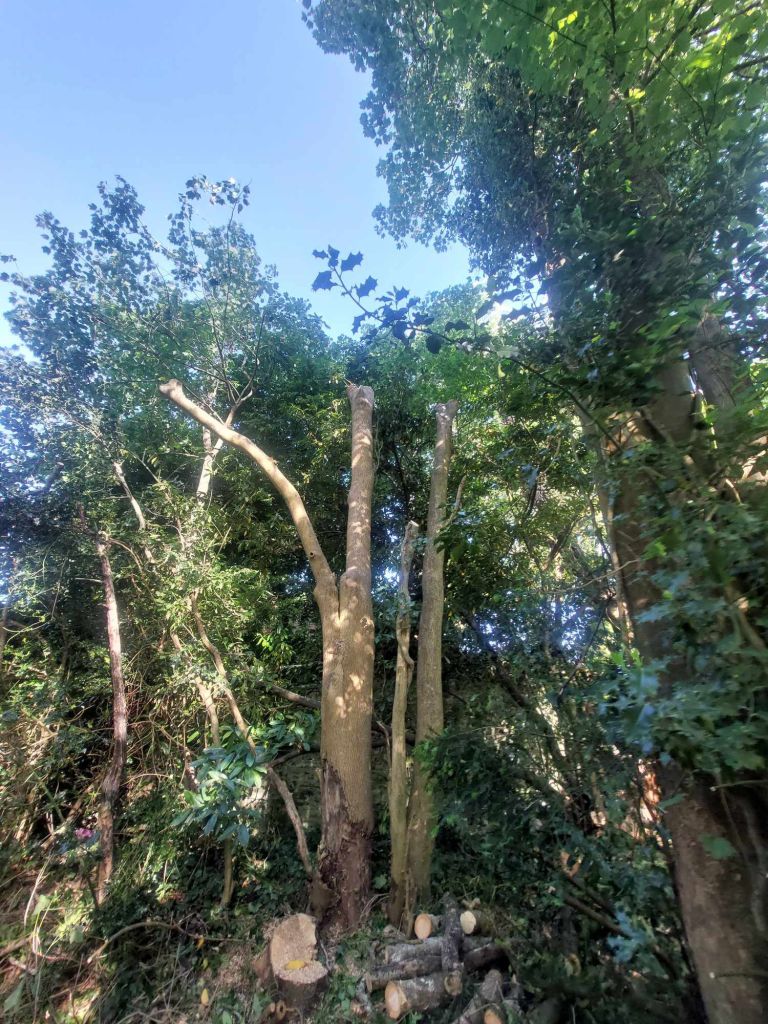
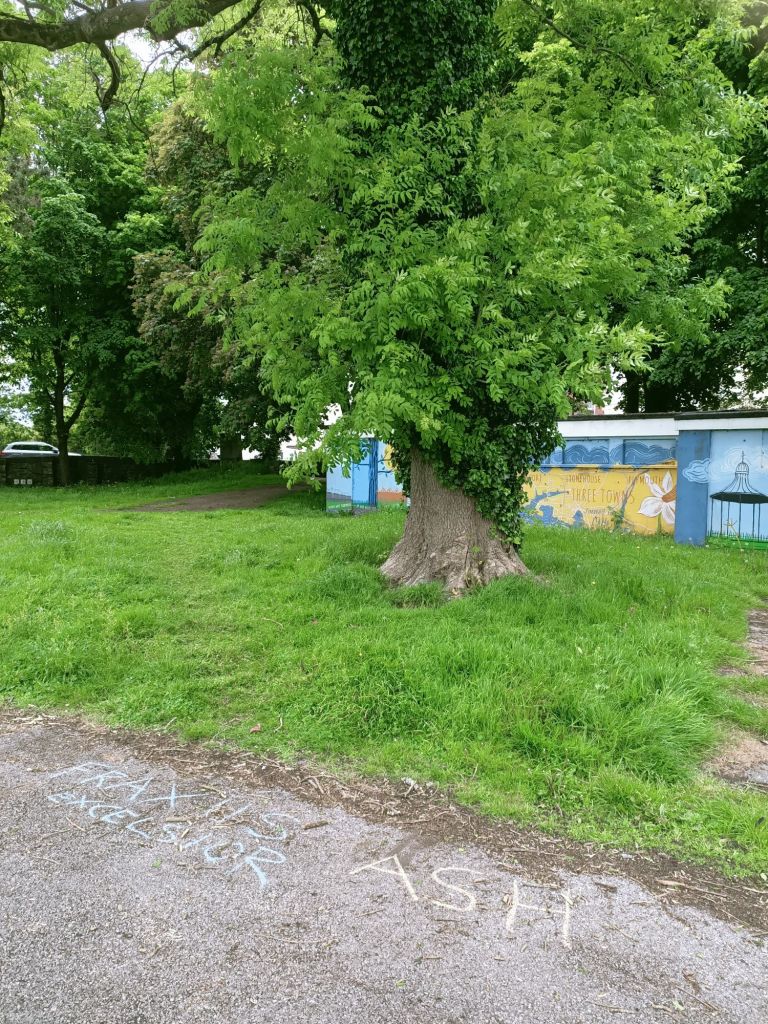
Before going over to speak to the chainsaw handlers, we watched. Looking through binoculars, we searched for nests but couldn’t see any, which was a relief. As we watched, total destruction was not unfolding, rather careful lopping of branches of one particular species, European Ash: Fraxinus excelsior.

European Ash

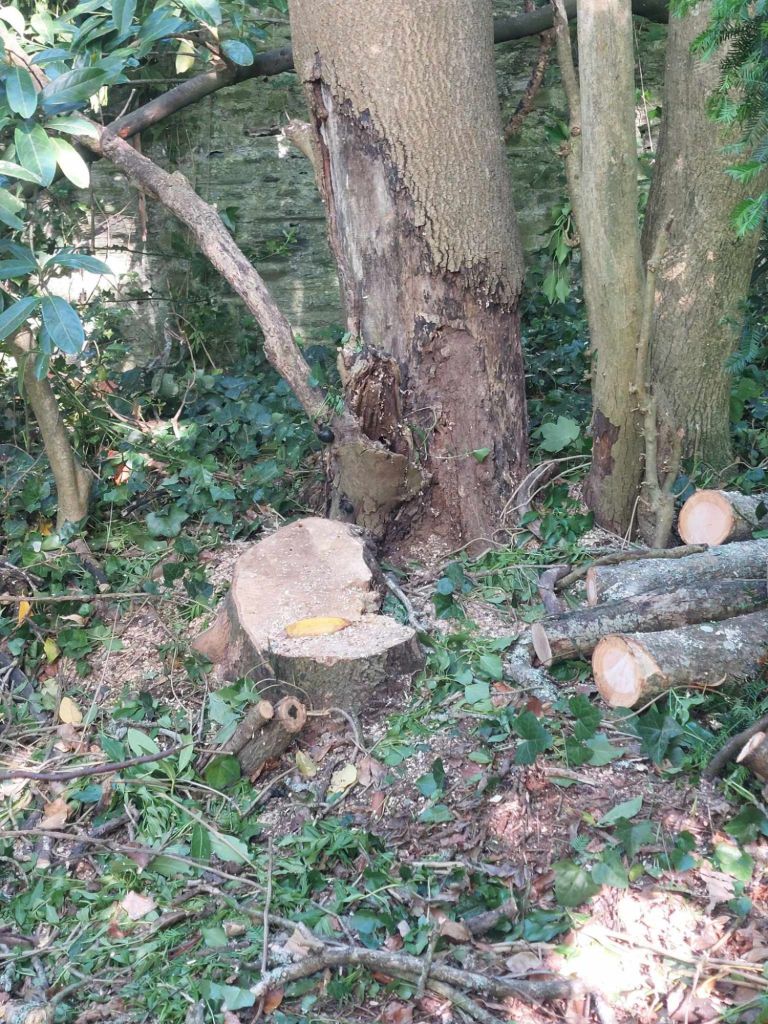
We edged towards the barrier and beckoned to the workmen. It was clear from their initial body language they expected confrontation, but quickly realised that was not our agenda and very soon we were having a very productive conversation. They invited us behind the barrier and showed us exactly what they were doing. Contracted in by the council, these tree surgeons had removed 5 Ash trees that had Ash die-back. Was that necessary? Could these trees have been saved by just removing affected branches?  It seemed not. The trunk pieces they showed us were black throughout the heartwood and placing his finger between the blackened wood and outer layer, it crumbled away. Other trees not so badly affected were having branches lopped to save the tree. Amongst the ash trees, other species like Sycamore were untouched.

Ash die-back

What about nesting birds? Was it really acceptable to be doing this during nesting season? He assured us they had checked for nests and hadn’t found any, but he did admit that it was a disruption for birds generally to have this activity and noise happening in their habitat.
Could this not be done outside of this season? He responded with honesty:  yes it could and it would be better for wildlife, but for us we’d have no income coming in during those months. The neighbour then responded that if more frequent checks were made, rather than leaving the trees for so long, then the remedial work would not be so intensive. This would also mean the tree surgeons would still have work throughout the year. That decision isn’t theirs though, it’s a council one.

The tree surgeons apologised that the neighbours hadn’t been informed but said they couldn’t be responsible for this. We agreed. The council have contracted them for the job and surely it’s their responsibility to also inform local residents that this would be happening. Yet, apparently, the council doesn’t have to because “the trees belong to them not the neighbours”. Though surely with the branches being so close and the level of noise, it would be respectful to contact them? Also, the initial stress caused to the community thinking they were going to lose all their trees would easily have been avoided if communication had been made.

It’s never good to see trees being cut. Ash die-back is a dreadful disease, though sometimes the tree is able to fight back and survive. With this knowledge, less trees are being cut down and more are being cared for. In this situation, it seemed the disease had gone too far to save the five but, hopefully, the rest will recover.

We left with handshakes and reciprocal smiles, our caller was relieved and happy to pass this on to other local residents. However, it appears that a complete lack of information from the council to its community had created the initial panic. So, please:

“All we need to do is make sure we keep talking”  (Stephen Hawking, 1993).  By talking we are keeping the channels open to communicating, collaborating and learning.

This post is dedicated to the five 🌳🌳🌳🌳🌳

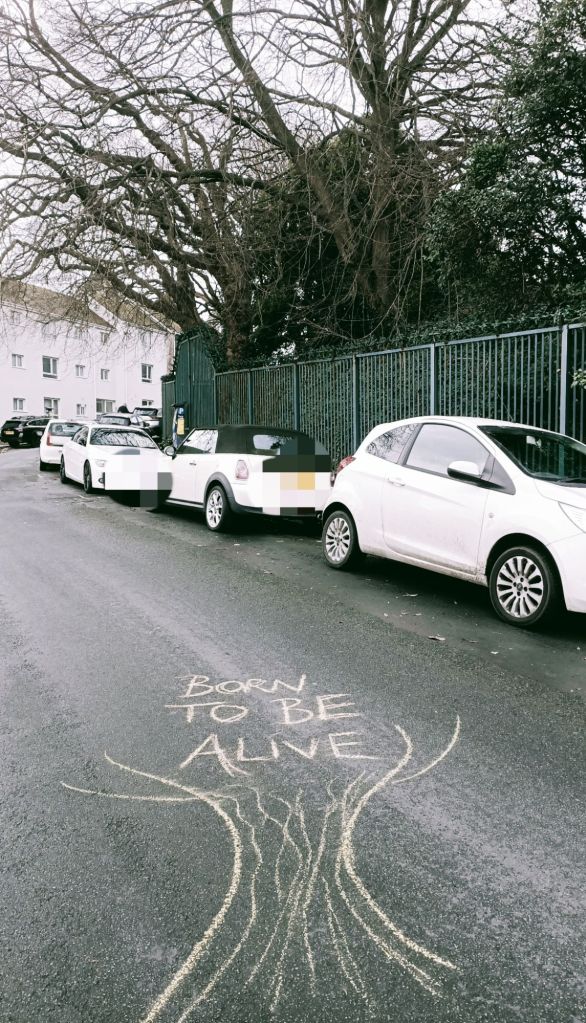
Sprightly Stepping into 2025: ‘Cos We’re “Born to be Alive”

How will you step into 2025?

A new year can sometimes seem negative: another year older, political, economic and climatic problems; however, it can be an opportunity that represents a liminal threshold to positive change. I don’t just mean those new year’s resolutions that last a few weeks until old habits kick in again, what I mean is real change, a wake up call to life because we are “Born to be Alive”, as the 1979 Patrick Fernandez song states. Have a listen 🎶 Let that tune stay in your head as you continue to read 😉

One of the Lambhay Hill limes waiting for spring to come into full bloom

Just like us humans, every wild life is born to be alive too and we need to respect and protect them. To be alive isn’t just existing; ‘to be’ is a verb, a doing word; to be alive suggests living with energy and enthusiasm: to be active!  So, what will your activ-ism be in 2025?

Lights are lovely but consumerism tends to focus on false materiality…
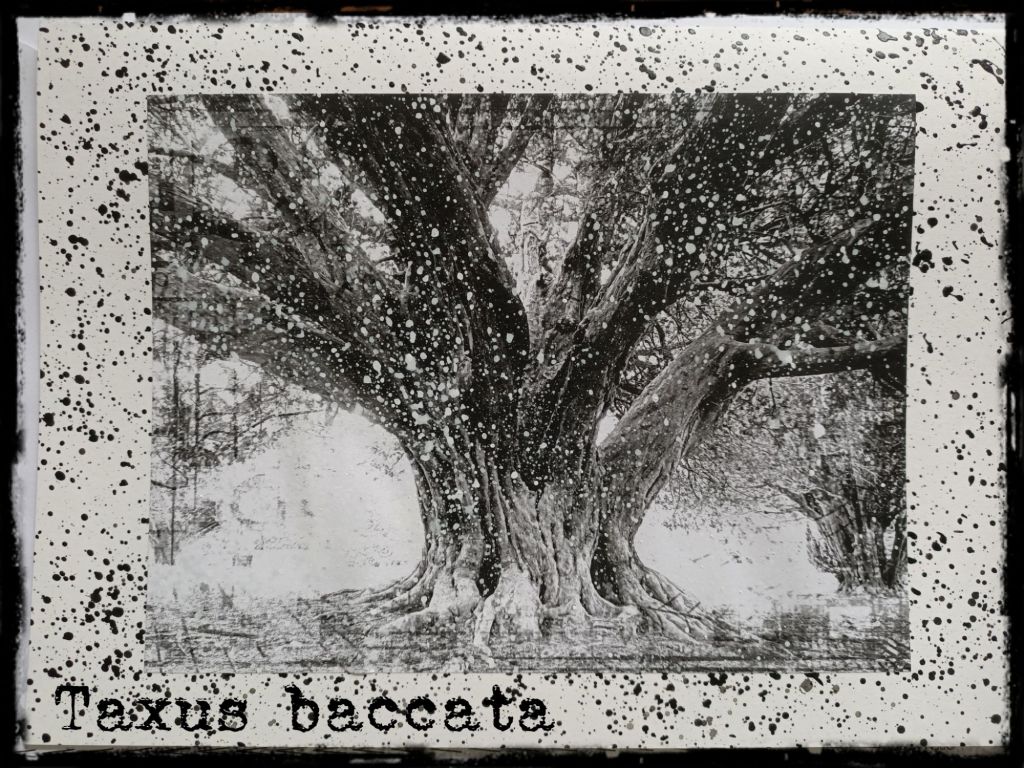
Our hand-made Christmas card design of a Taxus baccata, Yew tree, was created to illustrate the living beauty and life force of real trees.

So, thinking about life and being ALIVE we need to connect with reality, with nature, with being active.

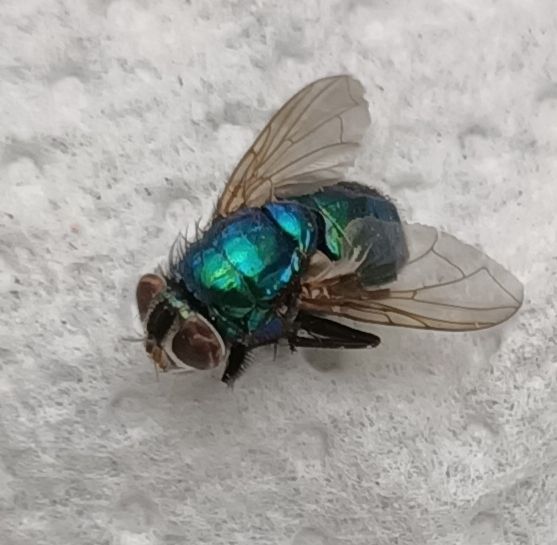
On this vein of thought, a fly caught my eye. As I looked closer, the stunning iridescent colours captured my attention. Quite often, in our busy lives we don’t give enough time to look more carefully, or read more deeply: our senses are often overwhelmed and undervalued in this digitally fast-paced world.

The Common Green Bottle fly (Lucilia sericata)

Many of us will soon be returning to work, our festive holiday over, back to the grind, so to speak.  How will we find time to ‘be alive’ when we are back to meeting targets, documenting data in triplicate and meeting the demands of a capitalist system driven by profit over people…?

Charlie Chaplin’s, Modern Times, 1936 Despite being a comedy film, Chaplin clearly portrays the dehumanising exploitation of labour, as his character becomes part of the industrialisation that almost destroys him.

Well, we need to find the time to find ourselves, and do the things that will make us healthier and happier beings.  Easier said than done, you may say, but we just have to do that, otherwise we lose ourselves and the wonderful world around us.

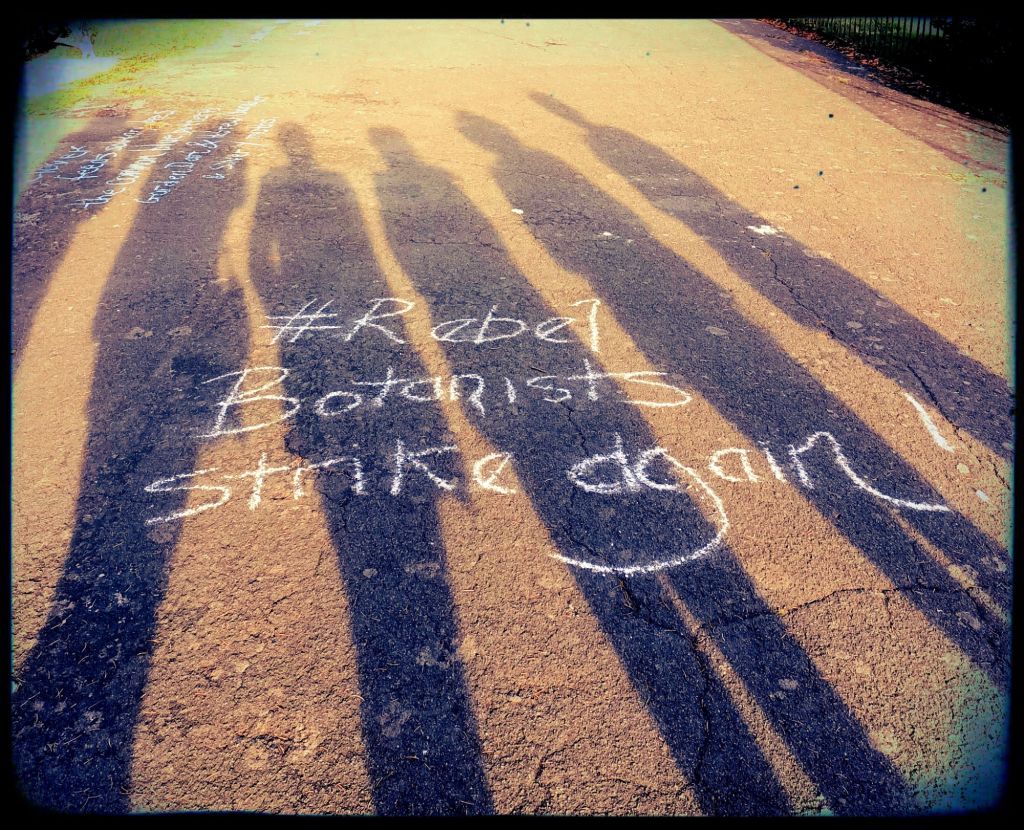
As you know, Rebel Botanists are volunteers, we give freely of our time to educate, through our street art activities, to highlight wildlife in the urban environment. Check out some of our past work:

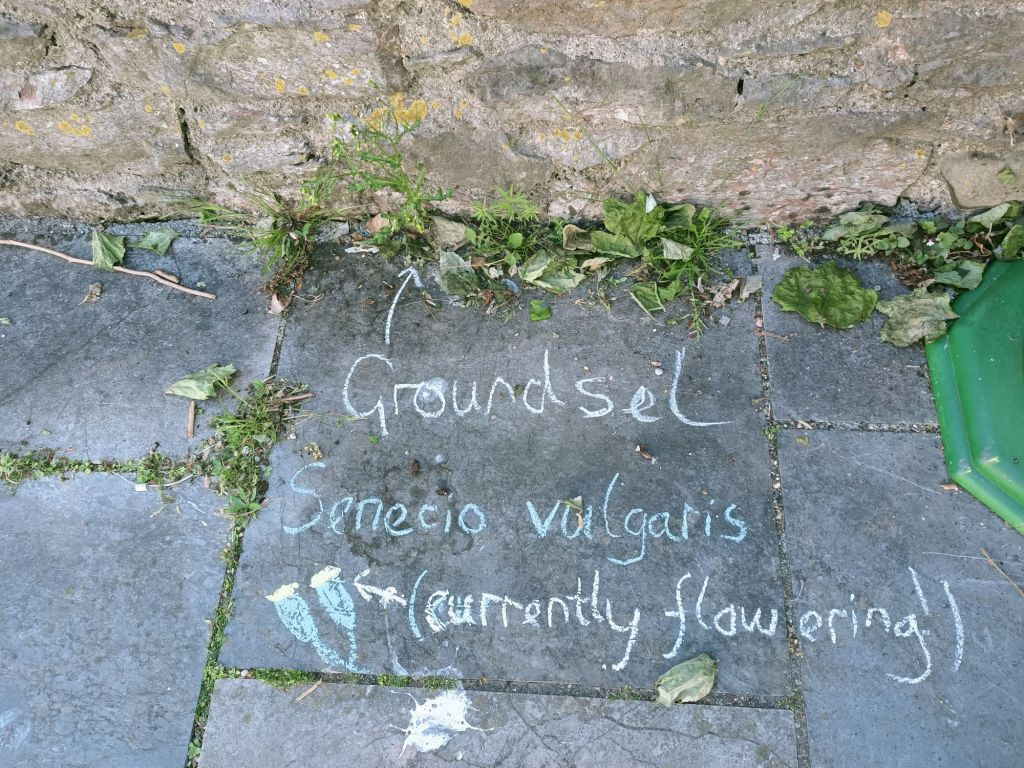
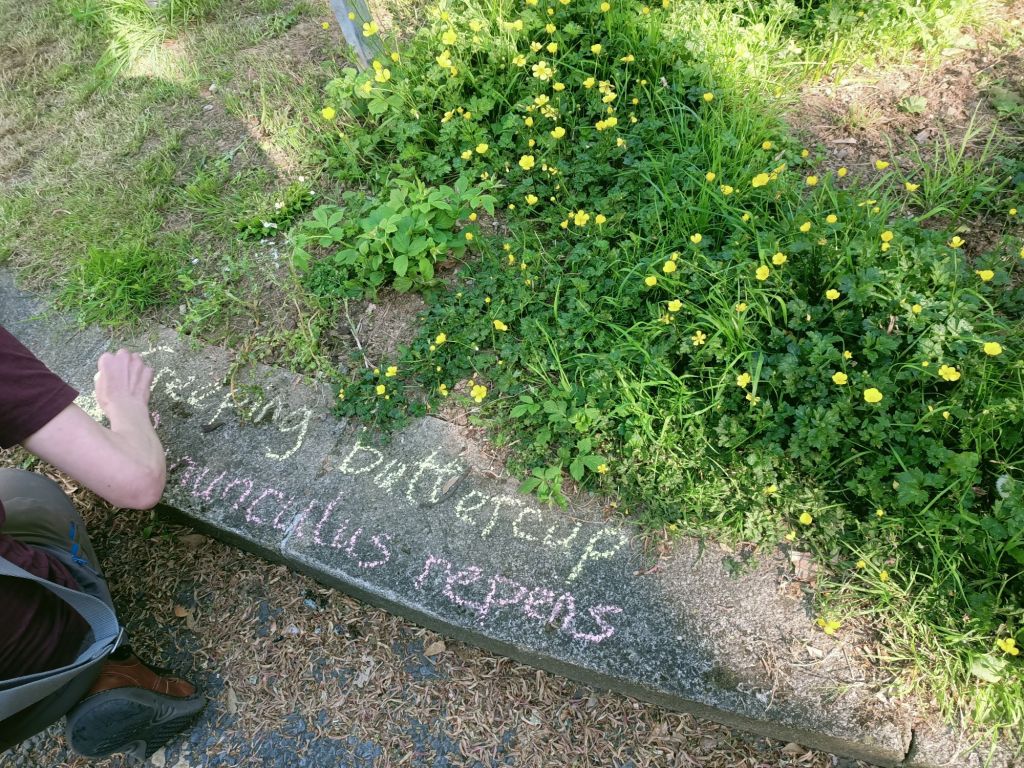
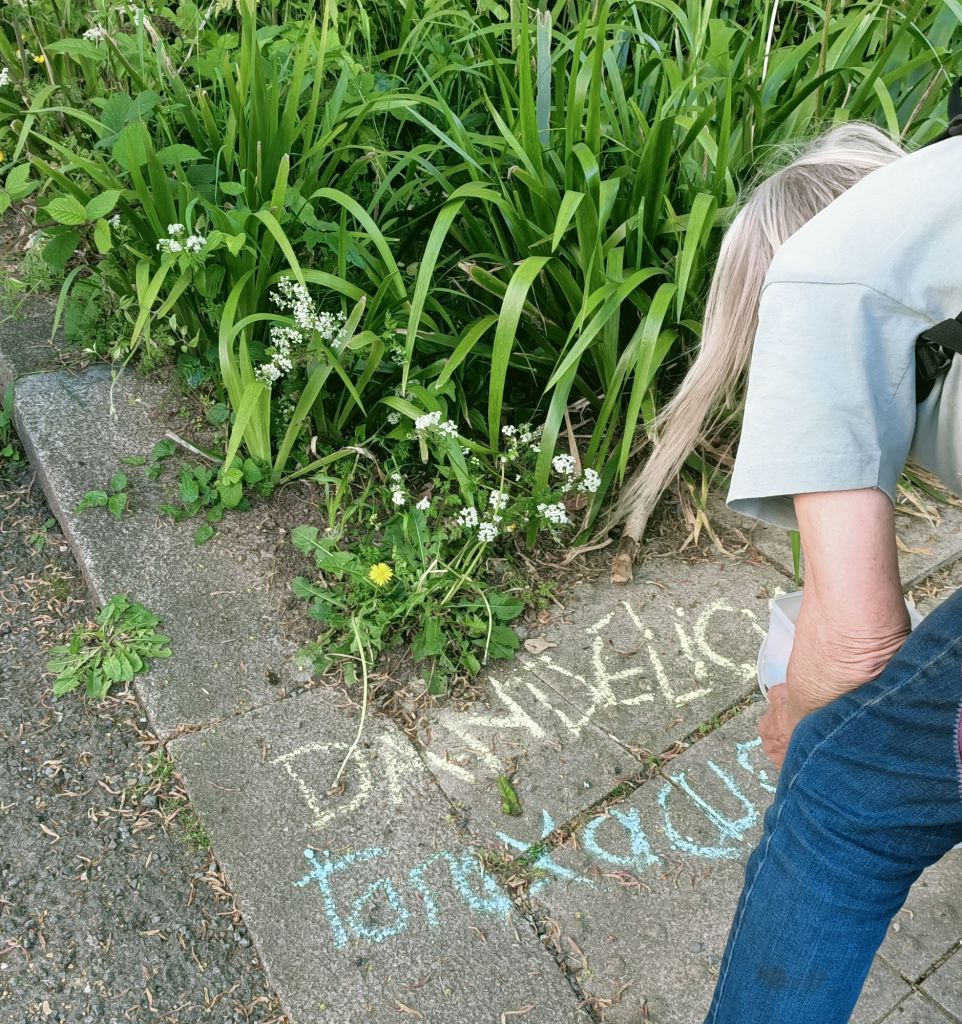
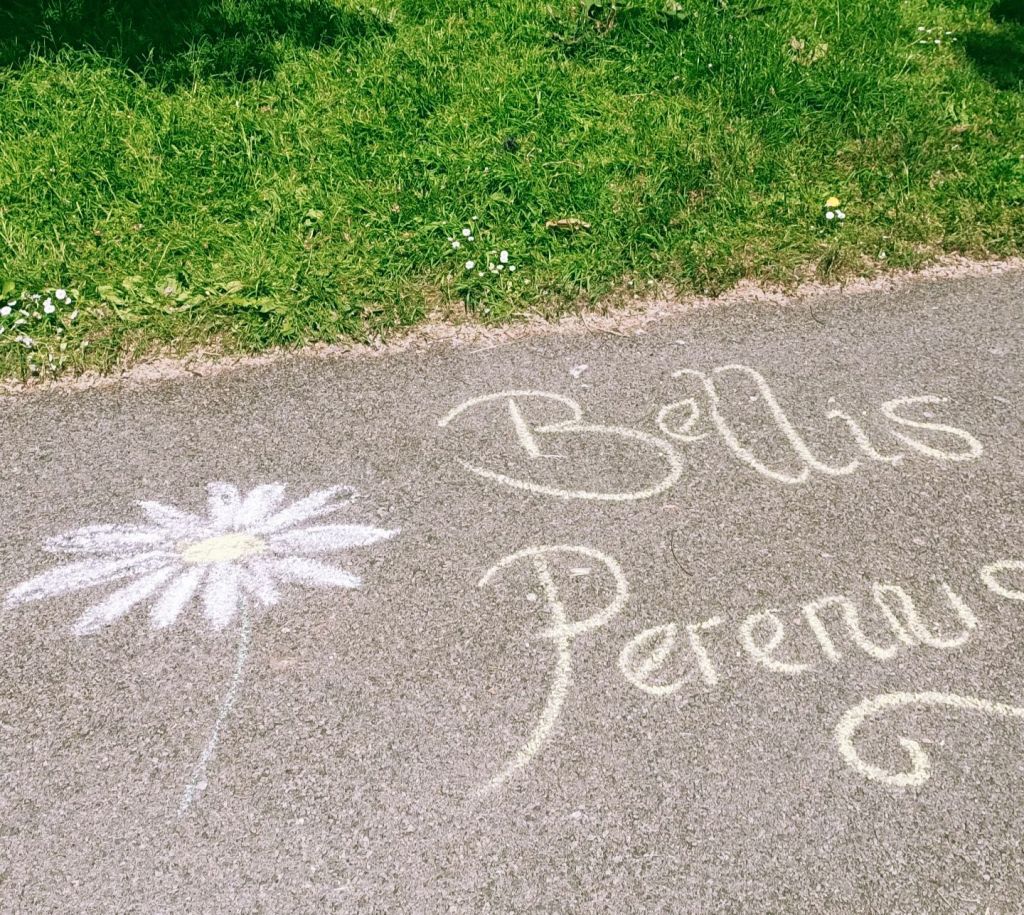
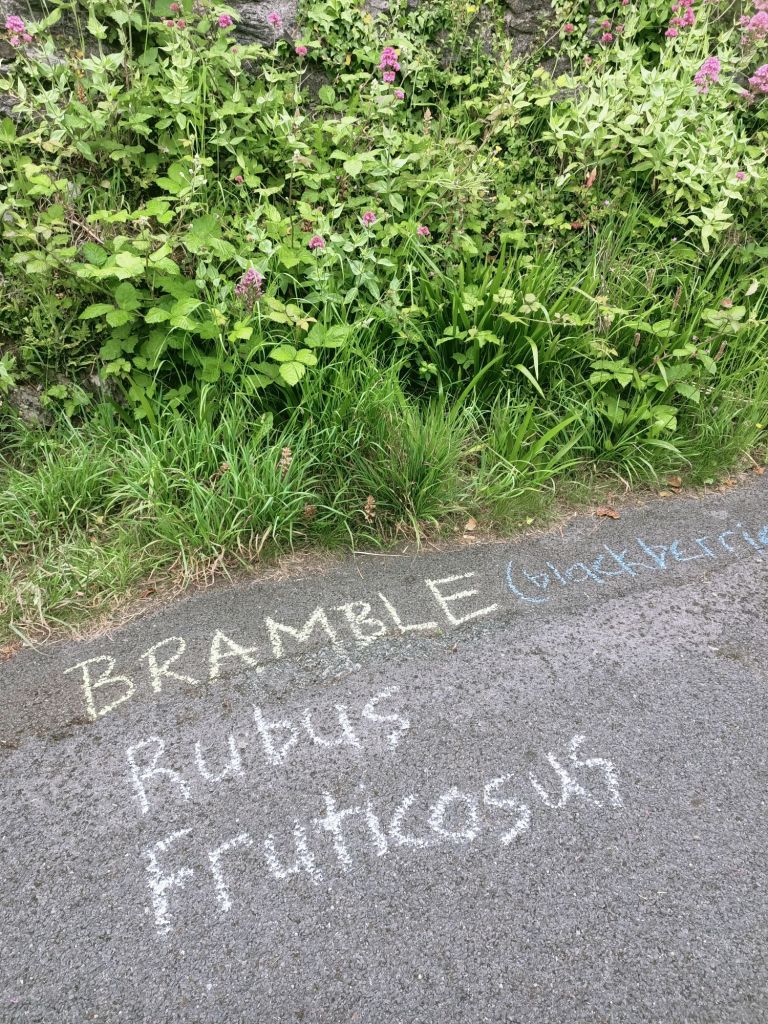
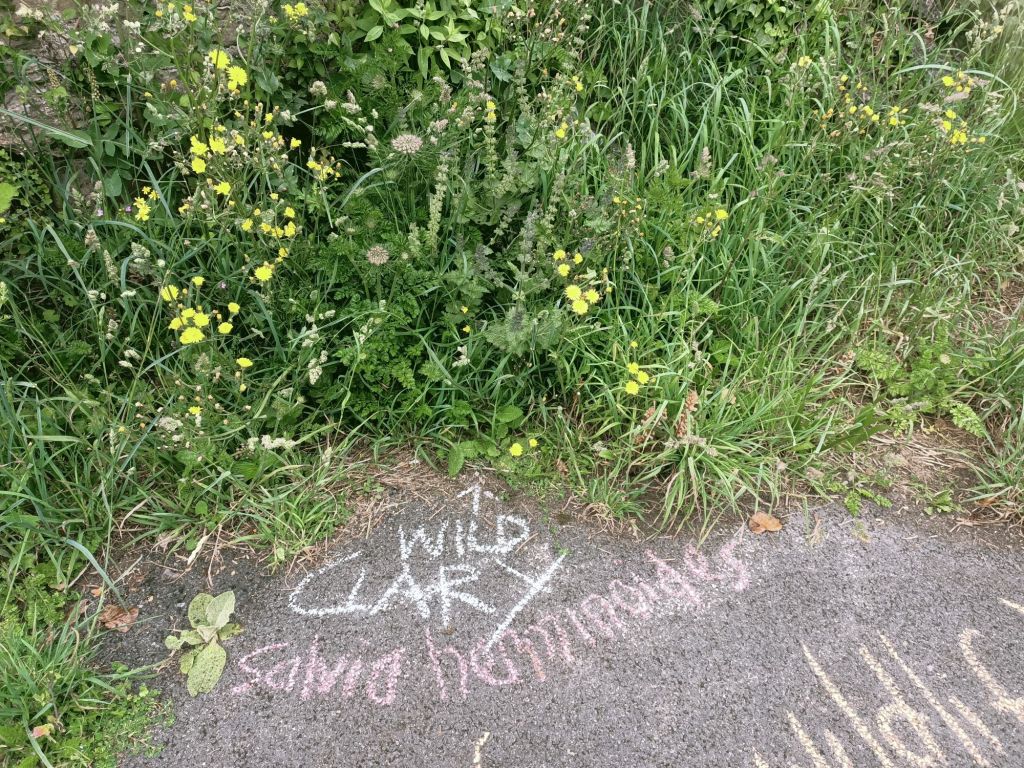
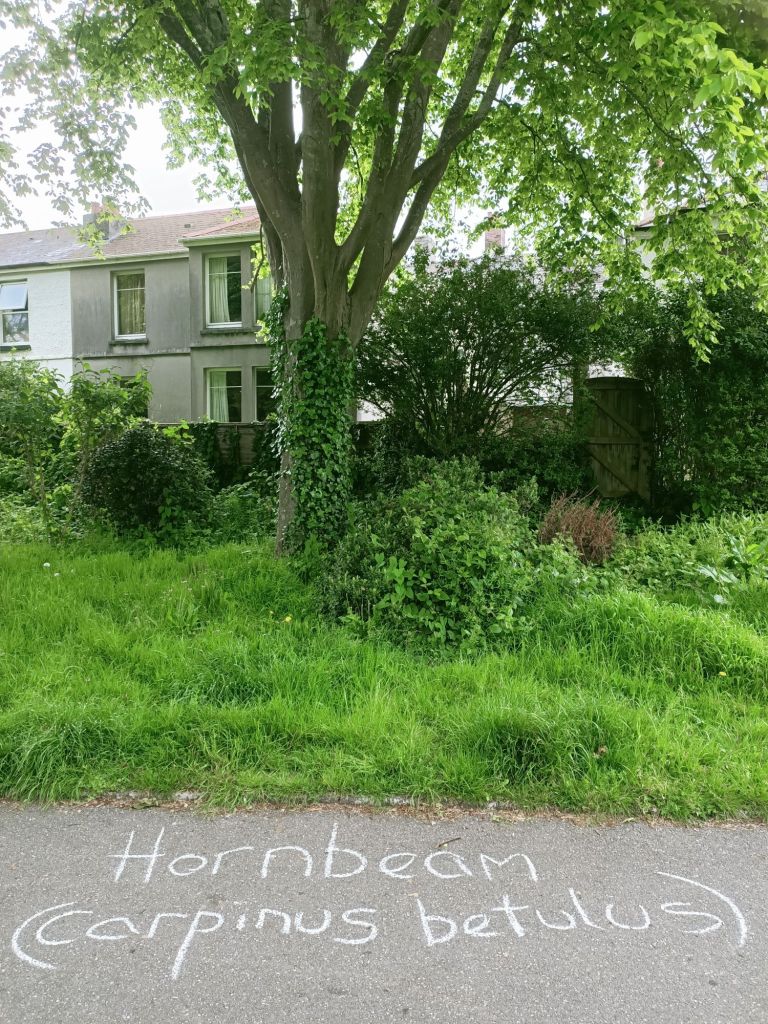
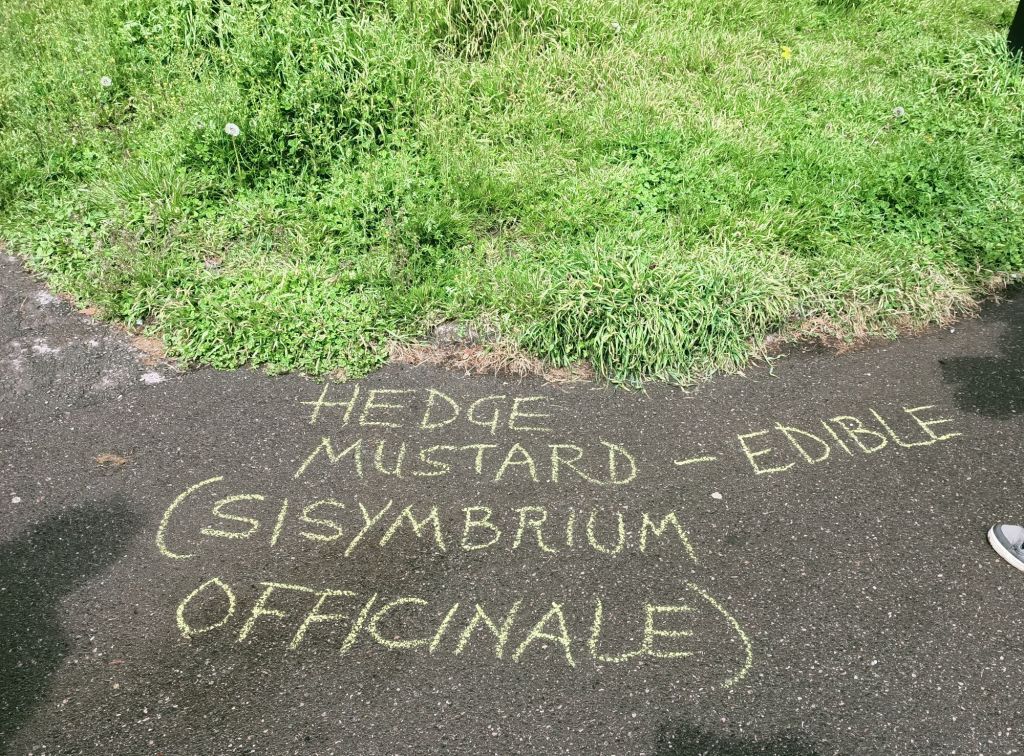
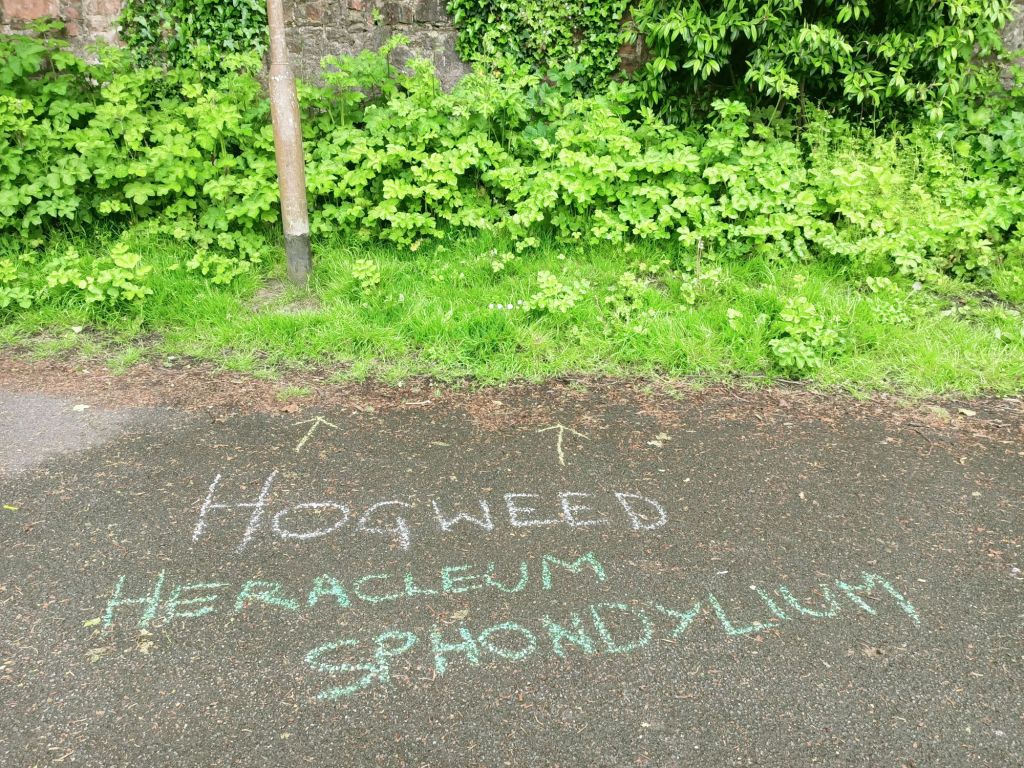
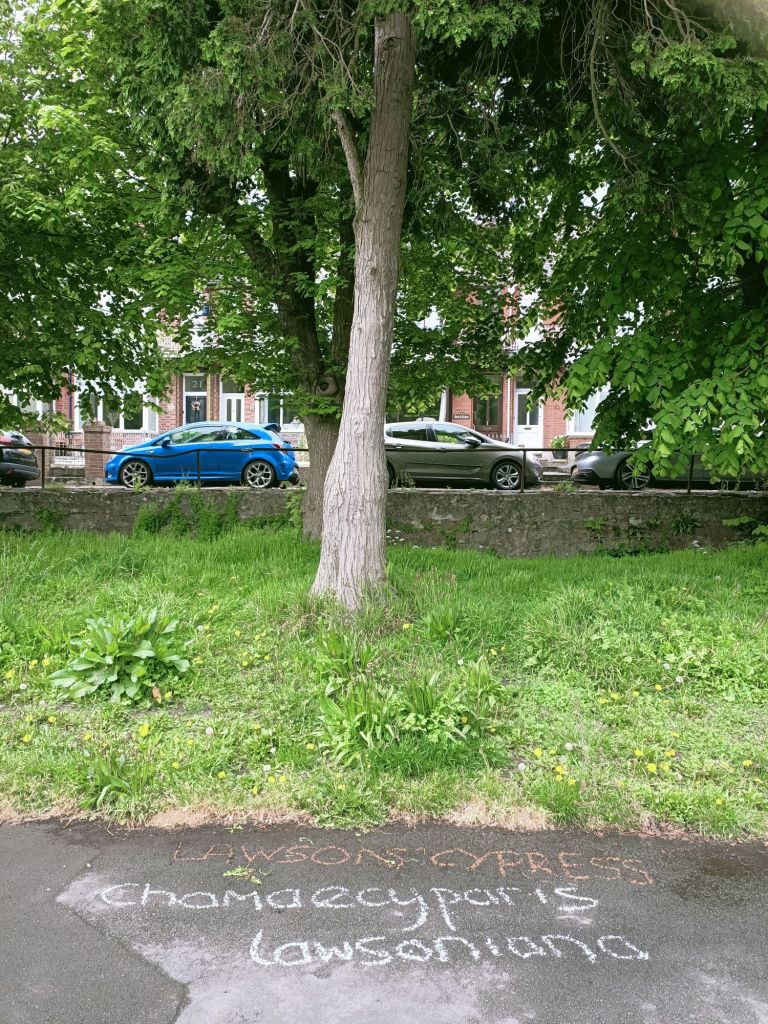
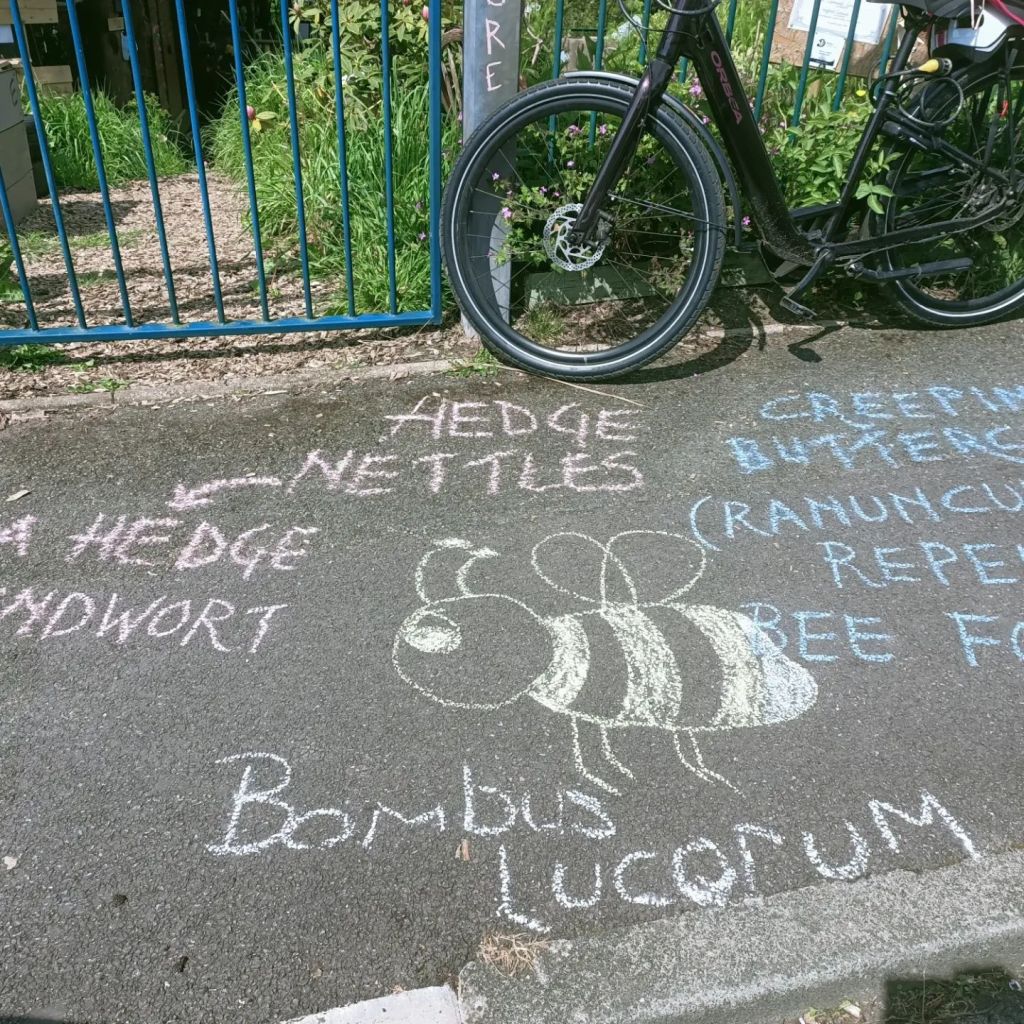
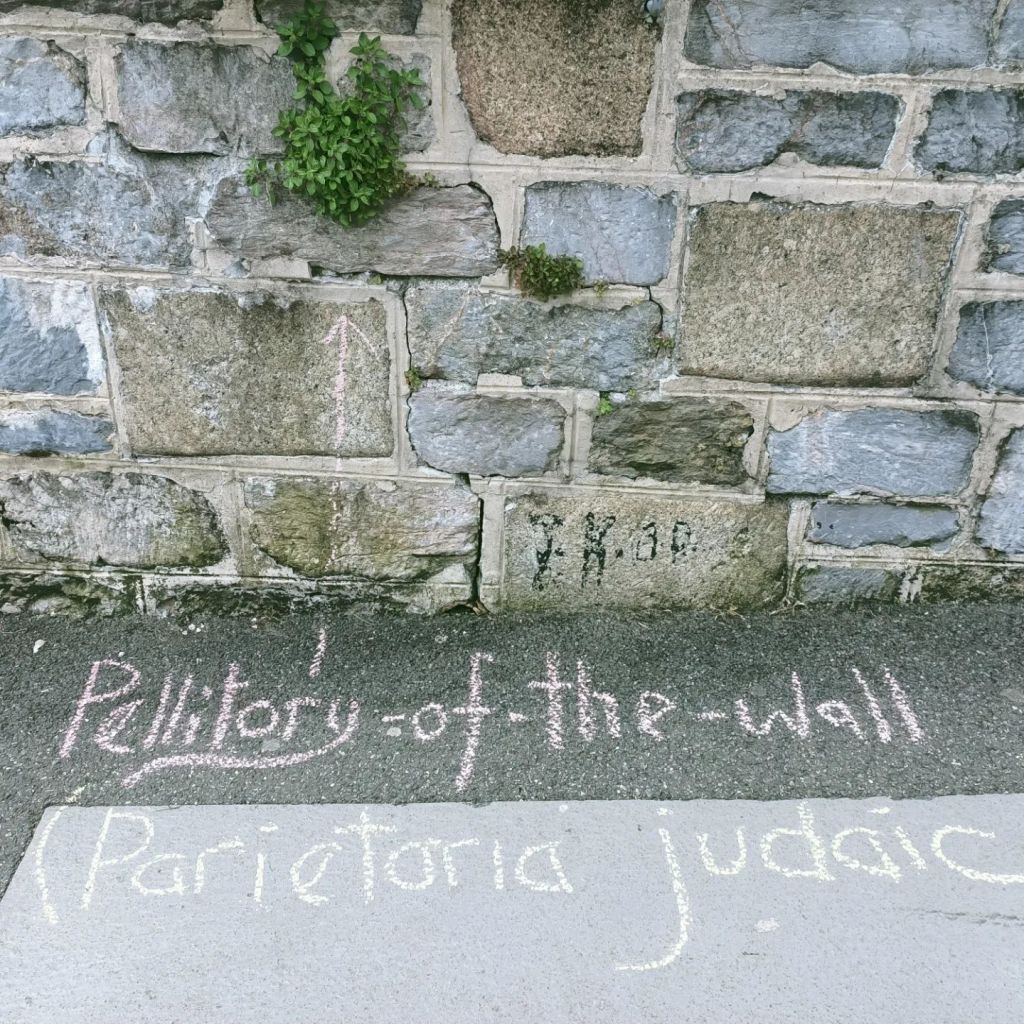
Chalking up the names of wild flowers along the streets, including the Latin/scientific name 🌼🌼🌼
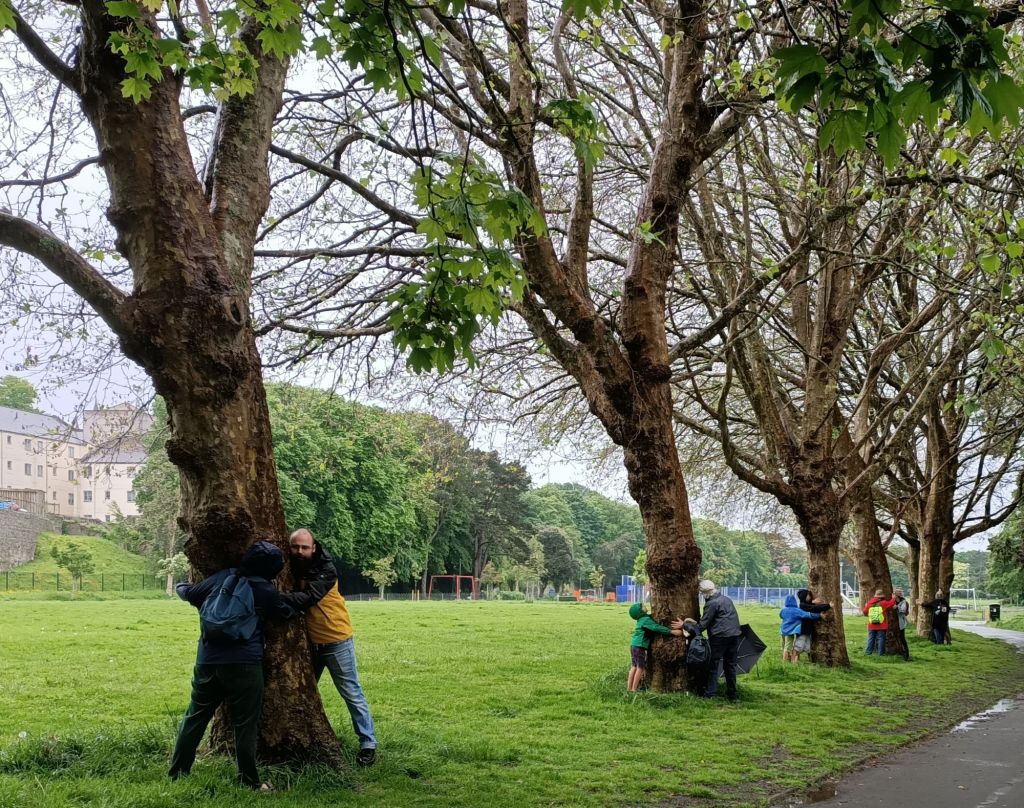
Yah, a bit of tree hugging – feel the energy and raise awareness to passers-by of tree species and their importance.
Walking and researching the value of Temperate Rainforests
We gatecrashed Edinburgh’s Fringe Festival and met some lovely people and chalked their streets 🏴󠁧󠁢󠁳󠁣󠁴󠁿
We’ve been seed-bombing!
Planting wild plants and trees 🌳🌳🌳
Carried out educational activities at City College Plymouth and the University of Plymouth
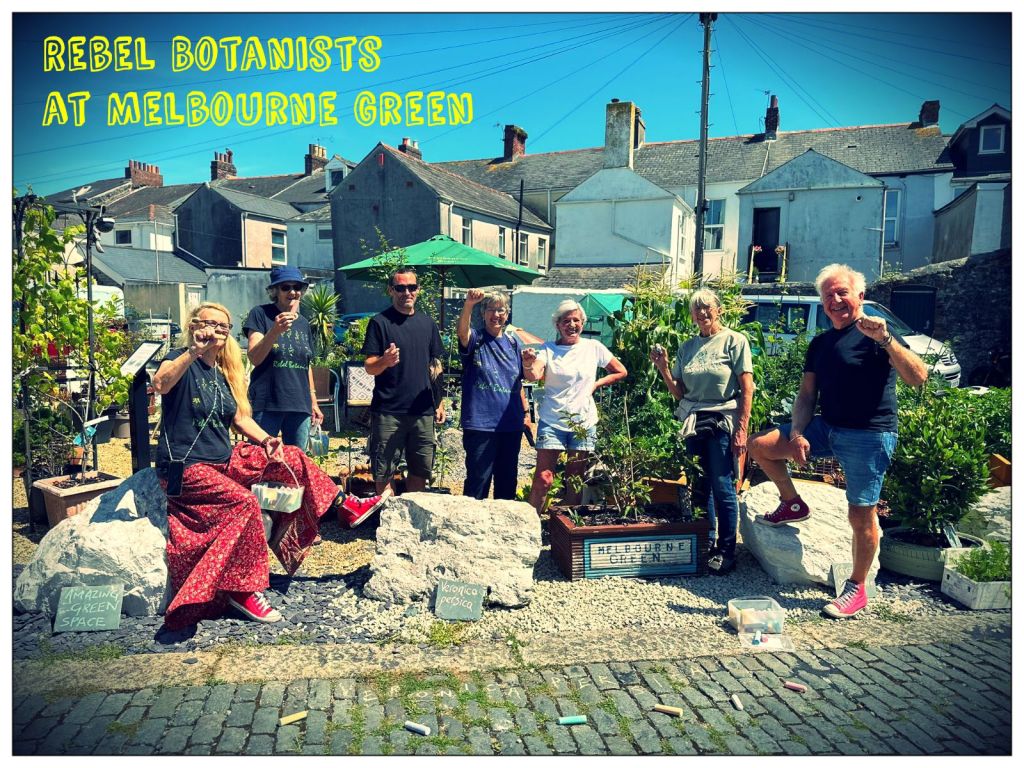
Supported other community groups and organisations e.g. Melbourne Green
Some of our Rebels make great hand-made cookies too 😉
And, we keep coming back:
Walking on your street,  
To name the wildplants at your feet. 🌼🌸🌼🌻🏵️🥀🌼🌷🌳🌸🌼🍀🍃😊                     

So, what will we be doing in 2025?

Keep following us and you’ll find out. 🙂We have lots of plans, as well as chalking and identifying wild plants, we will definitely be embracing this year’s Rebel Botanists’ motto, “Born to be Alive” – for ourselves and for every wild plant out there, so why not join us?! 😉

So, put your best foot forward into 2025 😀

A Puzzling Christmas Chalking

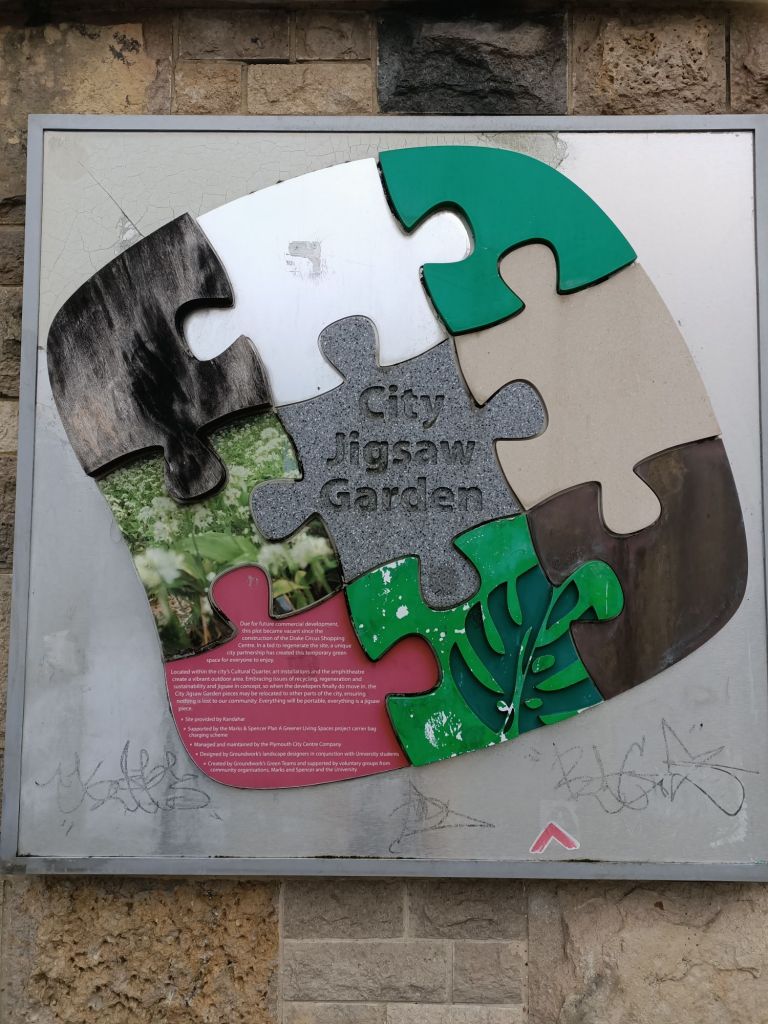
We meet at the City Puzzle Garden in Plymouth. It’s situated next to a busy shopping centre; but why, we wondered, is it so named…A puzzle indeed, until we read the sign.

That bottom left red piece tells the tale. This little urban green space is only temporary and earmarked for development, it seems. The layout has been designed in 9 sections, we presume, as the sign illustrates, with the idea that each section will be relocated elsewhere when, or if, building work starts. We consider if this would actually happen in practice, but rather hope that development does not take hold and swallow up yet another wild patch.

Despite a heavy presence of grass which tends to block wildflowers, there is plenty of life here in this urban nature patch
A respite from the hectic Christmas shopping
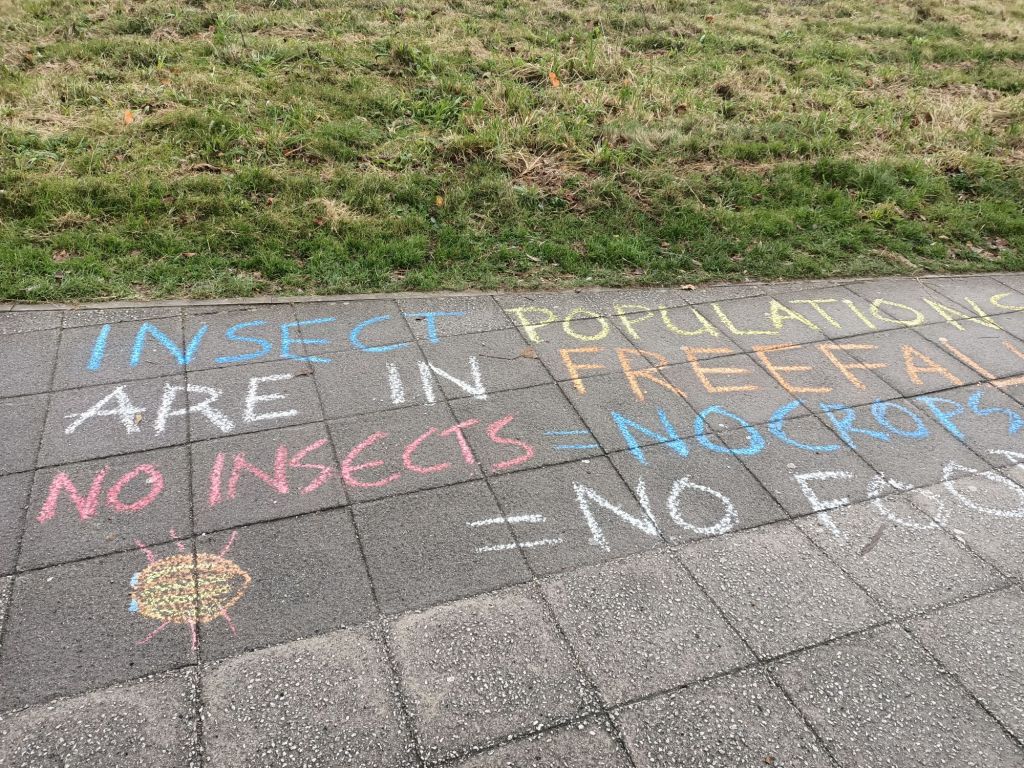
We really must rethink how we use land and stop the use of pesticides – we must protect insect populations which are fast depleting.
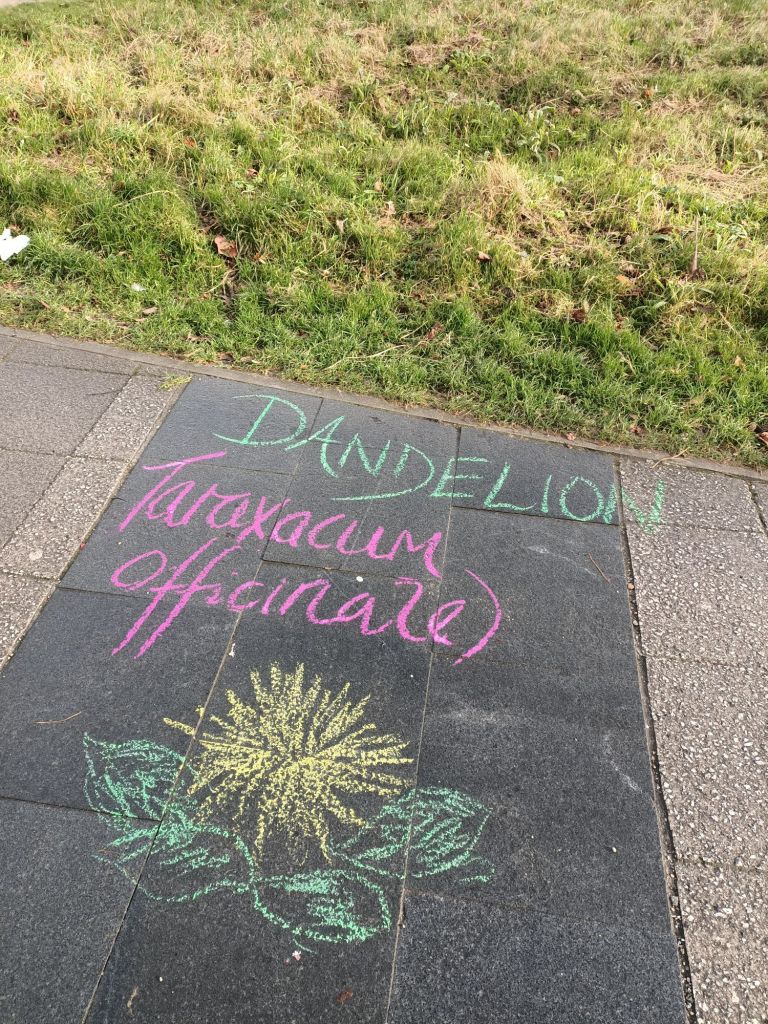
There may not be a yellow flower at this time of year, but the leaves are clearly evident.
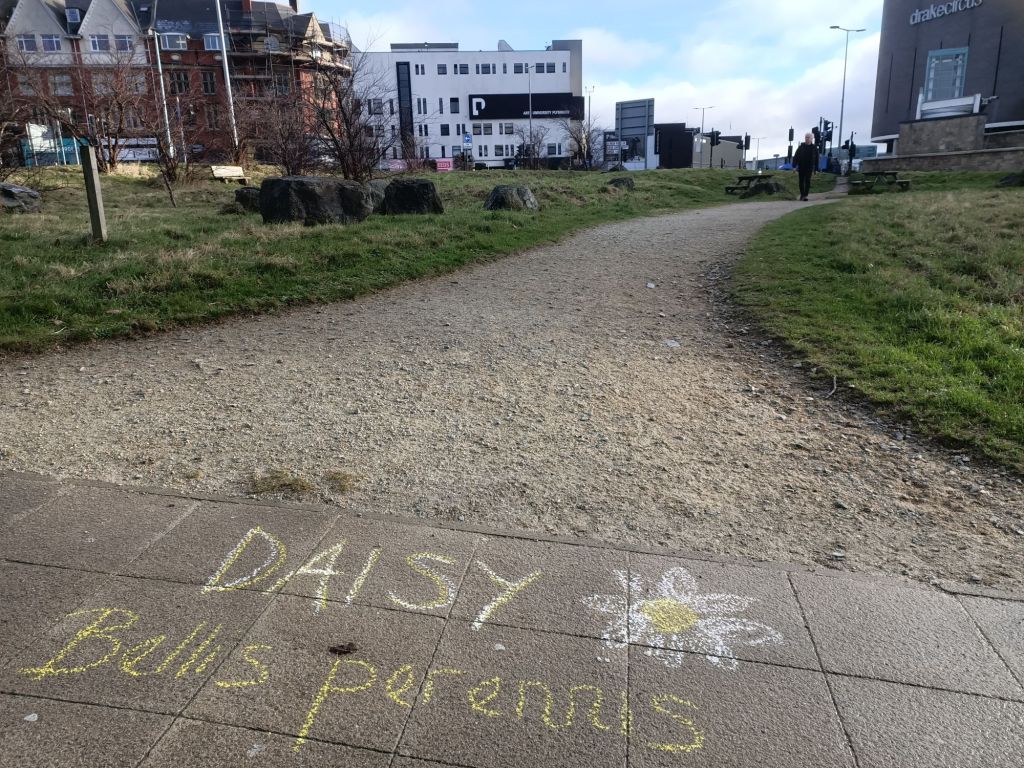
Some lovely Daisy flowers supporting winter wildlife 🌼🌼🌼
Trees help soak up excess water and store carbon – trees are tree-mendous! 🙂
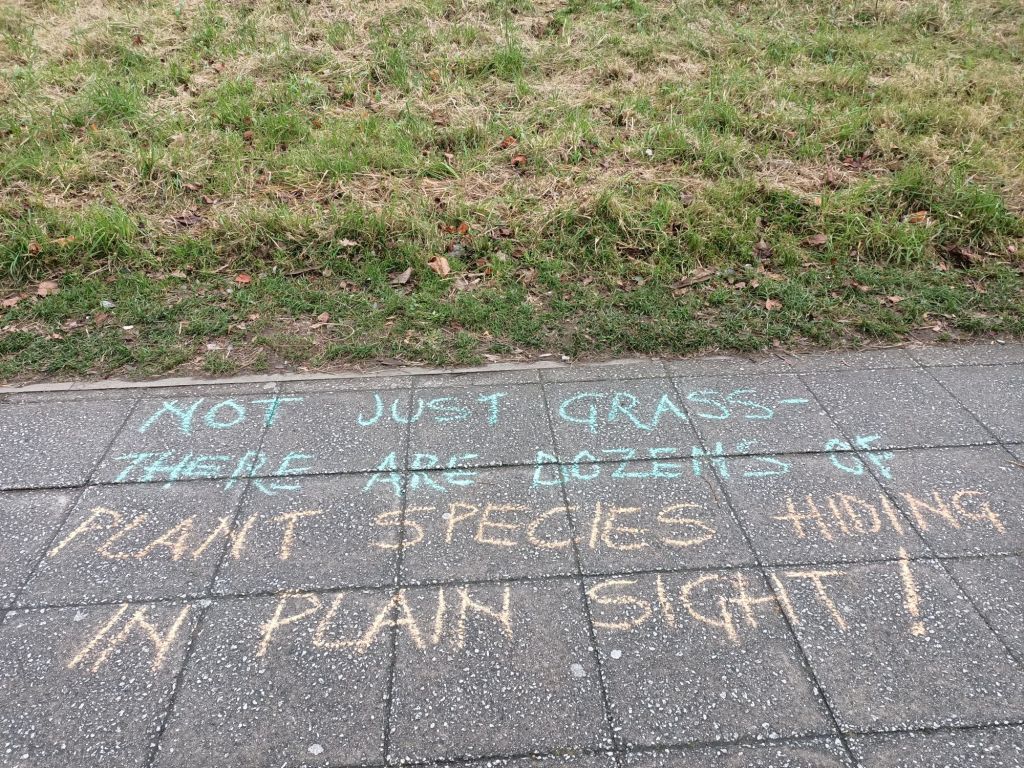
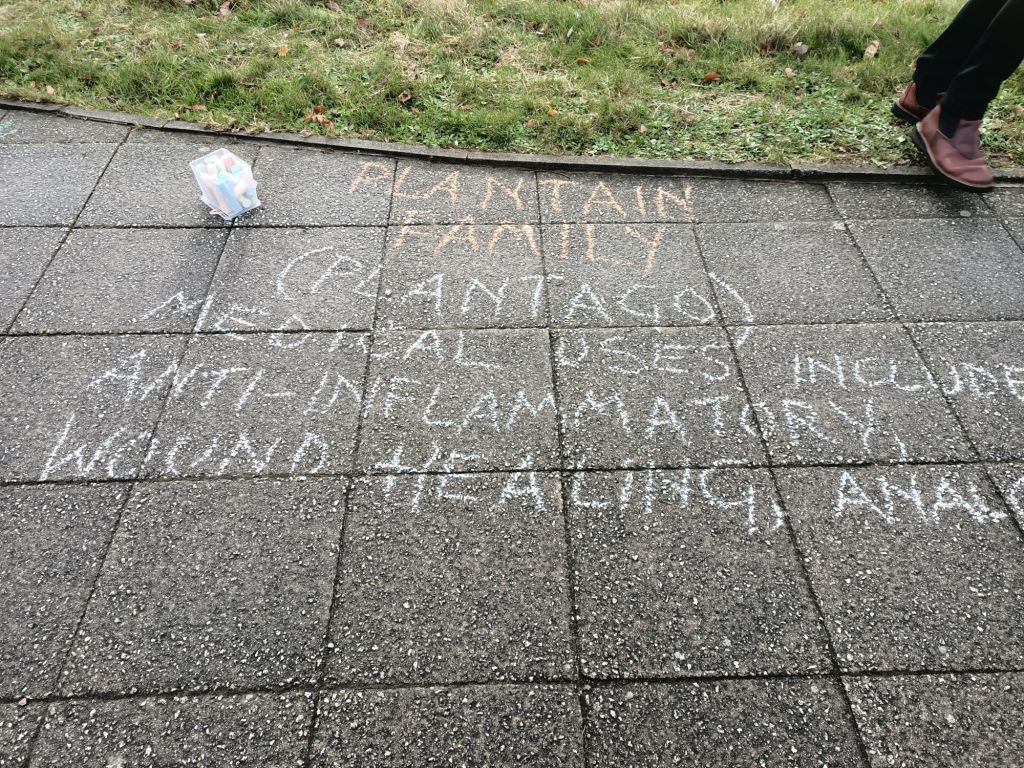
The long leaves of the Plantago lanceolata – great for human and animal medicine
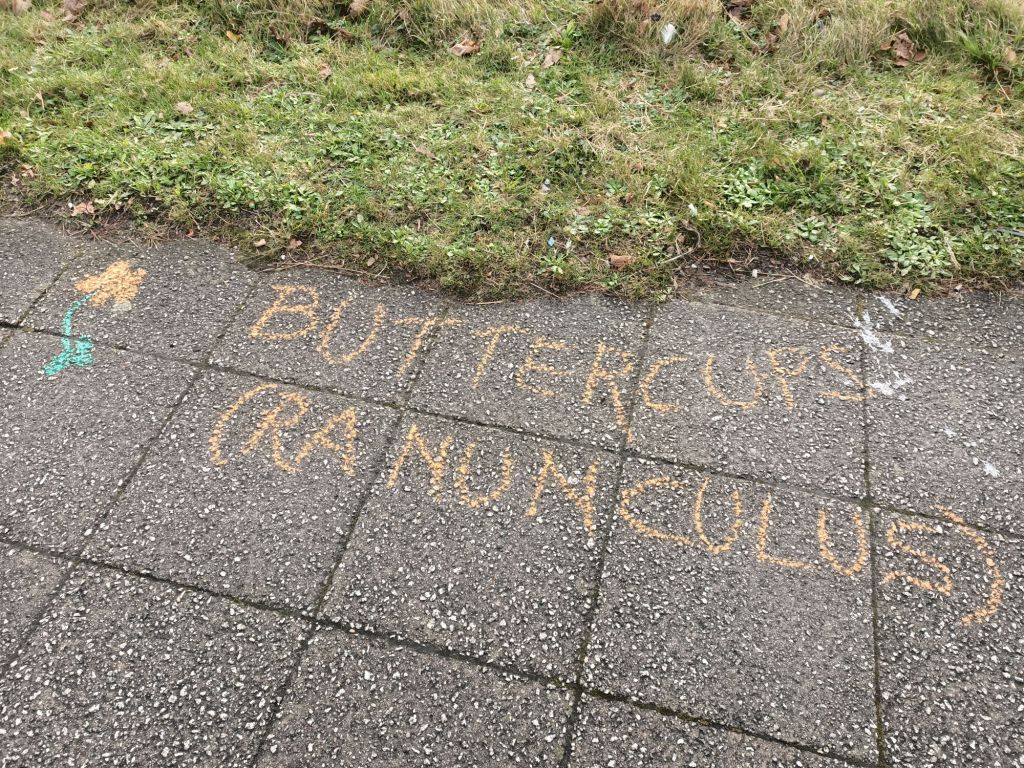
Leaves of buttercup
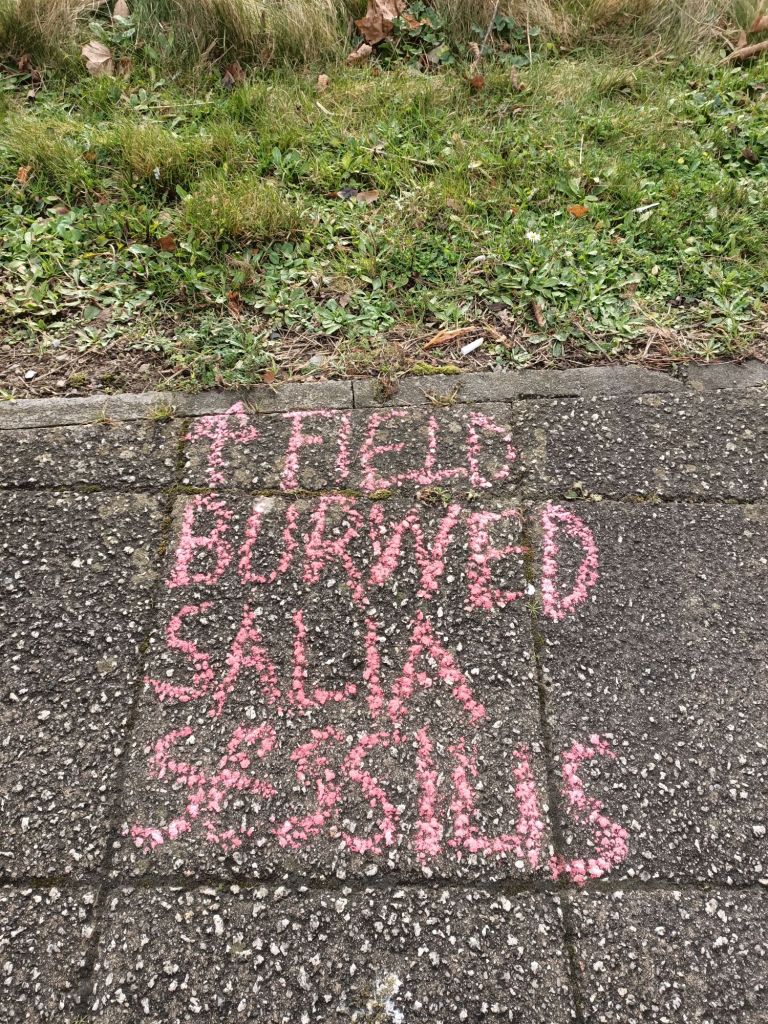
Field Burweed

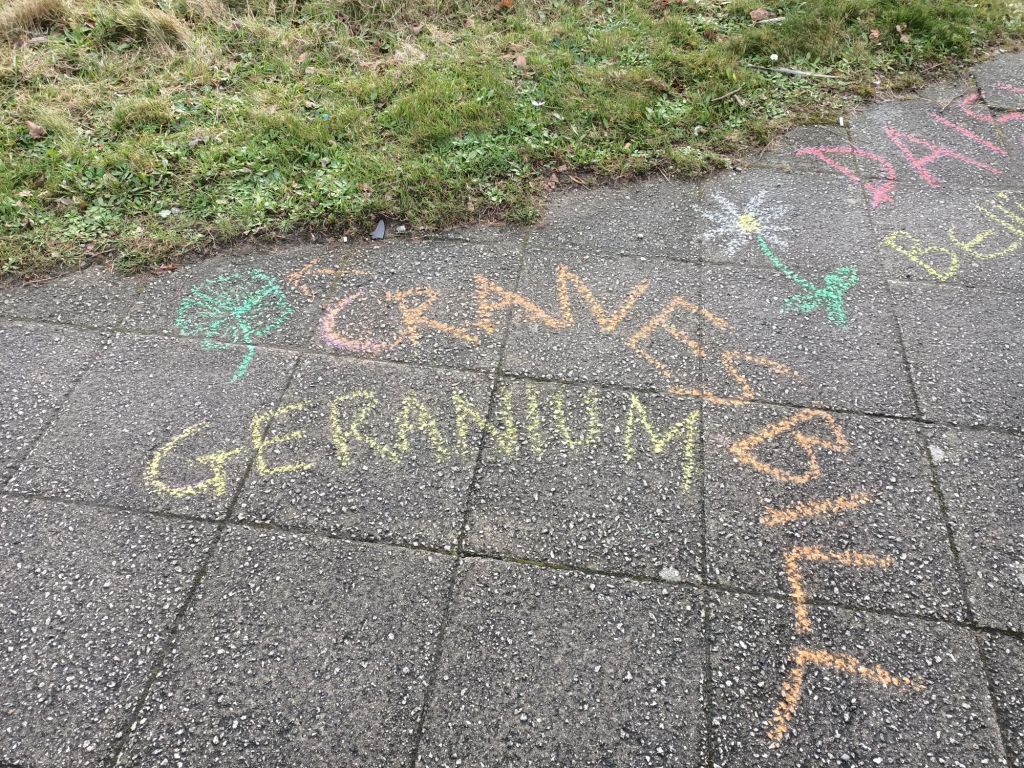
Cranesbill

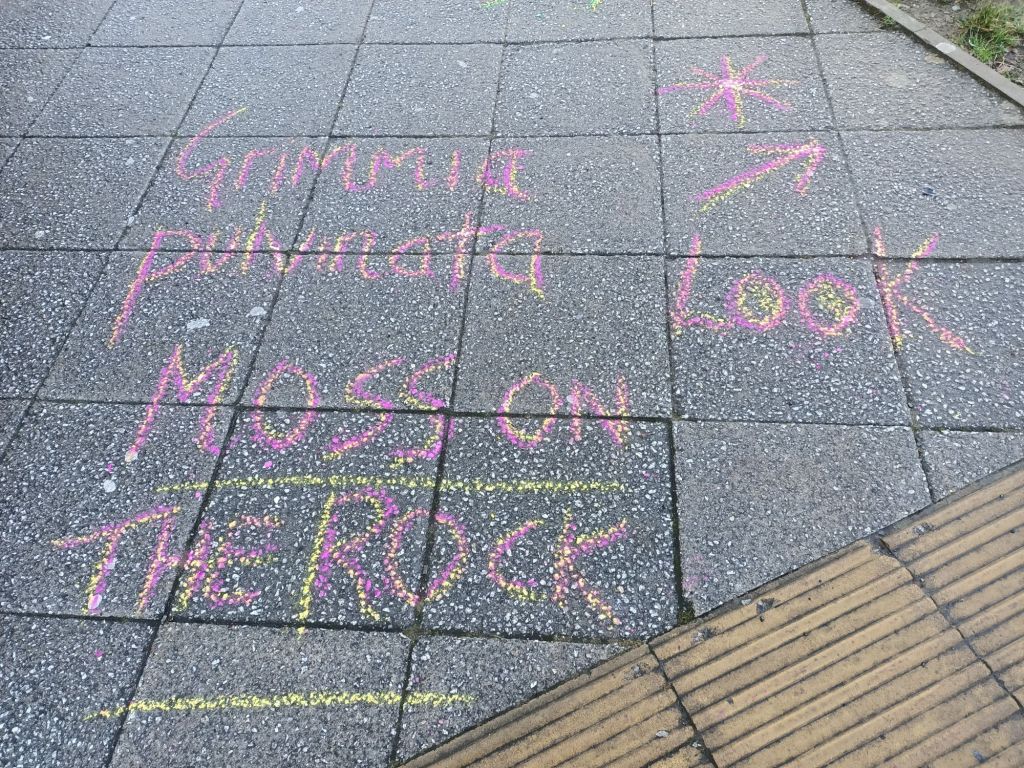
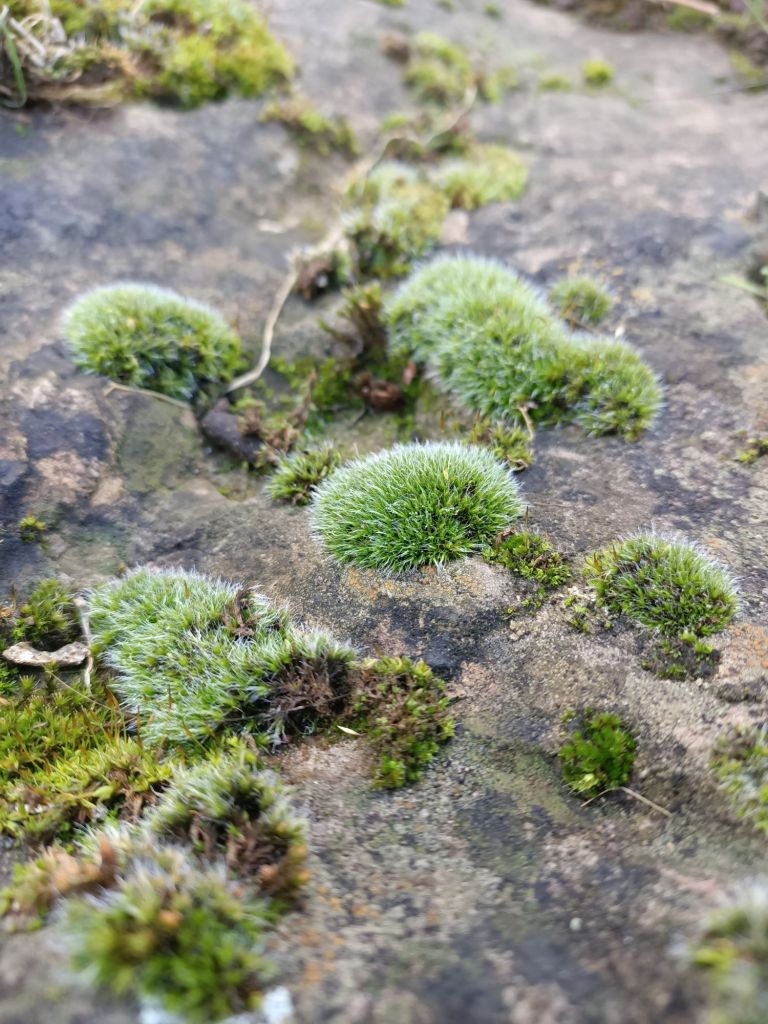
Mosses are truly ancient
Look on the rock 👀
Grey Cushioned Grimmia moss – wow!
Like a bit of lichen 🙂👍
Look after the birds in your garden, on your street, in the park… It’s cold out there and there’s less and less food out there for them 🐦🐦🐦💚

And then it was our turn… Scrumptious tahini vegan biscuits and custard cookies, yummy 😋 Happy Christmas.

The Dizzying Spectacle of Dizzard 🌳🌳🌳

Are we becoming nemophilists? 🤔 This is our second post on temperate rainforests, but we think you’ll like it 😉
Thanks to #plantsages for the photo.

After our visit to Cabilla, Guy Shrubsole, author of the Lost Rainforests of Britain book, said: “Have you been to Dizzard yet, it’s even bigger?”  Dizzard…? Where’s Dizzard…? And so the investigation began on this North Cornwall temperate rainforest.

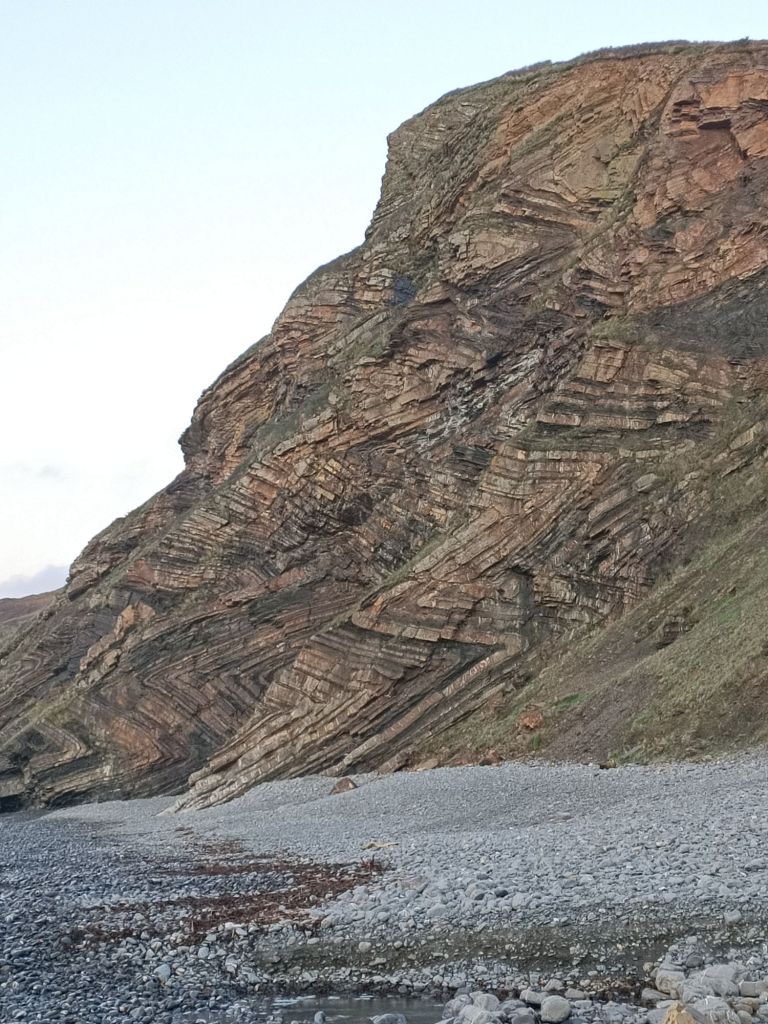
We headed for our destination, on the coastline, near Millook, with its stunning chevron rock formations,which are also well worth a visit. 

Striking folded rock formations at Millook

Our walk started over a stile and across a field.

That’s the only chalking we could do, no more tarmac from here 🙂

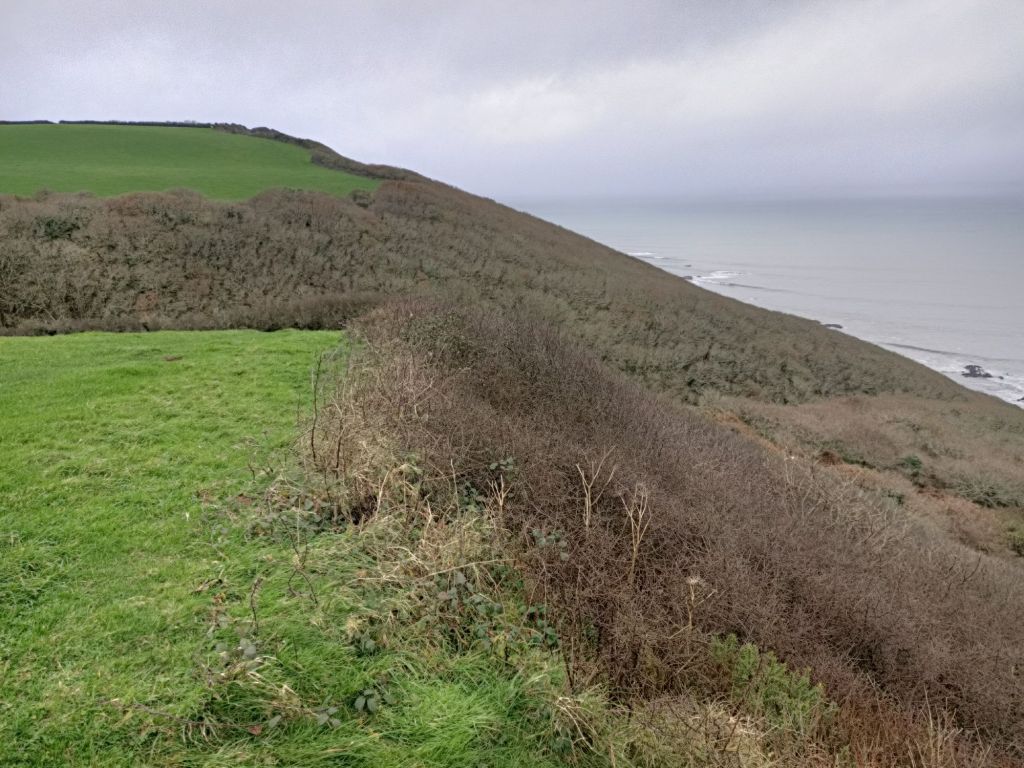
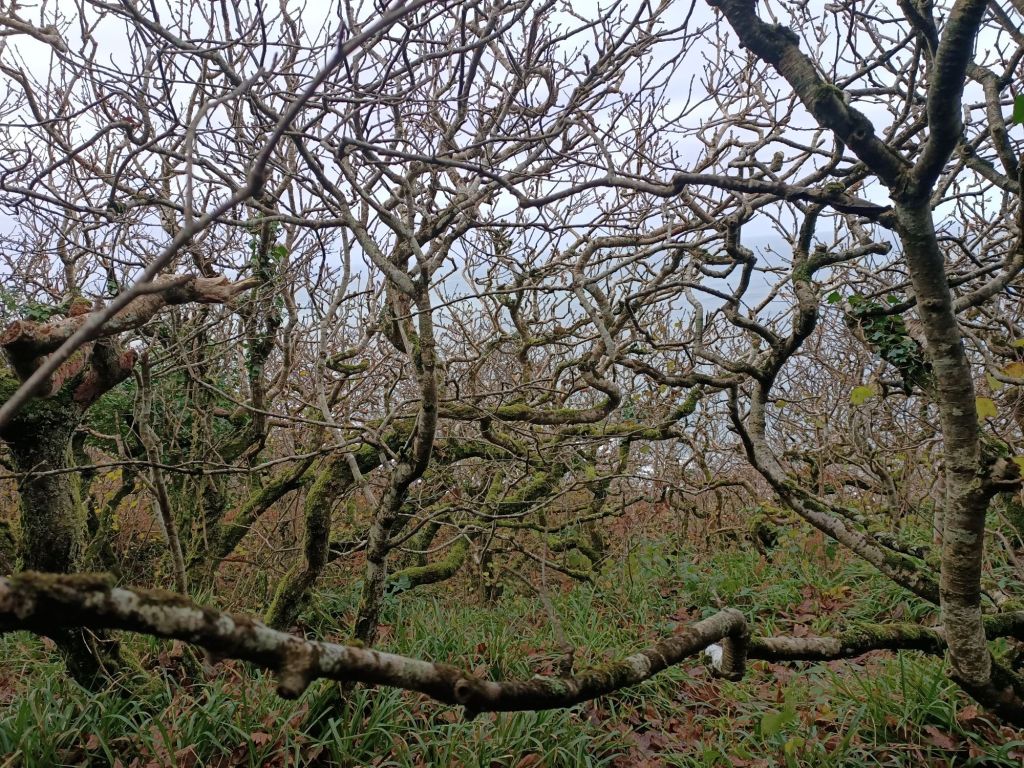
The name Dizzard comes from the Cornish word, Dyserth, meaning very steep and perhaps it is due to its steep cliff location, beside the sea, that it has survived centuries of human destruction.

In the 8th century, more than 25% of England had woodland cover, imagine that; now those ancient woodlands have reduced to only 2.5%. Ancient woodlands are documented as those having existed continuously since the 17th century; this continuity adding greatly to the amount of stored carbon and the incredible understory entanglement of the mycorrhizal network, which inextricably links tree roots and fungi in a symbiotic relationship.

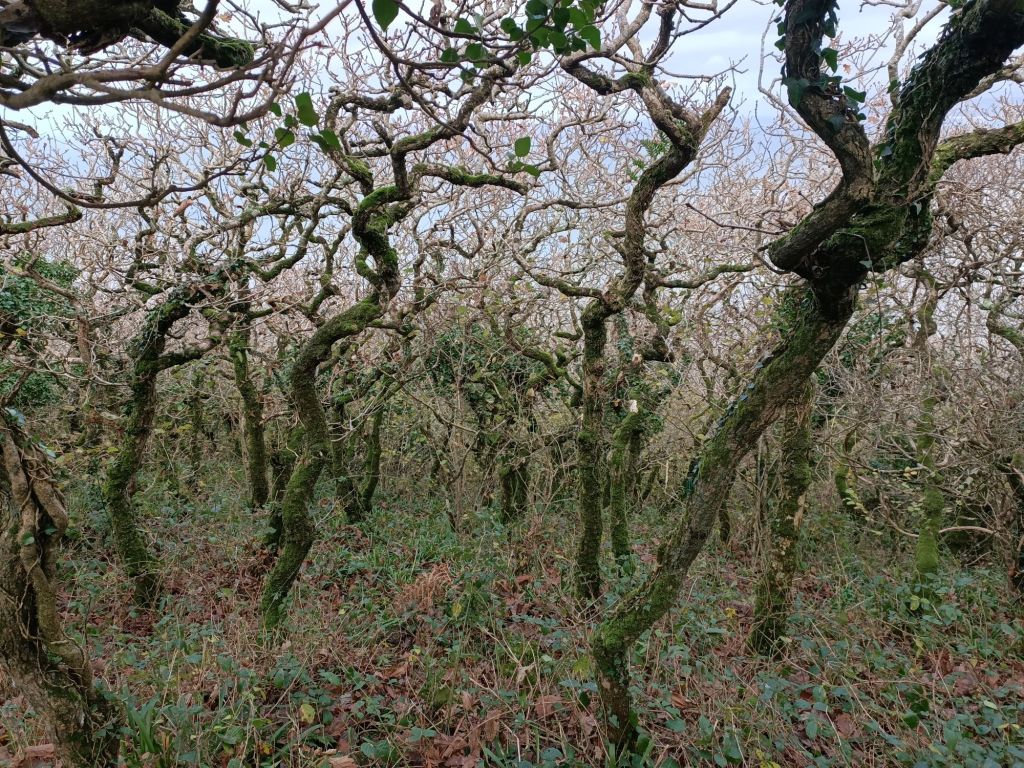
When we look at the gnarly twisted intricacy of the ancient trees above ground, we can only imagine the development of life below, beneath our feet.

            Image of mycorrhizal network.               Thanks to Eden Project for the photo

My phone’s camera, hi-tech though it is, cannot capture the living beauty of such a place: the smells, temperature, textures – the holistic sensorial experience of being at one with such an ancient undisturbed place. However, the visual record will serve to share its aesthetic existence.

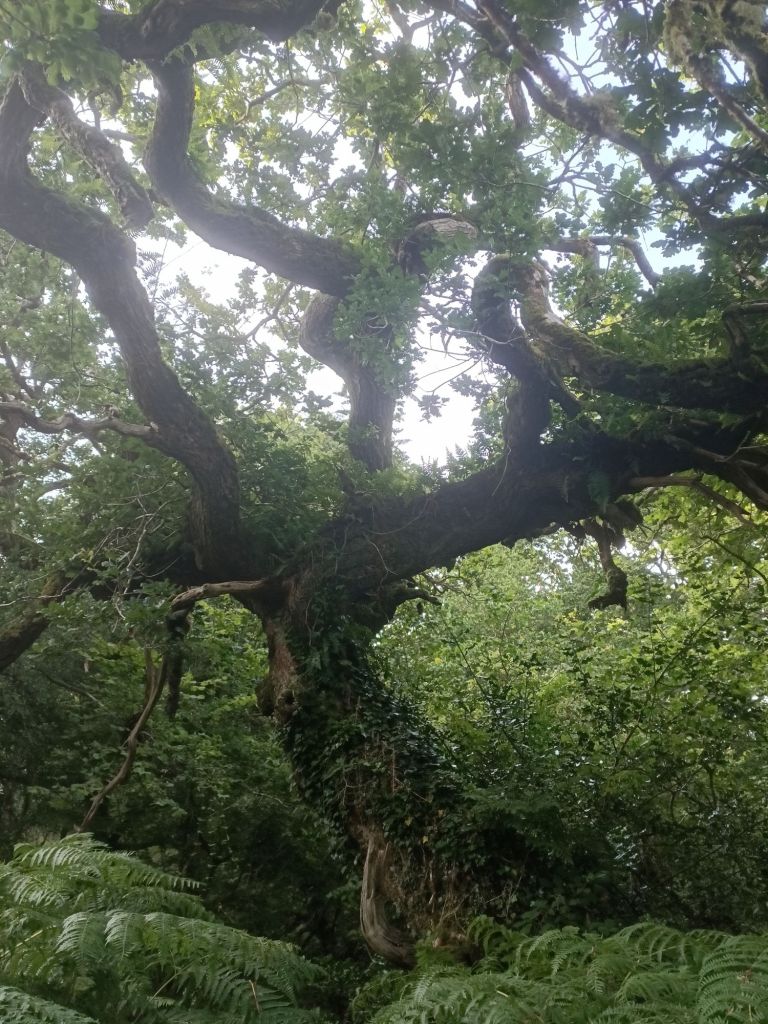
Quercus robur (English Oak) dominate the Atlantic temperate rainforests

You can’t mistake an ancient woodland from a veteran woodland, though both are incredible wildlife spaces providing a wealth of varied benefit to the environment. Arriving at the edge of Dizzard, the strange branching shapes resemble the Ancient Greek Gorgons: Medusa, Euryale and Stheno, with their hair of snakes writhing wildly from their heads.

Entering Dizzard’s ancient woodland
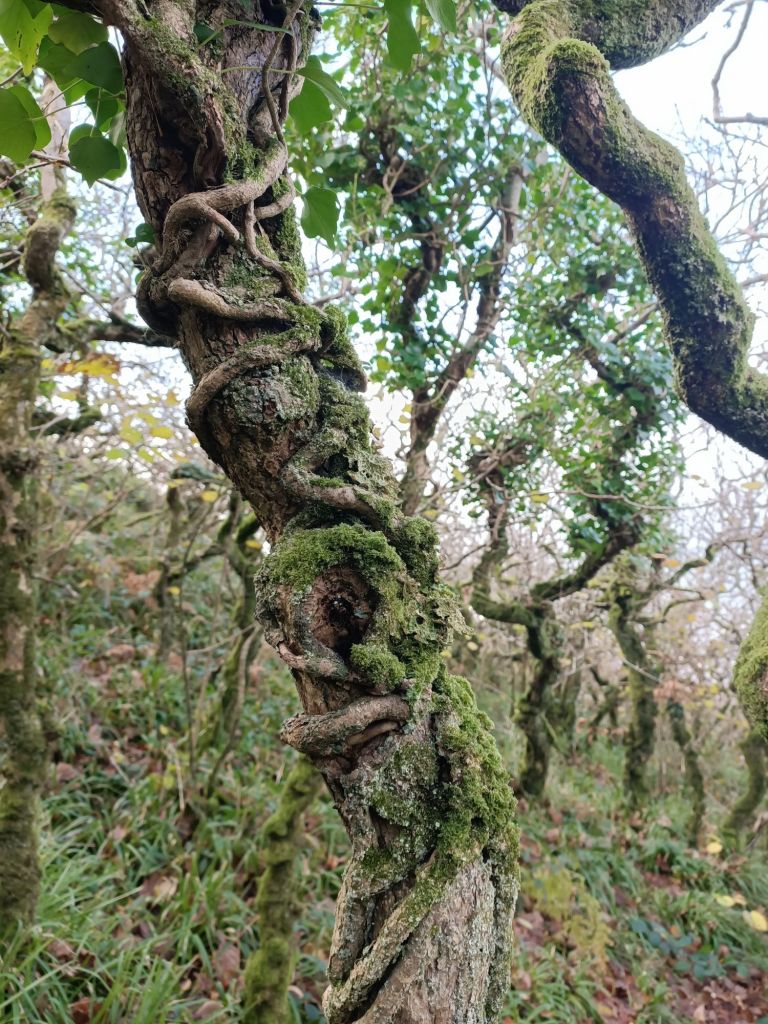
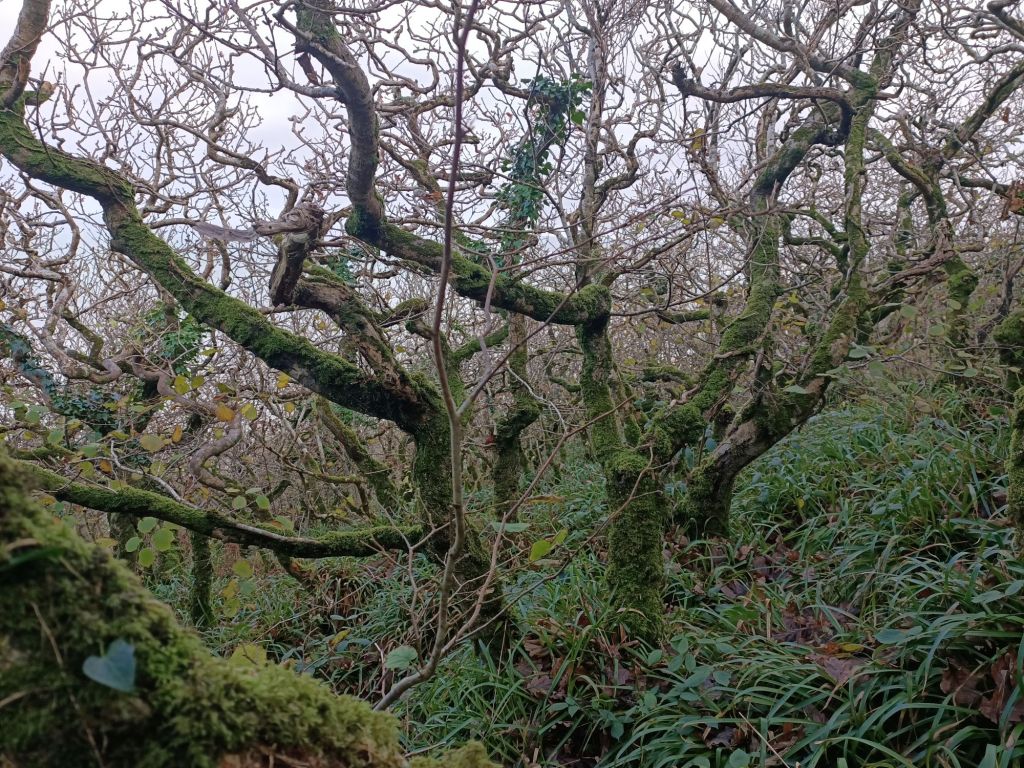
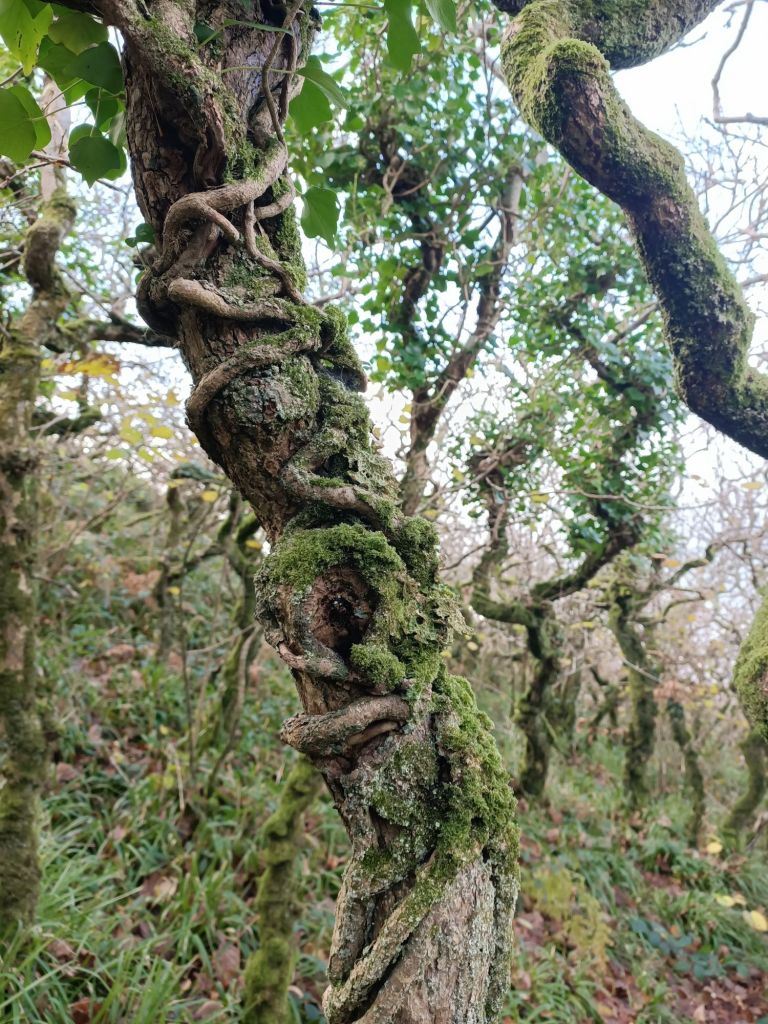
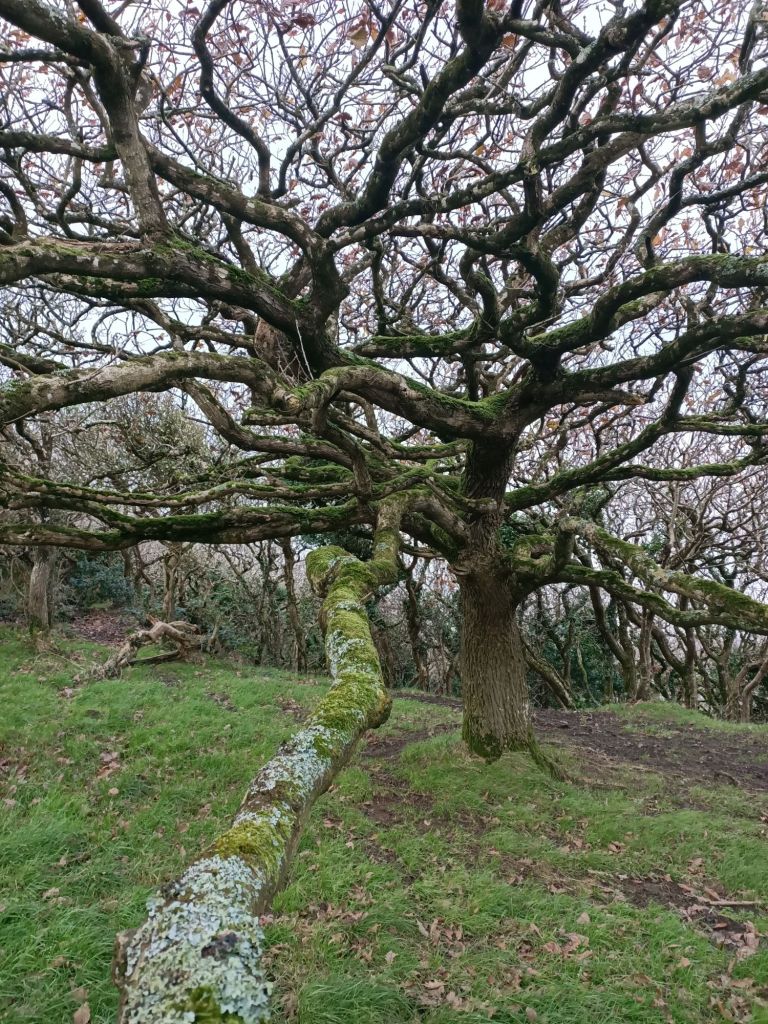
Gnarly twisted oaks

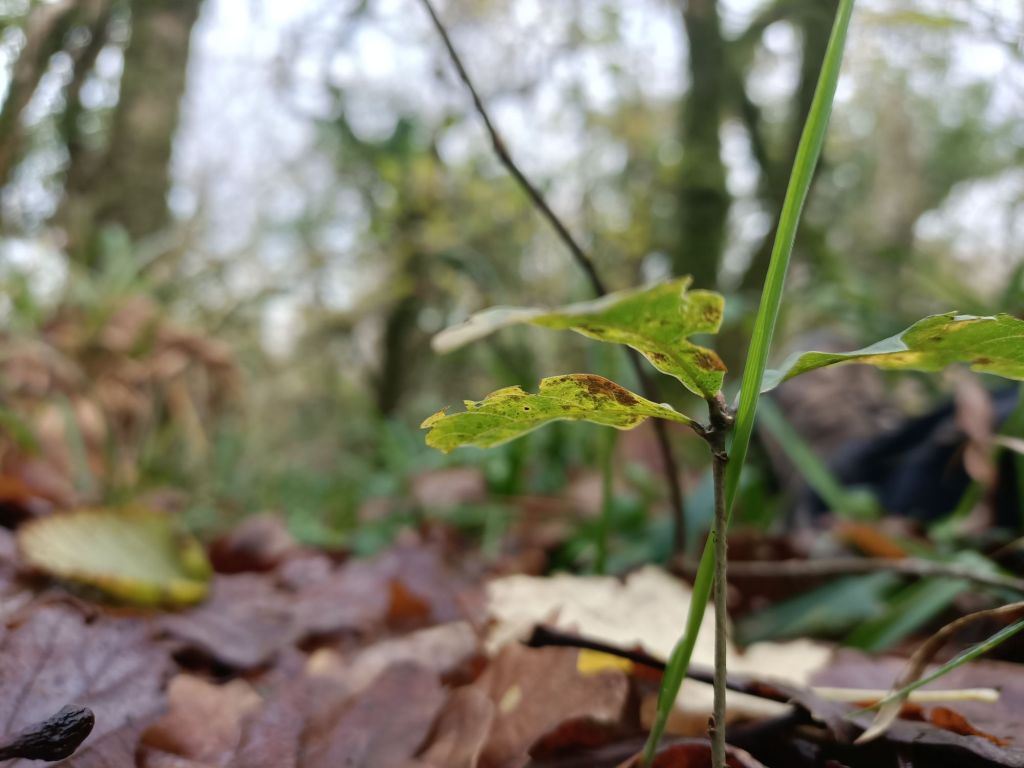
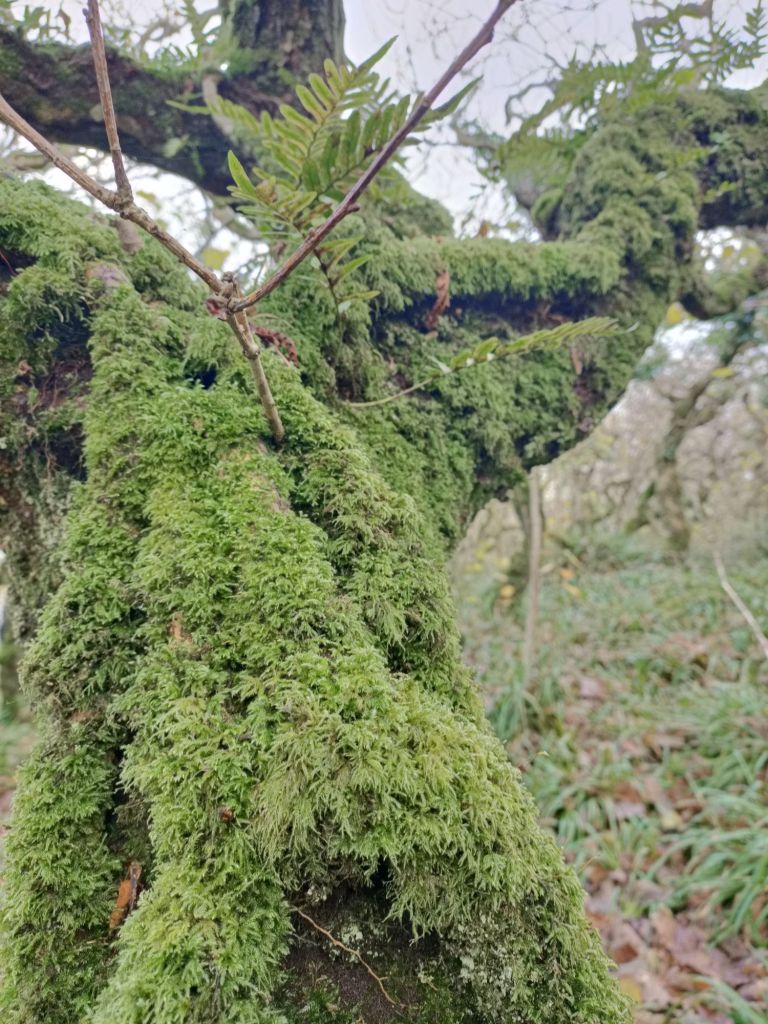
We tread slowly and carefully, checking for any new life popping its head up through the thick soft carpet of fallen leaves, and wander in wonder at the tree branches coated in velvet green mosses.

An oak sapling springing forth under the canopy of its relatives
Thickly blanketing moss

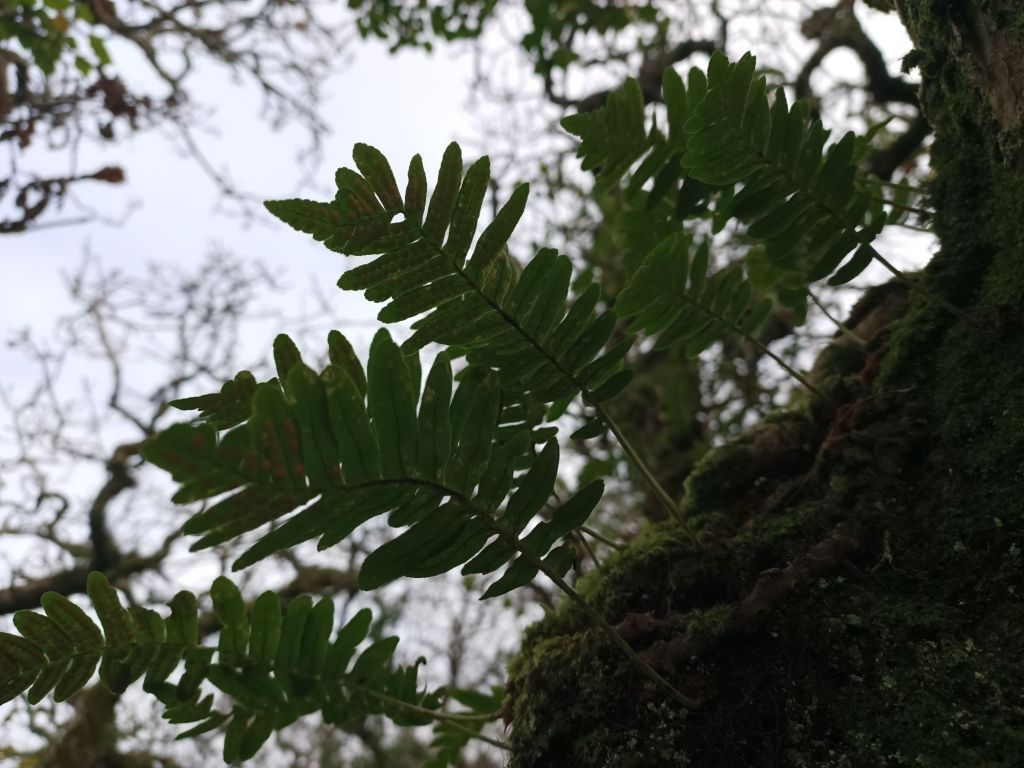
Epiphytes are abundant: mosses, lichen, fungi, polypody ferns and tiny creatures nestled between; it’s life on life on life.

Lobaria pulmonaria (Tree Lungwort)

Hhmm… Looks like Auricularia auricula-judae (Wood Ear)
Polypody ferns
Life on life on life

These strange and stunning woodlands are essential in our fight to prevent further climate warming, as they sequester and store atmospheric carbon.

The Woodland Trust states: “The entire woodland ecosystem plays a huge role in locking up hundreds of millions of tonnes of carbon, including the living wood, roots, leaves, deadwood, surrounding soils and its associated vegetation.” 

There can be no just reason for destroying any healthy tree, whether ancient, veteran, rural or urban, wouldn’t you agree? 🙂🌳

Temperate Rainforests and Ancient Woodlands: a visit to Cabilla

Quercus petraea festooned with epiphytes

When we were offered a last minute opportunity to visit Cabilla, the  temperate rainforest on Bodmin Moor, we jumped at the chance. 

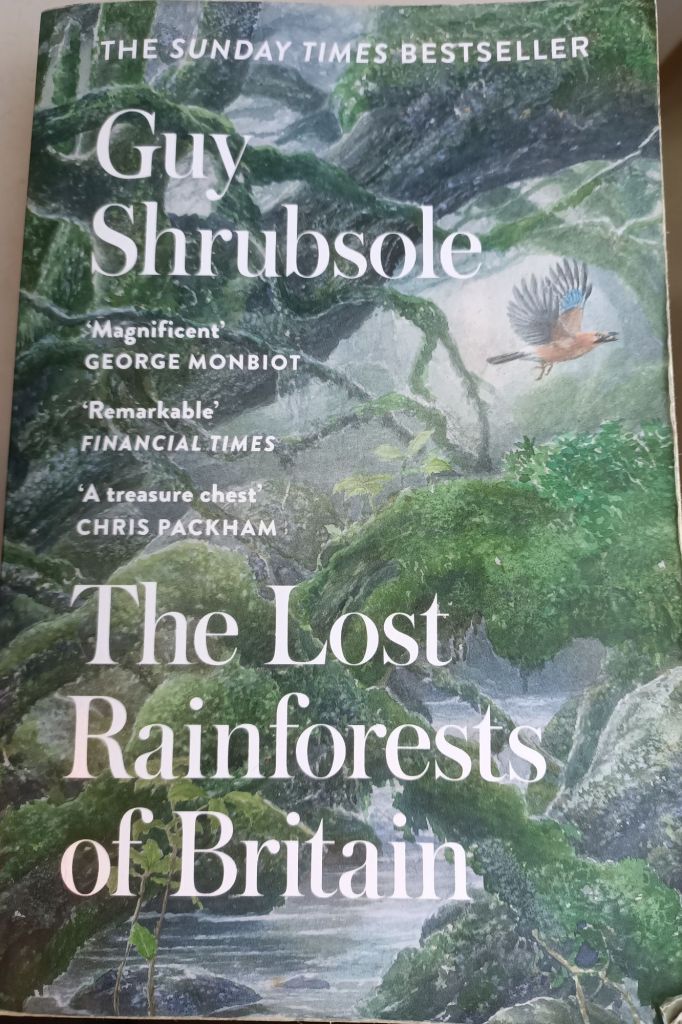
Despite appearing in the same book, The Lost Rainforests of Britain, by Guy Shrubsole, we had never experienced this ancient woodland environment or met its guardian, Merlin Hanbury-Tenison and, so, off we went.

     Rebel Botanists: pps. 46, 68; Cabilla Rainforest: pps. 227-232

When we think of rainforests, our thoughts usually go to the hot, humid tropical rainforests, near the equator, of which the Amazon is the largest. However, only recently has the spotlight shone on the temperate rainforests, also known as Celtic or Atlantic rainforests because of their geographic locations.  Most of the western coasts of Britain and Ireland were once covered in lush temperate rainforest but now, due to human devastation, only isolated fragments remain. On a global scale, they are rarer than tropical rainforests, with less than 1% remaining.

The specific wet, warm conditions for this lush habitat to exist are ideal for lichens, mosses and fungi, many of them rare species across the world, which co-exist with sessile oak, holly, hazel, rowan, ash, willow and birch trees. To visit such a wealth of wonderful wildlife was really exciting.

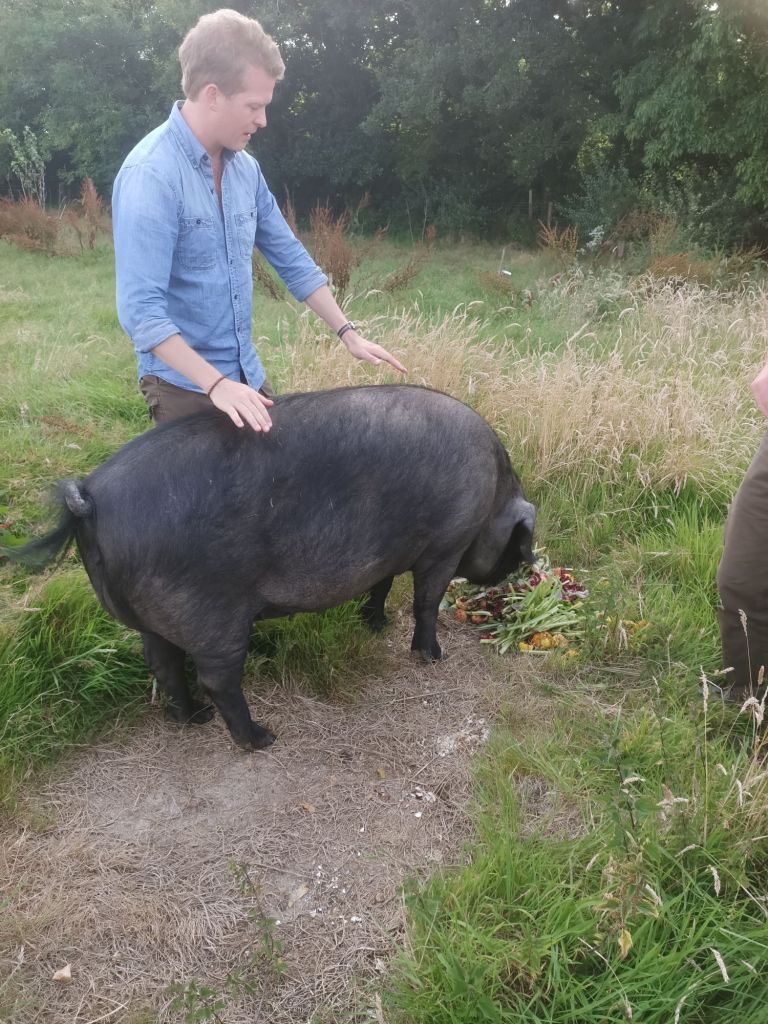
We walked from the meeting point, at the moorland upland farm, where we were greeted by Gloria, a very friendly Large Black pig, also known as a Cornwall Black. This breed is endangered, almost becoming extinct in the 1960s. Gloria was clearly very happy and healthy, enjoying our attention.

Merlin providing Gloria a very delicious lunch and affectionate back scratches

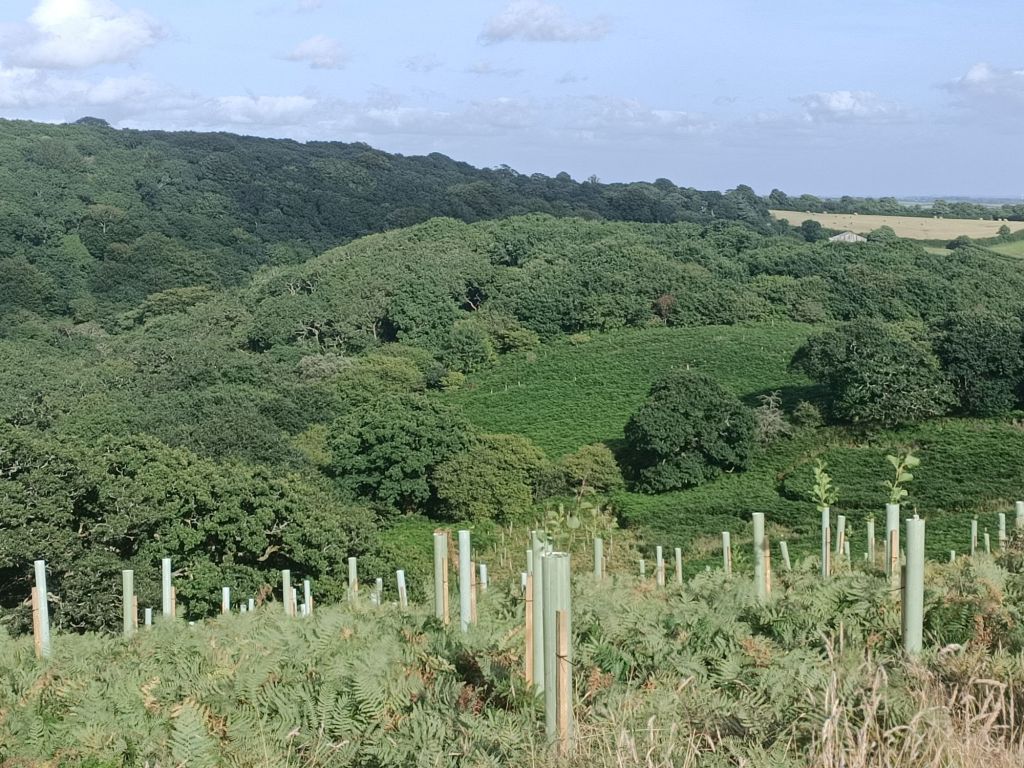
We passing by thousands of tree saplings, on land once given over to grazing. This is part of Merlin’s thousand year project designed to accelerate the establishment of a celtic rainforest habitat by factoring in the distribution of various tree species.

At the top of the valley, trees are being planted to extend the woodland – this is planning a thousand years hence

As we descended down into the valley, we entered a broad-leaved woodland, which provided pleasant shade from the hot sun. Bracken fern (Pteridium aquilinum) stood like a mini woodland below the swirling arms of the trees above; the leaves playing in the glinting sunlight.

A forest of ferns within a forest of trees

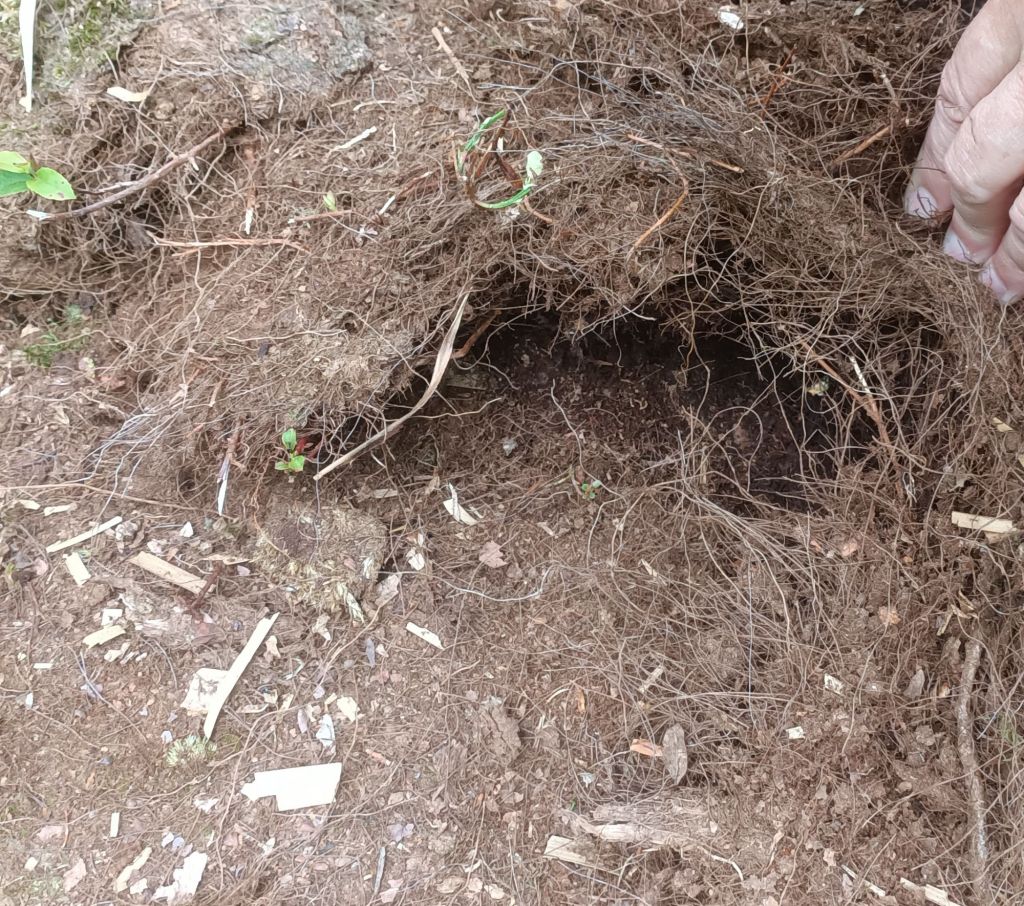
Our walk continued, and we sensed the air changing: becoming more humid, heavy and bringing different smells.  The soil became spongy underfoot and, on investigation, visibly comprised a vast interconnected mycorrhizal network, which resembled a thick matted carpet.

A layer of thick matted soil on the underlying rocky substrate – the interconnected mycorrhizal network quite visible

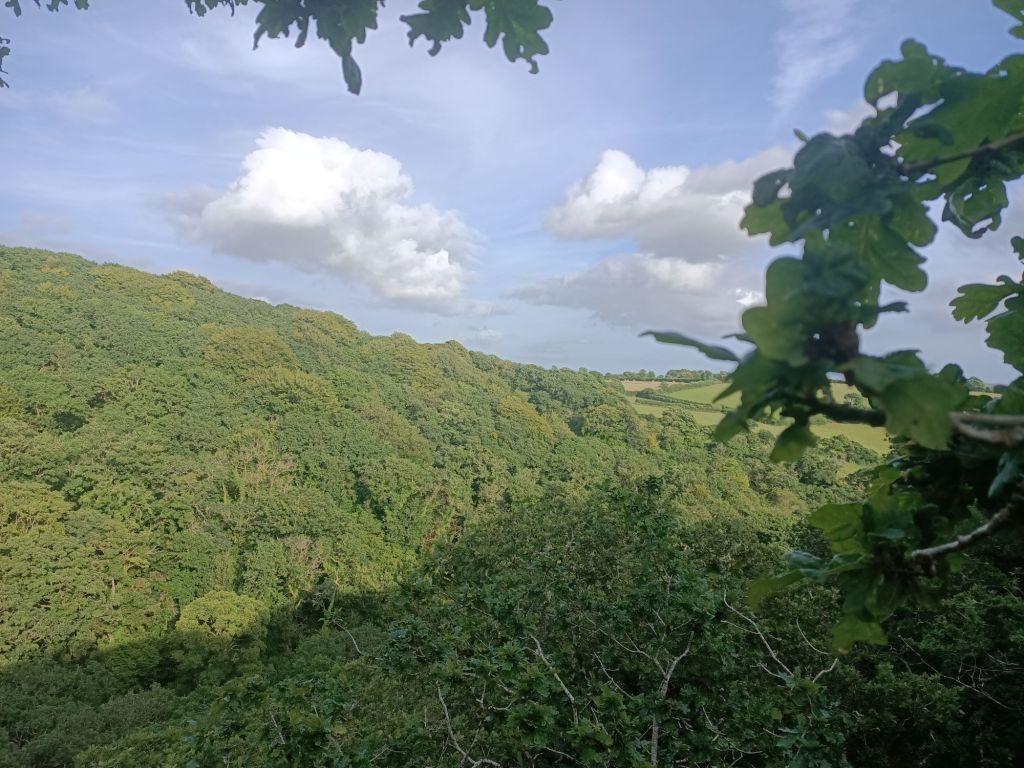
This was most evident when we stopped to take in the view on top of Cabilla Tor, a granite outcrop synonymous with moorland geology, looking down to the Bedelda River, a tributary of the River Fowey.

View across the valley from Cabilla Tor
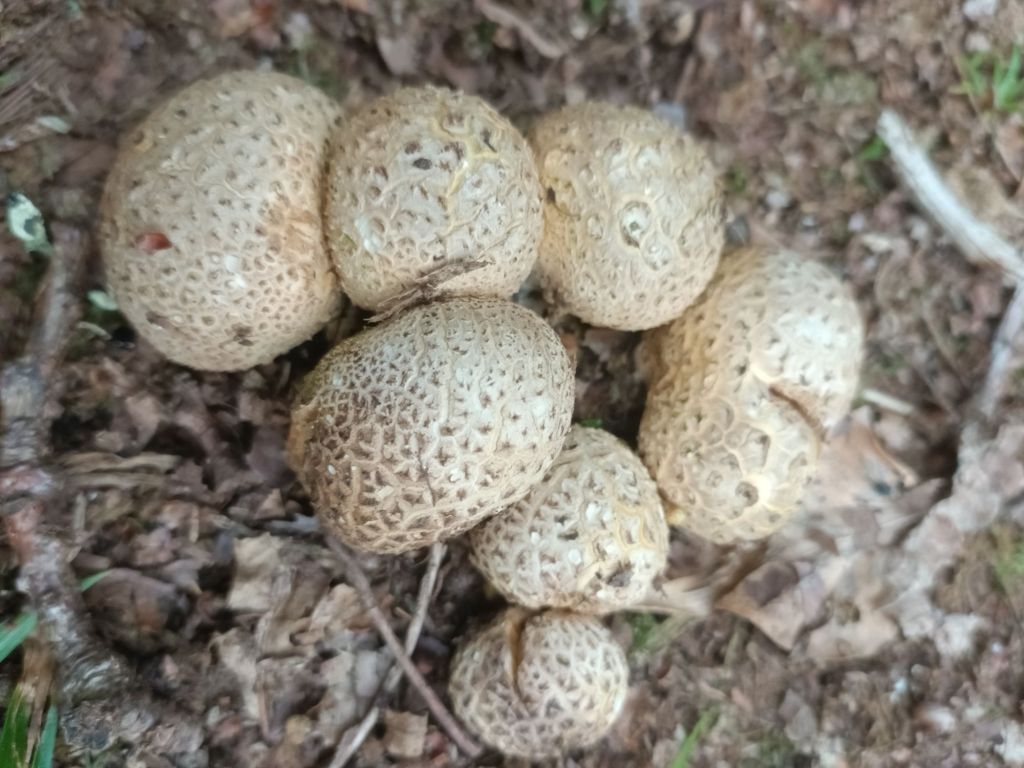
Fruiting bodies of a huge underground fungal network

German forester, Peter Wohlleben, dubbed this network the “woodwide web,” as it is through the mycelium that trees “communicate.”  This network is made up of tiny threads of mycelium, which is a fungal network, enabling every tree and plant to communicate as a supportive community. They not only communicate warning signals but share nutrients, carbon and water. If only human communication systems were as efficient…🤔

As well as the presence of the hundreds of tiny entangled threads of mycelium in the soil, the woodland was carpeted with Woodrush (Luzula sylvatica) and Bilberry (Vaccinium myrtillus).

Woodrush and Bilberry on the forest floor

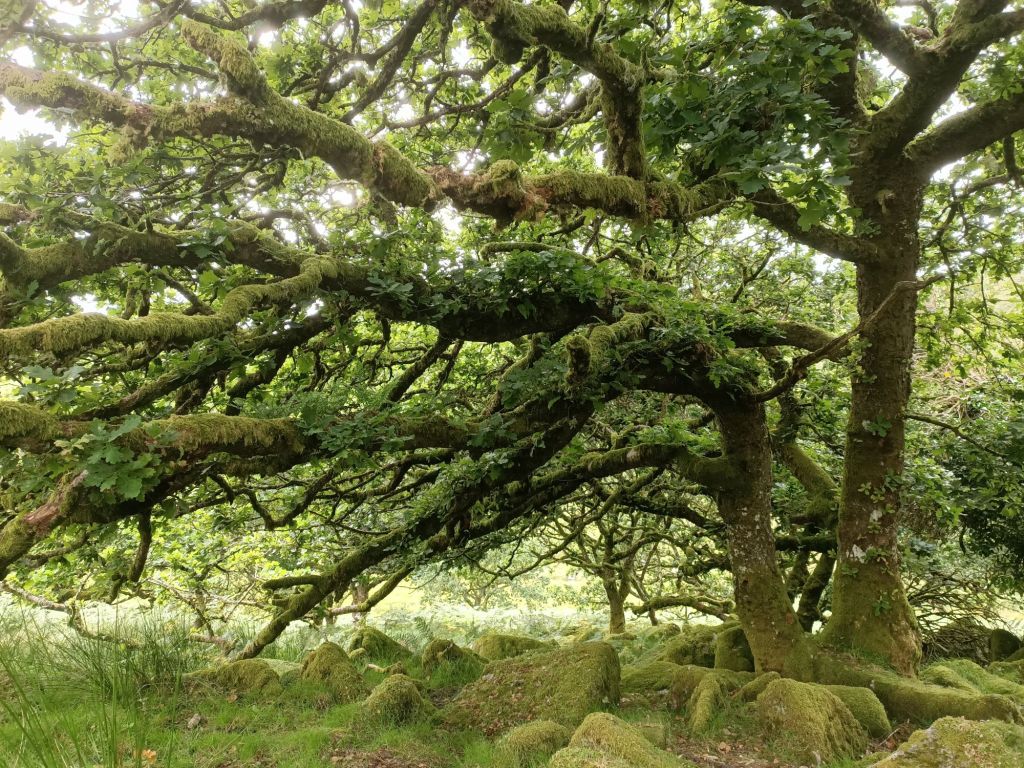
Bryoria (Horsehair) and Usnea (Beard) lichens hang like mysterious, forgotten Christmas decorations from the gnarled tangled branches of the Quercus petraea (Sessile oak) species. These oaks predominate and the low lying twisting structure is indicative of being in a temperate rainforest.

The branches covered in epiphytes: lichen and mosses

Petraea means ‘of rocky places’ which is the favoured environment of these ancient trees – rocky moorland. It’s hard to believe that areas like Dartmoor, Bodmin Moor and Exmoor in Devon were once thriving ancient woodlands until most of these trees were chopped down to make warships in the 18th century.  “HMS Victory at the Battle of Trafalgar, Nelson’s flagship is estimated to have required 6,000 trees, 90 per cent of them oak”.  Today, much of these moorlands appear as barren rocky landscapes due to the deforestation, and subsequent overgrazing by sheep and deer.  

Being in this rainforest was a sensorial delight: the thick velvety moss-clothed branches with a myriad of epiphytes growing on, around, down and up the embracing arms.  There was even a rowan tree growing out of a nook of a branch of oak which Merlin endearingly named “Mother Oak”.

Apparently, forty-six species of moss have been recorded (here) including the locally rare Atrichum undulatum and the first record for Cornwall of Pohlia muyldermansii

So what makes a temperate rainforest different from an ancient woodland? Would you know the difference if you found yourself in one of these?

“Ancient woods are areas of woodland that have persisted since 1600 in England, Wales and Northern Ireland, and 1750 in Scotland”.

This is the description as stated on the Woodland Trust site and many others, including the government website, so ancient woodlands are generally over 400 years old. Those between 150 and 300 years old are called veteran woodlands.  However, researching temperate rainforests dates is more ambiguous, as some pockets of rainforest have continued to exist for more than 60 million years!

To distinguish between them, we really need to think about what species are present, the soil content, the geology and geographical location, the air quality, the average annual rainfall and temperature. These factors determine the difference and walking through woodlands that are 400 years old and 4,000 years old, at Cabilla, revealed that difference.

Remember though, ALL woodlands are extremely important! Mature, well- established trees offer vital habitat for wildlife, they provide oxygen, offer shelter from the sun,  soak up rainwater, thereby reducing flooding and prevent soil erosion.

The Sessile oak supports 326 species of wildlife that we currently know of, and decaying wood left on the forest floor will support over 1800 species.

Woodlands exist in different climates and locations with different tree species. This in turn will determine other plants growing there and the pollinators that feed and habituate them. If woodlands were left to grow, rot and renew naturally then centuries of undisturbed soils and accumulated decaying wood (will) have created the perfect place for communities of fungi and invertebrates to thrive – plus, other specialist species of insects, birds, and mammals (which) strongly rely on them for survival. 

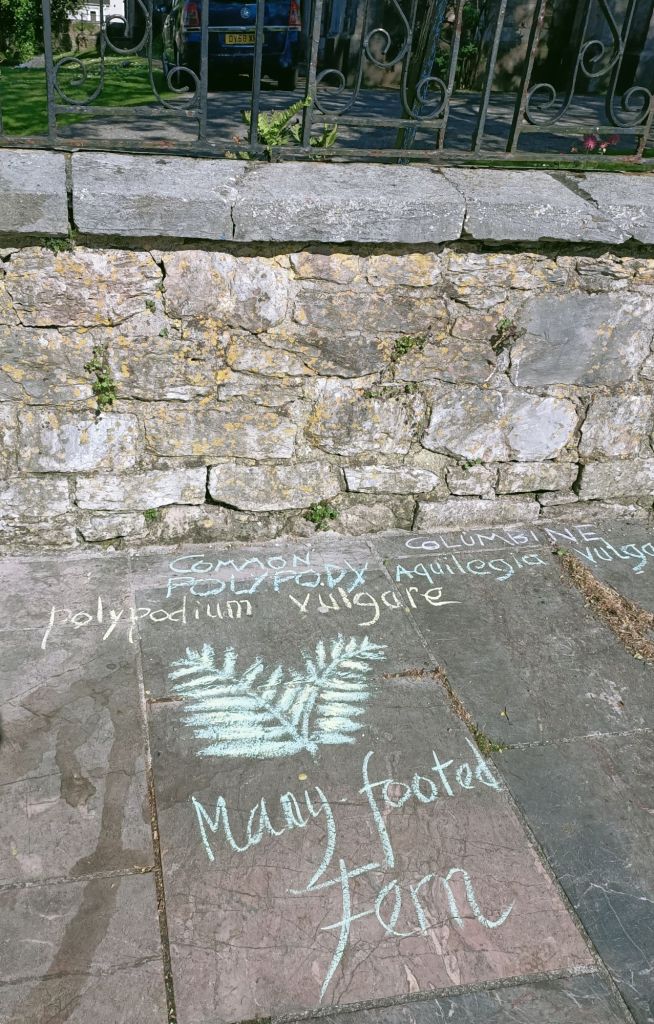
In conclusion, temperate rainforests, as the name suggests, need rain and the few fragments left can be found in areas where oceanic currents bring warm winds and torrential downpours…and Britain has some of the best climatic conditions. The trees, mainly oak, will be adorned with lichens and mosses with other epiphytes growing on them including: liverworts and polypody (many-footed) ferns. These bryophytes are believed to be the oldest living remnants of eukaryotic plants that colonised the land.

When woodlands age, they become rich in life, abundant in diversity and verdantly healthy environments – so let’s keep them that way  🙂👍🌳🌳🌳🌳🌳🌳🌳🌳🌳🌳

Making Connections

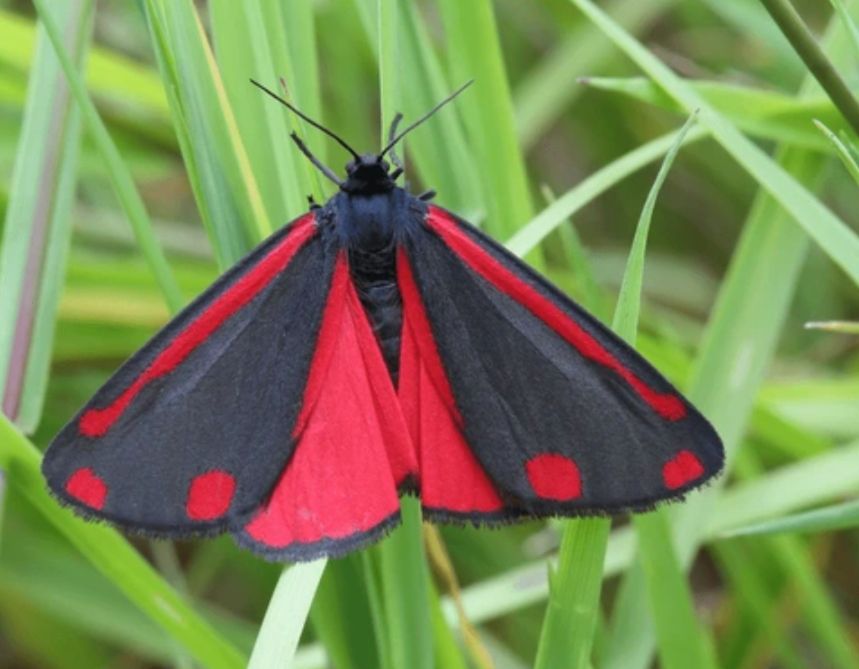
What connects Tyria jacobaeae and Eristalis tenax, or, I could say, what links Cinnabar moths and Common Drone flies?

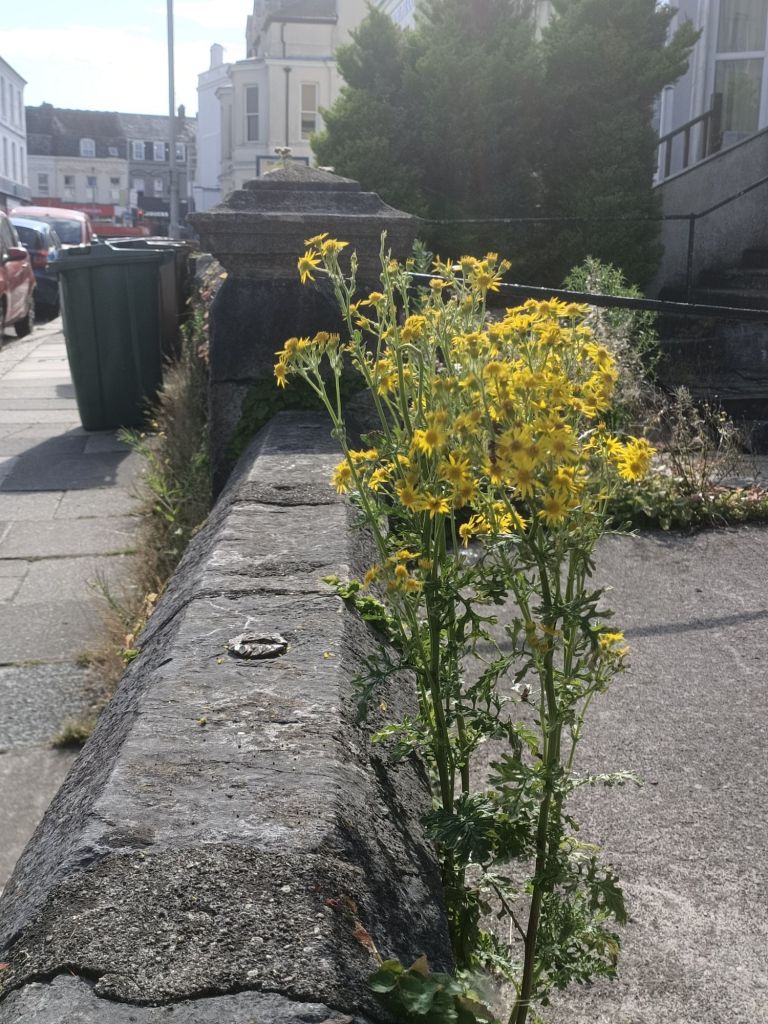
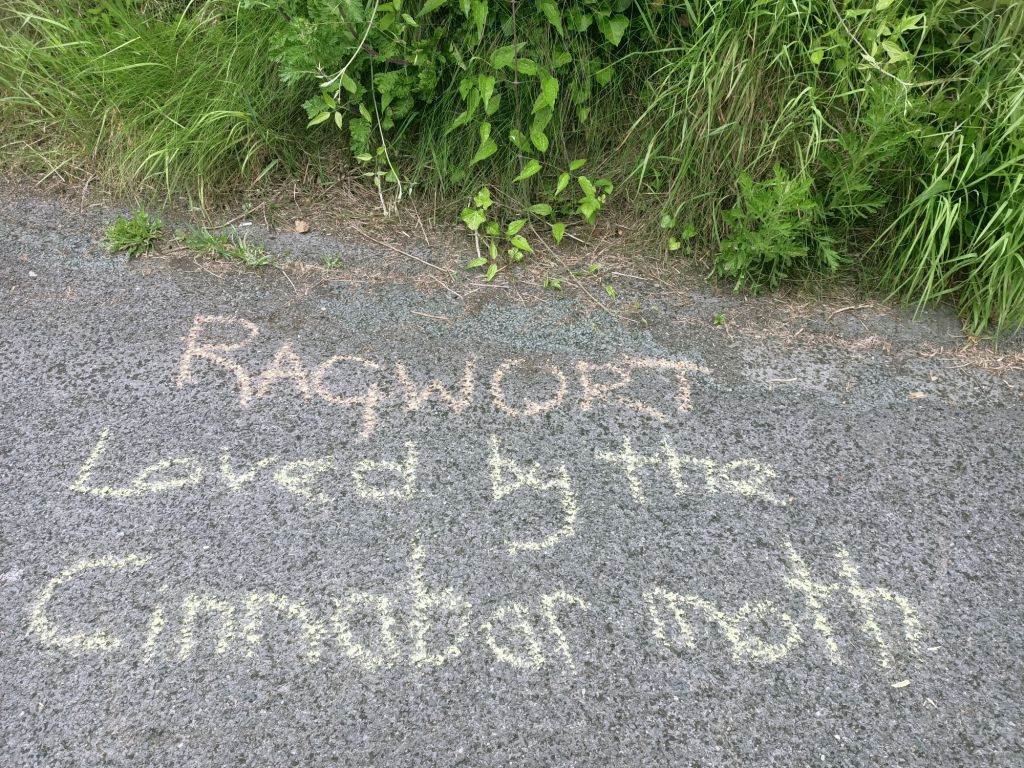
Well, as my photo evidences, the answer is Ragwort. This bright bunch of Ragwort flowers caught my eye, as I walked briskly from Mutley Plain, in Plymouth. But, what really caught my eye was the number of ‘woolly bears’ making a tasty meal of the petals, on just a small number of these wildflowers growing behind a low wall of someone’s front garden. 

Ragworts are in the daisy family, Asteraceae, and all these flowers are important to pollinators. We recently posted how valuable Ragwort is on so many levels, but with insects numbers significantly reduced, the most important factor has to be their benefit to wildlife.

With the Butterfly Count in full swing at the moment, I see and hear many comments lamenting how few butterflies we are currently seeing in this country – it is after all one of the most nature depleted in the world! 😞 Seeing the number of caterpillars on this plant gave me some hope, but it also emphasized the need that we all must do more to protect Nature by:

🌼 Reducing mowing – wait until early autumn when flowers will have seeded and young wildlife have fledged/grown.

🌼 Not using toxic pesticides which kill life below and above the soil – what’s the point of feeding birds and inviting insects if we are to poison them?

🌼 Encourage wildflowers in any space you can, no matter how small.

Moths are just as important as butterflies for pollination, and just look how beautiful the Cinnabar moth is in the above picture.

This is just a small outcrop of Ragwort along this road, but imagine if there was a while green corridor of life along this street and many more…🤔 It would be more colourful and supporting so many more pollinator lives. So go on, save a life and grow some wildness 🙂👍🦋🐦🐝🐞🪲🌳🌸🌼🌼🌼🌼

“Sweet April showers, do spring May flowers”

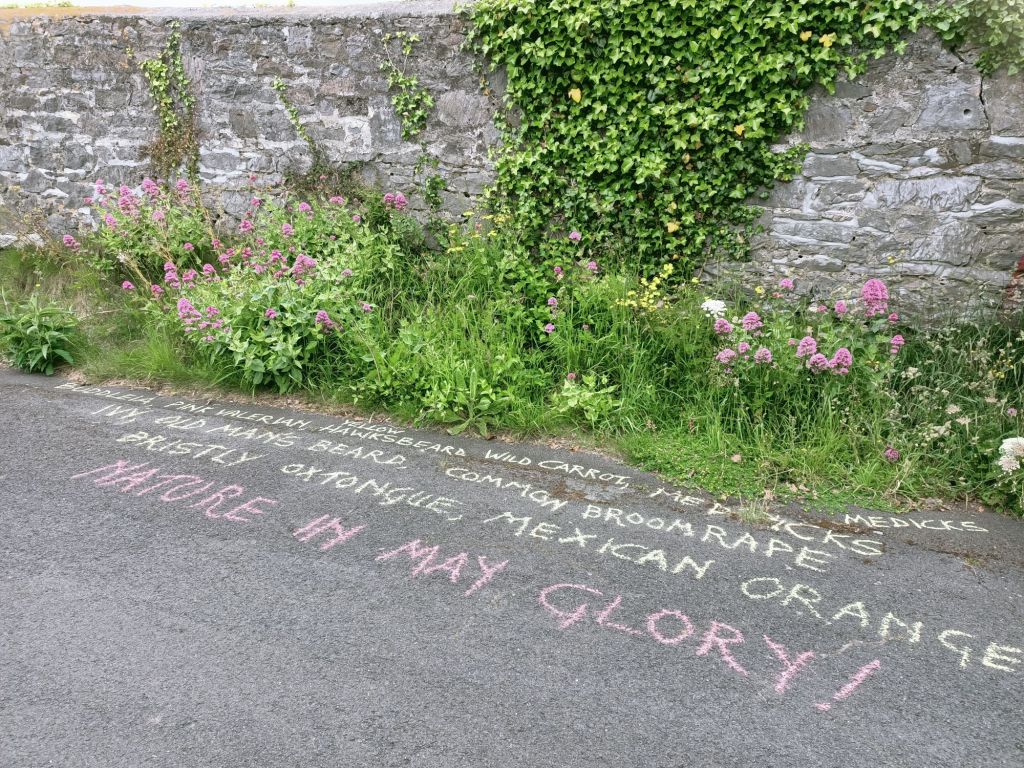
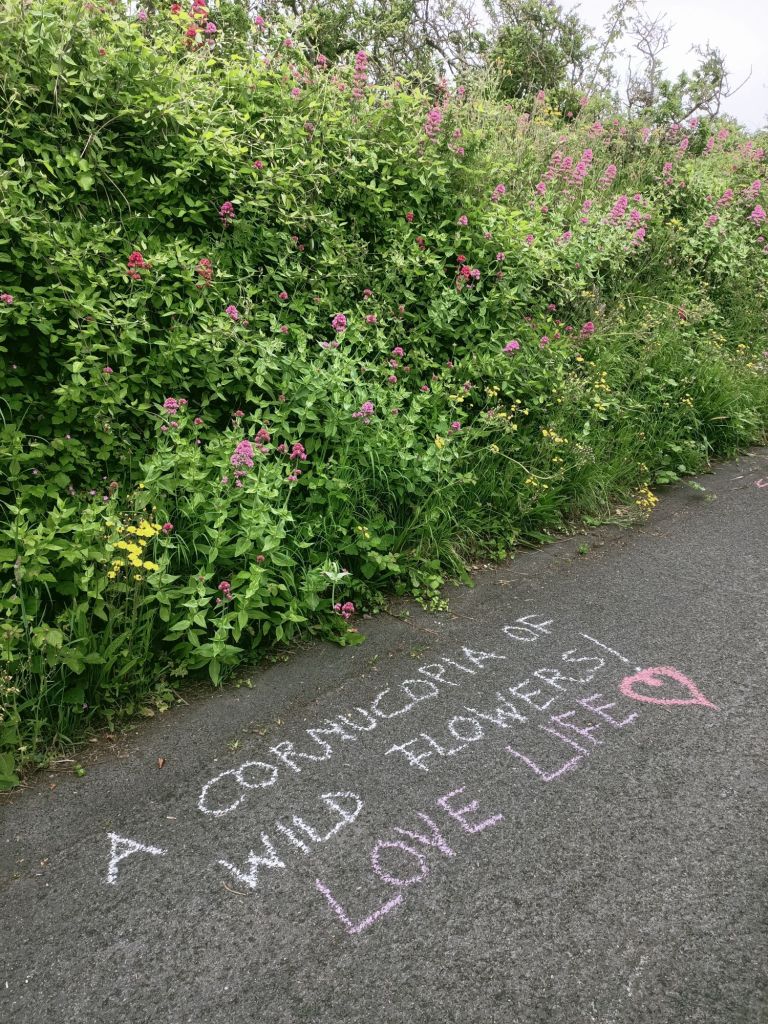
An array of wonderful wildness 🙂

This little poem, written in 1557 by Thomas Tucker, identified the seasonal British weather; although, I think we could all agree that, this year those “sweet April showers” were more like deluges at times!  Such is the effect of climate warming: less predictable and more dramatic.

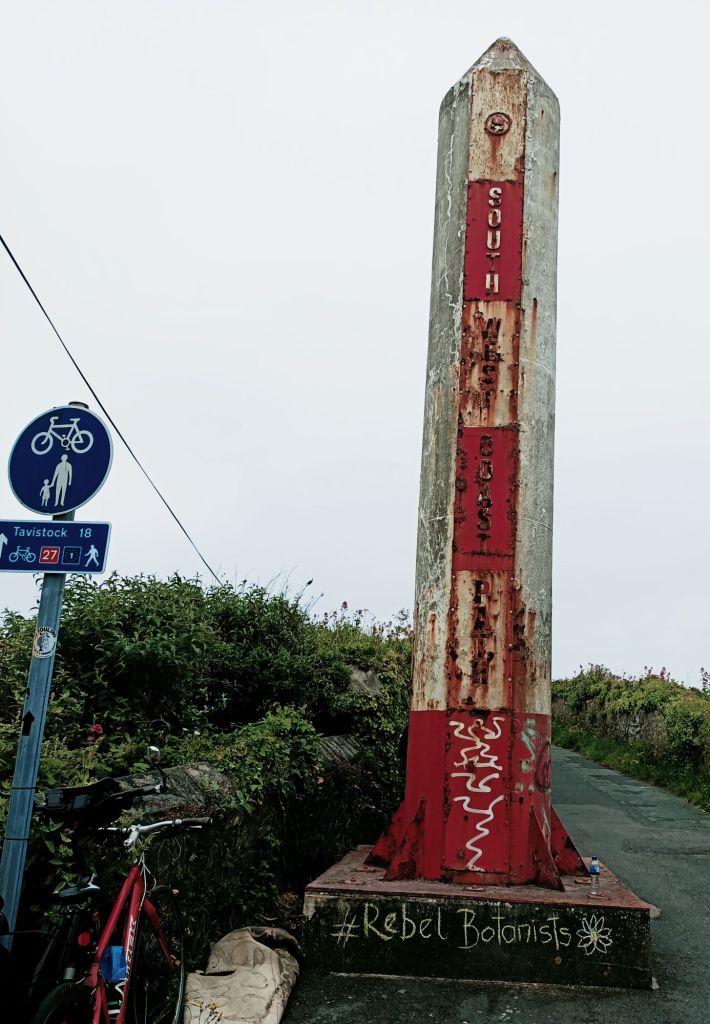
Today, with the May sunshine to warm us, we went for a short walk along the 630- mile Southwest Coast Path. It is the longest national trail in the UK, with free access to all.

Here we go! 👍
The coast path rocket blasted us off on our chalk and walk! Rather sad that someone had dumped an old carpet there.

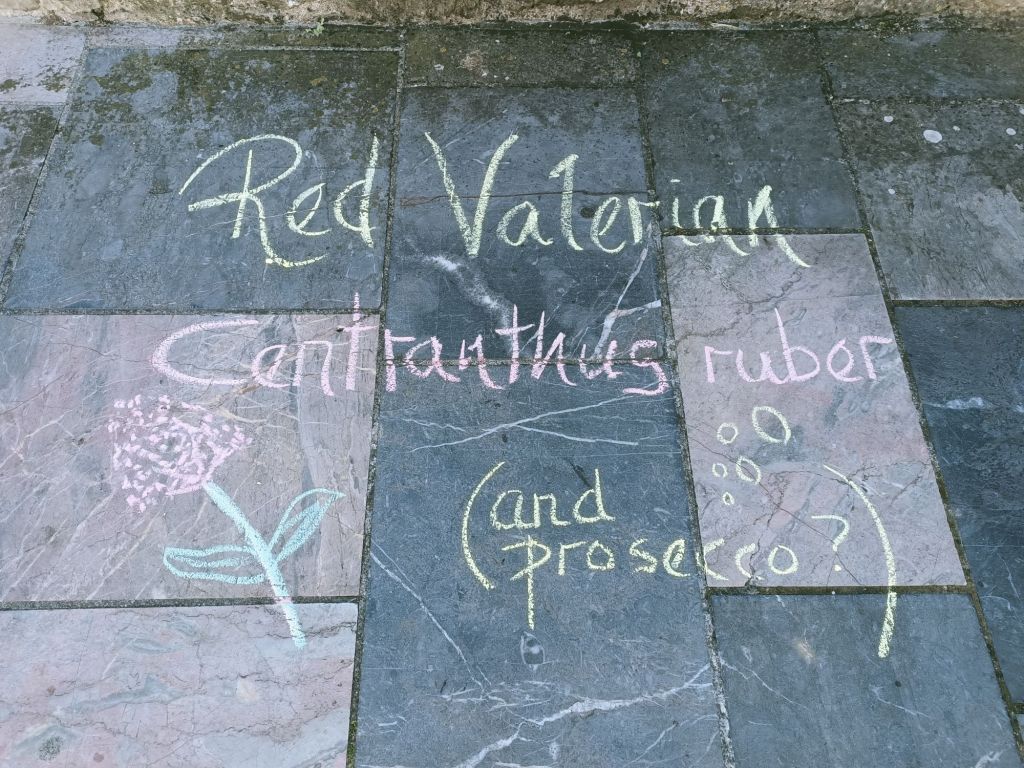
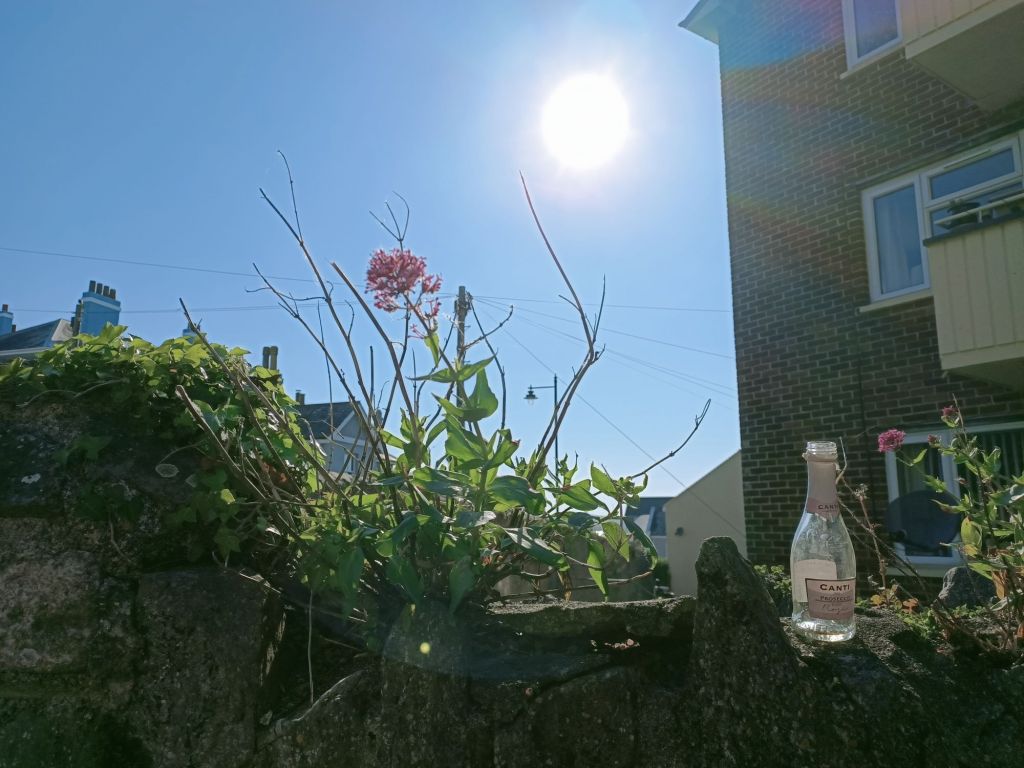
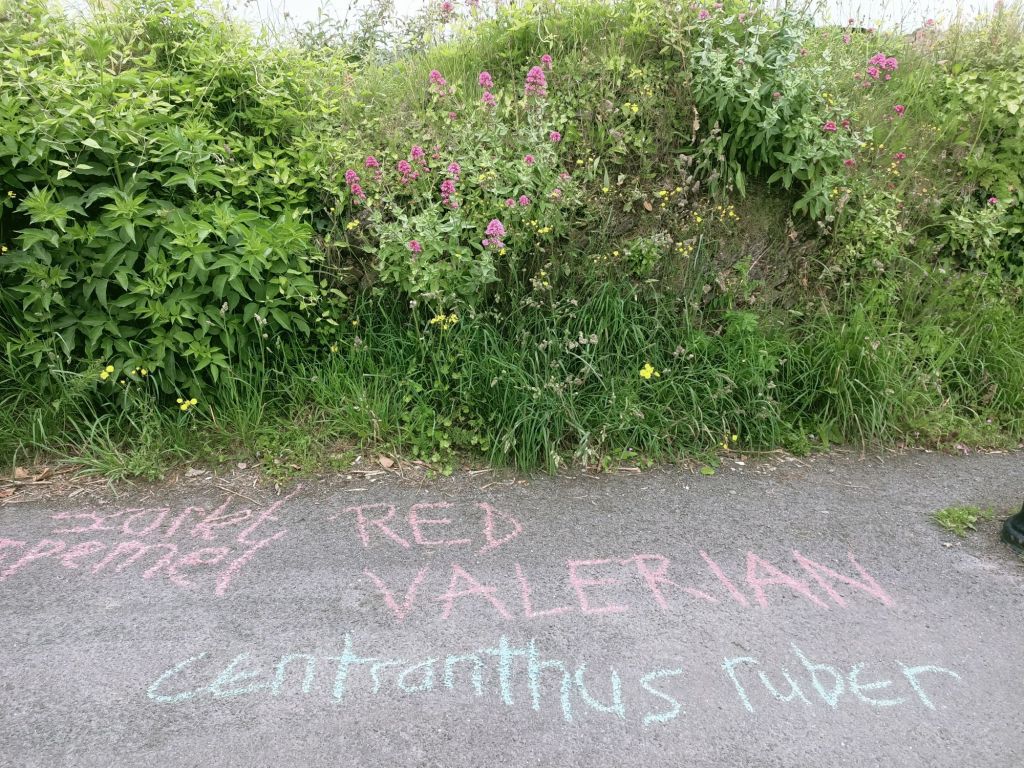
Red Valerian or Spur Valerian, Centranthus ruber, blooms flowers of red, pink and white. Although a non-native, it has established itself well with many pollinators.

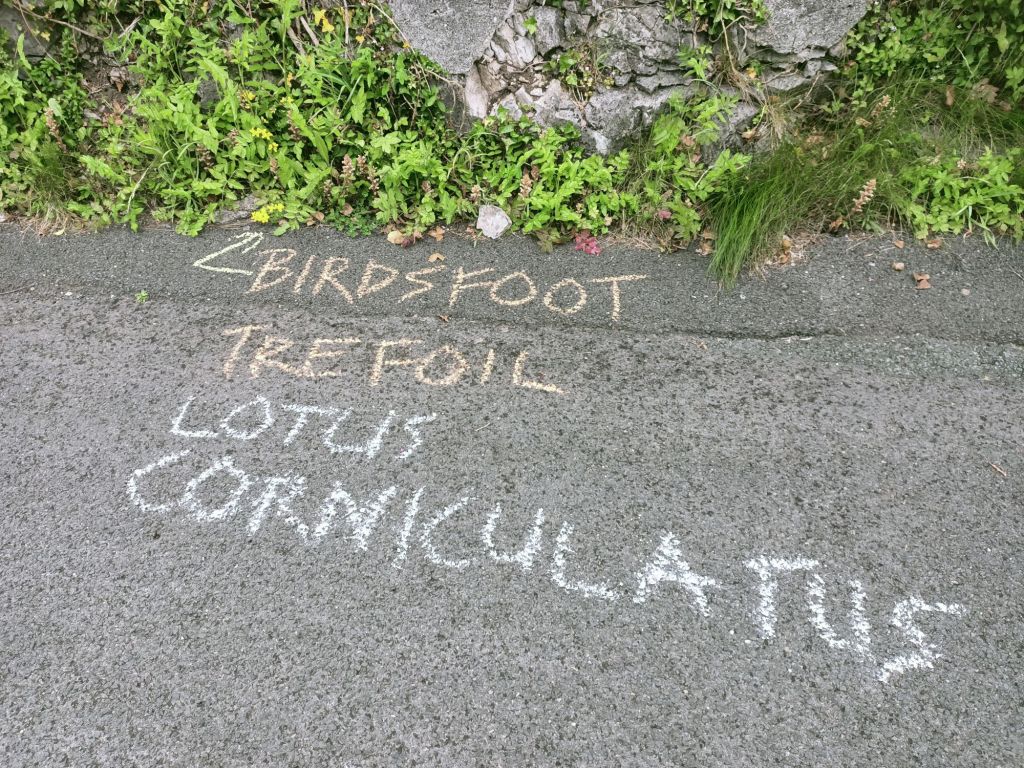
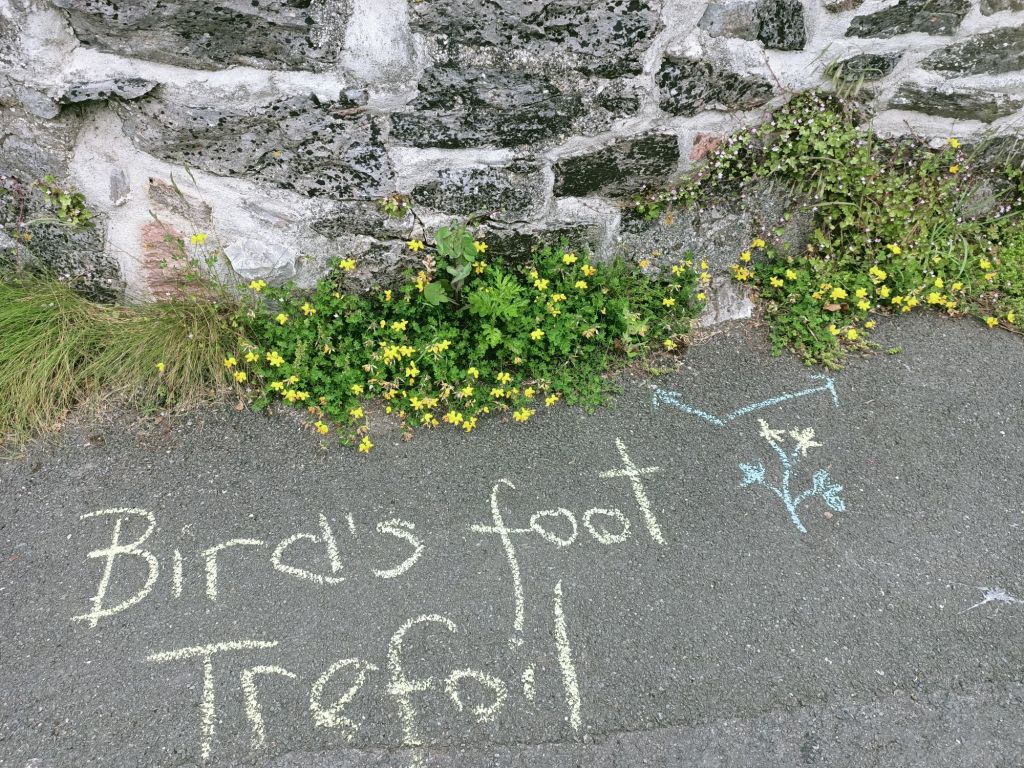
Did you know, as well as this species there is also another called Greater Birdsfoot Trefoil?

A widespread grassland native, it is also known as Eggs and Bacon or Tom Thumb. Get up close and take a look; the flowers are attractive in colour and design.

Umbilicus rupestris

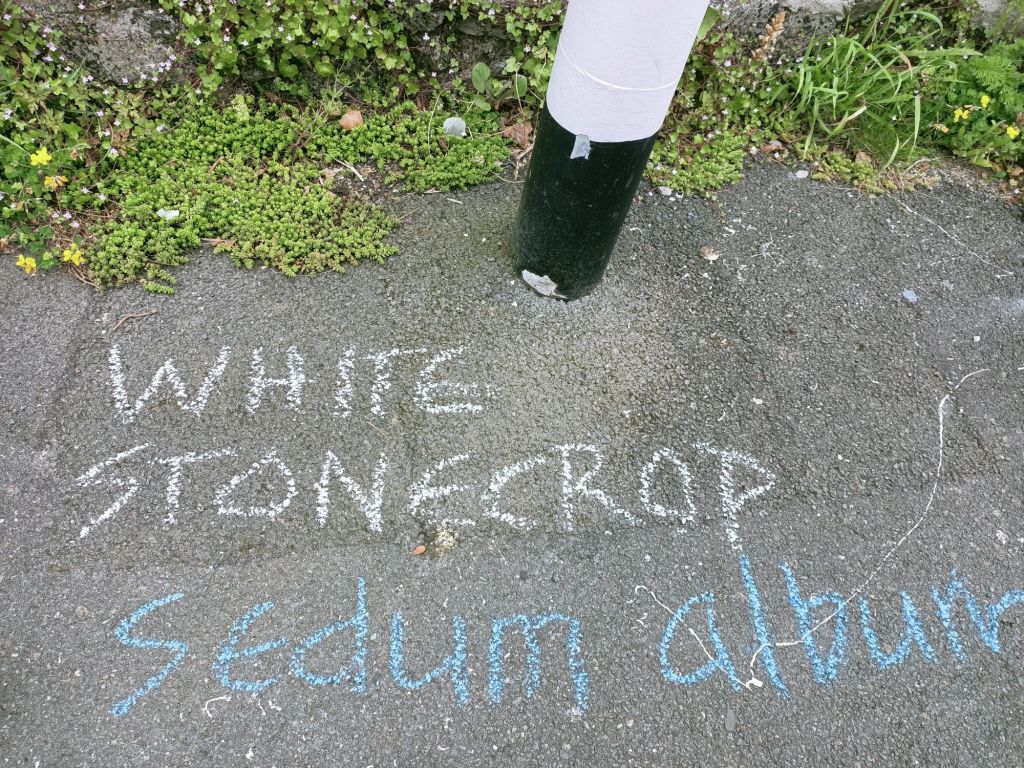
In the Stonecrop family, this plant is distinguished by its dimpled leaves. They are also known as Penny Pies.  Can you guess what our Rebel is starting to label?

A: Wild Carrot 🥕😁

Characterised by thick fleshy leaves 🍃

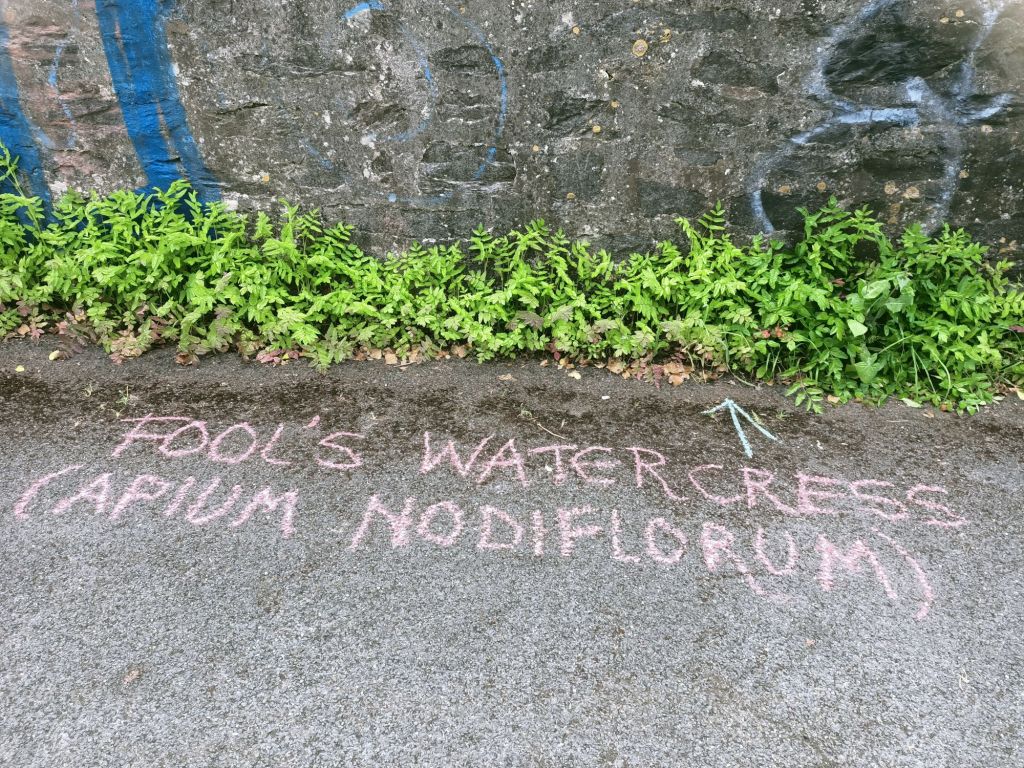
In case you are fooled into thinking it’s Watercress, no worries as it’s not poisonous, though probably not as tasty 🙂
Some lovely lichen and a view across Plymouth Sound to see Devon and Cornwall
A closer look at this Maritime Sunburst lichen
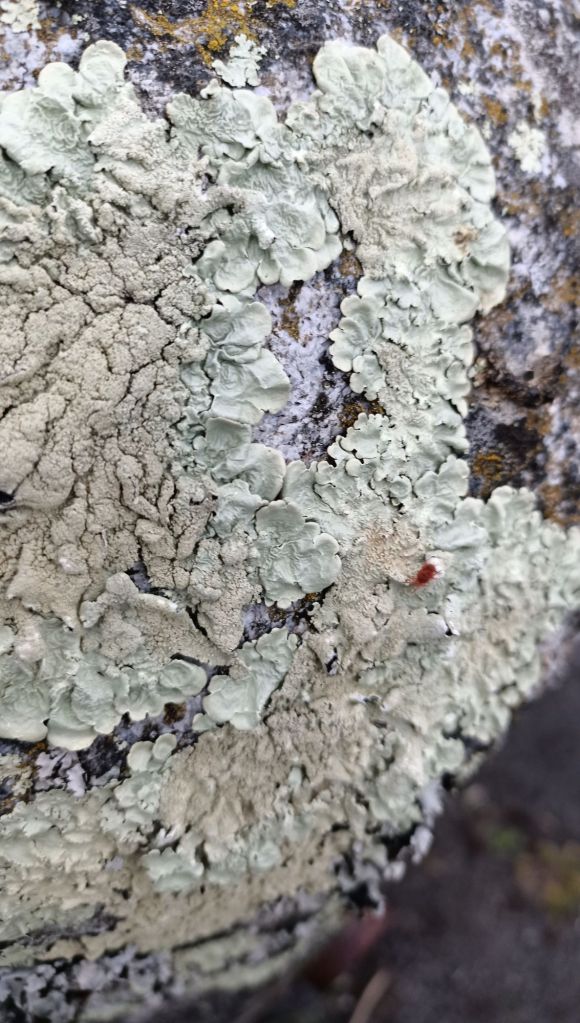
Let’s take a closer look at this stone post to see the Rock Green shield lichen 👀

Flavoparmelia baltimorensis

Our favourite 🌼🌼🌼
More recognisable when it flowers
A favourite food of birds and humans 😋
Look out for the Cinnabar moth with its distinctive red colouring
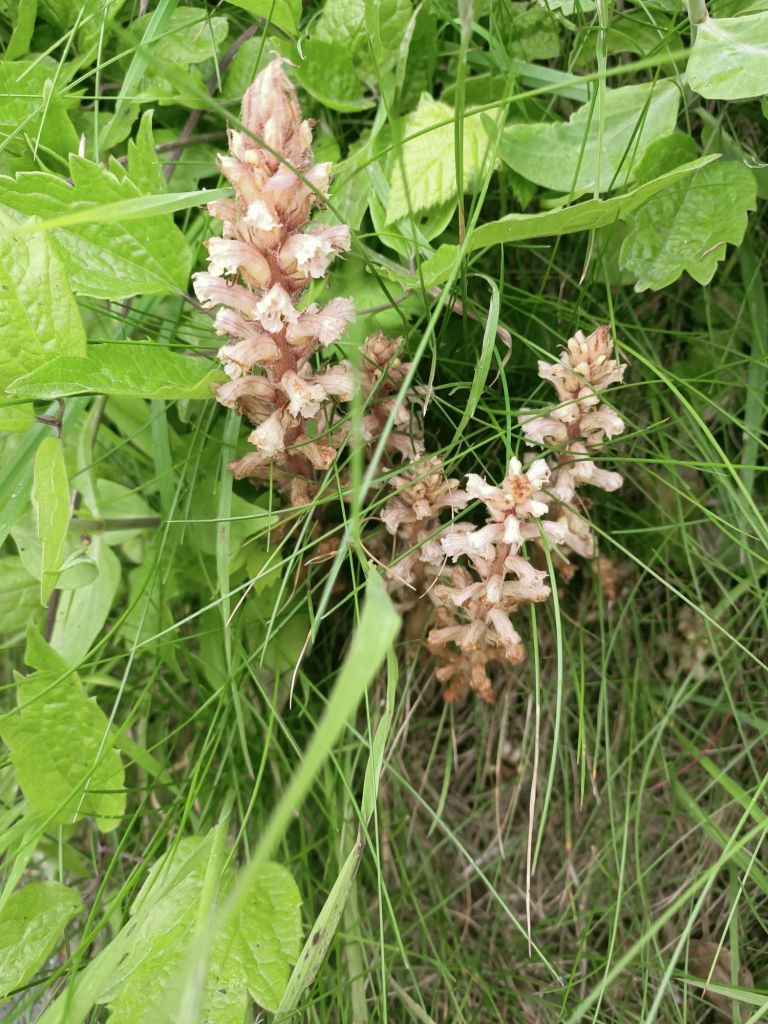
Orobranche minor

A close up of the Common broomrape – interesting how it gets its name, one for you to research.

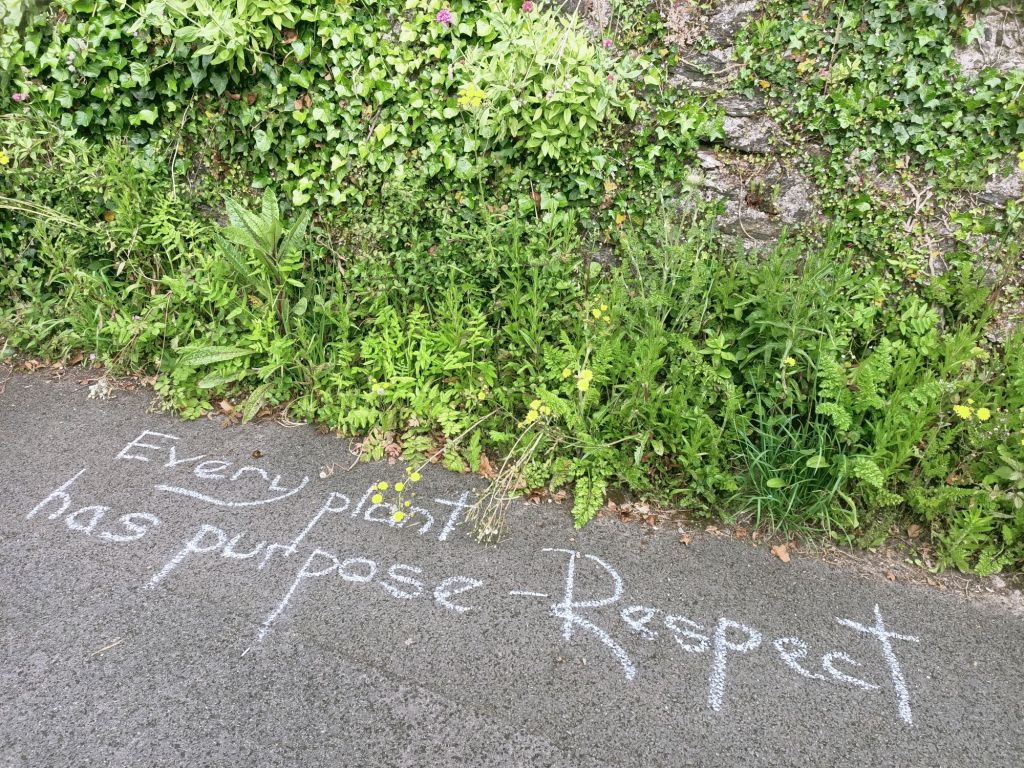
Every plant really does have a purpose!        In the highly complex and connected biodiversity network, that we, as humans, are still learning about, we do know that our existence depends upon them 💚🌳🌼
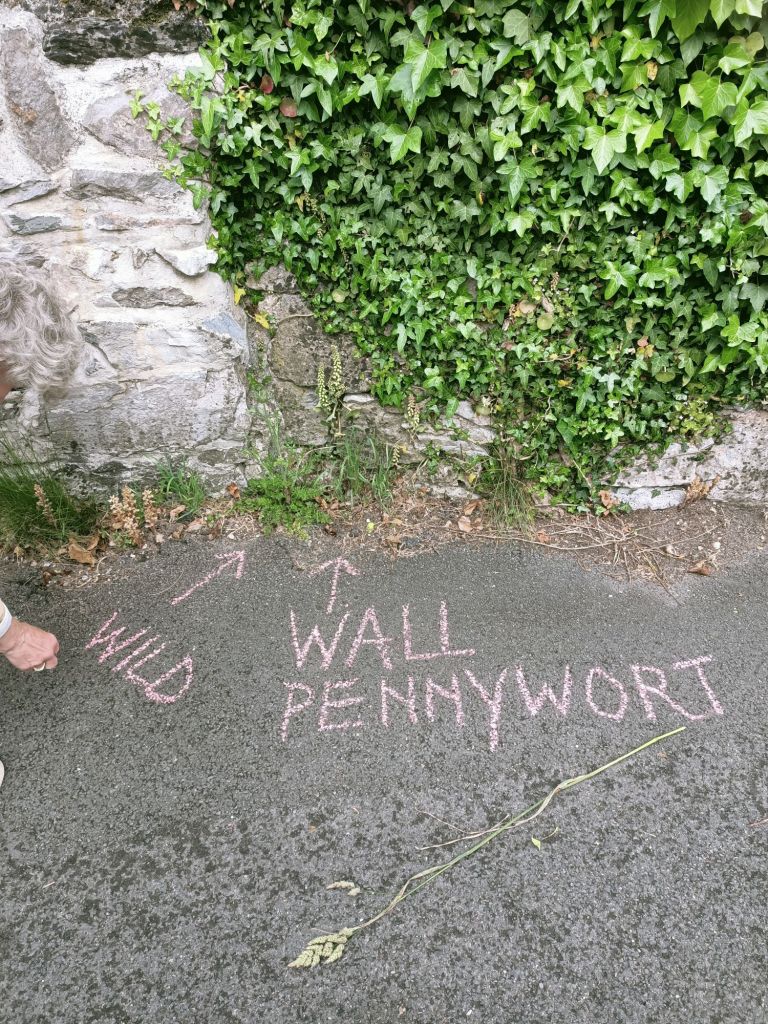
Aha, the elusive Scarlet pimpernel, Anagallis arvensis.
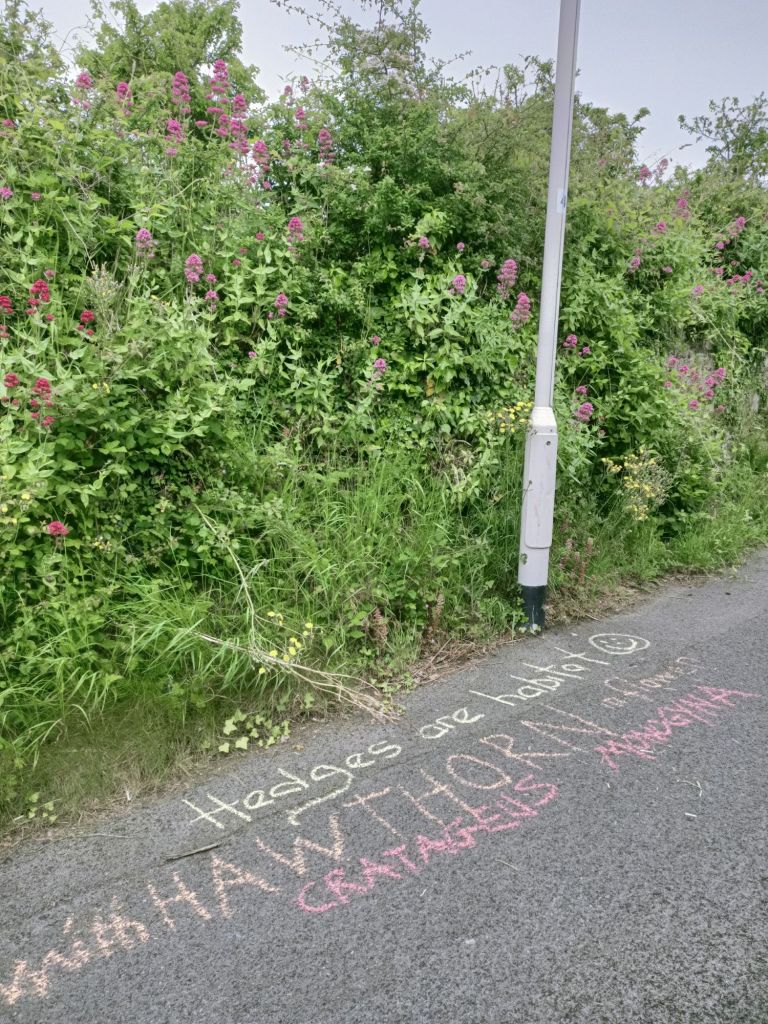
Allow your hedges to flourish – they are a haven for wildlife 🙂👍

This is one flower we saw. Can you guess what it is? 

A: Cymbalaria muralis 🙂

Thank you for reading this post. We hope you enjoyed it, as much as we loved doing it 😂👍🌼🌼🌼 See you next time.

Are you Brave Enough to be a Tree Hugger?

If you think tree huggers are ‘hippy- dippy time-wasters’ think again! This term is often, and incorrectly, used as a flippant pejorative, but it stems from a story of stunning defiance and vicious bloodshed.

The true etymology of this phrase comes from the courageous souls who laid down their lives to save the lives of others: the living, breathing and life-supporting beings that are  trees.

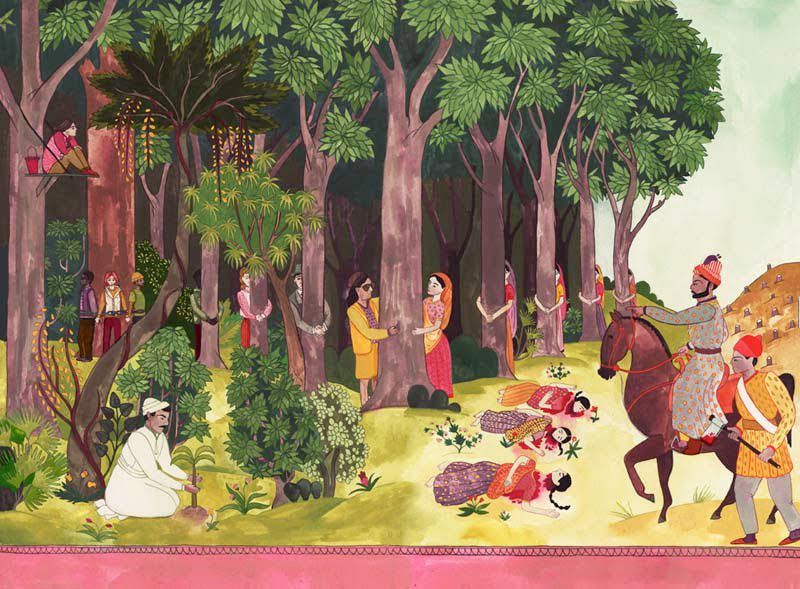
Amrita Devi and her three daughters were the first to be killed protecting their sacred Khejri trees (Photo: Cari Vander Yacht).

In 1730, 363 Bishnois people in India were brutally killed while trying to protect the trees, in their village, from being turned into the raw material for building a palace. They literally clung to the trees while being slaughtered by the soldiers.

From 1730 to present day, environmental peaceful activists are still fighting for the right to life for nature.

Amrita Devi and her 3 daughters were the first to die, by being beheaded, by the soldiers, sent by the King of Jodhpur to cut down the Khejri trees with their axes. Amrita ran to stop the felling when she realised what was happening. She hugged one of the trees to protect it from the blows and begged them to stop, but the soldiers took to violence and struck her with an axe. When her three daughters witnessed the brutality, they rushed and hugged the trees as well and were also killed. Word spread quickly around the village of Khejarli and others joined in, hugging trees in a nonviolent protest.  The soldiers continued to mercilessly kill the people, both young and old: a horrific massacre of caring people who died protecting their beloved sacred tree.

The Bishnois faith respects the sanctity of all forms of life and the non-killing of animals and felling of green trees.

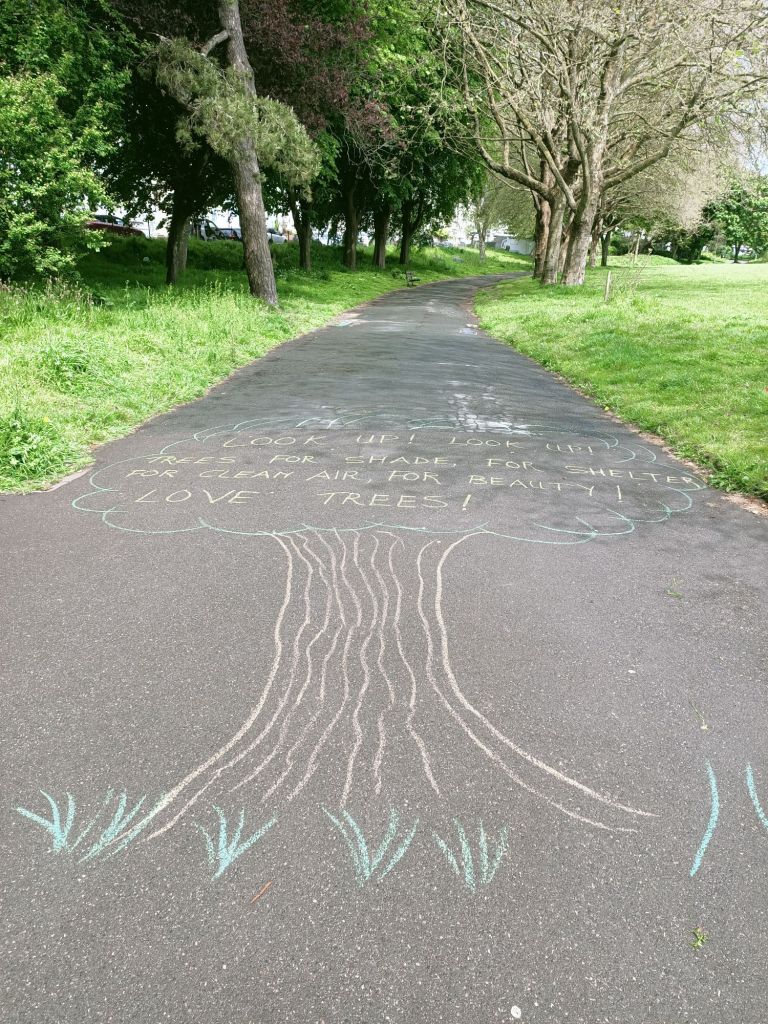
Look up! Look up! Trees for shade, for shelter, for clean air, for beauty! Love trees!

The Khejri tree (Prosopis cineraria) has adapted to withstand both frost and drought, and survives both high and low temperatures. It is known to improve soil fertility by supporting nitrate retention in soil and contributes greatly to the micro-flora in desert environments. A large and well-known example of the species is the Tree of Life in Bahrain: approximately 400 years old and growing in a desert devoid of any obvious sources of water. Living trees are far more valuable than dead buildings, don’t you think?

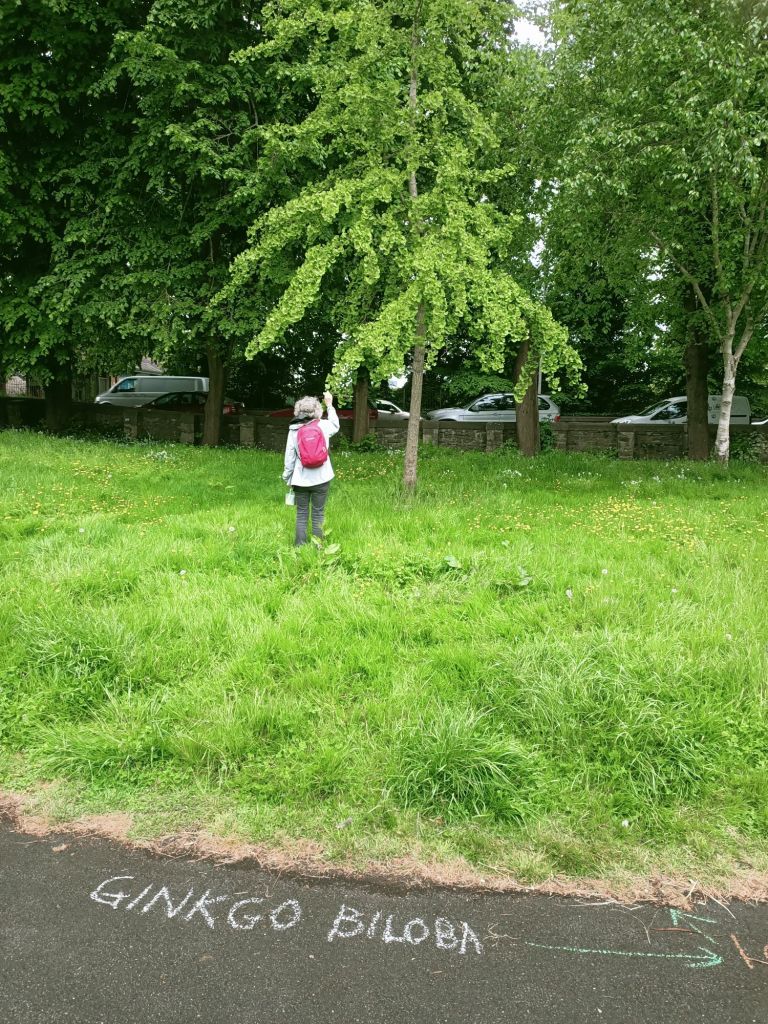
One of our Rebels admiring the leaf shape of the Ginkgo biloba; an ancient tree and the only species of its Genus to exist
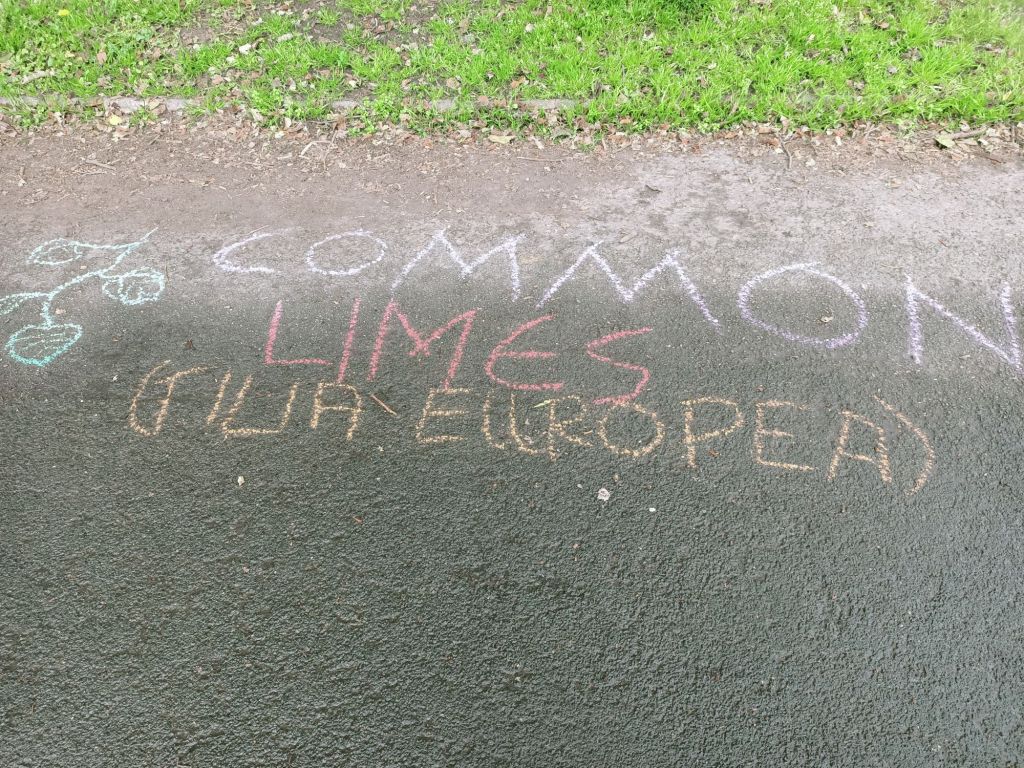
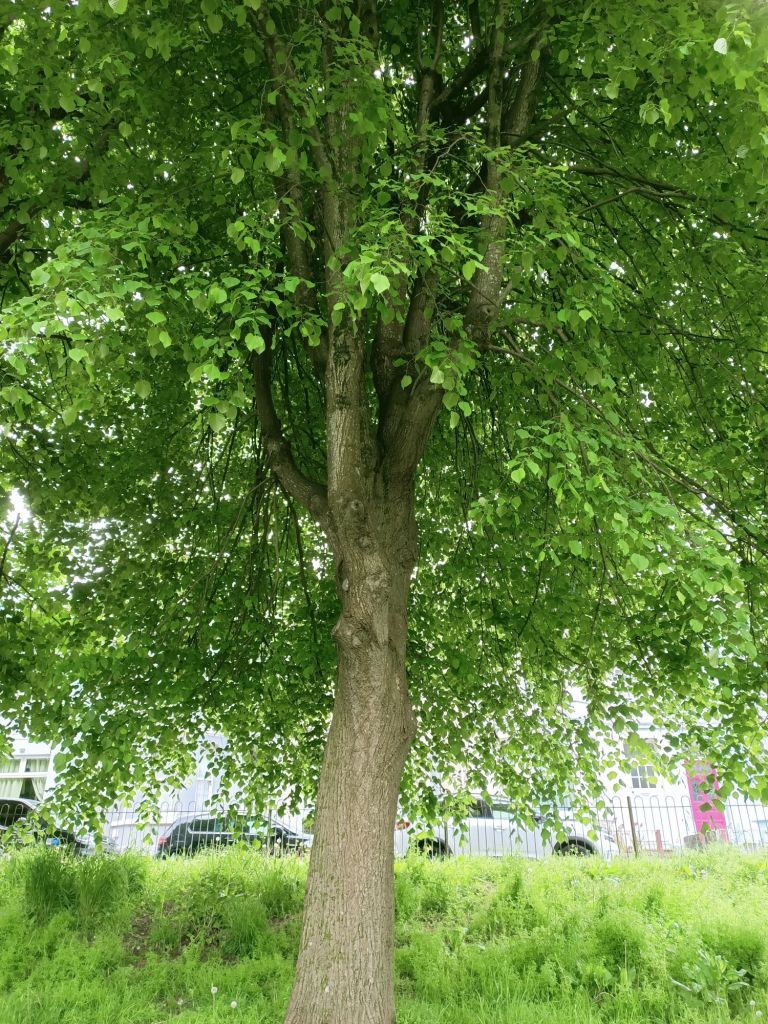
Lime tree: Tilia europea

The brave sacrifice of Amrita Devi and the villagers would have ripple effects 240 years later, in the formation of India’s most vibrant environmental movements called the Chipko Andolan, in the 1970s.
Chipko translates as ‘hugging’ and they represent a non-violent forest conservation movement, opposed to logging and deforestation.

From 1730 to present day, Rebel Botanists and chalkers repeat the action of Amrita and the villagers to show their respect and bravery in caring for trees today ✊🌳💚

Today, in Plymouth, we are supporting the Plymouth Tree People in this year’s festival. They are a volunteer run charity who, for 20 years, have been caring for, and planting, trees in Plymouth. They rightly state that trees “provide us with shade and shelter and a habitat for wildlife. Trees improve air quality, reduce crime and benefit our mental health”.

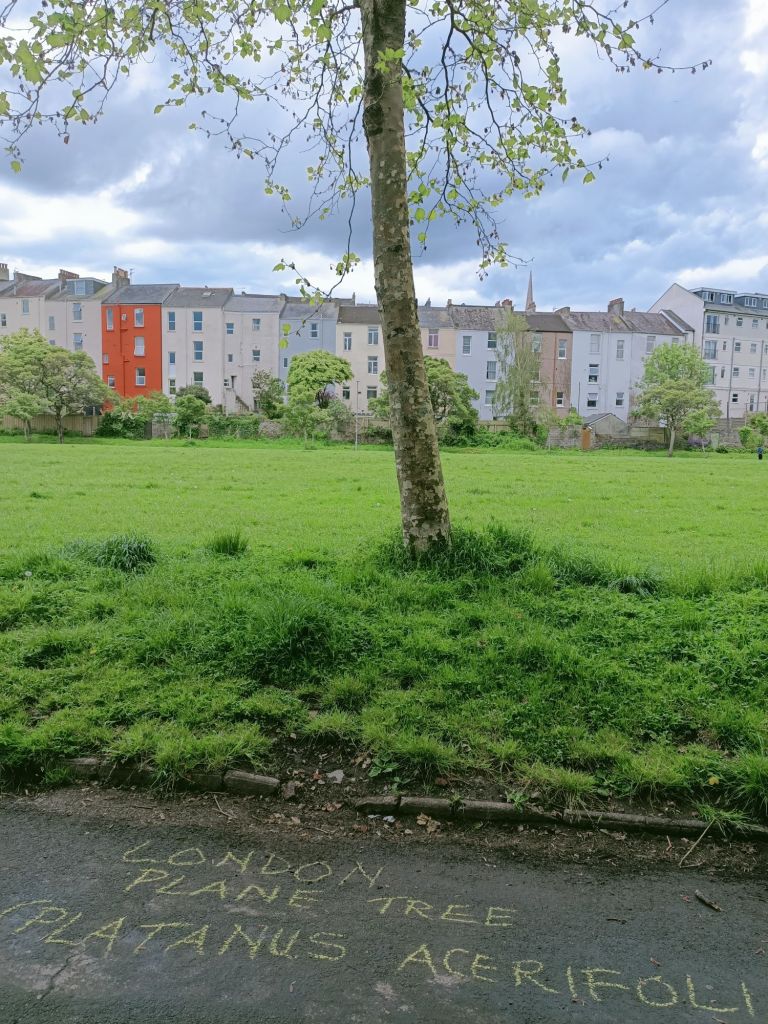
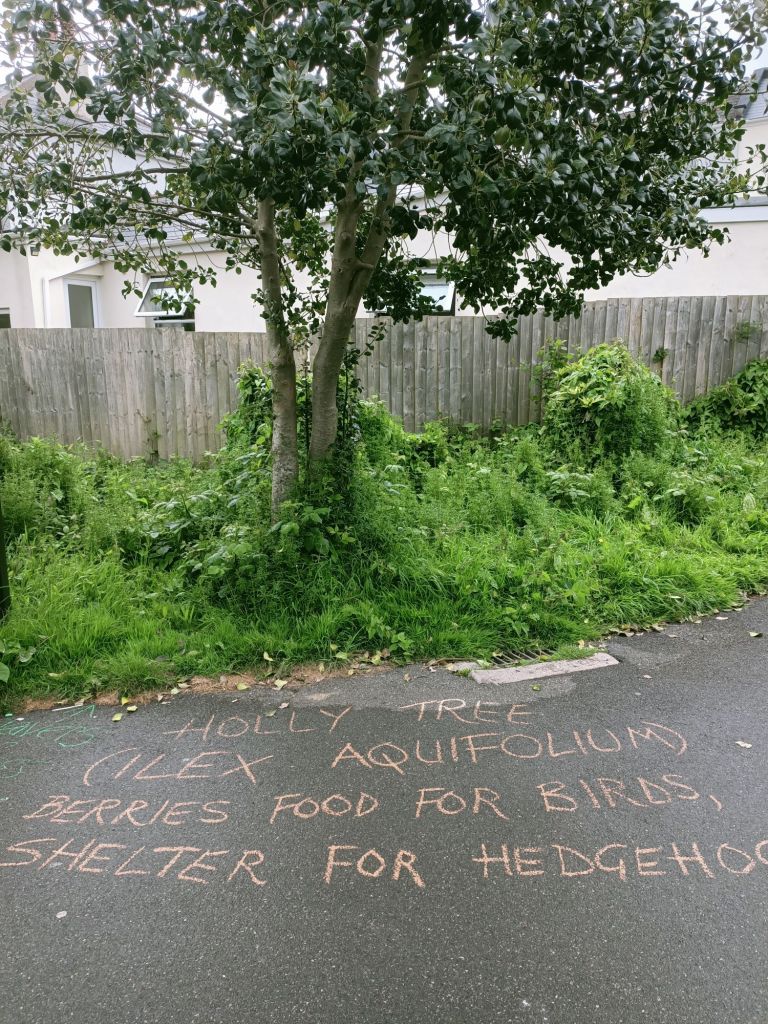
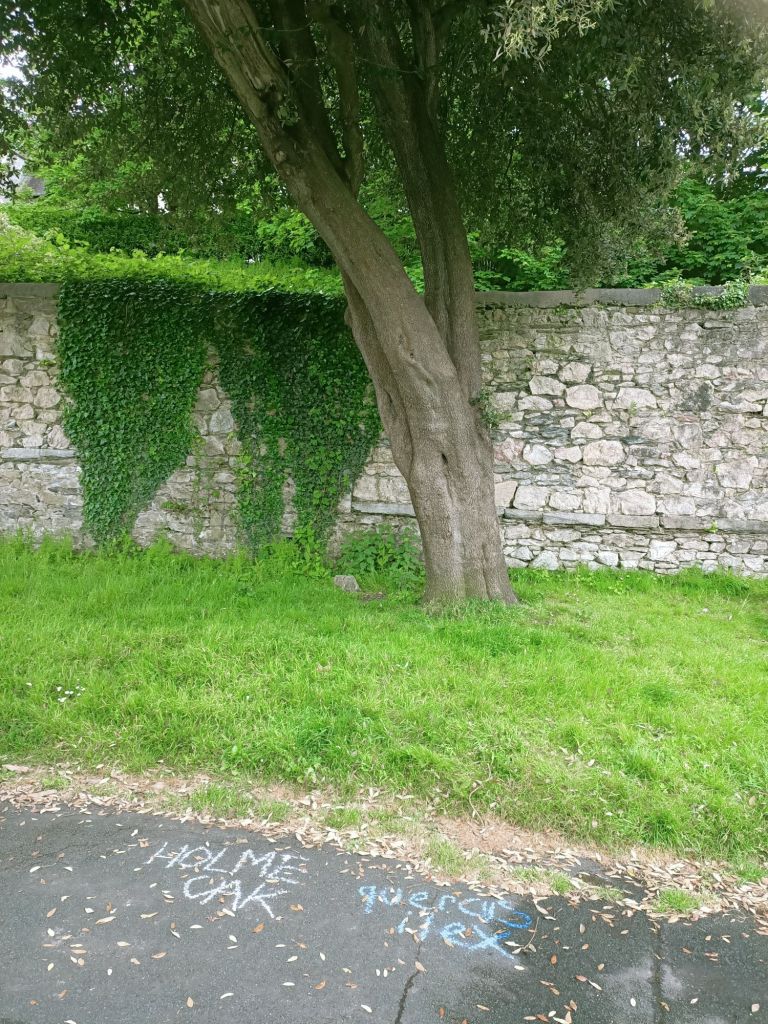
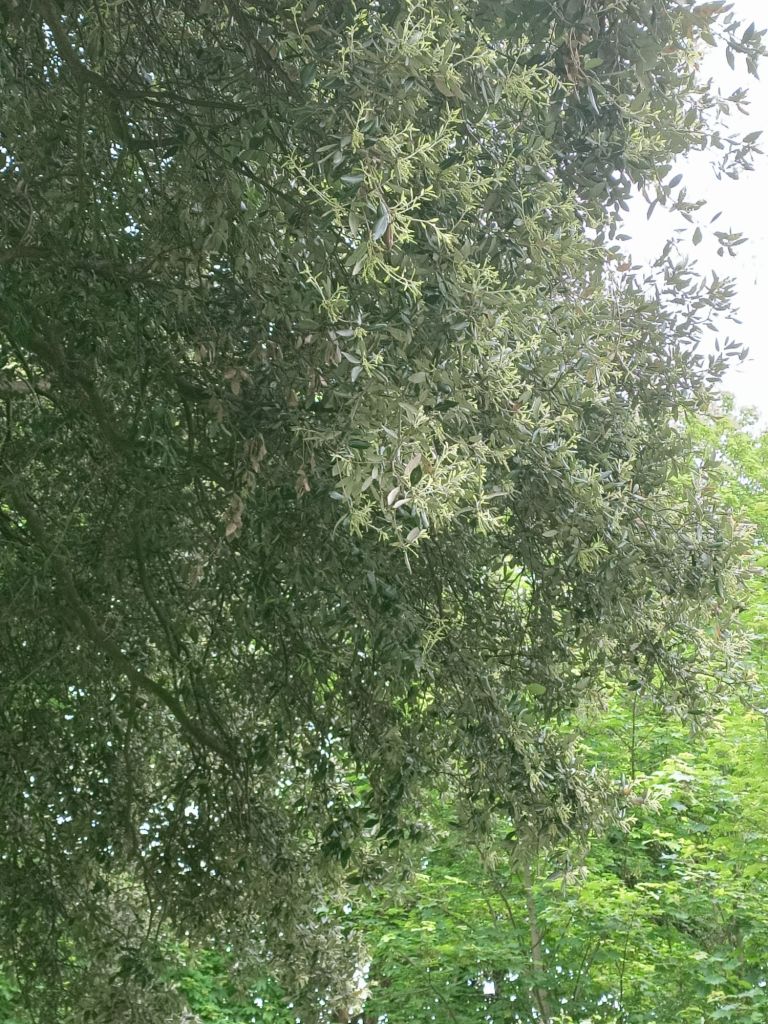
The leaves of the Holme oak (Quercus ilex) are quite different from the English and Red Oak
European Black Elderberry
European or Common Ash (Fraxinus excelsior) with its easily recognisable leaves.
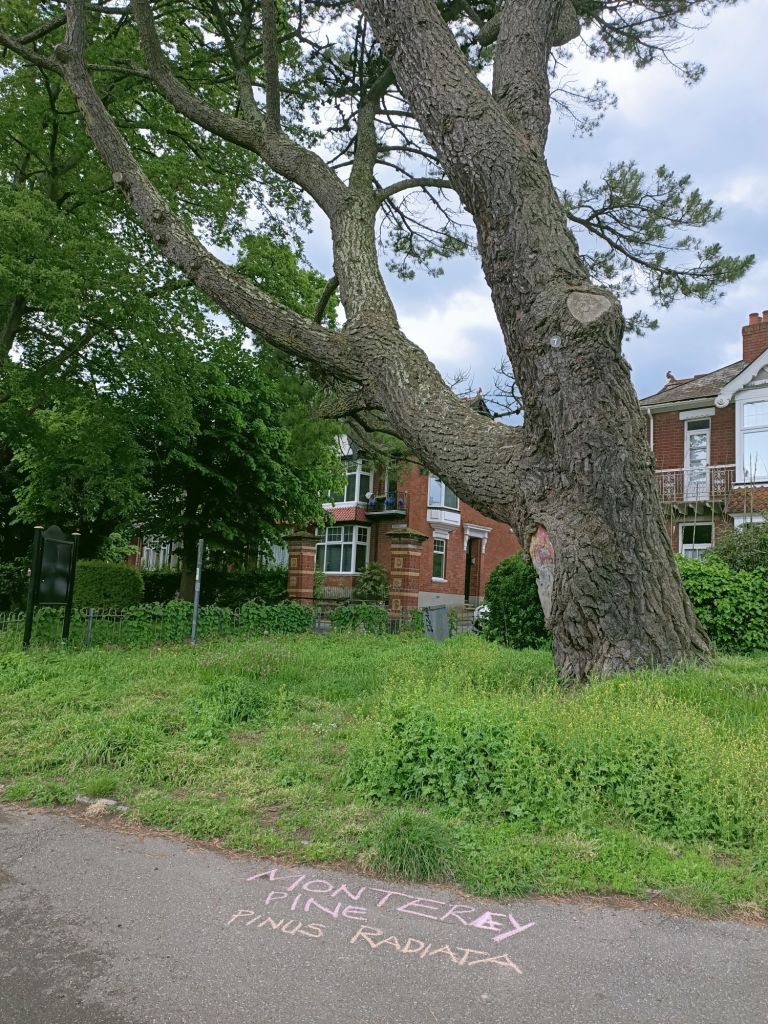
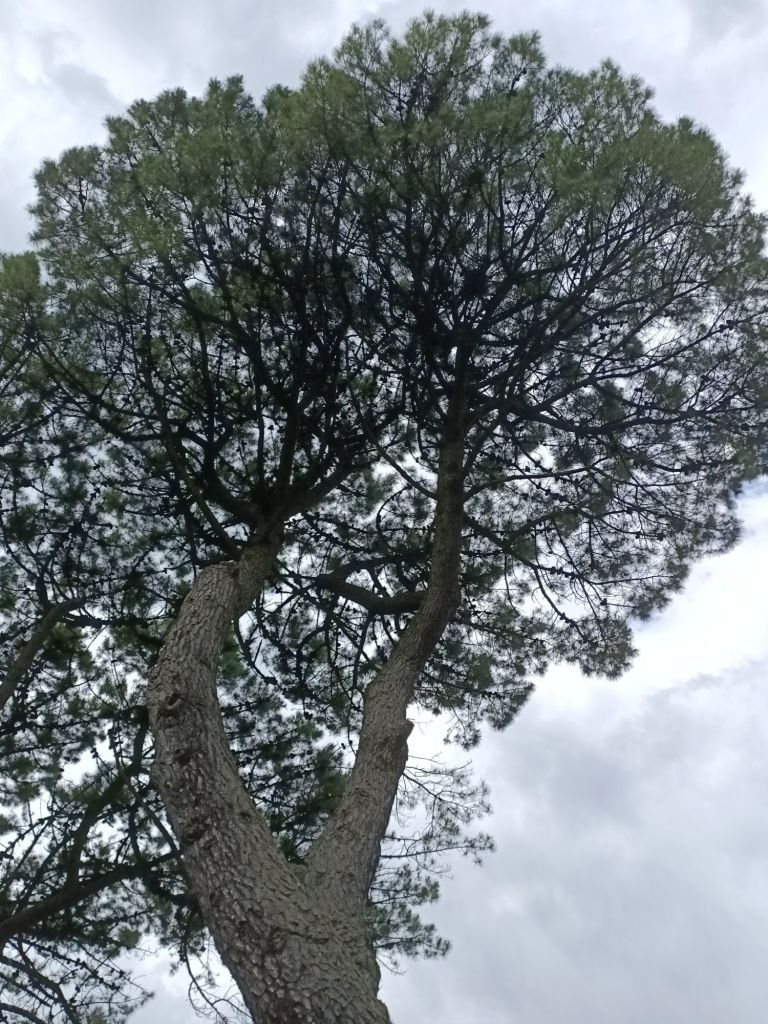
Look up! To see the magnificent beauty of this Monterey pine 👀

This city is also home to STRAW Plymouth, (Save the TRees of Armada Way)  who clearly could be a further ripple from the Bishnois legacy.  They set up in 2023 and attempted to save 117 trees (which included 37 different species) from the proverbial chop by the local council for ‘urban development’. Fortunately for them, the tree slayers didn’t behead them, but the council’s “military-style night time felling operation on March 14th 2023”, against these non-violent activists, resulted in the loss of many of the trees, despite their brave battle and 17,000 signature petition. However, they did save approximately 20 trees and they are continuing to protect them through legal action in the high courts.

Despite the fact that humans know the essential value of trees to our very existence, e.g. shelter, temperature reduction, water control, wildlife habitat and food sources, pollution control and  oxygen-generating) it seems activists still have to put their time, dedication and lives on the line to saving them, against the money-hungry exploiters across the globe. It’s time to make Ecocide a recognised law across the world to protect ALL living beings, not just human-centric existence.

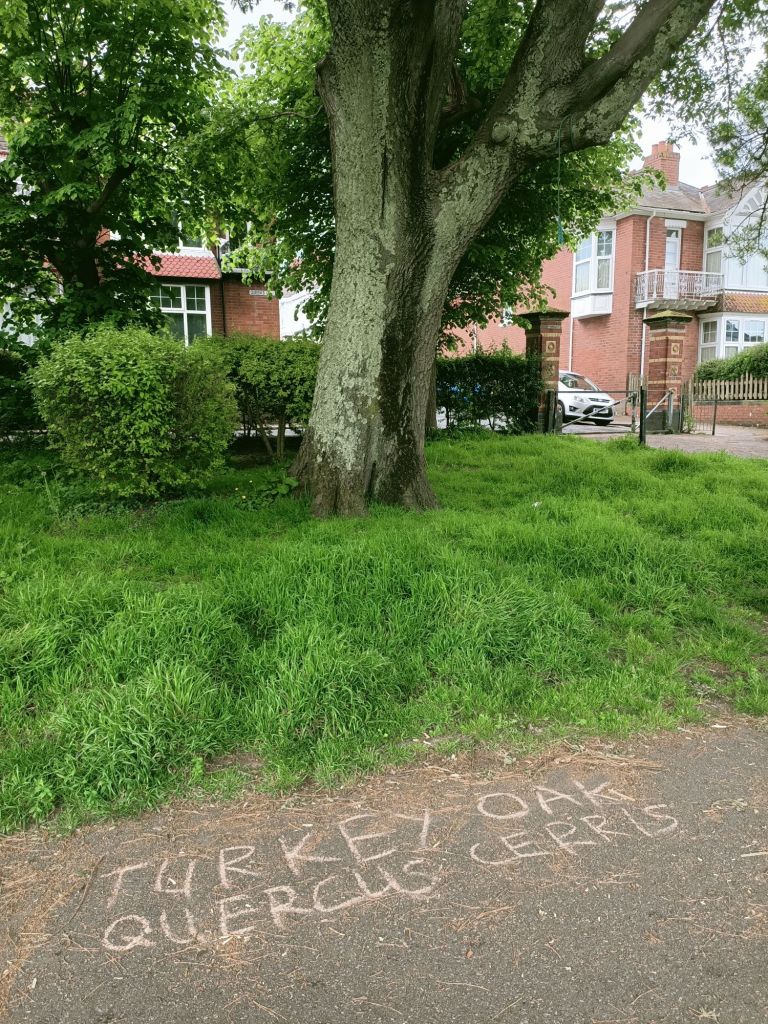
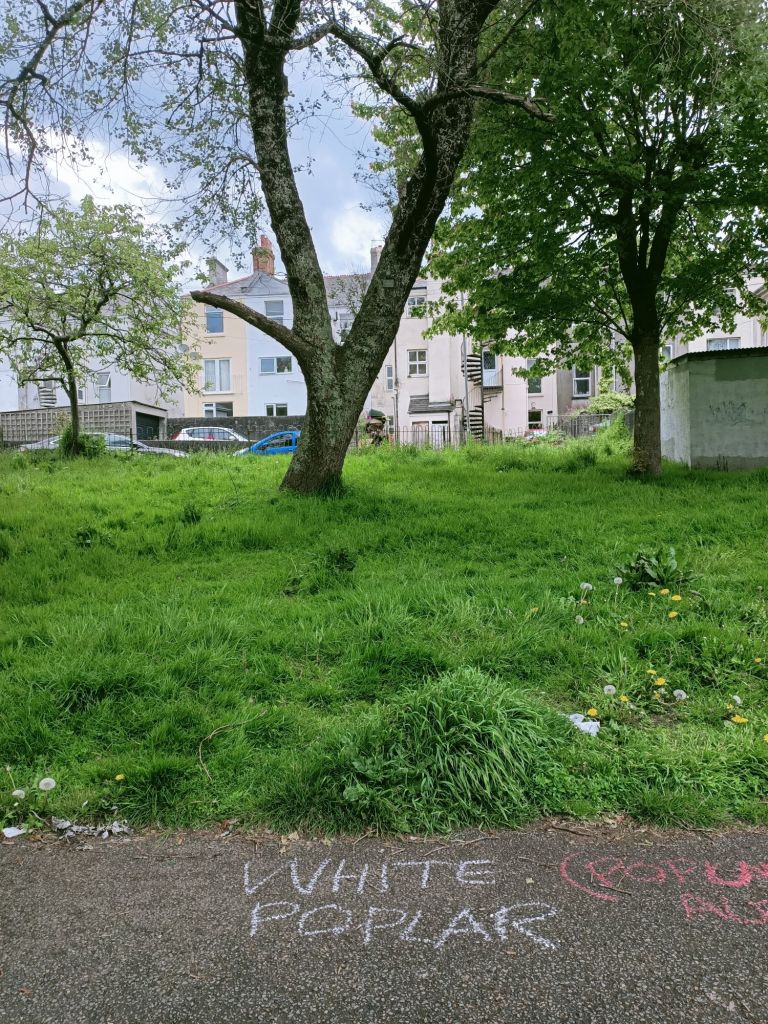
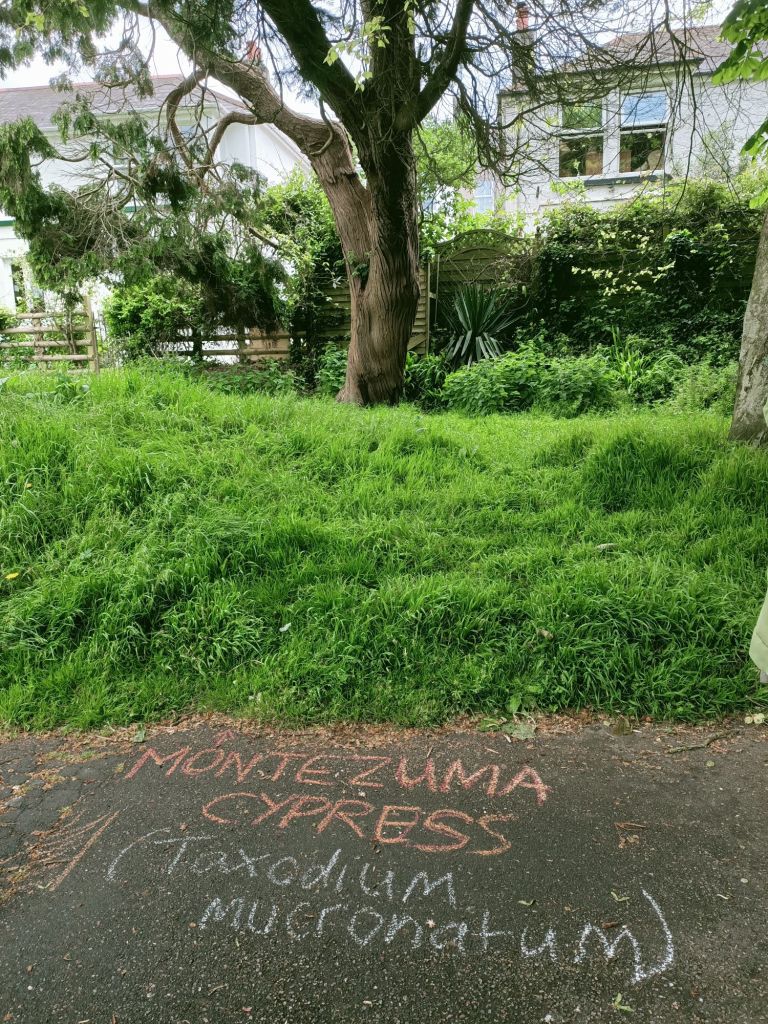
We had to chalk up other plant life alongside the trees in Victoria Park
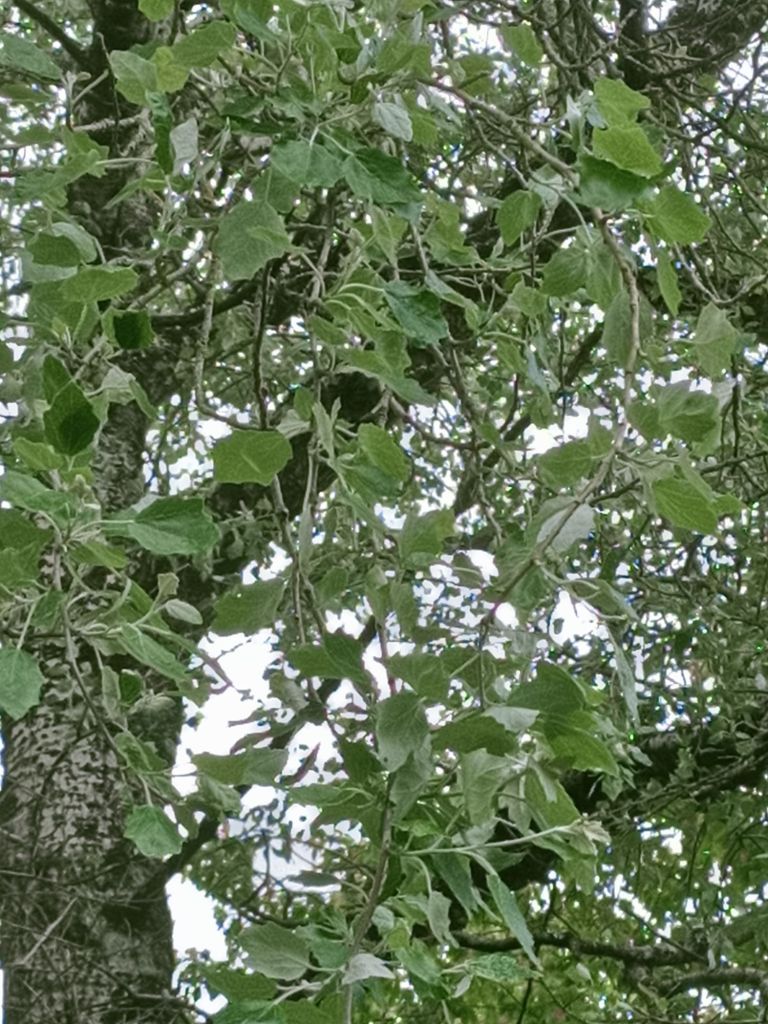
Leaves of the White poplar
Cute but he wasn’t so good at chalking 😂
This one is especially for the gentleman in the orange-red painted house:                          it’s a Red Chokeberry! 🙂👍
We were joined by lots of passionate chalkers and tree huggers today, including:  Rafi and his family, well done 👏👏👏

So, are you brave enough to be a tree hugger and protect what nature provides for free?

Thank for reading – I hope you enjoyed it 🙂

Information sources:

https://www.abc.net.au/news/science/2022-08-07/tree-hugger-bishnoi-chipko-defiance-deep-historical-roots/101247020

https://www.earthisland.org

https://en.m.wikipedia.org › wiki › Ecocide

A Celebration of Education: a rhizomatic rhythm

David Attenborough: 98 today on 08.05.24 Teaching Natural History for over 60 years.

On the 8th May 2024, we held two chalking events to celebrate the birthday and on-going work of Sir David Attenborough, at the fantastic age of 98 years. 

The work he has carried out in researching and facilitating natural history to millions of people across the world has, I’m sure, given rise to so many contemporary proteges, as well as raising awareness of the myriad life forms that make up our biosphere. Covering geology, botany, biology, zoology, history and climate warming: his publications and documentaries cover a plethora of sciences that reach across a wide curriculum. This is informal teaching at its best!

‘Informal education does not have the ordered structure and rigidity of formal education. It’s more natural, spontaneous, relaxed and engages different techniques from those found in a classroom.

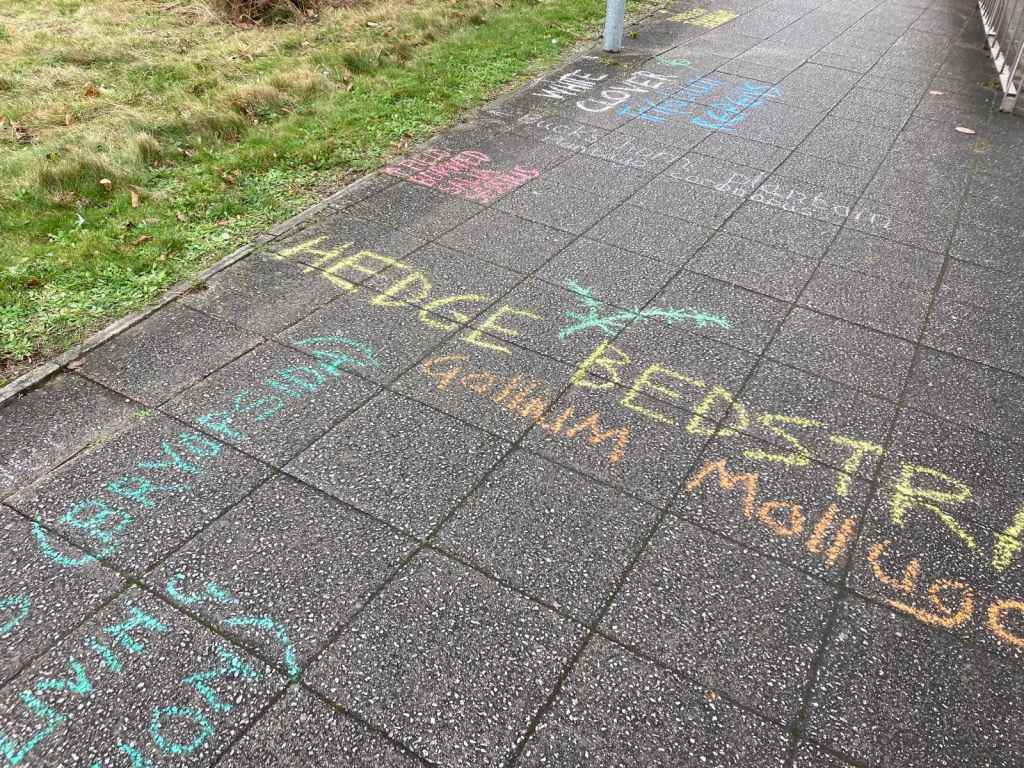
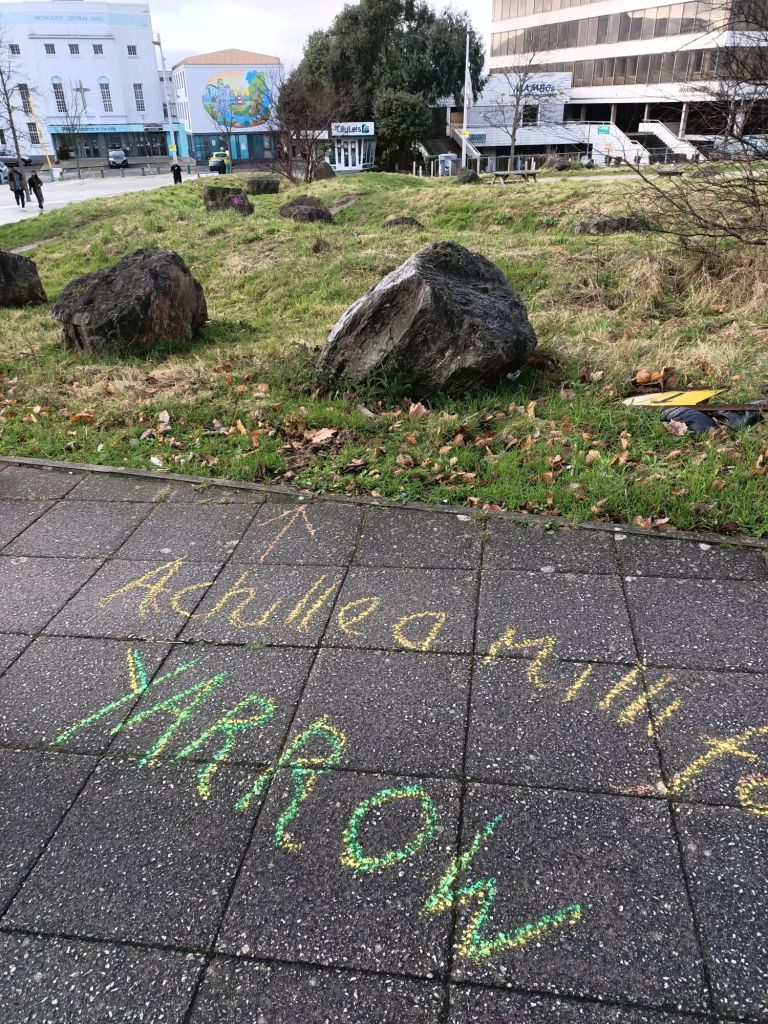
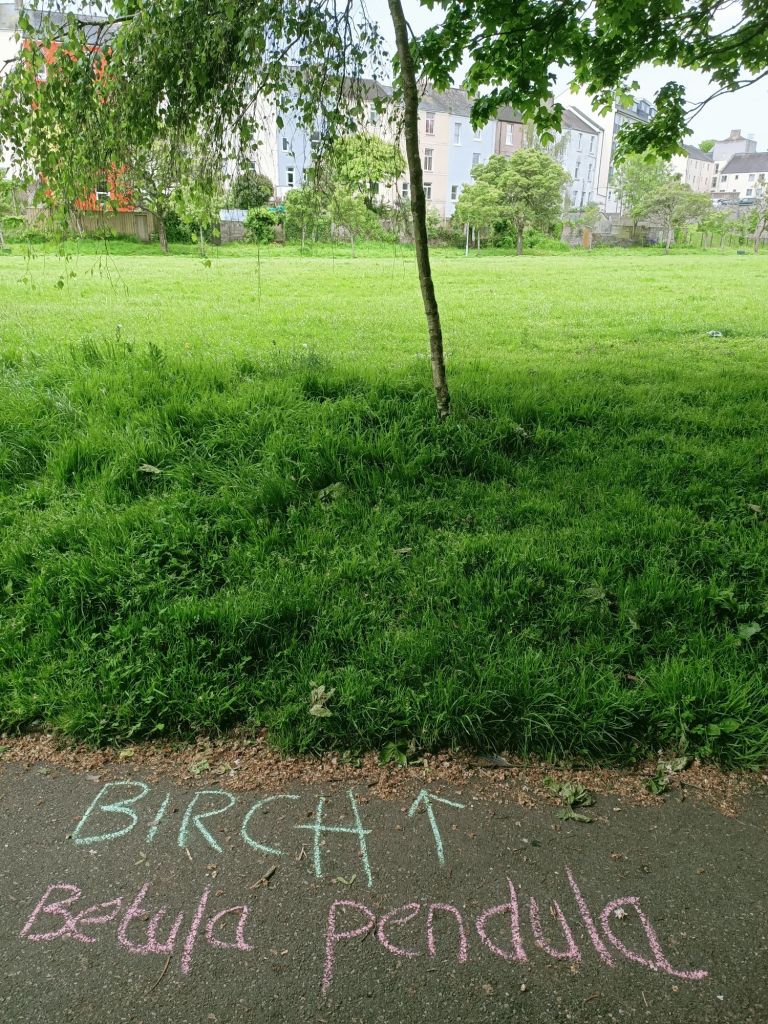
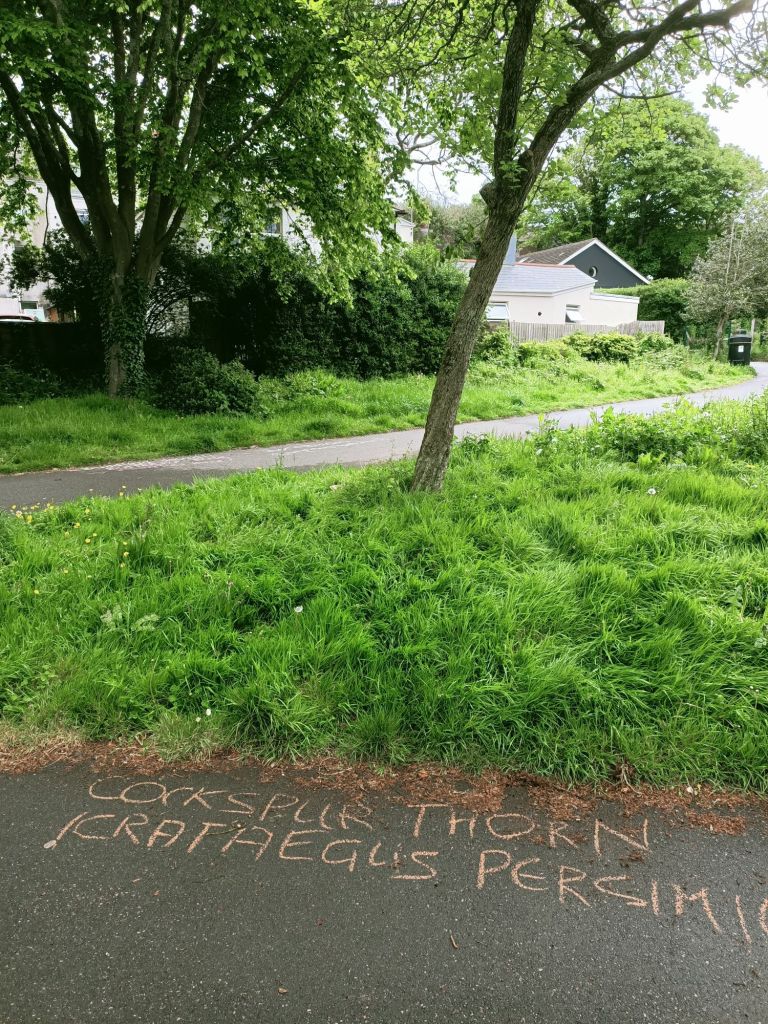
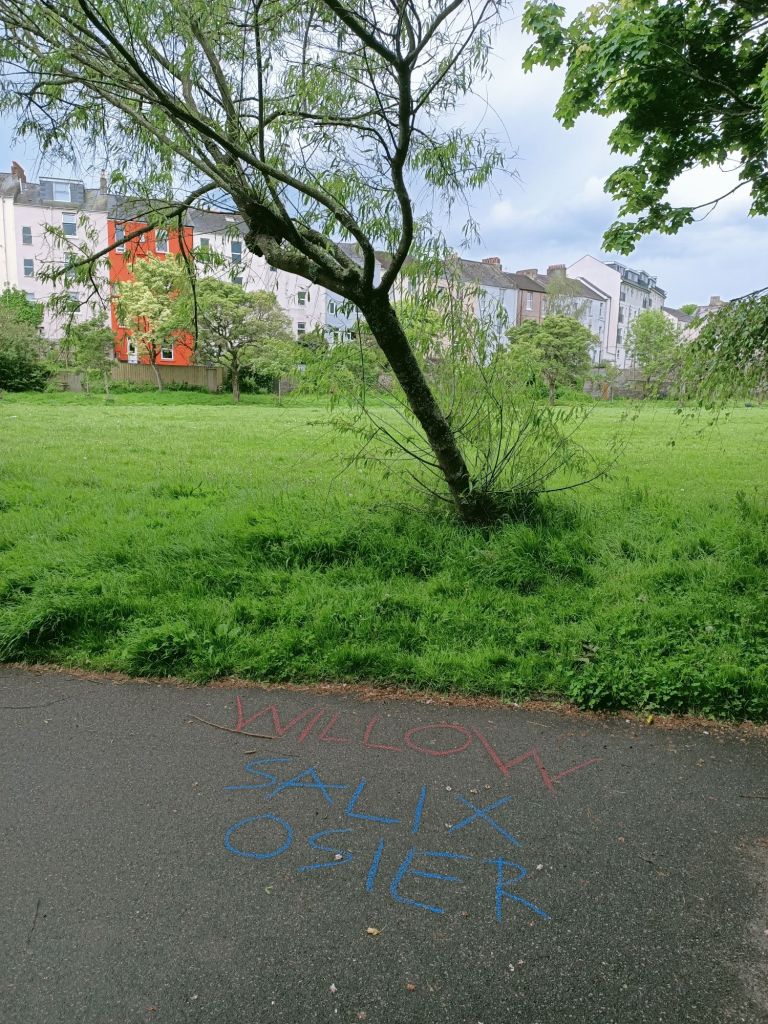
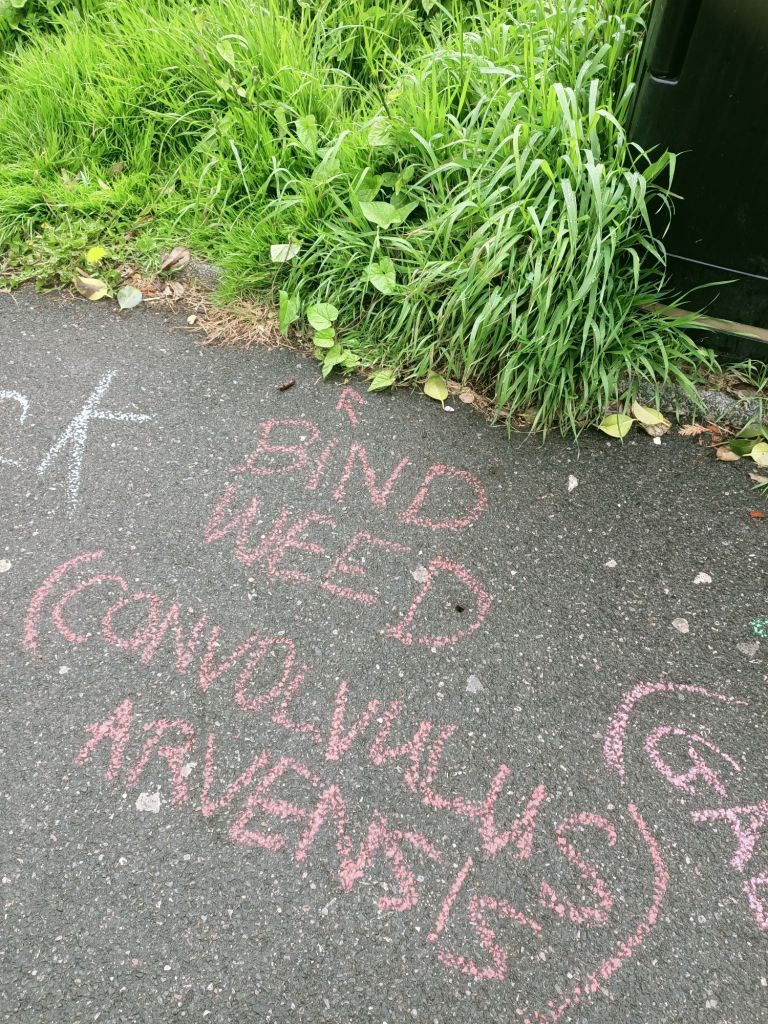
To increase knowledge and understanding of urban wild plants we also use an informal approach to learning. A different and rather rebellious technique of chalking Latin botanical names and information on pavements beside the plants: we are street art educators. People stop and look, they read, take photos and ask questions. This is the best way to engage learning – by arousing curiousity, so people want to know more.

So much of what’s going wrong in the world, is often borne out of ignorance. The mass media plays a big role in this by promoting a debt economy through blatant indoctrination practices: buy, buy, buy, debt, debt, debt. People are being conditioned to buy pesticides, power machines, bigger cars, oil-based plastic products, not because they need them but because it makes the CEOs richer.

“Education is the most powerful weapon you can use to save the world”, said Nelson Mandela; such wise words. Confrontation does not bring compromise, but conversations do. Taking time to listen and learn brings many rewards, including peace and understanding – which I’m sure you’ll agree, we need more of.

When I think back to growing up with  Attenborough, as my ‘television teacher’, I wonder if without his inspirational I would have read about Rachel Carson, Edward O. Wilson, Alexander von Humboldt or Darwin’s earthworm project.  It’s interesting how one thing leads to another: a rhizomatic rhythm, don’t you think?  🤔

Lost Chalks; Lost Words

On a recent visit to London, I ventured out one day and left my chalks behind. Heck, how could I do such a thing?! Chalks are the ‘weapons of mass education’ which should be carried at all times, by a true Rebel Botanist: always ready for street art education, to highlight  urban wildlife. Despite the lights and sights of the skyline, and the glory of galleries and museums (which is where I was heading) I couldn’t be distracted from the greatest art of all – nature!

Hollow holey twisted Willow trunk

A willow in St James’ Park grabbed my attention because despite it’s hollowed holey twisted trunk, which suggested decay, it’s branches were decorated with vibrant green leaves dancing in the sunshine. Am I the only one who sees this, as I stand in awe and people pass by? A chalked message would distract their attention to see this beauty, but alas, no chalk. No chalk, no words. No words to draw attention, to inform, to recognise: my words were lost. It reminded me of McFarlane’s book, Lost Words, written in response to nature words being omitted from children’s encyclopedias. My omission of chalked words gave me a sense of guilt and frustration. I walked on.

London Plane embracing the sun

Ah, a London Plane (Platanus x hispanica)  shimmering with thousands of tiny green emeralds over my head with arms outstretched in a warm embrace to the sun. Despite being a hybrid, it is extremely successful in urban cities, due to its outer bark, which it sheds to rid itself of environmental pollutants from cars and industry. This species was around long before city pollution, so I wonder why this characteristic evolved? When you really look and think about nature, so much curiosity is aroused.

Erupting roots of the Swamp Cypress

Further on I came across a Swamp Cypress (genus: Taxodium) with its roots erupting from the soil surface like snake heads rising to the sonorous sounds of a snake charmer. These outgrowths are in fact taking in oxygen for the roots below. This genus of tree has only two species, this one is the deciduous T. distichum from SE USA. Oh, to write this information on the smooth surface of the path; can you imagine my frustration?

Life rises resolutely: Dawn Redwood

A stunning Dawn  Redwood, Metasequoia glyptostroboides, resolutely rising in Whitehall, was breathtaking. This species was once thought extinct in the wild, due to loss of habitat, until some were found in central China in the 1940s, I believe. Clearly not in its natural environment, but providing a wonderful show of wildness in an otherwise sterile stand of Government buildings. A lone Gurkha stood guard before it. I desperately wanted to scribble its Latin name upon the cleanest smoothest paving stones at its base. What else are they there for, after all? 😉

Willowy Willows

This lovely glade of willows (Salix) outside the Tate Modern, offered quiet calm to the busy-ness around it. Oh, how I wished to describe the light shafts glinting through the slender elegant trunks and dainty leaves, to encourage people to stop and look. Dylan Thomas called this effect ‘windfall light’ in his poem Fern Hill, and C.S. Lewis described it as ‘Godlight’.            In Japan, they use the word Komorebi,      木漏れ日.  

Did you know that Canada’s Inuktitut dialect has 53 words for snow, and in the Iñupiaq language of Alaska, they have 70 words for sea ice? Yet, in Britain we struggle to have one to describe the effect of light through leaves…?  Could this be linked to the fact that only 7% of our native woodlands are in good condition, according to the Woodland Trust?  Consider, also, the fact that Robert MacFarlane wrote his widely acclaimed ‘Lost Words’  book, in response to a children’s encyclopedia omitting everyday nature words, like acorn, bluebell and wren. Whilst our language is a dynamic one, it should not be ‘losing’ words which are in fact vitally important to our existence.
Linguistic relativity theory  suggests that a language’s vocabulary determines or shapes the thought processes of the speakers; therefore if we are not using these words, that recognise the biodiversity in which we exist, how are we to save it?  With the eroding of our nature vocabulary and the recognition of the visual ‘impairment’ of ‘plant-blindness‘, people are becoming cognitively plant-blind. This planet is a living breathing biosphere of life, of which we depend, and therefore it should be at the forefront of our consciousness and conversations.

So, my chalks will not be lost or forgotten again! Education on the streets is absolutely necessitous to open our eyes to the beauty around us, that is Nature. We ARE Nature.