Nature provides wild plants for free! They provide habitat and food for wildlife as part of the natural cycle of life – they are essential to biodiversity.
Three familiar examples are:

- Bellis perennis, the humble but beautiful Daisy, is a source of nectar and pollen for many small insects. It’s name originated as Day’s Eye due to its behaviour to open during the day and close up at night.
- Cirsium arvense, Creeping Thistle, a common perennial providing pollen and nectar for numerous flying pollinators, including Skipper butterflies and Goldfinches.
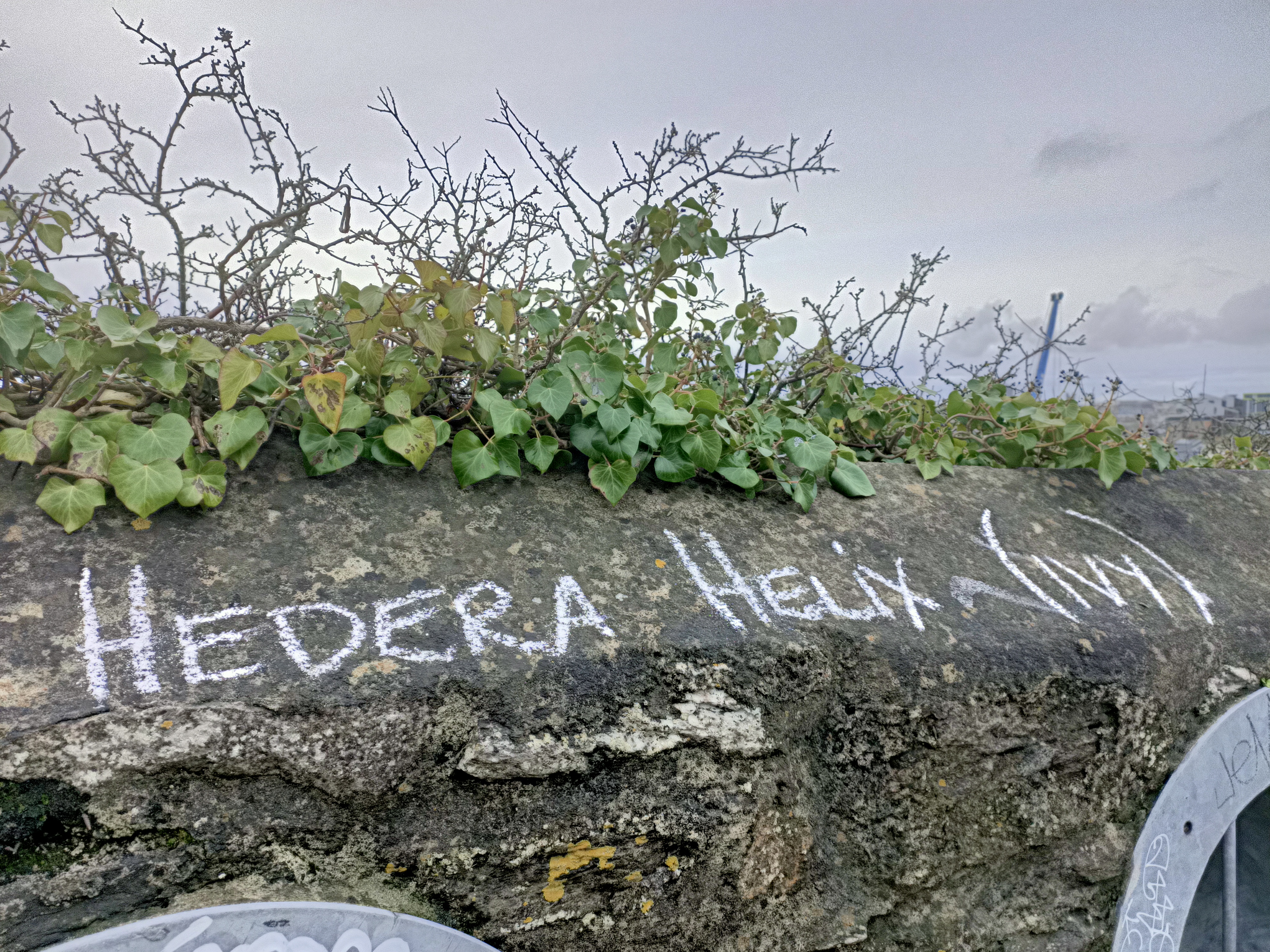
- Hedera helix, Ivy, a familiar and often vilified climber, is in fact a valuable plant providing much needed shelter and protection for many insects including the Brimstone butterfly. It also supplies nectar and berries to Holly Blue butterflies, Blackbirds, Woodpigeons, Blackcap, Hornets, hoverflies and wasps.
When we talk of native wild plants, we are referring to plants particular to your area and that will be different dependent on your geographical position across the country/world, and also the environment e.g. mountainous, moorland, coastal and so forth. Therefore, when choosing what to encourage in your garden, grass verge or field this needs to be taken into consideration to best support the wildlife there. In Devon and Cornwall, for example, we would consider the following wild native plants to be a good choice to encourage healthy habitats:
- Vicia sepium, Bush vetch, flowers late spring and summer and is great for Carder bees, Bombus pascuorum.
- Nepeta racemosa, Catmint, a good all-round garden plant for a wide range of bee species with a long flowering period.
- Symphytum officinale, Comfrey; flowers throughout summer and visited by long and short-tongued bees. It also makes great compost!
- Malva sylvestris, Common Mallow, an attractive summer flowering plant favoured by bees. It provides food for the Mallow moth, Larentia clavaria, and the Painted Lady butterfly caterpillars, Vanessa cardui. The seeds are eaten by voles and mice.
- Cerastium fontanum, Common Mouse-ear; these flowers are visited by very small insects and the seeds are eaten by different species of sparrow, finches and Dunnocks, Prunella modularis.
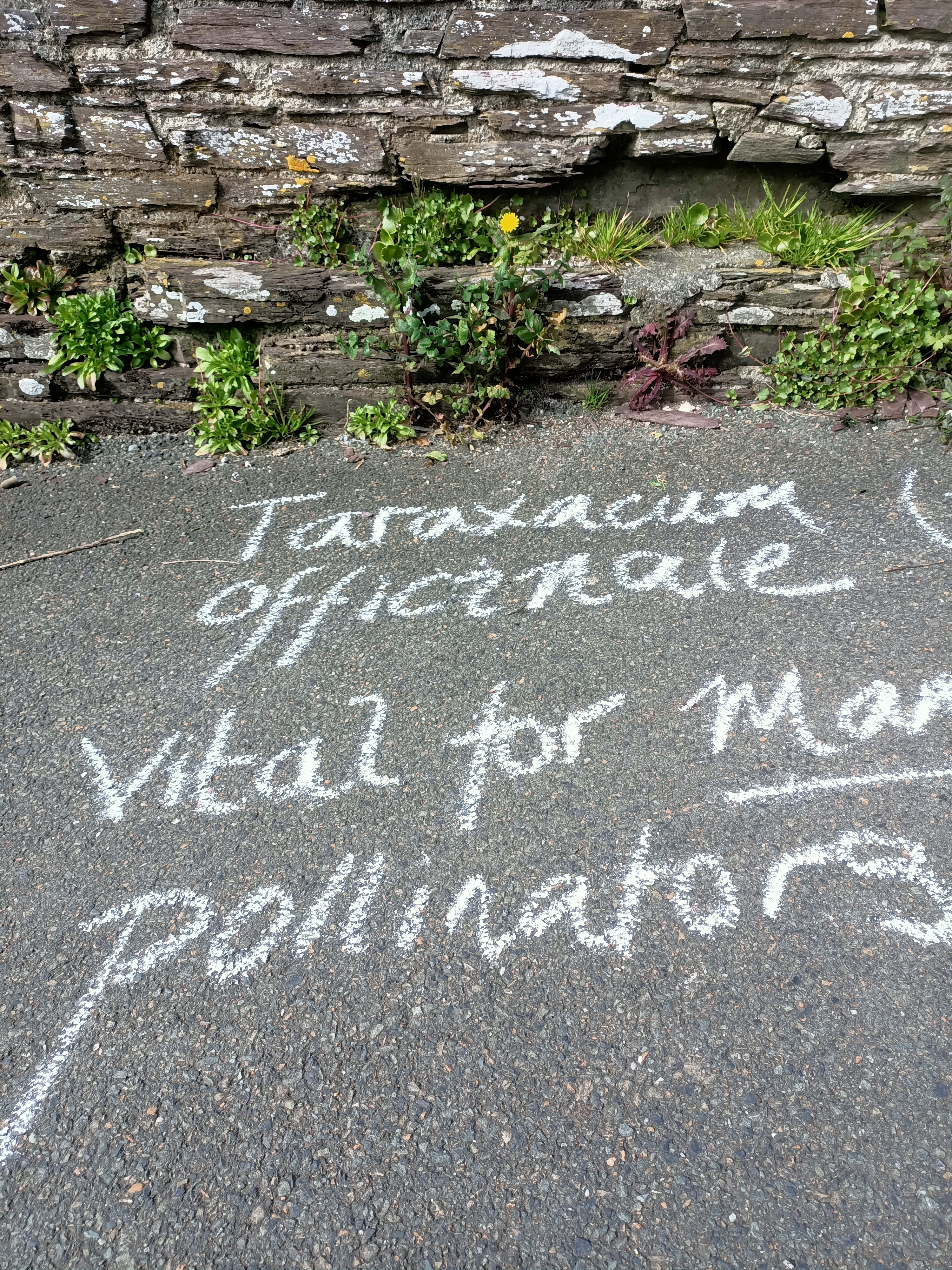
- Taraxacum officinale, Dandelions; their importance cannot be overstated: supporting over 50 insect species and many birds including Sparrows and Goldfinches.
- Papaver rhoeas, Common Poppy, with scarlet flowers blooming between May to August, provides good for many flying insects and slender-billed birds, such as Dunnock.
- Rosa canina, Dog Rose, serves well as a boundary hedge as it provides nest sites for birds and gall wasps, e.g. Robin’s Pincushion gall, Bedeguar gall. It attracts aphids, which in turn provides food for ladybirds (of which there are 46 known species in the UK), lacewings (43 known UK species found widespread in parks and woodlands) and many small birds.
- Knautia arvensis, Field Scabious, a lovely blue flowering plant which is favoured by many species of bee, hoverfly and butterfly.
- Digitalis purpurea, Foxglove, is happy in most soil types and conditions and is popular with long-tongued bumblebees.
- Solidago, Golden Rod, can thrive in very poor soils and flowers late summer to autumn. It is attractive to many bees including: Bumblebees, Bombus, Honey bees, (Apis), Sweat bees (Halictidae) and Nomad bees (Nomada).
- Lavendula, Lavender, a valuable source of nectar for bees and butterflies, including the Small Tortoiseshell, Aglais urticae. Sparrows and finches love the seeds too! A well recommended variety for numerous pollinators is Gros Bleu.
- Pulmonaria officinalis, Lungwort, is an early flowering plant; it provides much needed nectar for early early emerging Queen Bumblebees and Honey bees.
- Primula vulgaris, Primrose, an essential food source for early spring pollinators, like the Brimstone (Gonepteryx rhamni) and Small Tortoise (Aglais urticae) butterflies.
- Hyacinthoides non-scripta, Bluebell, a legally protected and valuable contributor to woodlands and biodiversity. They can take over 5 years to grow from seed and are vulnerable from being trampled on and hybridisation.
- Geranium pratense, Meadow Cranesbill, loved by many pollinators, including birds and moths.
- Cirsium rivulare, Plume thistle, flowers to 1m high in the summer. Good for male Bumblebees, of which there are over 250 species!
- Salix caprea, Pussy willow; the male trees produce pollen and a little nectar, whilst the female tree produces only nectar; so, have one of each, or if space is limited, opt for the male. Queen Bumblebees and Solitary Mining bees (there are about 65 species of this genus, Andrena) benefit from the early spring catkins.
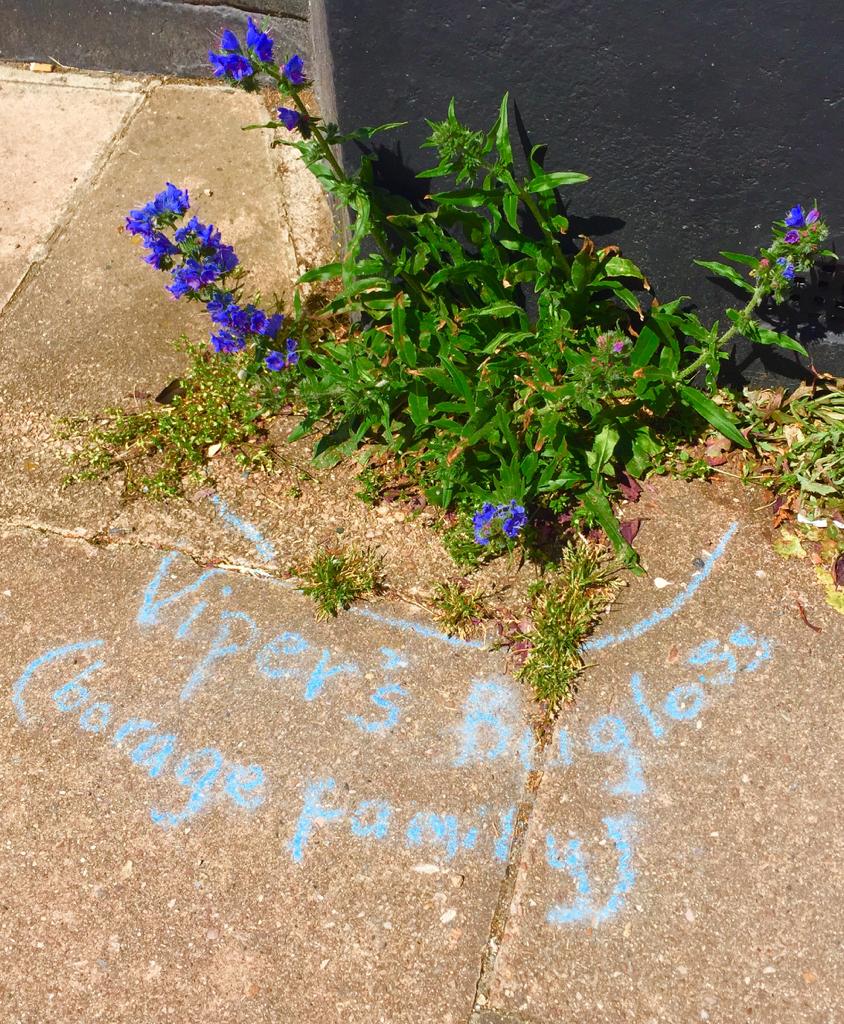
- Echium vulgare, Viper’s bugloss, the bright blue flowers bloom from May to September and can reach quite a height. It provides food for many pollinators including: Buff-tailed and Red-tailed Bumblebees, Honey bees and Red Mason bees (Osmia rufa) and the Painted Lady and Large Skipper (Ochlodes sylvanus) butterflies.
- Trifolium repens, White clover, is an important source of nectar for many insects including the caterpillar of the Common Blue (Polyommatus icarus) butterfly, and a range of moths: Garden Dart (Euxoa nigricans), Hebrew Character (Orthosia gothica) and Silver Y (Autographa gamma).
This list is certainly not exhaustive, but it provides a fair range of staple plants that wildlife survives and relies on.

 #RebelBotanists