Did you know that Wales is one of the top performing countries in the world for waste recycling? Travelling through to Pembrokeshire, for a 4-day visit, this became evident: hardly a scrap of roadside litter to be seen. What joy! And so began this mini Rebel Botanists adventure.
Pembrokeshire has an impressive 186-mile coastal path. We stayed at the start of it, in an eco-farm at Llanteg.
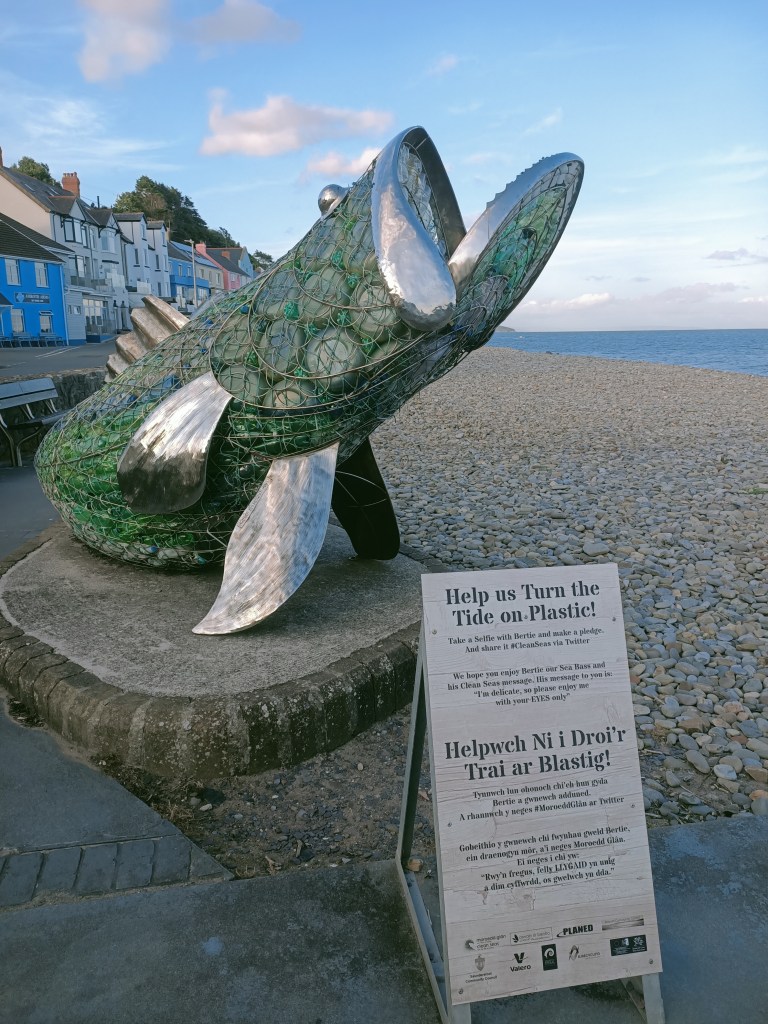
Close by, at Amroth, a giant fish sculpture stood proudly beside the pebble and sand beach, composed of re-used plastic bottles. It exemplified the care given towards cleaner seas by the local residents. It was pleasing to see that all the beaches we visited, along this coastline, were Blue Flag awarded.
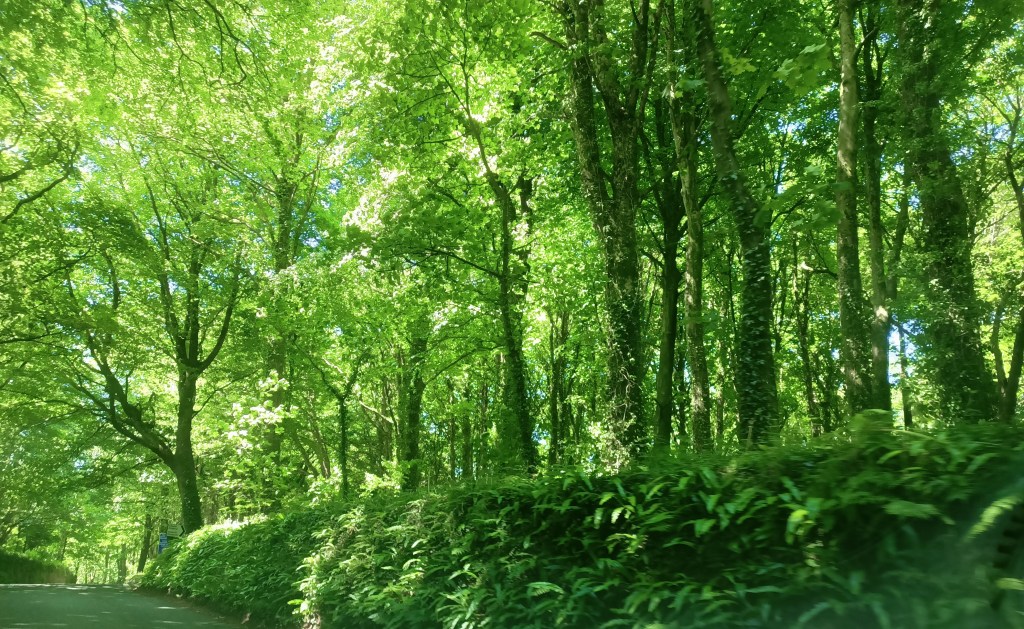
The eco-farm owners,Terri and Tom, had a recycling bin for every waste stream, their fields flourished with wildflowers and grasses and they had a beautiful woodland to explore, which we did.
As we walked towards the mixed broadleaf trail, across the valley we could see a monocrop of conifer covering the hills; a sign of the slaughter of World War 2. It represented not only the slaughter of the trees that once stood there, but all the wildlife it had once supported and the subsequent depletion of wildlife since. Wars take, not just human life but, wildlife too. Once we entered Terri and Tom’s dense woodland, we were thrilled by the rich variety of life all around us, stimulating our senses.

Soft, inviting mossy blankets carpeted the gnarly oak, Quercus, boughs; other epiphytic plants were springing up from the embracing verdant branches.
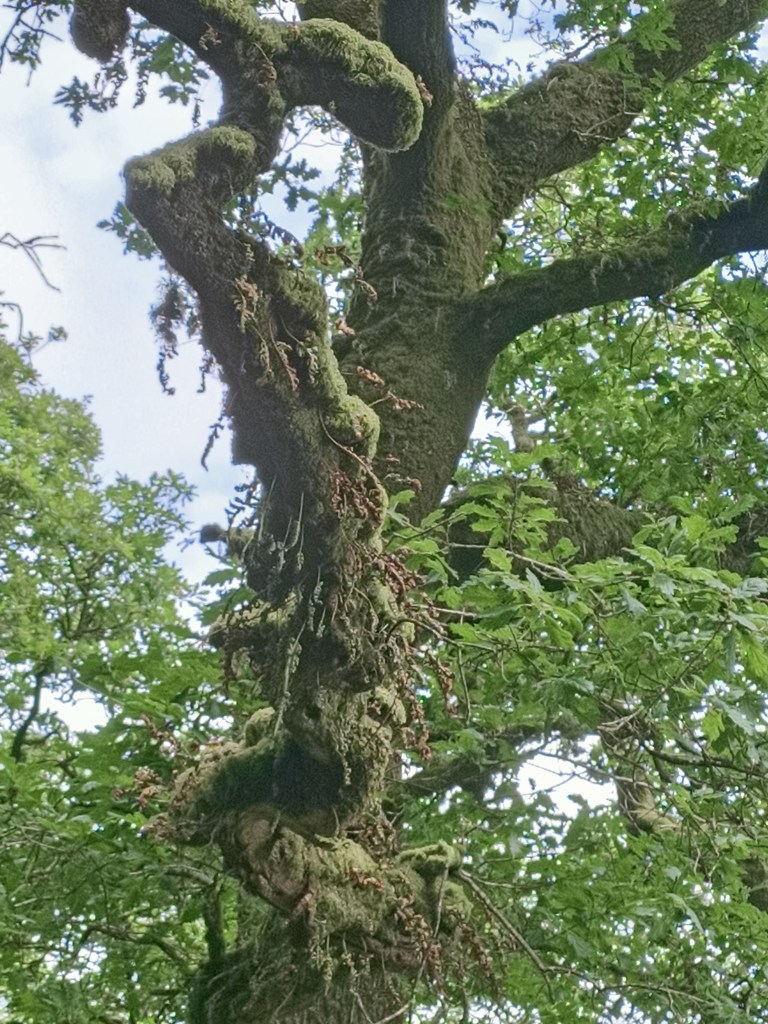
All around, lacy polypody ferns, Polypodium vulgare, and silky-smooth Hart’s Tongue, Asplenium scolopendrium, were growing resplendently. Little wildplants were springing up before us, as we made our way along the muddy track: self-seeded oaks, elders, Sambucus nigra, hawthorn, Crataegus monogyna, holly, Ilex, and rowan, Sorbus.
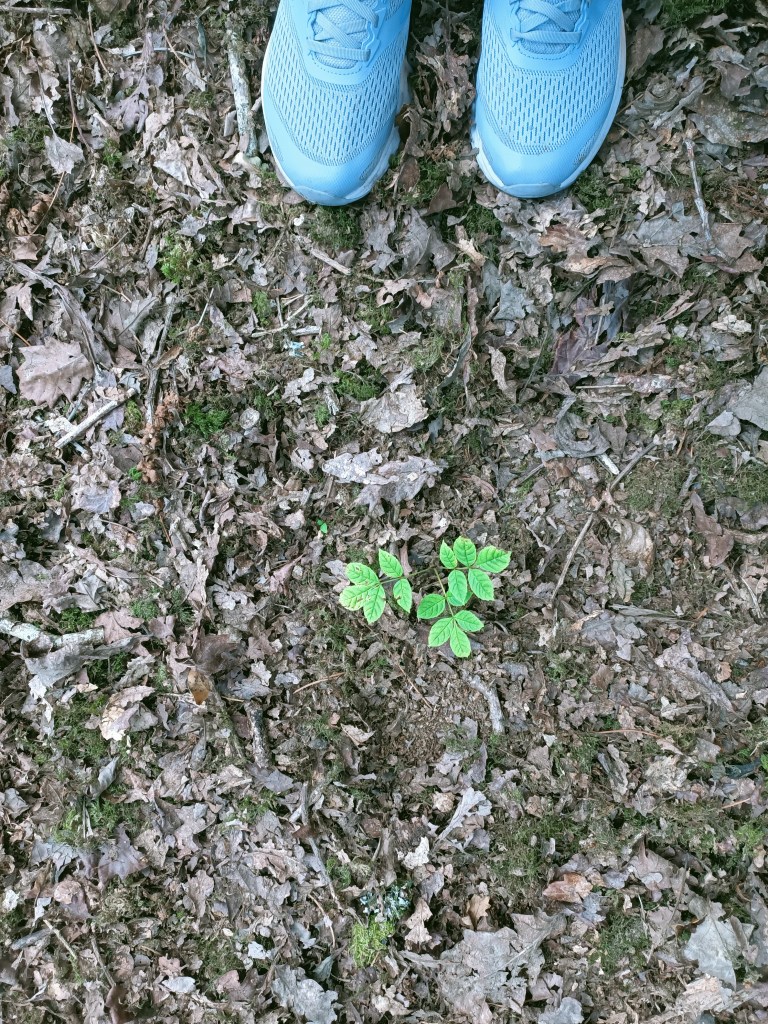
Tiny flies were buzzing everkywhere and birds were around to feed on them, flitting from tree to tree, we identified Song Thrush, Turdus philomelos, Long-tailed Tit, Aegithalos caudatus, and the European Green Woodpecker, Picus viridis, amongst many others. This woodland was full of life, life on life and every shade of green imaginable.
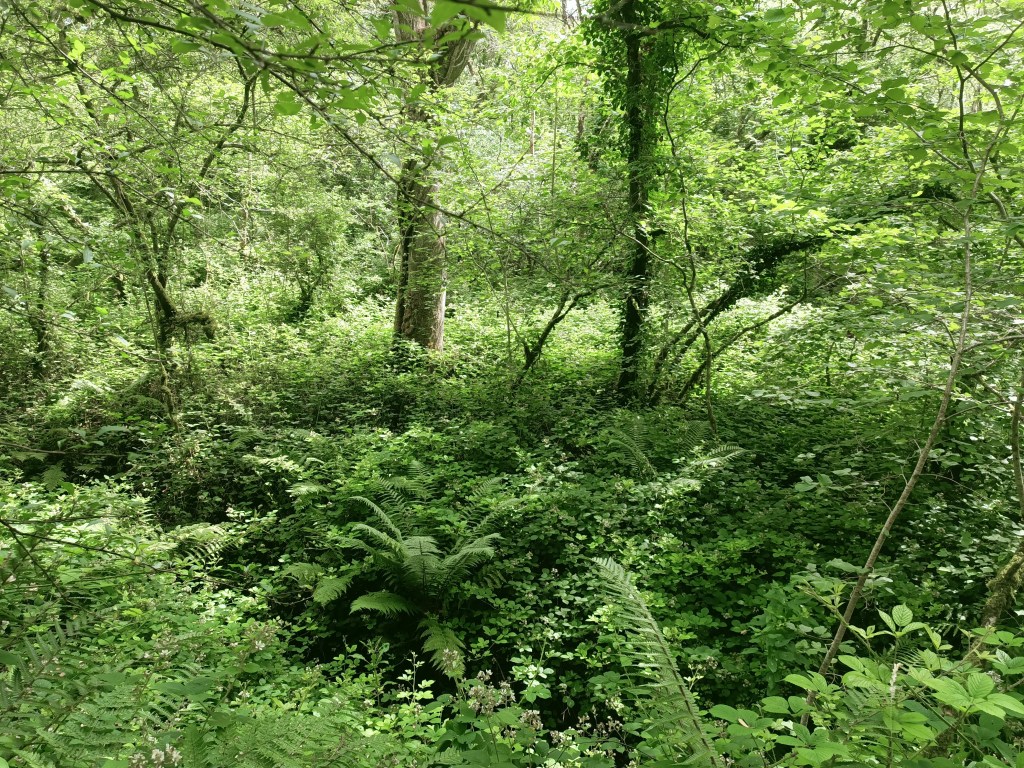
We noticed some of the oaks were distinctly tall and slim, stretching their arms high to find the sunlight above other established trees. Having recently read Guy Shrubsole’s book, The Lost Rainforests of Britain, we wondered… could we be walking in a fragment of lost temperate rainforest? Many of the plants we saw were indicators, and this area of Wales is recognised as being in the climatic zone which would have supported the swathes of ancient woodland that once covered ‘over perhaps a fifth of Britain’. Now, sadly, ‘less than 1%’ remains.
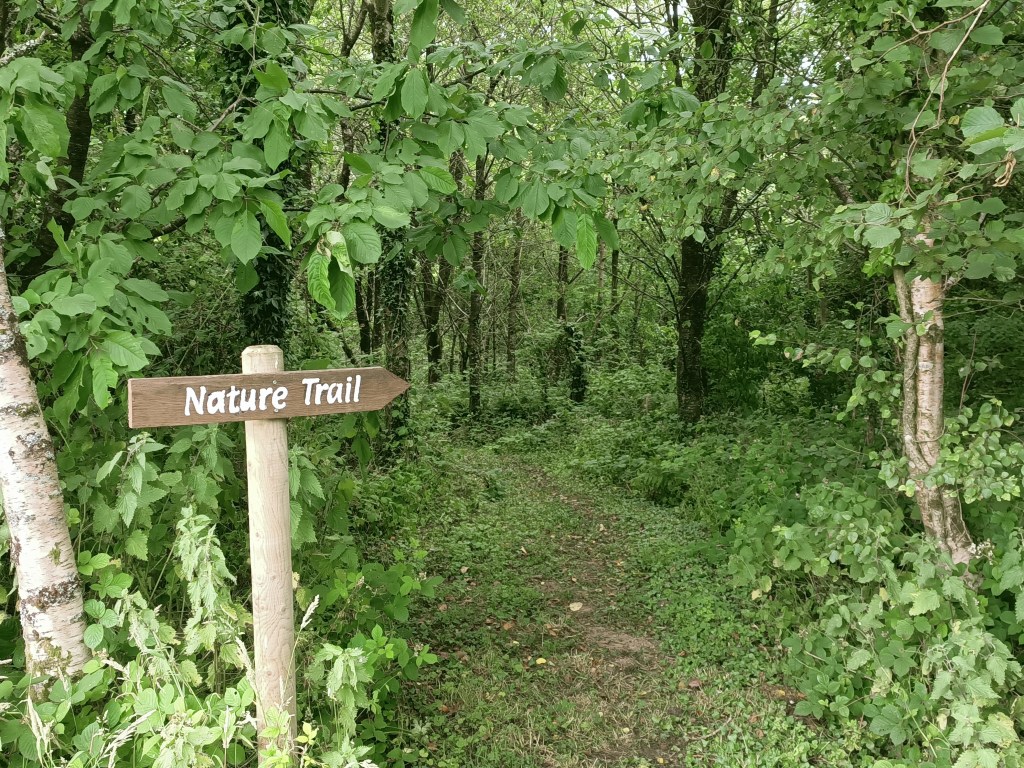
However, thanks to this diligent couple who are allowing nature to come back over their land, we may just have experienced a rainforest walk.
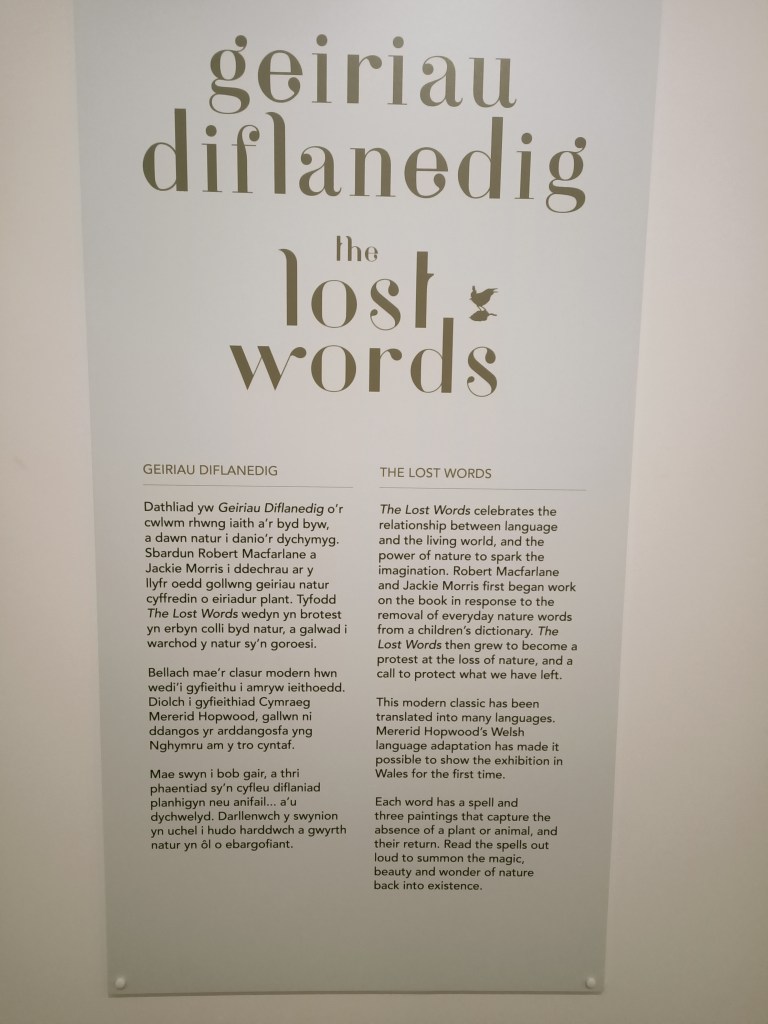
Our journey took us on to St David’s – the smallest city in Britain – with a population of just over 1,300 people; a village really, with a huge and impressive cathedral. It was here that The Lost Words exhibition at Oriel y Parc was on show. The author of the book, of the same name, Robert McFarlane wrote: “What we do not love we will not save”, so with, “more than 50% of species in decline”, we clearly need to learn to love nature again.
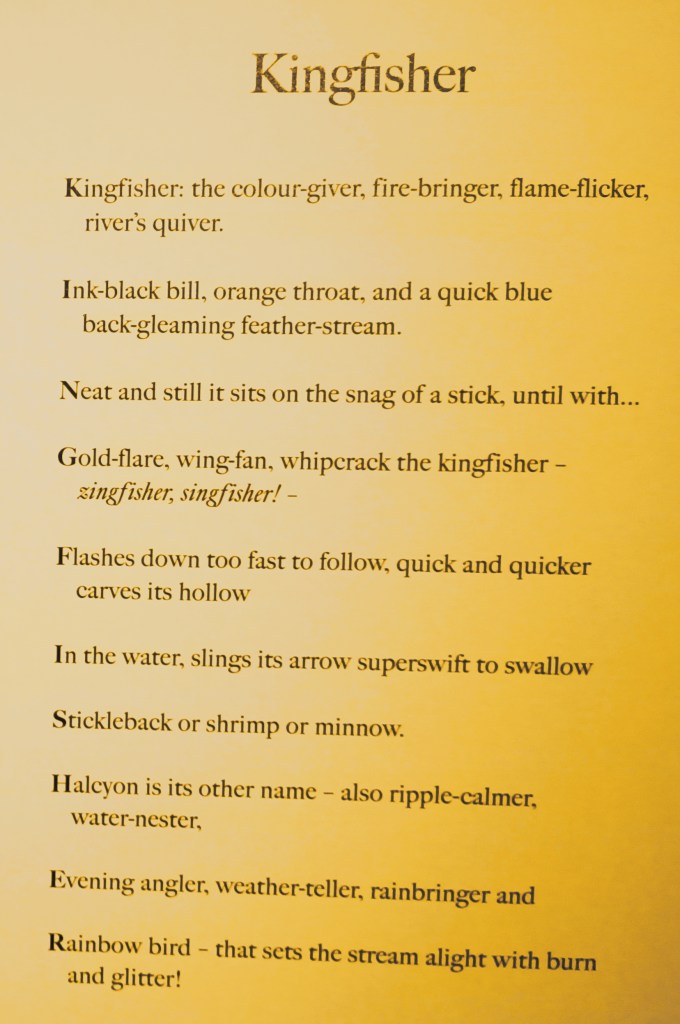
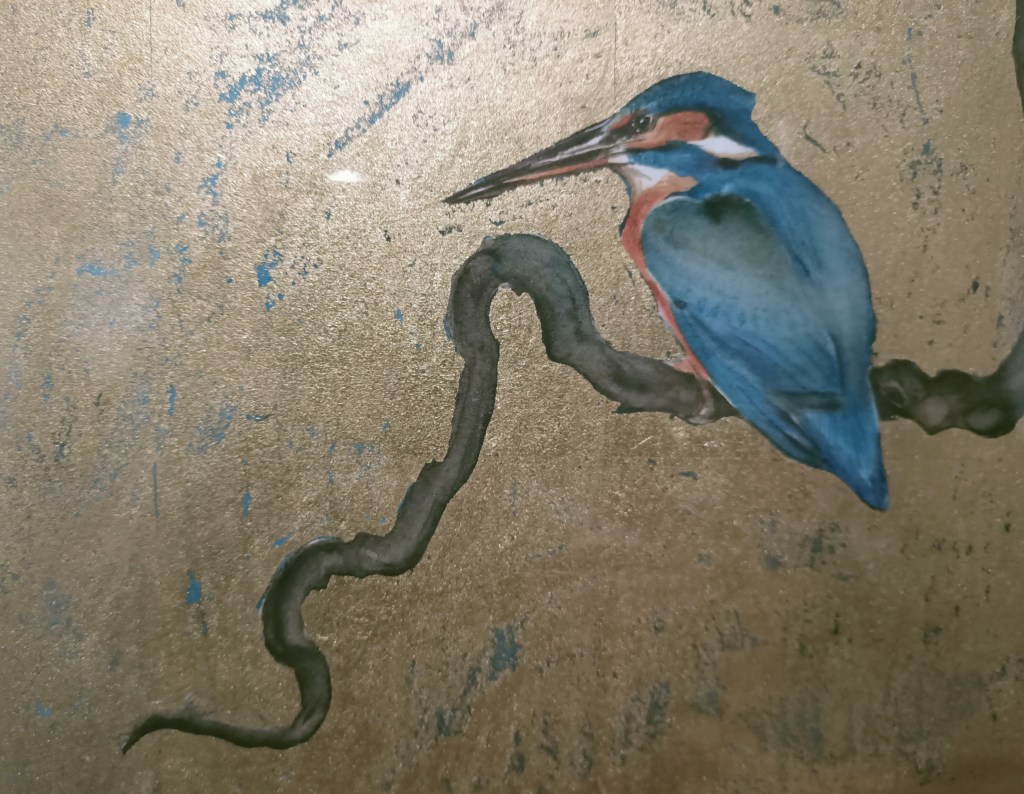
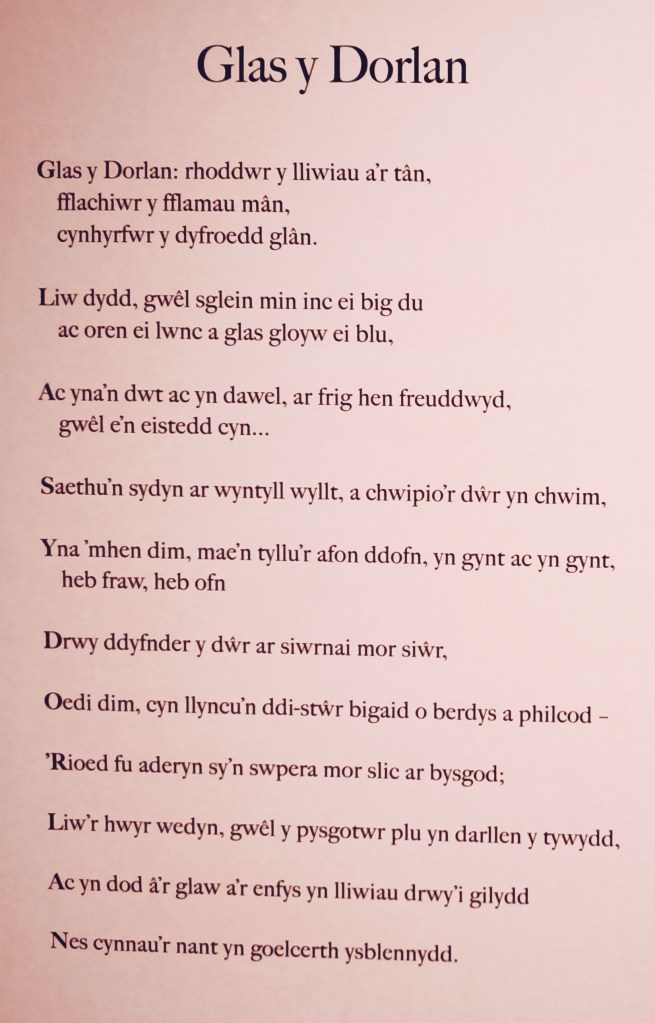
The book began as a protest against the ‘removal of everyday nature words from a widely used children’s dictionary’; however, it has also become an assemblage of words, illustrations and spells to raise awareness of our diminishing wildlife.
In a world where nature is fast being exploited and depleted, the words and the very existence of wildlife, should be a primary focus for everyone, not being eradicated from children’s reference books.
Education is at the forefront of the Rebel Botanists’ activities; if people have the knowledge and understanding of the intricate and vital connections of biodiversity, then hopefully they would make more ethical lifestyle choices.
The beautiful words and imagery of this exhibit enthused some chalking, and off we went… in different villages and towns naming wildplants, and even a beached jelly!
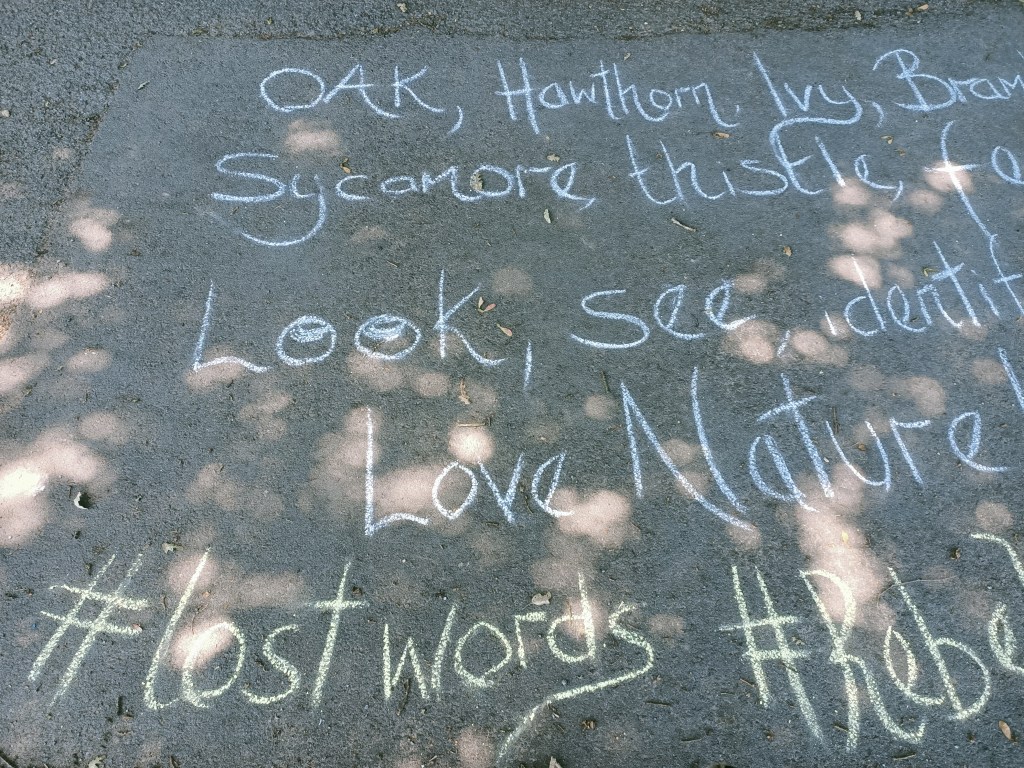
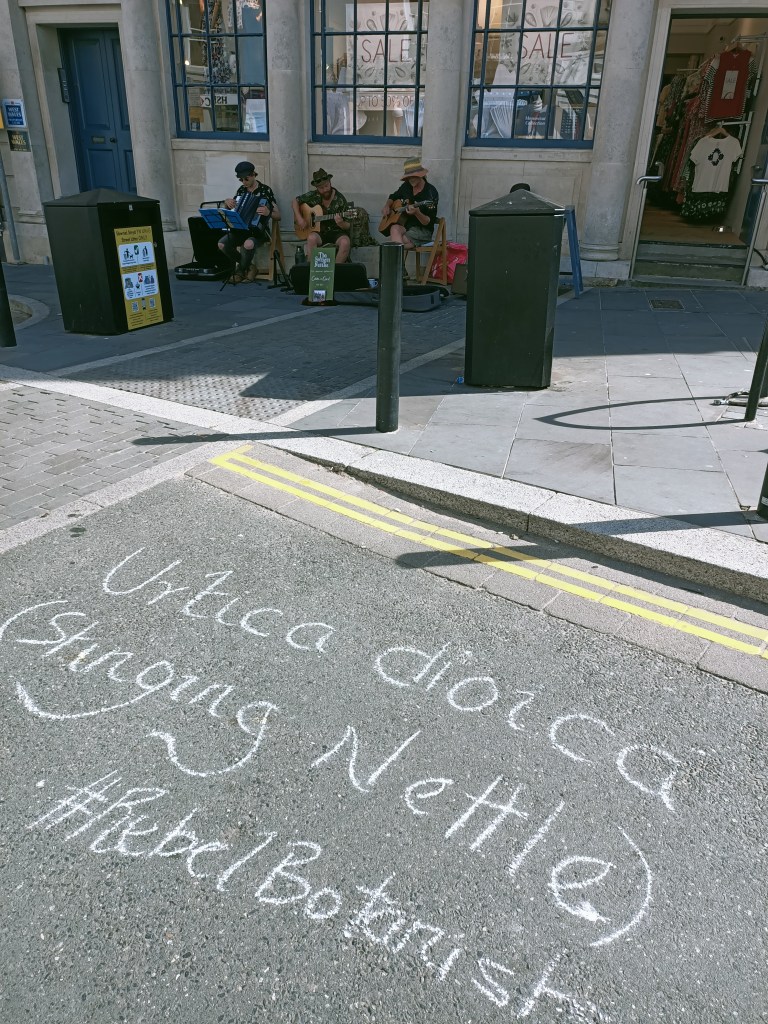
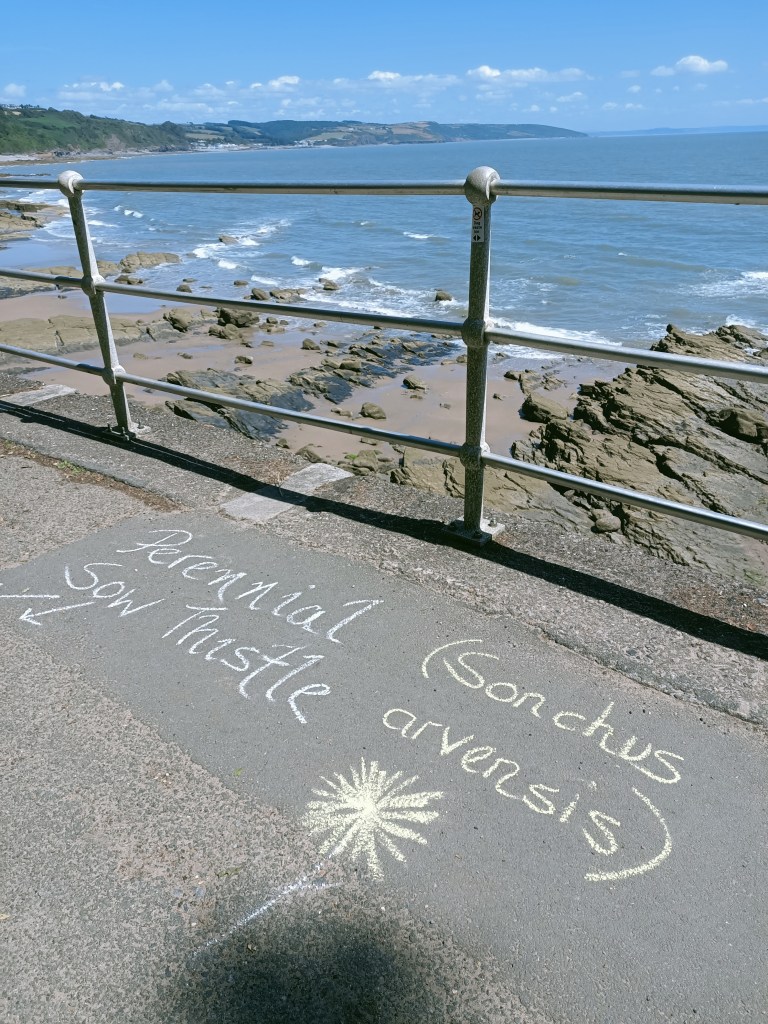
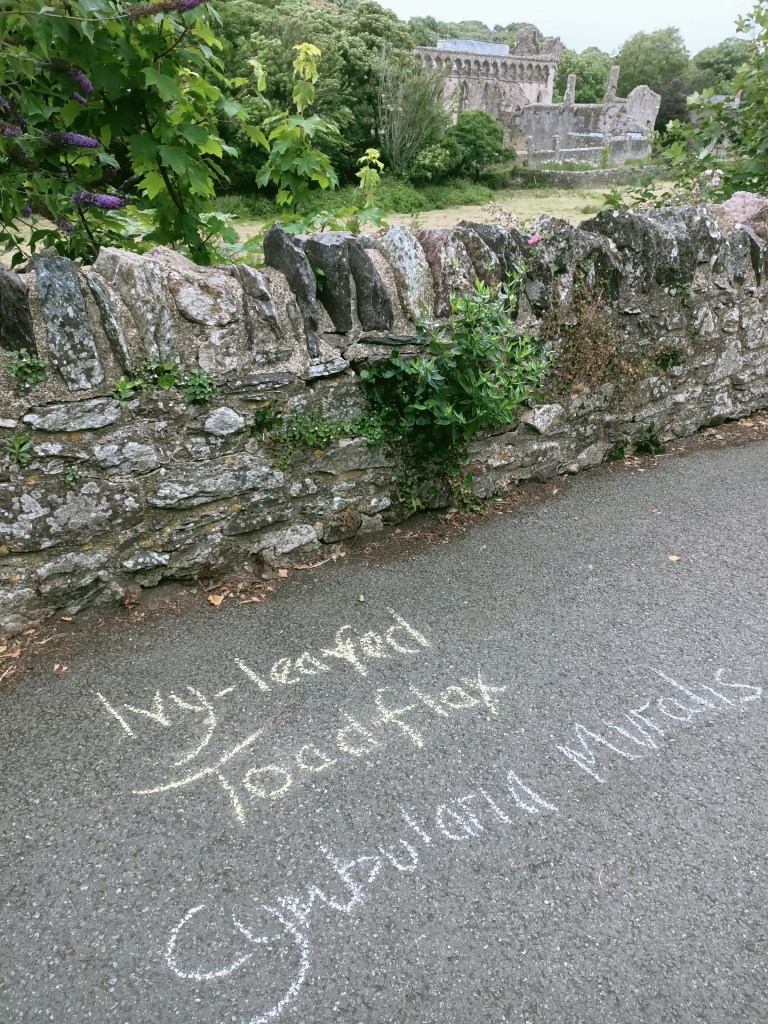
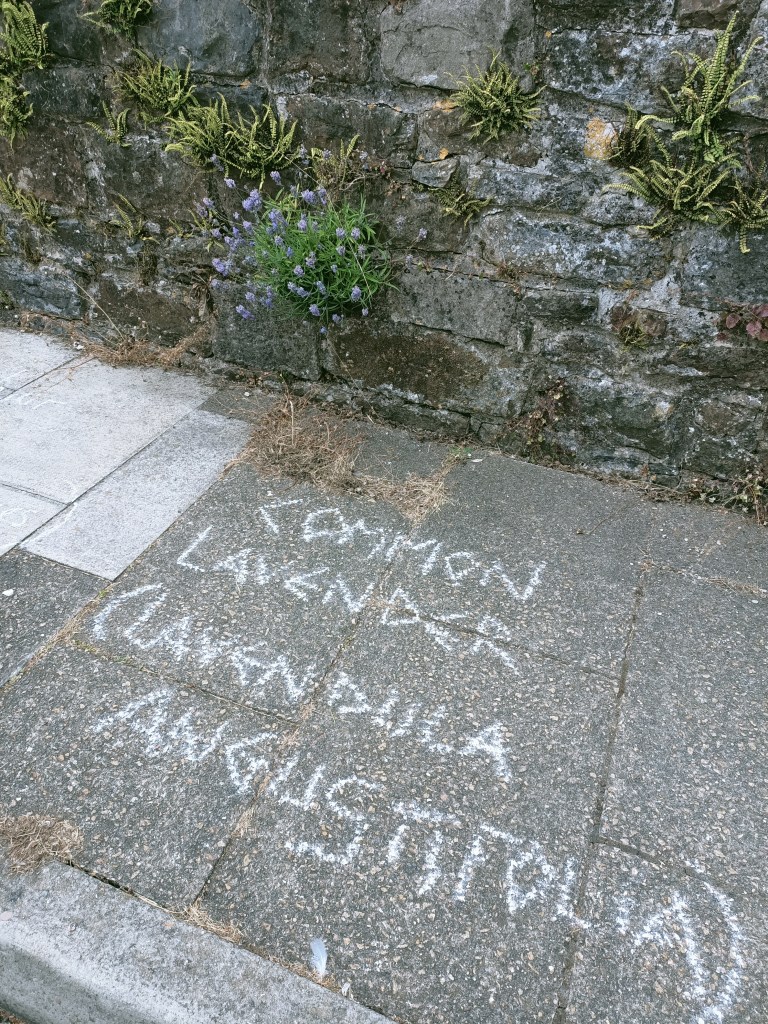
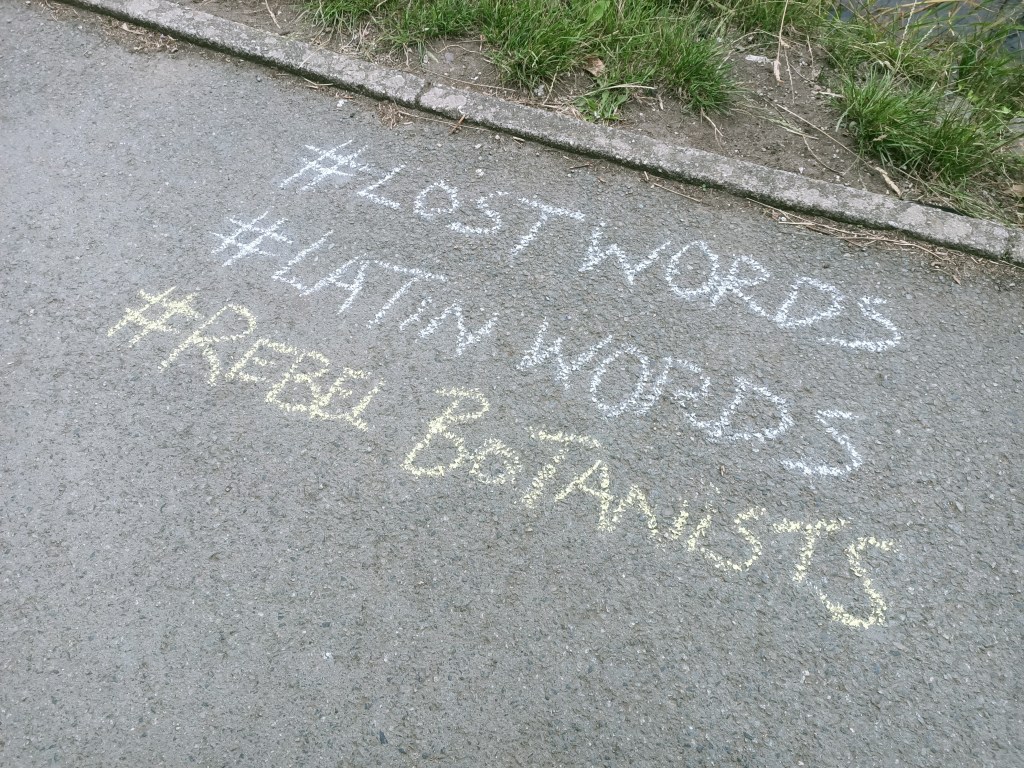
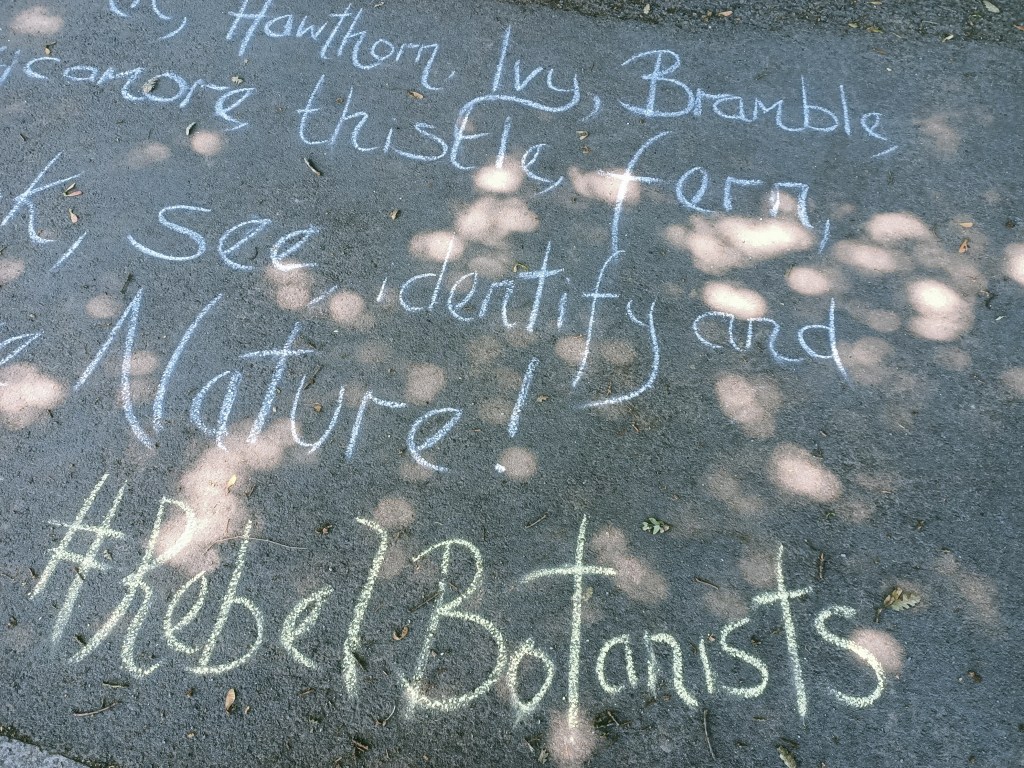
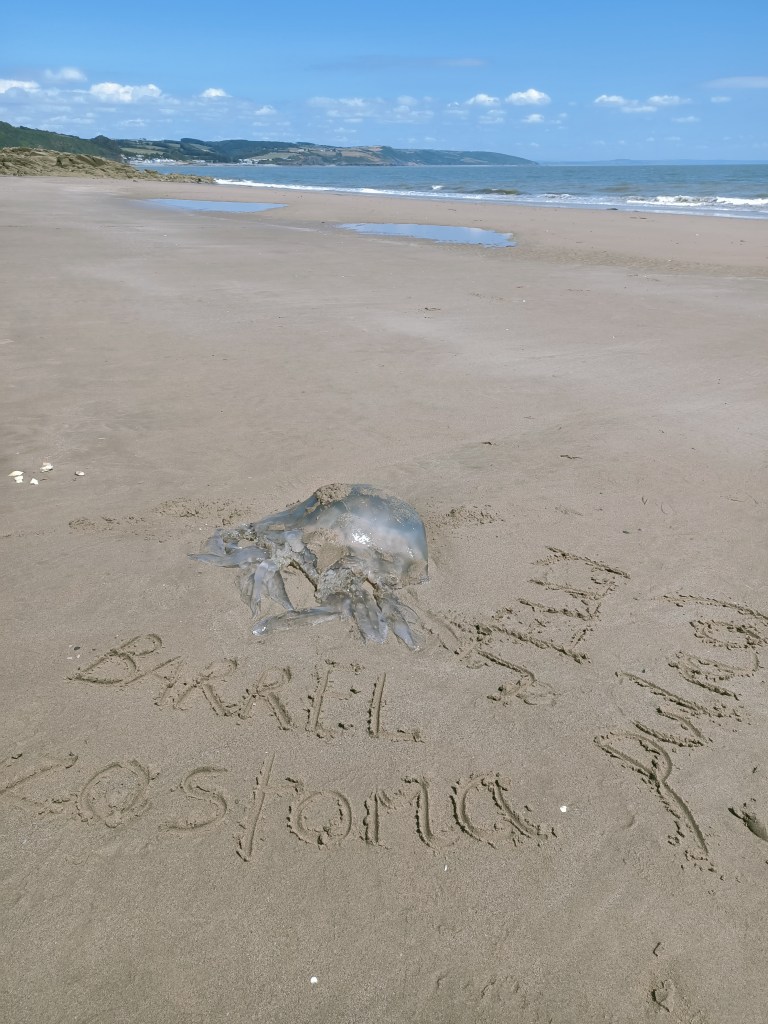
We must not allow the words of nature to be lost, nor the last remaining ancient temperate rainforests. Instead, we must nurture and revitalise them. Talk, chalk and walk in nature, you’ll feel better for it 💚
 #RebelBotanists
Rainforests, from Amazon to Wales, are losing fast in the battle against climate crisis 🙏🌍
LikeLike
Yes, both tropical and temperate rainforests need the opportunity to rejuvenate. Many people realise the issues around the Amazon rainforest, but not so much the temporary zone ancient woodlands. We have to keep raising awareness and do what we can to protect them all. ✊🙂
LikeLiked by 1 person
That is true. Raising awareness to protect not only the Amazon but also other rainforests in Wales and Sinharaja in Sri Lanka is the best option. Thank you 🌍😊🙏
LikeLike
Our pleasure 🙂
LikeLiked by 1 person
Thank you 🙏
LikeLike