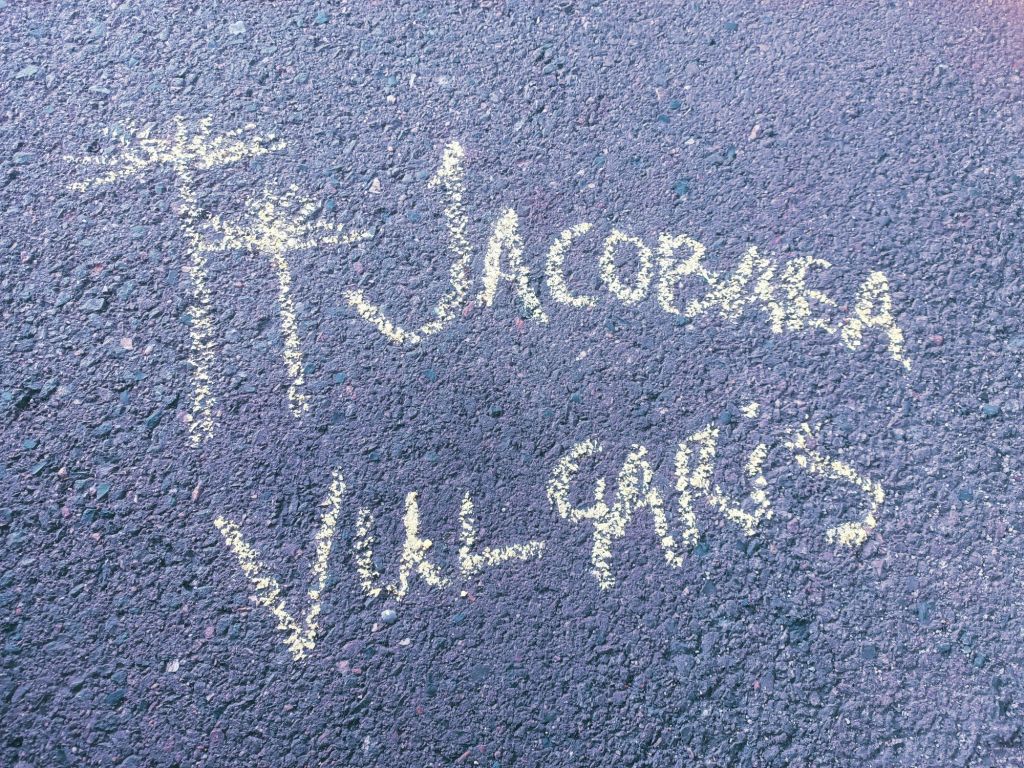
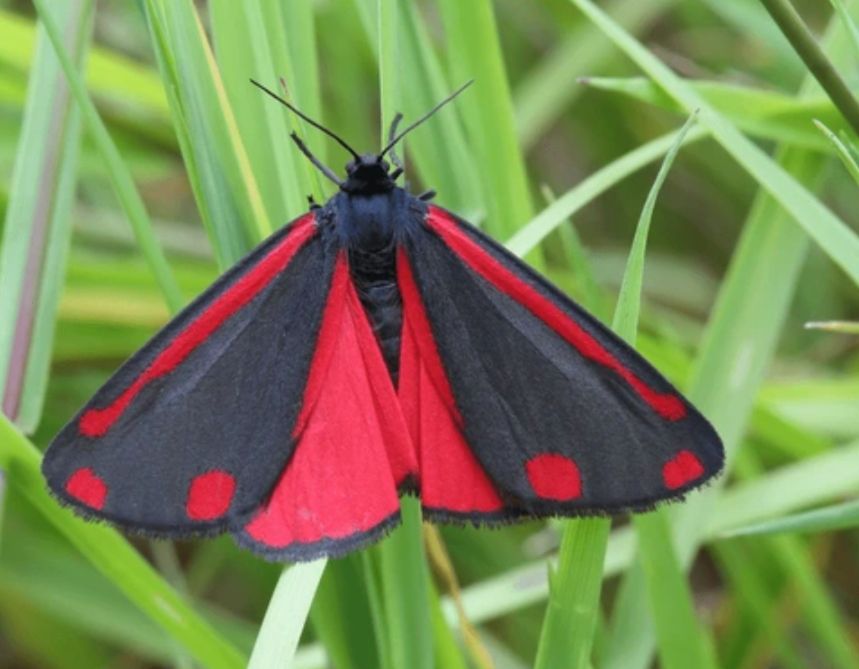
What connects Tyria jacobaeae and Eristalis tenax, or, I could say, what links Cinnabar moths and Common Drone flies?

Well, as my photo evidences, the answer is Ragwort. This bright bunch of Ragwort flowers caught my eye, as I walked briskly from Mutley Plain, in Plymouth. But, what really caught my eye was the number of ‘woolly bears’ making a tasty meal of the petals, on just a small number of these wildflowers growing behind a low wall of someone’s front garden.
Ragworts are in the daisy family, Asteraceae, and all these flowers are important to pollinators. We recently posted how valuable Ragwort is on so many levels, but with insects numbers significantly reduced, the most important factor has to be their benefit to wildlife.
With the Butterfly Count in full swing at the moment, I see and hear many comments lamenting how few butterflies we are currently seeing in this country – it is after all one of the most nature depleted in the world! 😞 Seeing the number of caterpillars on this plant gave me some hope, but it also emphasized the need that we all must do more to protect Nature by:
🌼 Reducing mowing – wait until early autumn when flowers will have seeded and young wildlife have fledged/grown.
🌼 Not using toxic pesticides which kill life below and above the soil – what’s the point of feeding birds and inviting insects if we are to poison them?
🌼 Encourage wildflowers in any space you can, no matter how small.
Moths are just as important as butterflies for pollination, and just look how beautiful the Cinnabar moth is in the above picture.
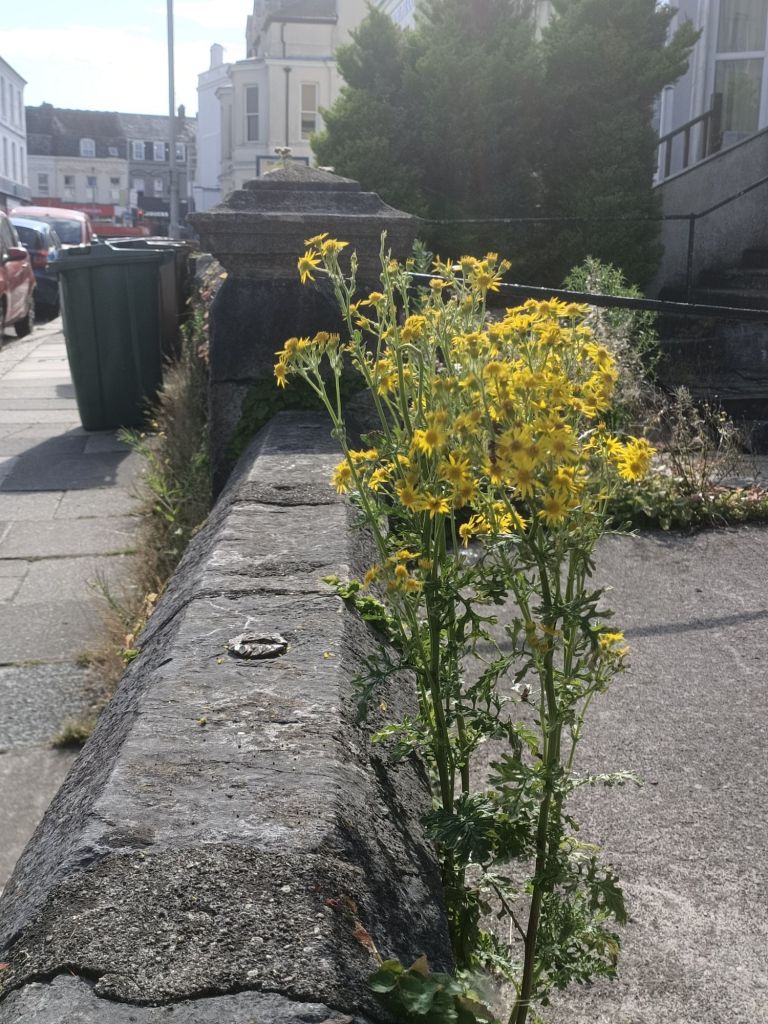
This is just a small outcrop of Ragwort along this road, but imagine if there was a while green corridor of life along this street and many more…🤔 It would be more colourful and supporting so many more pollinator lives. So go on, save a life and grow some wildness 🙂👍🦋🐦🐝🐞🪲🌳🌸🌼🌼🌼🌼
 #RebelBotanists
Try telling this to the neat and tidy brigade all of which must live in my town because these nature haters have demanded more mowing and the removal of any wildflowers growing on our barren streets! They say the town looks ‘a mess’ and ‘unkempt’ since our county council started mowing only twice a year and wildflowers were left to grow wherever they were doing no harm! What is the answer?
LikeLike
That’s dreadful. The ‘neat and tidies’ are everywhere but you obviously have more than your fair share. Perhaps private message us and let us know your location – maybe we can do a chalking in your area. It is very much about education. Is your council putting little signs in the wild areas to say growing for pollinators, or something similar? That sometimes helps. Maybe try getting together a local group, to support the council in what they are doing, and educating people by inviting people to walk in nature or wildflower identification activities. It is hard work, I know, but don’t get despondent, there are people out there who care as well 🙂👍
LikeLike