
On Friday, 16th May we turned up to a site in Plympton, Plymouth responding to an urgent plea that lots of trees were being chopped down and nesting birds were possibly in danger. Could we stop it? Well, we knew nothing about this and neither did anyone else we contacted in our ‘tree caring’ community. So, armed only with good advice and a passion for protecting nature, we responded.
The neighbours living close by these trees had not been informed of this action. As one resident said when we arrived: “you hear the chainsaws and you immediately think ‘Armada Way’, they’re going to cut the whole lot!” It seems the shock waves from that event are still very much felt by people in Plymouth.
Before going over to speak to the chainsaw handlers, we watched. Looking through binoculars, we searched for nests but couldn’t see any, which was a relief. As we watched, total destruction was not unfolding, rather careful lopping of branches of one particular species, European Ash: Fraxinus excelsior.
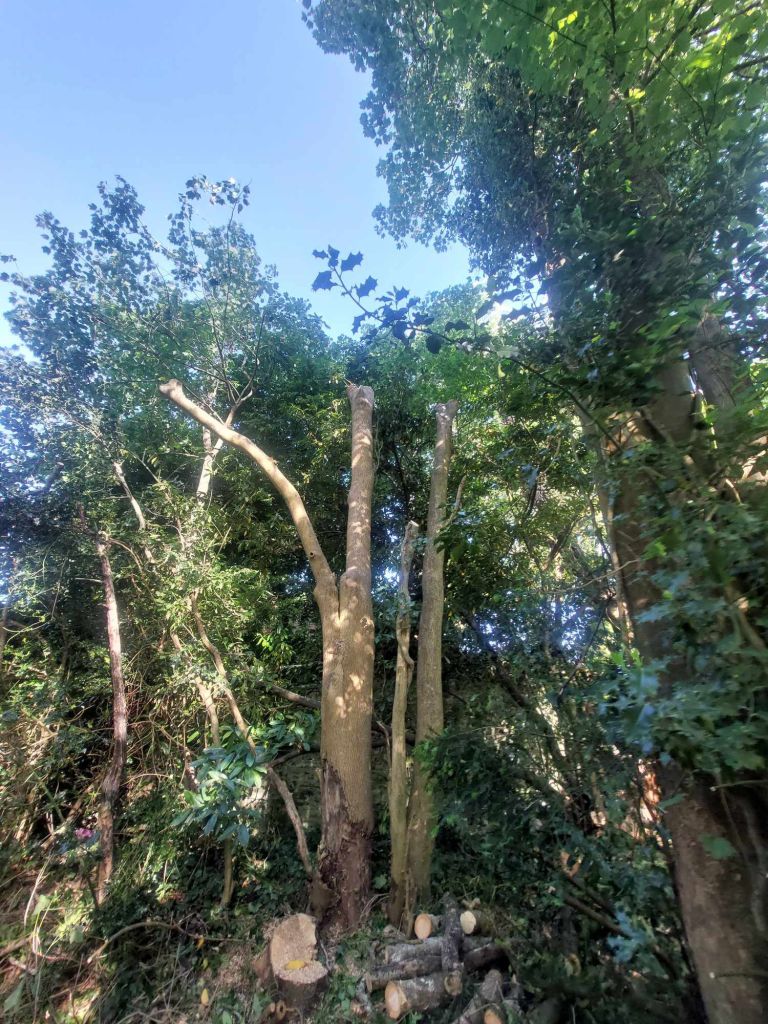
We edged towards the barrier and beckoned to the workmen. It was clear from their initial body language they expected confrontation, but quickly realised that was not our agenda and very soon we were having a very productive conversation. They invited us behind the barrier and showed us exactly what they were doing. Contracted in by the council, these tree surgeons had removed 5 Ash trees that had Ash die-back. Was that necessary? Could these trees have been saved by just removing affected branches? It seemed not. The trunk pieces they showed us were black throughout the heartwood and placing his finger between the blackened wood and outer layer, it crumbled away. Other trees not so badly affected were having branches lopped to save the tree. Amongst the ash trees, other species like Sycamore were untouched.
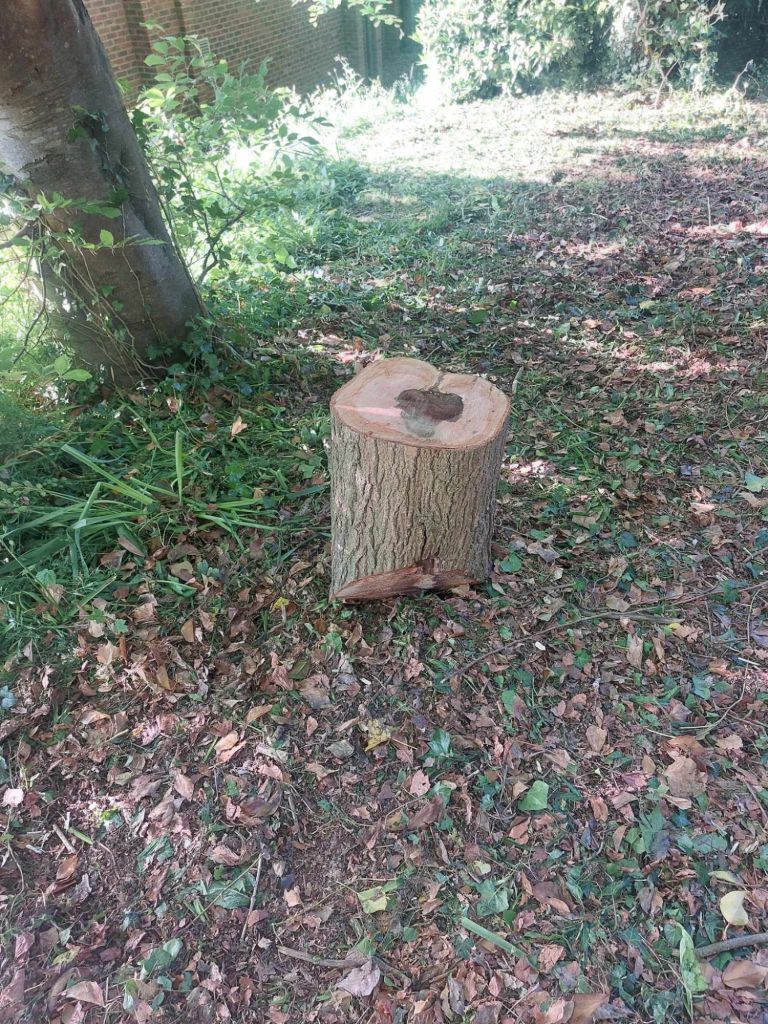
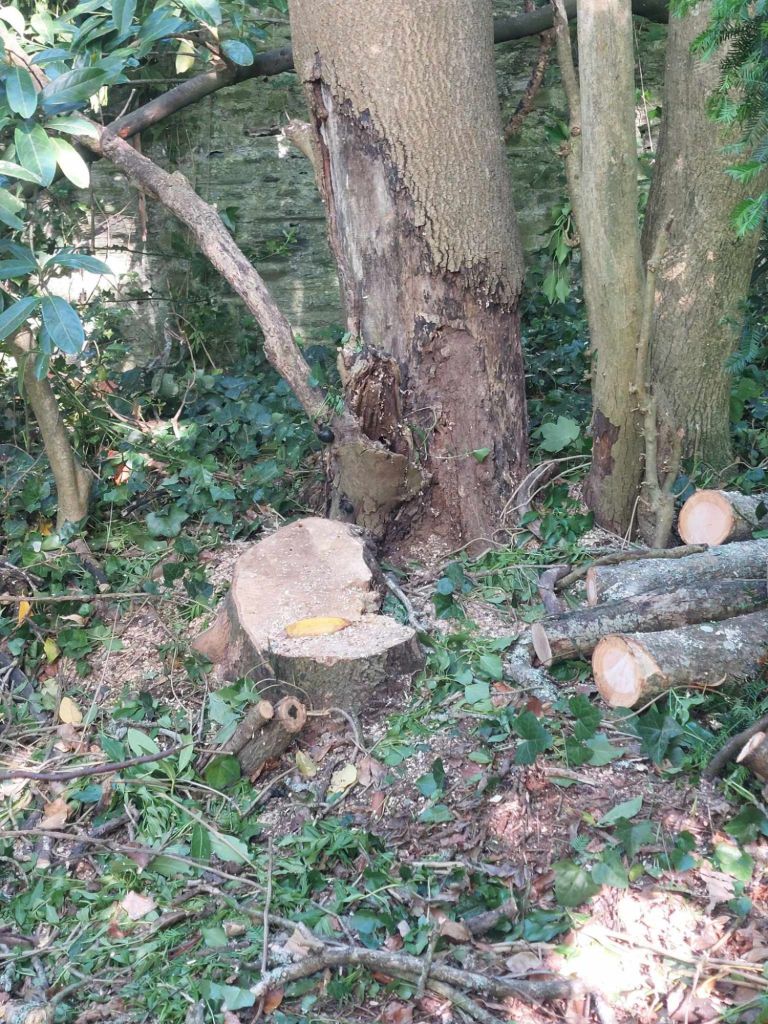
What about nesting birds? Was it really acceptable to be doing this during nesting season? He assured us they had checked for nests and hadn’t found any, but he did admit that it was a disruption for birds generally to have this activity and noise happening in their habitat.
Could this not be done outside of this season? He responded with honesty: yes it could and it would be better for wildlife, but for us we’d have no income coming in during those months. The neighbour then responded that if more frequent checks were made, rather than leaving the trees for so long, then the remedial work would not be so intensive. This would also mean the tree surgeons would still have work throughout the year. That decision isn’t theirs though, it’s a council one.
The tree surgeons apologised that the neighbours hadn’t been informed but said they couldn’t be responsible for this. We agreed. The council have contracted them for the job and surely it’s their responsibility to also inform local residents that this would be happening. Yet, apparently, the council doesn’t have to because “the trees belong to them not the neighbours”. Though surely with the branches being so close and the level of noise, it would be respectful to contact them? Also, the initial stress caused to the community thinking they were going to lose all their trees would easily have been avoided if communication had been made.
It’s never good to see trees being cut. Ash die-back is a dreadful disease, though sometimes the tree is able to fight back and survive. With this knowledge, less trees are being cut down and more are being cared for. In this situation, it seemed the disease had gone too far to save the five but, hopefully, the rest will recover.
We left with handshakes and reciprocal smiles, our caller was relieved and happy to pass this on to other local residents. However, it appears that a complete lack of information from the council to its community had created the initial panic. So, please:
“All we need to do is make sure we keep talking” (Stephen Hawking, 1993). By talking we are keeping the channels open to communicating, collaborating and learning.
This post is dedicated to the five 🌳🌳🌳🌳🌳
 #RebelBotanists
Great article friends
Yahoo Mail: Search, organise, conquer
LikeLike