Nature Calling!

“The State of Nature Report is an assessment of how nature is doing across the UK…The report pools data and expertise from more than 60 nature conservation and research organisations, a partnership unparalleled in UK conservation.” https://www.bto.org/our-work/science/publications/reports/state-of-nature

Our latest project, ‘Nature Calling!’ has been kindly funded by Charlotte Holloway, the local councillor of Drake Ward in Plymouth. Its key aims are to address and raise awareness of pests and pesticide pollution: both are major threats to flora and fauna.

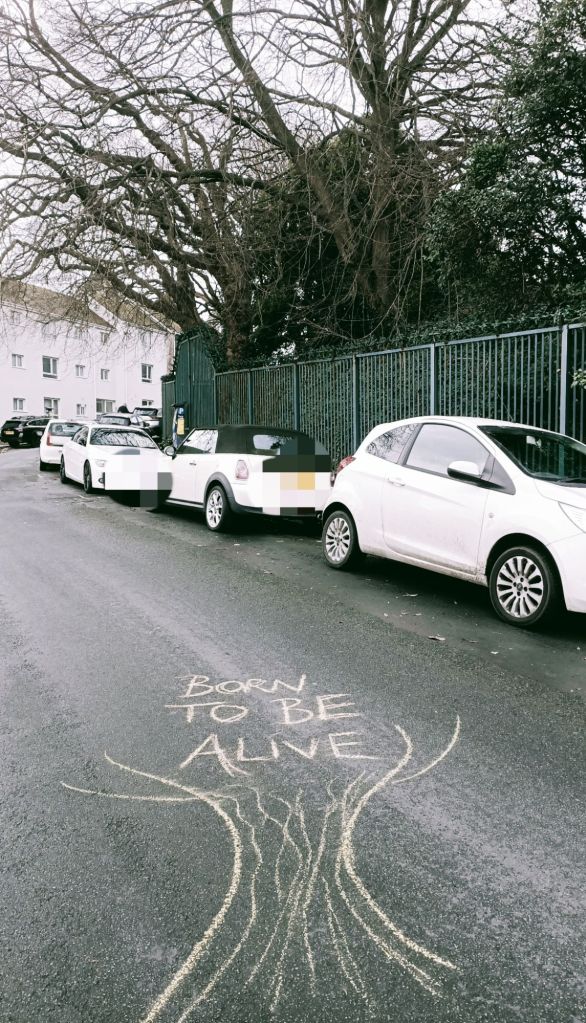
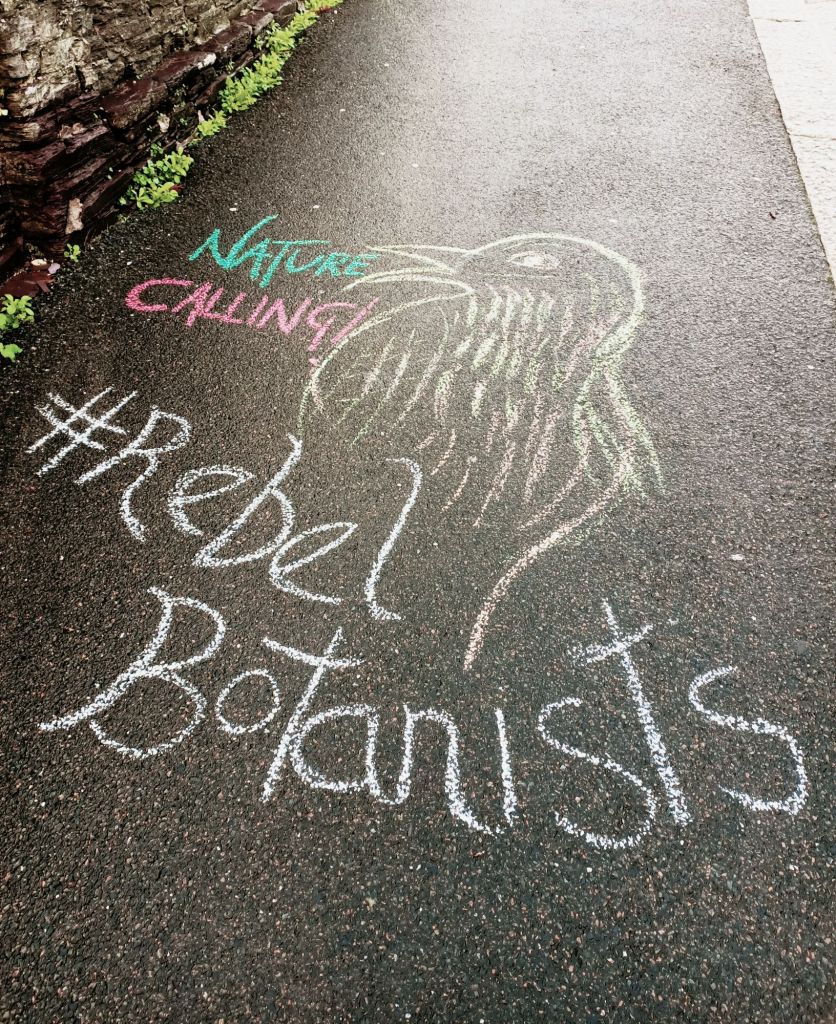
Our chalked sign at a previous EcoFest in Tavistock

When we talk of pests, we are not talking about insects, because with thoughtful gardening practices they are not pests, but pollinators and food for other insects, birds and mammals – a natural biodiversity cycle. No, the pests we are focussing on are in fact our cute and adorable moggies. Yes, cats!
A very adorable cat 💚

Apparently, over 25% of households have a cat. The problem is that when left to roam, as many do, they kill “over 100 million wild animals in the UK every year, and of these 27 million are songbirds”.
https://www.songbird-survival.org.uk/help-birds/help-birds-at-home/protecting-songbirds/pet-disturbance

It’s a cat’s instinct to hunt, so telling it off won’t work, but we can reduce this hunting behaviour. Given how seriously threatened birds and small mammals are, it’s an essential cat owner’s ethical responsibility to protect them, so here’s what you can do:

1. Keep your cat indoors between dusk (sunset) and dawn (sunrise) when birds are singing and feeding.
“Not only will doing this protect wildlife, but it may also protect your cat by reducing fighting and road accidents (Cecchetti, Crowley, & McDonald, 2021; Crowley et al., 2019).”

2. Play with your cat.
Providing physical and mental stimulation through play and puzzle feeders, even for just “10 minutes of daily play can reduce hunting by up to 25% (Cecchetti, Crowley, Goodwin, et al., 2021).” 

3. Consider your cat’s diet.
Store-bought cat food is low in meat proteins, instead they are packed out with grain and cheap proteins. “Changing your cat’s diet to include more proteins that come from meat has been shown to reduce hunting by 36% (Cecchetti, Crowley, Goodwin, et al., 2021).”

4. Place your bird feeders up high. Even though you may not have cats yourself, neighbours cats will undoubtedly wander in your garden. Place them really high, out of reach of the most energetic cat.

5. Get a multi-coloured cat collar with bells. They can reduce the number of prey caught “by over 50%, making it one of the most effective options for reducing the number of birds your cat kills.” (birdsbesafe.com).

So, at Houndiscombe Park, in Plymouth, funding has secured: 

– the replacement of high rise bird feeders and seed for our feathered friends 🐦🐦🐦🐦🐦

– 10 free multi-coloured cat collars (with bells and safe release clips). If you live in the Drake Ward – these are available to the first 10 lucky cat owners to try. Just give us email feedback (twice over 6 months) to let us know how effective they are. Just PM us on our Facebook page.
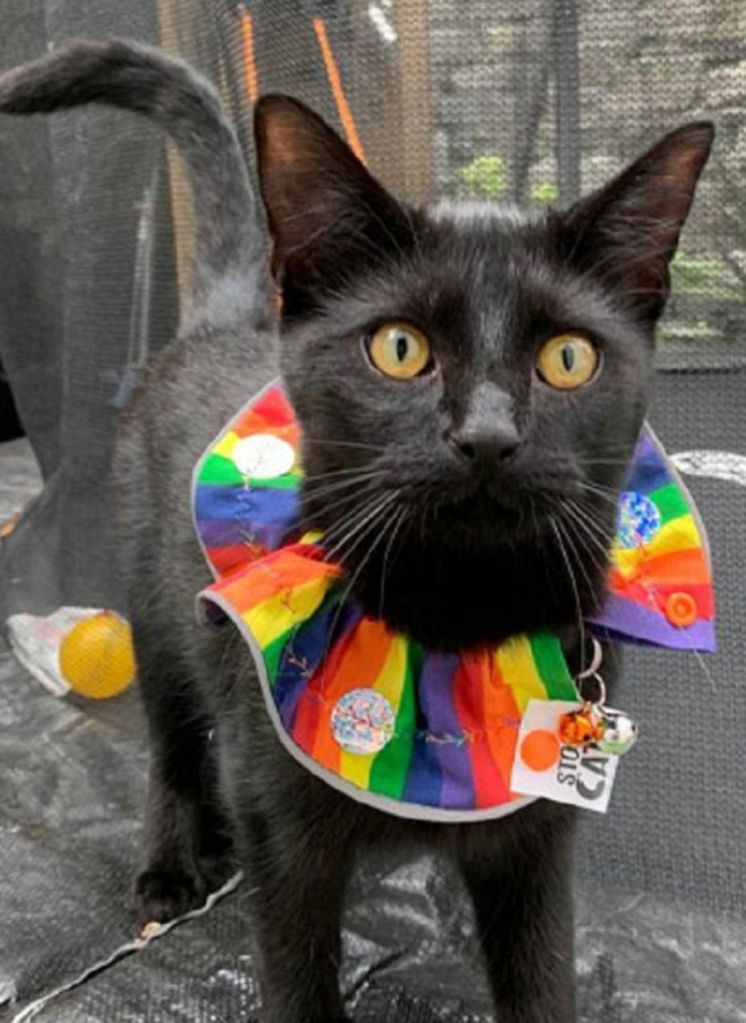
This is the rainbow design cat collar

The second focus of our project is pesticides. Despite being readily available to buy on garden centre shelves, they are destructive toxins, killing life in our gardens and further afield. These chemicals are also contained in flea sprays used on pets.

A recent study has revealed further worrying evidence that every bird’s nest tested was lined with pesticides in the nesting material. https://www.channel4.com/news/scientists-warn-chemicals-in-pet-flea-treatments-are-killing-wildlife

“PAN Europe recently revealed that PFAS pesticide residues are found in many fruits and vegetables… These forever chemicals are deliberately sprayed on food and fields and their use is increasing. Not only are they persistent but they also have toxic properties.” https://www.pan-europe.info/blog/pfas-pesticides-cause-havoc-uk
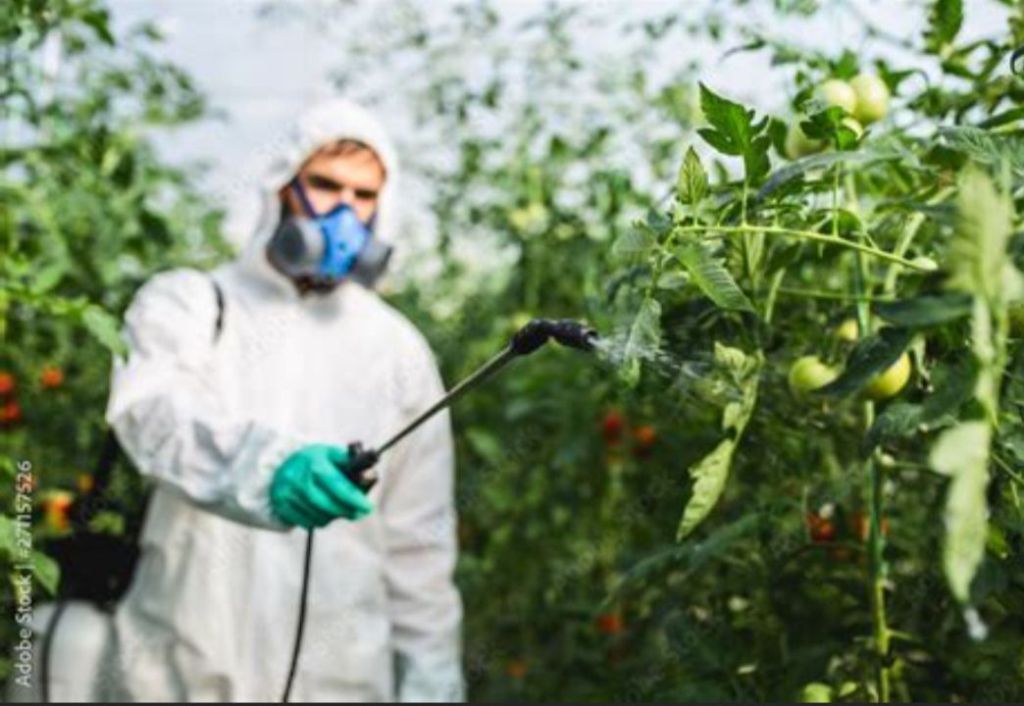
Done tests have revealed up to 17 different pesticide toxins being present!


“PAN UK analysed the latest results from the UK government’s residue testing programme, finding that ten different PFAS pesticides were present in spices and a range of fruit and vegetables including grapes, cherries, spinach and tomatoes. Strawberries were found to be the worst offenders, with 95% of the 120 samples tested by the government in 2022 containing PFAS pesticides.”

“Pesticide elements have now perpetually entered our atmosphere and subsequently contaminated water, food, and soil, leading to health threats ranging from acute to chronic toxicities…Pesticides produce different types of toxicity, for instance, neurotoxicity, mutagenicity, carcinogenicity, teratogenicity, and endocrine disruption.” https://www.sciencedirect.com/science/article/pii/S2405844024051594
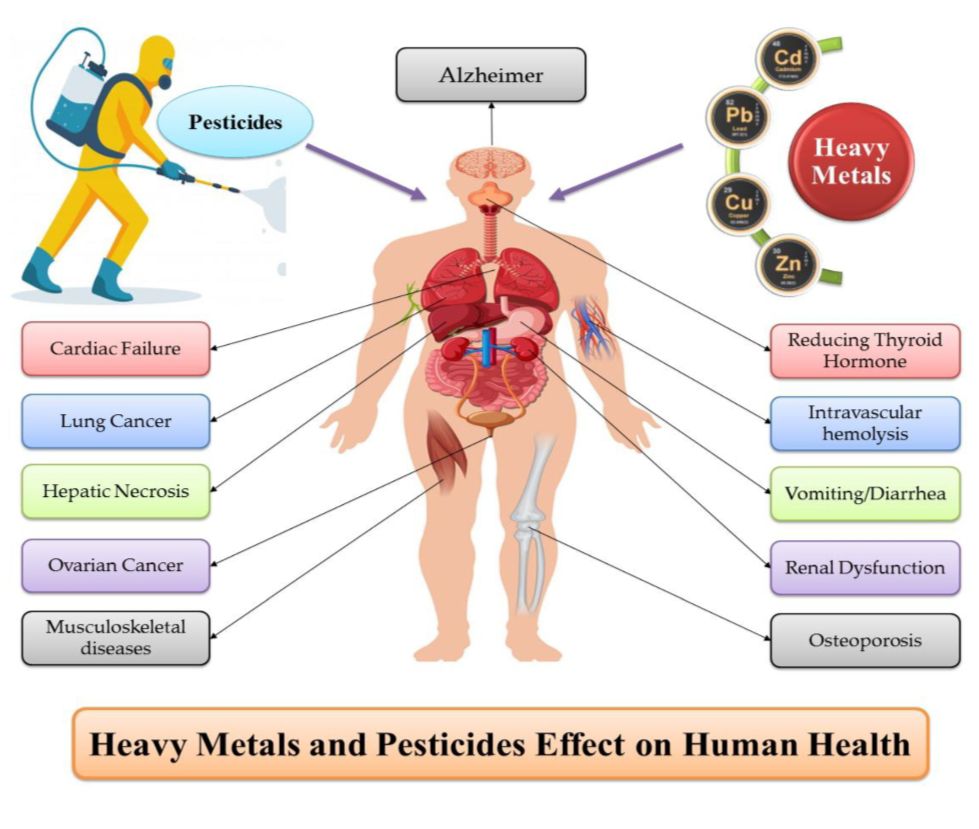
Depressing reading  isn’t it, but:
here’s what you can do:

– stop using pesticides in your garden
– email your council to stop using chemicals on streets and public spaces
– buy organic and significantly reduce your exposure to these chemicals
– use natural, toxic free, flea sprays for your pet.
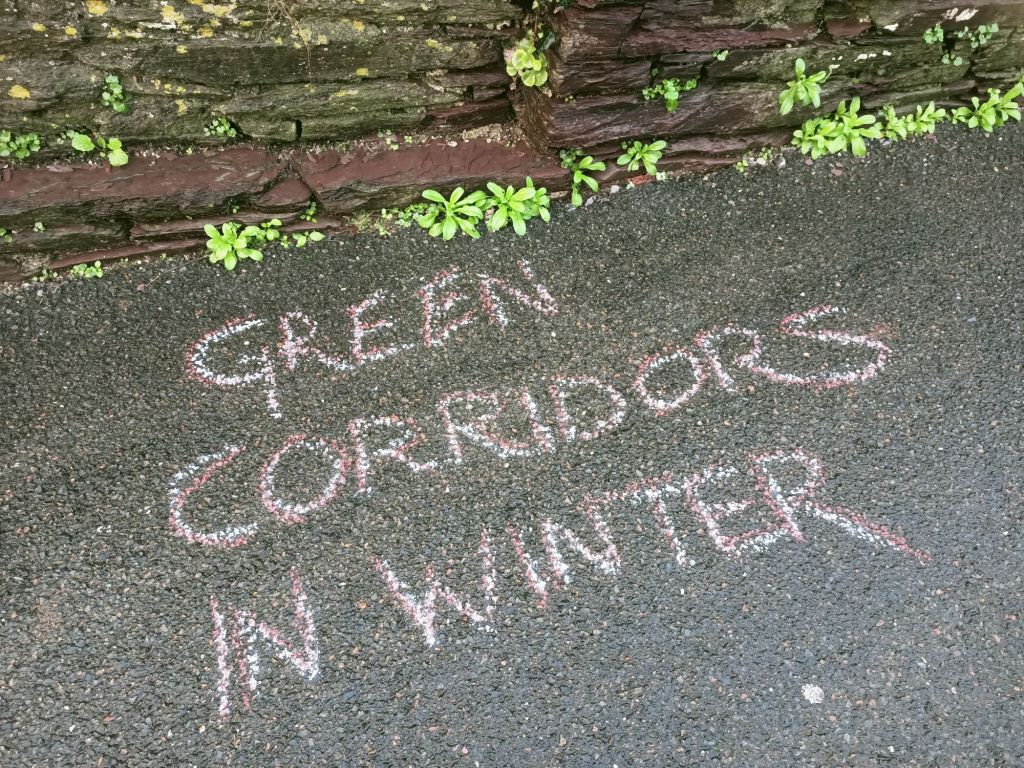
Pesticide-free green corridors for wildlife are crucial, particularly in winter
Lots of little plants popping up between the cracks and crevices, supporting insects, birds and mammals 🙂👍

A natural toxic-free alternative is
Apple Cider Vinegar (ACV) spray. It  is effective because:

– “pH balance: ACV slightly acidifies the skin’s surface, creating an environment fleas dislike.
– Smell and taste deterrent: its sharp scent and flavor make animals less attractive to biting insects.
Anti-inflammatory effects: helps calm itching and redness from flea bites.
Mild antiseptic properties: cleanses minor irritations and prevents infection from scratching.
A flea-free happy pooch 🙂

‍Use as a ratio of 1:2 (1 part ACV and 2 parts water) especially if your pets skin is sensitive.”
https://vetexplainspets.com/how-to-use-apple-cider-vinegar-for-fleas

Check out Alternatives to Herbicides on the PAN UK website:
https://www.pan-uk.org/alternatives-to-herbicides-a-new-guide/

Please click on our partner Facebook page: Pesticide-free-Plymouth to show your support of these initiatives. 🙂👍

QR code for Pesticide-free-Plymouth 👍

https://www.facebook.com/share/1AFdns9P3h/


Thanks to our reference links for all the informative data and to Charlotte Holloway for the funding to promote Nature Calling!

This project has been kindly funded by Councillor Charlotte Holloway of PCC

Pasley Street Chalking

Pasley Street (pronounced paisley) is a very long urban road in the heart of Stoke, Plymouth. Join us on our walk and chalk, with Sophie from Green Communities, to identify wildlife on the walls and in the cracks of pavements, serving as valuable green corridors for nature. 🚶‍♂️🚶‍♀️🚶Here we go 🙂…

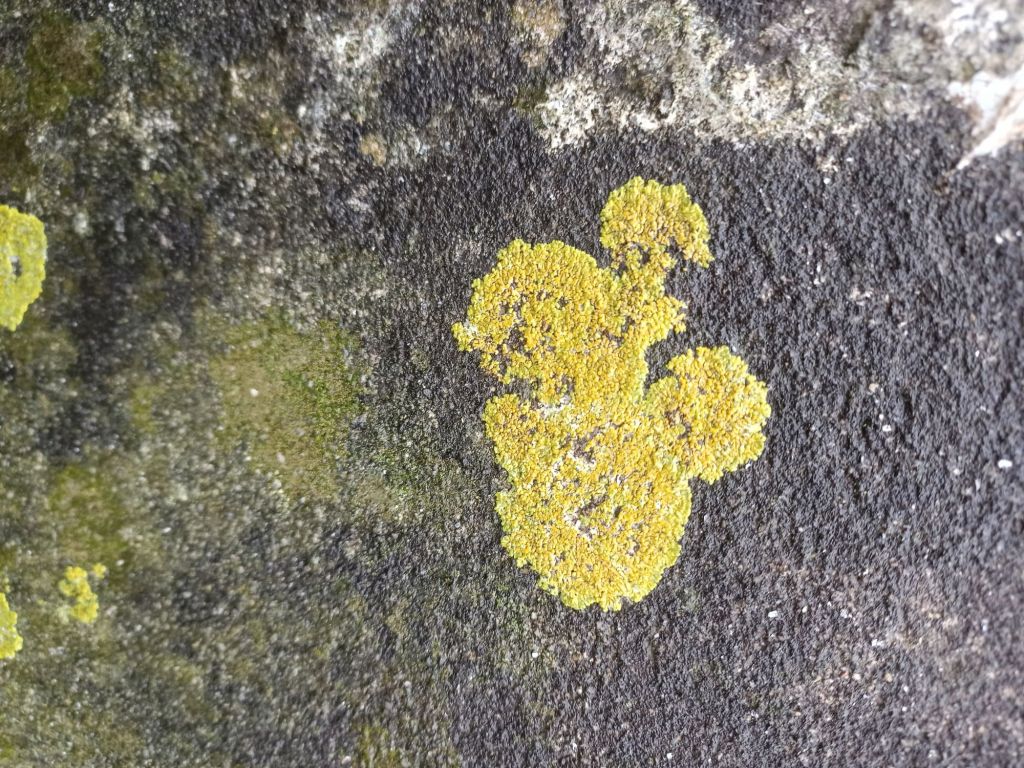
Firedot crustose lichens can be orange, yellow or brown and appear like tiny dots on the surface. These dots are the spore-bearing structures (apothecia).

Sunburst lichens (Xanthoria) like Firedot are often found on sunny walls and rocks. They have a circular, foliose design with tiny branching lobes, which often become obscured as they amalgamate into larger forms and can be easily mistaken for a crustose lichen.

Thoreau stated in his journal of 1851: “It is a good day to study lichens”, but perhaps that could refer to any day because lichens are fascinating. “They provide food, shelter and nesting material for birds, mammals and insects…moths on the run from a predator will mimic bark lichens. Many foods, perfumes, dyes, medicines (antibacterial and antiviral properties) and foods are directly derived from lichens…many species are very sensitive to pollutants such as sulphur dioxide and nitrogen.” (www.bbc.co.uk)

On the steps leading from Pasley Street to Block House Park.

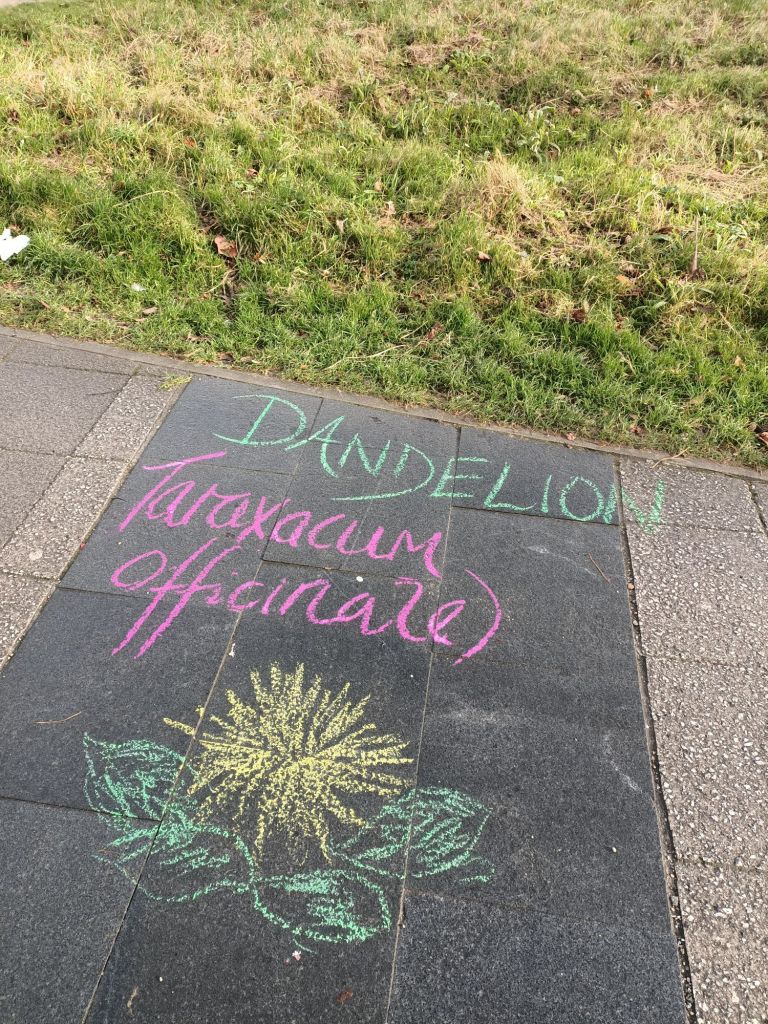
As well as those fabulous Vitamin K-packed, dandy Dandelions (Taraxacum officinale) we found Sunken Disc Lichen (Aspicilia calcarea) which belongs to the Aspiciliaceae family.

“Through its ability to break down minerals and organic matter, the lichen gradually forms a thin layer of soil, creating microhabitats that support the establishment of other plant species…By binding soil particles together and reducing surface runoff, the lichen contributes to the maintenance of soil structure and fertility. (https://www.sidmouth-nature.uk/hub-detail/Sunken%20Disc%20Lichen)

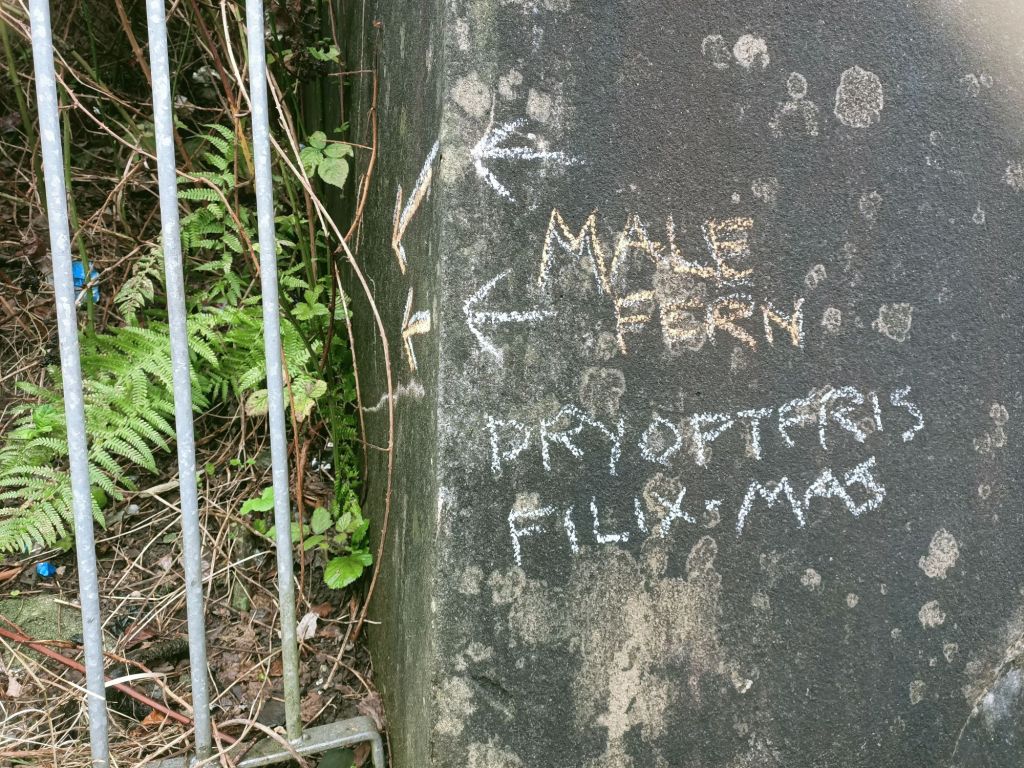
Another ancient life form on this planet is the fern. Did you know there are more than 10,500 species of fern? 🤔 Wow! 😲

It’s a vascular plant that has neither seed or flower, and this Male Fern likes damp shady places.

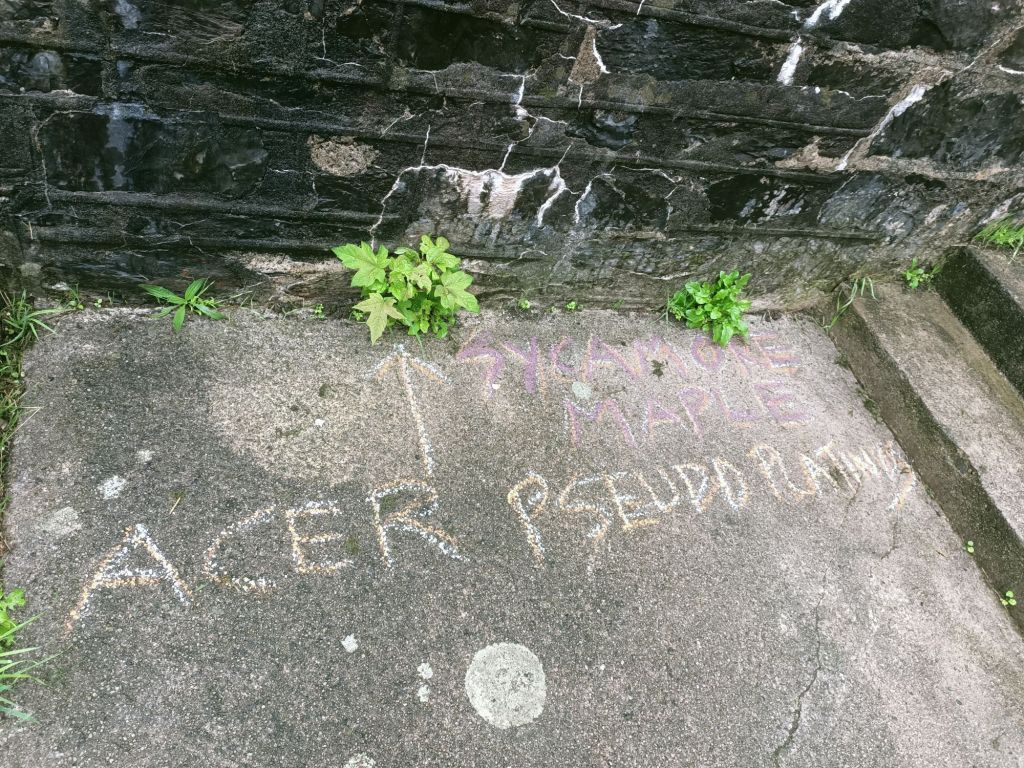
Self-seeded Maple, known as Sycamore

Don’t you just love it when a plant or tree finds the tiniest crack to find a home? 🙂Just like people, our sometimes hostile concrete streets are difficult places to find shelter, so plants have to be resilient and resourceful. The Sycamore provides nectar and pollen for bees and other pollinators 🐝🐝🐝🐝🐝🐝🐝🐝🐝🐝🐝🐝🌳🌳🌳🌳

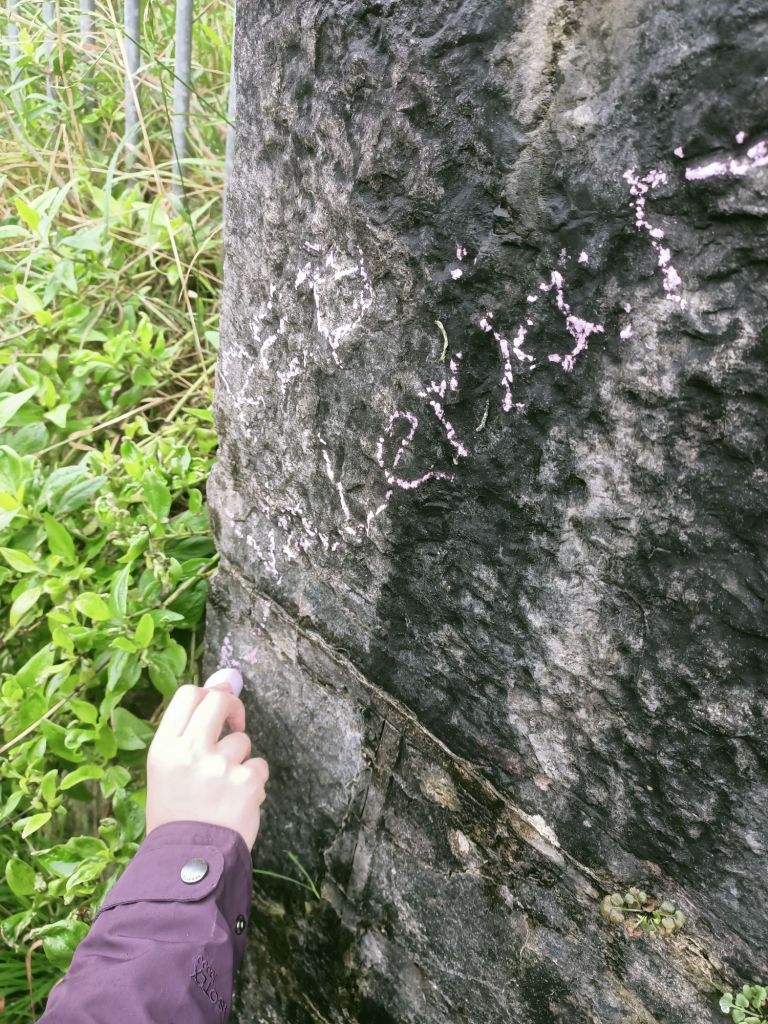
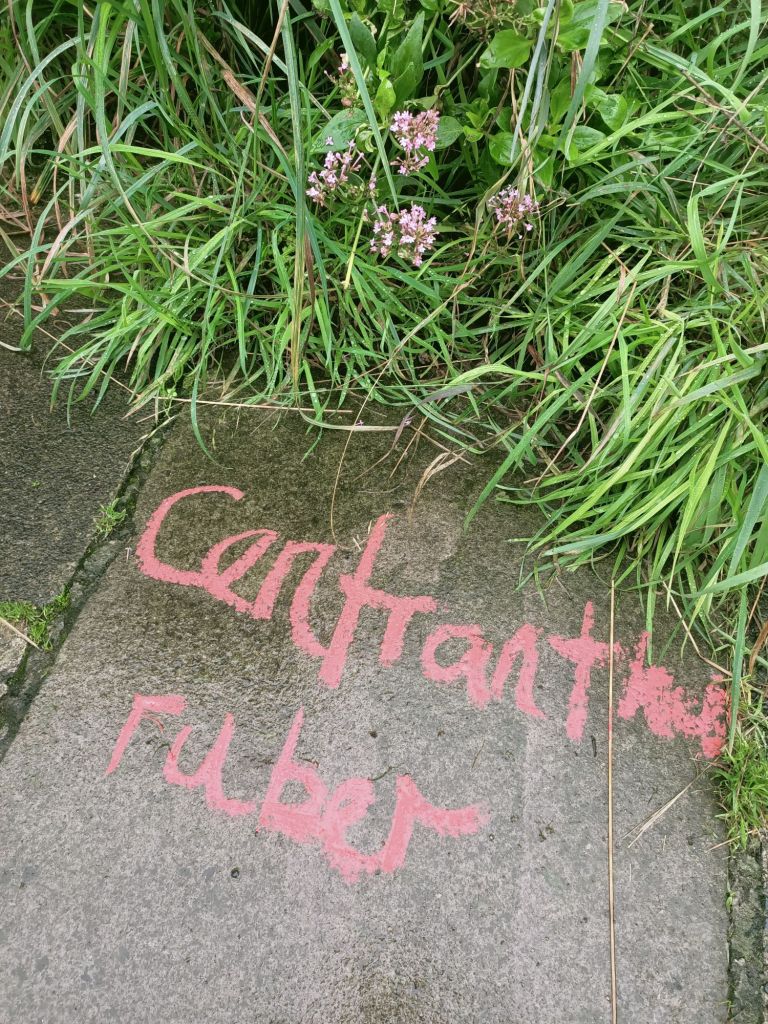
Thanks to a lovely local joining in with some chalking. Can you guess the plant she’s naming?
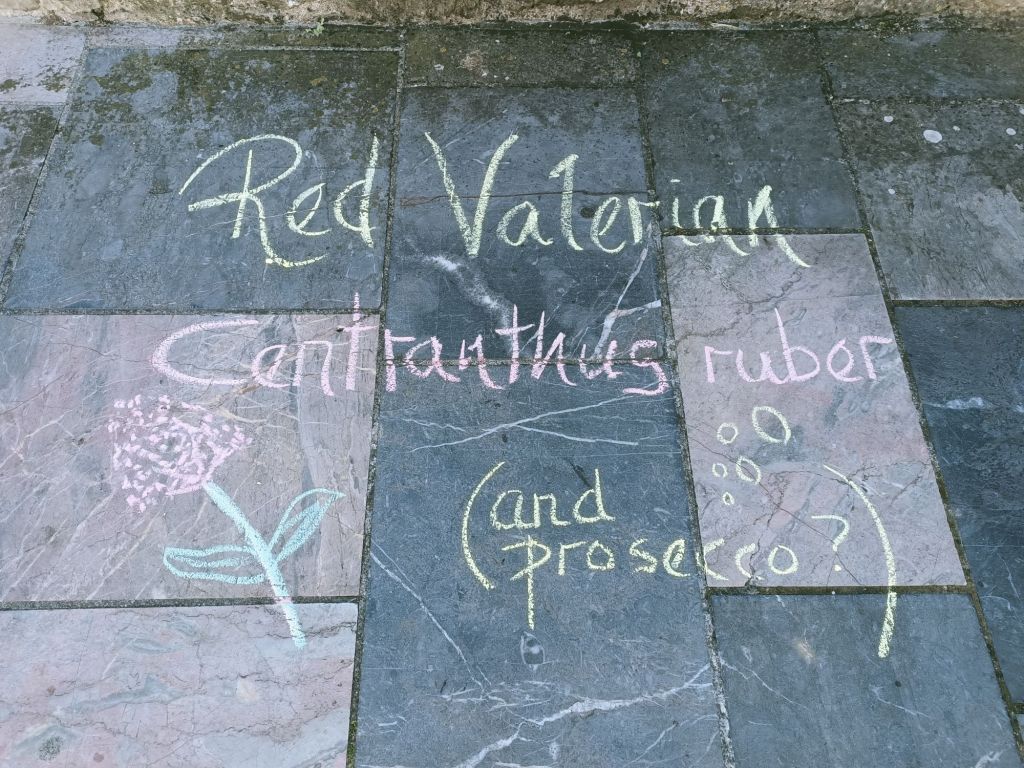
Yes, Red Valerian – Centranthus Ruber.

Did you know that Red Valerian is also known as: Kiss-me-Quick, Fox’s Brush, Devil’s Beard and Jupiter’s Beard. Which name do you know it as?

To avoid confusion this is why we use the Latin language to name plants, as this is globally recognised. “Since the first printing of Carl Linnaeus’s Species Plantarum in 1753, plants have been assigned one epithet or name for their species and one name for their genus”.  (Wikipedia) This is why Latin plant names are binomial.

All the little wildplants along your streets are absolutely vital for biodiversity.

“The troubling extent of insect declines across the UK has been highlighted… by the results of the 2024 Bugs Matter citizen science survey. The latest data shows that the number of flying insects sampled on vehicle number plates, across the UK, has fallen by a staggering 63% since 2021.                                                                    (https://www.buglife.org.uk)

We can all do more to help insects and increase these numbers – NOT using pesticides is a good start. These are toxins which kill insects and contaminate our socks, watercourses, and poison other life in our gardens, including birds and our own pets. Check out http://www.pan-uk.org for further information.

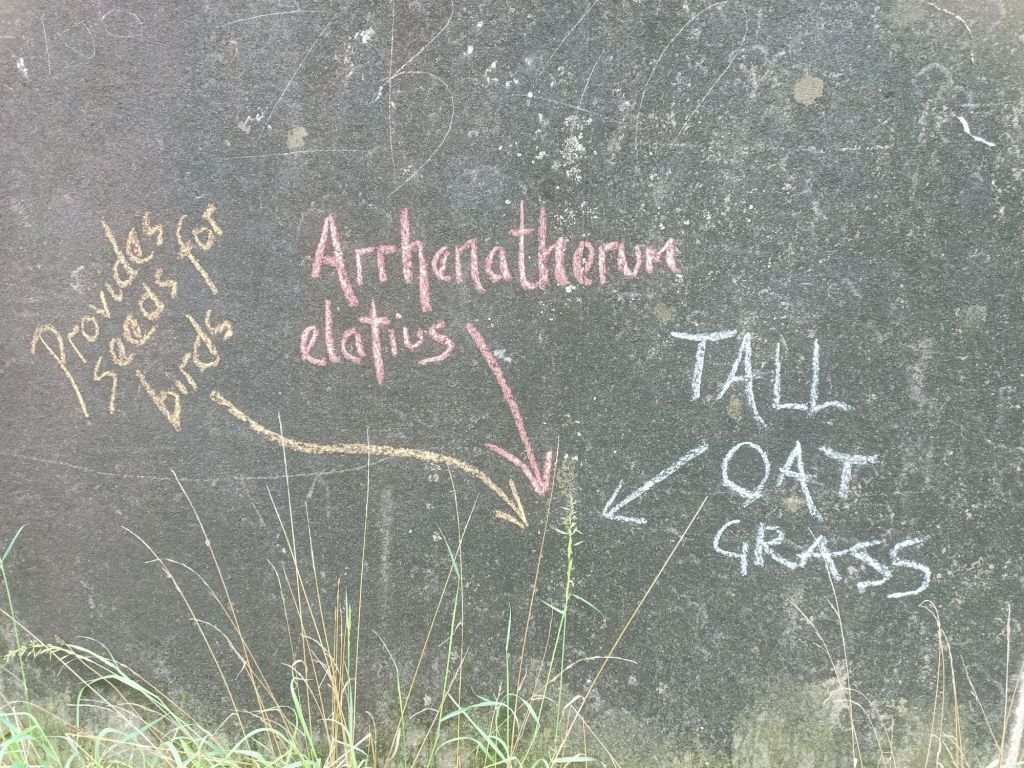
Grasses are really important too, providing food for birds, insects and small mammals.
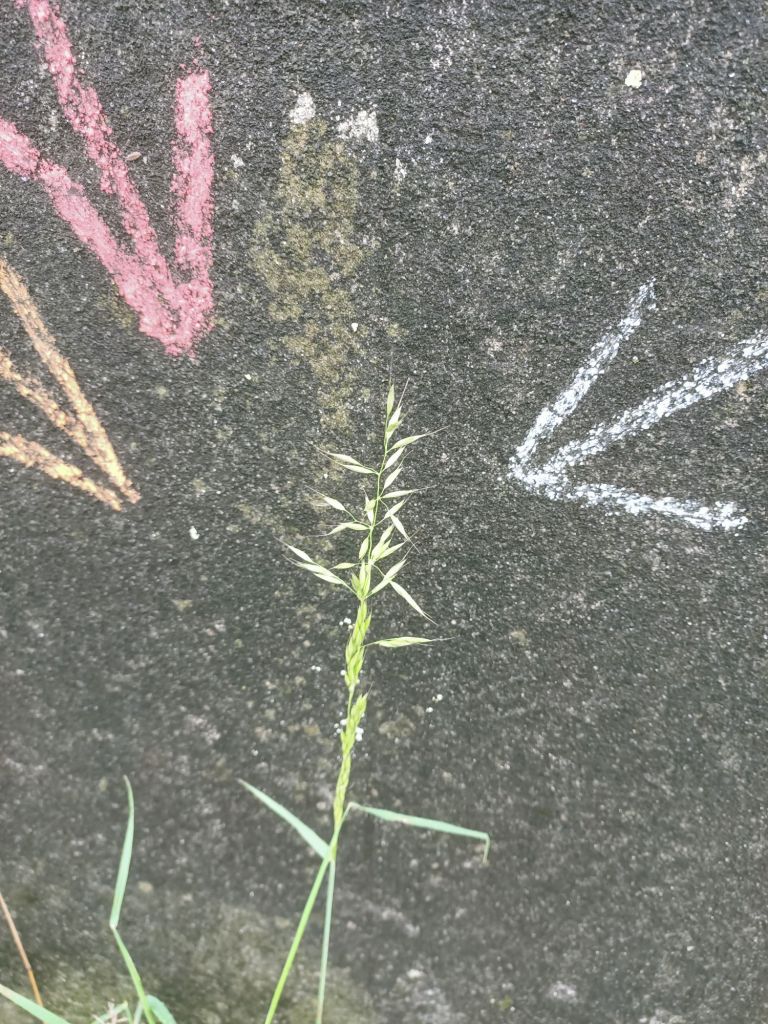
Close up of Tall Oat Grass

Also known as False Oat-Grass, it provides shelter and nesting material for Field Voles.

Looking closely, you can find lots of wild plant species in one small area.
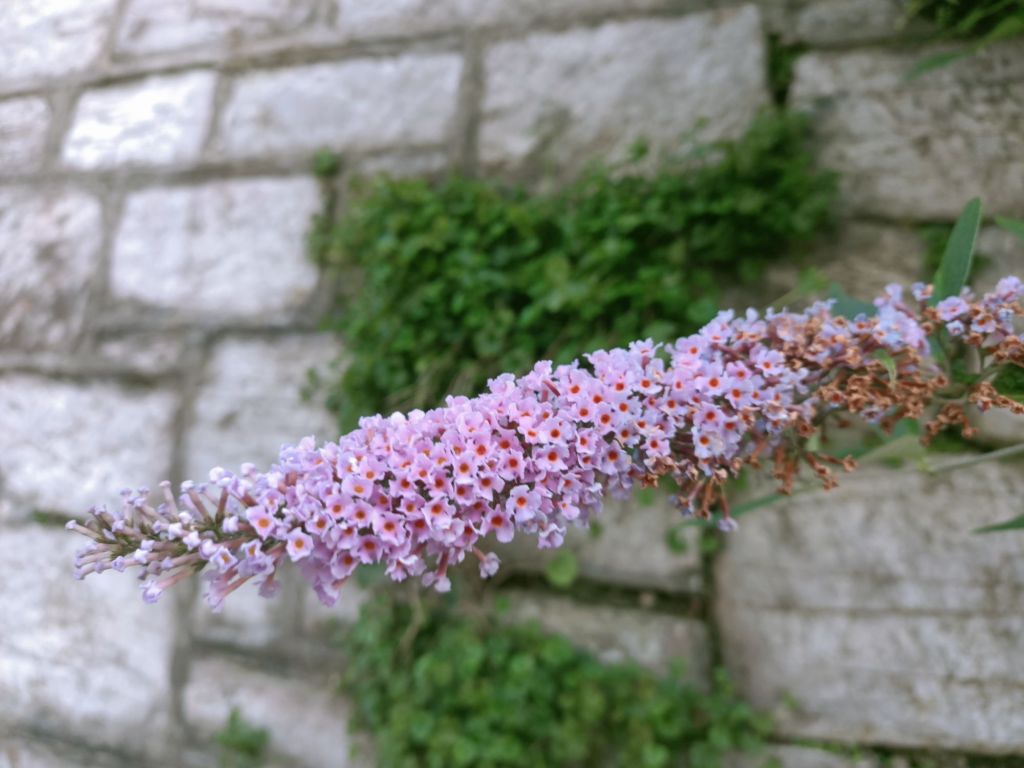
Butterfly Bush

Have you got up close and smelt the wonderful aroma of the Buddleja davidii? 🤔

The flowering Butterfly Bush

The little pink-purple flowers are so pretty, and the scent is wonderful of this wild plant. When you smell it, you’ll soon realise why it is so attractive to bees and butterflies – it’s a fabulous lifesaver to pollinators, so encourage it’s growth 😉👍

Symphyotrichum novi-belgii

It cannot be overstated enough how important autumn flowering plants are to pollinators (insects, birds, mammals). 🐝 These Michaelmas daisies also provide colour to your garden. Remember though, as with all flowers, try to avoid the hybridised (crossed/cultivars) because the more petal layers they have, the LESS pollen they have for 🐝🐝🦋🦋🐦🐦👍

Bloomin’ lovely 😍
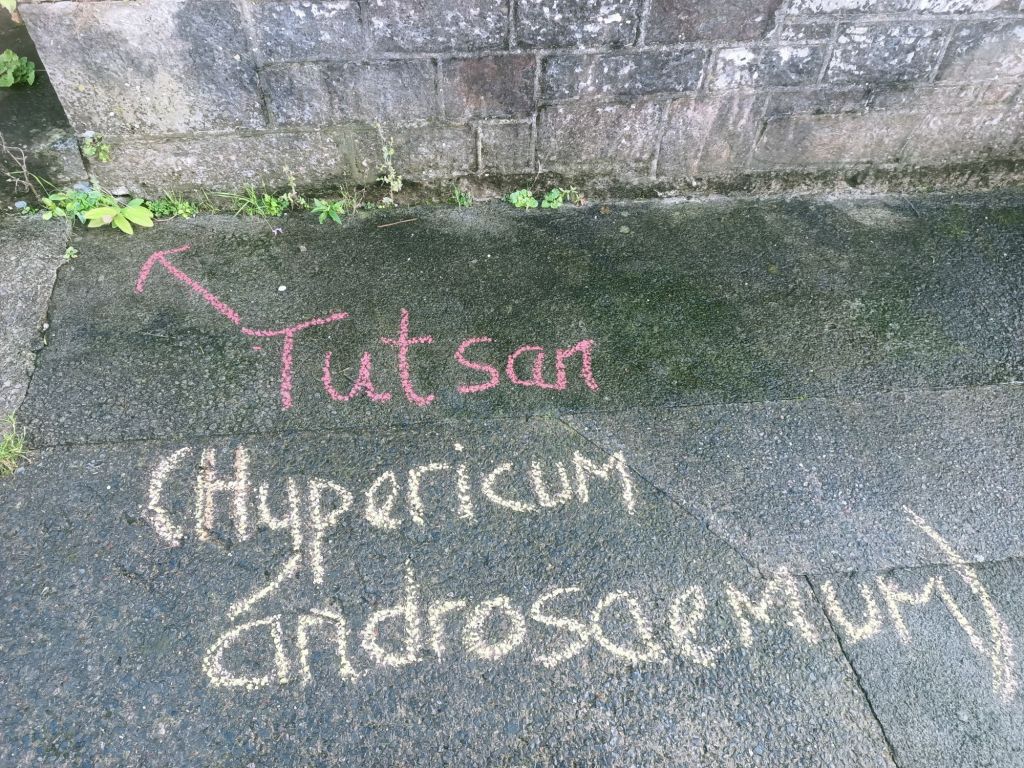
Hypericum androsaemum

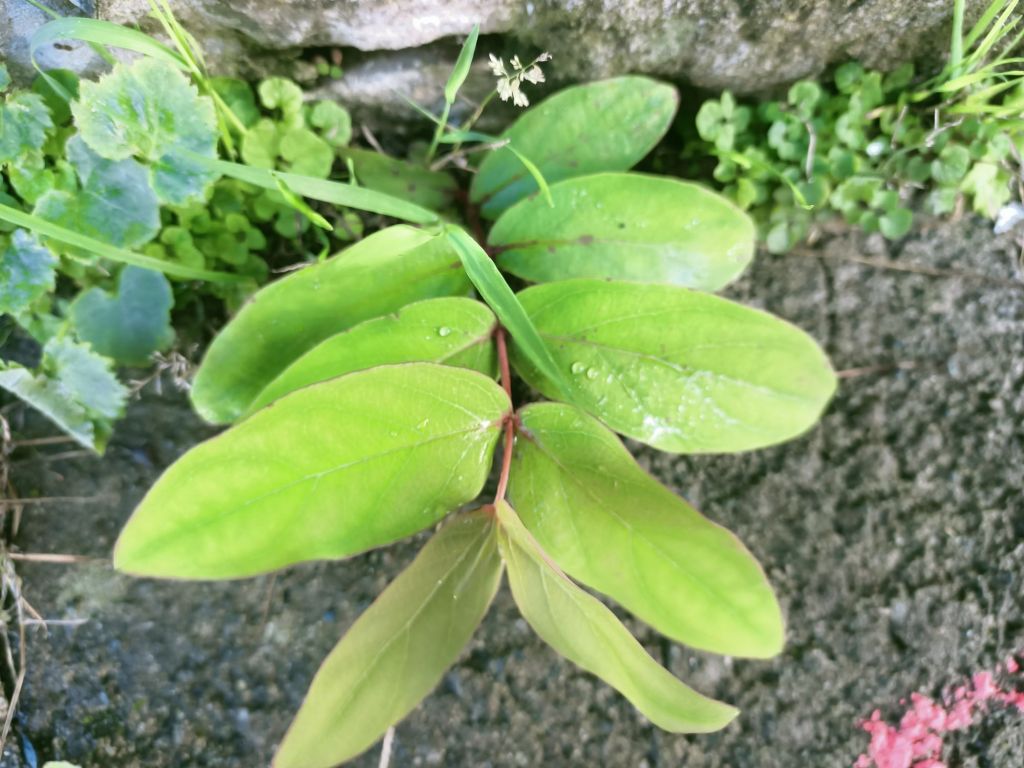
What’s Tutsan I hear some of you say? 🤔 Well it’s a shrubby St. John’s Wort, and it is also known as Sweet-amber. Want to see it close-up? It’s got rather lovely leaves…

Lovely lime green oval leaves with a reddish stalk.

A medical plant used as a diuretic and to progress the healing of burns and minor skin wounds. It has also been used to treat sciatica and gout, as well as being used in the skincare industry. In Portugal, the leaves are used in the treatment of liver, kidney and bladder problems: quite an elixir! 👍

Erigeron canadensis

As the name suggests, this plant originated from North and Central America. Its common names include: Canadian Fleabane, Marestail, Coltstail (there’s a horse theme here 🙂🐎) and Butter weed. 

We seek him here, we seek him there…okay, you heard that joke before 🤣😂
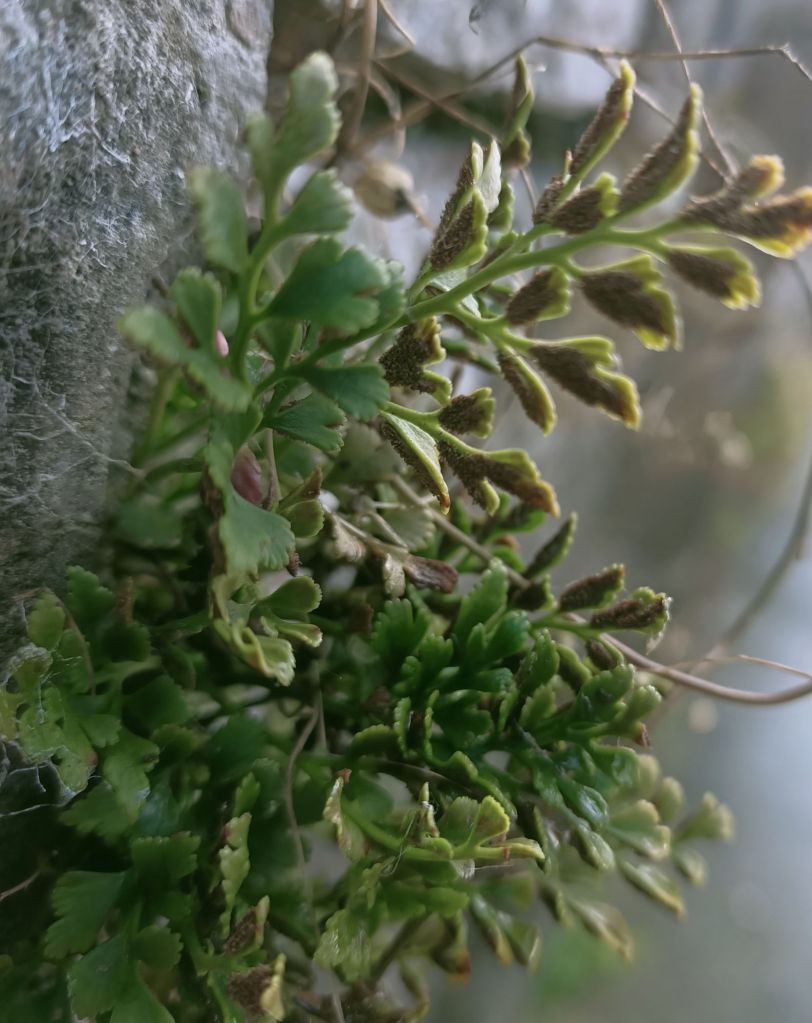
A small fern, Wall-rue

Distinctive due to its club-shaped leaflets that appear in groups of three on the frond. It often appears with other ferns like the Maidenhair Spleenwort.

The underside of the Wall-rue leaves reveal its spores
Aka Santa Barbara daisies, Mexican Fleabane  and Spanish Daisy, these profusions of flora look stunning 🌼🌼🌼🌼🌼
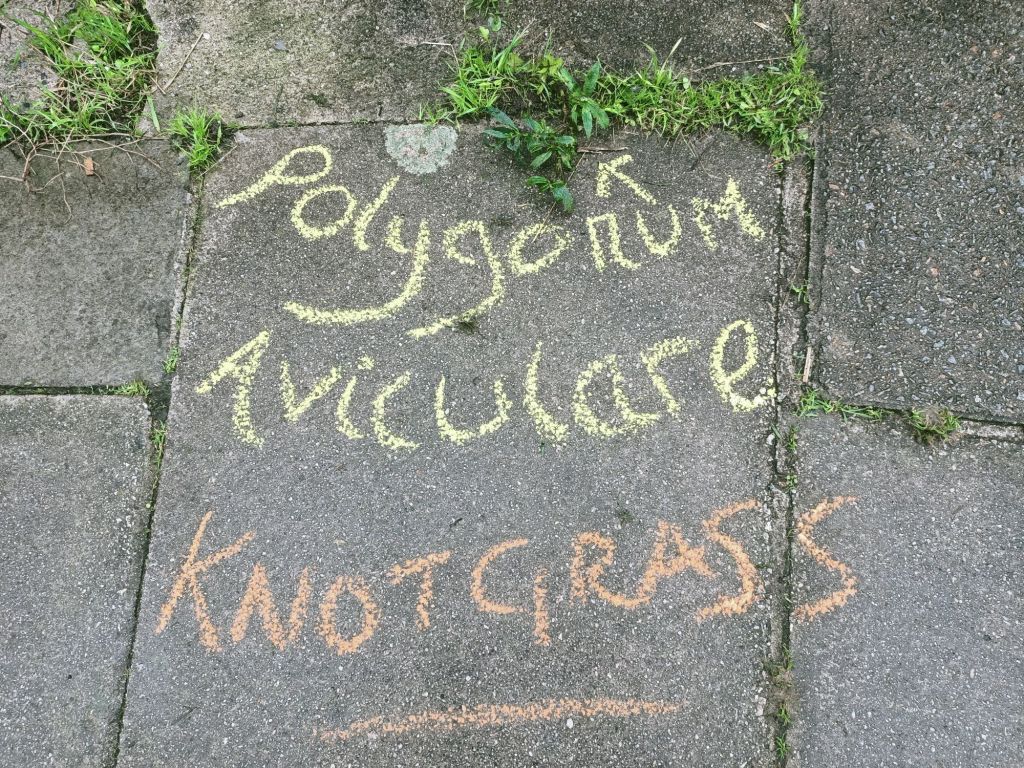
Common Knotgrass

Did you know, Polygonum means ‘many knees’ in Greek, referring to the prominent joints along the stem.  Many species of insects feed on Knotgrass, including the eponymous Knot Grass moth, Acronicta rumicis. 🙂👍

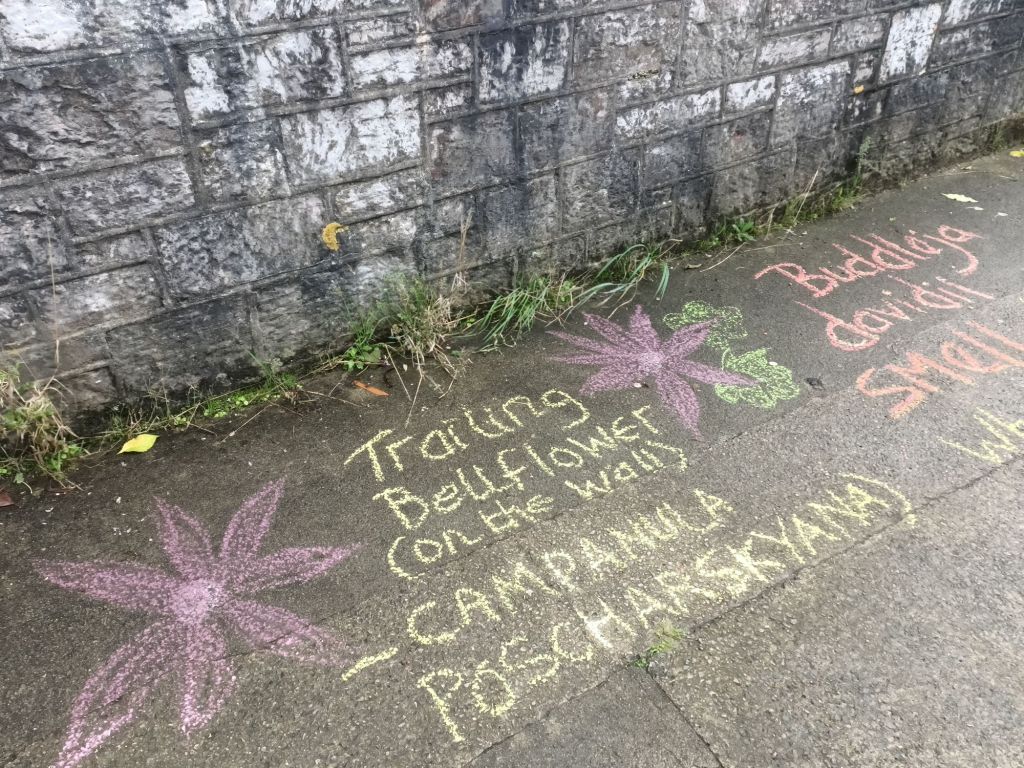
Trailing Bellflower

The species is hermaphrodite, which means it has both male and female organs, and is pollinated by bees, flies, beetles, lepidoptera (moths and butterflies). It is also known as the Serbian Bellflower – it originated from the Dinaric Alps, in the former Yugoslavia. Despite it being a non- native, it is extremely attractive to bees and other pollinators 🐝 🦋 🦋 🐝 Its bell shaped blue  flowers, also make it attractive to humans 😉.

Thanks for reading everyone 🙂 👍🌼🌼

Searching for the Real Wild Tulip

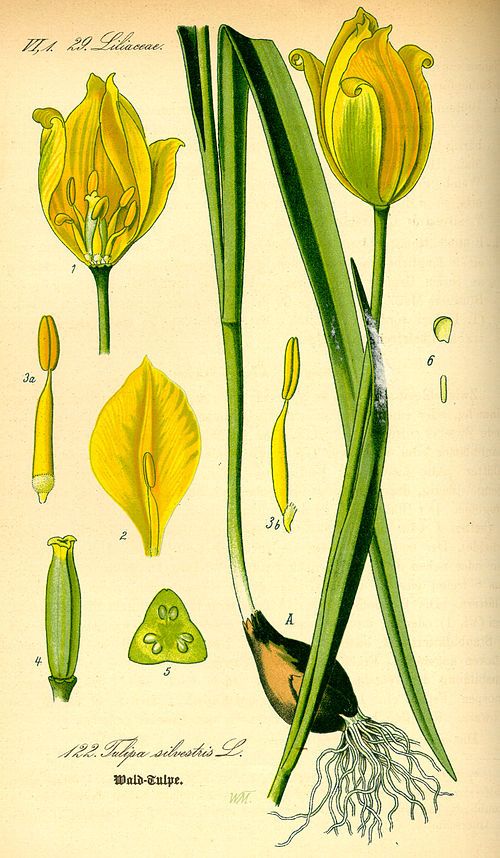
Early illustration of the Wild Tulip, Tulipa sylvestris. (Image thanks to: https://en.m.wikipedia.org/wiki/Tulipa_sylvestris)

It’s fair to say the Dutch people seem really wild about tulips! 🌷 They are everywhere, in every colour and composition imaginable, through a hybridisation process that has lasted over 400 years and still continues. There is even a book called Tulipomania explaining the fad that took hold regarding this flower.

Each genetically modified design has a different commercial name; here are just a few:

Armada
Kansas
Golden melody
Queen of Night
Golden Artist

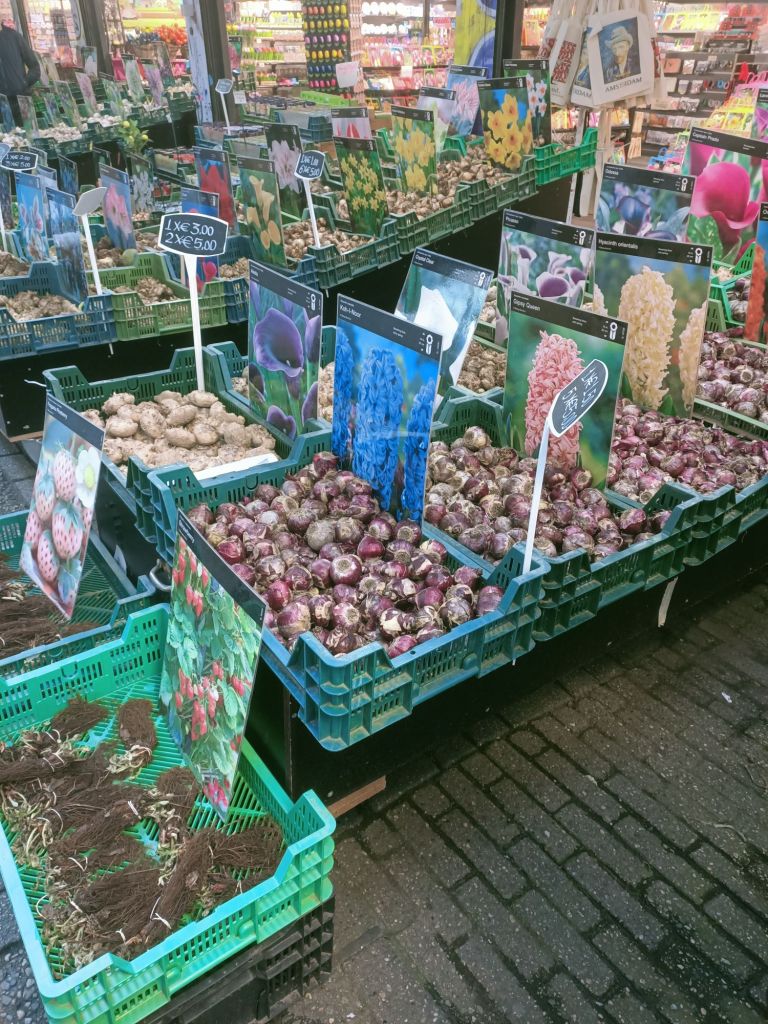
Tulip bulbs for sale in the huge flower market in the centre of Amsterdam
The names of the genetically modified flowers are designed to appeal to potential buyers/tourists.

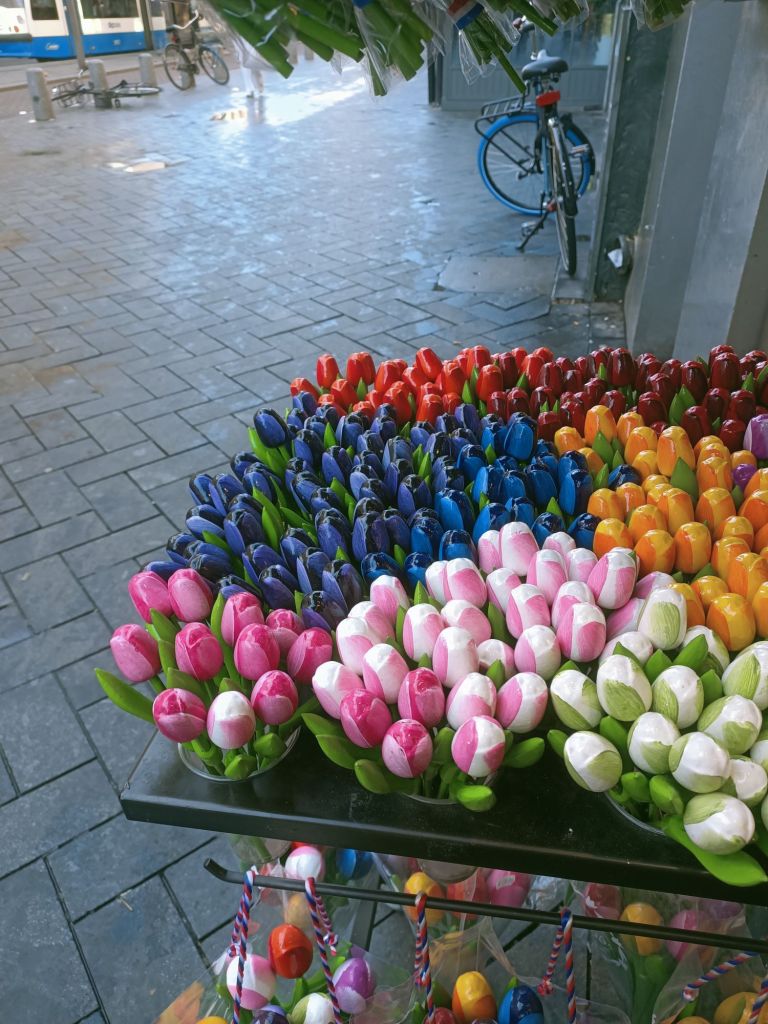
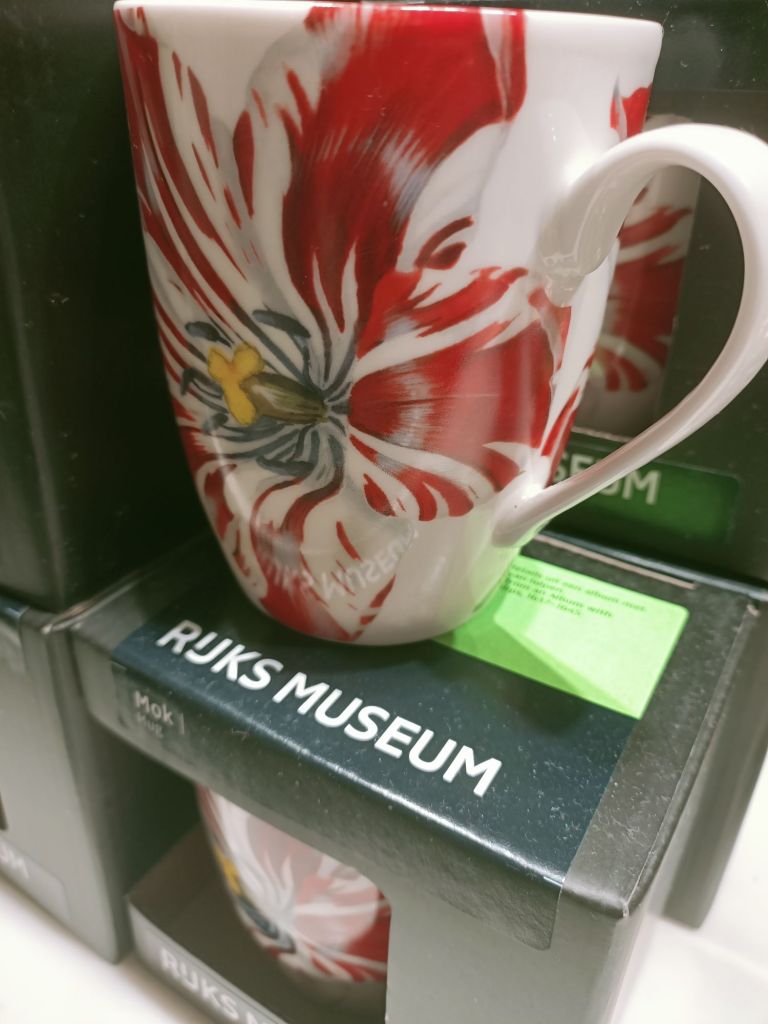
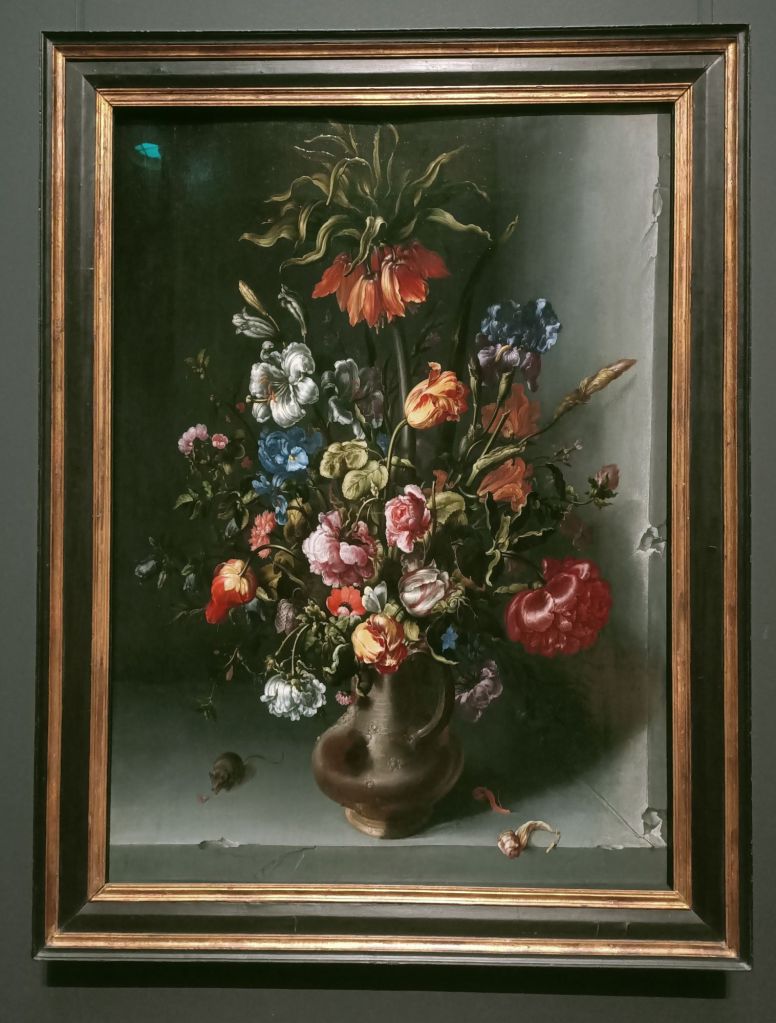
Not only are they sold as bulbs, but the flowers are recreated in oil paintings, plastic decorations, china crockery and even wallpaper.

Plastic tulip decorations are popular features in gift shops and supermarkets.
Decorated cups in one of Amsterdam’s famous museums.
Captured in an oil painting by Vosmaer, in 1613.
As wallpaper in a bathroom.

But where is the original tulip, the Wild Tulip, Tulipa sylvestris? 🤔

Tulipa sylvestris, the Wild Tulip, or Woodland Tulip, is an Eurasian  and North African species of plant in the lily family. “It was introduced from the Mediterranean to northern Europe in the sixteenth century and became widely naturalized”. (https://www.nature.com/articles/s41598-022-13378-9)

Who first introduced tulips to Europe is not completely clear, but it may well have been the “French diplomat and naturalist Pierre Belon” (ibid) around 1540, during his travels in the Orient.

Yes, though you may have thought Tulips are native flowers to Holland, they were introduced, albeit about more than 400 years ago.

“The Netherlands, known for its tulips, is the world’s largest producer and exporter of tulip bulbs. In 2021, the value of the tulip bulb export in the Netherlands was over 250 million euros.” https://oggardenonline.com

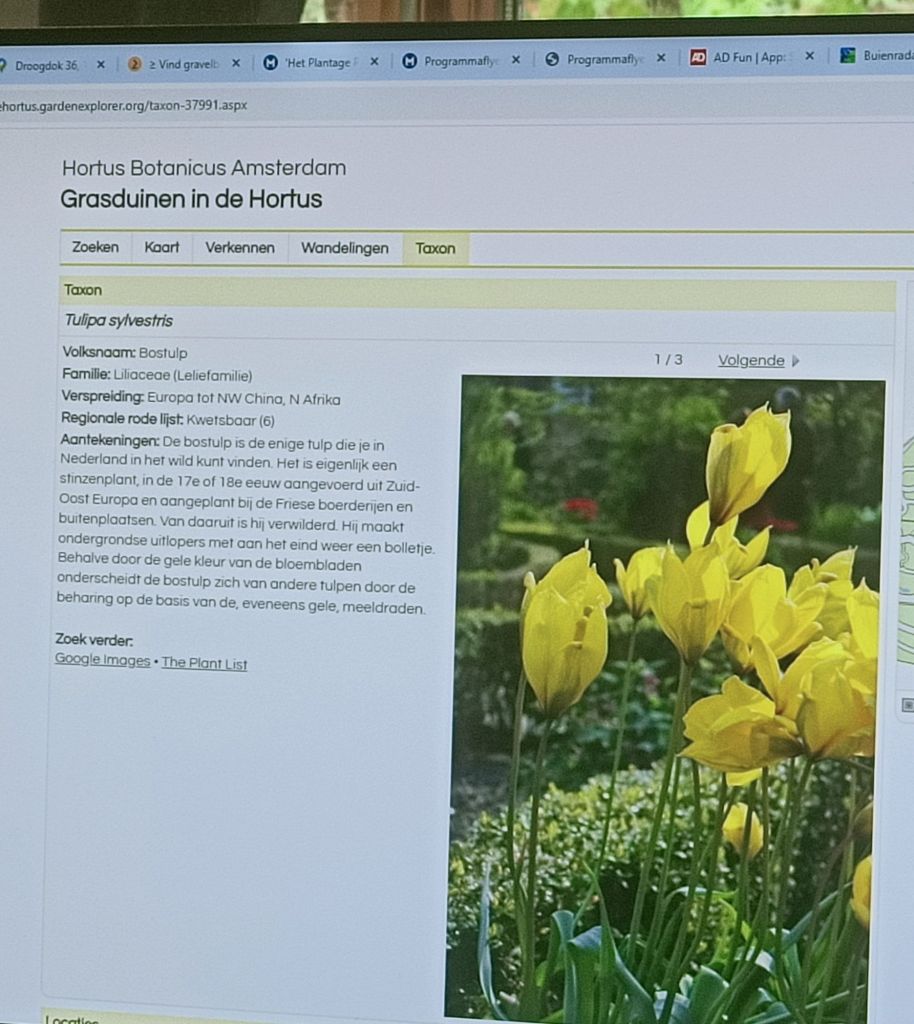
However, still keen to find the original Wild Tulip species, the search ended up at the Hortus Botanicus in Amsterdam.  Of course, to see any tulip in bloom one must see them in the spring, but now, in late summer/early autumn, seeking them as a bulb for planting is the only option. After discussion with two very helpful staff at the gardens, they explain that they do have Wild Tulip bulbs, though not for sale to the public, but planted in their grounds. Unfortunately, their location is not in a public area; however, they show me on the computer evidence on their database that they are there.

And here they are, Tulipa sylvestris

It would have been more eventful to have found the Wild Tulip, or Woodland Tulip, as bulbs that could have been planted, but at least we found them. It’s rather a pity that the hybridised colourful versions have completely taken over the sales markets from the original wild species: I wonder what the pollinators think about that…🐦🐝🦋🪲

The French Connection

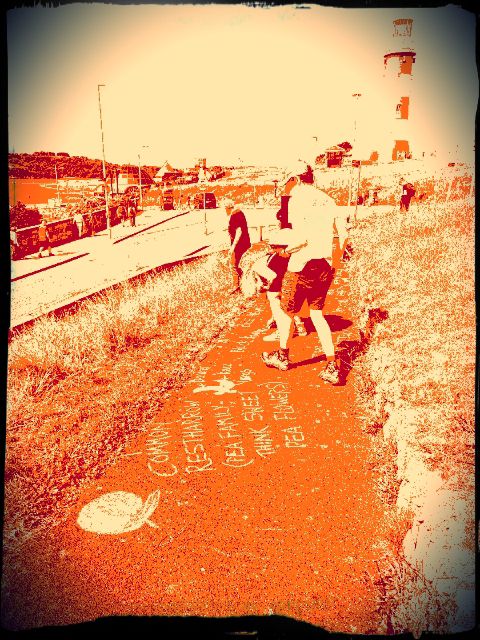
Rebel Botanists chalking on Plymouth Hoe

Whilst walking and chalking on Plymouth’s Hoe, we met a lovely French lady and her two young daughters visiting from Paris. They joined in, chalking flowers on the path, and commended our work for raising attention to urban wildflowers, which are key to the survival of pollinators in cities.

Our French guests joining in chalking flowers 🌼🌼🌼

We explained how this consciousness raising supports the non-use/ banning of chemical pesticides, which ultimately destroys the  biodiversity we are highlighting. She then informed us of a bombshell: the “Duplomb law”.

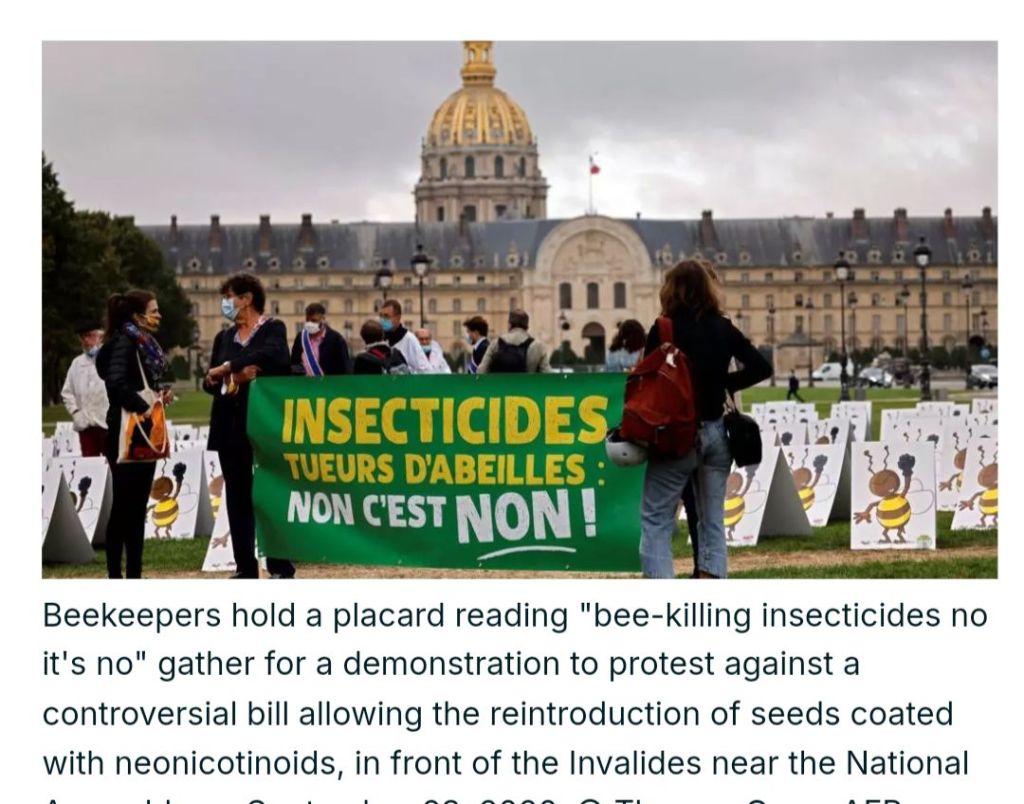
Protest in France

The “Duplomb law” is being hotly debated now, with over 2 million people having signed a petition against it. This new law is overturning a previously banned toxic pesticide, acetamiprid, to be used across the country in the agribusiness. Many “Michelin-starred chefs, school canteen cooks, bistro owners and farmer-restaurateur collectives have spoken out” against this toxic from the “neonicotinoid family saying: “We restaurateurs are in this business to feed, not to poison.” https://www.france24.com/en/france/20250728-feed-not-to-poison-french-chefs-push-back-against-pesticide-law-duplomb

“France is the leading agricultural power in Europe and is committed to offering healthy, sustainable and traceable food”, states the https://www.businessfrance.fr website, so the ruling on this will have far reaching implications and possibly for the UK also. By relaxing rules and regulations about the standards of food being produced and sold, in favour of economic growth (greed), in one country will certainly have a knock-on effect in other countries. In the UK, we are currently pushing for councils to ban the use and sale of pesticides, whilst some have done so others, clearly, haven’t.

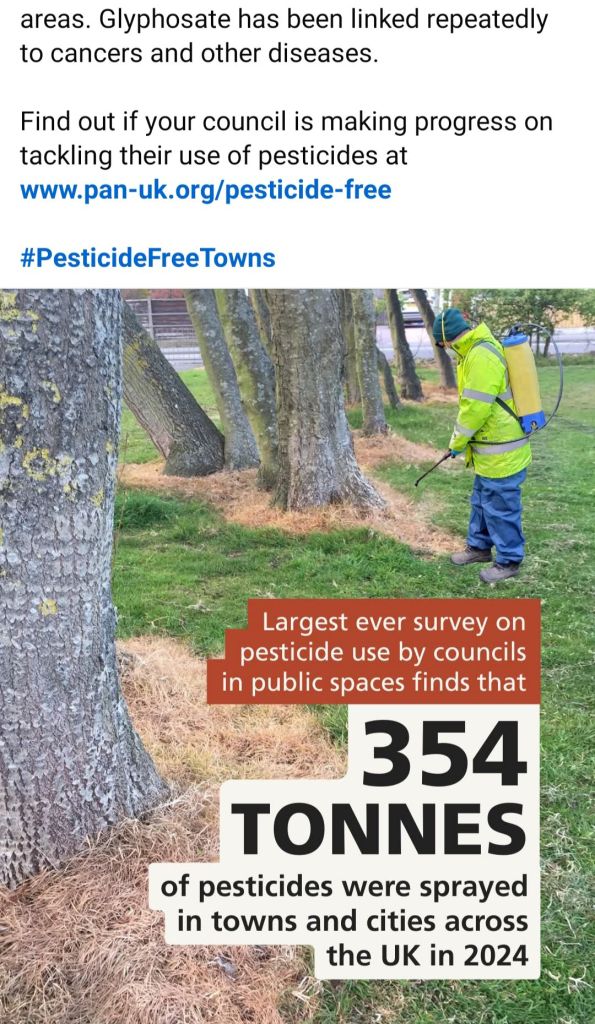
Check the Pesticide Action Network website to see if your council is ‘pesticide-free’

Pollinator populations around the world are declining at an alarming rate over recent decades (Goulson et al., 2015), and “disappearing habitats and use of pesticides are driving the loss of pollinator species around the world”. https://www.cam.ac.uk/stories/pollinatorsriskindex

Ladybird on Dock plant
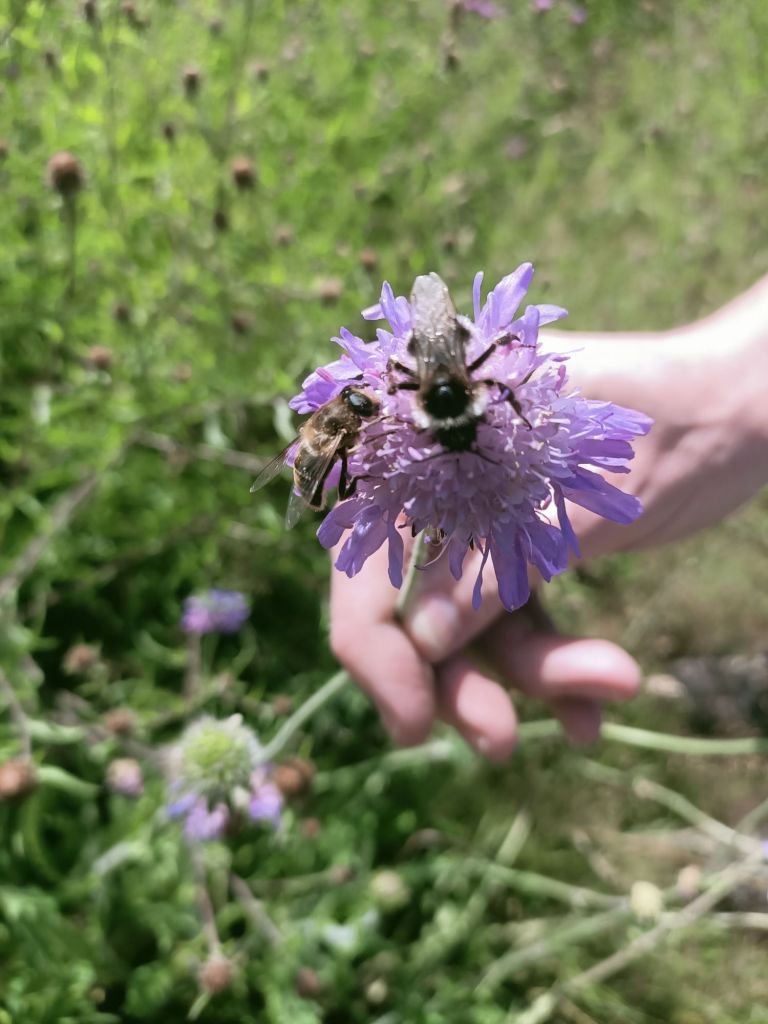
Bees on Field Scabious

We’ve known this since the 1960s with Rachel Carson’s research and subsequent book: “Silent spring is acknowledged as the ‘effective beginning’ of ‘toxic discourse’, and as a pivotal contribution to emergent modern environmentalism” https://pmc.ncbi.nlm.nih.gov/articles/PMC5554789/

This French lady was clearly distraught by this threat. She said: “I worry for my children; what kind of world will there be for them…if this goes ahead I will have to buy bio (organic) food… this law will effect all of biodiversity.”

So, by the 7th August share this post with everyone you know, especially anyone who lives in France or has any connection with food production and cooking, to send a message to President Macron at: https://www.elysee.fr/en/contact/

Please feel free to copy and paste any part of this blog in your message to President Macron. ✊

Vive la biodiversité 🦋🌿🐦🌼🐝🐛🪲🪻🪳🌷🦗🦋🐝🌳🌼

Criminal Damage or Ecocide: a right to life

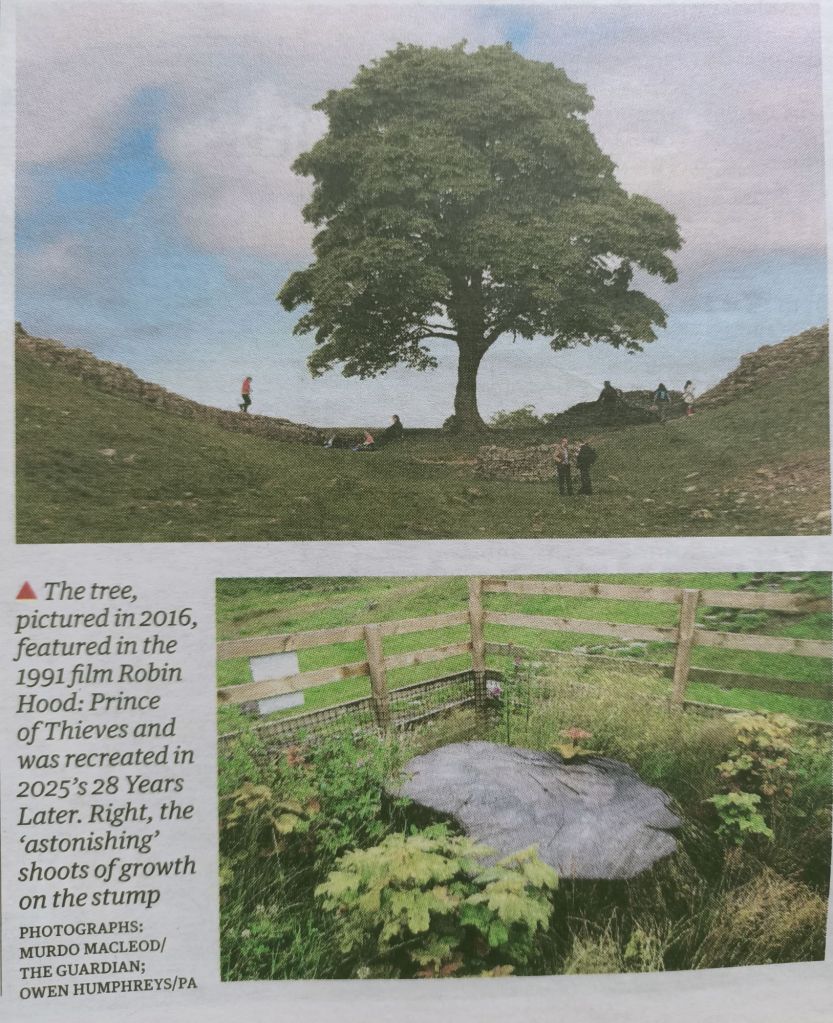
The men responsible for chainsawing the Sycamore Gap tree “were each given sentences of four years and three months”, stated The Guardian on 16th July, 2025.

Although the charge was one of criminal damage, “the attack… was met with sadness, disbelief and anger that rippled around the world…the felling caused widespread distress”.  Generally, acts of criminal damage only effect the immediate owners of property or items involved, this case had a far different and far reaching impact, as the mayor for the area stated: “the sentence could never reflect the devastation we all still feel for the loss”.  The loss is a living breathing life “that brought only joy and happiness to people”.

It’s not an inanimate object, it’s a beautiful life. So, with this legal story a couple of questions arise: firstly, is this a case of criminal damage or ecocide? Secondly, if killing a tree results in a custodial sentence, why are we seeing so many trees being killed across the country without any criminal investigation or sentencing? Is it acceptable for corporates and councils to destroy trees, but not so by two men on a “moronic mission”? https://www.guardian-series.co.uk/news/national/uk-today/25315781.sycamore-gap-men-jailed-4-years-felling-iconic-tree/

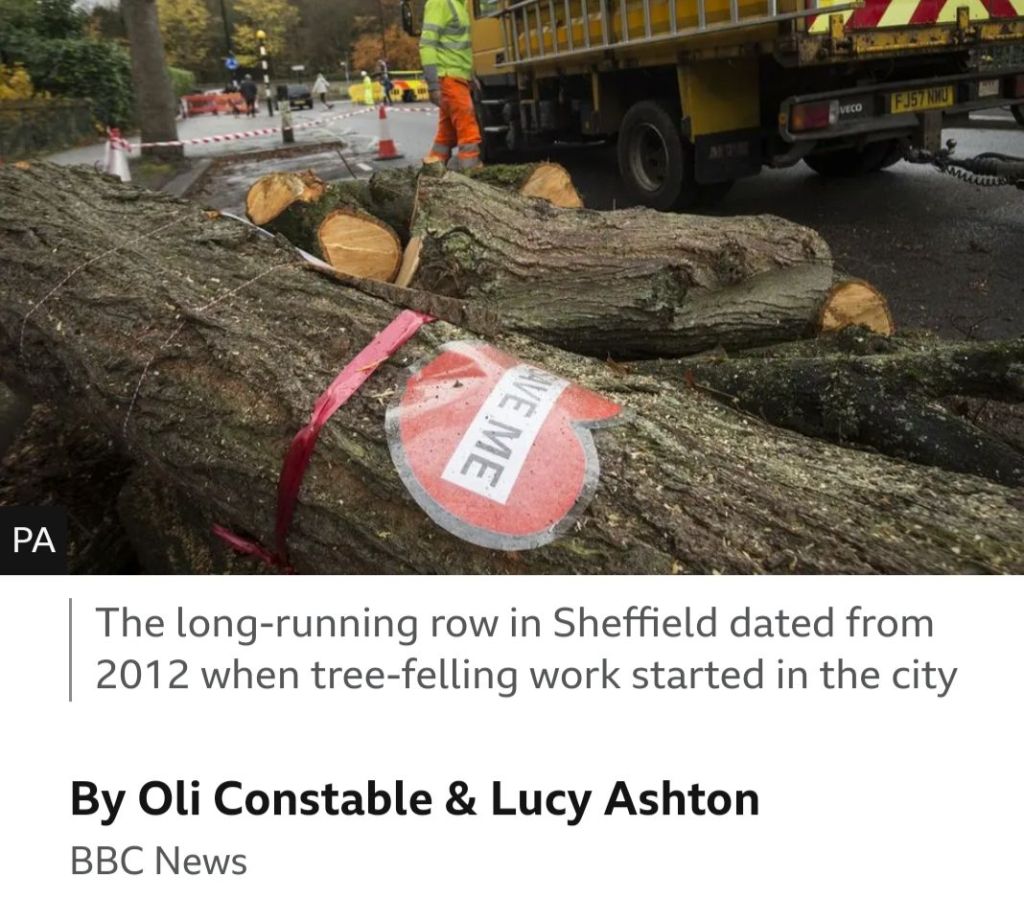
“Thousands of trees were felled as part of a £2.2bn street improvement project” in Sheffield back in 2012. “…the authority and contractor, Amey, had ignored the value of street trees and did not anticipate the views of significant numbers of residents”.  https://www.bbc.co.uk/news/uk-england-south-yorkshire-64863130

In Plymouth, in March 2023, 119 trees were felled in the city centre, under cover of darkness, despite outrage from many of its citizens. A subsequent court case hit the national headlines and a report stated “council failings in governance, project management, engagement, and staff wellbeing.” https://www.plymouthherald.co.uk/news/plymouth-news/armada-way-trees-council-told-10205168

In Derbyshire recently, dozens of trees were felled beside a railway line. Network Rail contractors stated it was for “essential vegetation management”; however, residents and a local councillor feel the work was: “absolutely devastating for the area”. “Contractors had gone far and beyond what they needed to do. I just burst into tears. I saw the birds, the thrushes, and it was just heartbreaking”. https://www.bbc.co.uk/news/articles/c0719jmjxx0o

Every tree is beautiful and has a Right to Life

The beautiful Sycamore Gap tree is representative of all trees, each and every tree is a life which gives oxygen, temperature protection, soil stability, absorbs pollution and provides habitat for thousands of insects, birds, mammals, lichen, fungi and moss. We all need to rethink trees – respect trees, respect  what they do for us and every living being on this planet and stand up for their right to life.

A One Street Wander/Wonder

Did you know that Durnford Street, Plymouth was once the location of Sir Arthur Conan Doyle, the author of the great fictional detective, Sherlock Holmes? In 1882 he practiced medicine for a short time here. Well, we went on our own investigation to see what urban wild plants we could find on this famous street. 🔎👀 🌿

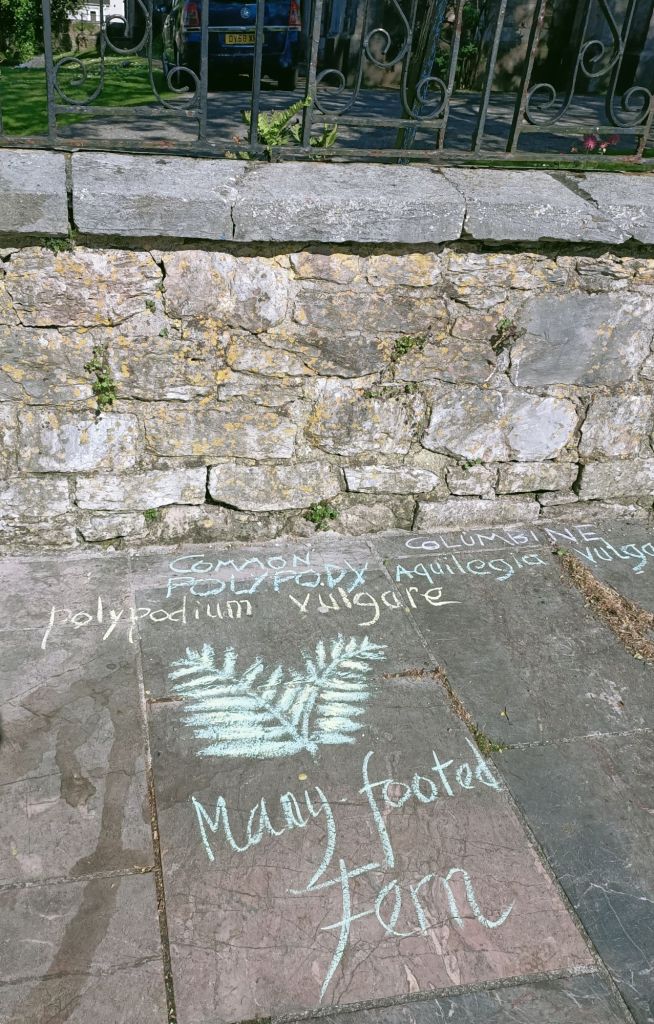
From the Greek, poly means many and podos means foot. Ferns provide shelter and habitat for many wildlife, particularly insects.
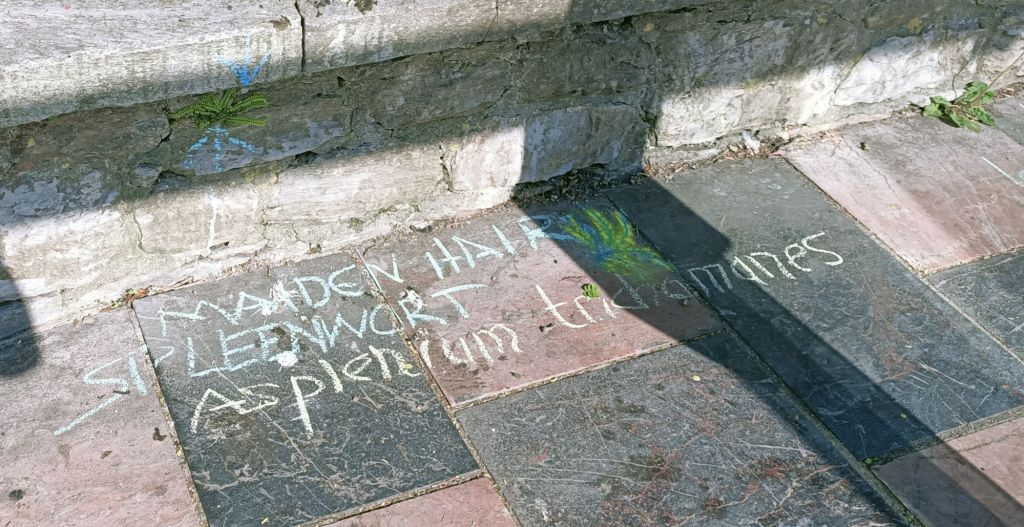
Another fabulous fern, but smaller and a real wall climber, Asplenium trichomanes. Once used as a herbal medicine to treat lung disorders. 🤔…I wonder if Conan Doyle knew about this plant 🌿
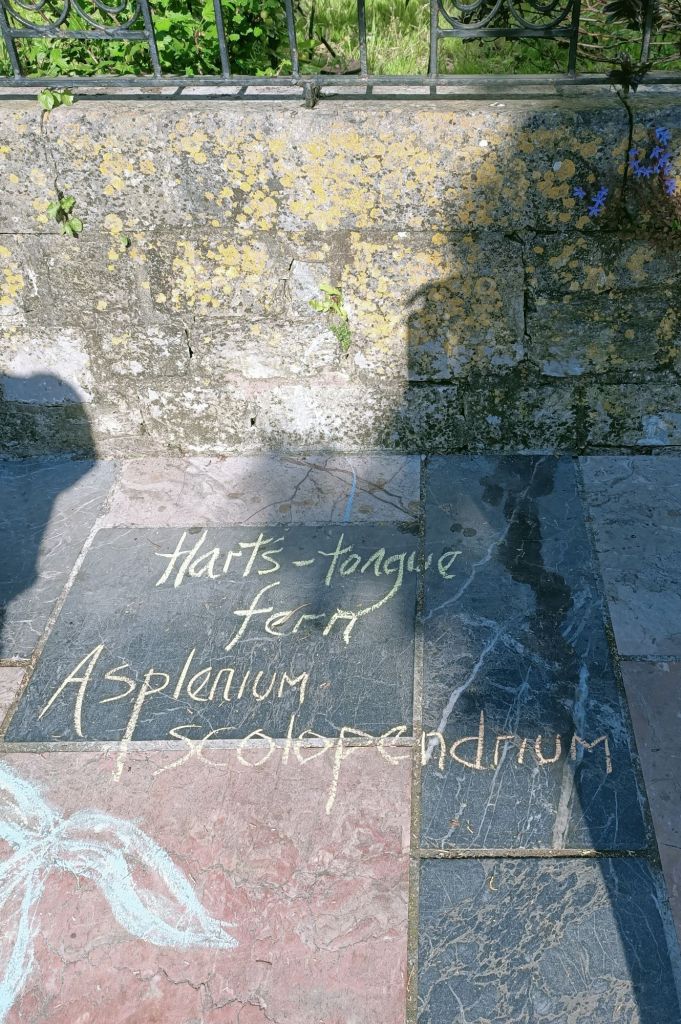
Another ancient fern, the Asplenium scolopendrium, or Hart’s-tongue fern. You can’t quite see it by the wall here, but a very different shape from the previous two ferns – long, slightly curly, rich green shiny leaves.
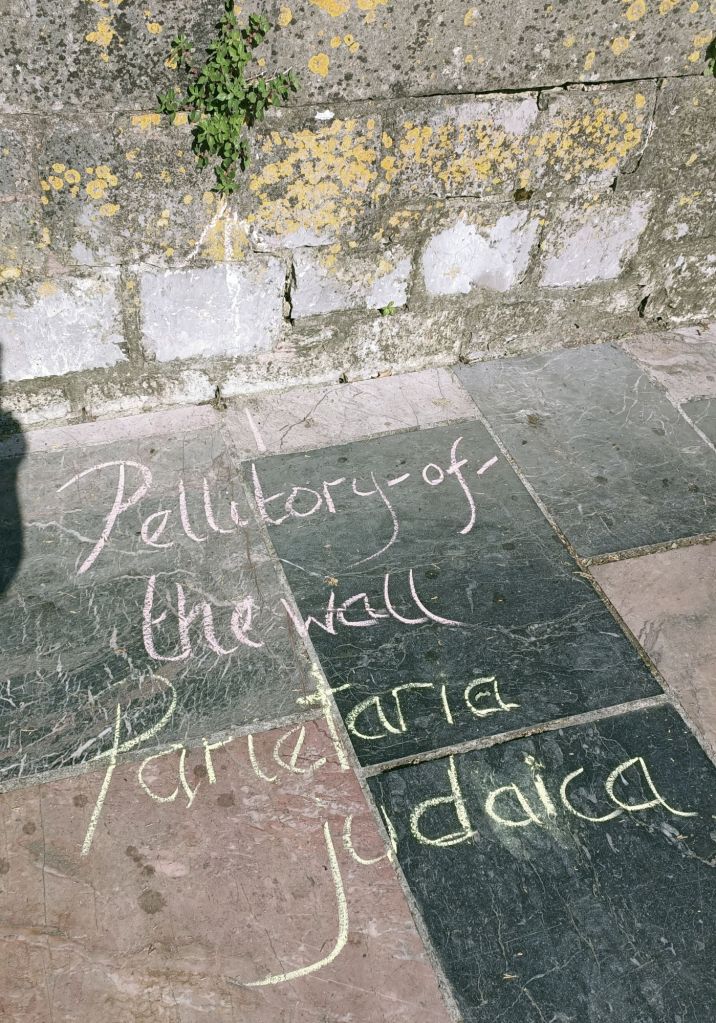
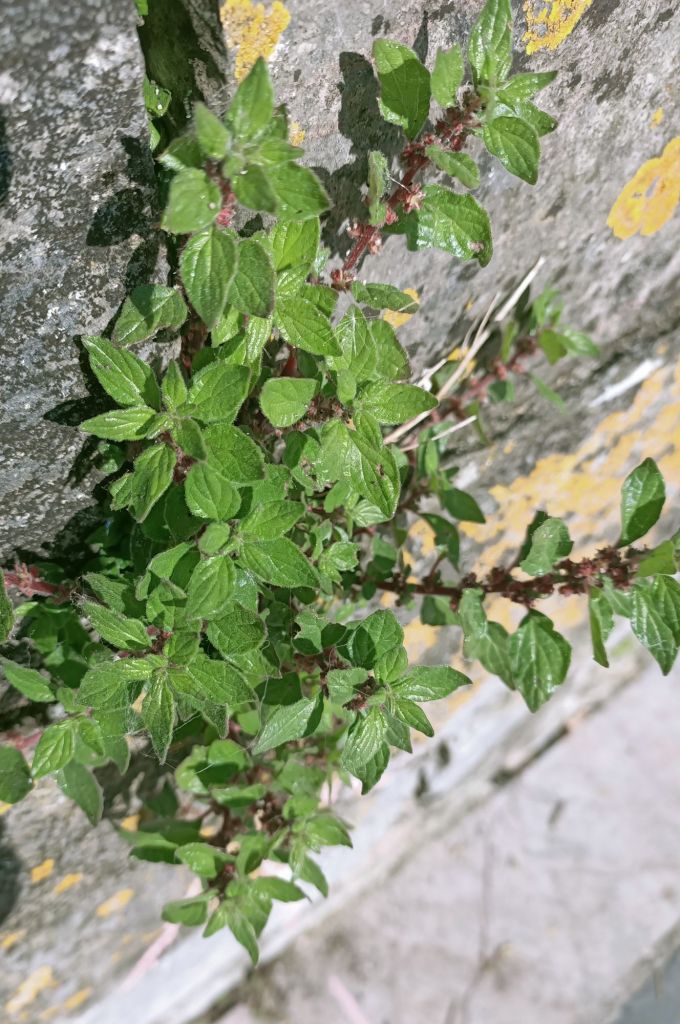
The generic name Parietaria derives from the Latin meaning borne on the wall. The epithet, Judaica, hints at its origins, Judaea.
And here is a photo of the Pellitory-of-the-wall
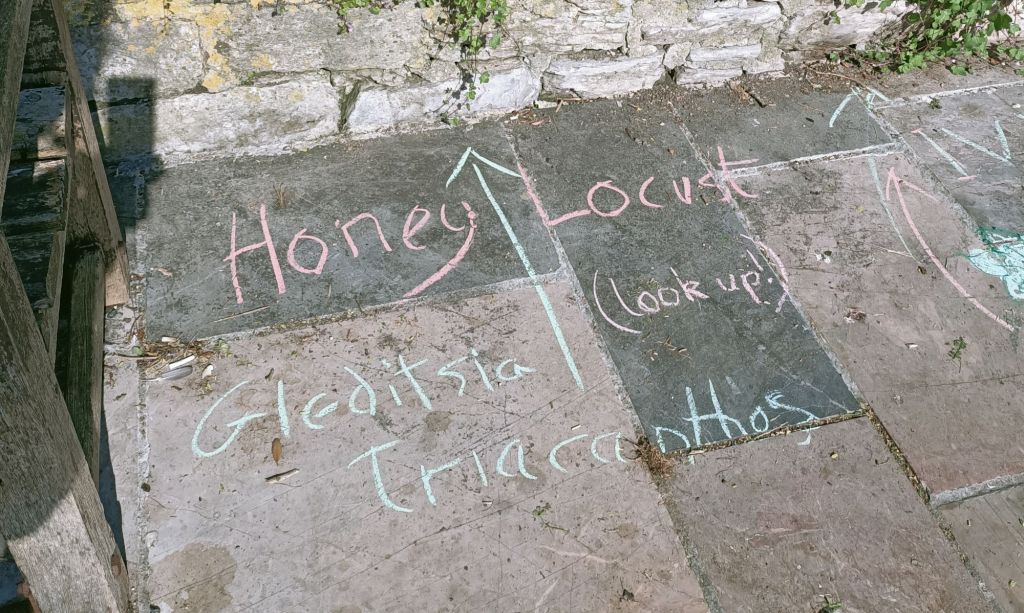
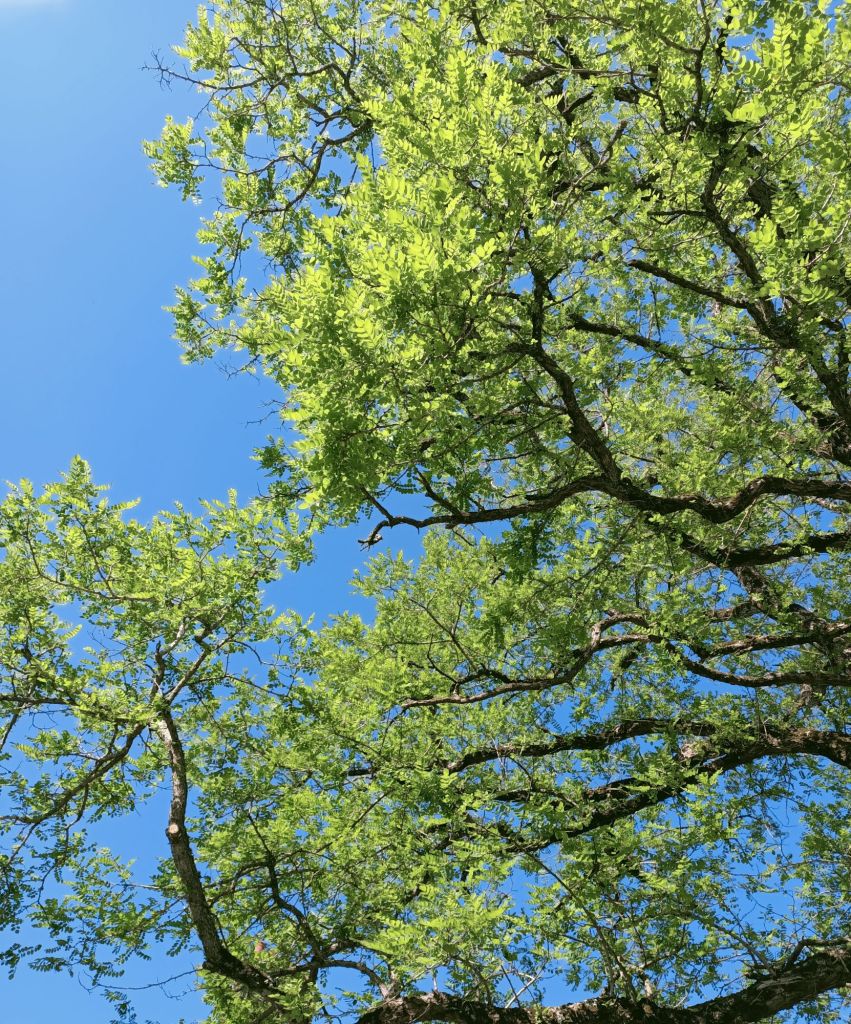
We know how important trees are to biodiversity. Yep, so look up 👀 to see this non-native Honey Locust, Gleditsia triacanthos.
Rather stunning, isn’t it? 😊
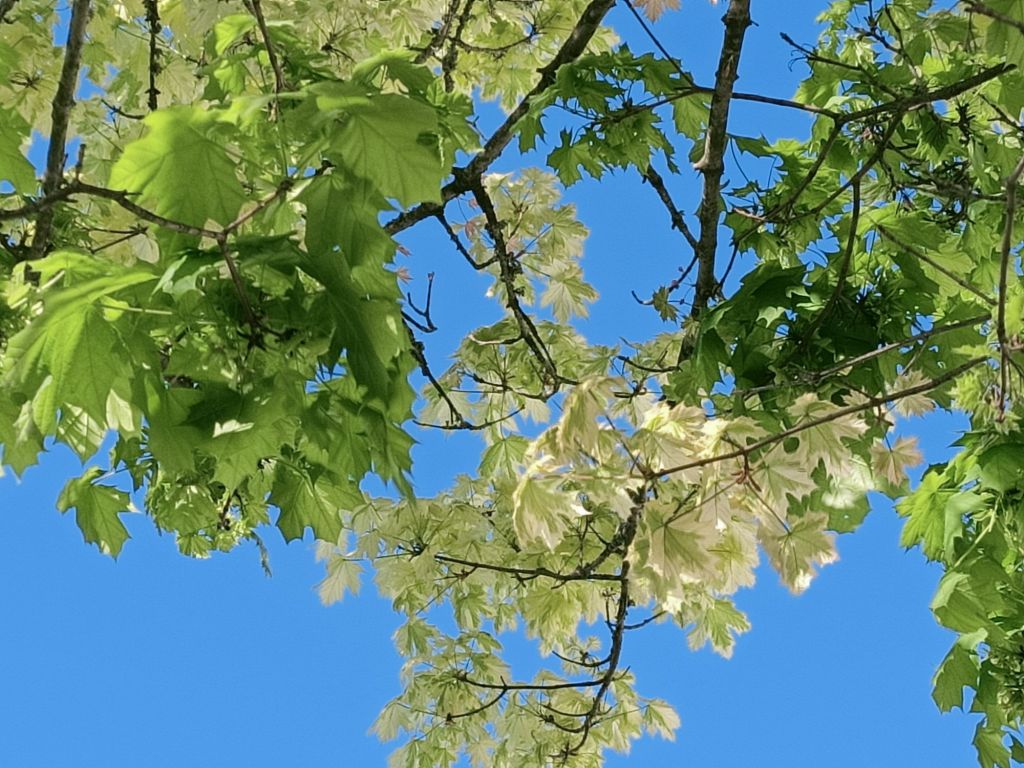
Acer campestre
Here they are close up

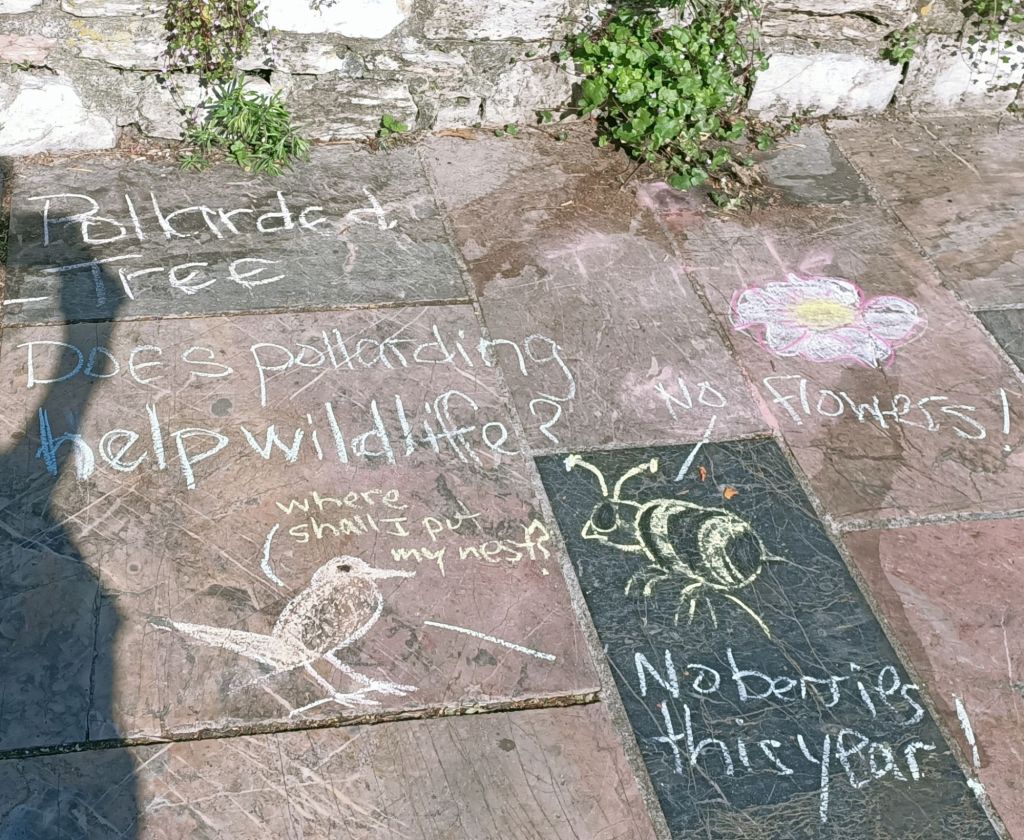
Unfortunately, a harshly pollarded tree in the church grounds upset a local lady who spoke to us about it. She said:

“It (Hawthorn) was just coming into flower; it was beautiful last year, but look how they’ve pollarded it! I doubt it will recover from this; they have left it as a stump.”                                         

Pollarding is a controversial issue, particularly when it’s been carried out so extensively it appears to have killed the tree!  Education is clearly needed. .   

Common hawthorn can support hundreds of other species. It is the foodplant for caterpillars of moths, including the hawthorn, orchard ermine, pear leaf blister, rhomboid tortrix, light emerald, lackey, vapourer, fruitlet-mining tortrix, small eggar and lappet moths. Its flowers are eaten by dormice and provide nectar and pollen for bees and other pollinating insects. The haws are rich in antioxidants and are eaten by migrating birds, such as redwings, fieldfares and thrushes, as well as small mammals.” Thanks to the Woodland Trust for this information.

‘Eco Churches’ is a UK organisation to support churches to protect nature through a range of ethical and environmental practices. https://ecochurch.arocha.org.uk/                     If you live near a church perhaps recommend them to connect with this  website.  If you are outside the UK then check out A Rocha which is the international organisation. For surely, ‘ all things bright and beautiful, all creatures great and small‘ need protecting now 🙂👍

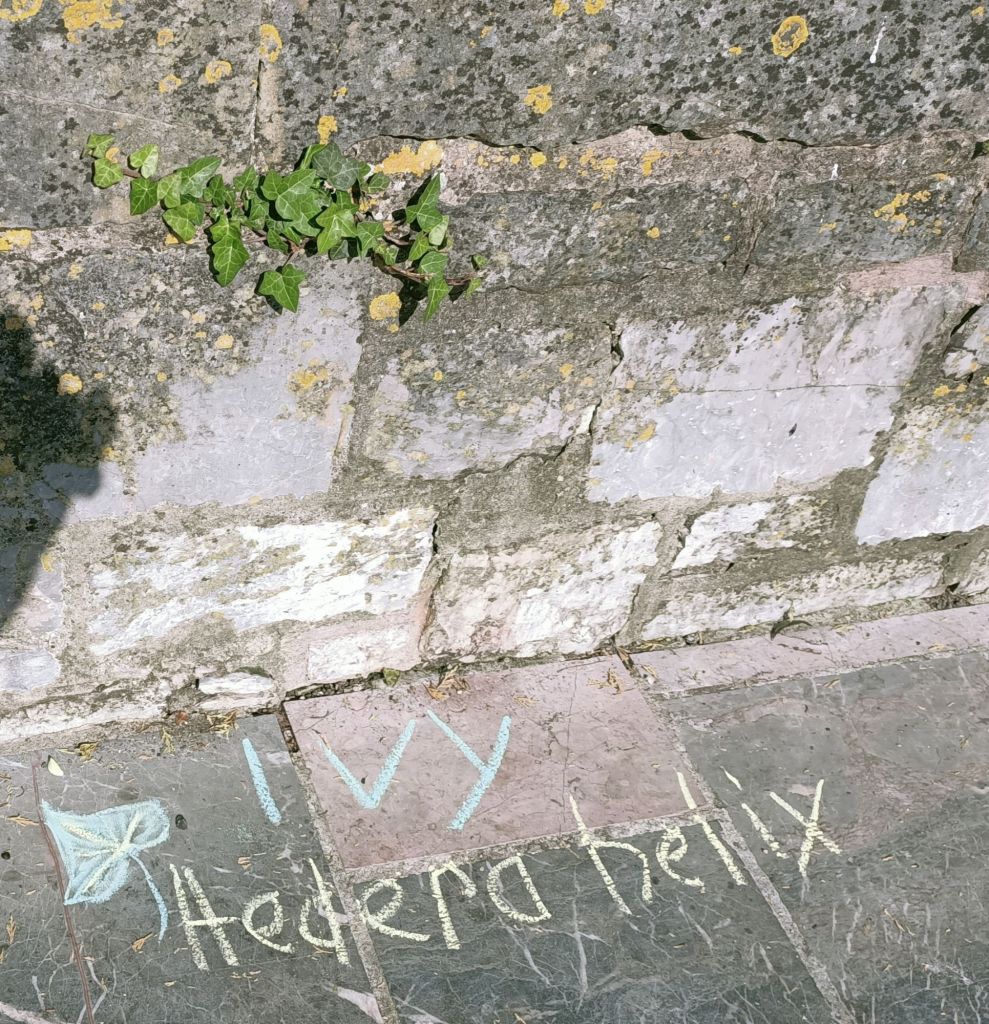
Here are some amazing biodiversity facts about Ivy! If you’re not a fan you need to read this:

“Ivy is particularly important to many insects before they go into hibernation. Some of the main insect species which forage on the nectar and pollen of ivy are bees, hoverflies and wasps. It is an important food plant for some butterfly and moth larvae such as holly blue, small dusty wave, angle shades and swallow-tailed moth.

Nectar, pollen and berries of ivy are an essential food source for insects and birds, especially during autumn and winter when little else is about. It also provides shelter for insects, birds, bats and other small mammals. The high fat content of the berries is a nutritious food resource for birds and the berries are eaten by a range of species including thrushes, blackcaps, woodpigeons and blackbirds.

Many rare insects are attracted to ivy flowers, including the golden hoverfly.

Thanks to https://www.woodlandtrust.org.uk/trees-woods-and-wildlife/plants/wild-flowers/ivy/ for the information 🙂👍

Lovely pink flowers loved by many pollinators 🐝🦋🐝🦋

Hey look 👀 👀 it’s Anthriscus sylvestris 🙂
Despite having very noticeable bright blue white-eyed flowers, the plant is called Green Alkanet – in a strange way it makes me remember it’s name (mnemonic) 🙂
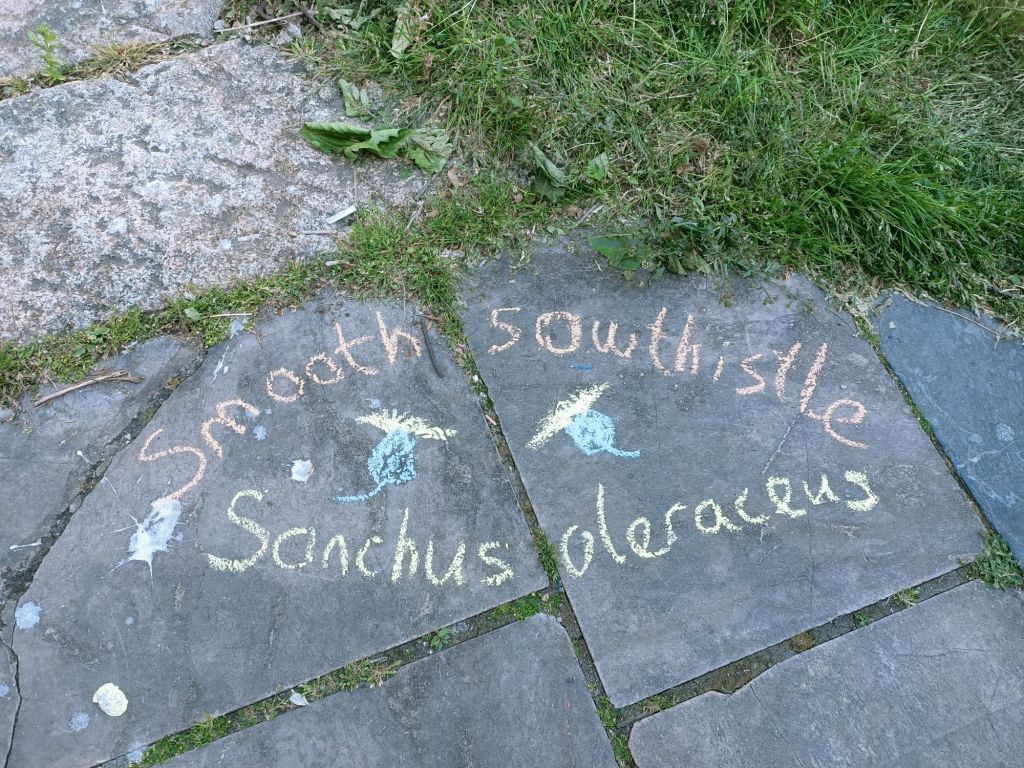
Sonchus oleraceus

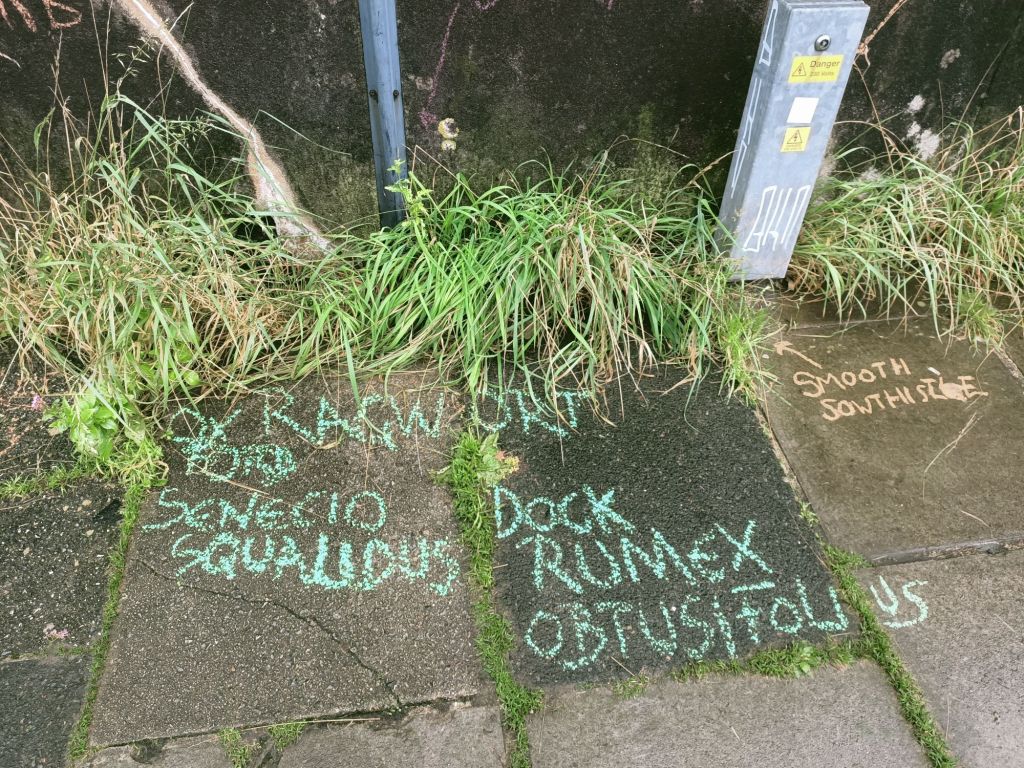
The Smooth Sowthistle has many common names, including Common Sowthistle and Puha in New Zealand 🙂

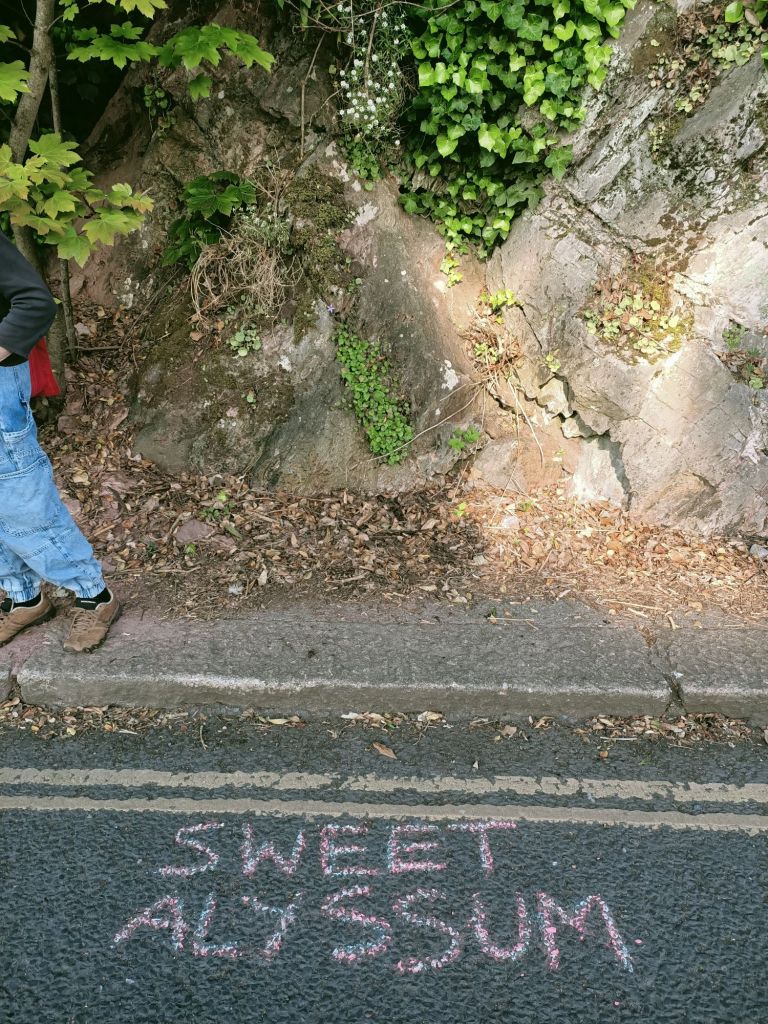
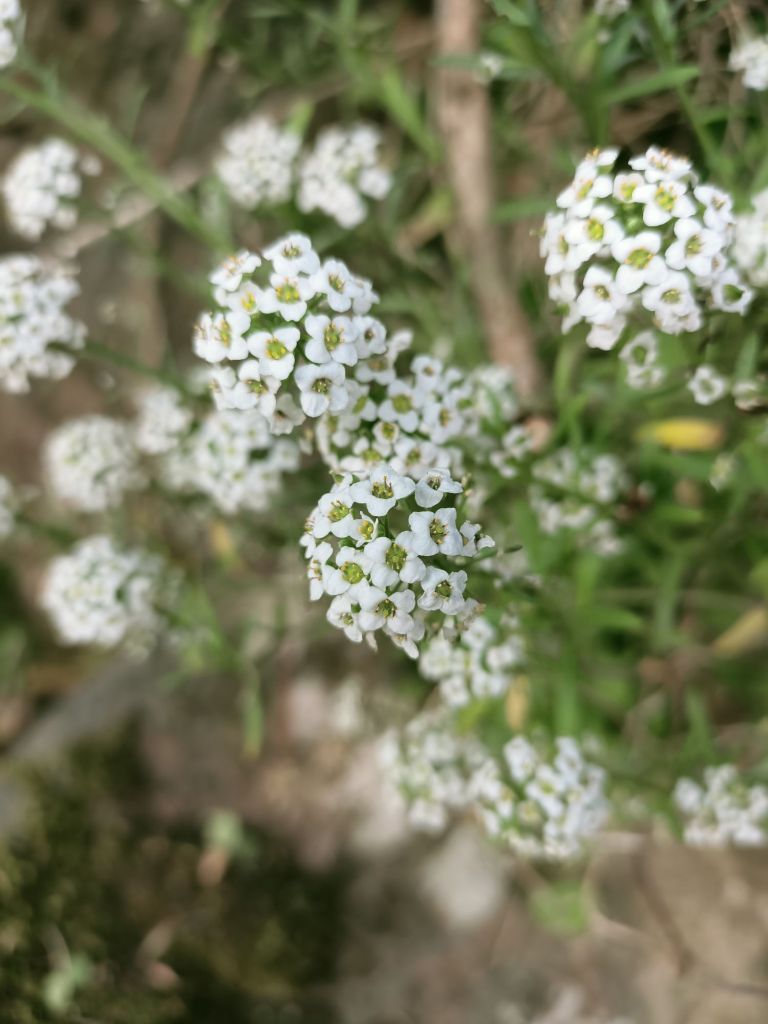
Lobularia maritima

The delicate floral scent of the Sweet Alyssum is believed to have a calming effect on the mind and reduces anxiety.

And they are beautiful to look at 👀🙂
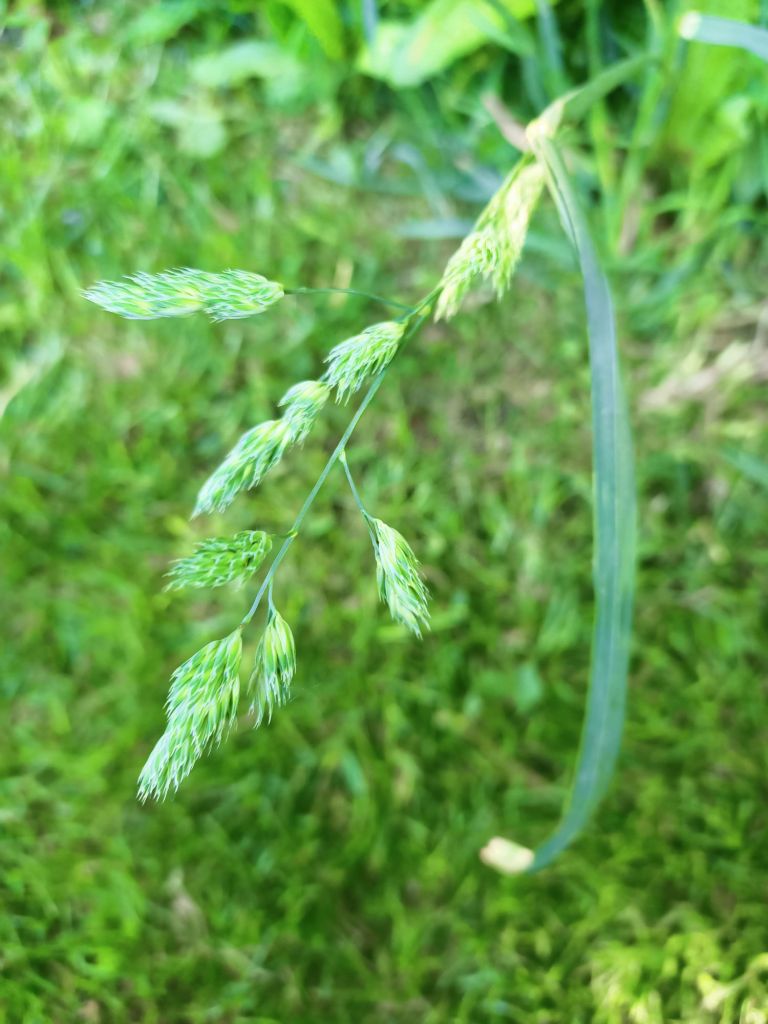
No, it’s not just grass!  Everything has it’s place and importance in the natural world. Don’t you watch Attenborough? 😃  🤣         Look at the next photo for a closer look…
Orchard grass, also known as Cat’s or Cocksfoot grass, Dactylis glomerata

Orchard grass is an important food source for Gatekeeper and Meadow Brown butterfly caterpillars 🦋🦋🦋🦋 and many species of finches 🐦🐦🐦                             

But here’s another amazing fact; are you ready?

Honeybees 🐝🐝🐝🐝often favour the pollen of Orchard grass to many wildflowers 🌼🌺🌸 Wow, what a cool fact! 😲

One of our Rebels searching for survivors in this sprayed area ☹️
She’s found Travellers’ Joy, Clematis vitalba.

Now here’s a thing:  shouldn’t the apostrophe be placed as I have written it, meaning the joy of travellers (plural)?  However, many books and websites write it as Traveller’s Joy, being the joy of just one traveller…hmm… Who is this traveller? 🤔

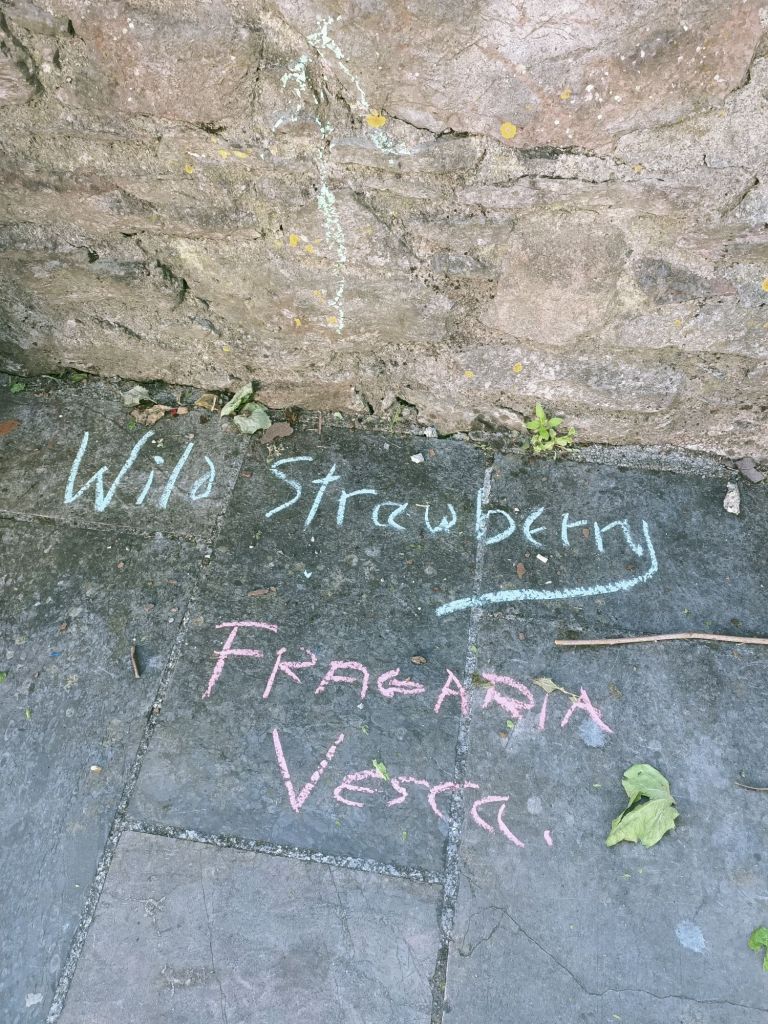
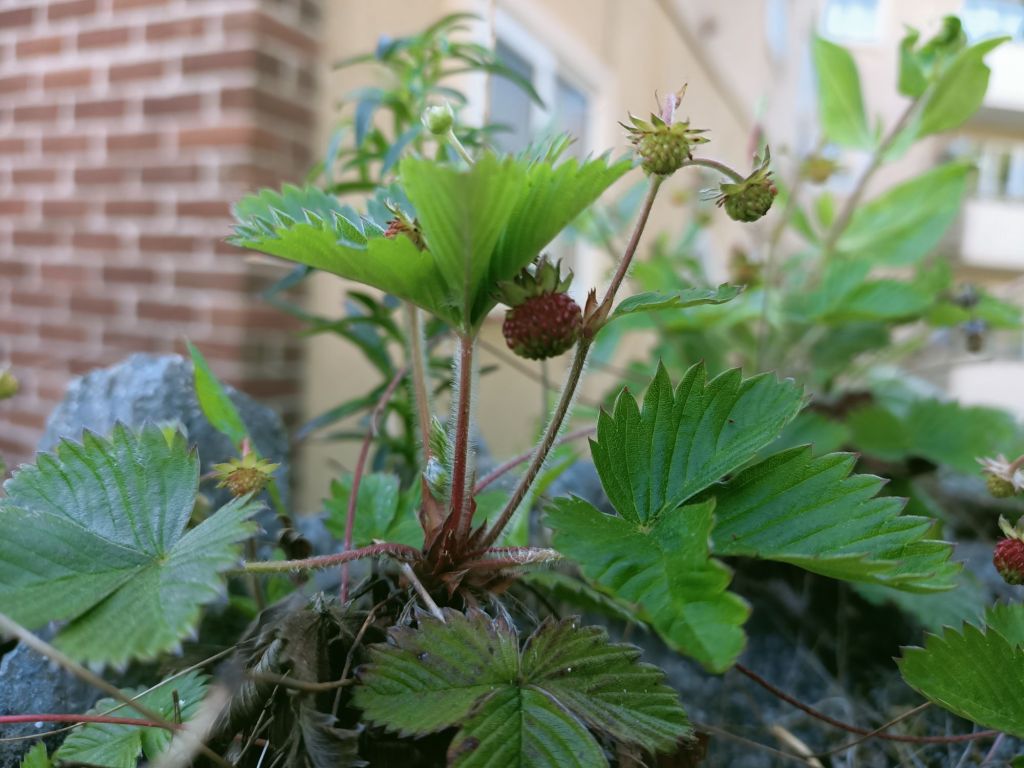
Fragaria vesca – yum 😋
And here it is, upon the wall
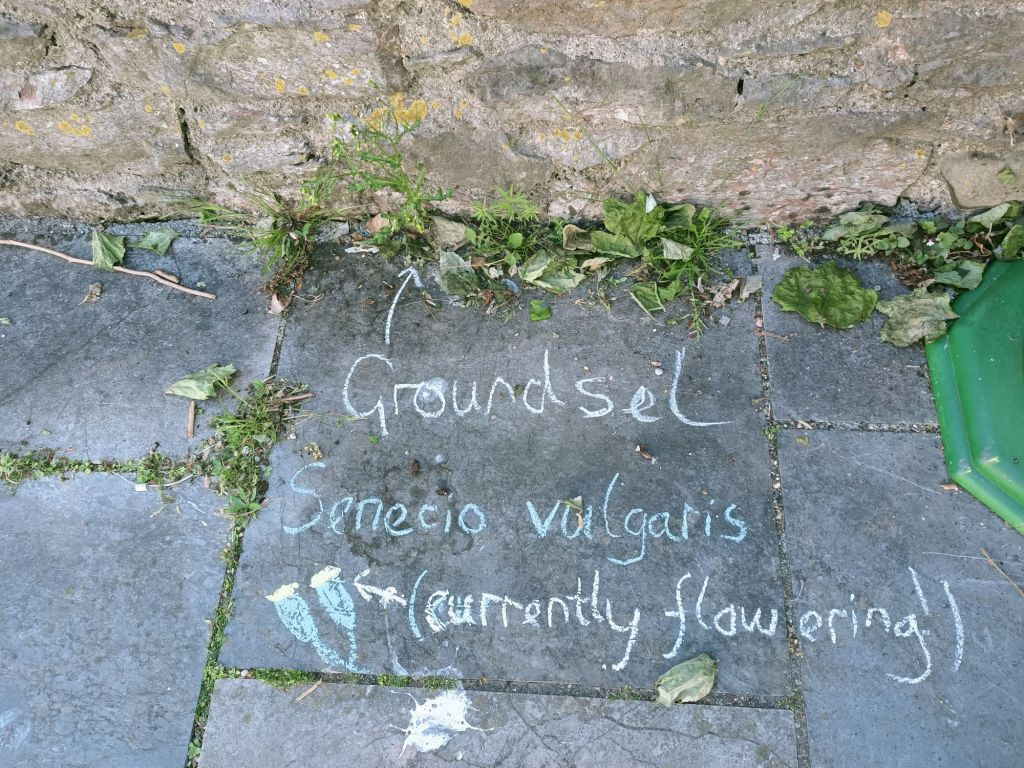
Senecio vulgaris, Common Grounsel

I hope you like and appreciate these little drawings our Rebels are creating for you. They are getting very arty you know 😉

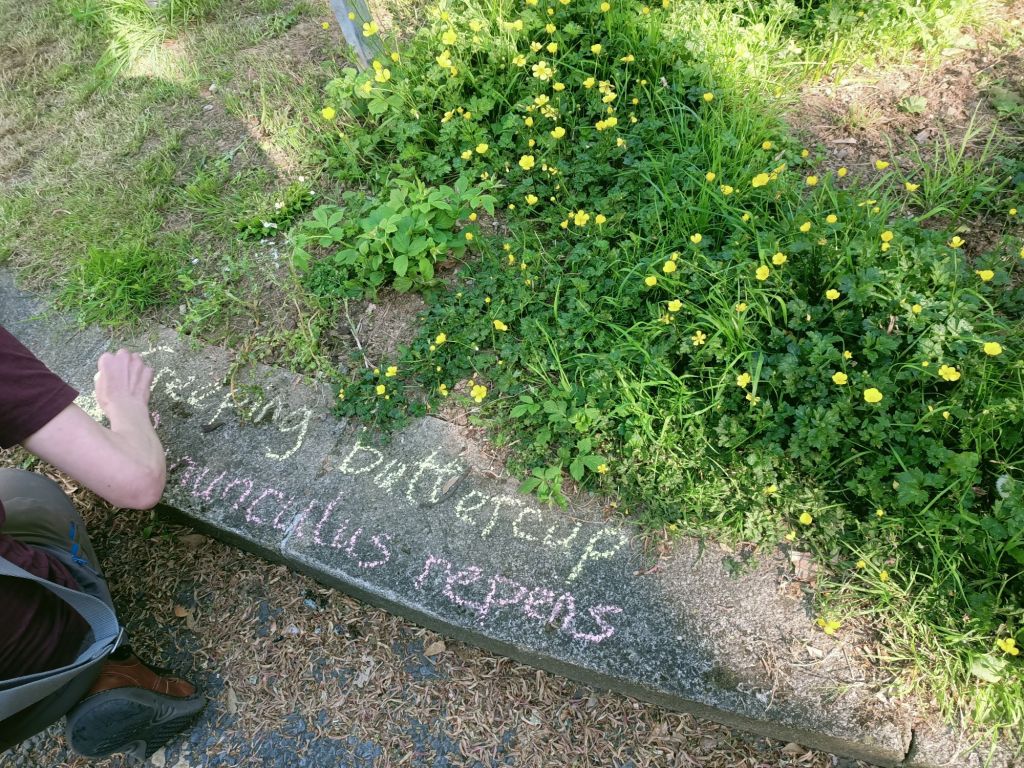
What’s creeping along here? Ah, lovely yellow flowers of Ranunculus repens
Another Rebel has found one of our amazing favourites…
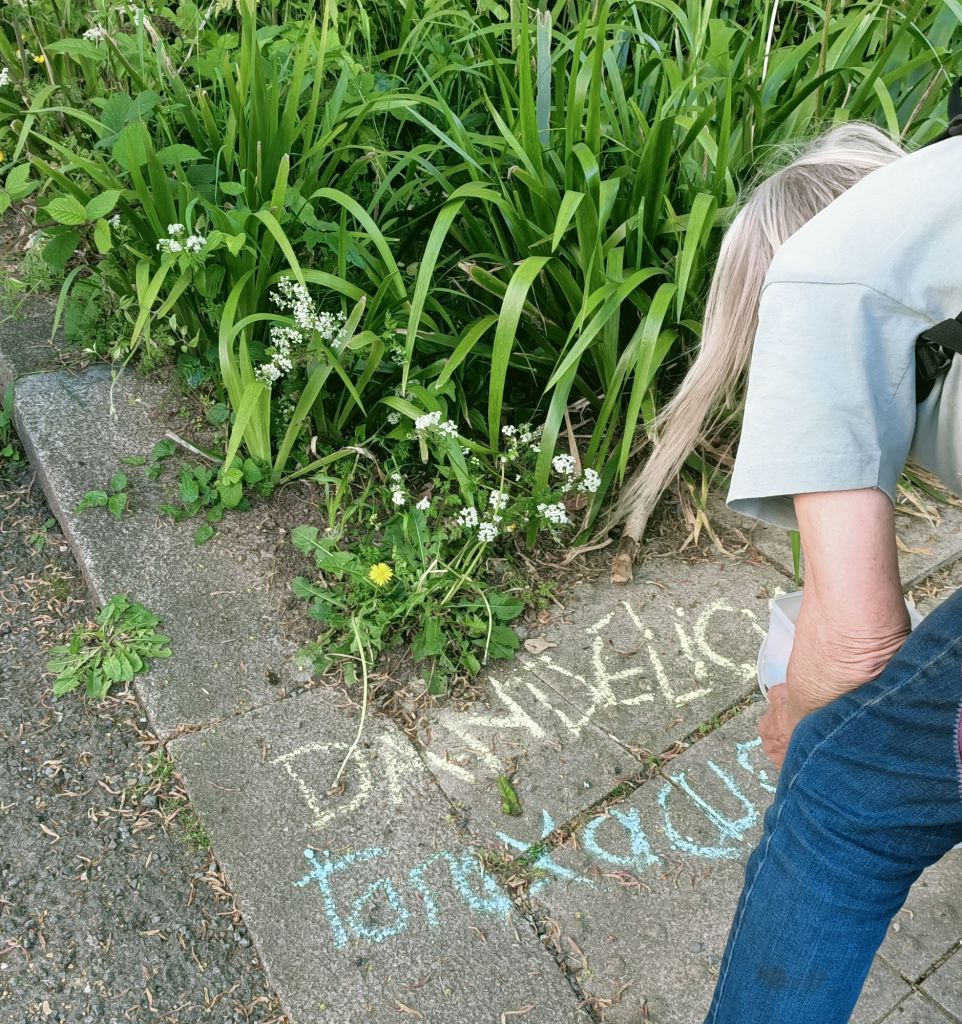
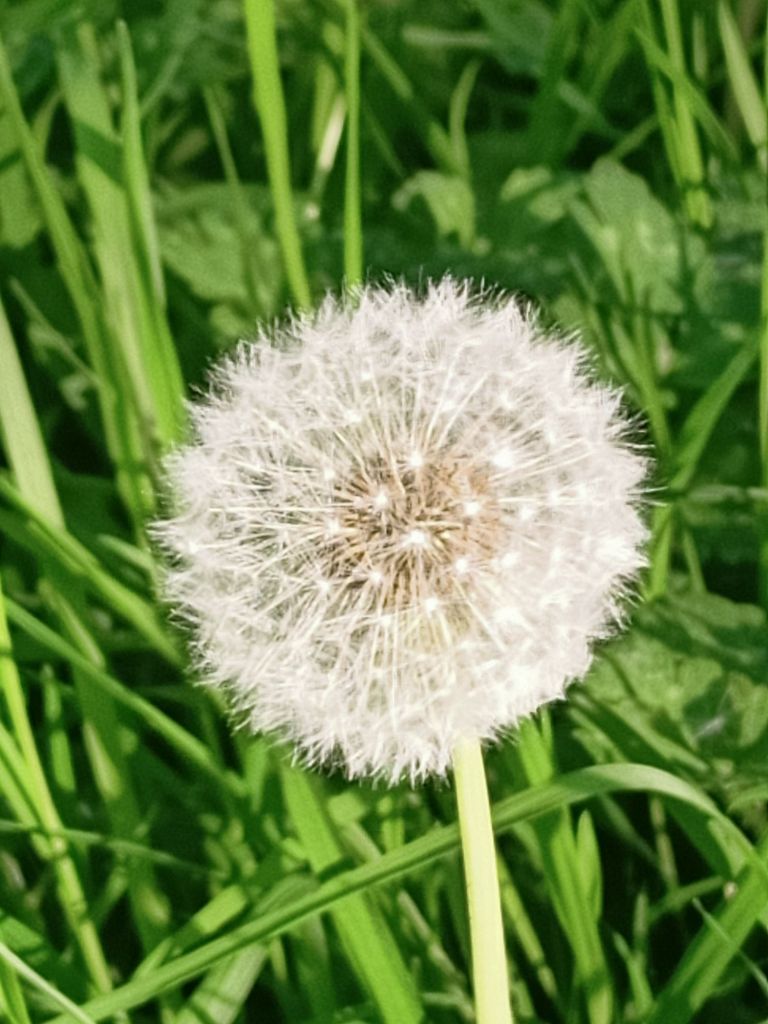
The clock of the Dandelion, Taraxacum officinale

Did you know (I bet you don’t 🤣) that the word Taraxacum derives from the Arabic tarakhshaqūn, meaning “bitter herb”.  However, the Persian 10th Century polymath, Al-Razi,  used this same word in relation to dandelions, chicory, and endives, which suggests the word is originally Persian.  He wrote “the tarakhshaqūn is like chicory, but more efficacious”.  (Info from: Wikipedia)

Oh, what a great word – efficacious!  I think we should use it more often, don’t you? 😉

Introduced before 1600 and naturalised, this plant is really important to many pollinators: bees, butterflies and moths.

Next photo shows the flower…

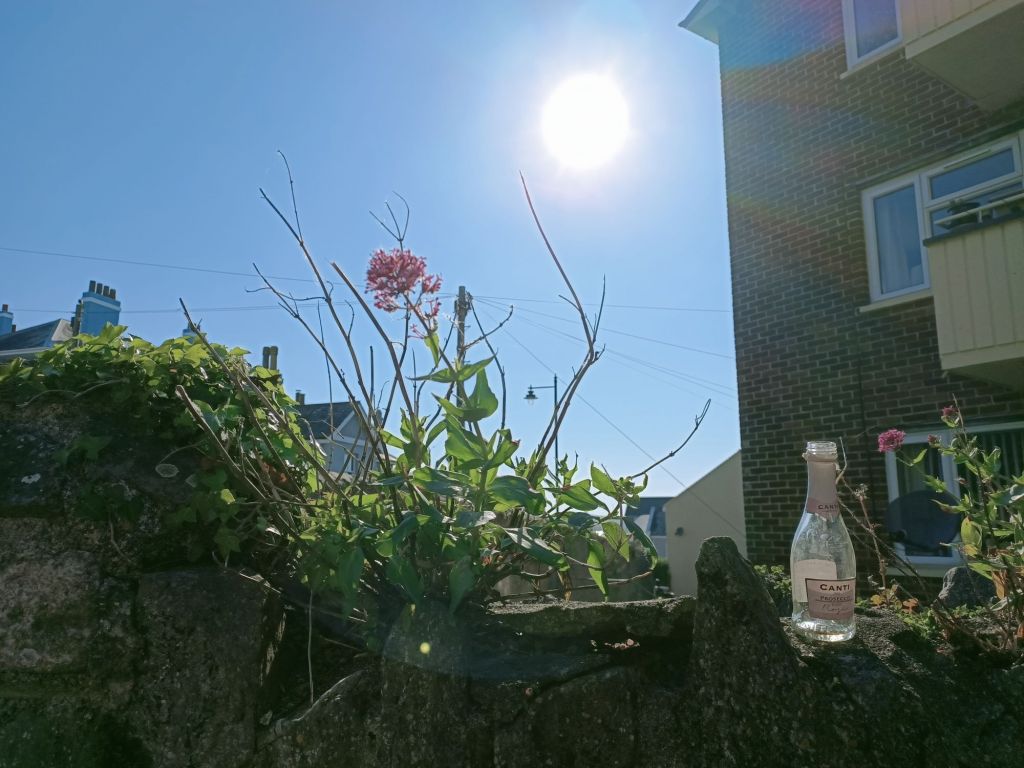
And here it is, with…

Named after a village in the province of Trieste, in Italy, Prosecco is a drink…Hang on!  This isn’t a wild plant, it’s not even the drink! It is, in fact, the bottle left as litter!

Who’s been irresponsible enough to leave an empty bottle on a wall, which could easily fall, break and cause a health and safety risk to walkers and, particularly, dogs’ paws? Grr!

Did you know in 2020 the UK generated 191 million tonnes of waste (www.gov.uk) but in 2024 that figure rose to 215 million tonnes (www.wastedirect.co.uk)?

That’s a shocking statistic, particularly with the rise of litter pickers, trying to raise awareness! Let’s keep our streets tidy everyone, reduce packaging, and pass the message on. 👍Thanks for reading and sharing 🙂

Let’s Keep Talking

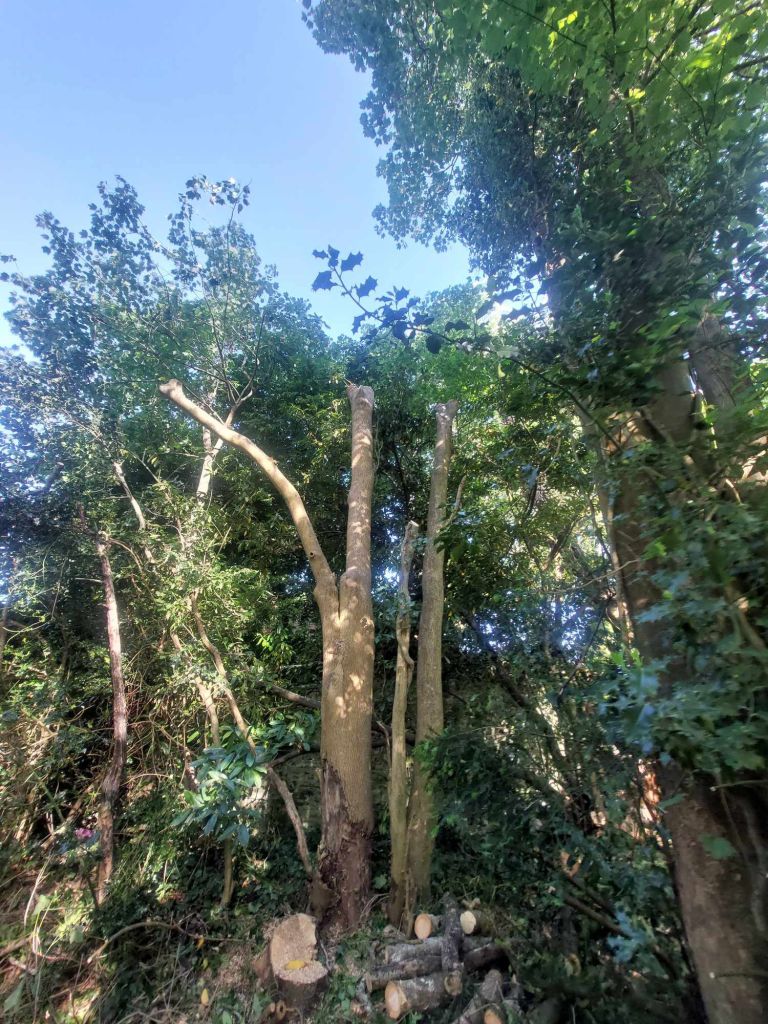
Tree Felling in Progress

On Friday, 16th May we turned up to a site in Plympton, Plymouth responding to an urgent plea that lots of trees were being chopped down and nesting birds were possibly in danger. Could we stop it?  Well, we knew nothing about this and neither did anyone else we contacted in our ‘tree caring’ community. So, armed only with good advice and a passion for protecting nature, we responded.

The neighbours living close by these trees had not been informed of this action. As one resident said when we arrived: “you hear the chainsaws and you immediately think ‘Armada Way’, they’re going to cut the whole lot!”  It seems the shock waves from that event are still very much felt by people in Plymouth.

Before going over to speak to the chainsaw handlers, we watched. Looking through binoculars, we searched for nests but couldn’t see any, which was a relief. As we watched, total destruction was not unfolding, rather careful lopping of branches of one particular species, European Ash: Fraxinus excelsior.

European Ash

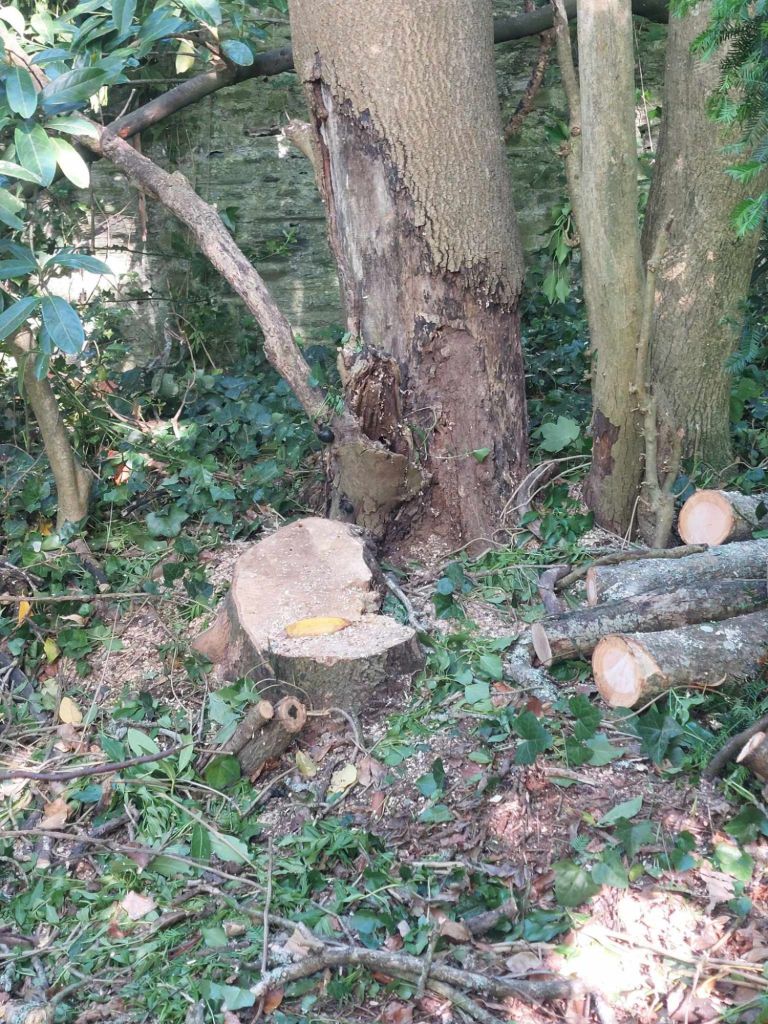
We edged towards the barrier and beckoned to the workmen. It was clear from their initial body language they expected confrontation, but quickly realised that was not our agenda and very soon we were having a very productive conversation. They invited us behind the barrier and showed us exactly what they were doing. Contracted in by the council, these tree surgeons had removed 5 Ash trees that had Ash die-back. Was that necessary? Could these trees have been saved by just removing affected branches?  It seemed not. The trunk pieces they showed us were black throughout the heartwood and placing his finger between the blackened wood and outer layer, it crumbled away. Other trees not so badly affected were having branches lopped to save the tree. Amongst the ash trees, other species like Sycamore were untouched.

Ash die-back

What about nesting birds? Was it really acceptable to be doing this during nesting season? He assured us they had checked for nests and hadn’t found any, but he did admit that it was a disruption for birds generally to have this activity and noise happening in their habitat.
Could this not be done outside of this season? He responded with honesty:  yes it could and it would be better for wildlife, but for us we’d have no income coming in during those months. The neighbour then responded that if more frequent checks were made, rather than leaving the trees for so long, then the remedial work would not be so intensive. This would also mean the tree surgeons would still have work throughout the year. That decision isn’t theirs though, it’s a council one.

The tree surgeons apologised that the neighbours hadn’t been informed but said they couldn’t be responsible for this. We agreed. The council have contracted them for the job and surely it’s their responsibility to also inform local residents that this would be happening. Yet, apparently, the council doesn’t have to because “the trees belong to them not the neighbours”. Though surely with the branches being so close and the level of noise, it would be respectful to contact them? Also, the initial stress caused to the community thinking they were going to lose all their trees would easily have been avoided if communication had been made.

It’s never good to see trees being cut. Ash die-back is a dreadful disease, though sometimes the tree is able to fight back and survive. With this knowledge, less trees are being cut down and more are being cared for. In this situation, it seemed the disease had gone too far to save the five but, hopefully, the rest will recover.

We left with handshakes and reciprocal smiles, our caller was relieved and happy to pass this on to other local residents. However, it appears that a complete lack of information from the council to its community had created the initial panic. So, please:

“All we need to do is make sure we keep talking”  (Stephen Hawking, 1993).  By talking we are keeping the channels open to communicating, collaborating and learning.

This post is dedicated to the five 🌳🌳🌳🌳🌳

Sprightly Stepping into 2025: ‘Cos We’re “Born to be Alive”

How will you step into 2025?

A new year can sometimes seem negative: another year older, political, economic and climatic problems; however, it can be an opportunity that represents a liminal threshold to positive change. I don’t just mean those new year’s resolutions that last a few weeks until old habits kick in again, what I mean is real change, a wake up call to life because we are “Born to be Alive”, as the 1979 Patrick Fernandez song states. Have a listen 🎶 Let that tune stay in your head as you continue to read 😉

One of the Lambhay Hill limes waiting for spring to come into full bloom

Just like us humans, every wild life is born to be alive too and we need to respect and protect them. To be alive isn’t just existing; ‘to be’ is a verb, a doing word; to be alive suggests living with energy and enthusiasm: to be active!  So, what will your activ-ism be in 2025?

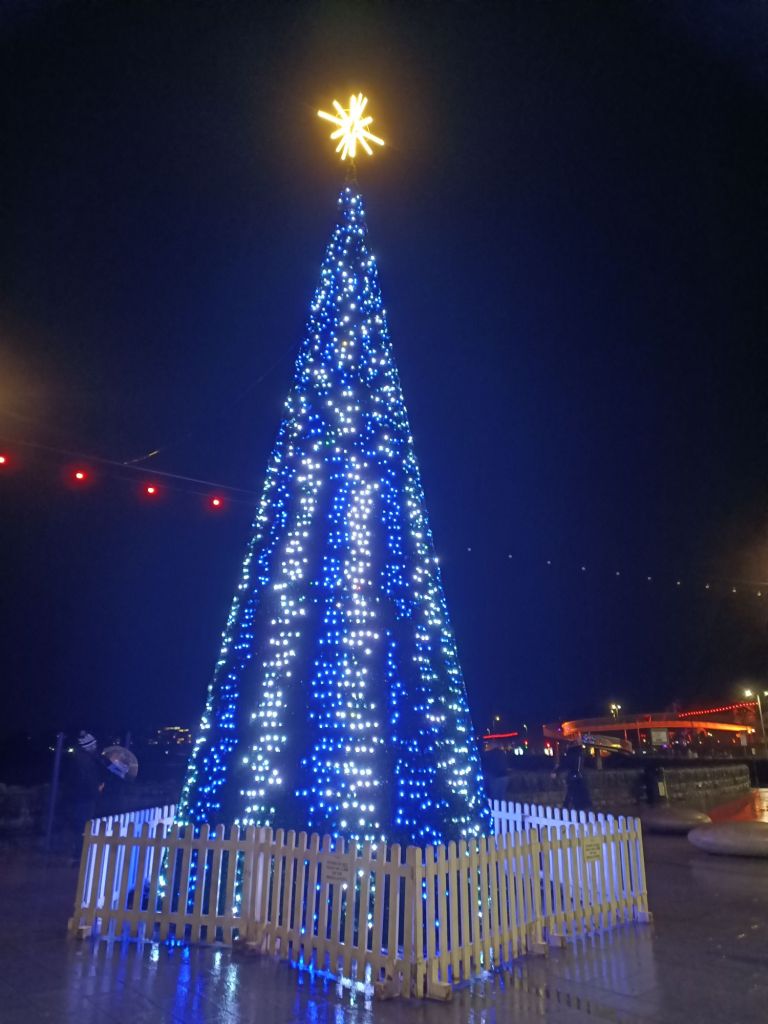
Lights are lovely but consumerism tends to focus on false materiality…
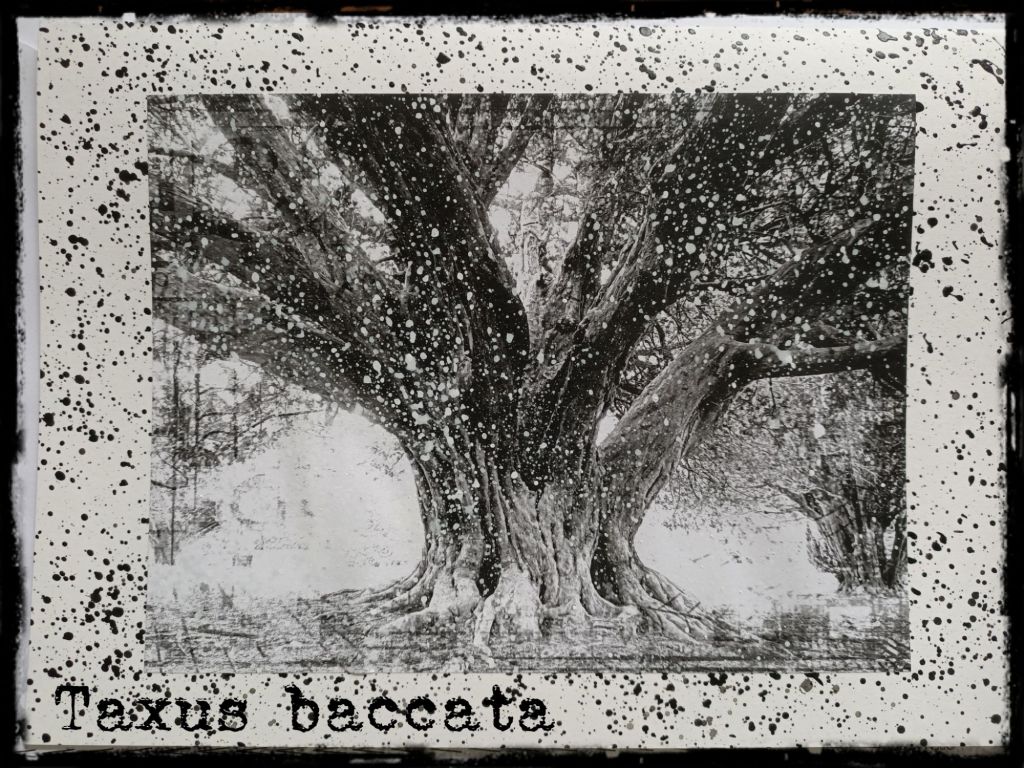
Our hand-made Christmas card design of a Taxus baccata, Yew tree, was created to illustrate the living beauty and life force of real trees.

So, thinking about life and being ALIVE we need to connect with reality, with nature, with being active.

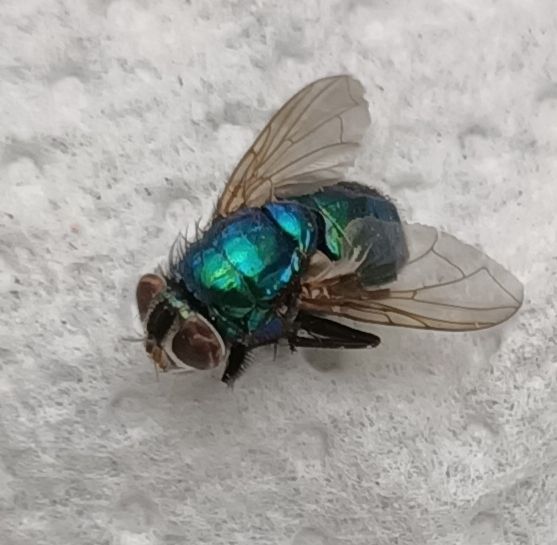
On this vein of thought, a fly caught my eye. As I looked closer, the stunning iridescent colours captured my attention. Quite often, in our busy lives we don’t give enough time to look more carefully, or read more deeply: our senses are often overwhelmed and undervalued in this digitally fast-paced world.

The Common Green Bottle fly (Lucilia sericata)

Many of us will soon be returning to work, our festive holiday over, back to the grind, so to speak.  How will we find time to ‘be alive’ when we are back to meeting targets, documenting data in triplicate and meeting the demands of a capitalist system driven by profit over people…?

Charlie Chaplin’s, Modern Times, 1936 Despite being a comedy film, Chaplin clearly portrays the dehumanising exploitation of labour, as his character becomes part of the industrialisation that almost destroys him.

Well, we need to find the time to find ourselves, and do the things that will make us healthier and happier beings.  Easier said than done, you may say, but we just have to do that, otherwise we lose ourselves and the wonderful world around us.

As you know, Rebel Botanists are volunteers, we give freely of our time to educate, through our street art activities, to highlight wildlife in the urban environment. Check out some of our past work:

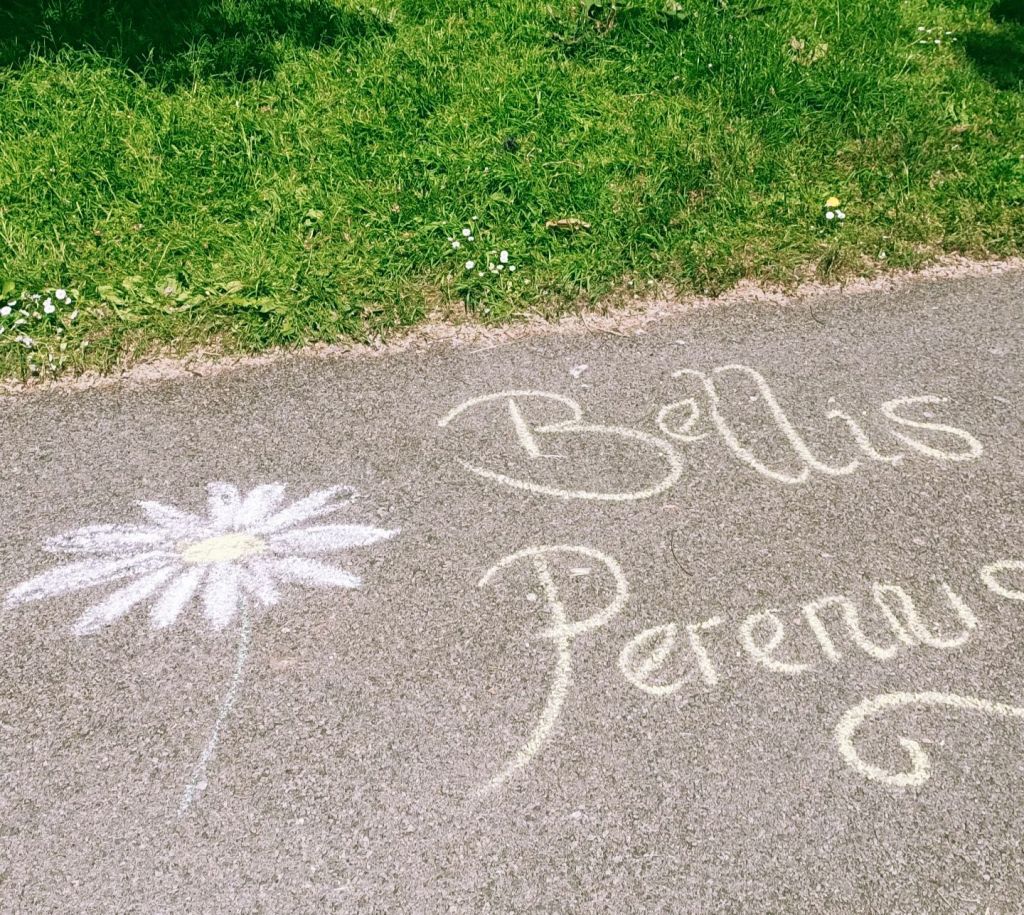
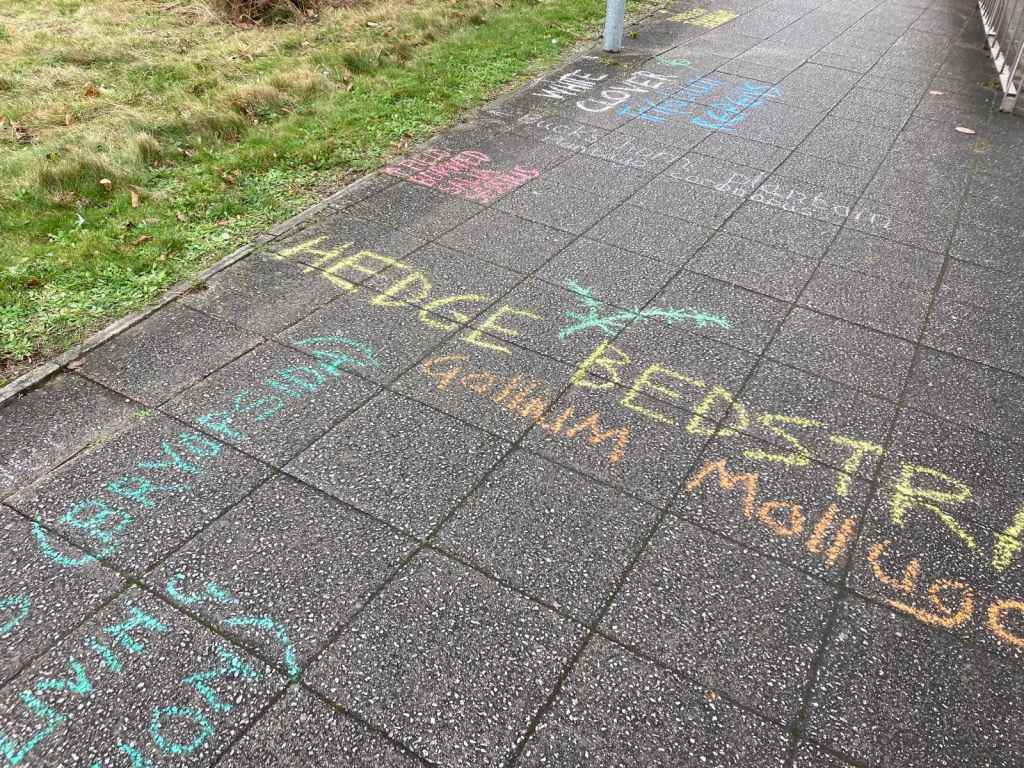
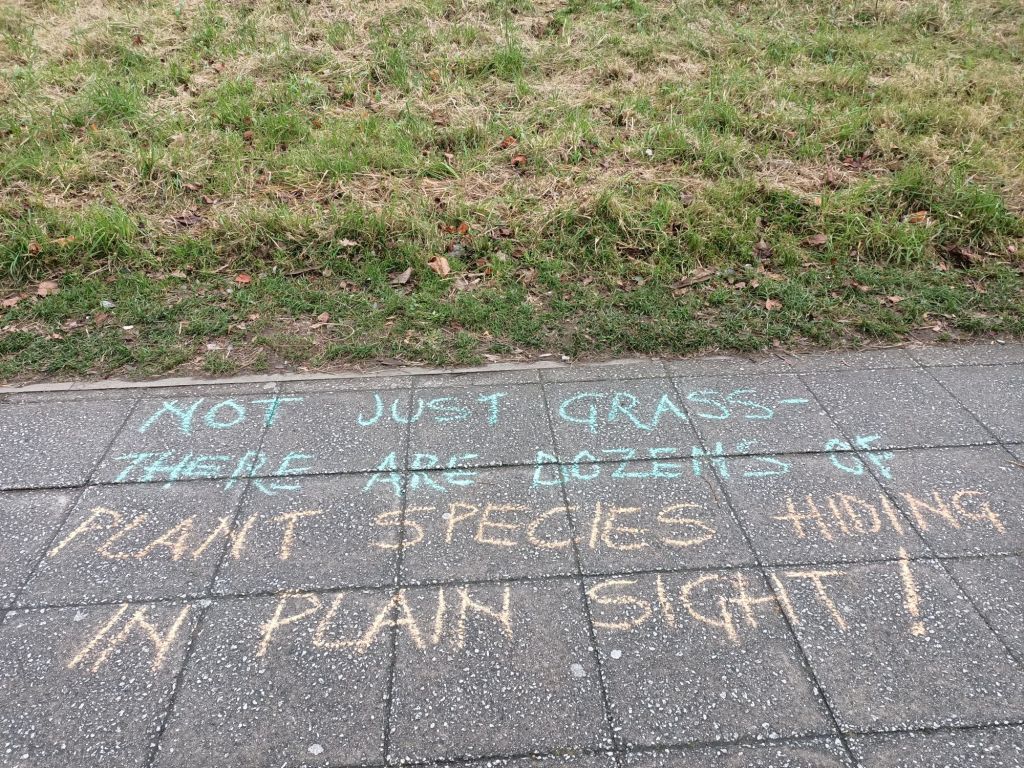
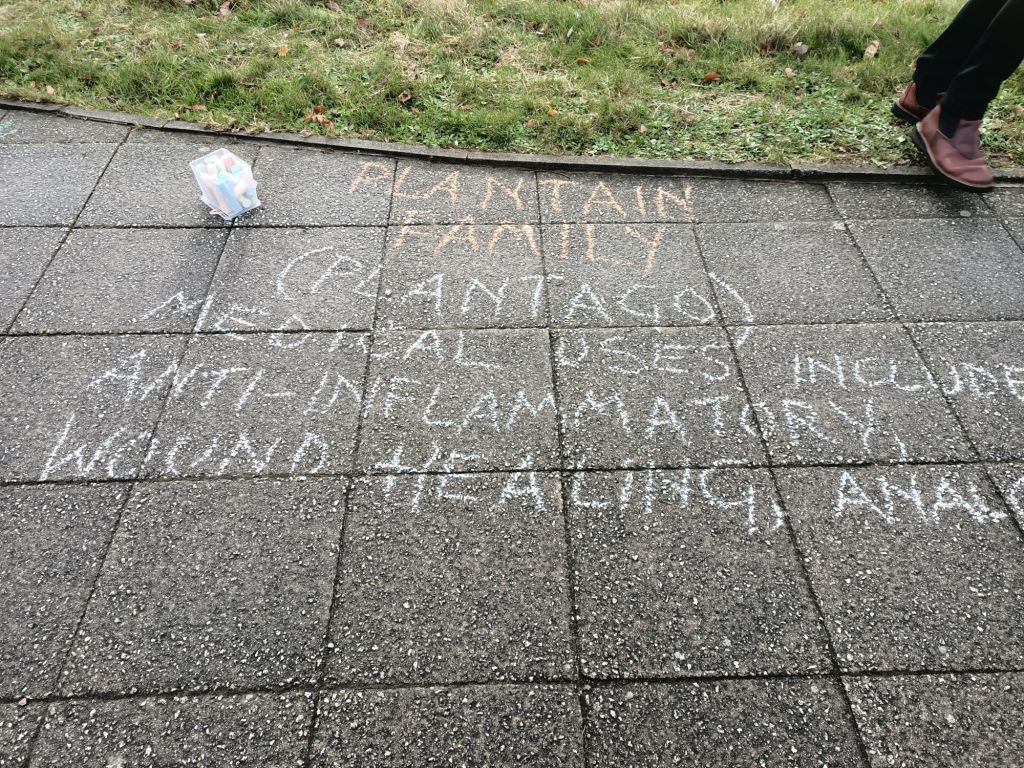
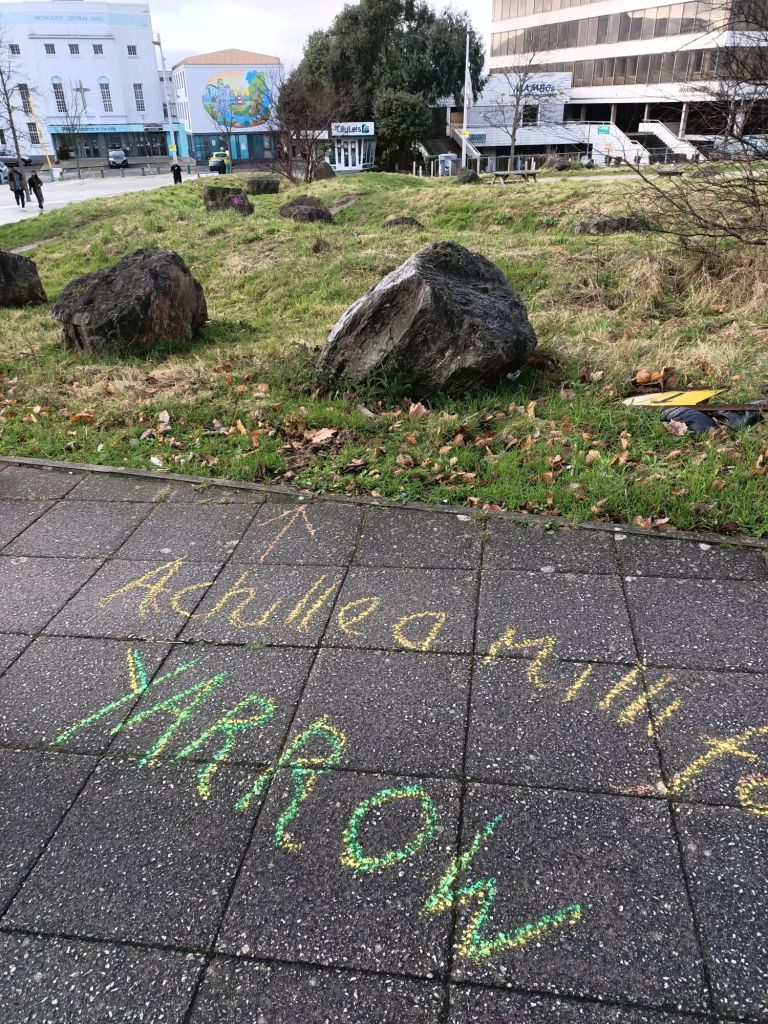
Chalking up the names of wild flowers along the streets, including the Latin/scientific name 🌼🌼🌼
Yah, a bit of tree hugging – feel the energy and raise awareness to passers-by of tree species and their importance.
Walking and researching the value of Temperate Rainforests
We gatecrashed Edinburgh’s Fringe Festival and met some lovely people and chalked their streets 🏴󠁧󠁢󠁳󠁣󠁴󠁿
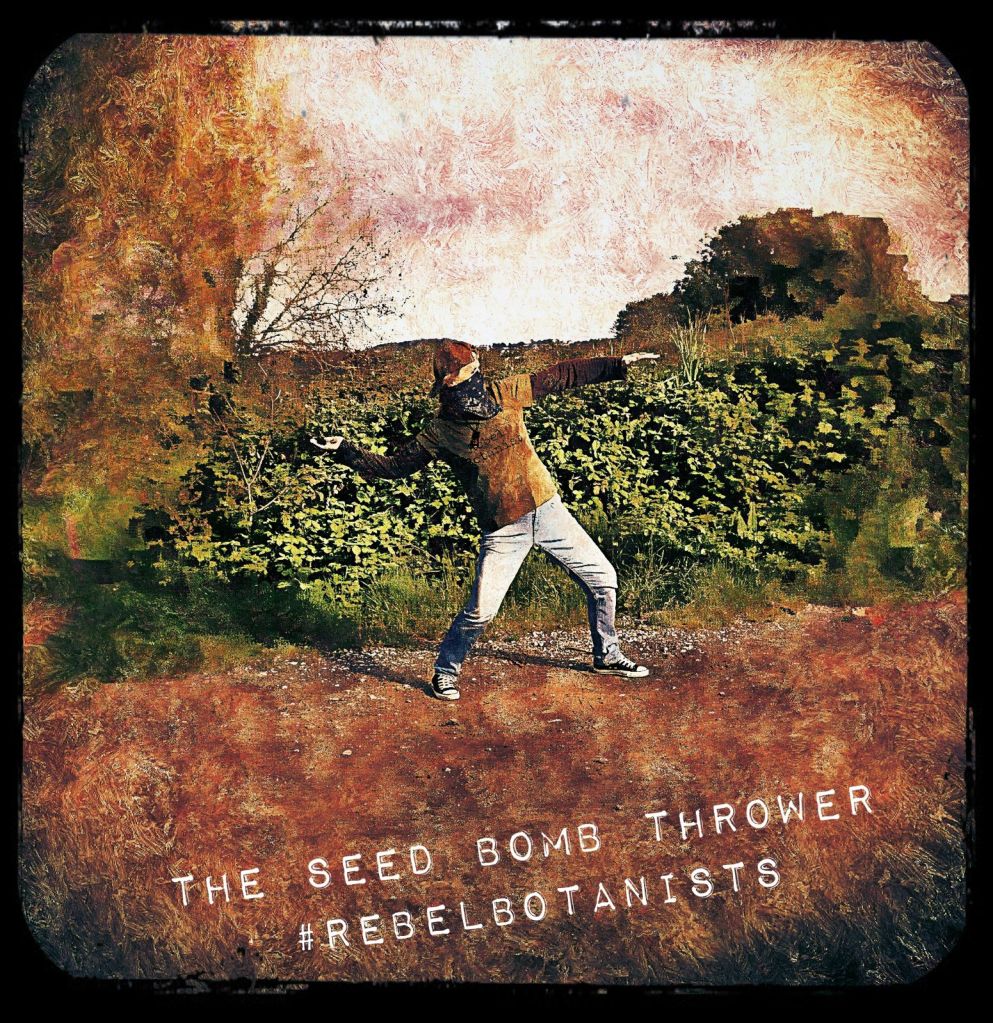
We’ve been seed-bombing!
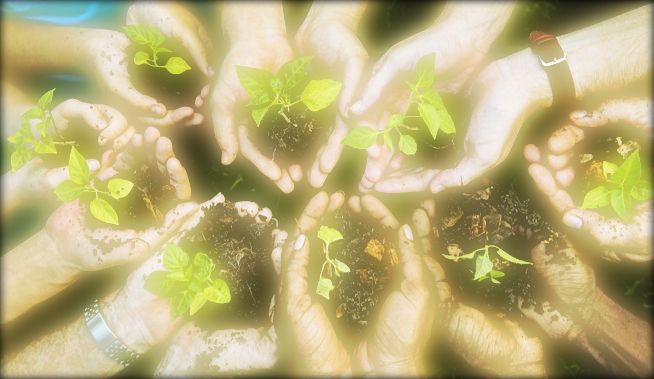
Planting wild plants and trees 🌳🌳🌳
Carried out educational activities at City College Plymouth and the University of Plymouth
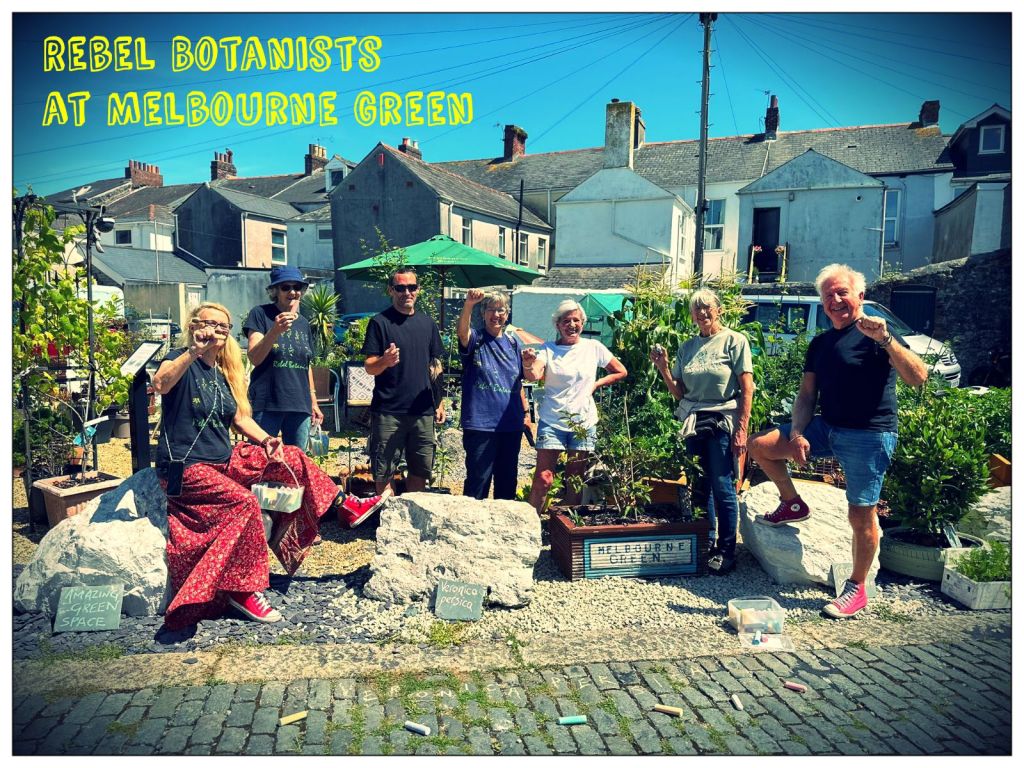
Supported other community groups and organisations e.g. Melbourne Green
Some of our Rebels make great hand-made cookies too 😉
And, we keep coming back:
Walking on your street,  
To name the wildplants at your feet. 🌼🌸🌼🌻🏵️🥀🌼🌷🌳🌸🌼🍀🍃😊                     

So, what will we be doing in 2025?

Keep following us and you’ll find out. 🙂We have lots of plans, as well as chalking and identifying wild plants, we will definitely be embracing this year’s Rebel Botanists’ motto, “Born to be Alive” – for ourselves and for every wild plant out there, so why not join us?! 😉

So, put your best foot forward into 2025 😀

A Puzzling Christmas Chalking

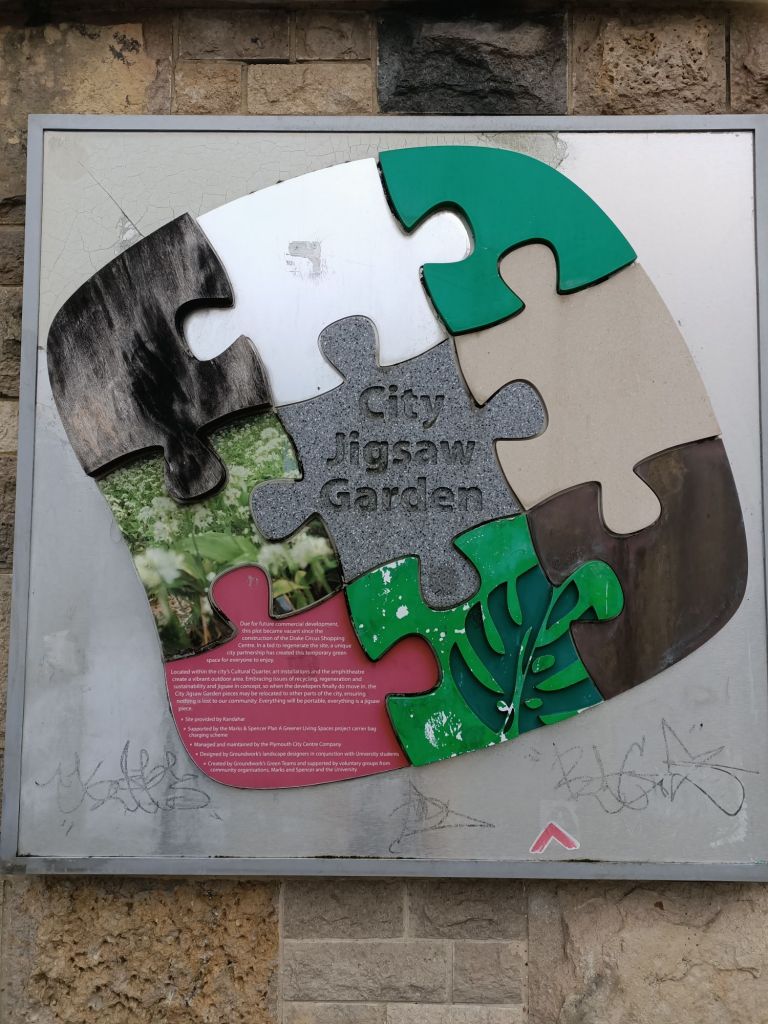
We meet at the City Puzzle Garden in Plymouth. It’s situated next to a busy shopping centre; but why, we wondered, is it so named…A puzzle indeed, until we read the sign.

That bottom left red piece tells the tale. This little urban green space is only temporary and earmarked for development, it seems. The layout has been designed in 9 sections, we presume, as the sign illustrates, with the idea that each section will be relocated elsewhere when, or if, building work starts. We consider if this would actually happen in practice, but rather hope that development does not take hold and swallow up yet another wild patch.

Despite a heavy presence of grass which tends to block wildflowers, there is plenty of life here in this urban nature patch
A respite from the hectic Christmas shopping
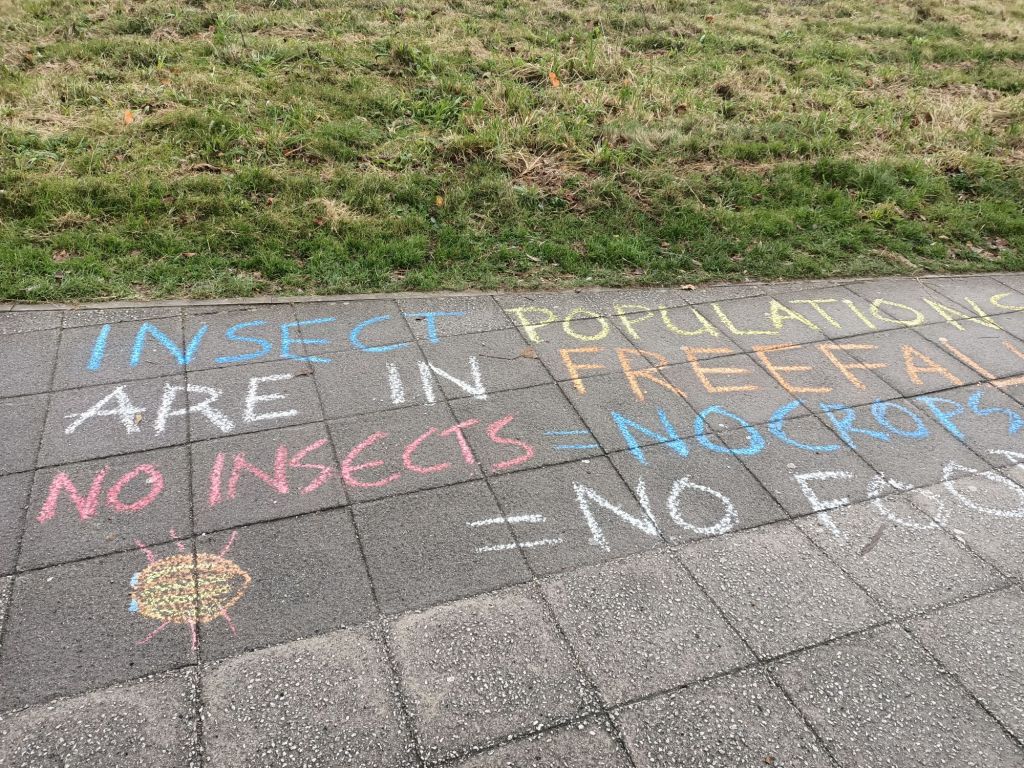
We really must rethink how we use land and stop the use of pesticides – we must protect insect populations which are fast depleting.
There may not be a yellow flower at this time of year, but the leaves are clearly evident.
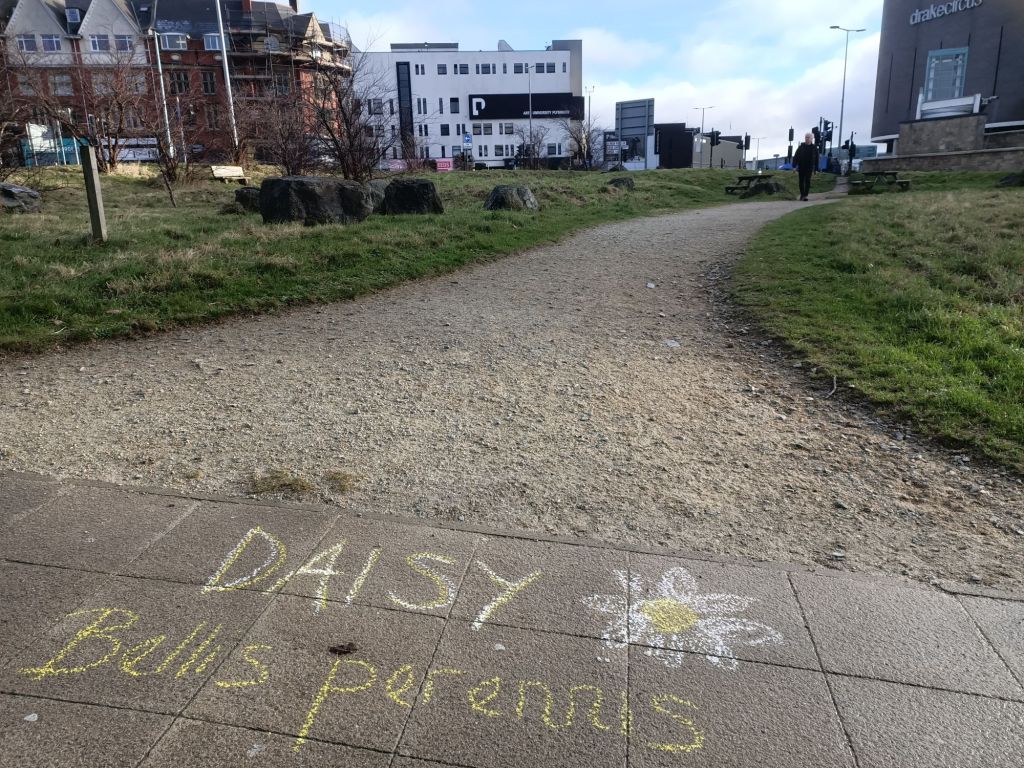
Some lovely Daisy flowers supporting winter wildlife 🌼🌼🌼
Trees help soak up excess water and store carbon – trees are tree-mendous! 🙂
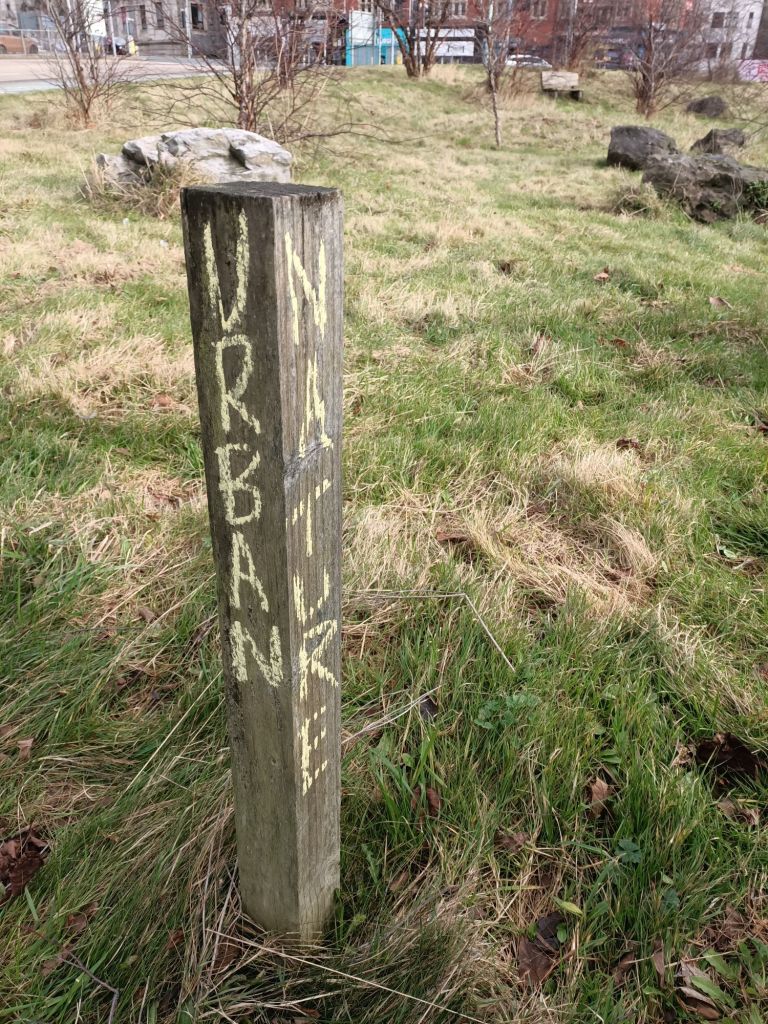
The long leaves of the Plantago lanceolata – great for human and animal medicine
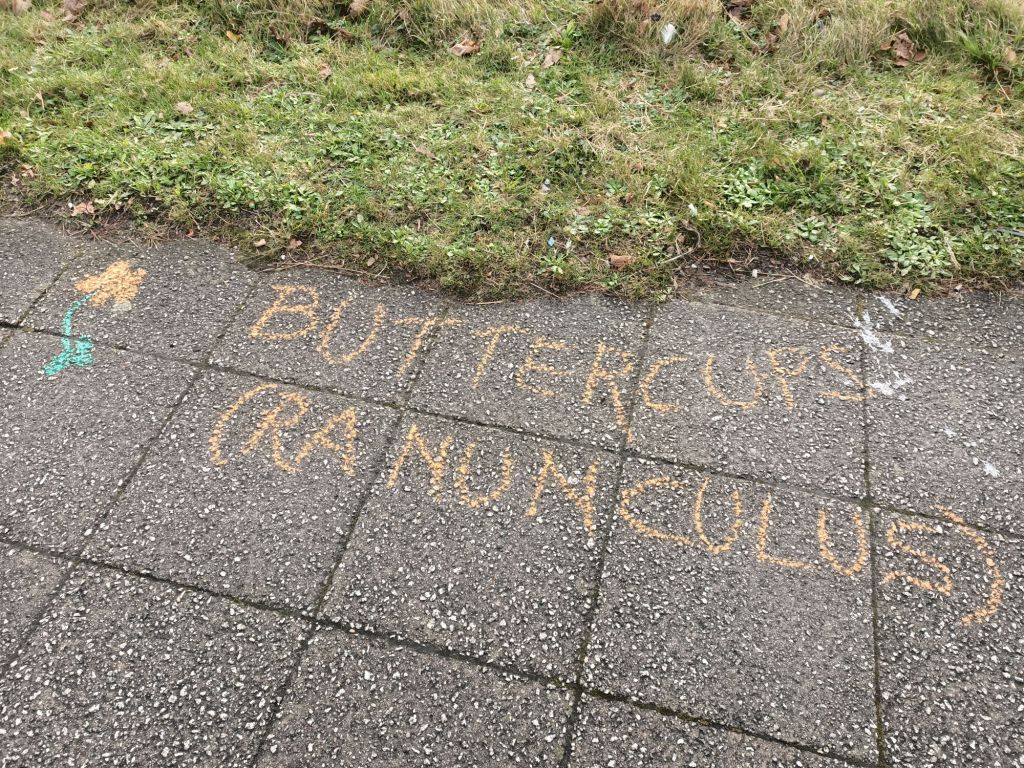
Leaves of buttercup
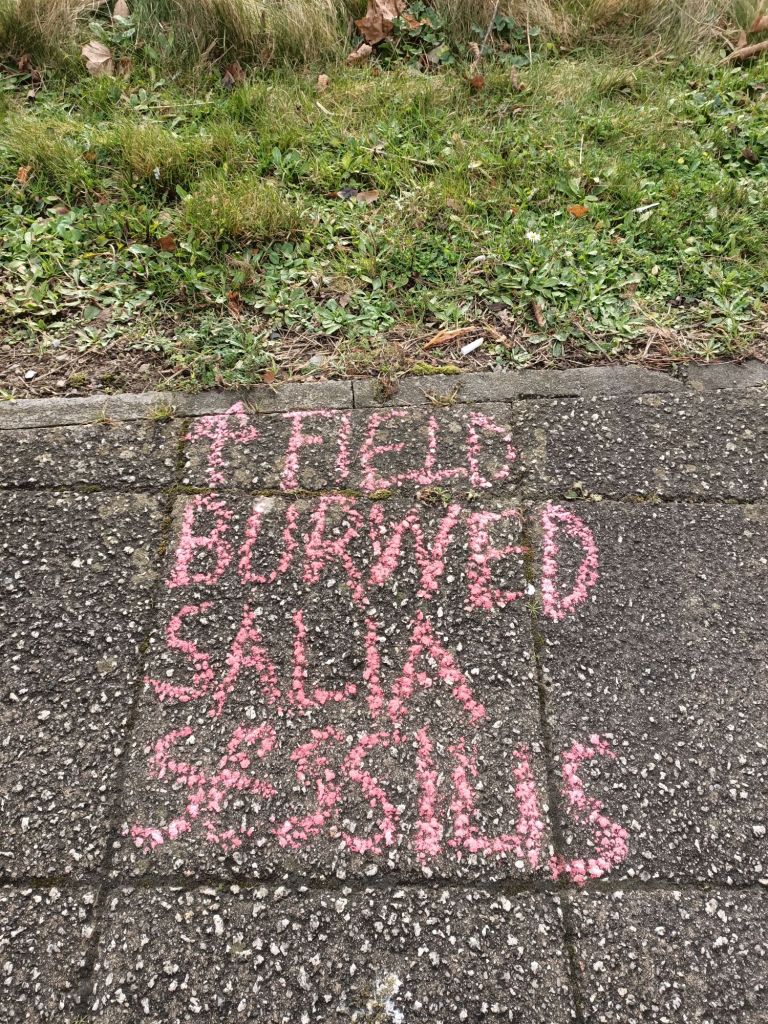
Field Burweed

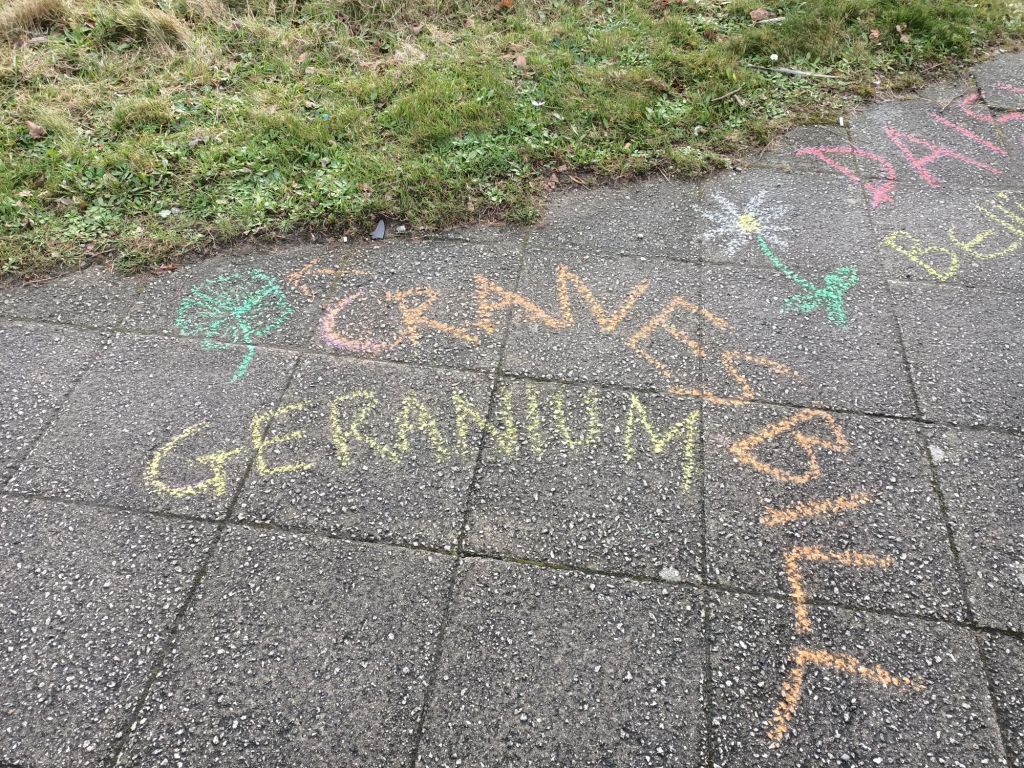
Cranesbill

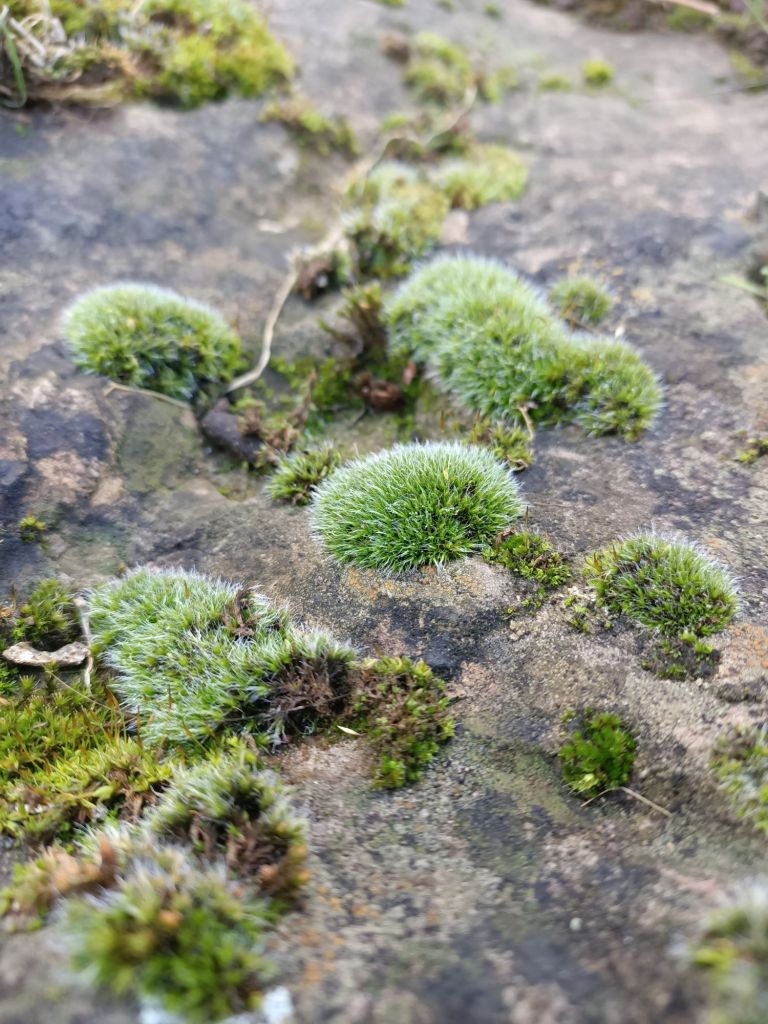
Mosses are truly ancient
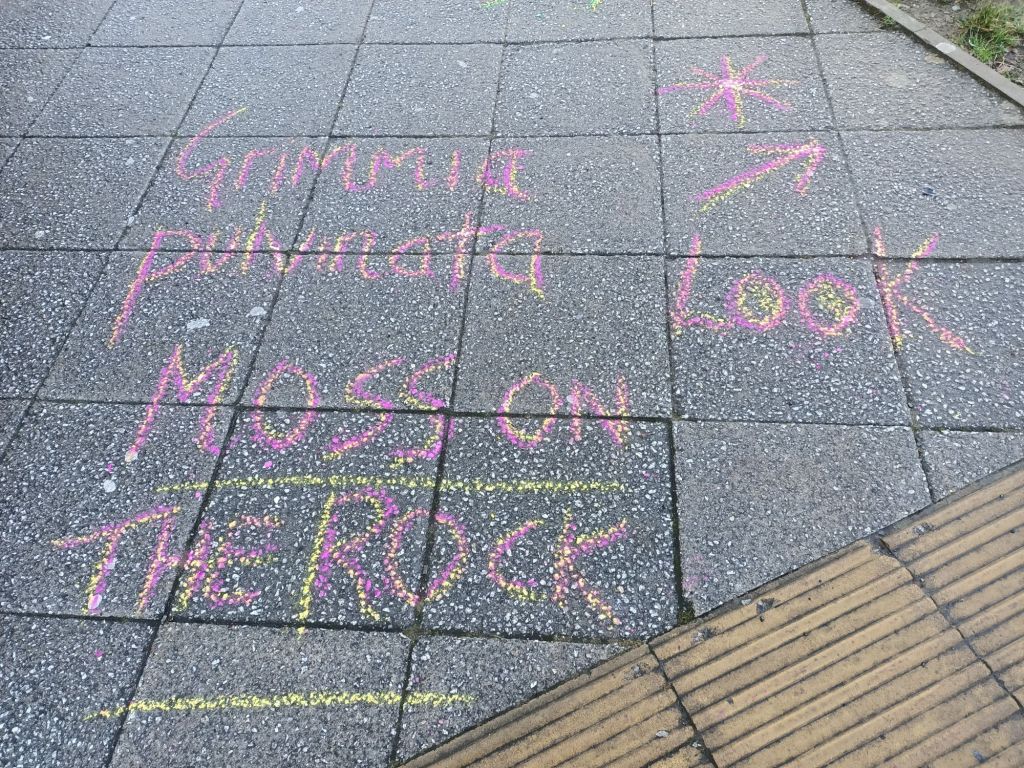
Look on the rock 👀
Grey Cushioned Grimmia moss – wow!
Like a bit of lichen 🙂👍
Look after the birds in your garden, on your street, in the park… It’s cold out there and there’s less and less food out there for them 🐦🐦🐦💚

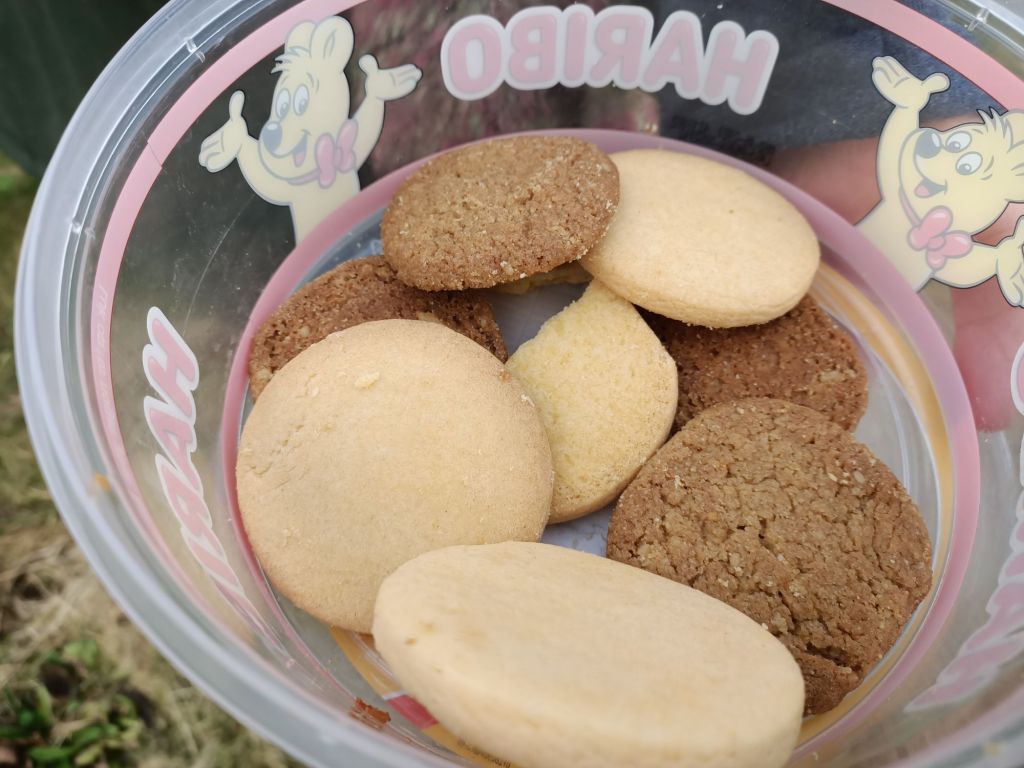
And then it was our turn… Scrumptious tahini vegan biscuits and custard cookies, yummy 😋 Happy Christmas.

The Dizzying Spectacle of Dizzard 🌳🌳🌳

Are we becoming nemophilists? 🤔 This is our second post on temperate rainforests, but we think you’ll like it 😉
Thanks to #plantsages for the photo.

After our visit to Cabilla, Guy Shrubsole, author of the Lost Rainforests of Britain book, said: “Have you been to Dizzard yet, it’s even bigger?”  Dizzard…? Where’s Dizzard…? And so the investigation began on this North Cornwall temperate rainforest.

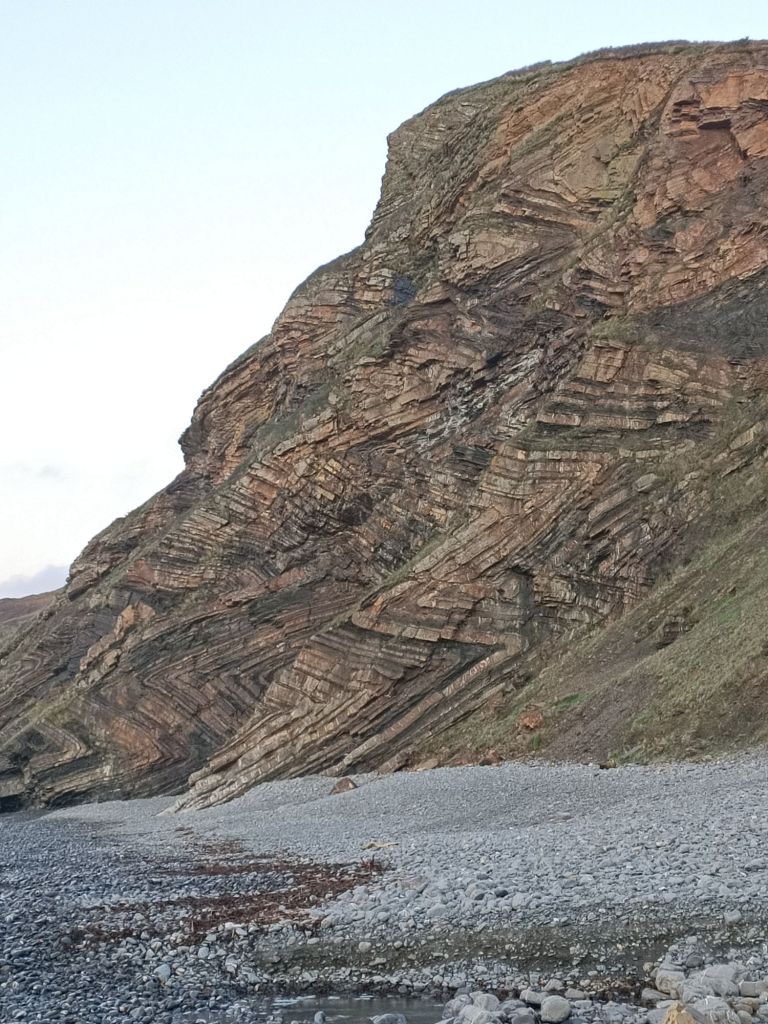
We headed for our destination, on the coastline, near Millook, with its stunning chevron rock formations,which are also well worth a visit. 

Striking folded rock formations at Millook

Our walk started over a stile and across a field.

That’s the only chalking we could do, no more tarmac from here 🙂

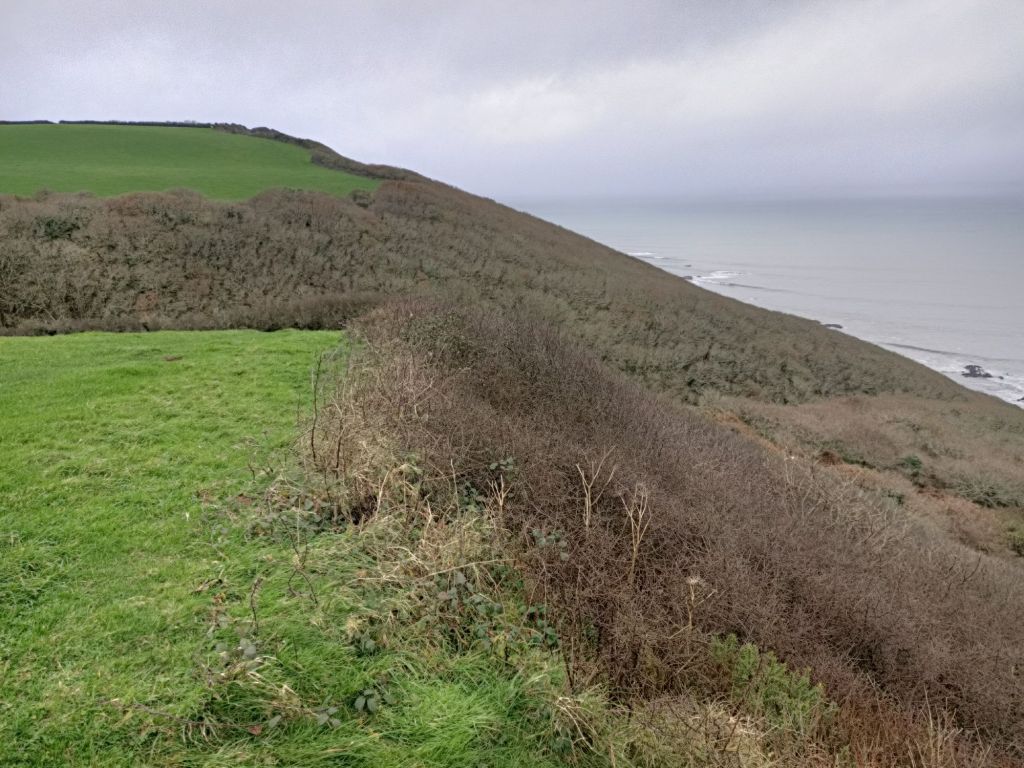
The name Dizzard comes from the Cornish word, Dyserth, meaning very steep and perhaps it is due to its steep cliff location, beside the sea, that it has survived centuries of human destruction.

In the 8th century, more than 25% of England had woodland cover, imagine that; now those ancient woodlands have reduced to only 2.5%. Ancient woodlands are documented as those having existed continuously since the 17th century; this continuity adding greatly to the amount of stored carbon and the incredible understory entanglement of the mycorrhizal network, which inextricably links tree roots and fungi in a symbiotic relationship.

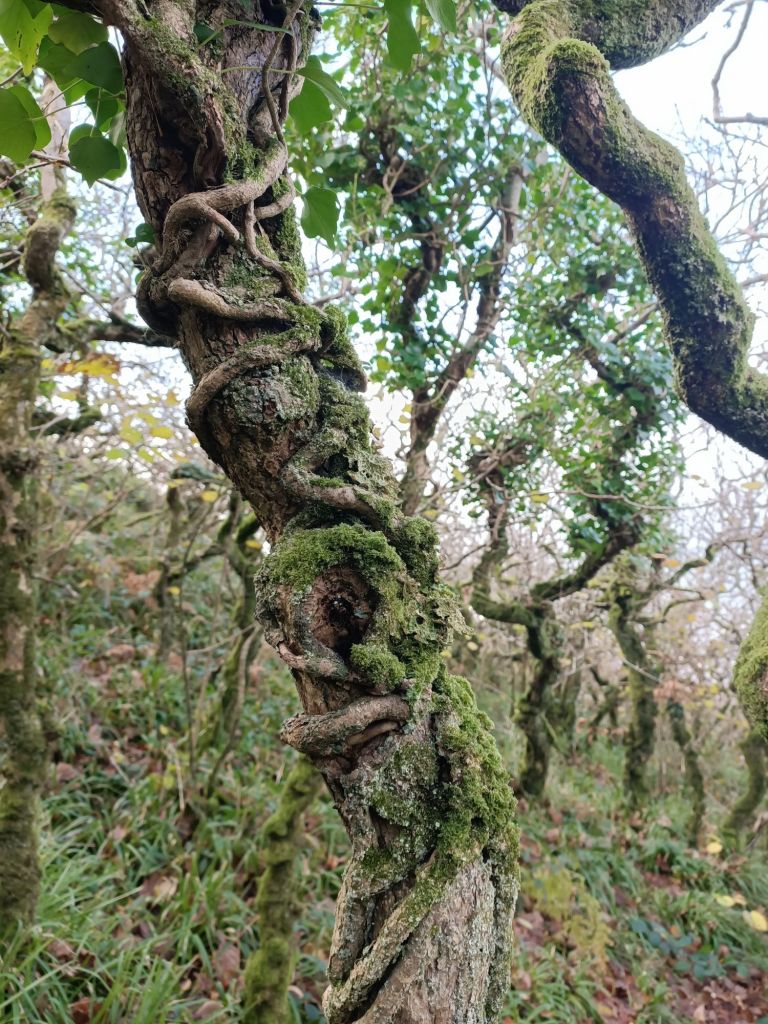
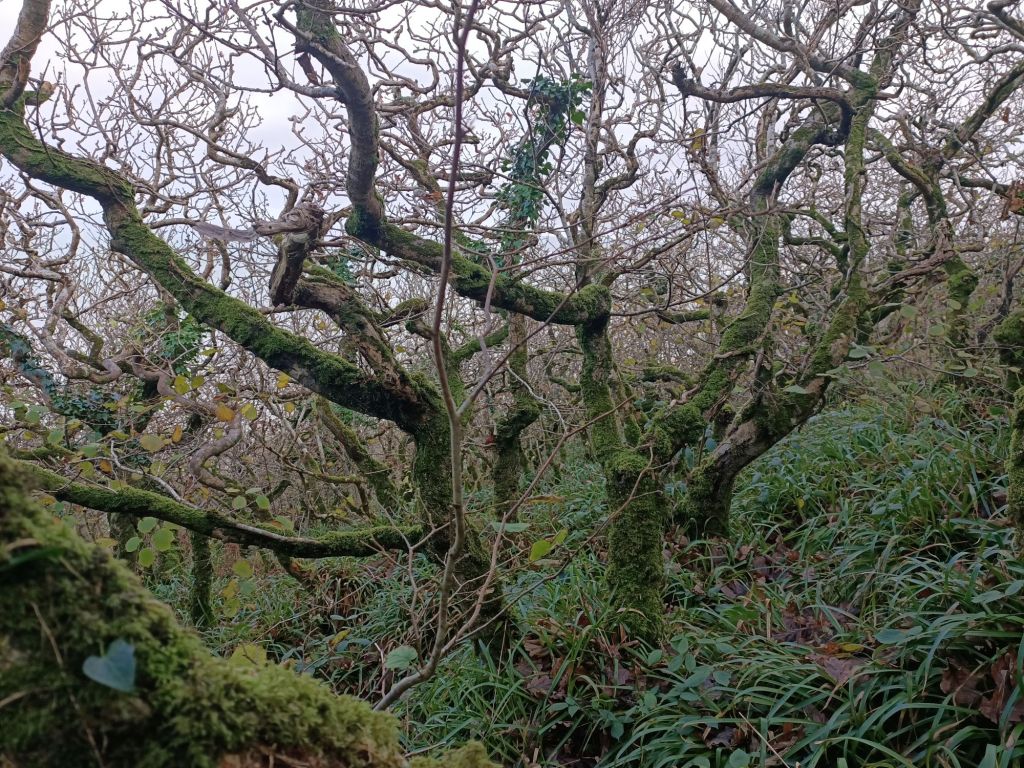
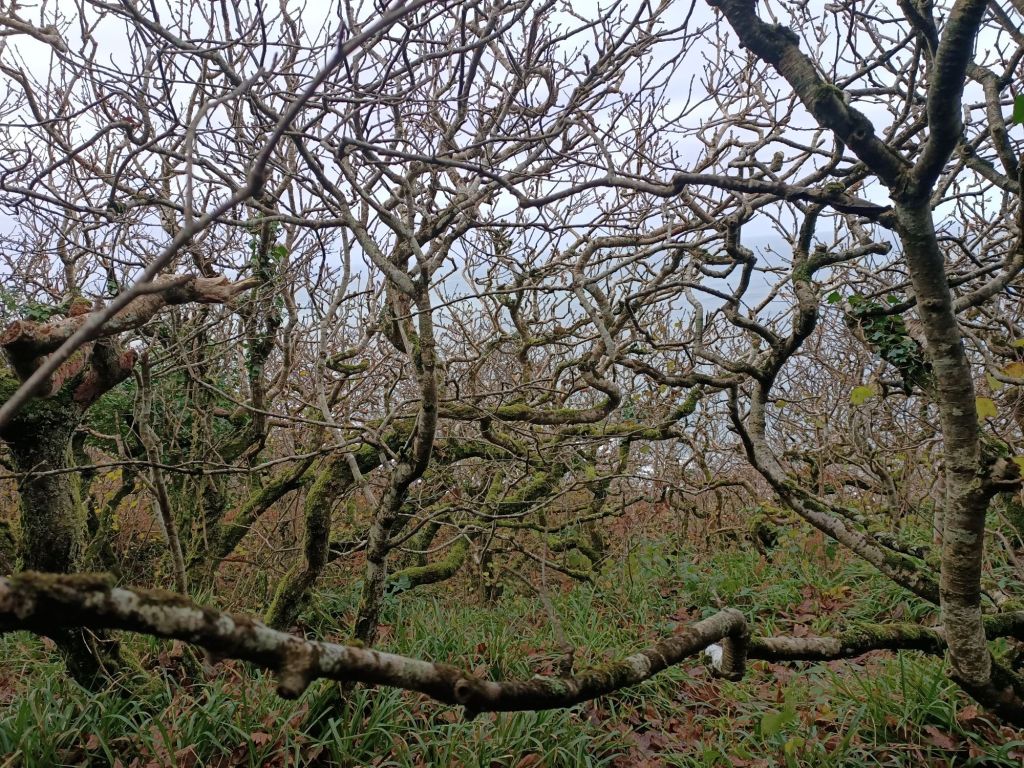
When we look at the gnarly twisted intricacy of the ancient trees above ground, we can only imagine the development of life below, beneath our feet.

            Image of mycorrhizal network.               Thanks to Eden Project for the photo

My phone’s camera, hi-tech though it is, cannot capture the living beauty of such a place: the smells, temperature, textures – the holistic sensorial experience of being at one with such an ancient undisturbed place. However, the visual record will serve to share its aesthetic existence.

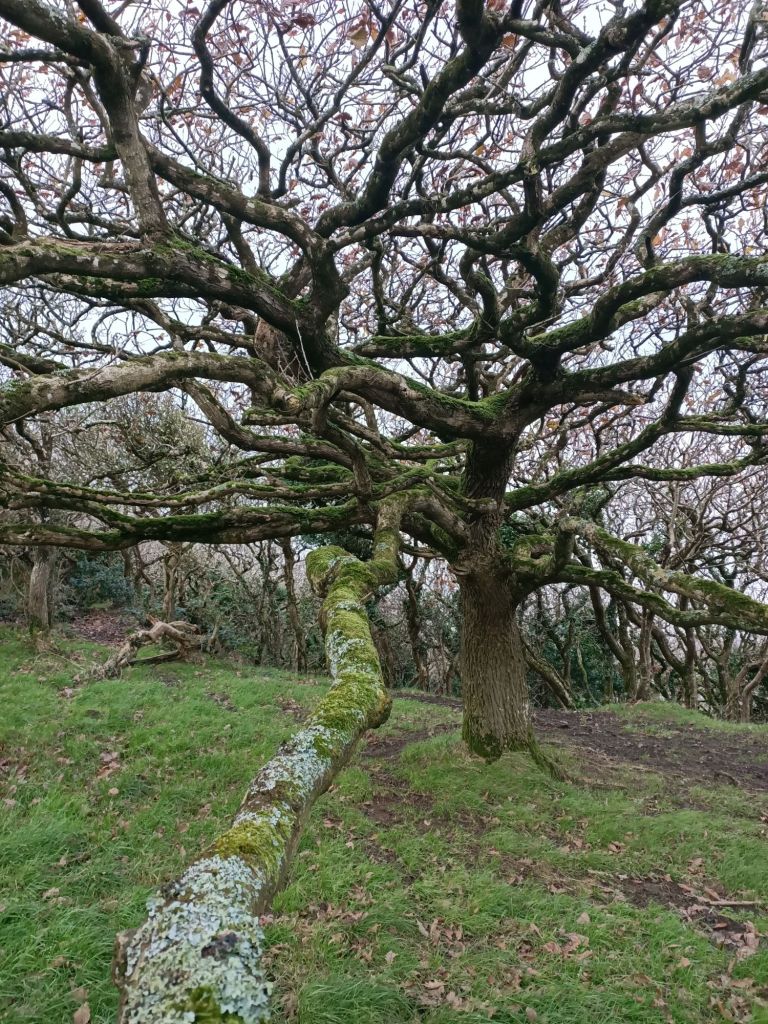
Quercus robur (English Oak) dominate the Atlantic temperate rainforests

You can’t mistake an ancient woodland from a veteran woodland, though both are incredible wildlife spaces providing a wealth of varied benefit to the environment. Arriving at the edge of Dizzard, the strange branching shapes resemble the Ancient Greek Gorgons: Medusa, Euryale and Stheno, with their hair of snakes writhing wildly from their heads.

Entering Dizzard’s ancient woodland
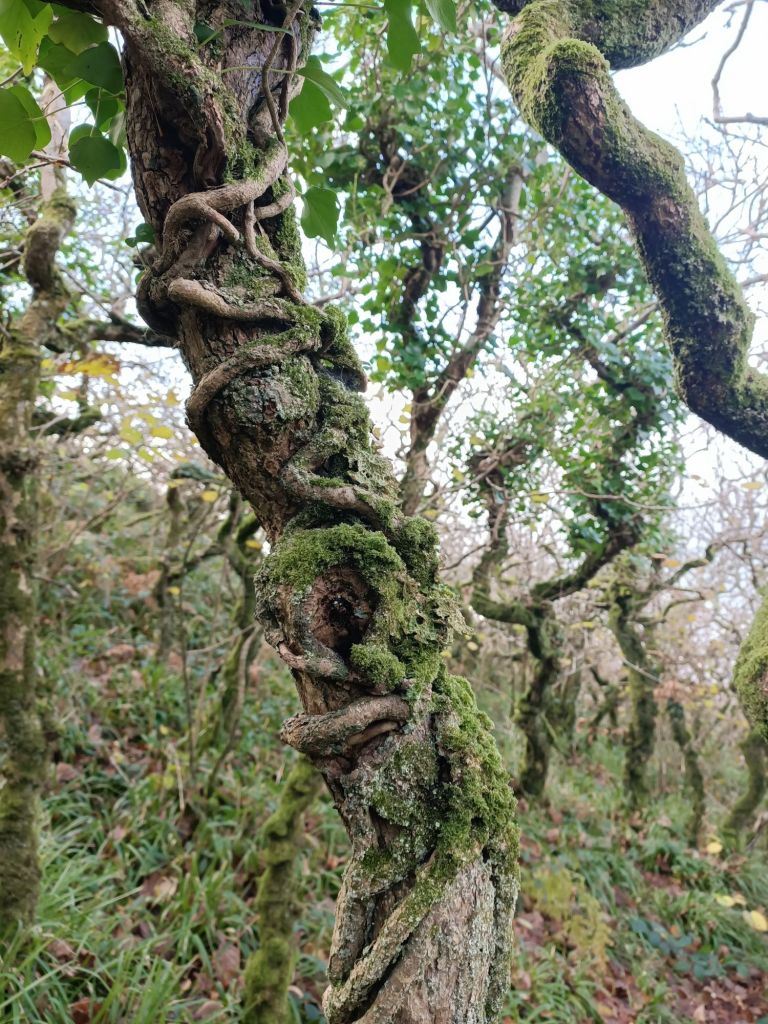
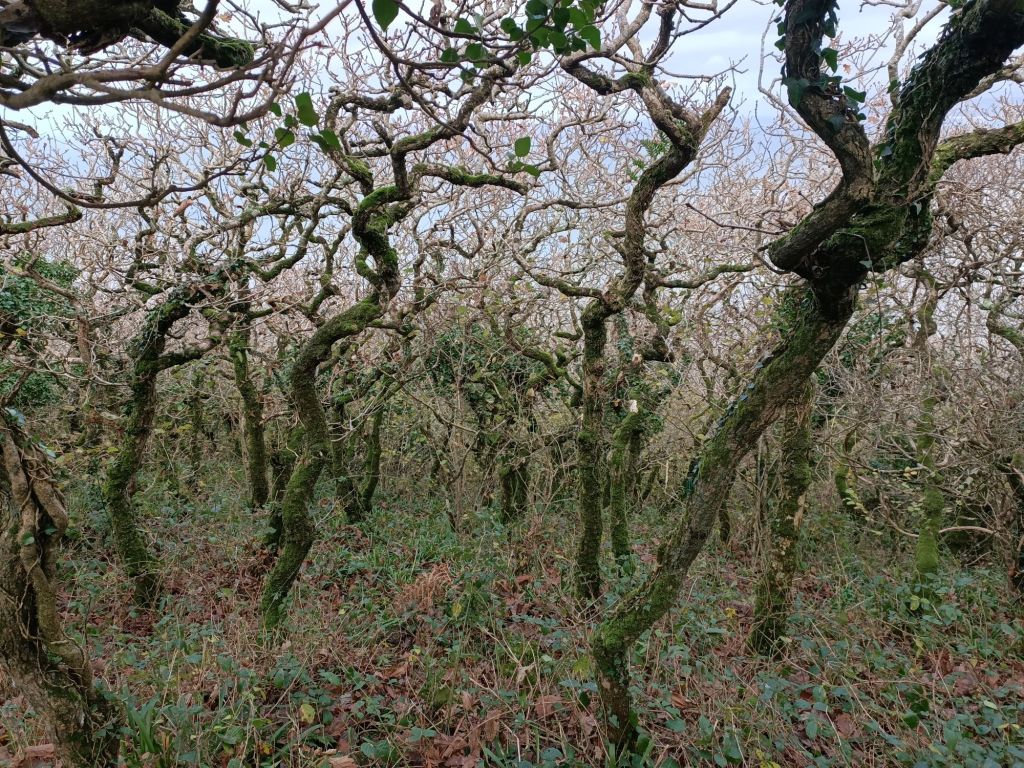
Gnarly twisted oaks

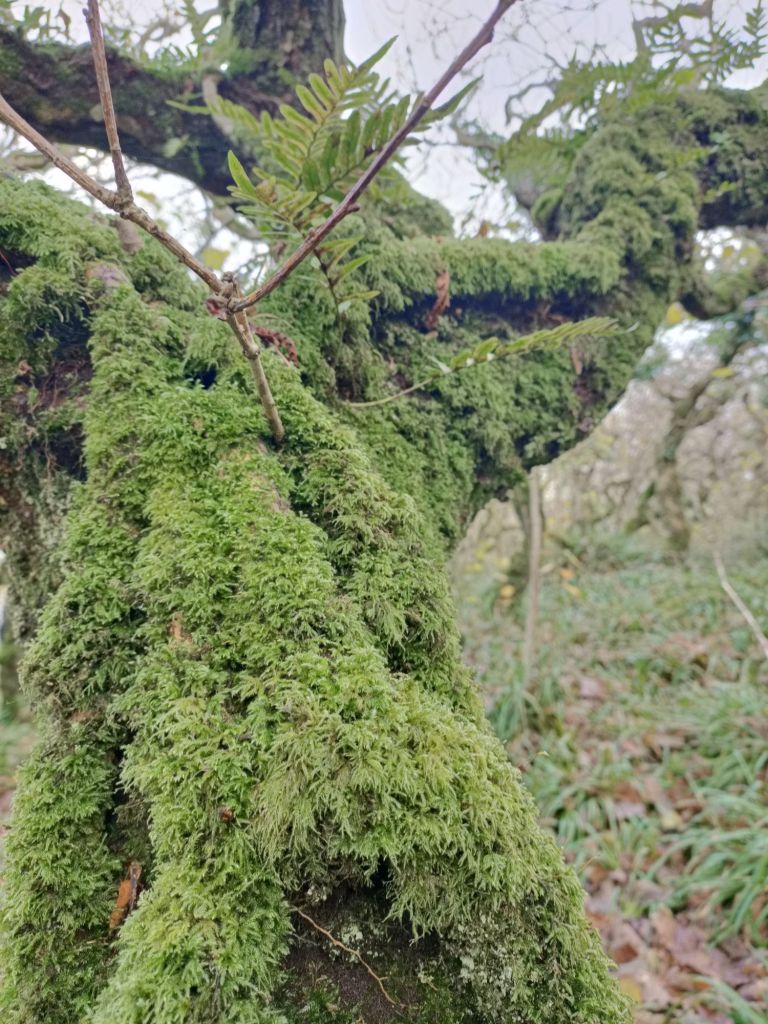
We tread slowly and carefully, checking for any new life popping its head up through the thick soft carpet of fallen leaves, and wander in wonder at the tree branches coated in velvet green mosses.

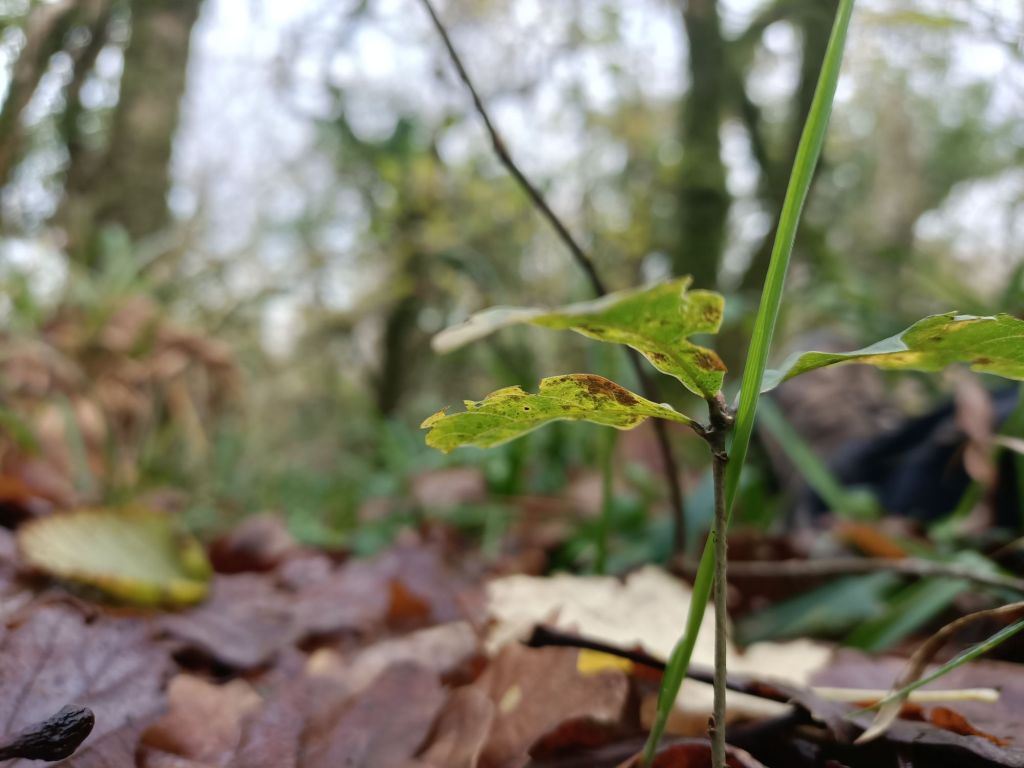
An oak sapling springing forth under the canopy of its relatives
Thickly blanketing moss

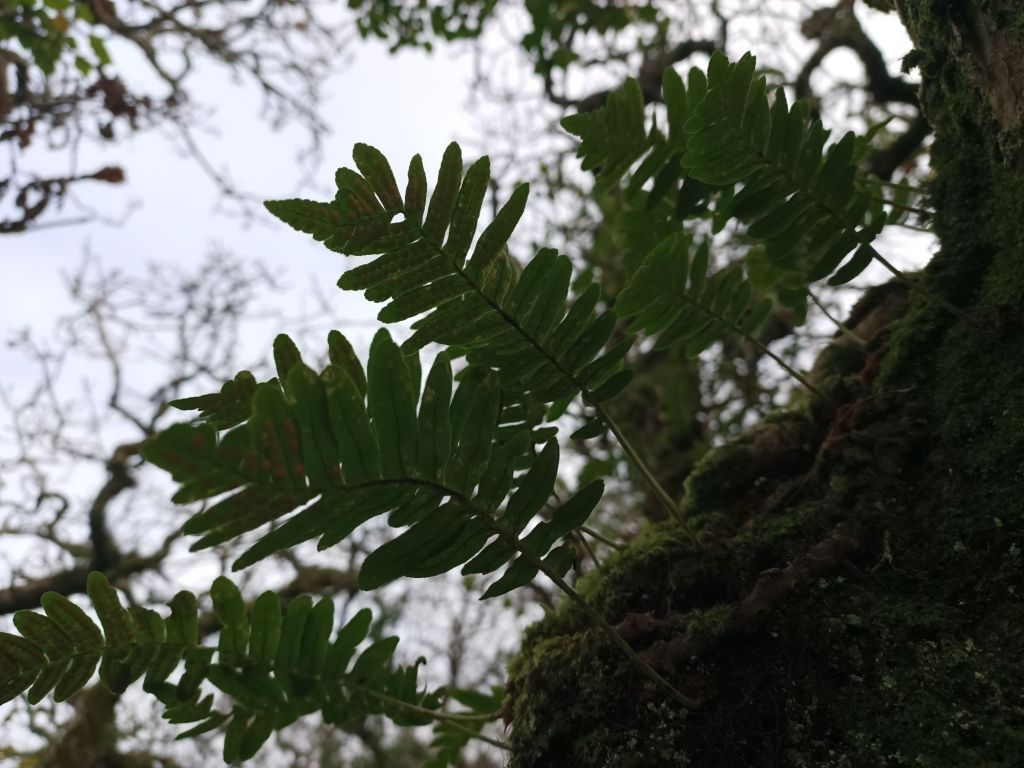
Epiphytes are abundant: mosses, lichen, fungi, polypody ferns and tiny creatures nestled between; it’s life on life on life.

Lobaria pulmonaria (Tree Lungwort)

Hhmm… Looks like Auricularia auricula-judae (Wood Ear)
Polypody ferns
Life on life on life

These strange and stunning woodlands are essential in our fight to prevent further climate warming, as they sequester and store atmospheric carbon.

The Woodland Trust states: “The entire woodland ecosystem plays a huge role in locking up hundreds of millions of tonnes of carbon, including the living wood, roots, leaves, deadwood, surrounding soils and its associated vegetation.” 

There can be no just reason for destroying any healthy tree, whether ancient, veteran, rural or urban, wouldn’t you agree? 🙂🌳