Nature Day at Houndiscombe Park in Plymouth, Devon
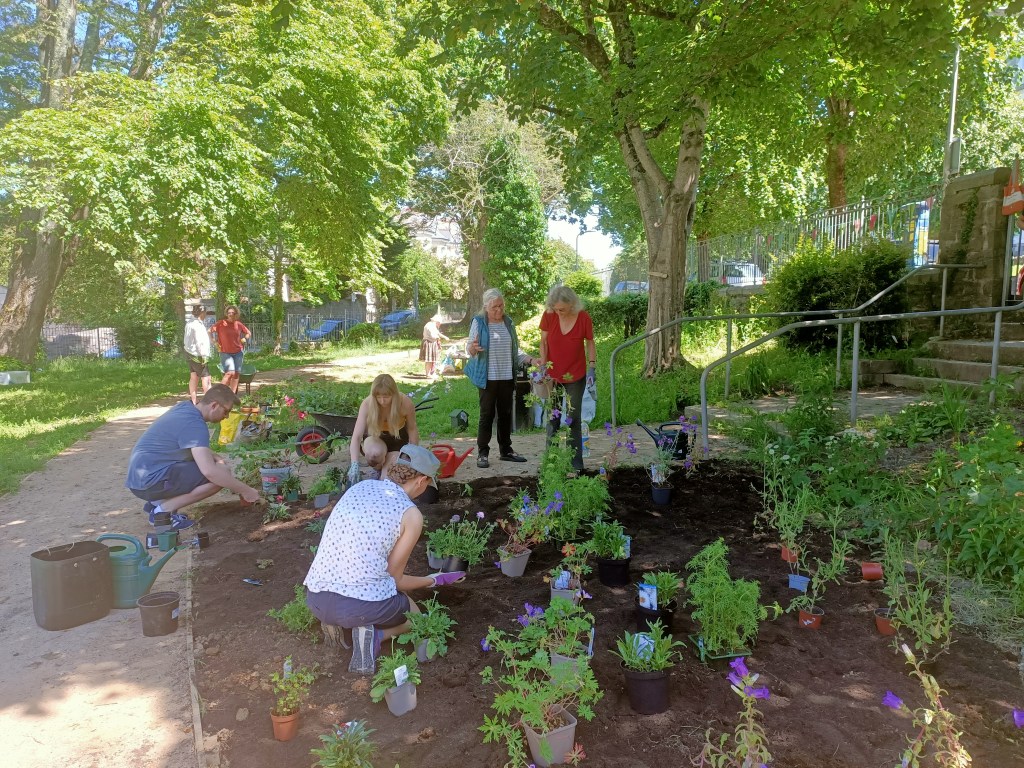
We have returned to Houndiscombe Park, in Plymouth, nearly 3 years after our visit to this triangular-shaped urban park. Back then it was in a sad state: distressed by empty beer cans, dog faeces and syringes. There was very little flora, just patchy grass and mud. We decided this park needed help and with the support of Green Minds Plymouth, Nature Plymouth and the council’s Infrastructure Team, a complete revamp was initiated in February 2021.
And today, it is thriving. It has its own Friends of Houndiscombe Park group to care for it and monitor the visiting wildlife.
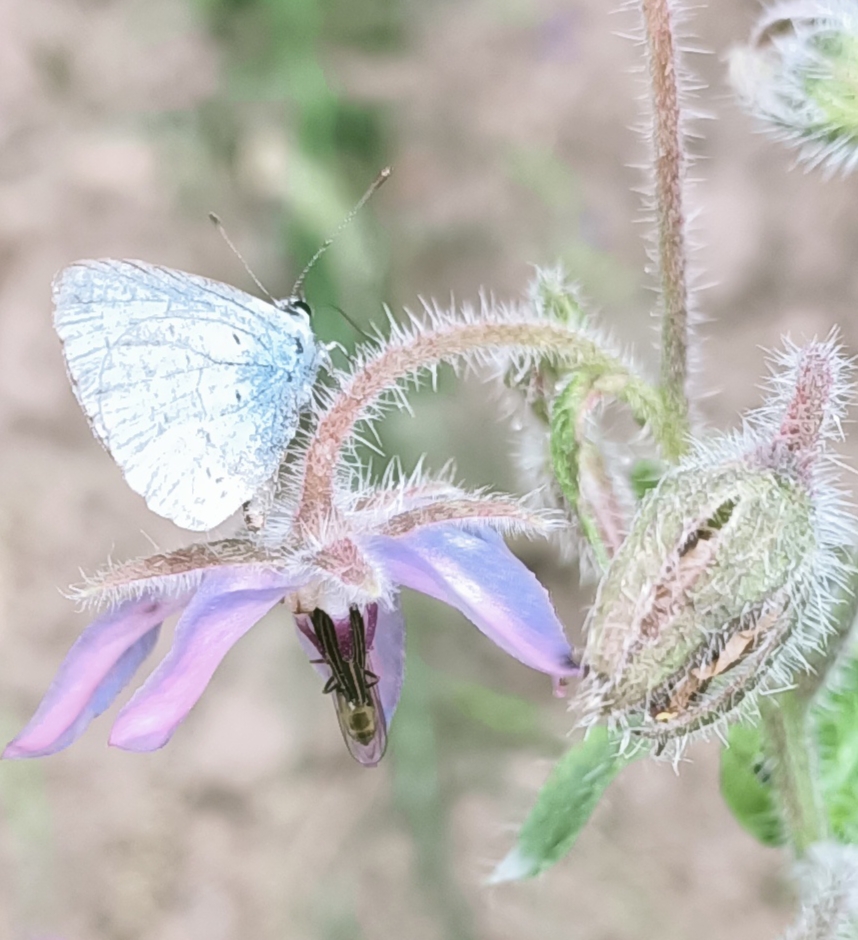
A variety of plants for pollinators and bird and bat boxes have been positioned in the trees.This Borage has attracted two pollinators here. Look at the delicate blue of this tiny Holly Blue butterfly…
So, together with the Friends group, we held a Nature Day there, with the help of the RSPB, University of Plymouth and Tess from Plymouth Food and All Ways Apples, generating ideas for Food Resilience. Tess also brought a generous donation of her home-grown organic plums 😋
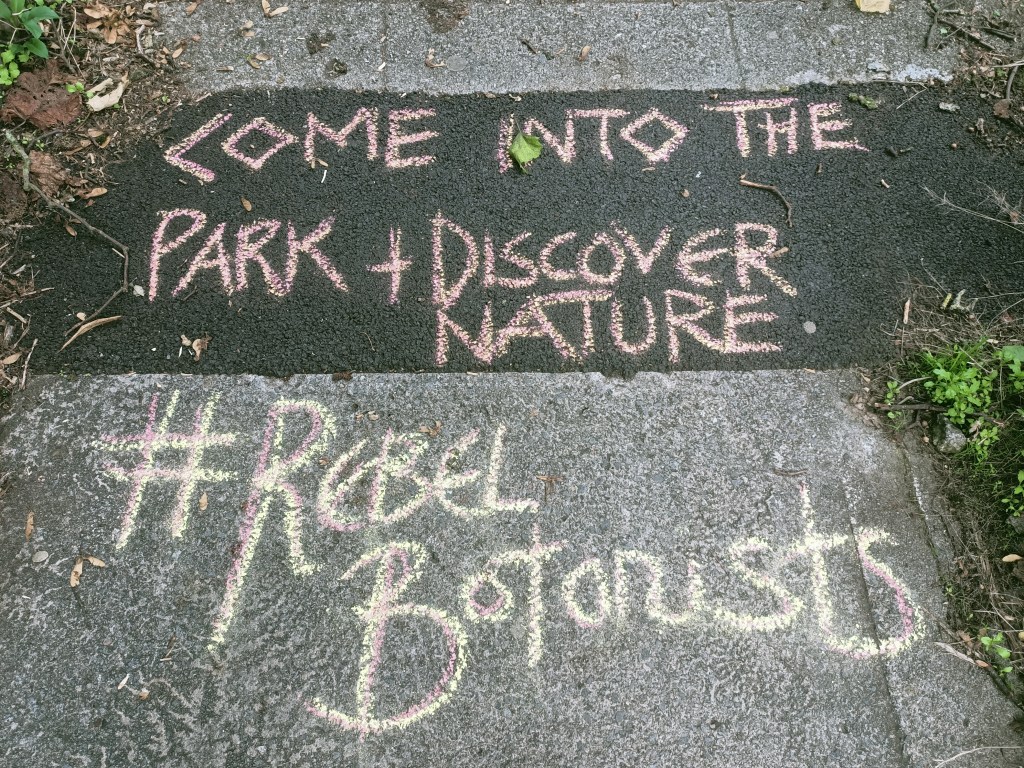
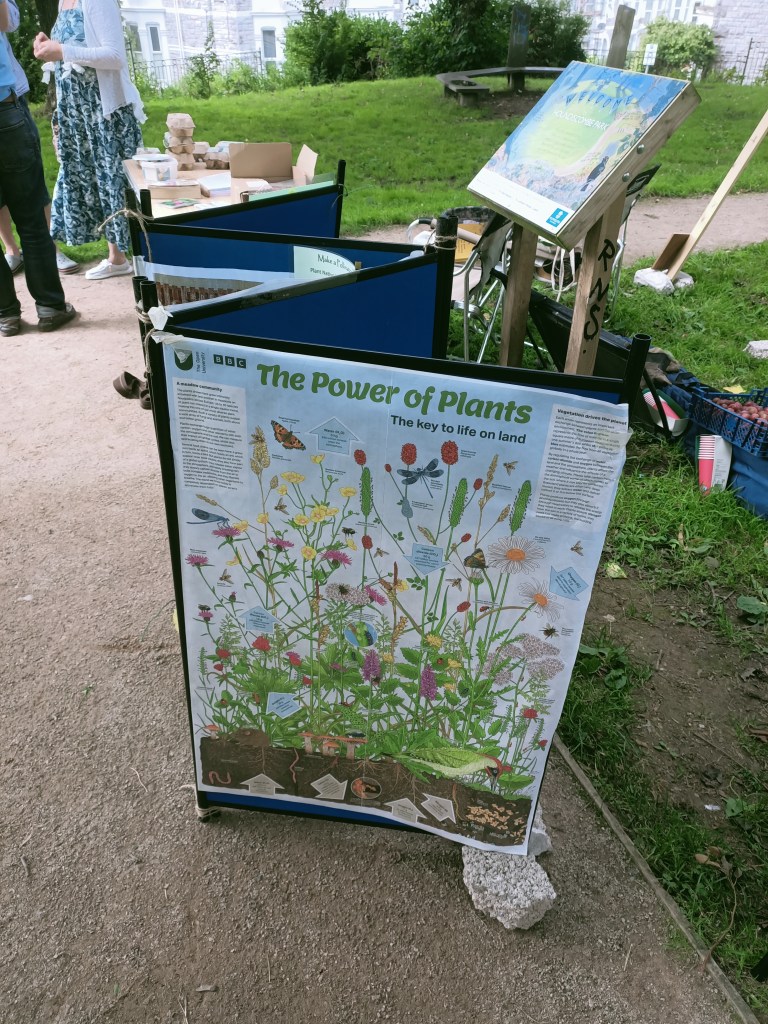
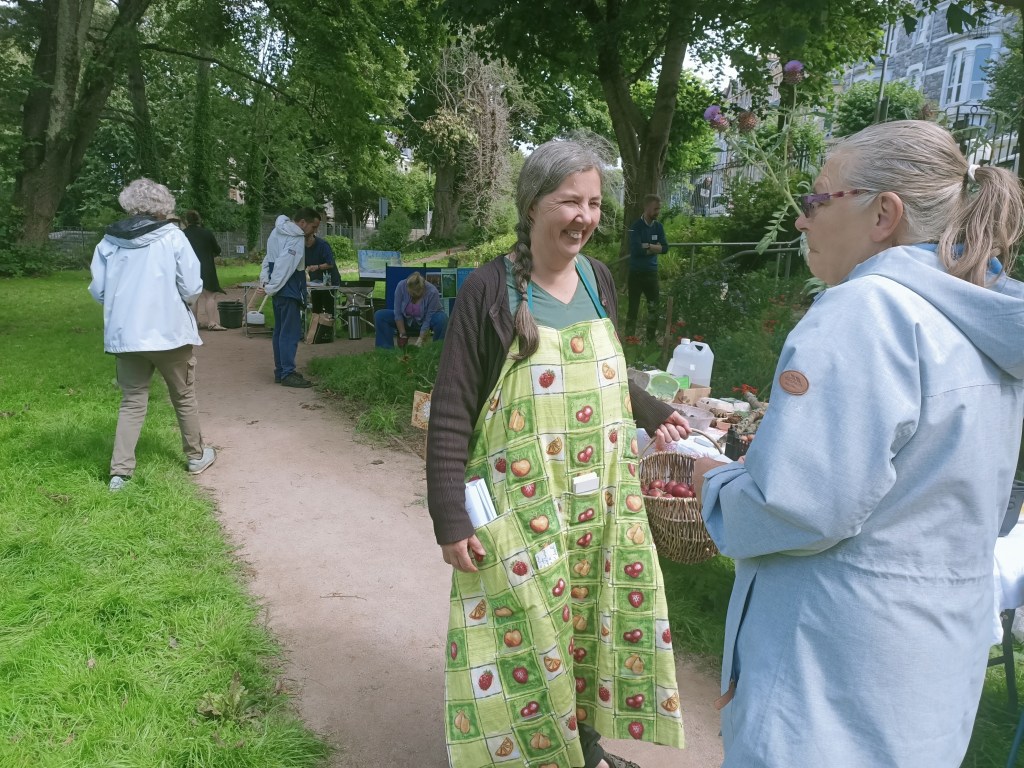
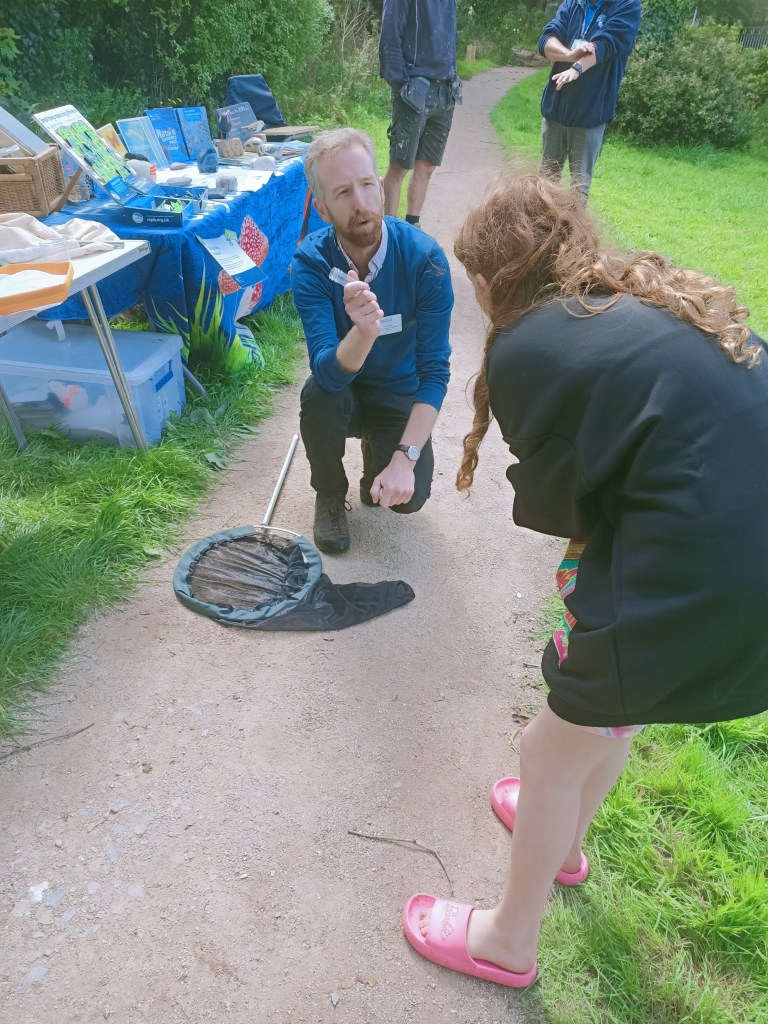
We displayed our information standsSet up our handmade Rebel Botanists signs Welcome, Tess wearing her fabulous apron full of cards 😀The Plymouth university Ecology lecturer, James, engaged a young lady in some citizen science activities
And then we set off, discovering the wildplants around the park: those little plants that appear between the cracks of the pavement and the crevices of the walls. 🚶♂️🚶♀️🚶🌿
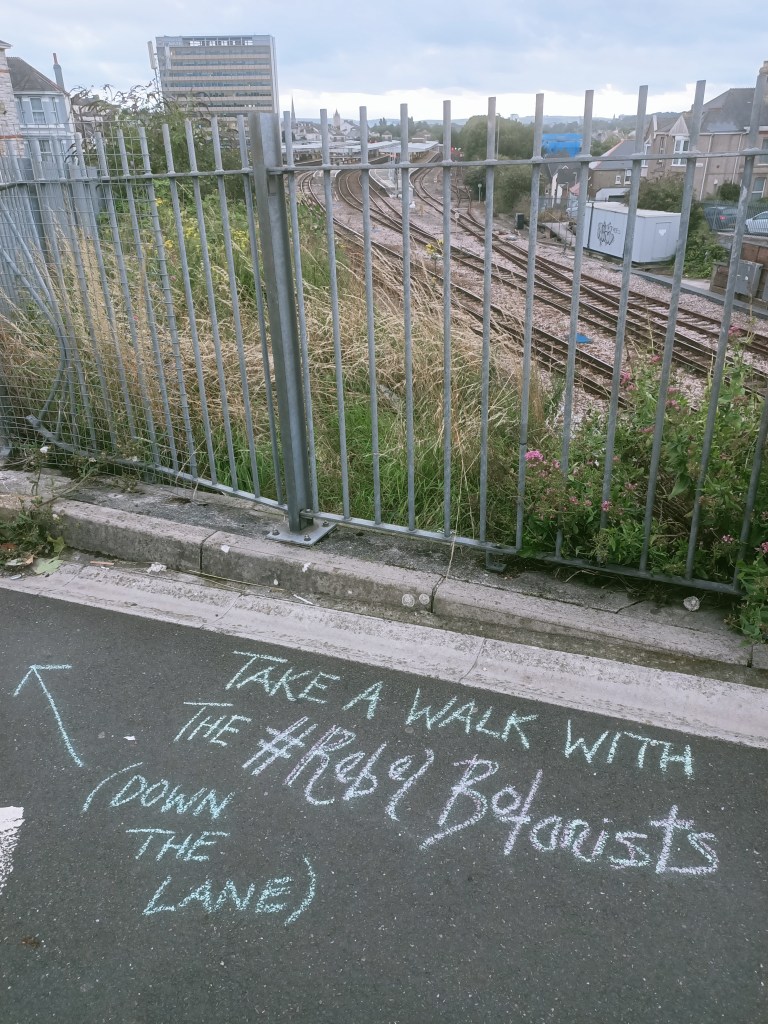
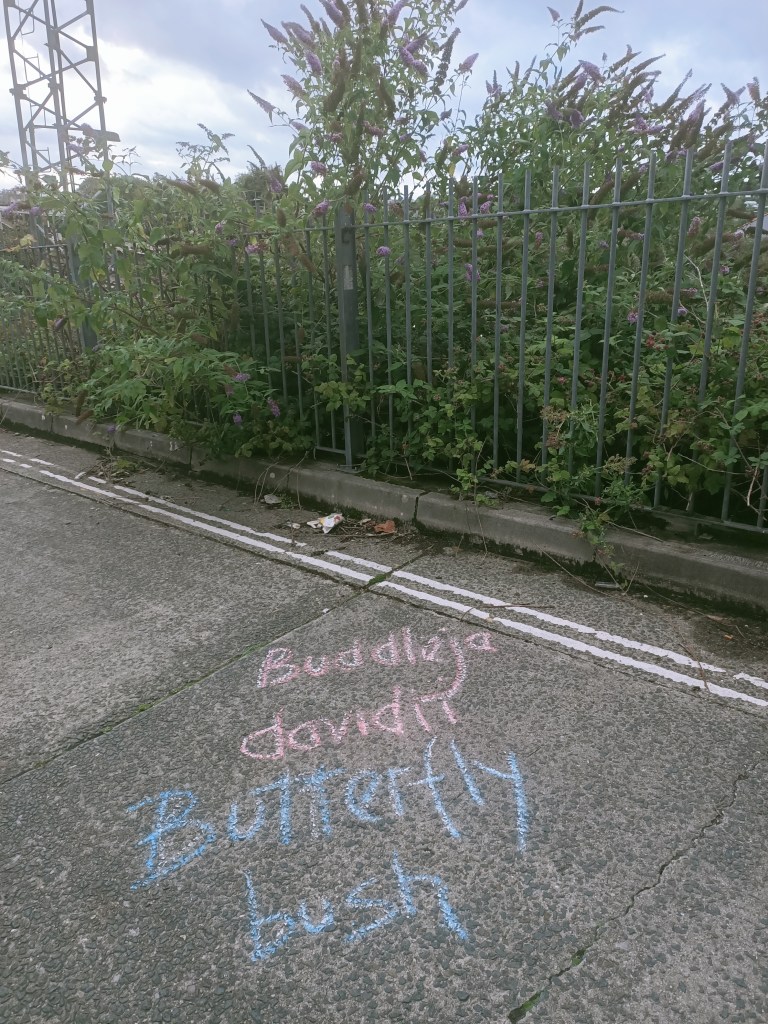
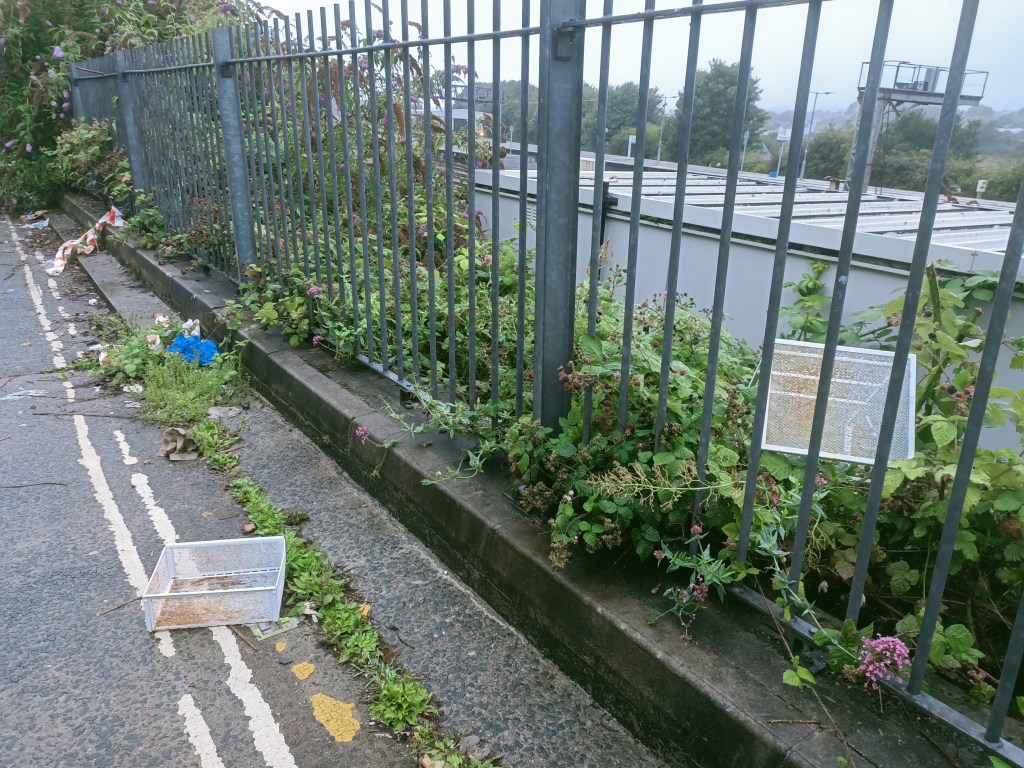
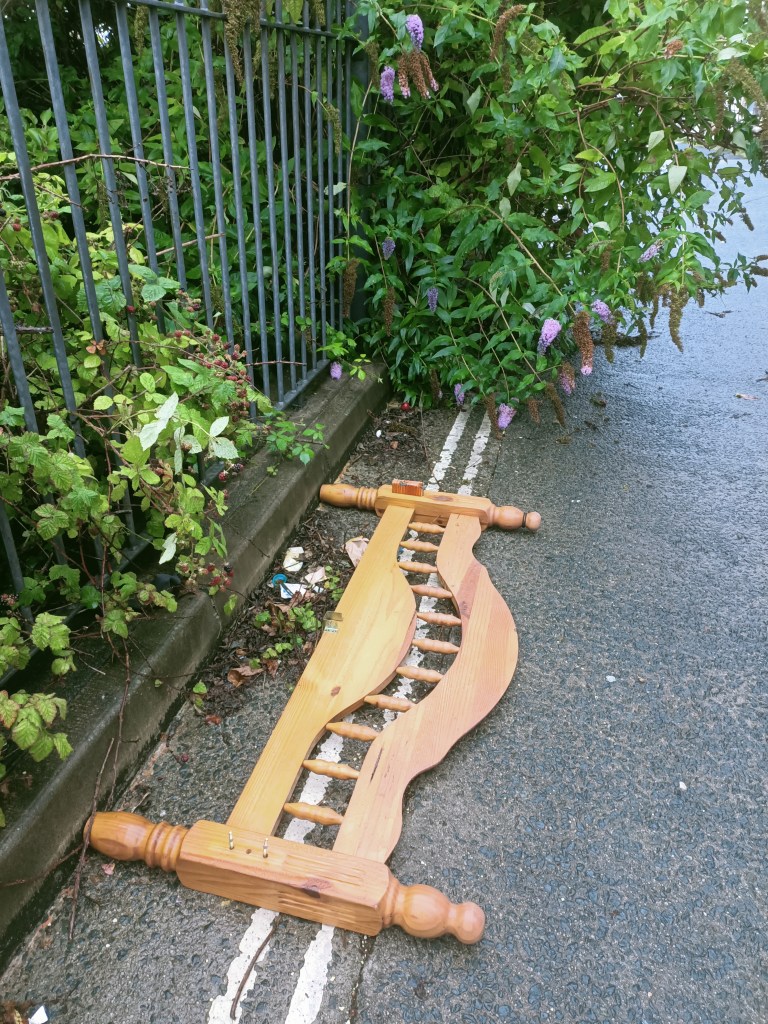
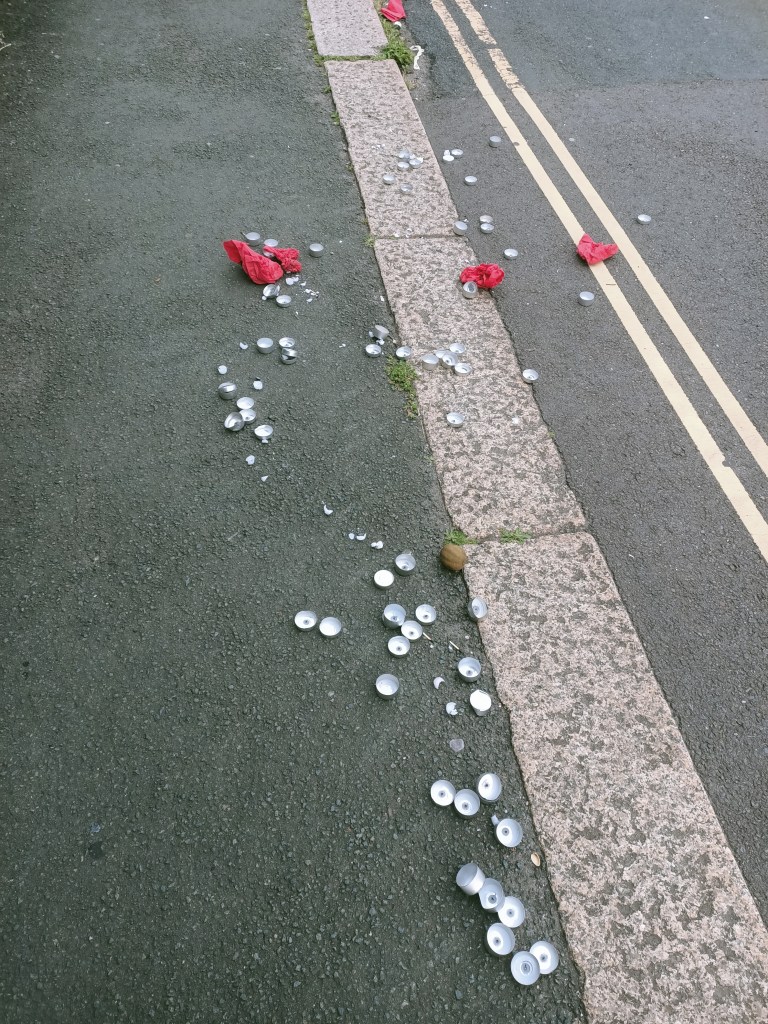
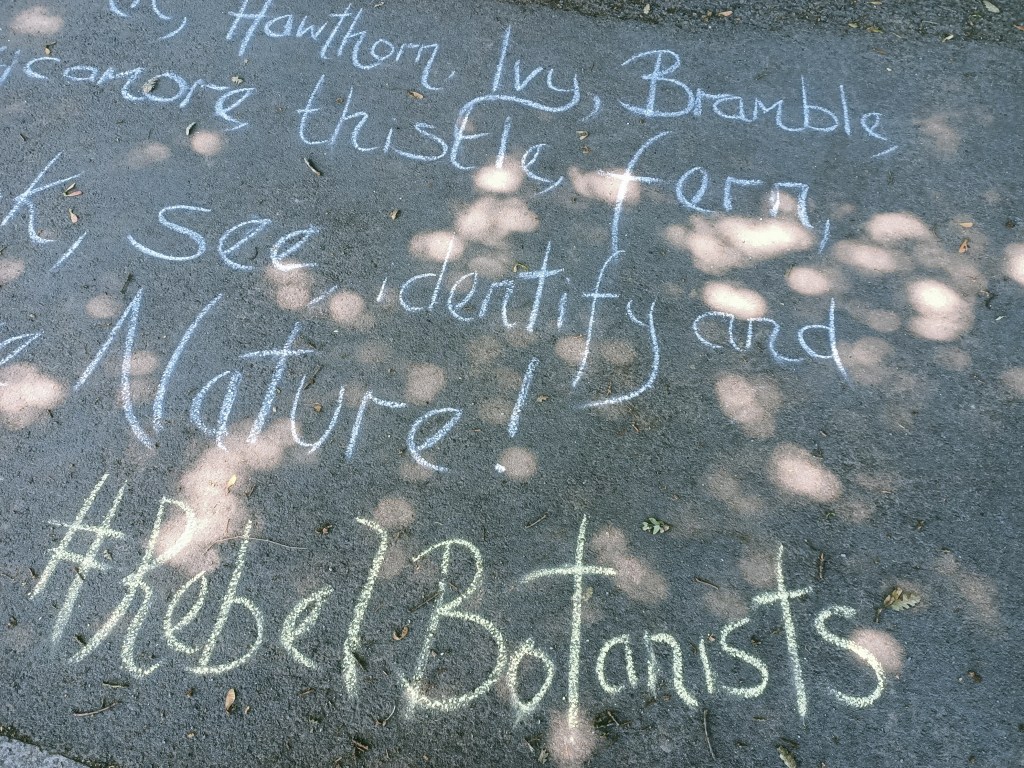
The lane, featured in this post, locally known as ‘scruffy lane’, is often strewn with discarded rubbish: cheap broken furniture, cigarette ends, plastic toys and bags. However, this human detritus is juxtaposed by the beauty of nature, so we felt we needed to highlight this in a chalking.
It would have been good to have found Sweet peas perhaps, rather than this bag of frozen peas scattered everywhere. In the background a selection of dumped furniture and a lampshade 😔
Another frozen pea packet, really! 😔
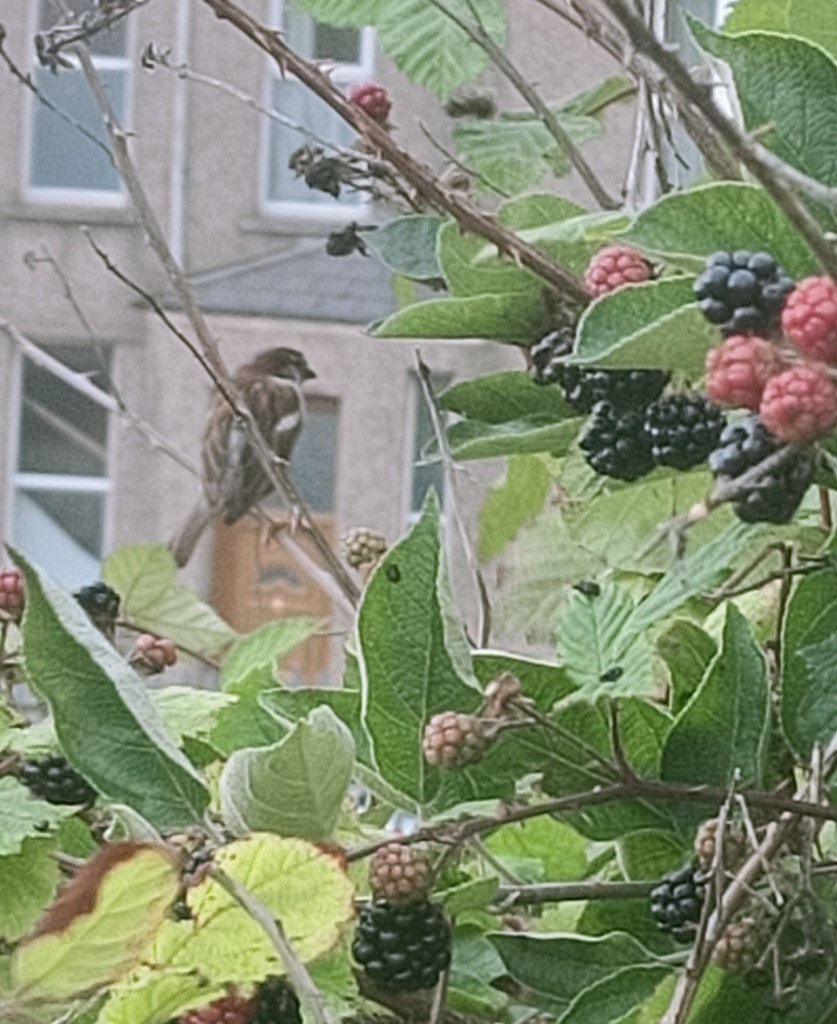
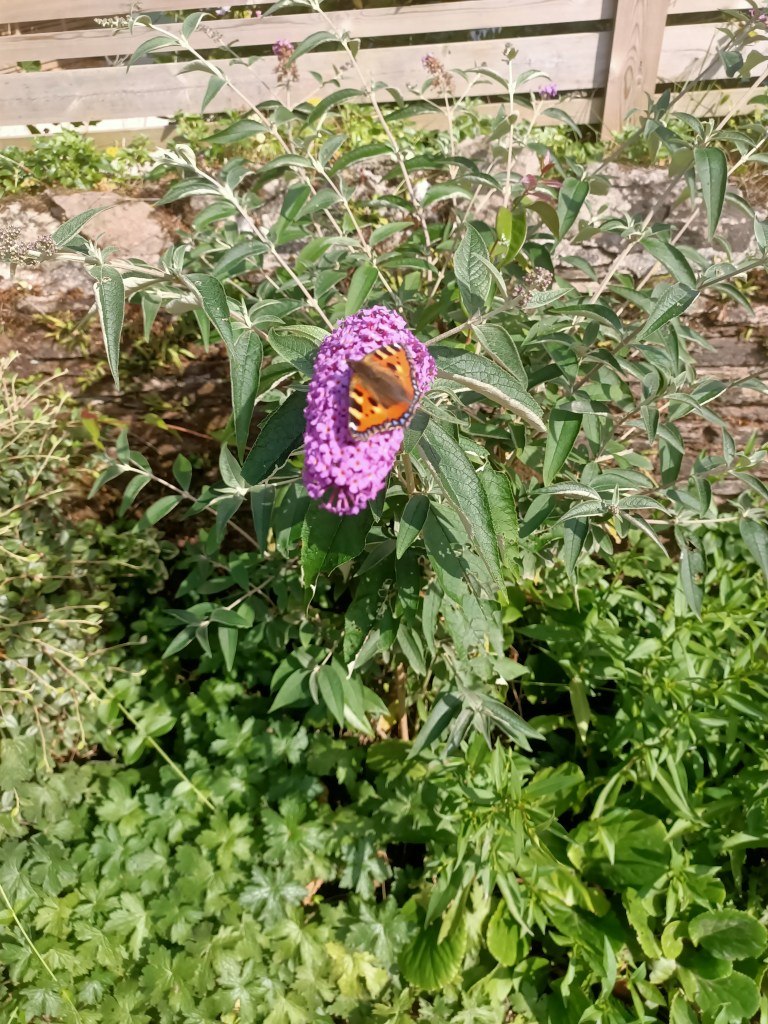
The firework-explosion of colour from the Buddleja davidii, encouraged bees, birds and butterflies. The ‘singing’ apple tree, bursting with rosy red fruits, had enticed a myriad House sparrows in birdsong. A sensorial delight.
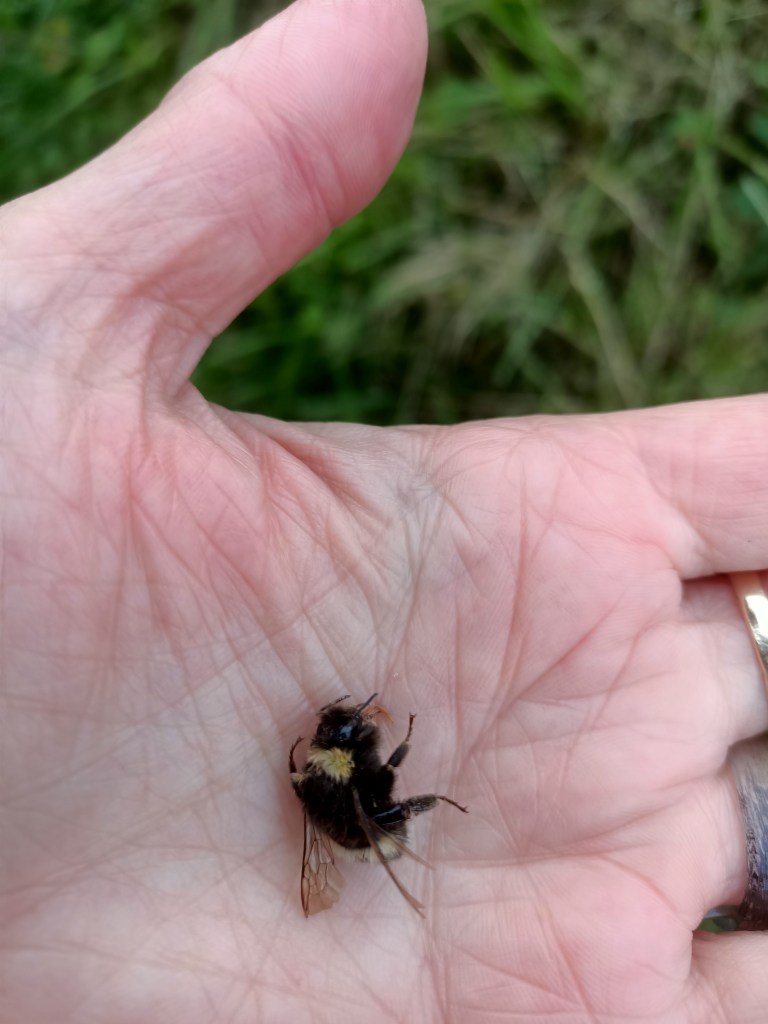
Passer domesticusBombus lucorumThere are 3 particularly good-sized Buddleja davidii in the lane providing nectar for bumblebees and sparrows, who visit daily.
The previous post, about our Wales walk and chalk, stated that it is apparently, one of the top best countries for waste recycling in the world! Yet, not far away, England’s recycling statistics are far lower and motorway verges and some city streets are sometimes strewn with litter. So why is this? Why are people in Wales seemingly more caring and respectful of their environment, than their English counterparts?
Dirty plastic containers thrown into the lane (reusable)Abandoned furniture (reusable)Empty candle holders (metal, so recyclable)
However, nature provides beauty against this ugliness…
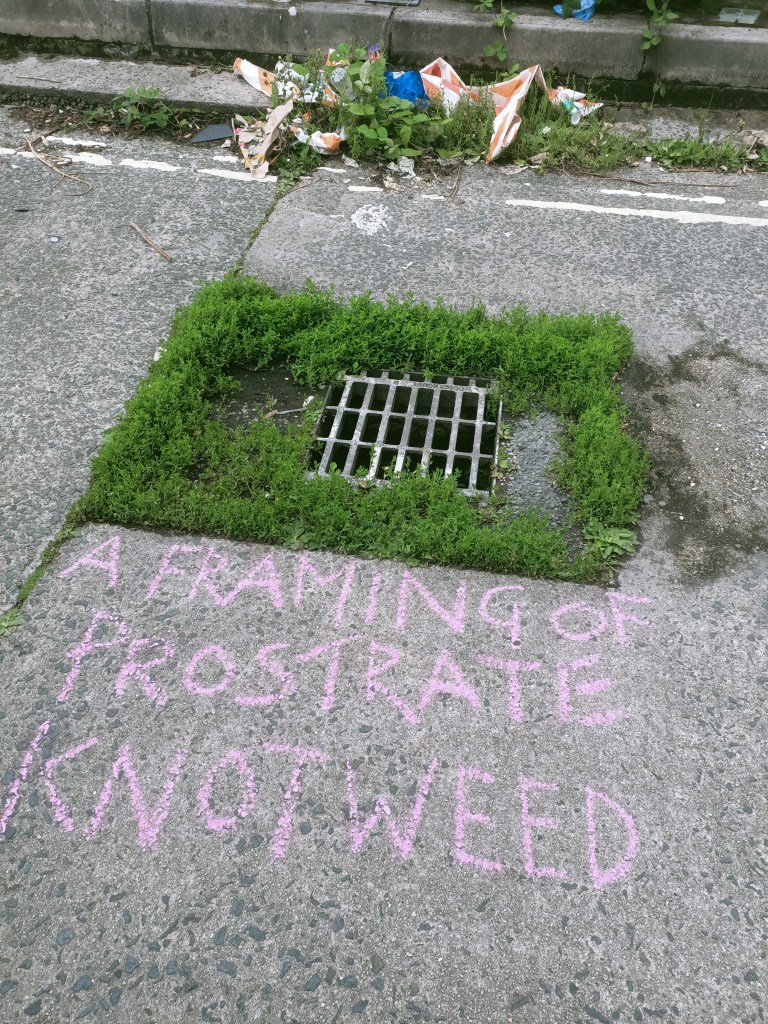
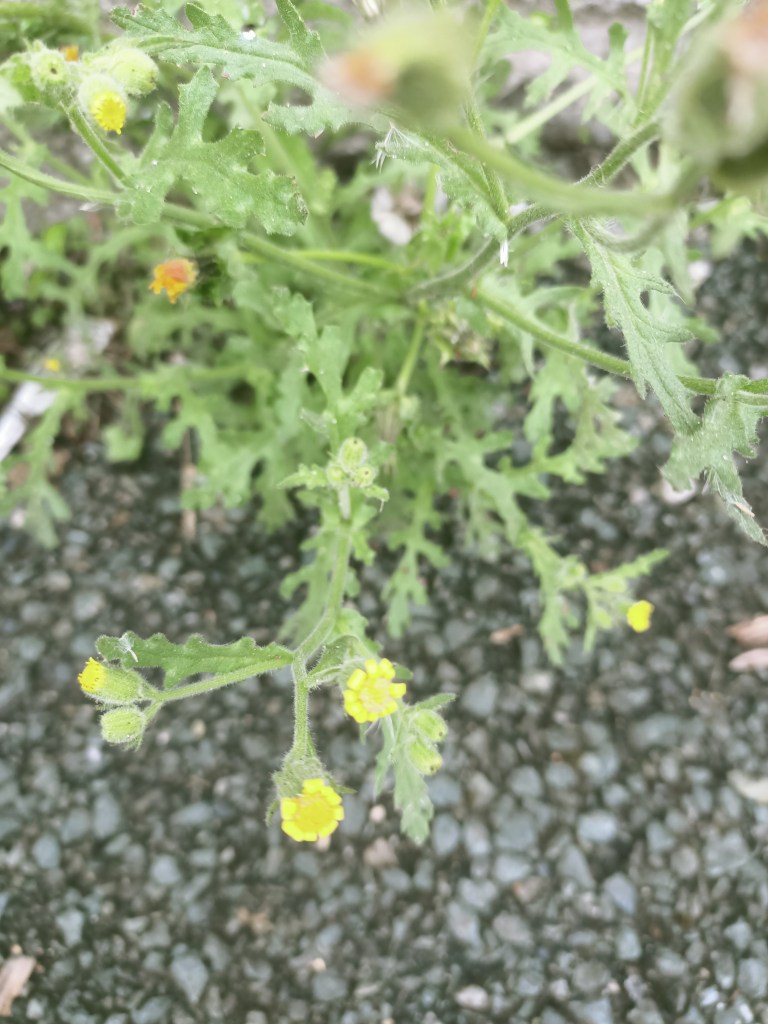
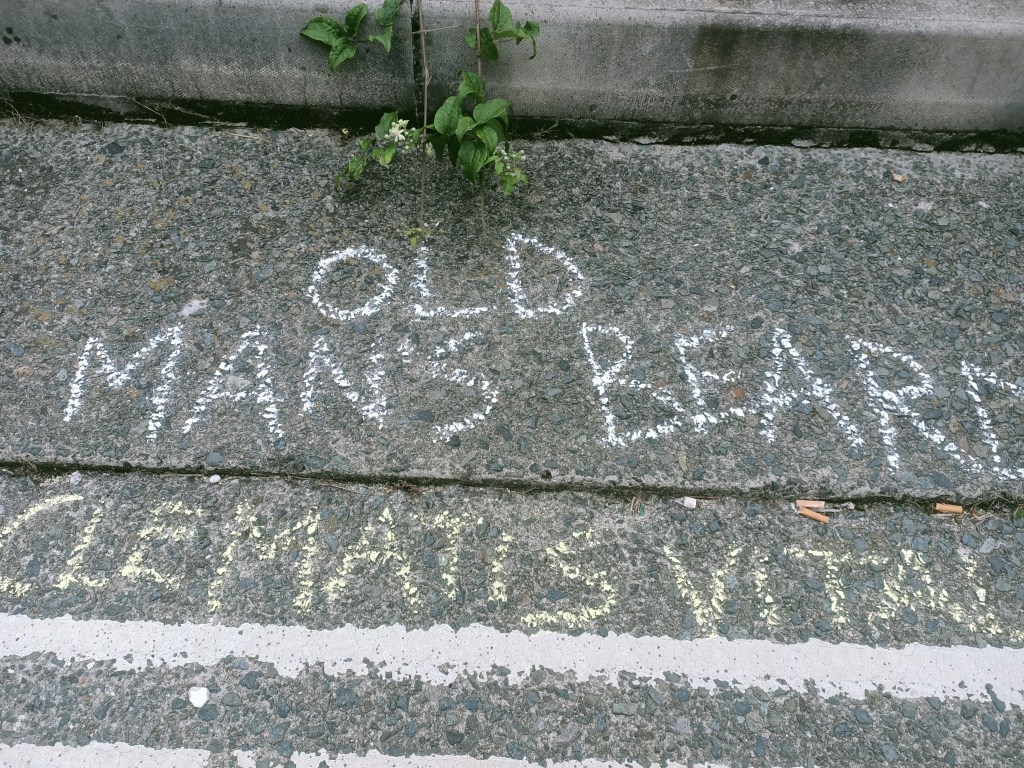
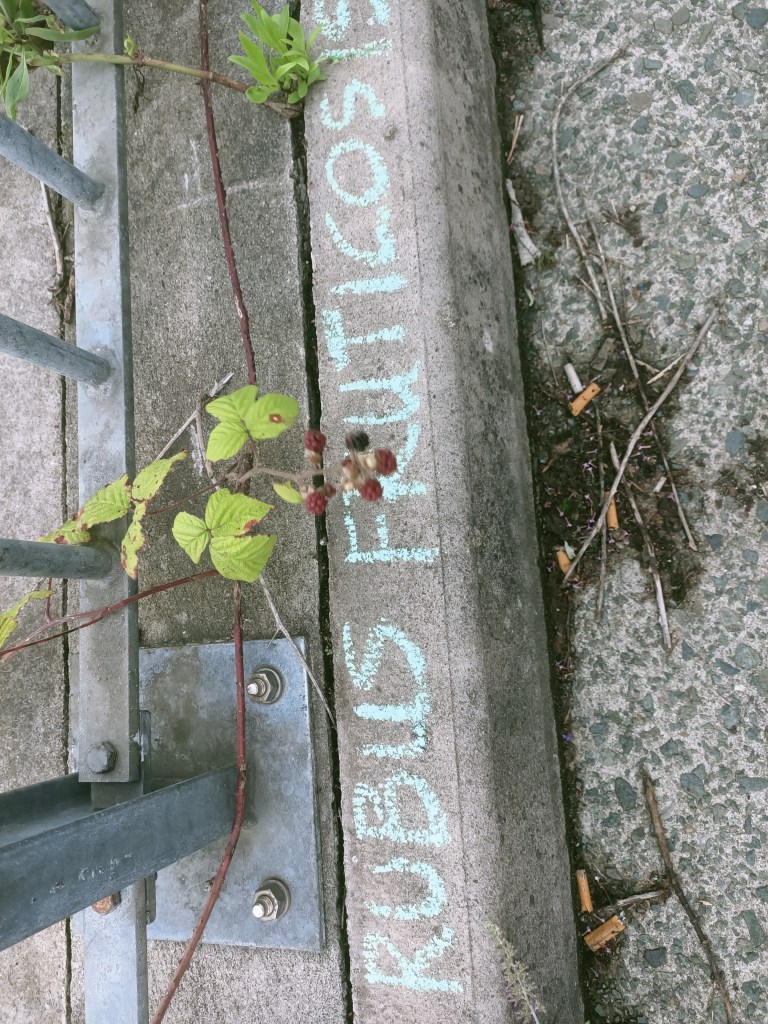
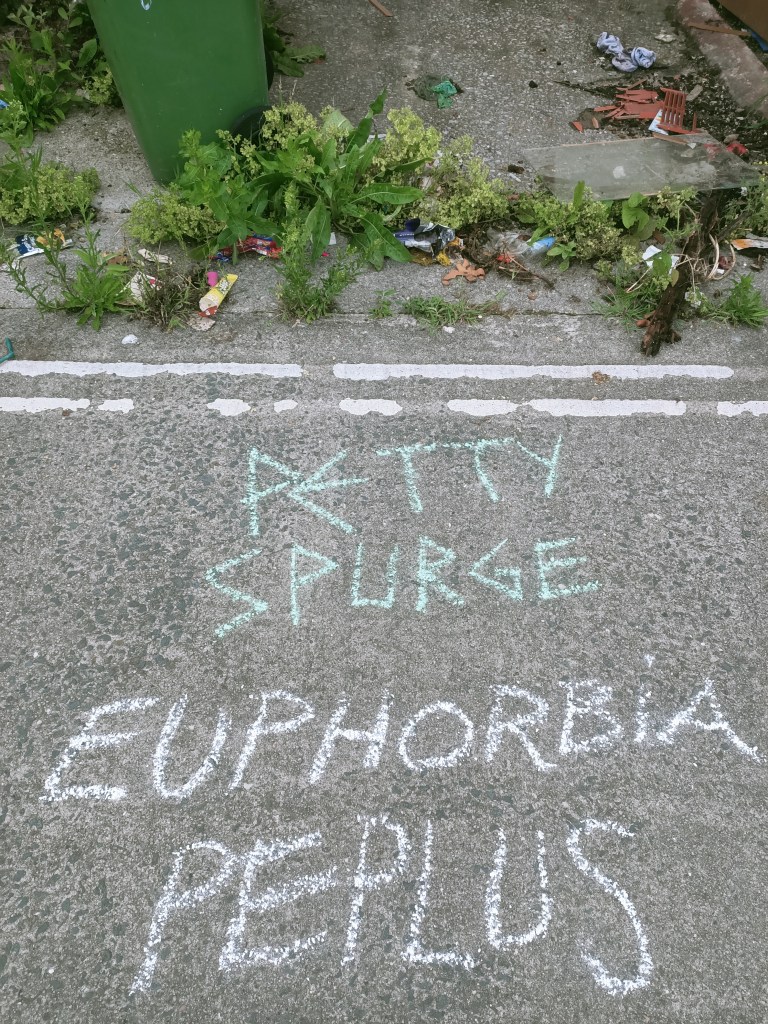
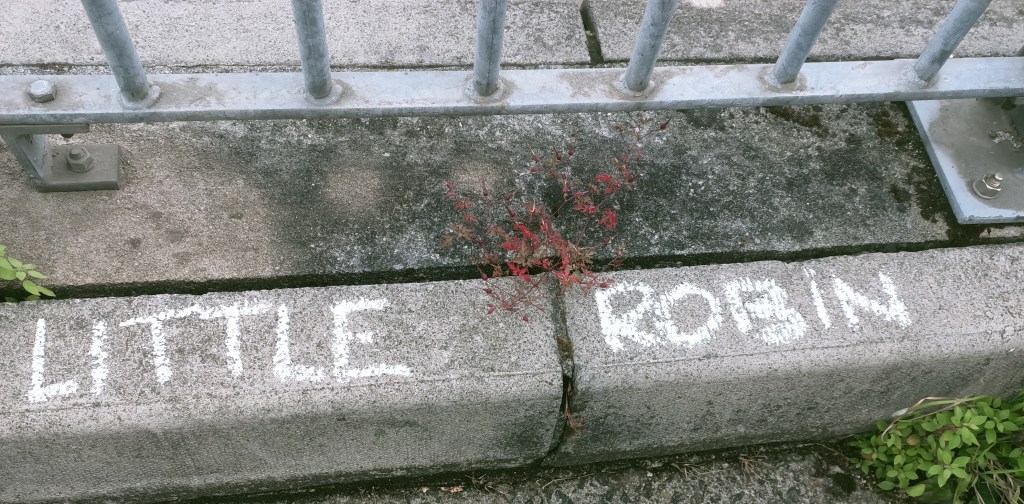
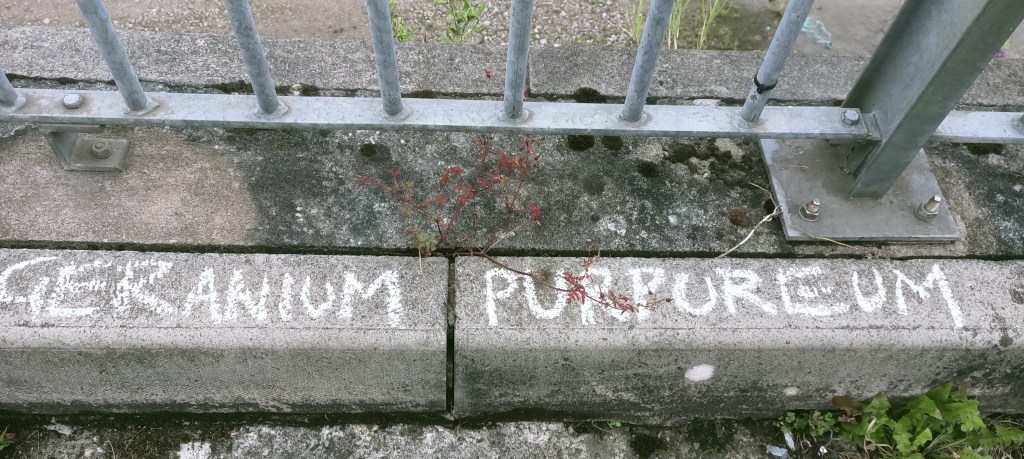
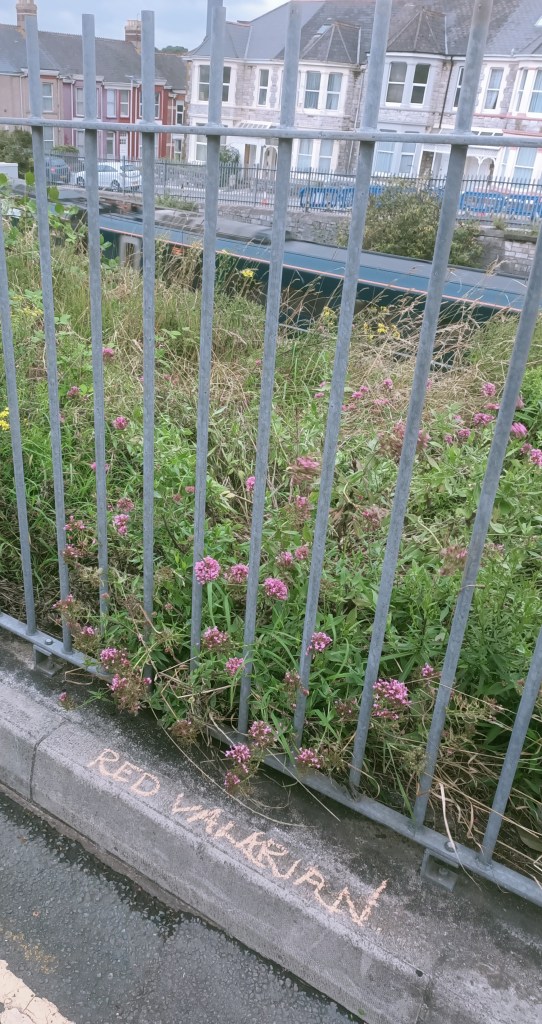
Purple top Vervain have delicate vibrant flowersJust love how this Prostrate knotweed has framed this drain hole, like a verdant soft carpet.Is it Sticky Groundsel, one of us queried…Well, gently touch the leaves and you will see why it is so called. A close up of the yellow flowers of the Senecio viscosusWhen this plant flowers it looks like an old man’s white curly beard.Lots of blackberries on show along the railway fencing – great for the birds! On this faded graffitied wall there is a lovely show of Maidenhair spleenwort, with their gorgeous green distinctive leaves. Despite the rubbish, the plants will grow including this Euphorbia peplus And, look, over there! Evening primrose. In fact there were lots growing inside the fence on the railway land, growing tall and proud. Purietaria judaica, Pellitory-of-the-wall, both fabulous names.We spent some time explaining to a passing gentleman how to identify the Little Robin plant. He then went on to identify one further up the lane 👏👏And here it is, Geranium purpureum. Note the deep red colour of the stem and leaves.Lots of Centranthus ruber, good for butterflies, and the amazing Hummingbird Hawkmoth
Public information films were a series of short films televised as adverts between programmes, from the 1950s. They were commissioned by the Government, to highlight dangers and offer safety advice in a range of contexts. They became obsolete by the 2000s, with the closure of the Central Office of Information. They were great – amusingly memorable, but with a serious message. Take a look at some of the best ones: https://en.m.wikipedia.org/wiki/Public_information_film Which one do you like?
Looking at the state of our streets and disregard for the nature that surrounds us, wouldn’t it be a good idea to shed some of those boring repetitive adverts (enticing you to spend money you haven’t got, on things you do not need) and replace them with a public information films, to Keep Britain Tidy? Check out this one from the 80s: https://youtube.com/watch?v=r5k34-L-yv0&feature=share
If you want to help keep our streets clean for nature, why not:
1. Shop for need, not greed, 2. Buy goods with less packaging, 3. Reuse and recycle what you can, 4. Ensure all your waste fits into your recycling bin with the lid down, 5. Join a local litter-pick group. It’s a great way to meet like-minded people too. 6. Write to the BBC or ITV asking for Public Information Films to be reinstated that address the problems of today: e.g. Keep Britain Tidy, Pesticide-free cities, Reducing Carbon Footprint
Thank you for joining us on this walk. We received several positive comments whilst chalking this lane. One commuter returning home said: “You’ve made my day. I really enjoyed reading all that. Thank you.” We hope you enjoyed it too, and please share this to anyone you think would benefit from this public information 🙂👍🌼
Did you know that Wales is one of the top performing countries in the world for waste recycling? Travelling through to Pembrokeshire, for a 4-day visit, this became evident: hardly a scrap of roadside litter to be seen. What joy! And so began this mini Rebel Botanists adventure.
Pembrokeshire has an impressive 186-mile coastal path. We stayed at the start of it, in an eco-farm at Llanteg.
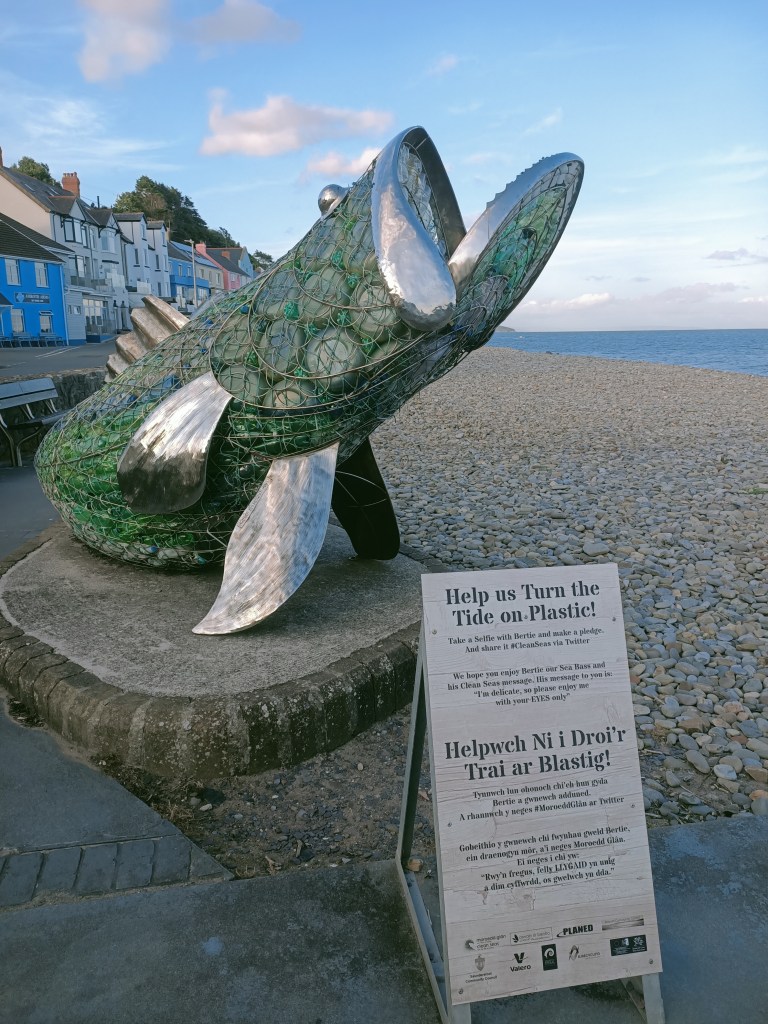
Close by, at Amroth, a giant fish sculpture stood proudly beside the pebble and sand beach, composed of re-used plastic bottles. It exemplified the care given towards cleaner seas by the local residents. It was pleasing to see that all the beaches we visited, along this coastline, were Blue Flag awarded.
The eco-farm owners,Terri and Tom, had a recycling bin for every waste stream, their fields flourished with wildflowers and grasses and they had a beautiful woodland to explore, which we did.
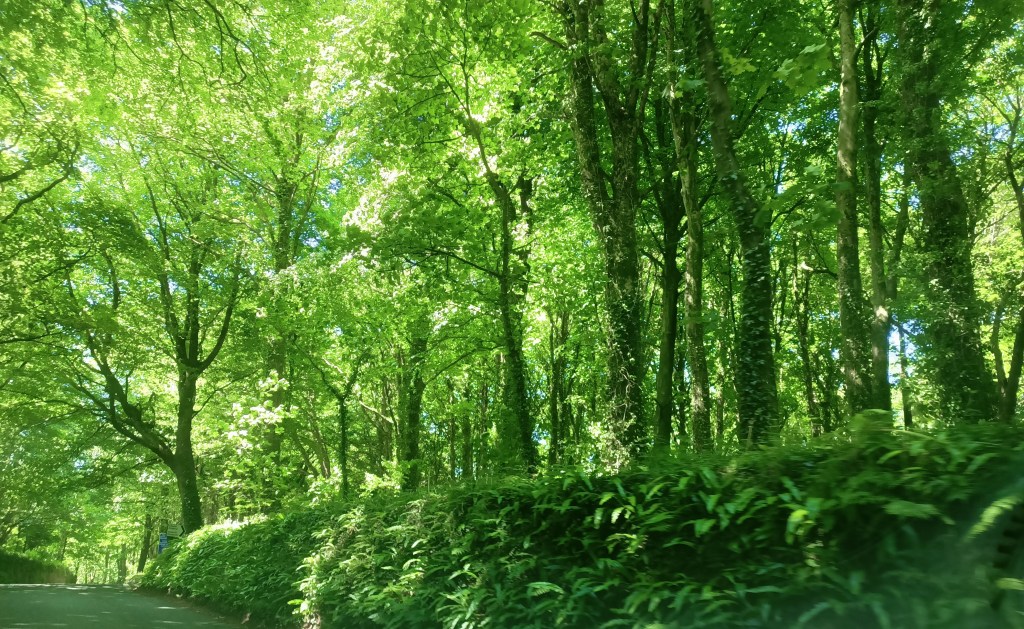
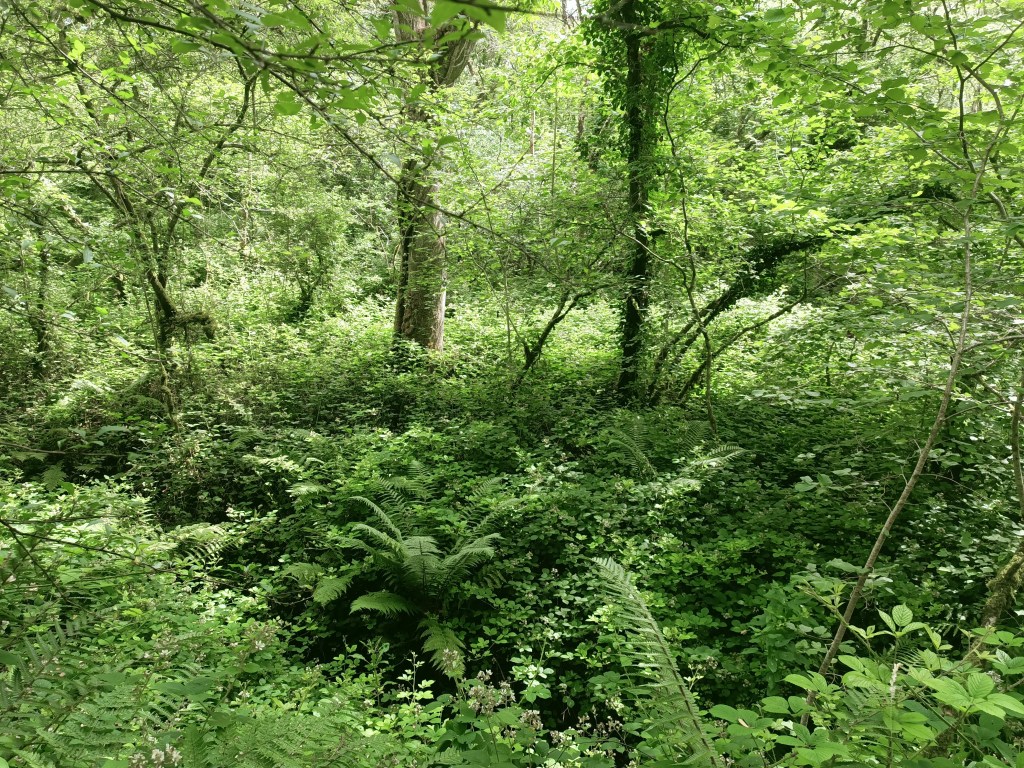
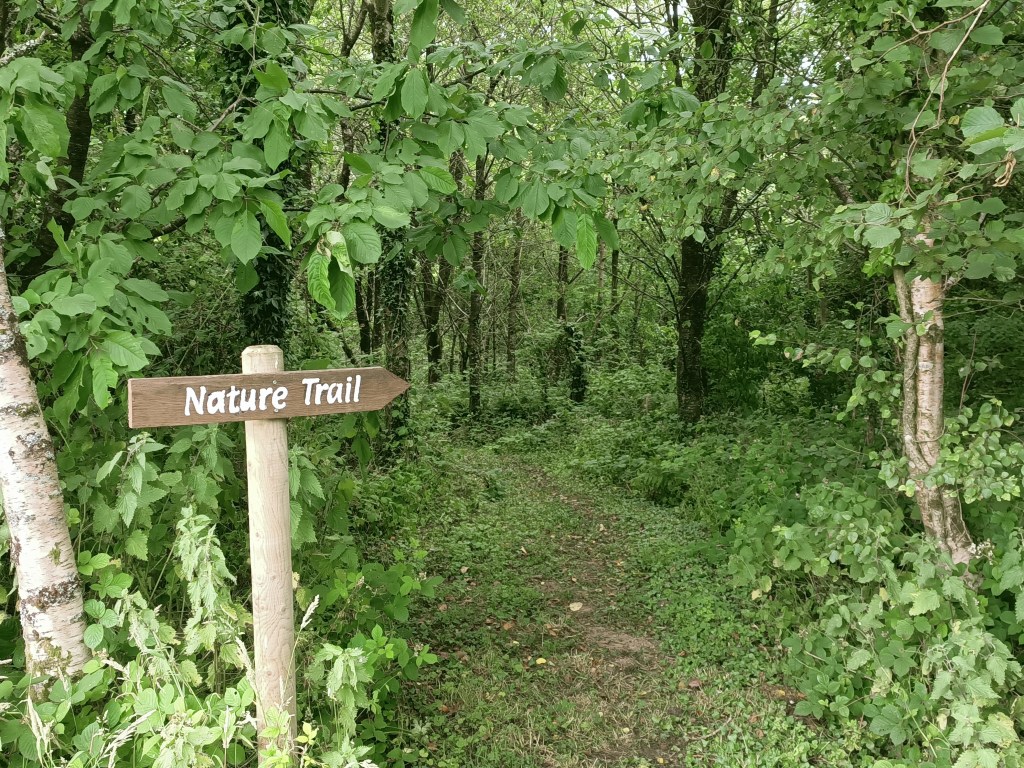
As we walked towards the mixed broadleaf trail, across the valley we could see a monocrop of conifer covering the hills; a sign of the slaughter of World War 2. It represented not only the slaughter of the trees that once stood there, but all the wildlife it had once supported and the subsequent depletion of wildlife since. Wars take, not just human life but, wildlife too. Once we entered Terri and Tom’s dense woodland, we were thrilled by the rich variety of life all around us, stimulating our senses.
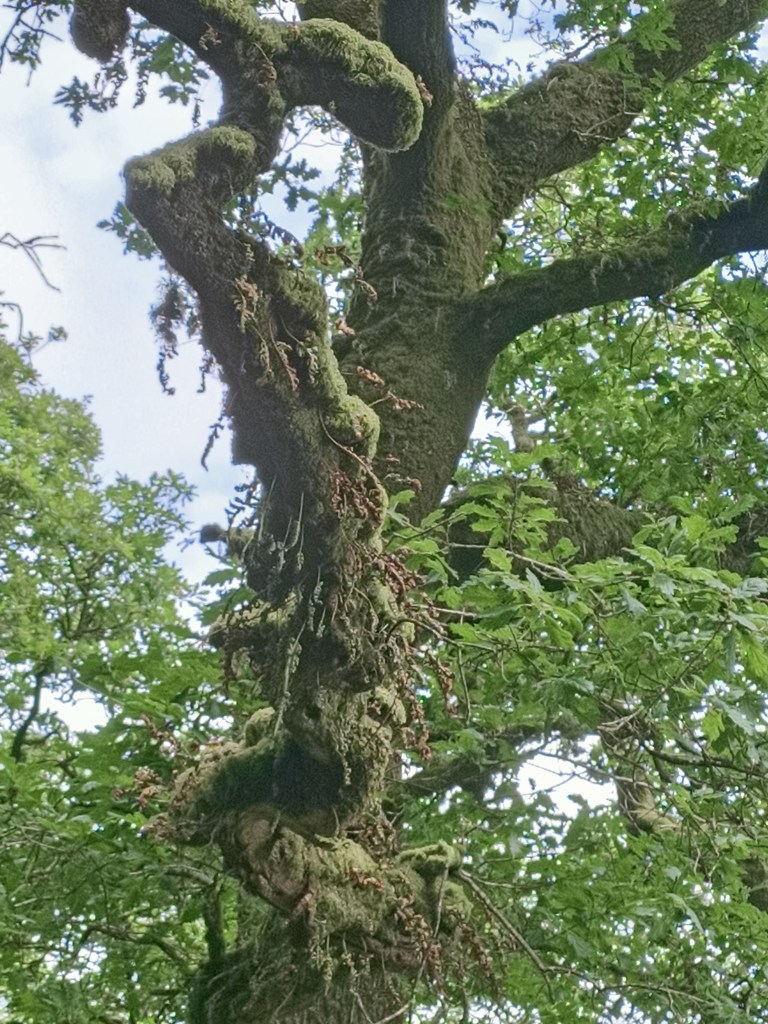
Soft, inviting mossy blankets carpeted the gnarly oak, Quercus, boughs; other epiphytic plants were springing up from the embracing verdant branches.
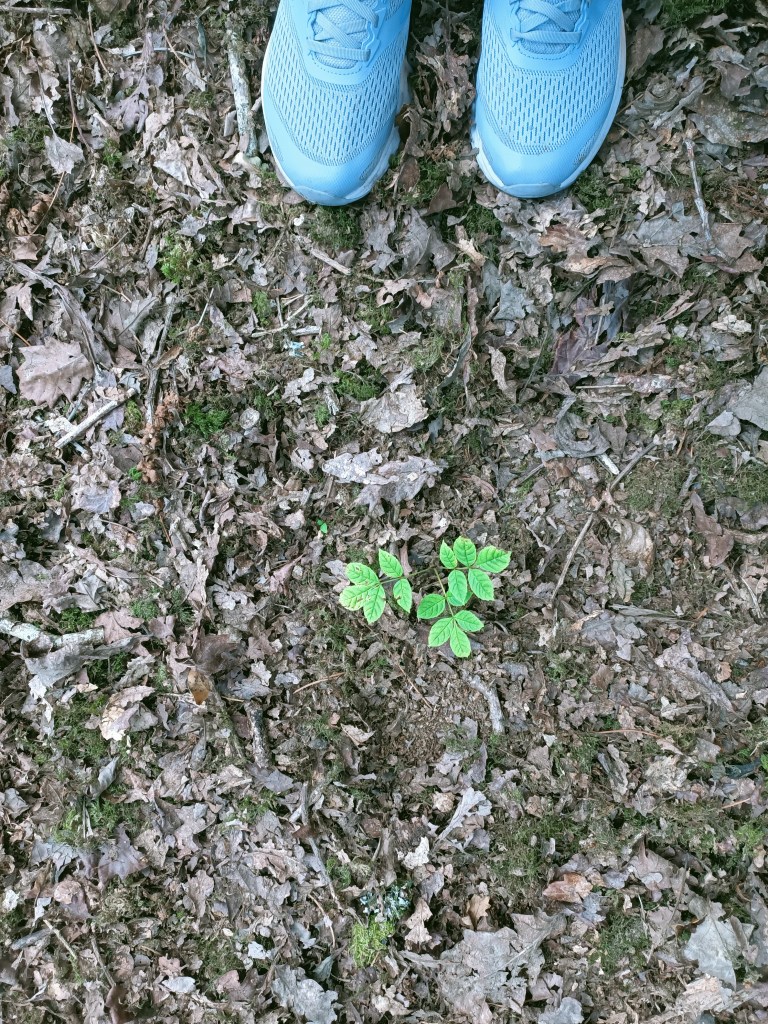
All around, lacy polypody ferns, Polypodium vulgare, and silky-smooth Hart’s Tongue, Asplenium scolopendrium, were growing resplendently. Little wildplants were springing up before us, as we made our way along the muddy track: self-seeded oaks, elders, Sambucus nigra, hawthorn, Crataegus monogyna, holly, Ilex, and rowan, Sorbus.
Tiny flies were buzzing everkywhere and birds were around to feed on them, flitting from tree to tree, we identified Song Thrush, Turdus philomelos, Long-tailed Tit, Aegithalos caudatus, and the European Green Woodpecker, Picus viridis, amongst many others. This woodland was full of life, life on life and every shade of green imaginable.
We noticed some of the oaks were distinctly tall and slim, stretching their arms high to find the sunlight above other established trees. Having recently read Guy Shrubsole’s book, The Lost Rainforests of Britain, we wondered… could we be walking in a fragment of lost temperate rainforest? Many of the plants we saw were indicators, and this area of Wales is recognised as being in the climatic zone which would have supported the swathes of ancient woodland that once covered ‘over perhaps a fifth of Britain’. Now, sadly, ‘less than 1%’ remains.
However, thanks to this diligent couple who are allowing nature to come back over their land, we may just have experienced a rainforest walk.
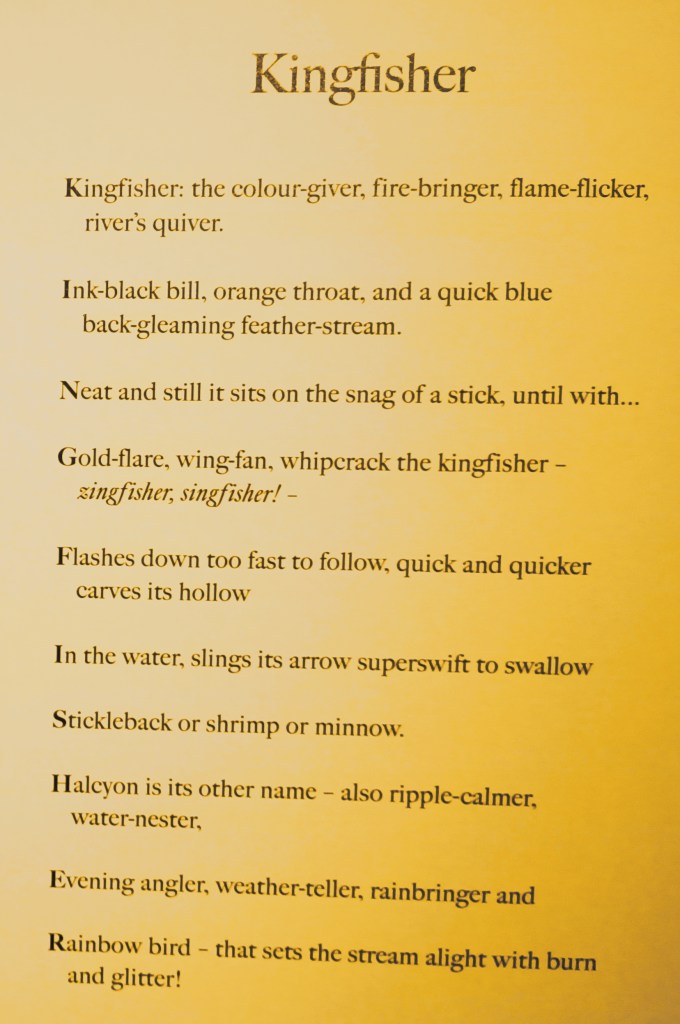
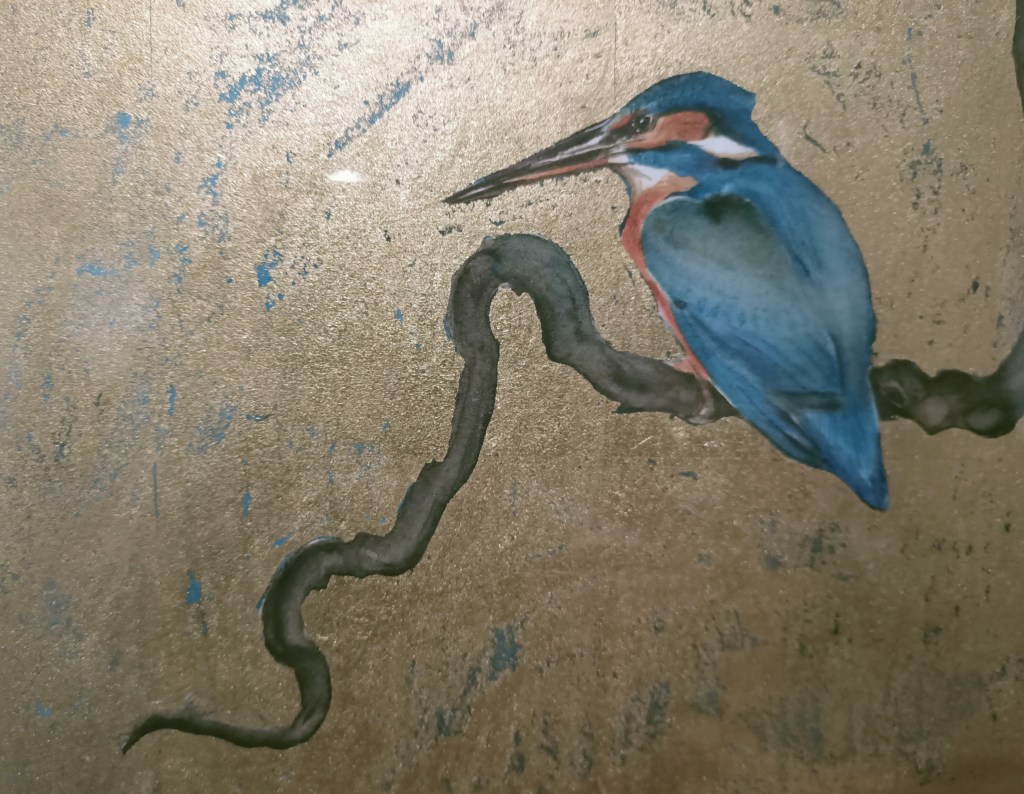
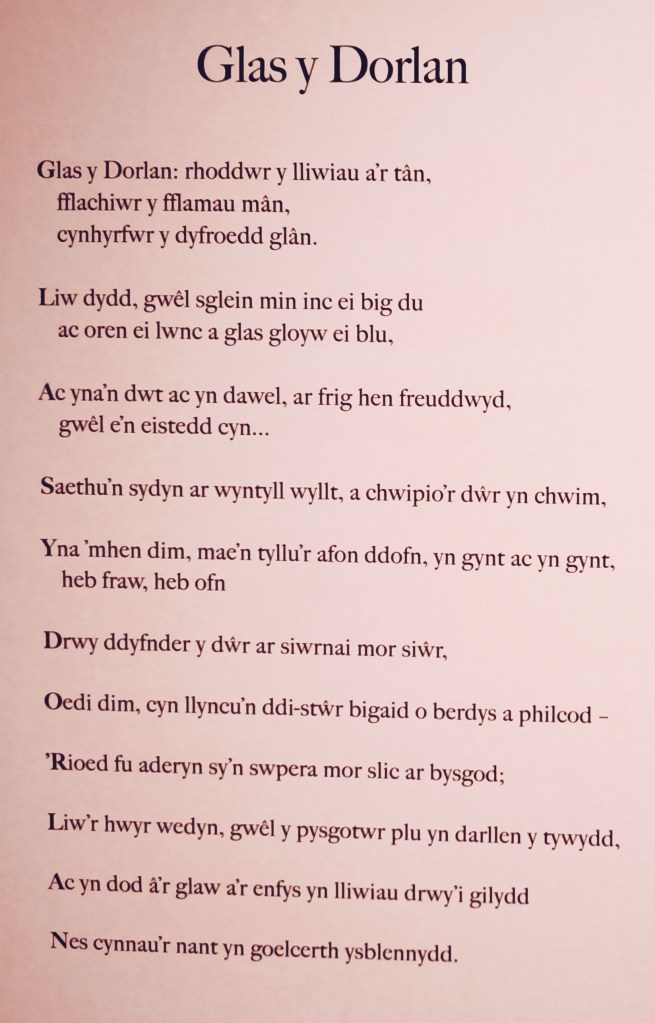
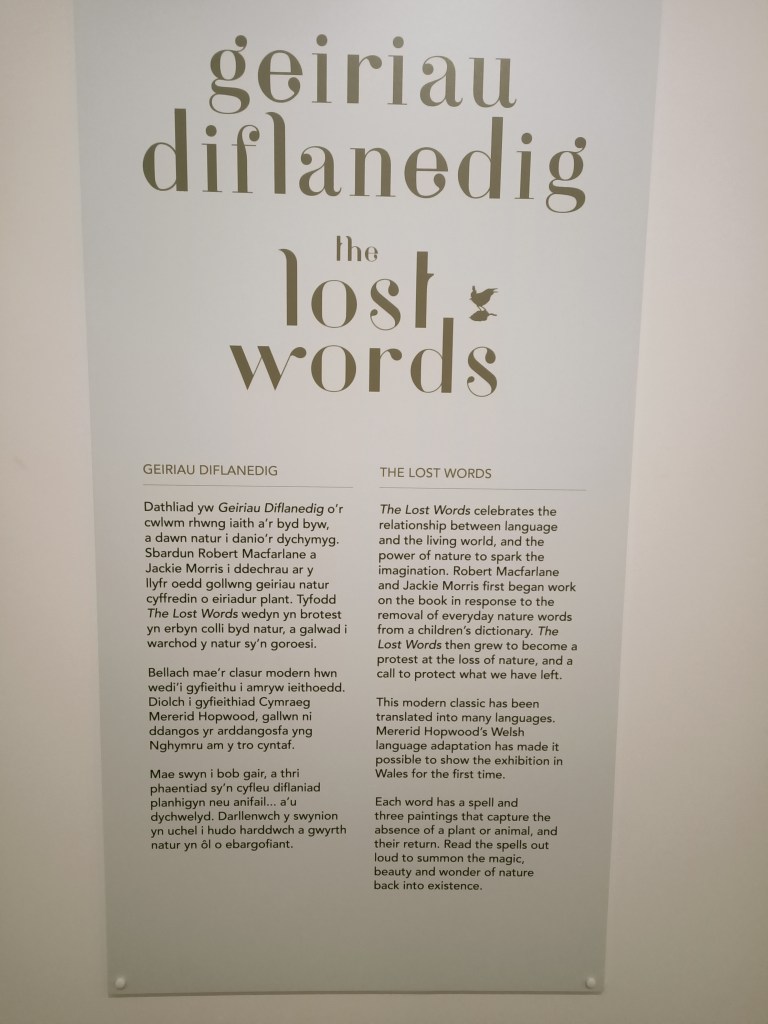
Our journey took us on to St David’s – the smallest city in Britain – with a population of just over 1,300 people; a village really, with a huge and impressive cathedral. It was here that The Lost Words exhibition at Oriel y Parc was on show. The author of the book, of the same name, Robert McFarlane wrote: “What we do not love we will not save”, so with, “more than 50% of species in decline”, we clearly need to learn to love nature again.
The book began as a protest against the ‘removal of everyday nature words from a widely used children’s dictionary’; however, it has also become an assemblage of words, illustrations and spells to raise awareness of our diminishing wildlife. In a world where nature is fast being exploited and depleted, the words and the very existence of wildlife, should be a primary focus for everyone, not being eradicated from children’s reference books.
Education is at the forefront of the Rebel Botanists’ activities; if people have the knowledge and understanding of the intricate and vital connections of biodiversity, then hopefully they would make more ethical lifestyle choices.
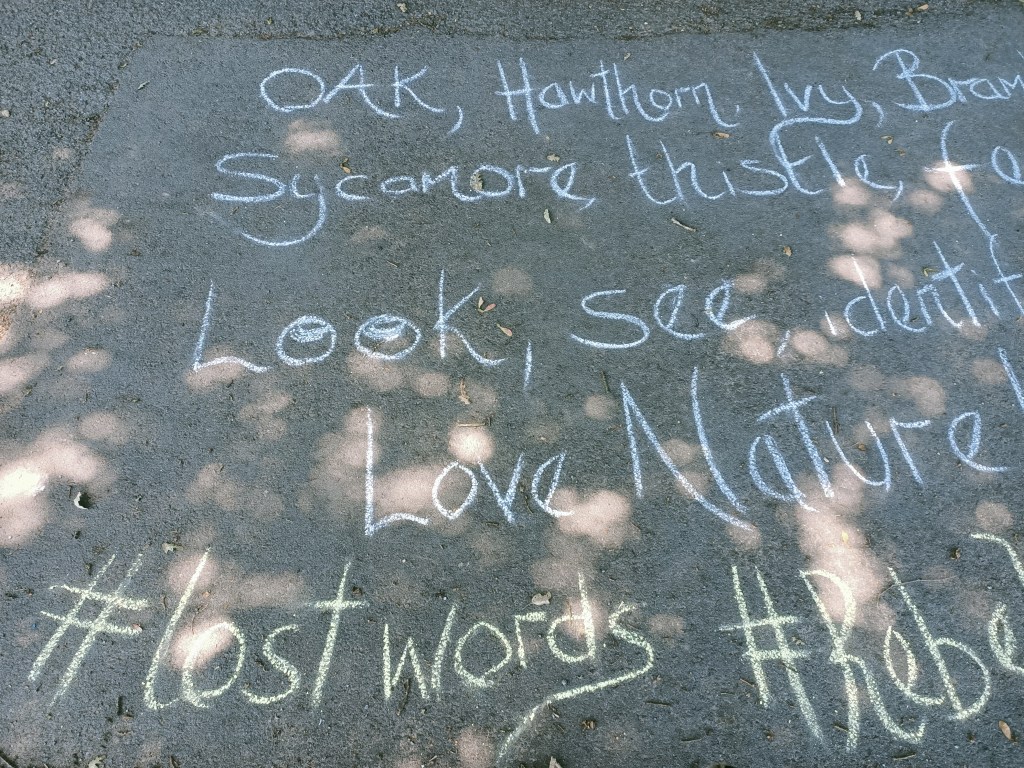
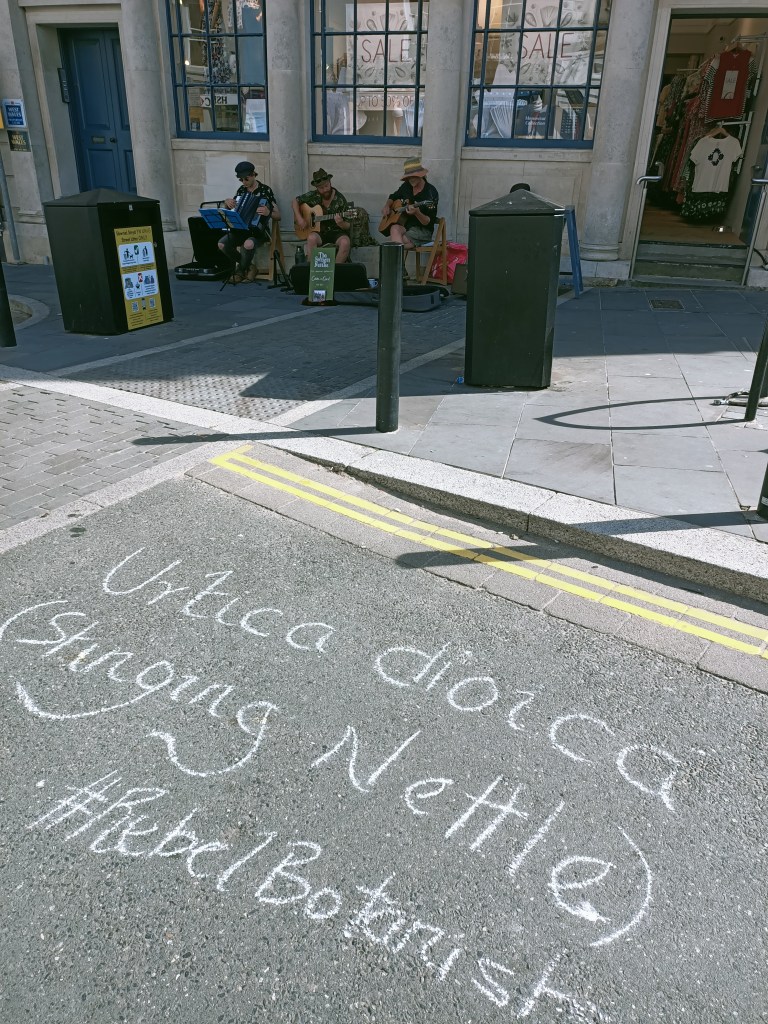
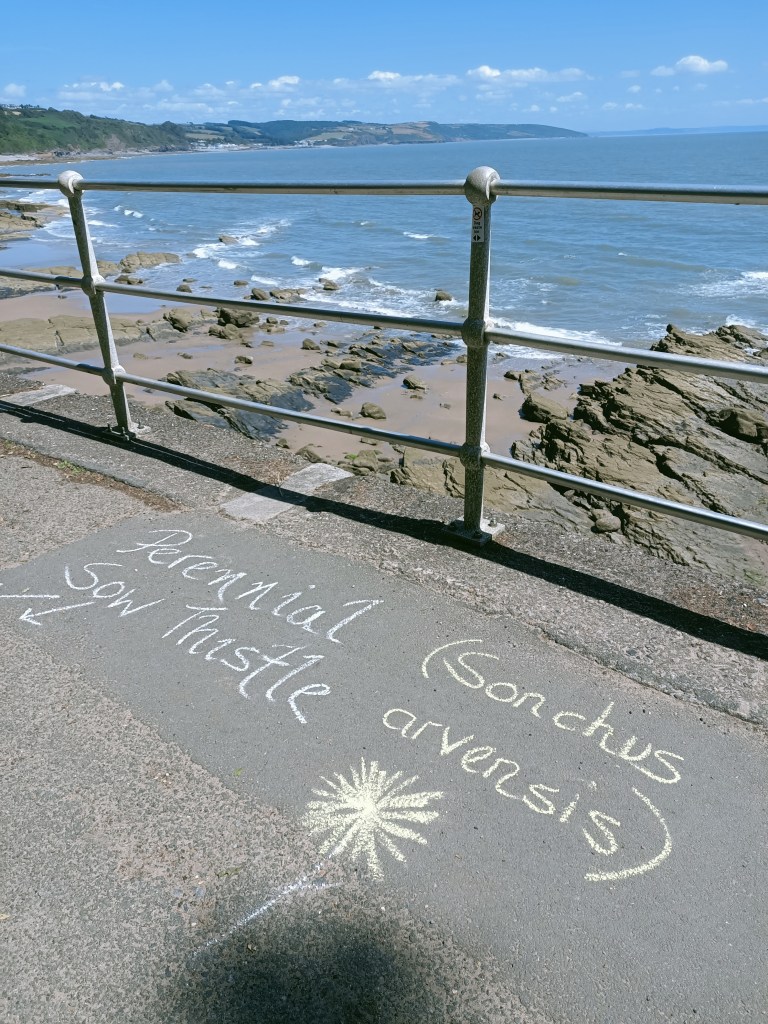
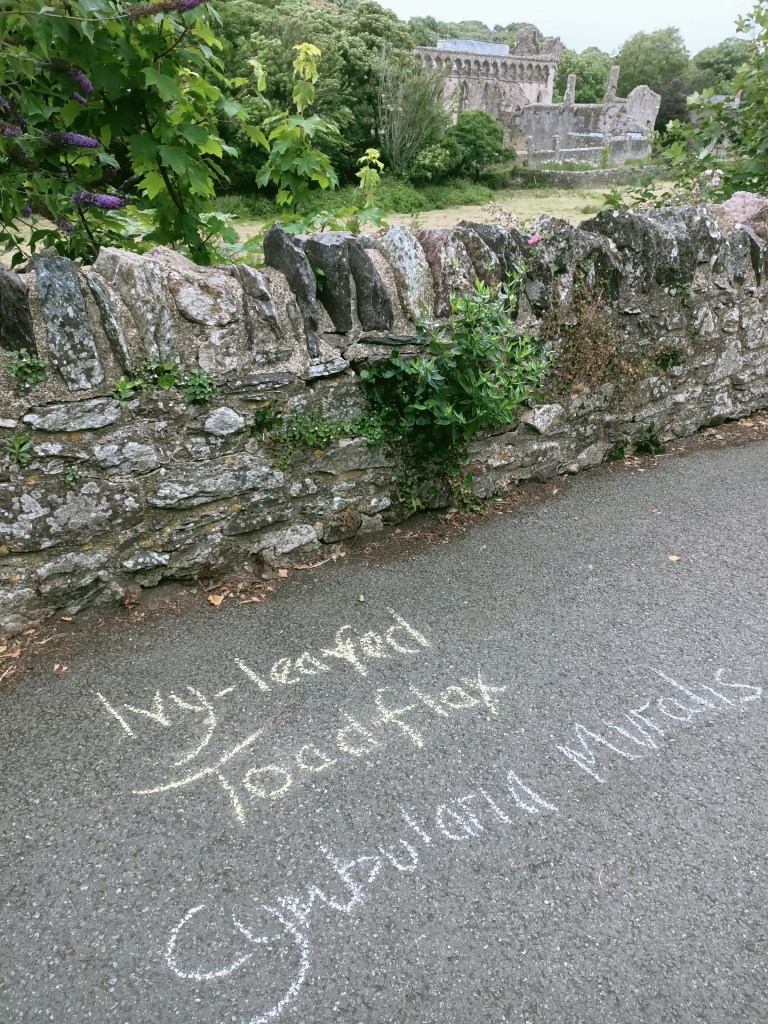
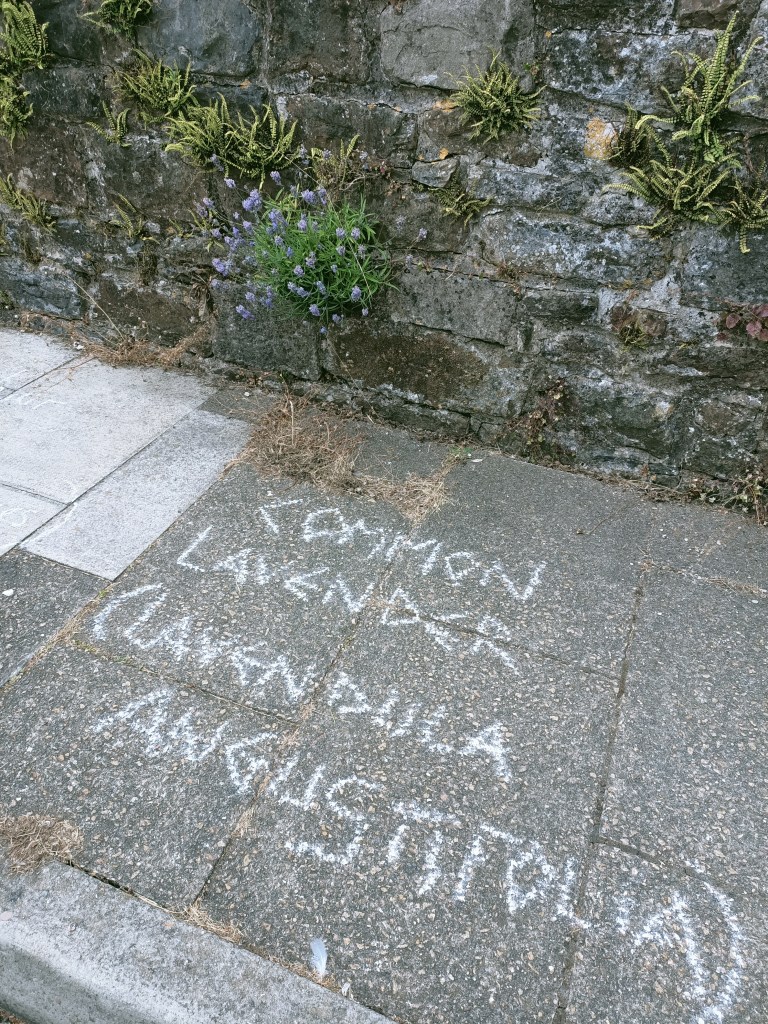
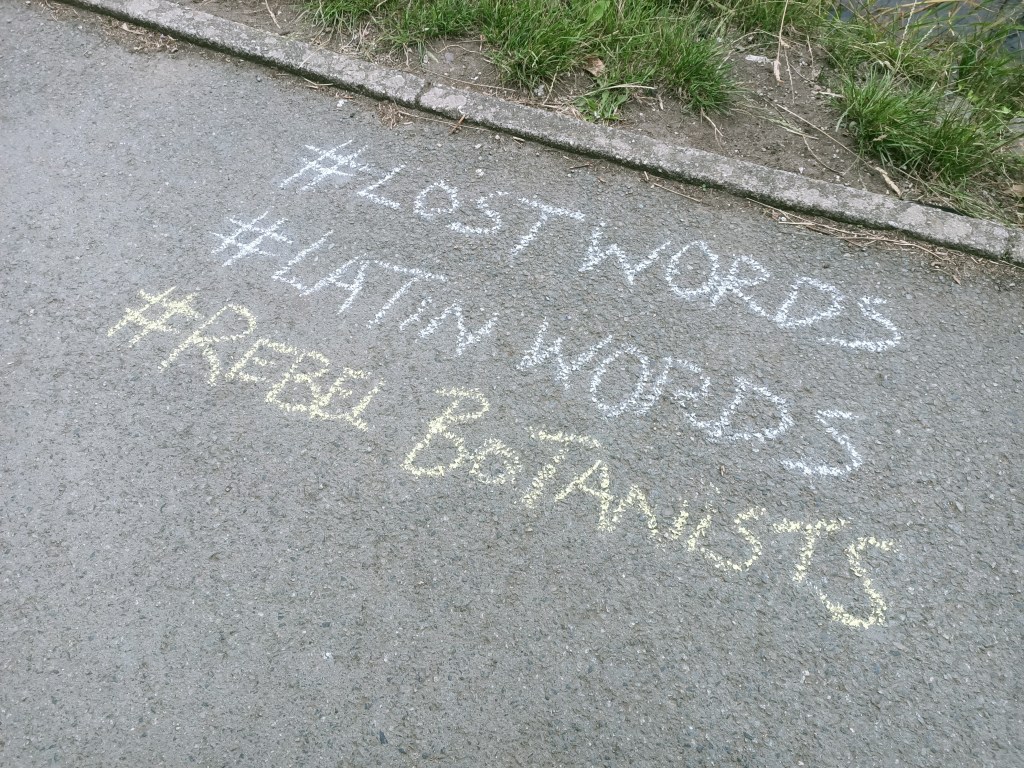
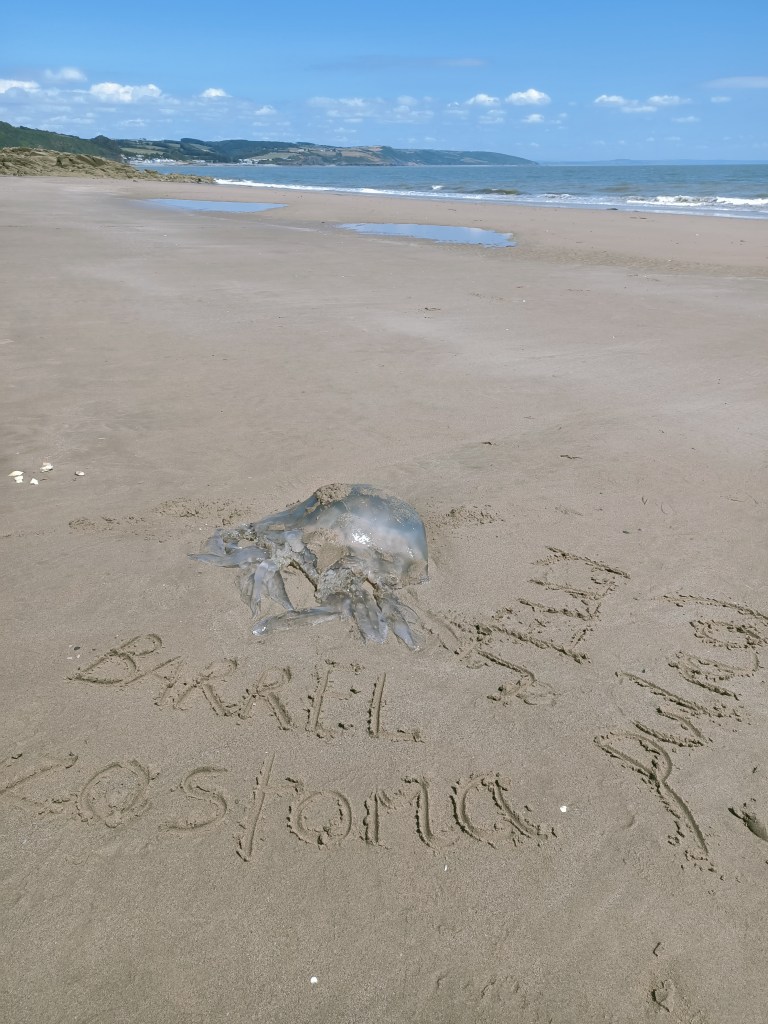
The beautiful words and imagery of this exhibit enthused some chalking, and off we went… in different villages and towns naming wildplants, and even a beached jelly!
We must not allow the words of nature to be lost, nor the last remaining ancient temperate rainforests. Instead, we must nurture and revitalise them. Talk, chalk and walk in nature, you’ll feel better for it 💚
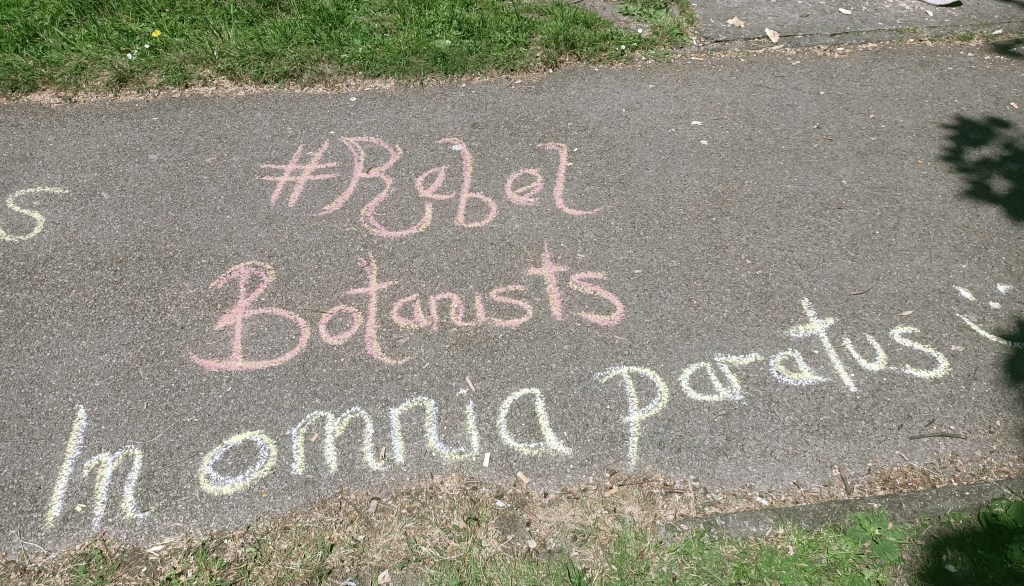
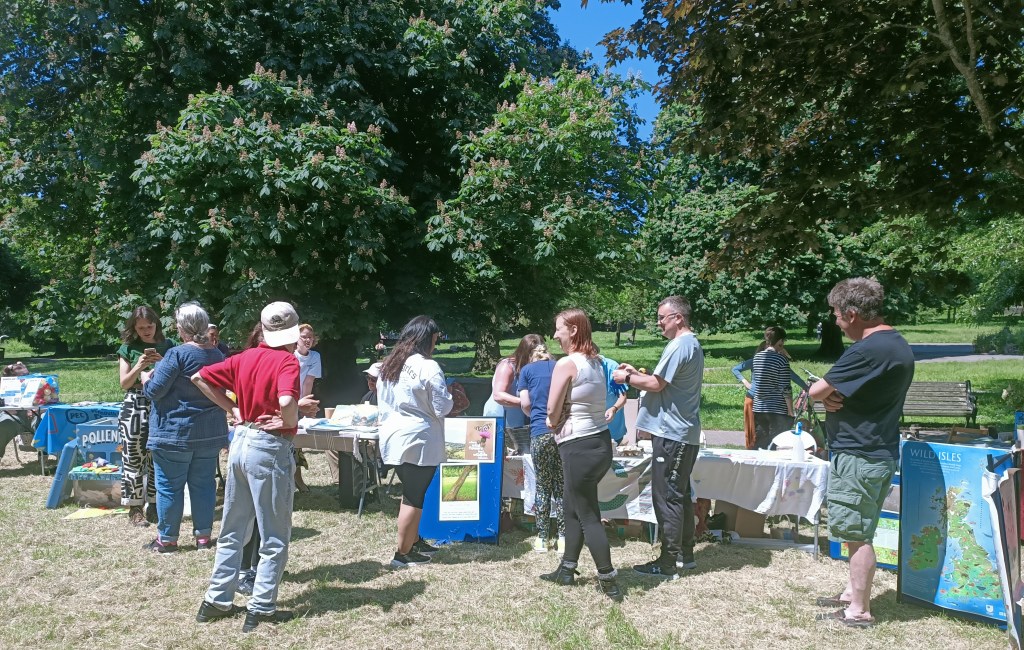
Yes, Rebel Botanists are ready for anything! (In omnia paratus) 👍 Today, we held quizzes, made seed bombs, discussed wildflower meadows and did a walk and chalk around Plymouth’s first public park.
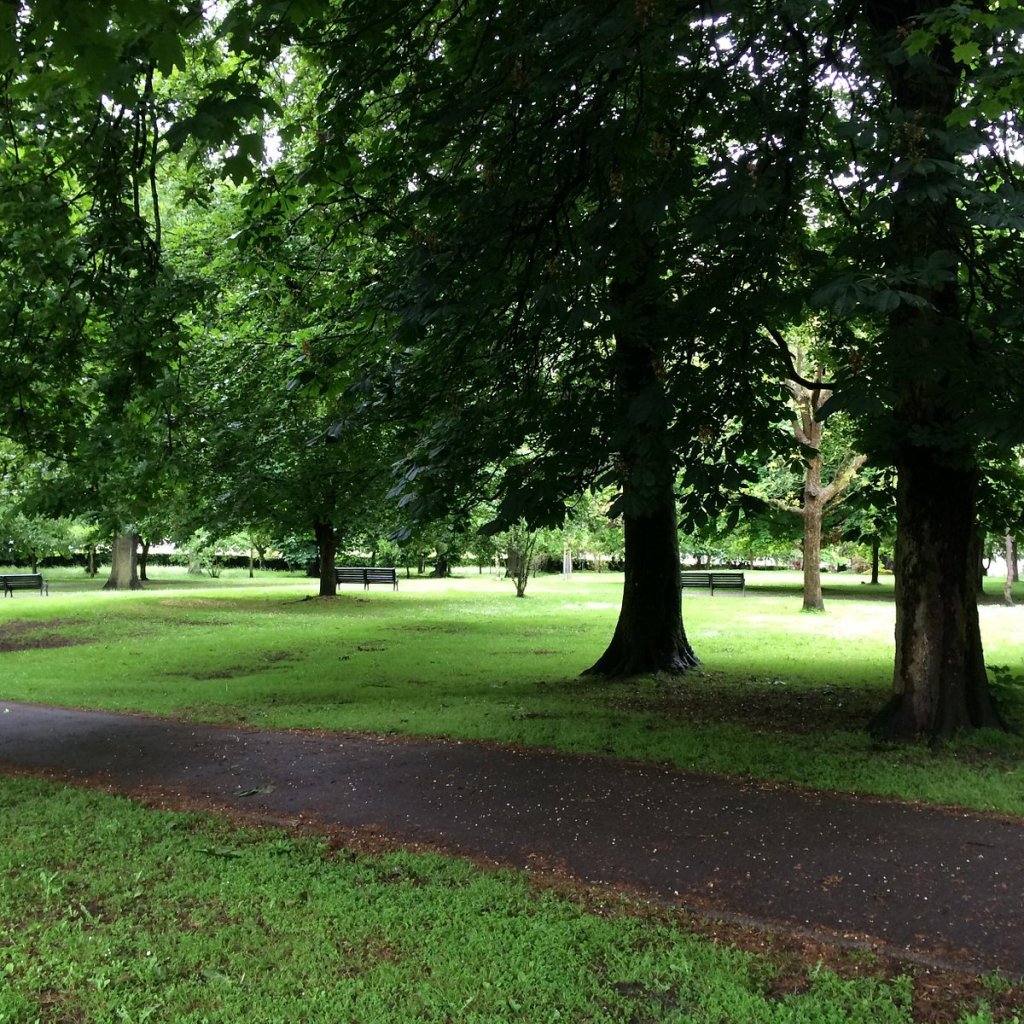
Opened in 1892, Beaumont Park in Plymouth, is also known as Squirrel Park, due to the abundance of grey squirrels climbing around the Beech, Oak, Sycamore and Horse-chestnut trees.
So let’s see what other plant life we found in this lovely park 🌱🌼…
A beautiful abundance of our favourite Bellis perennis. It’s heliotropic flowerhead wide open to the midday sun.
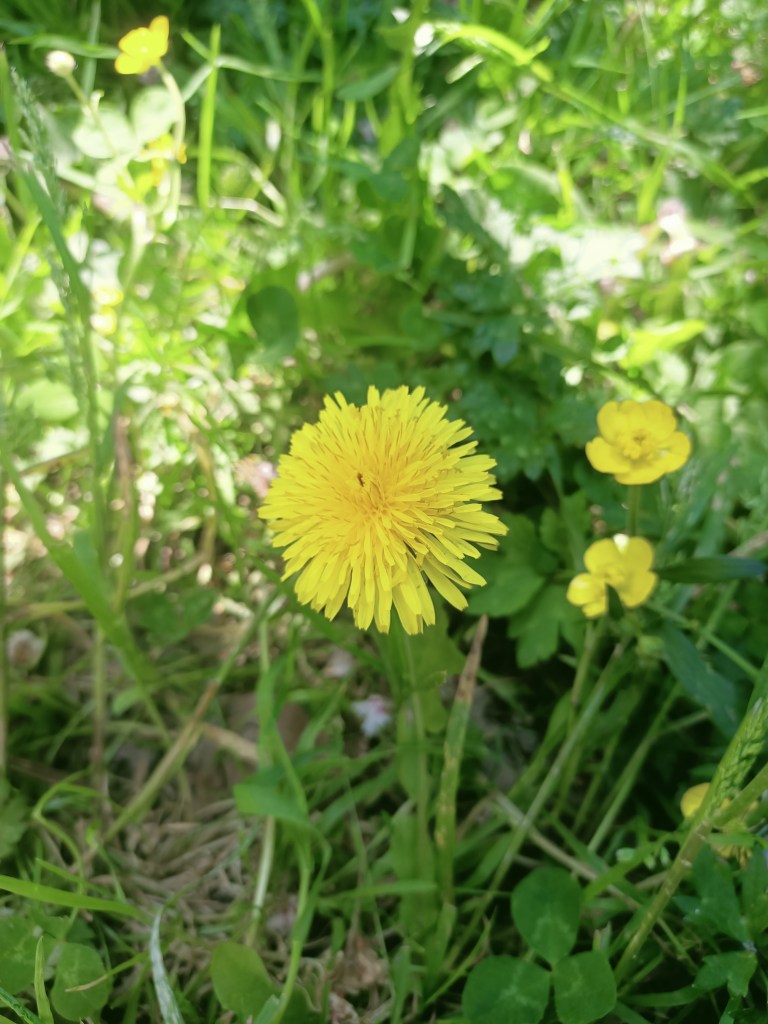
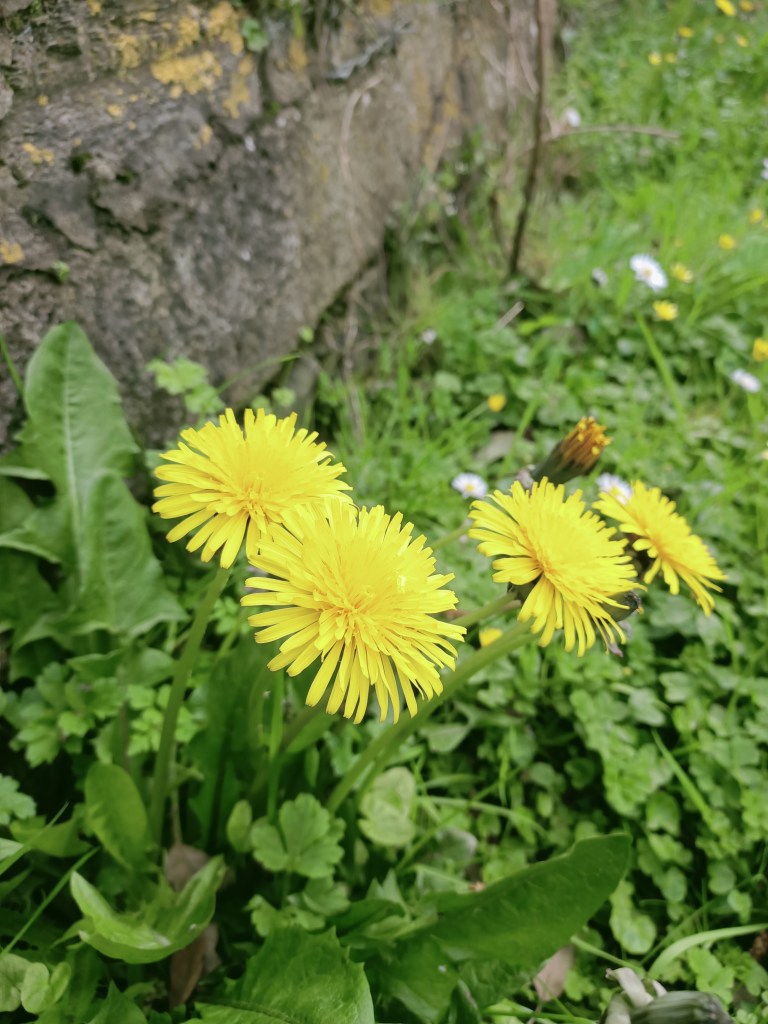
A dandy Dandelion, with it bright yellow florets.
Another yellow wild one, the Creeping buttercup.
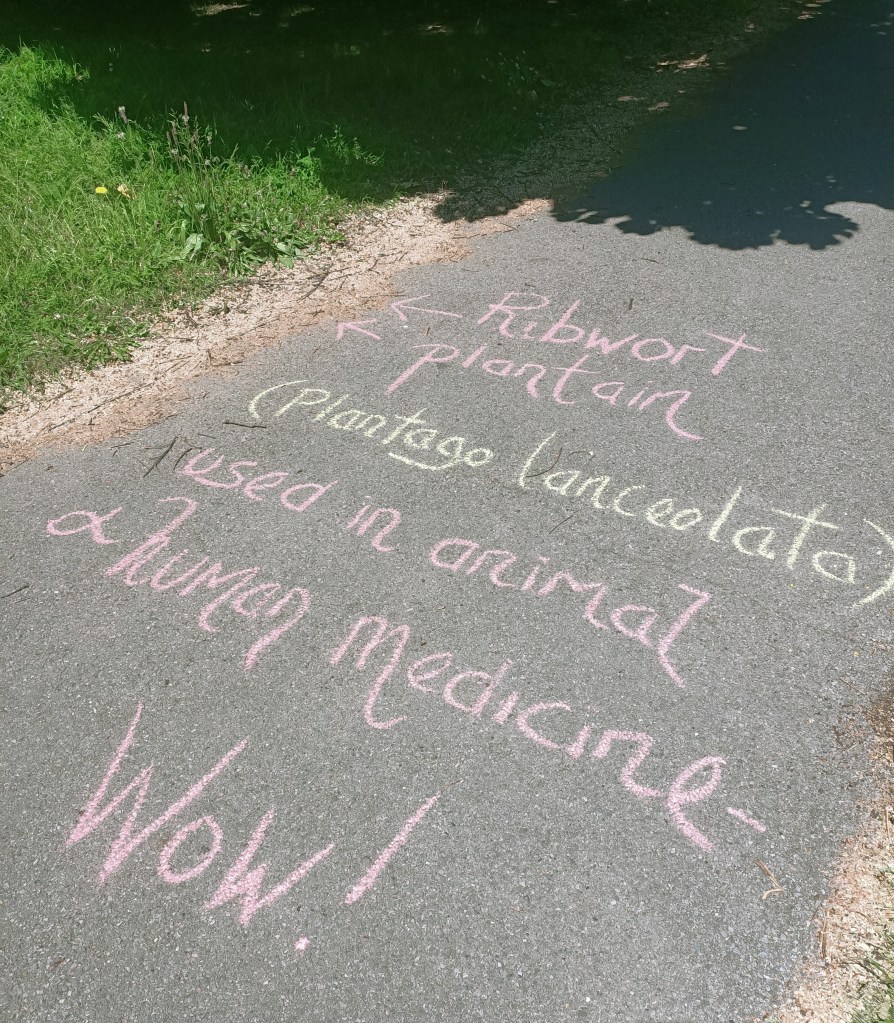
Plenty of Ribwort Plantain, great for human and animal medicine and excellent food for songbirds and finches, e.g. Goldfinches. So, let it grow 🌱
Lapsaria communis is in the sunflower family.
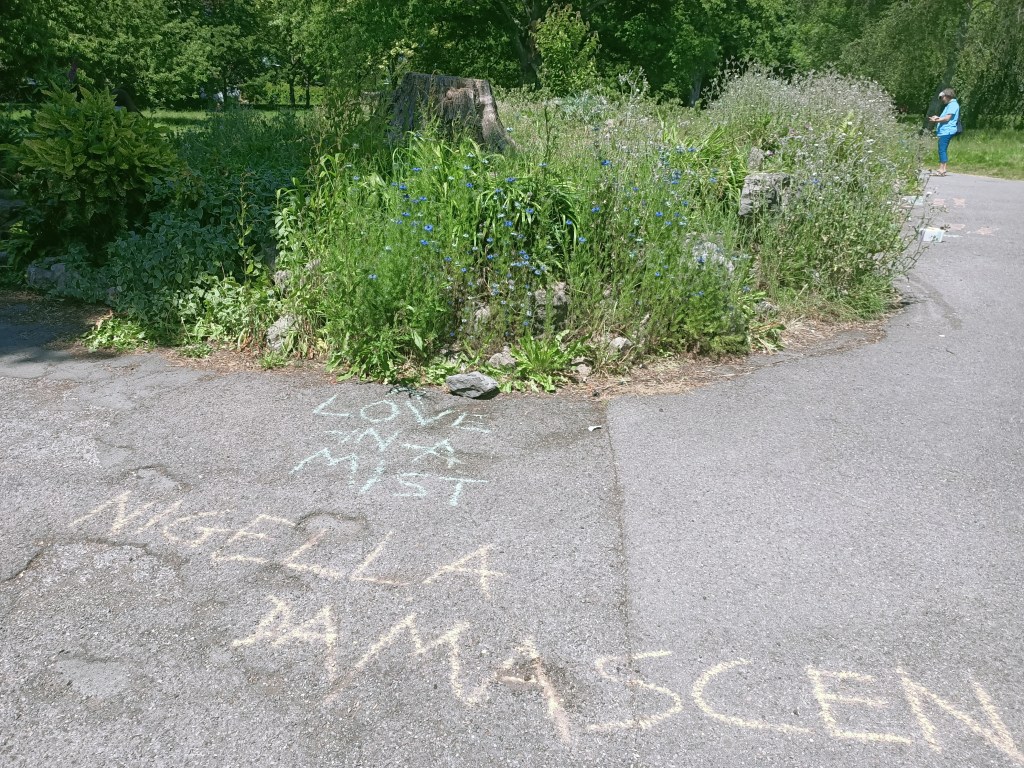
The centre of the park had a real array of flowers, both native and non-native. One of these was Love-in-a-Mist – a fabulous name for a fabulous plant, don’t you think?
The flower heads look like their dancing in the breeze, hence the name Greater Quaking Grass. This plant provides food for farmland birds like: Linnets, Yellowhammers, Greenfinches and House Sparrows. So, let it grow 🌱
Another good food source: Red Valerian.
This is also known as Lady’s Glove and provides digitalis and other cardiac glycosides for medical use.
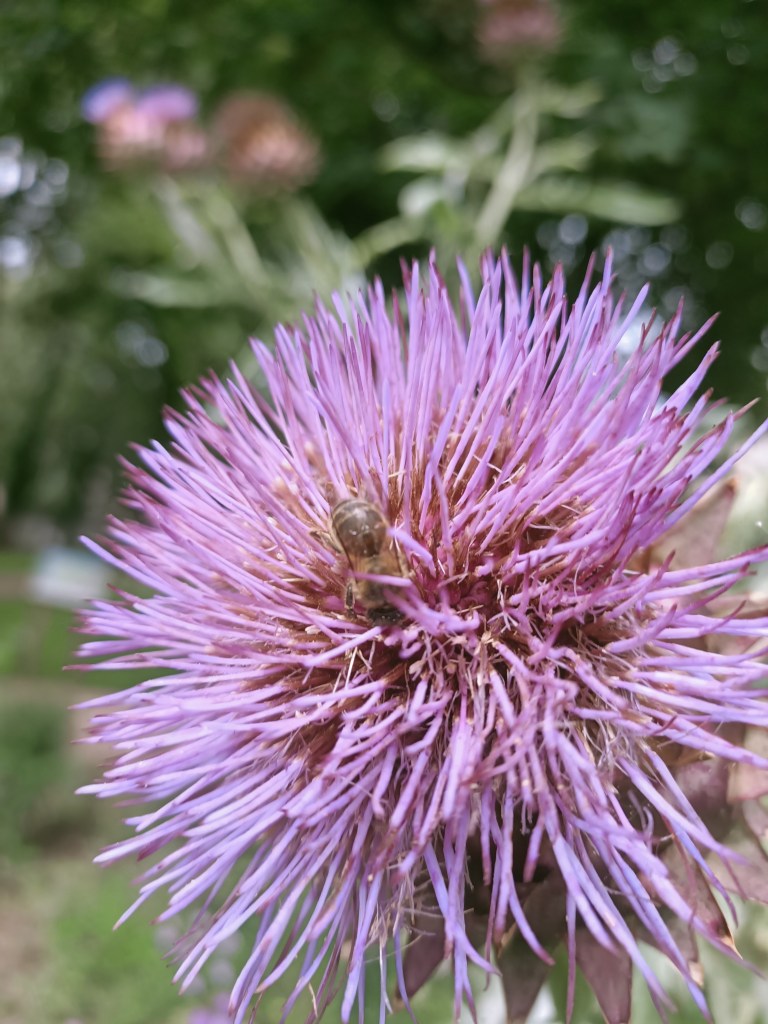
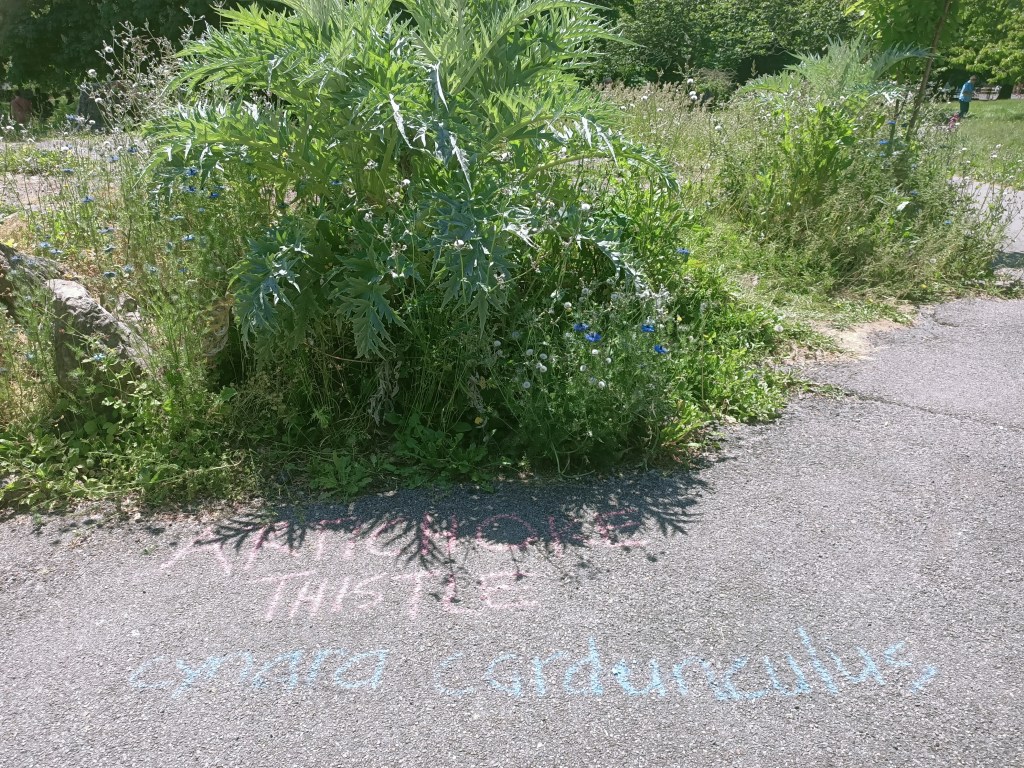
Cynara cardunculus is edible just like a regular artichoke.
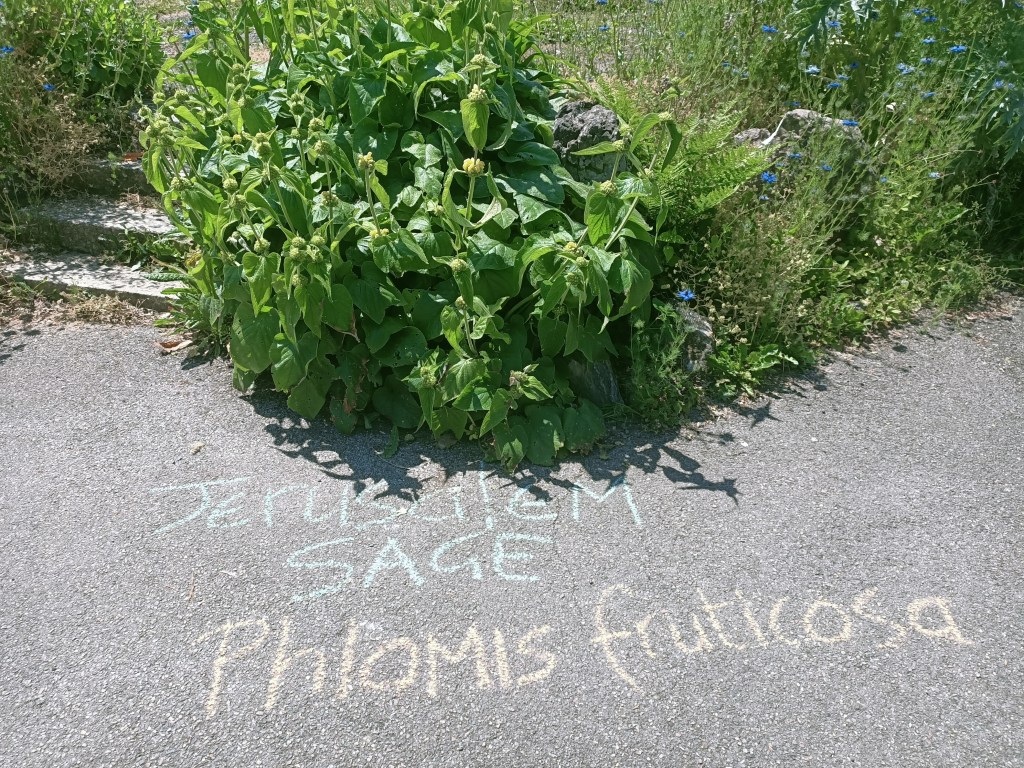
Jerusalem Sage is used in tea to aid digestion. Another non-native, I wonder how they got here? 🤔
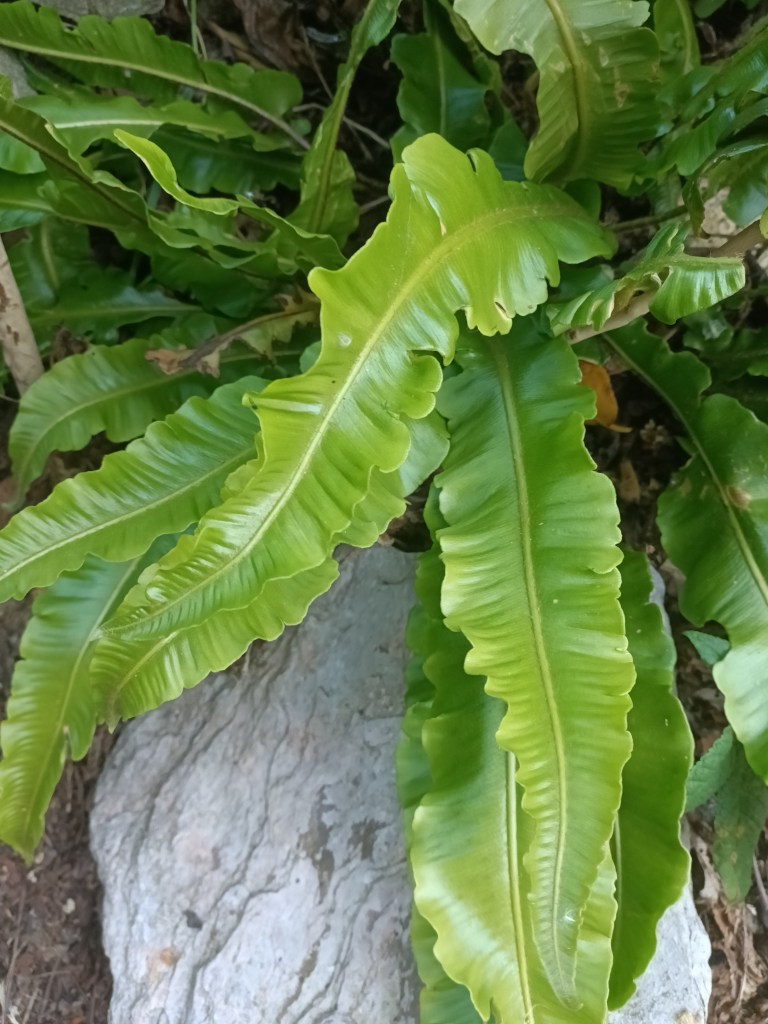
This is native Hart’s Tongue fern, Asplenium scolopendrium; its “unfurling fronds resemble the curled scroll of a violin.” Taken from: The Lost Rainforests of Britain @guyshrubsole
Shield ferns, Polystichum, like shady, moist areas.
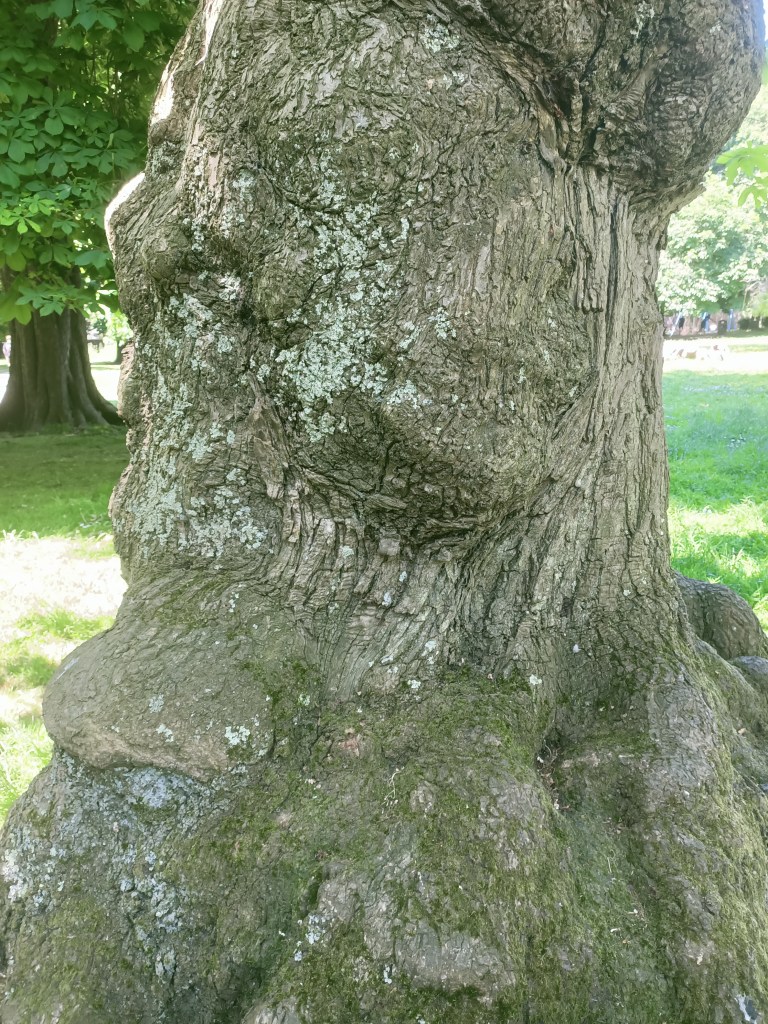
Did you know? Lichens are “symbiotic organisms comprising both plants and fungi, bridging two entirely different kingdoms of life.” (@guyshrubsole). They are also an indicator of good air quality.
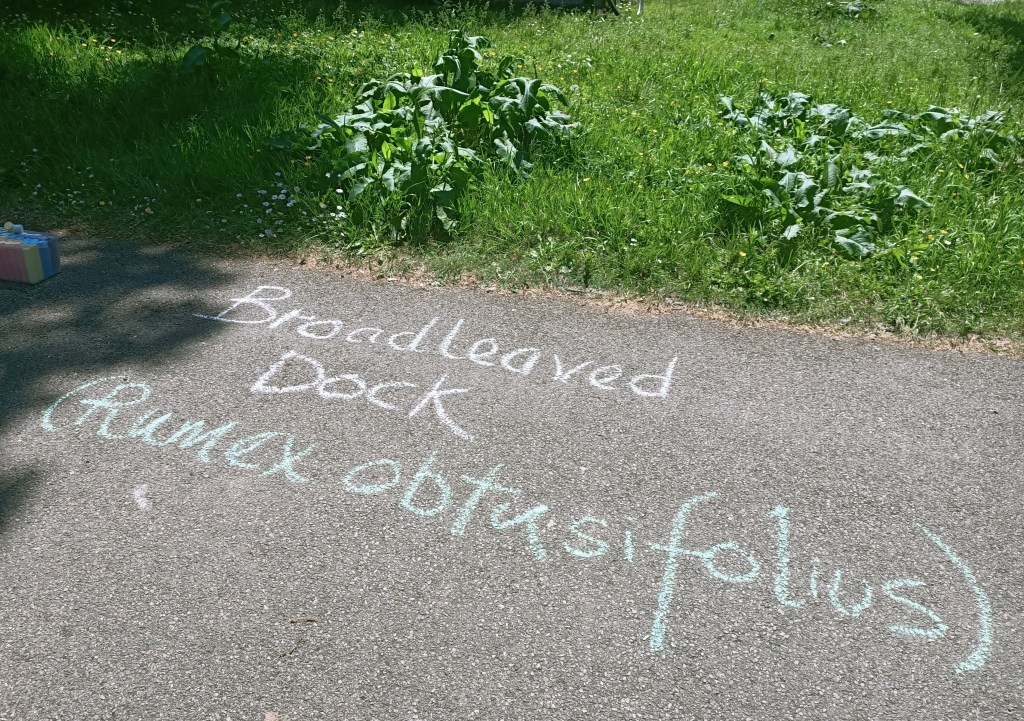
Broad-leaved dock, aka Bitter dock – a lovely green habitat for wildlife.
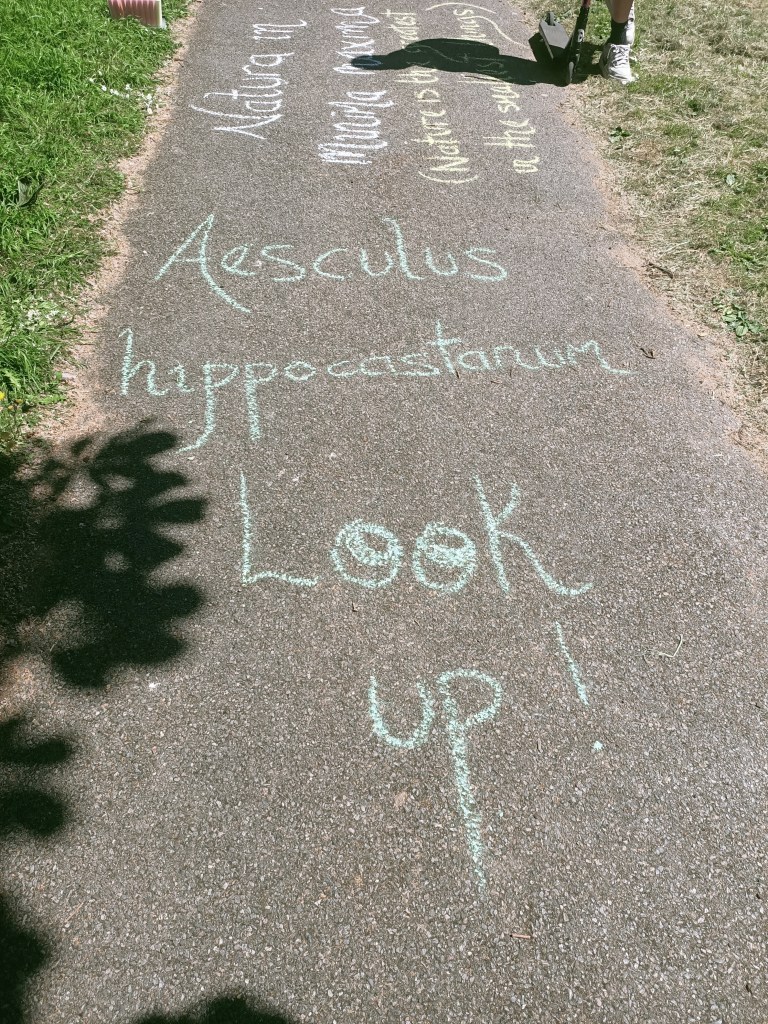
Hmm…a nature crossroads, which way now? 🤔
Aesculus hippocastanum can live for 300 years and reach 40m in height.
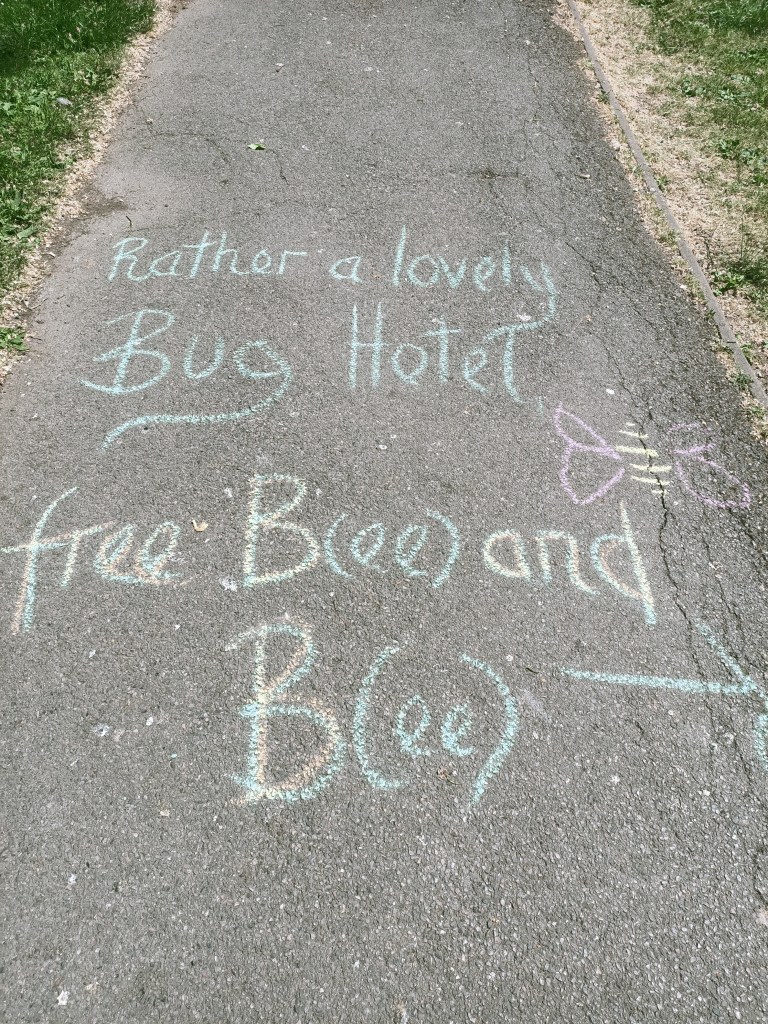
A free B(ee) and B(ee) for insects only. 🤣 It’s only humans who charge other humans for bed and breakfast. 😂
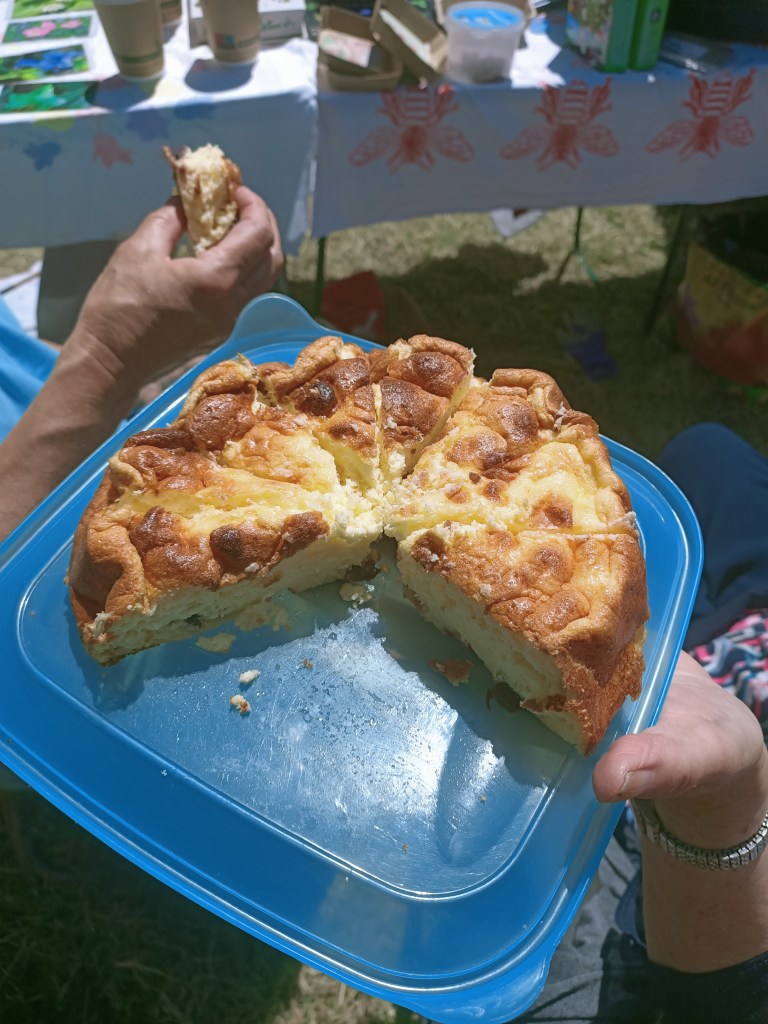
We love being Rebel Botanists, providing free street art education through our chalking. What’s also great is eating Janet’s cake. Janet is one of our original team members who makes the most amazing homemade cakes and she’s created one of her best yet – yoghurt cake. Words cannot describe the yummy taste.
Thanks to Jonathan Spurling for the invite. Great to share the day with Jane and Joy from @plymouthscrapstore, Owen from @pollenize, also @cleanourpatch, #gamesgaloreplymouth and @xrdoctors.
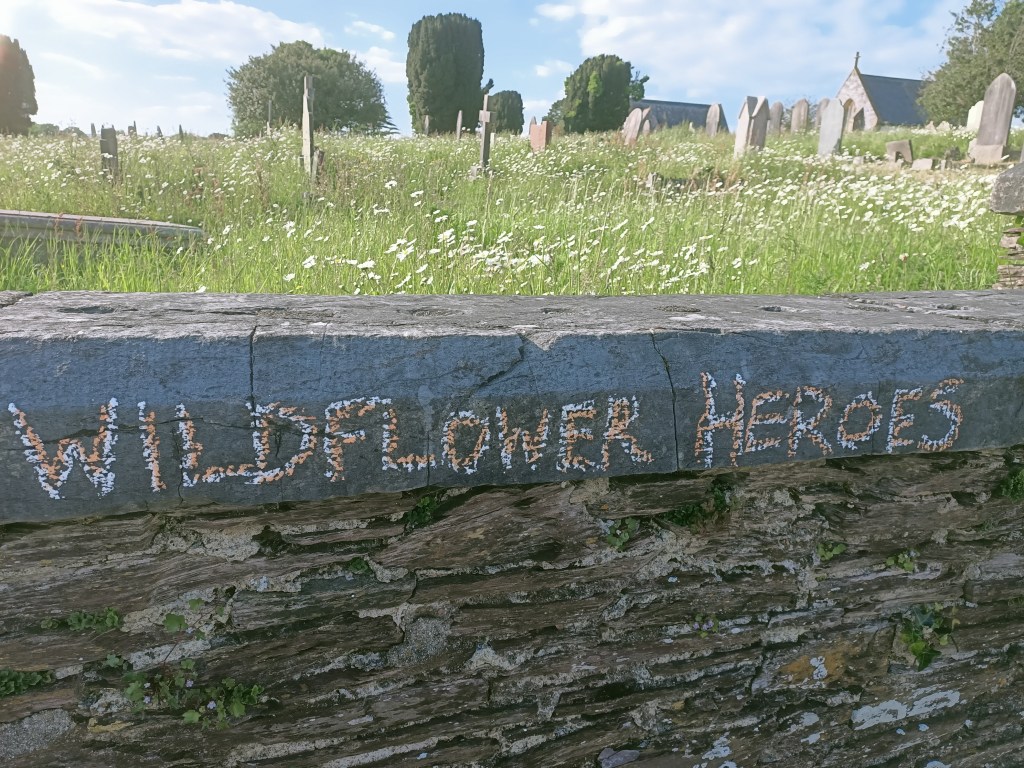
What’s in a name? Well, when we’re talking about wildplants, there’s rather a lot! As Rebel Botanists, we’re very keen to discourage the broadly used label ‘weeds’. Oh, it almost makes me shudder to say/write it! Thank goodness, and at last, the RHS agrees too, according to a recent Guardian report (https://www.theguardian.com/lifeandstyle/2023/apr/25/chelsea-flower-show-gardens-rebrand-weeds-hero-plants) which has headlined them as ‘hero’ plants.
“Sheila Das, a garden manager at Royal Horticultural Society (RHS) Wisley in Surrey, said gardeners should stop using the term “weeds” in a derogatory way…Tom Massey at the Royal Entomological Society (RES) said there’s a lot of stigma around the word ‘weed’.
The word has become a very derogatory one, that is clear, conjuring up distaste, verging on hatred. It reminds me of school playground name-calling; it seems the human species are very good at creating words to fix things into convenient boxes, paying little attention to individuality, and very often using these words to belittle and discredit. But, why? Why do we do this?
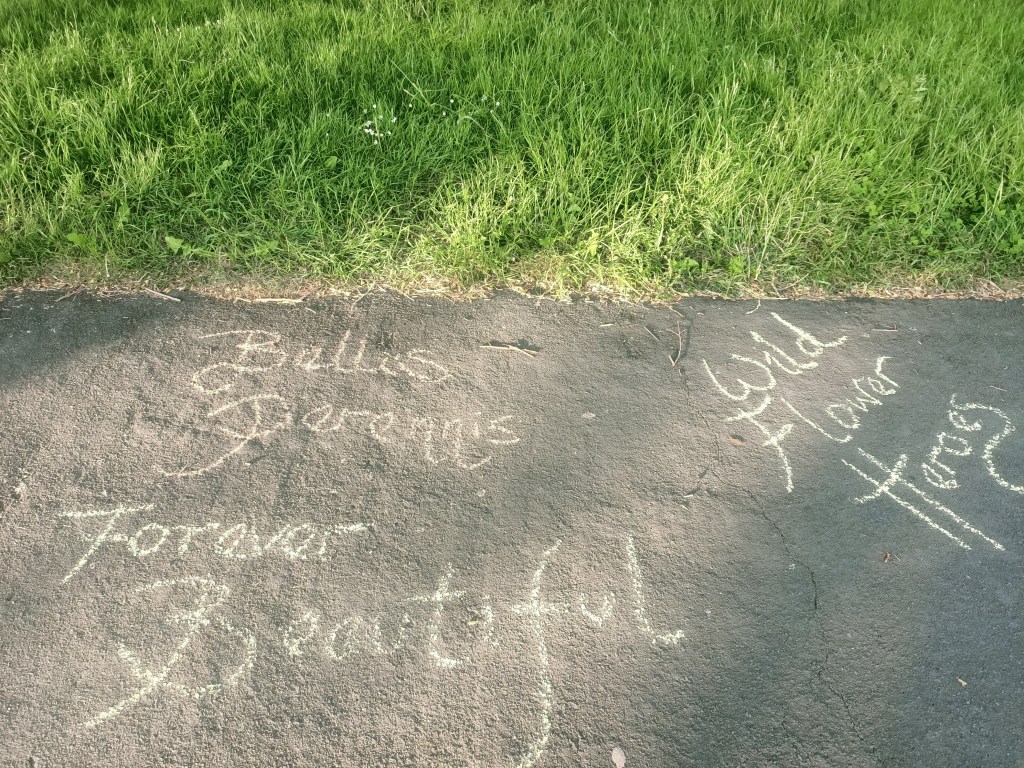
This fixation to turn the positive into a negative, I feel, generates hatred and possibly the seeds of poor mental health. In the case of wildplants, it is also completely unwarranted. Nature’s wildflowers are indeed heroes.
Many wildflowers are vital to wildlife health, as well as our own. Did you know, the Dandelion, for example: “is full of vitamins A, B, C and D, as well as minerals, such as iron, potassium, and zinc. The leaves are used to stimulate the appetite and help digestion. Dandelion flower has antioxidant properties. Dandelion may also help improve the immune system. Herbalists use dandelion root to detoxify the liver and gallbladder, and dandelion leaves to help kidney function.” https://www.mountsinai.org/health-library/herb/dandelion). “Dandelions are an important early source of food for pollinators – so let them grow!” say the Wildlife Trust on their website.
With a massive 60% decline in flying insects, in just the last 20 years, there can be no excuse to cut these vital food sources. “…we would starve without plants, we wouldn’t be able to breathe without plants. And yet people’s understanding about plants, except in a very kind of narrow way, has not kept up with that.” David Attenborough stated in 2022. (https://www.radiotimes.com/tv/documentaries/david-attenborough-the-green-planet-appeal) Wildflower heroes are in your gardens, on grass verges, climbing up the walls, nestled by trees – they are both beautiful and vital. We have to see them for the individuals they are and what they bring to this incredible planet.
Please research each one as you come across them, to understand their value. Look at reliable sources of information, e.g. Plantlife.org.uk, Wildlifetrust.org, Woodlandtrust.org.uk, Britishlichensociety.org.uk and so on. You’ll be amazed at what you’ll learn. Remember, we probably know less than 15 percent of the value of nature around us. There could be species going extinct today, that may cure some of our cancers or prevent dementia. There is still so much we do not yet know.
So, whilst we can start to replace that horrible ‘w’ word for wildplant heroes, let’s also consider using the specific names to identify the plants we are referring to – it really does help.
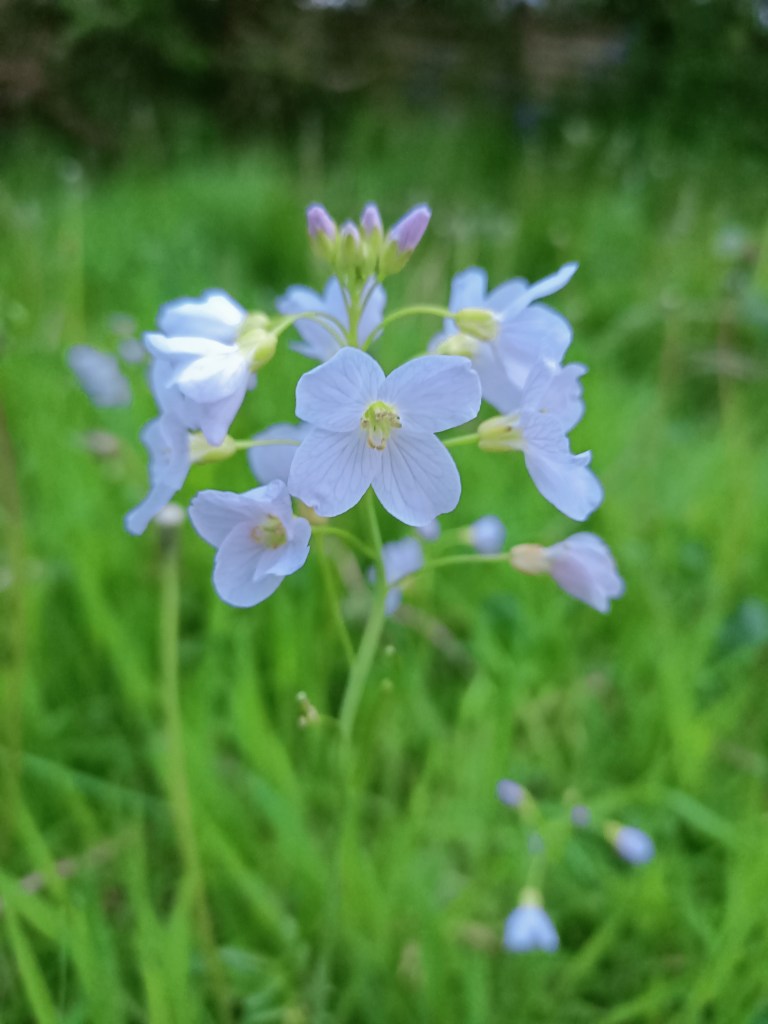
If you’re lucky enough to have these lovely delicate pale pink wildflowers in your garden, or on a nearby verge, then you may know it’s called a Cuckoo flower.
However due to cultural/regional differences you may know it as Lady’s Smock, Mayflower or Milkmaids. So, how can we be sure we are all looking at the same flower? Enter Latin, to solve that problem.
Latin offers stability of recognition across the world. So regardless of the regional names, we know this flower is recorded as Cardamine pratensis. Pratensis is Latin for meadow, so we know this is predominantly found in meadowlands. Cardamine is a large genus of flowering plants in the mustard family, Brassicaceae, known as bittercresses and toothworts. It contains more than 200 species of annuals and perennials. Species in this genus can be found worldwide, except the Antarctic, in diverse habitats. (Wikipedia). The leaves of the flowering plant are used to treat chronic skin complaints and asthma. It has beneficial digestive and stimulant properties, also (https://www.conservationhandbooks.com/wildflowers/cuckooflower). Importantly, it is a valuable source of food for many species of bees, hover-flies, moths and butterflies, including the Orange-tip, Anthocharis cardamines, that feed on the flowers and lay eggs on the leaves, which their larva will later feed on.
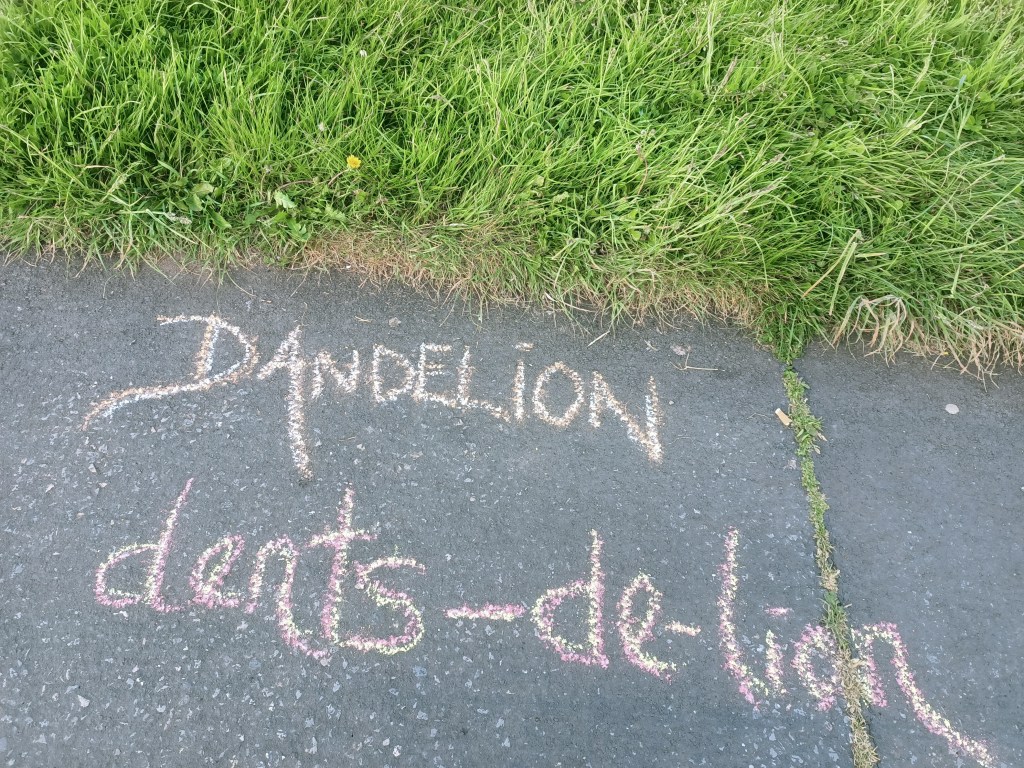
If we refer back to the delightful Common Dandelion, its Latin name is Taraxacum officinale. Officinale tells us this wildflower has uses in medicine, herbalism and cookery. The first part of the name, Taraxacum, is Arabic meaning ‘bitter herb’. However, the word Dandelion comes from the French dents-de-lion, referring to the yellow floral rays resembling the shape of lions’ teeth.
You see, when we really think about how we use words, they can be to all of our advantage, educational and fascinating! So, let’s start losing the derogatory labels and reveal our wildlife heroes through the use of their individual names and appropriate use of language.
I recently set up the Connections Project with the aim of supporting young people to understand the complex and interdependent connections between different living species in our urban environment. Nothing exists in isolation, including humans and, so, to really grasp the concept of biodiversity and the current crisis of our planet, I wanted to highlight those connections through an engaging, multi-sensory venture.
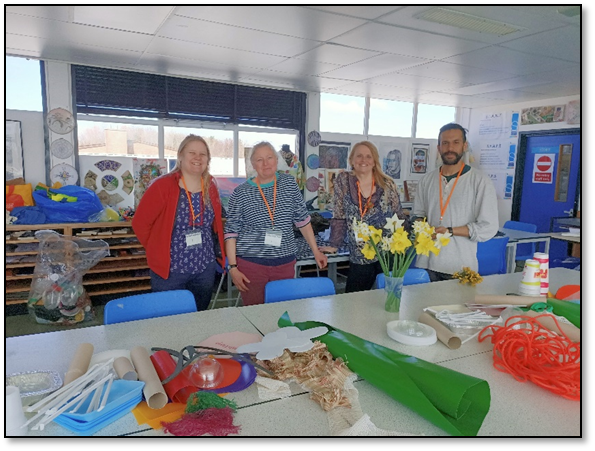
Before I realized any funding for this idea, Juliette, from Seadream CIC, and Jane, from Plymouth Scrapstore, joined me, Elizabeth, from the Rebel Botanists, to help turn this idea into a workable plan. Within a matter of only a few weeks the plan matured into a reality: we received funding from several generous P.C.C. councillors, put together our team of facilitators and delivered a pilot project to 30, Year 7, students at Stoke Damerel Community College.
The Connections Facilitators: Juliette, Judith, Liz and Amaya
My rationale for this was based on our present climatic and environmental situation because, surely, if these connections were already being made, we wouldn’t be in this predicament? For example, whilst many people may be aware of the plight of bees and the resurgence in bee-keeping, do they fully understand the required habitats and nectar sources to support them? We may know that earthworms are a sign of a healthy soil, but why is that? What is the importance of earthworms and bee pollination to the human race? And, what is the implication of applying pesticides to life below, on and above the soil?
In many aspects of our lives, we learn about things but miss the connections. School subjects are frequently considered apart: how often do you hear comments like, “I really like art, but I hate maths”? Well, think how these subjects are linked… many techniques in art are based upon maths: shapes, angles, perspective, rule of halves, rule of thirds, grid technique, the Golden Ratio and Pi. Then consider how history, culture and social commentary are reflected and communicated through art. Reflect also upon the self-expression and creative skills being developed which are much needed personal and professional attributes in our rapidly-changing world, where new design concepts and job roles are required. The Connections Project makes visible the inter-curricula, or perhaps I should say the intra-curricula, and therefore encourages participants to develop a more holistic perspective in their learning.
The initial pilot project was also experimental in terms of:
selecting the most relevant content to present
highlighting the connections between the workshop topics
how effective the delivery would be to meet the aims of the project
how we would gather evidence of existing knowledge and use that to enhance understanding
the timings of the workshops
how this would fit into the school timetable
what long-term benefits may come from this
being an inquiry to how valuable and needed this holistic approach might be to secondary schools, to complement existing teaching and learning.
After discussions with Louise McManus from Stoke Damerel Community College, we decided on delivering 3 workshops: soils, urban wild plants and pollinators; these would link and highlight the importance of healthy habitats, the cycle of life and human impact. This would culminate in a final art workshop, where participants would evidence their understanding through the creation of a final art installation. Each workshop would be tailored to ensure every voice counts through small group Q & A discussions and individual engagement with hands-on activities.
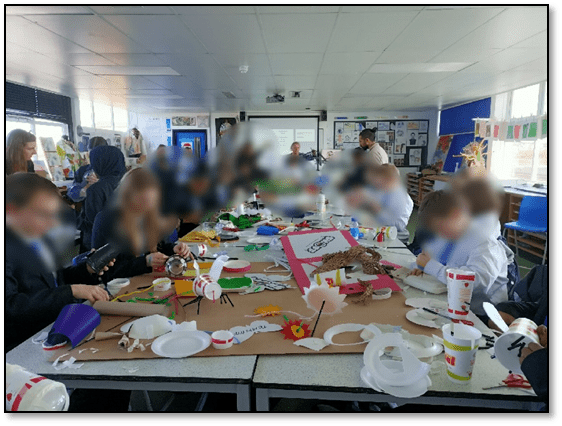
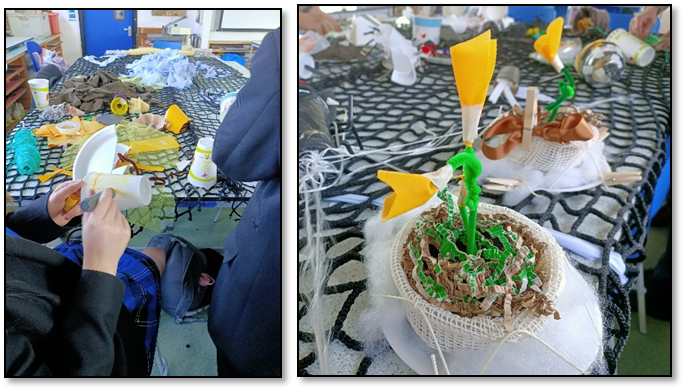
Year 7 students enjoying creating ‘arty-facts’
The final art workshop demonstrated the understanding of the workshop themes. It was really encouraging to see how the students eagerly started, clearly having ideas in their minds from the outset. They modelled different species to work within an ecosystem, e.g. bees, butterflies, dragonflies and spiders, with a web, whilst some created jellyfish and a sea turtle. Other students created a mini-eco-system illustrating the connections between soil, leaf litter, tree stumps, plants, earthworms and tardigrades. Throughout this creative activity, students talked with each other and were clearly fully enthralled with the task, considering techniques of how they might craft their structures. They asked the facilitators subject-specific questions about stamens, bark and particular insect and flower features. Some of the unprompted feedback was lovely to hear:
“Thank you, I really enjoyed learning about soil, it was really interesting”… “I’m having the best day!”…”When are you coming back?”
Well, we are happy to go back and revisit this school, and the good news is that due to the generosity of the councilors who supported our project, we have enough money to fund another event in a school. So, thank you to the kind support of the following Plymouth City councilors: Margaret Corvid, Sue Dann, Sally Cresswell, Jemima Laing and Sarah Allen. We would also like to thank Louise McManus and the staff at Stoke Damerel Community School for providing us the opportunity to trial this project with their pupils.
If you would like to find out more about the Connections Project please email: rebelbotanists@gmail.com
Elizabeth Richmond – Connections Team Project Lead
Peace not War, on Nature (in response to Plymouth City Council’s, ‘War on Weeds’ declaration, 26th October 2021)
Armed with weapons of plant destruction!
I, as many other people who have since contacted me, have found the Plymouth City Council’s, ‘War on Weeds’, declaration absolutely shocking: feelings of dismay, anger, sadness and distress have resulted, and understandably so.
At such a crucial time, when the world is experiencing the oncoming effects of global warming; when the facts can no longer be ignored and countless countries, counties and councils are, or have already, declared a ‘climate emergency’, the council’s Cabinet Member for Environment and Street Scene, Maddi Bridgeman, declares a ‘War on Weeds’. Is she not aware of the importance of wild plants in urban environments?
Equally as shocking, as the proposed action, is the manner in which it has been communicated. The language used is excessively aggressive: “hell-bent on destruction…fight the war…deadliest of destruction machines…age old enemy…” These are small pretty flowers for goodness sake!
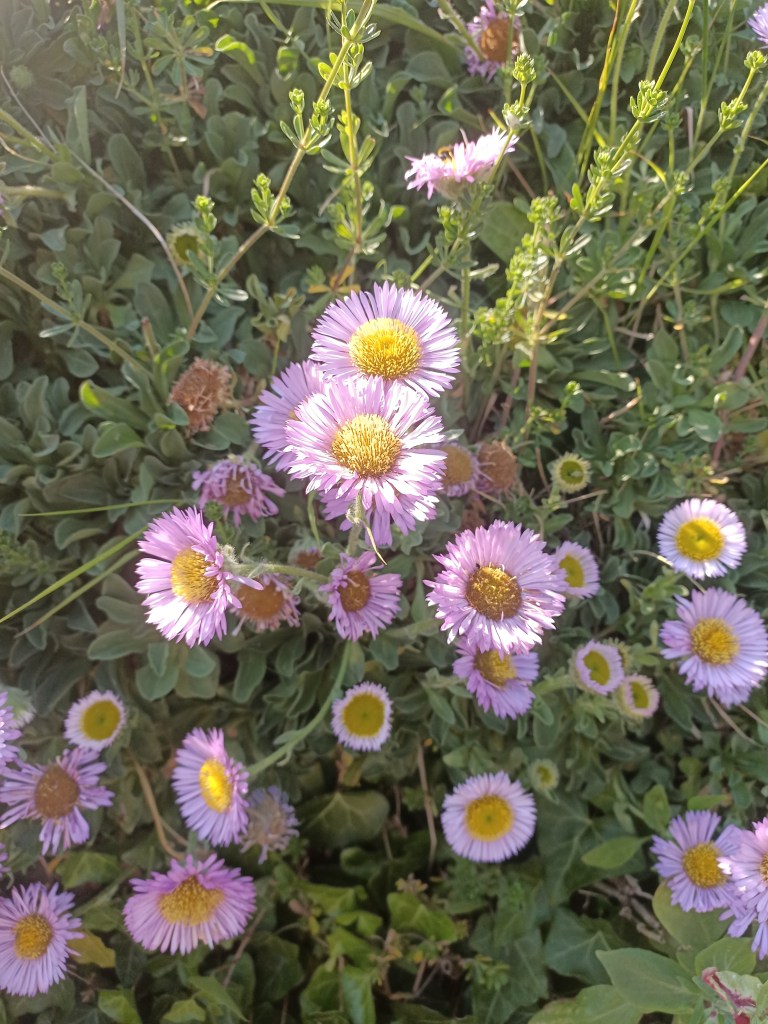
Late-flowering Fleabane, or Michaelmas daisies, are an essential food source for pollinators in autumn
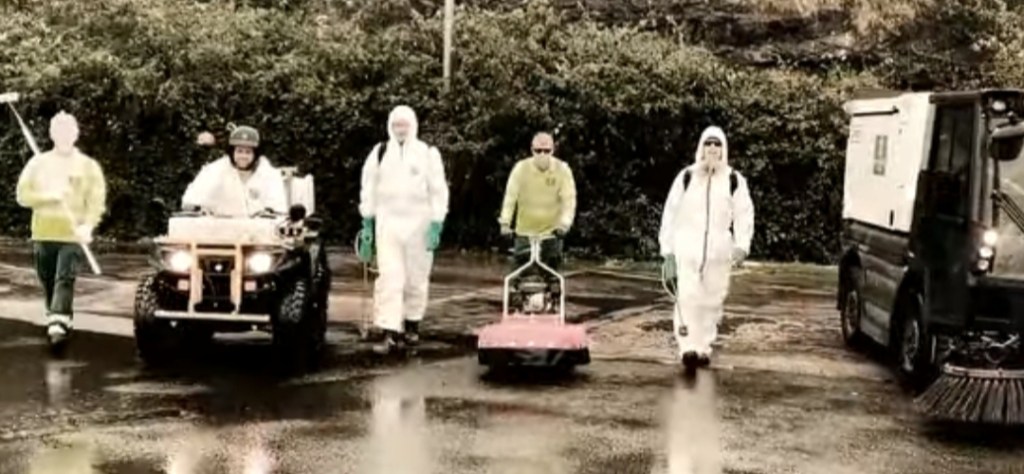
The accompanying video clip is equally violent in its imagery, with men dressed in chemical suits and masks, holding their ‘weapons of plant destruction’ as if they are Kalashnikovs – really this is Plymouth, not a Hollywood film-set!
As well as the obvious waste of money on such a disturbing media form, and on these weapons, what message does this send out? Plymouth is already recognised as having a high and increasing rate of violent crimes (76 crimes per 1,000 people, in 2020). It’s still reeling from the distressing shootings that took place in Keyham, this August. We need an emphasis on peace, not war. On this basis, I would support those people that feel a public apology is in order for the unnecessary violent content which clearly suggests that this form of behaviour is acceptable.
If the council proceeds with this wild plant ‘Armageddon’, as well as the obvious destruction of the plants and the wildlife that it supports, it will completely undermine and devastate all the positive work the council has made up until now. An important point, I think we all need to keep in mind, is that there are many people within Plymouth City Council who have worked hard, especially over the last 18 months, to support nature across our urban landscape. They have invested time and hard work into creating wildflower spaces, wetland areas, woodlands and green community areas for all of us, and wildlife, to enjoy. There are some very proactive and well informed people within Natural Infrastructure and the Green Minds team who have carried out positive work around Plymouth. I have personally collaborated with them to restore and support urban wildlife habitats and raise awareness through educational activities, like this one below at Houndiscombe Park.
Education is very important and clear facts need to be spread like seeds, if we are all to make informed decisions. Let’s look at some facts: Insects make up over half the entire species on our planet, but 41% of them are hurtling towards extinction. We need insects for our very survival, and those insects need habitat to rest, nest and feed.
Every species of plant, insect, bird and mammal is interdependent, and as humans we need them for our sources of food, medicines and the air we breathe: our very existence depends on them. 3/4 of our crops depend on pollinators. Common wild plants and flowers found around the city, not just in parklands, but cracks in pavements and wall crevices, are vital for them to survive.
Beautiful flowers amongst the cracks and crevicesAll important food and energy sources for pollinators
I think many of us have noticed empty shelves in supermarkets, but for bees, butterflies, moths and birds, by taking away these little corridors of nature from our streets, this is like taking the supermarkets and corner shops away entirely: with nothing to feed on, they die.
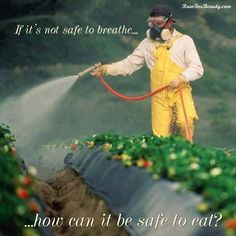
The added threat of using glyphosate-based herbicides is yet another ‘nail-in-the-coffin’ for wildlife. Here are some more facts:
The International Agency on Research on Cancer classified glyphostate as “probably carcinogenic to humans” in 2015. Since that classification many countries have banned it, some of these include: Australia, changed to steam technology (as less harmful and more economical), Belgium, as part of their ‘zero pesticides’ policy, Colombia, due to concerns over cancer, Costa Rica, to protect its wild areas, Denmark, declared it carcinogenic, El Salvador, due to links to deadly kidney disease, Greece, as a duty of risk management towards consumers and the environment, India, Italy, Kuwait, Luxembourg, Malawi, Netherlands, New Zealand, Oman, Bahrain, Qatar, Saudi Arabia, Arab Emirates, the list goes on…
So, why is it still being sold in Britain? Well, possibly they deem it ‘environmentally safe’ because it is assumed to be inactive shortly after spraying due to rapid sorption (when one substance attaches itself to another) on to soil particles, however scientists state that there are concerns about our insufficient understanding of how glyphostate behaves and reacts with living organisms, the soil and the waterways it may filter into. That basically translates as: not enough is known about the chemical to make an informed decision as to its safety – therefore it’s dangerous! It’s a chemical that is sprayed, so it’s airborne for some time and can be inhaled. It then sits on the surface of plants and grasses that we sit in, play in, eat on and eat from (fruit and vegetables). Think about this when you’re next in the park with your children and your dogs… Now imagine how destructive this is to much smaller wildlife…is this really want we want?
There are many other solutions to control wild plants, such as steam technology, cutting back and letting nature take its course.
Without facts and education how can any of us make informed and ethical decisions? How do we go forward now?
Well, I ask all the people of Plymouth to consider this article carefully. Please do not take my word for all this information – check out the facts for yourself. Research and reconsider. Do not blunder into actions that later, with more understanding, you may regret, just because it seems the quickest and easiest solution.
Many more people write letters of complaint, than in praise of something, that’s an unfortunate fact too. So, I implore every one of you who cares about nature, who has seen the accomplishments of the last 18 months to our natural and wild spaces in Plymouth, to please email or write a letter to the council and tell them how much you care.
I also reach out to Maddi Bridgeman at Plymouth City Council to rethink: education not eradication! I myself have learnt so much about wild plants, flowers and biodiversity in the last 18 months, working with many other amazing organizations and individuals across Plymouth. Many of us work tirelessly, often voluntarily, to make our city a more beautiful and healthier place to live, so let’s work together, not against each other.



























 #RebelBotanists